
Our readers keep the lights on and my morning glass full of iced black tea. As an Amazon Associate, I earn from qualifying purchases.
Specs are compiled from manufacturer listings and verified buyer reviews and can change over time — please confirm the key details on the product page before buying.
You know the scene: you grab a fresh baguette, apply the serrated knife with confidence, and within seconds a halo of crumbs and seeds has dusted your entire countertop. A great bread cutting board stops that mess at the source, gives you a stable surface that does not slide around, and often doubles as a serving piece when company arrives. The right pick saves you cleanup time and keeps your knife edge sharper longer.
I’m Min — the founder and writer behind Gadgets Feed. This guide is built by comparing the manufacturers’ published specifications and the patterns across verified customer reviews, so you get each pick’s real strengths and trade-offs instead of marketing spin.
Whether you bake sourdough every weekend or just need a cleaner way to slice a morning bagel, choosing the right bread cutting board depends on size, material, and how well it contains the crumb situation.
Our Picks at a Glance


How To Choose The Best Bread Cutting Board
Picking a bread board is simpler than picking a chef’s knife, but a few key details separate the boards you will reach for daily from the ones that end up leaning against the backsplash. Focus on the material, the size, and the crumb-containment strategy.
Material Matters: Acacia, Walnut, or Bamboo
Hardwoods like acacia and walnut are naturally water-resistant and dense enough to stand up to a serrated blade without showing every single cut. Acacia offers dramatic grain patterns and a hardness that resists warping. Walnut is slightly softer on knife edges and brings warm, rich coloring. Bamboo is harder than most woods and highly renewable, but it can be tougher on your knife’s edge over time.
Size and Footprint
A board that is too short will have a baguette hanging off both ends, making a clean slice difficult. Look for a length that matches your longest loaf. For standard sandwich bread, a 16-inch board is ample. For artisan batards or full baguettes, consider a board around 23 to 26 inches. Thickness also adds stability — a board that is at least 1.5 inches thick tends to stay planted.
Crumb Control and Special Features
This is the bread board’s superpower. Some boards use a deep juice groove to catch crumbs instead of juice. Others use a foldable crumb tray or slotted design that funnels debris into a removable catcher. If you slice bread daily, a dedicated crumb-management system is worth the small premium. A reversible board offers a juice-groove side for bread and a flat side for charcuterie.
Quick Comparison
| Model | Best For | Dimensions | Weight | Material | Amazon |
|---|---|---|---|---|---|
| Sonder Los Angeles Winsome Acacia★ Best Overall | All-purpose heavy duty | 16″ x 12″ x 1.5″ | 6 lbs | Acacia Wood | Amazon |
| Omega National Rubberwood Bread BoardBest for Long Loaves | Long loaves | 23.5″ x 12″ x 0.75″ | 3.02 lbs | Rubberwood | Amazon |
| MOYUART Bread Board with SlicerSmartest Design | Crumb-free slicing | 14.96″ x 9.53″ x 1.46″ | 1.06 kg | Acacia Wood | Amazon |
| Ironwood Gourmet Avignon Baguette Miter | Baguette precision | 26.25″ x 3.5″ x 1.75″ | 1.6 lbs | Acacia Wood | Amazon |
| FANICHI XL Acacia Board | Big batch prep | 20″ x 15″ x 1.5″ | 3.9 kg | Acacia Wood | Amazon |
| Farberware Extra-Large Bamboo Board | Budget-friendly large surface | 20.08″ x 14.17″ x — | 4.8 lbs | Bamboo | Amazon |
| Ayiaren 17″ Acacia Board | Everyday reversible use | 17″ x 12″ x 0.8″ | 2 lbs | Acacia Wood | Amazon |
| HIKTYEI Walnut Board | Compact serving + slicing | 16.6″ x 7.9″ x 0.9″ | 2.4 lbs | Walnut Wood | Amazon |
| Ayiaren 16.6″ Acacia Board | Light-duty slicing and serving | 16.6″ x 13″ x 0.8″ | 2.7 lbs | Acacia Wood | Amazon |
In‑Depth Reviews
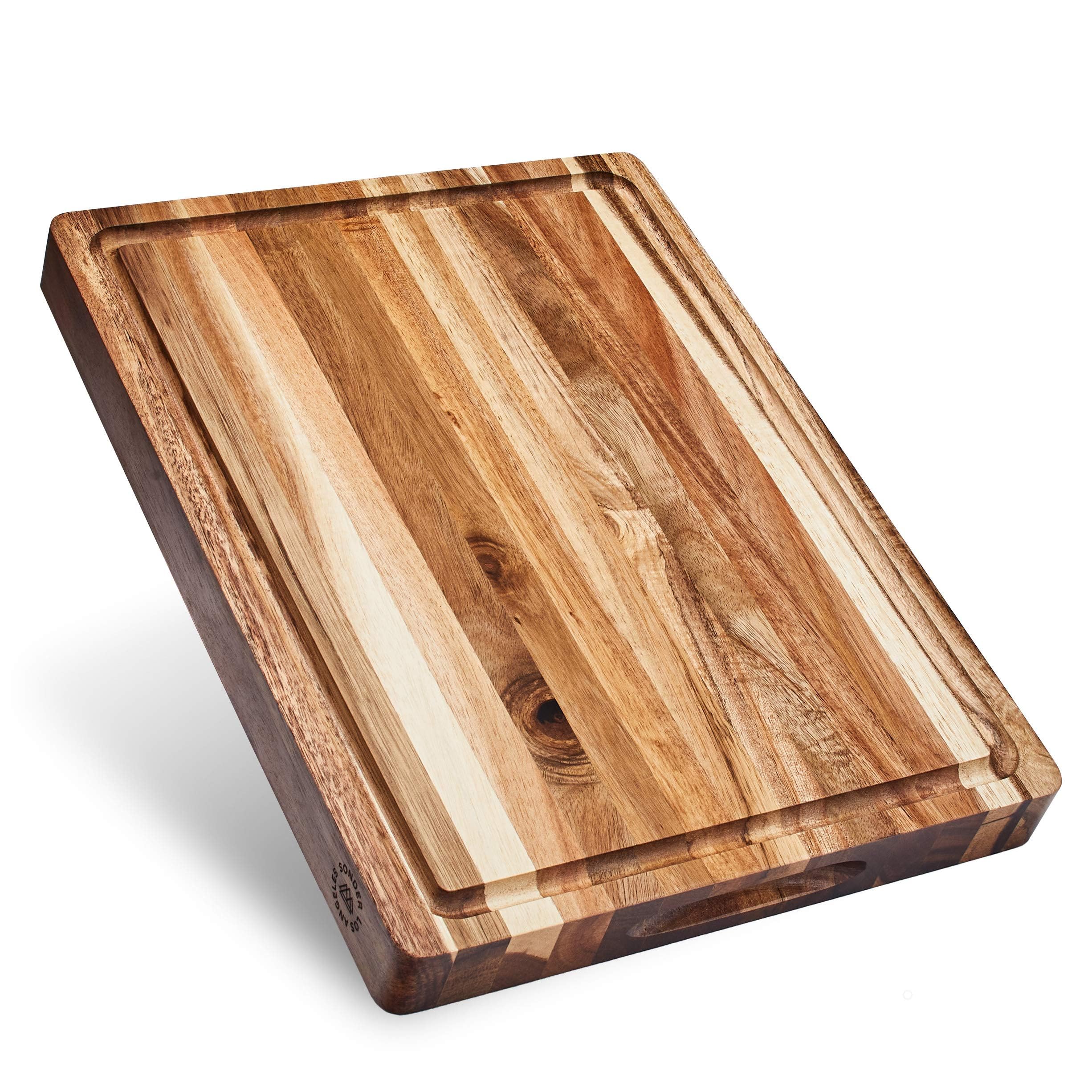
1. Sonder Los Angeles Winsome Acacia Wood Cutting Board
Our pick — over 4.5★ from 10,500+ verified ratings; the strongest balance of quality and price.
The heavy anchor that stays planted while you slice through a crusty boule.
This edge-grain acacia board weighs 6 pounds — more than twice the weight of most competitors — and that heft is exactly what makes it such a reliable bread-slicing surface. A board that slides around while you are bearing down with a serrated knife is dangerous; the Winsome simply stays put. At 16 by 12 inches and a full 1.5 inches thick, it provides a generous foundation for batards, sandwich loaves, and even charcuterie spreads.
The deep 3.5 fl oz juice groove catches crumbs surprisingly well, and the built-in cracker well is a clever touch for serving. Owners regularly describe it as “substantial, stable, smooth surface” that does not warp or split, though a few note light scratching after 4 to 6 months of heavy use. That is true of any wood board, but the edge-grain construction keeps those marks less noticeable than on face-grain boards. The look earns the most praise — nearly two thousand owners single out the appearance alone. It arrives in a gift-ready box, making it a confident present for a serious home baker.
What makes it the top pick
- 6-pound weight ensures zero sliding while slicing crusty loaves
- Deep juice groove and cracker well add serving versatility
- Edge-grain acacia resists stains and hides everyday knife marks
Who should think twice
- Requires regular oiling every 3 weeks to prevent the wood from drying out
- At 6 pounds it is heavy to lift and store compared to thinner boards
Reach for this if: you want one board that handles daily bread slicing, heavy chopping, and party charcuterie without budging an inch.
Look elsewhere if: you prefer a lightweight board you can toss in a cabinet and forget.
2. Omega National Rubberwood Bread Board
The 23.5-inch runner built for baguettes that hang off every other board.
If you regularly bake or buy full-length baguettes and artisan loaves, a standard 16-inch board leaves you sawing at an awkward overhang. This rubberwood board stretches to 23.5 inches long and 12 inches wide, giving a full loaf room to rest flat. At just 0.75 inches thick and 3.02 pounds, it is far slimmer than the Sonder LA board, which makes it easy to slide into a cabinet slot or stand upright on a counter.
Rubberwood is a dense, eco-friendly hardwood that holds up well to knife contact. Owners note its solid feel — one even uses it as a replacement board for a 1920s Hoosier cabinet. The natural grain is clean and attractive, and the board ships with a smooth finish right from the start. The trade-off is the lack of any juice groove or crumb-catching feature, and at three-quarters of an inch thick, it will not feel as bombproof as a 1.5-inch board. The praise centers on its fine quality and solid craftsmanship — both of which are the top-mentioned positives among owners.
Why it stands out
- 23.5-inch length accommodates full baguettes and batards without overhang
- Thin profile stores easily in narrow cabinet slots
- Rubberwood is a dense, renewable hardwood that resists warping
What it lacks
- No juice groove or crumb tray means crumbs end up on the counter
- Thinner build may not feel as stable for heavy-duty chopping
Perfect for: anyone with a bread habit that involves loaves longer than 16 inches who wants a board that disappears into storage when not in use.
Better for another pick if: you need crumb containment or a board thick enough to double as a butcher block.
3. MOYUART Wood Bread Cutting Board With Slicer and Crumb Tray
The crumb-tray system that makes post-slicing cleanup almost satisfying.
This is the purpose-built crumb-catcher. The MOYUART board uses a color-combination design with a foldable crumb tray that slides under the main board — crumbs fall through the slotted top directly into the tray, so your counter stays completely clean. After slicing, you lift the tray and dump the crumbs in the bin. No wiping, no sweeping. The set also includes a bread slicer guide, which helps you produce even slices without the knife wandering.
It is made from 100% natural acacia wood with a smooth, hand-polished surface. At 14.96 x 9.53 x 1.46 inches, it is compact enough to store easily but large enough for a standard loaf. The board also doubles as a serving tray for cheeses or crackers. The top-mentioned strength among owners is functionality — and that includes how well the crumb tray works in real use. Owners say “crumbs fall inside and easy to clean out,” and that it “cut back on clean up in the kitchen.” One eco-friendly note: the maker, MOYUART, presents this board unpainted or with only varnish, showing the natural wood color.
Clever features
- Slotted top and removable crumb tray mean zero counter cleanup
- Includes a bread slicer guide for consistent, even slices
- Compact and foldable design saves counter space when stored
Space consideration
- At 9.53 inches wide, it will not fit extra-wide loaves or large baguettes
- Foldable construction may feel less solid than a one-piece hardwood board
Grab this if: you want the fastest post-bread cleanup possible and value a dedicated crumb-catching system over a massive work surface.
skip it if: you regularly slice loaves longer than 15 inches or need a board that also handles heavy butcher-block duty.
4. Ironwood Gourmet Avignon Baguette Miter

The 26-inch slotted runner built for one job: perfect baguette slices.
This board is a specialty tool in the truest sense. At 26.25 inches long and only 3.5 inches wide, it is shaped like a baguette and has slots cut across the surface. You lay the bread in the groove, and the knife passes through the slots, giving you even, uniform slices without the loaf rolling or shifting. The knife glides through the slots and protects your table surface underneath. For anyone who serves French bread regularly, this board turns a frustrating task into a neat extra.
Made from end-grain acacia wood, it weighs just 1.6 pounds and features a stainless steel grommet so you can hang it on the wall as decor between uses. The wood grain is rich with contrasting light and dark patterns — the appearance and craftsmanship are the two most-praised qualities among owners. One owner admits they bought it as a gift, kept it, and now display it on their backsplash. A caveat: at 3.5 inches wide, it is not designed for standard sandwich loaves or wider artisan breads. It is strictly for slender baguettes.
Brilliant for baguettes
- Slotted design delivers even, uniform baguette slices every time
- Hanging grommet turns it into kitchen decor when not in use
- End-grain acacia wood is gentle on knife edges
Limited use case
- Only 3.5 inches wide — incompatible with sandwich loaves or thick batards
- Single-purpose tool; not suitable as a general cutting board
Buy this if: you serve baguettes or ficelle at least once a week and want the easiest, most consistent slicing experience possible.
Pass if: you need a general-purpose bread board that handles different loaf shapes and knife tasks.
5. FANICHI XL Acacia Wood Cutting Board
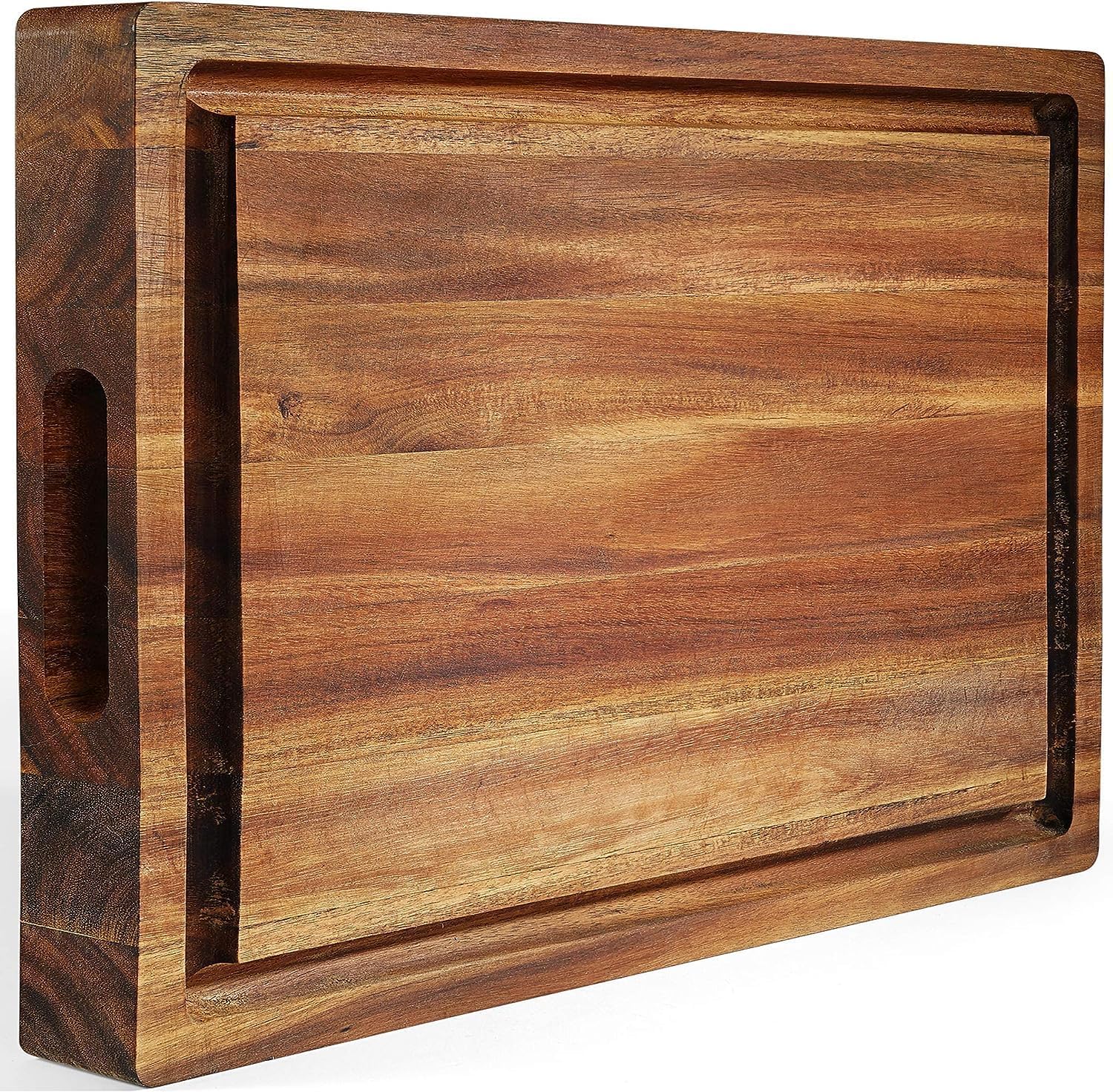
A monster 20×15 work surface that handles a full baking batch at once.
When your bread-baking habit produces multiple loaves and rolls at once, a small board forces you to slice in shifts. This FANICHI board spans 20 by 15 inches and is a full 1.5 inches thick, offering enough real estate to arrange, cut, and serve an entire batch without crowding. It is reversible: one side has a deep juice groove for catching crumbs and runoff, while the other side features a long holder slot ideal for cutting bread and cheeses.
The acacia wood is unpainted and natural, so there is no concern about chemicals leaching into food. Owners consistently praise the quality and appearance, noting it is “well made with quality wood” and “looks great on the countertop.” At nearly 4 kilograms, it is heavy enough to stay stable while you bear down on a crusty loaf. The honest trade-off is that some owners have reported cracking after a few weeks of use, and the board can slide on smooth surfaces without a towel underneath. The mixed feedback on durability is the most-discussed topic among reviewers — it is a caveat note, though the majority of owners are satisfied.
Spacious advantages
- 20 x 15 inches fits multiple loaves or a full sheet of pastries at once
- Reversible with a juice groove on one side and a holder slot on the other
- Thick 1.5-inch acacia construction feels solid and stable
Watch out for
- A minority of buyers report cracking or splitting after limited use
- Slick surface may require a towel underneath to prevent sliding
Ideal for: the serious home baker who needs a massive work surface and wants a reversible board that doubles as a serving platter.
Consider another if: you are risk-averse about potential long-term cracking and prefer a board with a longer warranty.
6. Farberware Extra-Large Bamboo Cutting Board
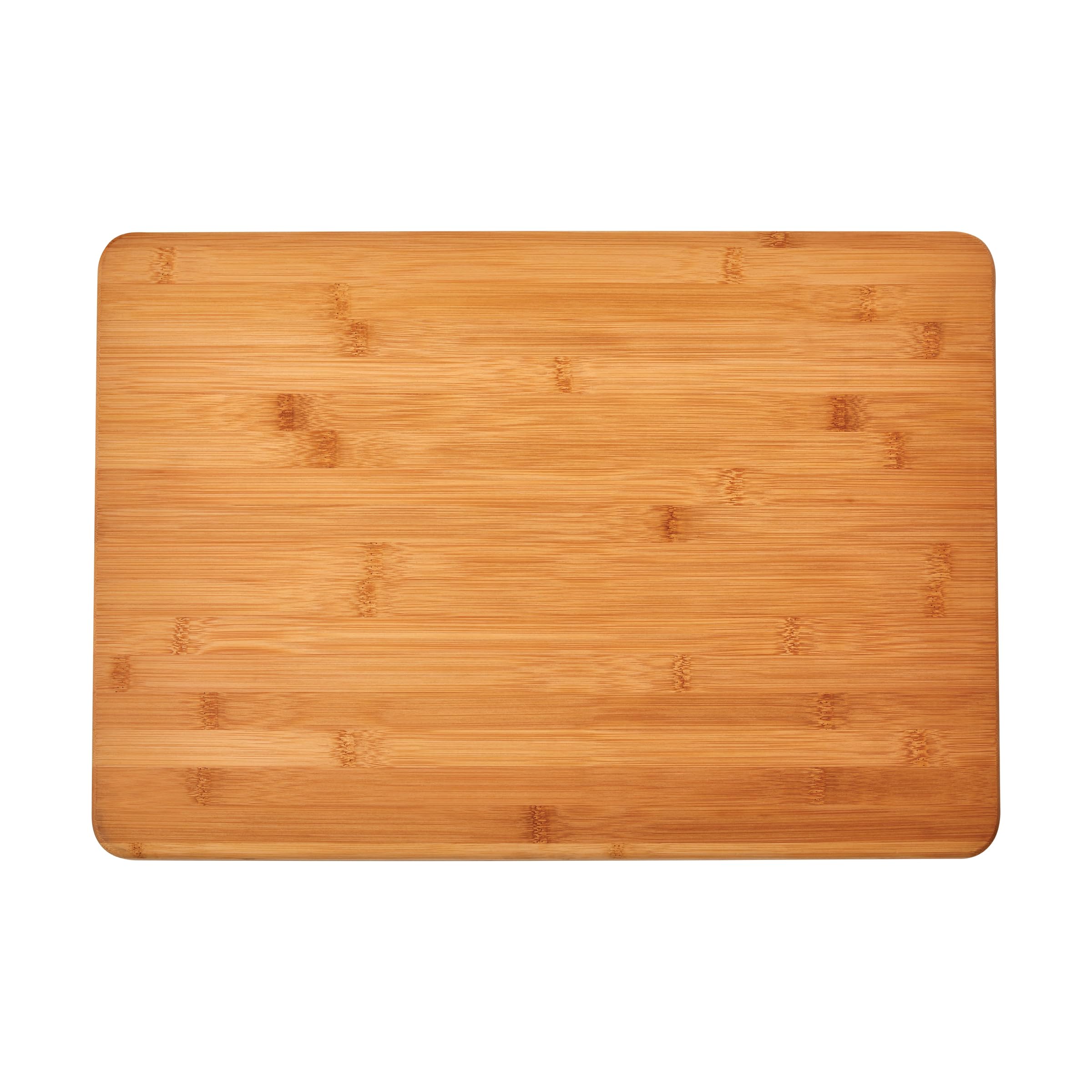
A 20-inch bamboo plank that gives you acres of room without the premium price.
If you want a big cutting board but do not want to spend mid-range money on acacia, this Farberware board delivers a 20.08 by 14.17-inch surface in bamboo — a material that is harder than many hardwoods and highly renewable. It is reversible, so you can rotate sides to distribute wear, and the bamboo is naturally gentle on knife blades compared to plastic or glass boards.
It is 4.8 pounds, which gives it a solid feel without being back-breaking to move around. Owners describe it as “sturdy, durable, no warping or cracking” and appreciate the simple, no-frills design. There are no juice grooves, no handles, and no rubber feet — it is a straight, flat slab of bamboo. A few owners add their own stick-on feet for grip. The top two positives are quality and size, with many noting it is large enough to roll out pizza dough. The hard truth is that durability is a mixed topic: some owners mention the board coming apart over time, especially if it is not oiled regularly or is left soaking in water.
Value highlights
- Massive 20-inch surface at a budget-friendly price point
- Bamboo is harder than many woods and renewable
- Reversible design extends the board’s useful life
What is missing
- No juice groove, no handle, and no non-slip feet
- Some customers note the board delaminating over time
Best for: bargain-minded cooks who need a large, simple cutting surface for bread, dough, and general prep without extra bells and whistles.
Avoid if: you want a board with crumb management, a handle, or rubber grips.
7. Ayiaren 17″ Acacia Wood Cutting Board

A reversible 17-inch slab with a juice groove that pulls double duty as a charcuterie board.
This board from Ayiaren hits a practical balance: it is 17 inches long, big enough for most loaves, and 0.8 inches thick — thinner than the premium boards but still sturdy enough for daily use. The reversible design means you get a juice-groove side for catching bread crumbs or meat juices and a flat side for serving cheeses, fruits, and crackers. That dual-purpose nature makes it a strong candidate if you want one board for both prep and presentation.
At just 2 pounds, it is noticeably lighter than thicker boards, so transferring it from counter to table is easy. The acacia is 100% natural and food-grade. The quality and appearance are the top-mentioned positives among owners — they call it “nice quality” and “beautiful wood.” However, there is a notable pattern in feedback: the durability is mixed, with some owners reporting cracking within a few weeks. The scratch resistance is also a weak point, with many noting the wood shows knife marks easily. It is a good board for light to medium use, but heavy daily chopping might accelerate wear.
What works
- Reversible with a juice groove on one side, flat surface on the other
- Lightweight at 2 pounds — easy to carry and store
- Natural acacia wood with attractive grain patterns
What to expect
- Reports of cracking and warping in some units within weeks
- Knife marks show easily on the surface over time
Good for: lighter bread-slicing duty and occasional charcuterie serving where you want a reversible board without the bulk.
Not ideal if: you plan to use it for heavy daily chopping or need a board that hides knife marks better.
8. HIKTYEI Walnut Wood Cutting Board
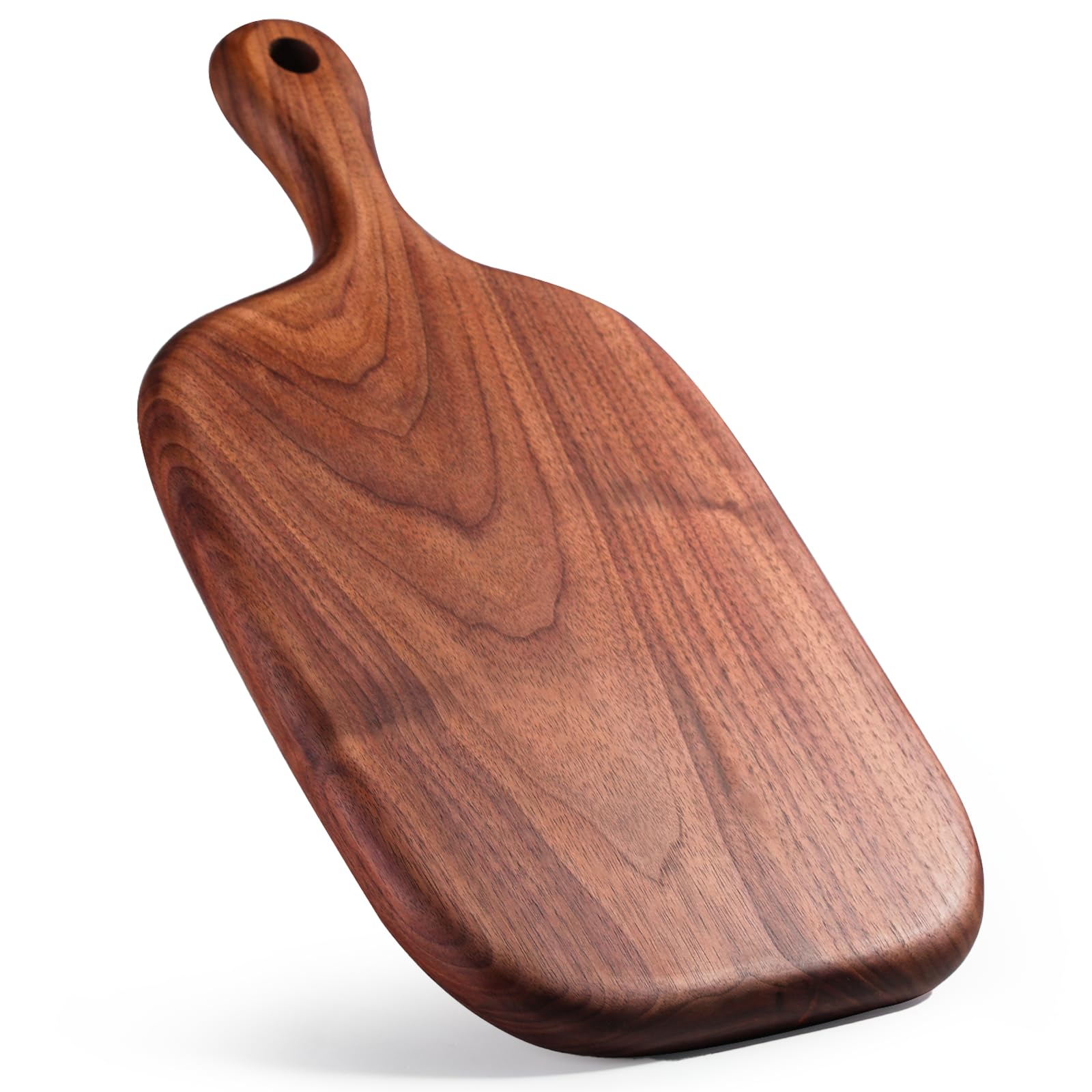
A solid walnut board sized perfectly for quick jobs and beautiful enough to leave on display.
Walnut is prized in the kitchen for its rich, warm color and its moderate hardness — it is dense enough to resist wear but slightly more forgiving on knife edges than acacia. This HIKTYEI board is made from solid North American walnut with no glue joints, so there is no risk of layers separating over time. At 16.6 by 7.9 inches, it is narrower than most boards on this list, but that slim profile makes it ideal for slicing a single loaf, a baguette, or a batch of rolls without taking over the whole counter.
It features an extended handle with a hanging hole and includes a lanyard for tidy storage. The surface is hand-polished and finished with food-grade wood wax oil, which is safe for direct food contact. Owners consistently describe it as “beautiful” and note that the finish holds up well with periodic conditioning. The quality and appearance are the top two positives. It arrives in a gift box, making it a thoughtful present for a baker who appreciates natural materials. One owner notes, “I ordered this cutting board in an effort to quit using plastic cutting boards. It’s so nice, I almost hate to use it.”
Standout traits
- Solid North American walnut with no glue joints or laminations
- Compact size with an ergonomic handle and hanging loop for easy storage
- Food-grade wax oil finish protects the wood and is safe for direct contact
Size limitation
- At 7.9 inches wide, it will not fit large artisan loaves or multiple items at once
- Narrower surface offers less stability for vigorous chopping
Best suited for: quick bread-slicing tasks and serving cheese or charcuterie in a compact, elegant board that looks good on the counter.
Consider a wider board if: you regularly slice large boules or need a larger prep surface.
9. Ayiaren 16.6″ Acacia Wood Cutting Board with Handle

The lightweight handled board you can grab with one hand and carry straight to the table.
This Ayiaren board weighs just 2.7 pounds and includes a 4-inch handle, making it one of the easiest boards to move from counter to sink to serving table. The 16.6 by 13-inch surface is wide enough for a standard loaf or a cheese spread, but the board is thin at 0.8 inches, which keeps it light. The acacia has a rustic farmhouse finish, so it looks right at home on a kitchen island or dining table as a serving piece.
The handle is the defining feature here — it gives you a secure grip for transferring chopped contents to a pan or carrying the board to a table. Owners praise its size and attractive appearance, calling it “perfect size for light veggie prep” and “good-looking.” The most-discussed positive is quality, followed closely by appearance. The honest catch: reviewers point out that the board scratches very quickly with minimal use, and one side may be darker than the other due to natural wood variation. One review notes the wood feels harder than similar boards, making cuts more pronounced. Compared to the 6-pound Sonder LA board, this is a lightweight option for lighter duty — a 2.2x weight difference that you feel in daily use.
Why you might like it
- Built-in handle makes it easy to carry and transfer food
- Large surface area relative to the lightweight 2.7-pound build
- Rustic acacia finish doubles nicely as a serving board
What to know
- Scratches and knife marks show quickly with regular use
- Harder acacia surface can make knife marks more pronounced
Best for: light bread slicing, cheese serving, and anyone who prioritizes portability and a compact handle design.
Look elsewhere if: you want a board that hides knife marks or will see heavy daily chopping.
Understanding the Specs
Edge Grain vs. End Grain
The direction of the wood fibers matters for durability and knife care. Edge-grain boards (like the Sonder LA Winsome) have the wood fibers running vertically, creating a solid surface that resists stains and hides knife marks well. End-grain boards (like the Ironwood Gourmet baguette miter) have the fibers running vertically, so the knife cuts between the fibers rather than across them, which is gentler on the blade and makes marks less visible. End grain tends to be more expensive and requires more oiling.
Juice Groove vs. Crumb Tray
A juice groove is a channel cut into the board’s perimeter to catch liquids. For bread slicing, it also traps a surprising amount of crumbs. A dedicated crumb tray (like on the MOYUART board) is a separate compartment or slotted design that funnels debris into a catcher. The crumb tray is far more effective at keeping the counter clean, but it adds complexity to the board design. Juice grooves are simpler and found on reversible boards.
FAQ
Can I use a bread board for other types of food?
How do I clean and maintain a wooden bread board?
Why does my bread board scratch so easily?
What size bread board do I need for a standard loaf?
Is a heavier board always better for bread slicing?
What is the difference between acacia and bamboo for a bread board?
Can I use a bread board as a charcuterie board?
How do I stop crumbs from falling off my cutting board?
Final Thoughts: The Verdict
For most people, the bread cutting board winner is the Sonder Los Angeles Winsome Acacia Wood Cutting Board because its 6-pound, 1.5-inch-thick edge-grain construction stays planted on the counter, handles daily bread slicing and charcuterie serving with equal ease, and earns top marks from owners for both appearance and quality. If you want a dedicated crumb-management system, grab the MOYUART Bread Board with Slicer and Crumb Tray. And for baguette lovers who want perfect slices every time, the Ironwood Gourmet Avignon Baguette Miter is the one to reach for.
How We Picked
We do not accept paid placement. Every pick is matched to a real buyer and a real use-case; we do not hands-on test units.
Sources & Methodology
Specifications: manufacturer listings and product documentation. Review insights: verified customer reviews, as of July 2026. Pricing: not shown on this page (it changes often); check the current price via the retailer link.
As an Amazon Associate, Gadgets Feed earns from qualifying purchases. This does not affect which products we feature.