
Whether you’re a competitive athlete chasing marginal gains in VO2 max or someone recovering respiratory function after illness, a dedicated lung trainer is a precise tool that isolates and stresses your inspiratory and expiratory muscles in ways running or weightlifting cannot. Unlike general cardio, which taxes your whole system, these devices create targeted resistance that forces your diaphragm and intercostals to adapt, leading to measurable improvements in endurance and breath control.
I’m Min — the co-founder and writer behind Gadgets Feed. My deep market research and technical spec analysis for this guide involved comparing adjustable resistance ranges, build materials, and digital tracking capabilities across dozens of models to separate the genuinely effective devices from the gimmicks.
This guide cuts through the noise to present the most effective options for strengthening your breathing muscles, helping you find the best breath trainer that matches your specific goals from athletic performance to clinical respiratory support.
How To Choose The Best Breath Trainer
Selecting the right respiratory muscle trainer requires matching its core features to your training level and specific use case. Not every device is built for the same purpose, and overlooking key variables can lead to stalled progress or a tool that simply gathers dust.
Resistance Type and Adjustability
The most critical spec is how the device creates resistance. Basic models use a simple spring-loaded valve or a magnetic mechanism that provides a single linear resistance curve. More advanced trainers offer independent resistance levels for inhalation and exhalation, allowing you to specifically target your inspiratory muscles (diaphragm) separately from your expiratory muscles (abdominals and intercostals). Look for a device with a wide, granular adjustment range if you plan to progress over several months. A knob with only 3 settings is a red flag for long-term training.
Build Quality and Hygiene
You will be putting this device in your mouth repeatedly. The mouthpiece material is paramount — food-grade silicone is standard for its durability and softness, while medical-grade polycarbonate (PC) offers shatter resistance and transparency for tracking internal function. The device must be easy to fully disassemble for thorough cleaning with warm water and soap. A design with crevices where moisture can pool is a breeding ground for bacteria. Weight is also a factor; a 0.5-ounce trainer is truly pocketable, while a 6-ounce unit with metal balls is more substantial but less portable.
Digital vs. Analog Feedback
Analog trainers are simple, durable, and require no batteries. You gauge your progress through feel and the number of reps. Digital trainers add Bluetooth connectivity, a companion app, and an onboard manometer for MIP/MEP (Maximum Inspiratory/Expiratory Pressure) tests. These provide objective data on your lung strength gains, gamified training sessions to maintain motivation, and auto-logging of your history. The trade-off is a higher price point, reliance on a charged battery, and the need to sync with a smartphone. For clinical users and serious athletes, the data is invaluable. For casual fitness, analog is often sufficient.
Quick Comparison
On smaller screens, swipe sideways to see the full table.
| Model | Category | Best For | Key Spec | Amazon |
|---|---|---|---|---|
| Sonmol Digital Breathing Trainer | Digital | Progress Tracking & Gamification | 6 Independent Inhale/Exhale Levels | Amazon |
| POWERbreathe Medium Resistance | Analog | Clinically Proven Fundamentals | Single Resistance Level (Medium) | Amazon |
| The Breather Pink | Analog | Ease of Use & Wellness | 6 Resistance Levels with App | Amazon |
| Expand-A-Lung (2 Pack) | Analog | Dual-Way Inhale/Exhale Training | Adjustable Single Knob | Amazon |
| Flutter Valve Mucus Clearance | Medical | Mucus Clearance & Clinical Use | 3 Steel Ball Resistance Settings | Amazon |
| Second Breath Respiratory Trainer | Analog | Portability & Premium Silicone | Adjustable Resistance | Amazon |
| Nemstar Compact Breathing Exerciser | Analog | Entry-Level Affordability | Adjustable Pressure Knob | Amazon |
In‑Depth Reviews
1. Sonmol Digital Breathing Exercise Device for Lungs with App & Bluetooth
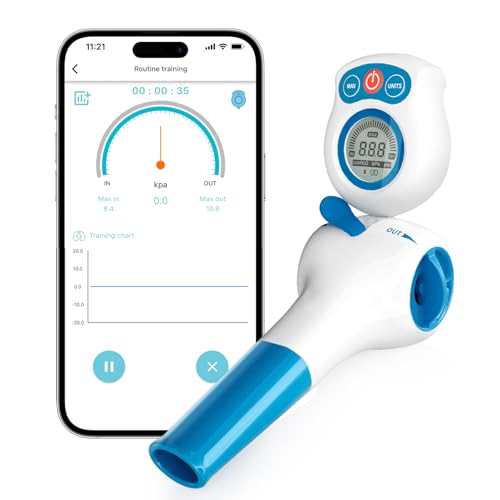
The Sonmol is the only device in this lineup offering fully independent digital resistance settings for inhalation and exhalation across 6 distinct levels, adjustable via separate dials. This independence is critical because your inspiratory strength (breathing in) often lags behind or exceeds your expiratory strength (breathing out), and training them with the same resistance is inefficient. The inclusion of a digital manometer allows it to perform MIP and MEP tests, giving you a concrete measurement in cmH2O of your lung pressure output — a metric usually reserved for clinical spirometry.
Its companion eRMT app adds considerable value through auto-synced data that charts your daily progress and MIP/MEP trends over weeks. The interactive games, like “Little Beluga Whale” and “Inflate the Balloon,” transform what is typically a monotonous reps-and-sets routine into something genuinely engaging, which is a major factor in long-term adherence. The device itself is compact at 3 x 2.1 x 6 inches and comes with a BPA-free construction and a travel case, making it suitable for desk or gym bag storage.
The main trade-off is the app’s user interface, which some users report being unintuitive, particularly on iOS devices where display zoom settings may need adjustment to see all on-screen buttons. The Bluetooth sync can also be slow after a session. Despite these software quirks, the combination of independent dual-axis resistance, objective MIP/MEP tracking, and gamified training makes this the most comprehensive tool for anyone serious about data-driven respiratory training.
Why it’s great
- Unique independent 6-level resistance for inhale and exhale allows precise, targeted muscle training.
- Integrated MIP/MEP manometer provides quantifiable lung strength data without needing a separate device.
- Gamified app and auto-synced progress charts boost long-term training consistency.
Good to know
- Initial Bluetooth setup and app interface on iOS can be finicky requiring display setting changes.
- Requires batteries and regular charging, unlike purely mechanical devices.
2. POWERbreathe – Blue, Medium Resistance

The POWERbreathe is the gold standard in clinical and athletic respiratory muscle training, backed by decades of research. Unlike adjustable knob-based trainers, this model uses a precisely calibrated spring-loaded valve that offers a single resistance level — this one being the Medium Resistance (MR) variant, with Low (LR) and High (HR) also available. This specificity is a double-edged sword: it is incredibly effective for its target load, but it means you must buy the correct resistance level for your current strength, and you will need to purchase another unit to progress to a higher load.
Its construction is simple and robust, consisting of a synthetic rubber body and a non-slip grip that feels industrial-grade. The device is purely inspiratory, meaning it only provides resistance when you inhale, making it ideal for diaphragm-specific conditioning. Many athletes and voice therapists rely on this exact model because the resistance curve is consistent and repeatable — you know exactly how much force you are generating with each breath. The included carrying case adds to its practicality for travel.
The major caveat is that you are locked into a single resistance level out of the box. Users who quickly adapt to the Medium setting will need to purchase the High resistance unit separately, which drives up the long-term cost significantly. It also lacks any form of pressure gauge or digital tracking, so you must rely on subjective feel or a stopwatch to gauge progress. It is a no-frills, highly effective tool for those who want a proven, specific training load and are willing to manage progression via hardware purchase.
Why it’s great
- Clinically validated spring-loaded valve provides a repeatable, precise resistance curve for inspiratory training.
- Non-slip synthetic rubber body and compact design are extremely durable and easy to clean.
- Trusted by respiratory therapists and voice coaches for its predictable, measurable load.
Good to know
- Offers only one resistance level per unit; progression requires buying a separate, more expensive model.
- No digital feedback, pressure gauge, or app connectivity for tracking quantifiable gains.
3. The Breather Pink | Easy Lung Training with Guided Coaching App

The Breather Pink finds an excellent middle ground between the analog simplicity of the Nemstar and the digital complexity of the Sonmol. It provides 6 independent resistance levels for both inhalation and exhalation, controlled by separate dials — a feature typically found at higher price points. This dual-axis control allows for balanced training of both your diaphragm (inhalation) and your abdominal/intercostal muscles (exhalation), which is important for achieving a full respiratory cycle.
Its design philosophy is centered around ease of use, with a straightforward form factor that does not look overtly medical. The included guided coaching app provides structured 5-minute daily workouts, taking the guesswork out of creating a routine. The device is lightweight and portable, and the materials are high-quality. Users report noticeable improvements in energy and breathing efficiency within the first two weeks of consistent use, a timeframe that aligns with basic neuromuscular adaptation.
The primary value concern is that, for a device in its price range, it lacks objective measurement tools. There is no digital manometer to measure MIP/MEP pressure, and the app provides guided routines but does not log pressure data. You are reliant on subjective feedback and the app’s timer to gauge progress. It also does not come with a travel case, which is a notable omission at this price for a device intended for daily “on-the-go” use.
Why it’s great
- Independent 6-level resistance for both inhale and exhale allows for comprehensive respiratory muscle training.
- Included guided coaching app removes the guesswork from building and following a training routine.
- Simple, non-clinical design and high build quality feel good for daily wellness use.
Good to know
- No built-in manometer or MIP/MEP test capability for objective strength measurement.
- Does not include a travel case or container for hygiene and portability.
4. Expand-A-Lung (2 Pack) | Dual-Way Inhale-Exhale Resistance
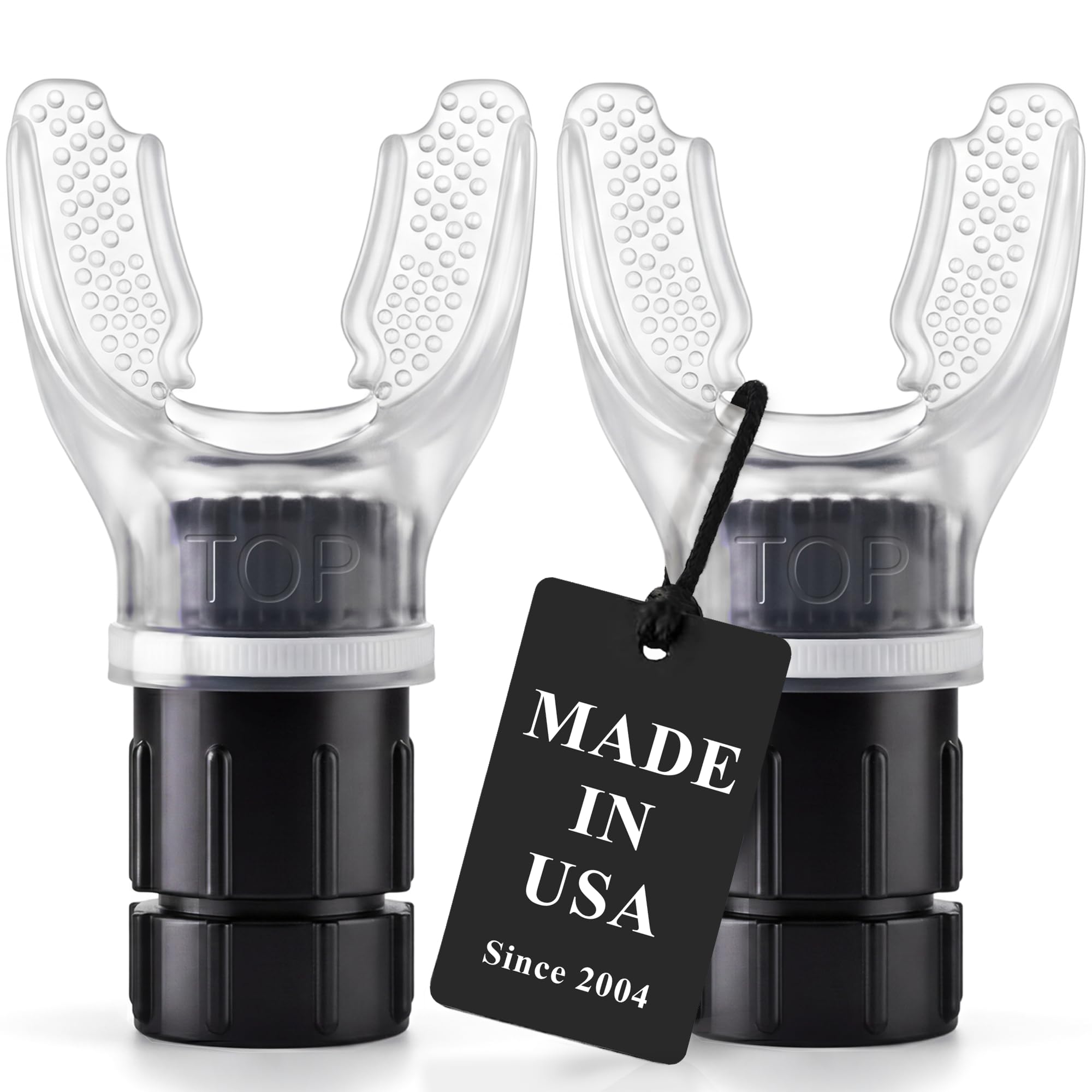
Expand-A-Lung is a veteran in the space, and its design reflects a focus on simplicity and effective dual-way resistance (resistance on both inhale and exhale). The single adjustment knob controls the tension for the entire breathing cycle, which simplifies operation compared to dual-dial systems. The resistance range is notably wide, scaling from very light (suitable for beginners or those recovering from respiratory illness) to challenging levels that competitive athletes find useful for high-intensity conditioning.
The material choice of a food-grade premium silicone mouthpiece is a clear advantage for hygiene and comfort. The silicone is soft on the mouth and teeth, and the entire unit, being only 4 inches long, is one of the most pocketable designs available. The fact that it comes as a 2-pack is a strong value proposition, allowing you to keep one at the office and one at home, or train with a partner. The simple, all-analog design means zero setup friction and no reliance on batteries or a phone.
The lack of a detented or numbered scale on the adjustment knob is a common complaint. Users must rely on memory or markings made with a pen to find their previous resistance setting. This makes it difficult to precisely replicate a training load from the previous day. Additionally, because it uses a single knob for the entire breathing cycle, you cannot independently target inhale vs. exhale strength, which may limit specialized training programs.
Why it’s great
- Simple single-knob dual-way resistance control is intuitive and requires zero setup.
- Food-grade silicone mouthpiece is comfortable, hygienic, and durable for long-term use.
- Excellent value with a 2-pack configuration for shared or location-based training.
Good to know
- Adjustment knob lacks numbered markings or detents, making exact resistance replication difficult.
- Single control for both inhale and exhale prevents independent targeting of inspiratory vs. expiratory muscles.
5. Flutter Valve Breathing Exercise Device for Lungs, Adjustable Resistance
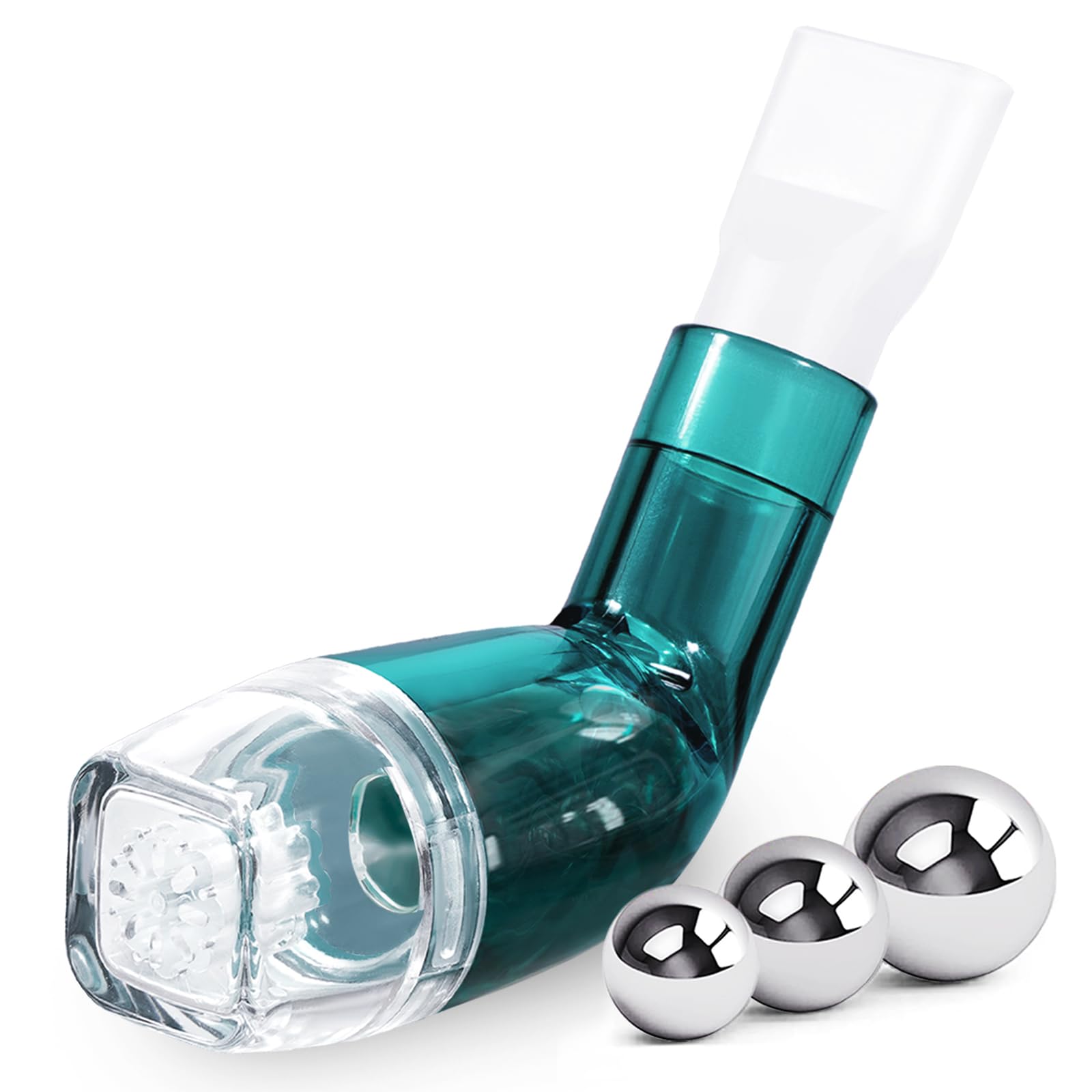
This flutter valve device serves a distinct medical purpose: oscillatory positive expiratory pressure (OPEP) therapy for mucus clearance. Instead of just providing resistance, the three steel balls inside the chamber vibrate during exhalation, creating air pressure oscillations that loosen and mobilize mucus from the airway walls. This is a clinically recognized technique for managing conditions like COPD, bronchiectasis, and chronic bronchitis, a function standard resistance trainers simply cannot replicate.
Its build uses durable, medical-grade PC material that is transparent, allowing you to visually track the ball movement and adjust your effort. The three steel balls offer three distinct resistance levels, providing a basic progression. It is lightweight at just under 6 ounces and requires no batteries. Users report a noticeable improvement in mucus clearance and a reduction in chest tightness with daily use, with some noting a stronger voice as a secondary benefit from the improved airflow.
The device is not designed for general athletic respiratory conditioning. The flutter mechanism primarily targets expiratory flow and mucus mobilization, not inspiratory muscle strength. Using it to try and build VO2 max or diaphragm power would be inefficient. It also requires a deliberate learning curve to find the correct breathing rhythm that effectively activates the flutter vibration, which may be frustrating for some users on the first few attempts.
Why it’s great
- Effective oscillatory PEP mechanism for mobilizing and clearing lung mucus, a specialized clinical function.
- Medical-grade PC material is durable, shatter-resistant, and transparent for tracking ball movement.
- Simple three-ball resistance system offers clear progression for expiratory strength.
Good to know
- Designed primarily for mucus clearance, not general inspiratory muscle training or athletic performance.
- Requires practice to master the correct flow and rhythm to activate the flutter vibration effectively.
6. Second Breath Respiratory Trainer | High Grade Silicone
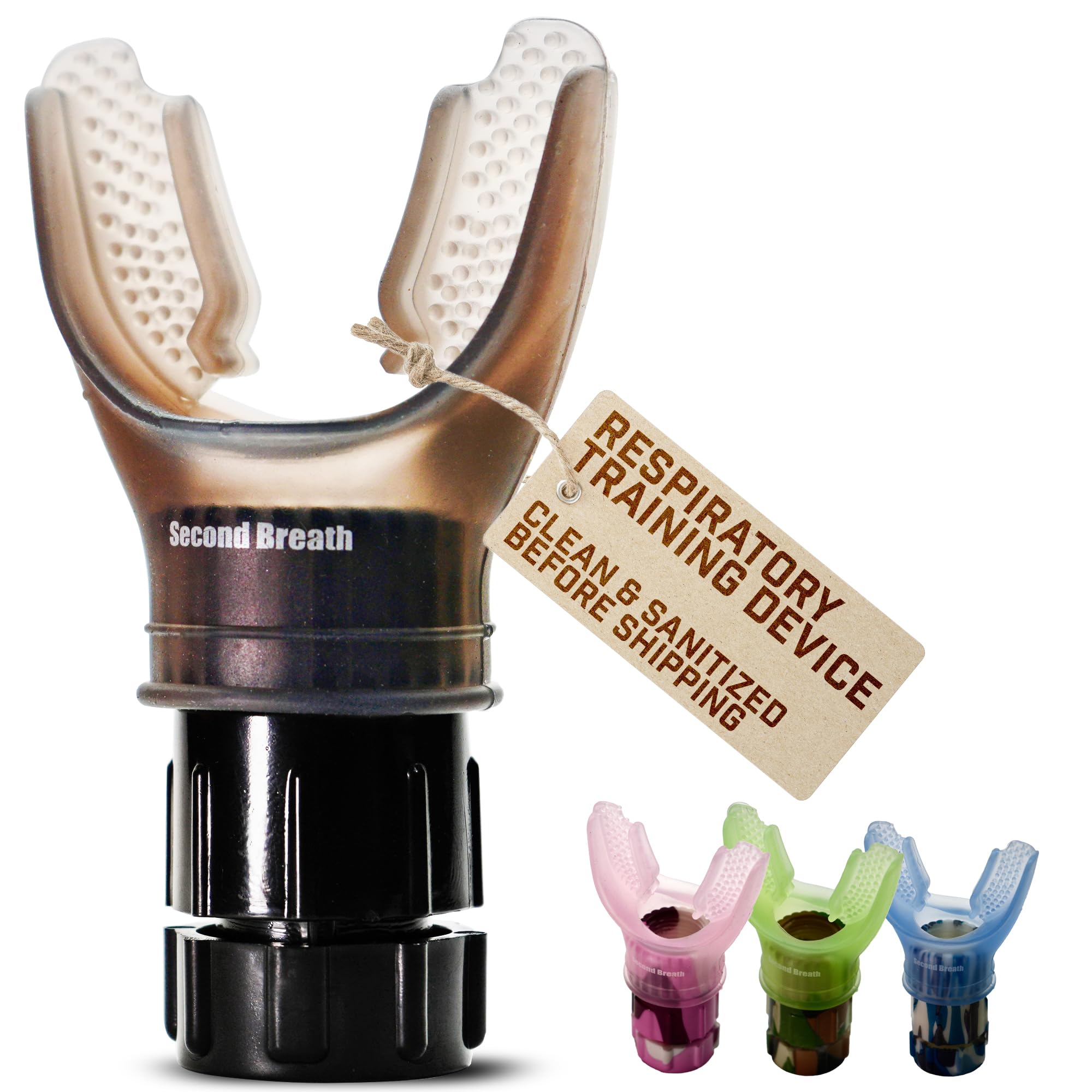
The Second Breath trainer differentiates itself through material quality and aesthetic design. Its entire body is constructed from high-grade silicone, which is a significant upgrade over the hard plastics found on many budget units. This silicone is soft on the mouth and lips, non-slip in the hand, and resistant to the wear and tear of daily cleaning. Available in four exotic colors including black, pink camo, and green camo, it also offers a visual appeal that is rare in this category.
Its performance hinges on a simple, adjustable resistance mechanism that is effective for both diaphragmatic breathing and standard resistance workouts. Users report rapid improvements in cardio stamina and a reduction in being winded during heavy lifts within weeks. The unit is extremely lightweight at 1.76 ounces and is advertised as “no mess, no fuss”, meaning it focuses on pure function without extra parts or a bulky design. The manufacturer also notes that each unit is cleaned and sanitized before packaging, ensuring a fresh out-of-box experience.
The main downside is a lack of granularity in its resistance adjustment. Like the Expand-A-Lung, it does not feature numbered settings or detents, making it hard to know exactly what resistance level you are training at from session to session. It is also a very new product on the market (first available April 2025), so its long-term durability and customer support record are not yet established compared to more established brands like Expand-A-Lung or POWERbreathe.
Why it’s great
- Full high-grade silicone construction provides superior comfort, grip, and durability over plastic alternatives.
- Unique and stylish color options (camo patterns) stand out from standard monochrome medical designs.
- Ultra-lightweight and compact design is highly portable for gym or travel use.
Good to know
- Resistance adjustment lacks numbered markings for precise tracking of training load.
- Newer brand with less long-term track record and customer feedback history compared to established competitors.
7. Nemstar Compact Breathing Exercise Device | Adjustable Valve

The Nemstar is the quintessential entry-level breath trainer, offering a proven adjustable valve mechanism at a price point that is hard to beat. Its core function is simple: an adjustable pressure knob that modulates the resistance on inhalation, effectively training your inspiratory muscles. It is constructed from plastic, making it lightweight at just 0.5 ounces, and is a solid no-frills option for someone who wants to test the waters of respiratory muscle training without a significant investment.
Users consistently note its effectiveness as a “great cheaper alternative to Bas O2 trainer,” validating that its basic function performs well for its intended purpose. It is effective for toning the diaphragm and core muscles, and its compact 2-inch height makes it easy to toss in a pocket. The fact that it is made in the USA is also a quality signal for those who prefer domestic manufacturing. It serves as an effective tool for daily use to improve overall breathing performance.
The most significant compromises are in precision and comfort. The plastic mouthpiece is less comfortable than silicone alternatives, and the adjustment valve is noted to have a narrow effective range with no scale for tracking resistance. Users report needing to “tighten fully before washing to avoid bending the screw.” It also lacks a dedicated exit valve, meaning you must exhale through your nose while inhaling through the device, which some users find claustrophobic. This is a functional trainer, but its rough edges are evident.
Why it’s great
- Extremely affordable entry point for experimenting with inspiratory muscle training.
- Compact and lightweight design at 0.5 ounces is truly pocketable for daily carry.
- Made in the USA, which adds a layer of quality assurance for its price range.
Good to know
- Plastic mouthpiece is less comfortable and durable than food-grade silicone alternatives.
- Narrow adjustment range with no scale makes precise, progressive resistance tracking impossible.
- Lacks a dedicated exit valve, requiring nose exhalation which can feel restrictive.
FAQ
Is a breath trainer effective for lowering blood pressure?
Can I use a flutter valve device and a resistance trainer for the same workout?
Final Thoughts: The Verdict
For most users, the best breath trainer winner is the Sonmol Digital Breathing Trainer because its independent 6-level inhale/exhale resistance and data-driven MIP/MEP tracking offer the most complete and adaptable training platform for both fitness and clinical users. If you want a clinically proven, no-frills workhorse with predictable resistance, grab the POWERbreathe Medium Resistance. And for the budget-conscious beginner wanting cost-effective dual-way training, nothing beats the Expand-A-Lung 2-Pack.