
Standard compression socks trap heat and moisture, turning a medical necessity into an itchy, clammy ordeal. The right pair, however, uses specialized fiber blends and knit structures to move sweat away from the skin as fast as it forms, keeping legs dry without sacrificing the graduated pressure needed for circulation.
I’m Min — the co-founder and writer behind Gadgets Feed. To separate the truly airy options from the marketing claims, I spent dozens of hours cross-referencing fiber composition (merino wool, bamboo viscose, Coolmax, alpaca), knit density, moisture-wicking test data, and real customer feedback on temperature regulation across 7 top contenders.
This guide breaks down the 7 best models on the market so you can stop sweating and start moving. best breathable compression socks deliver clinical-grade support without turning your feet into a swamp.
How To Choose The Best Breathable Compression Socks
Not all compression socks handle heat the same way. The main difference between a pair you rip off after an hour and one you forget you’re wearing often comes down to three factors: the fiber blend, the compression level, and the fit design.
Fiber Blend and Knit Structure
Breathability starts at the yarn level. Merino wool and alpaca fibers have natural hollow cores that trap insulating air while allowing moisture vapor to escape, making them ideal for temperature swings. Bamboo viscose offers a silky feel and excellent wicking at a lower price point. Coolmax is a engineered polyester that pulls moisture away from the skin and dries faster than natural fibers. Avoid 100% nylon socks if you run hot — they trap heat against the leg.
Compression Level (mmHg)
For all-day wear in warm conditions, 15-20 mmHg is the sweet spot. It provides enough graduated pressure to prevent swelling and fatigue without feeling restrictive. The 20-30 mmHg range is better for medical needs or long flights, but the tighter knit can reduce airflow slightly. If you need high compression and breathability, look for socks with mesh ventilation panels along the calf or instep.
Fit, Seam Design, and Cushioning
A seamless toe closure eliminates the friction point that causes blisters and irritation — essential when sweat is already a factor. The top band should stay put without cutting into the skin; a turn-welt top is a sign of quality construction. Low-cut ankle versions like the BRISIRA are cooler for running, while knee-high options provide full-calf support but require proper calf circumference measurement to avoid bunching at the ankle.
Quick Comparison
On smaller screens, swipe sideways to see the full table.
| Model | Category | Best For | Key Spec | Amazon |
|---|---|---|---|---|
| Sockwell Micro Grade | Premium Merino | All-day wear in heat | 32% Merino Wool / 32% Nylon | Amazon |
| Zensah Tech+ | High-Performance | Running & travel | 82% Polyamide / 18% Elastane | Amazon |
| HOLLOW Alpaca | Natural Fiber | Temperature regulation | 15-20 mmHg / Alpaca Blend | Amazon |
| SB SOX 20-30 | Medical Grade | Travel & recovery | 80% Nylon / 20% Spandex | Amazon |
| BRISIRA Coolmax | Athletic | Running & hiking | Coolmax / Bamboo Viscose blend | Amazon |
| Doctor’s Select Bamboo | Lightweight | Everyday comfort | 8-15 mmHg / Bamboo Viscose | Amazon |
| Physix Gear 20-30 | Budget-Friendly | Value & versatility | 20-30 mmHg / Nylon blend | Amazon |
In‑Depth Reviews
1. Sockwell Women’s Micro Grade
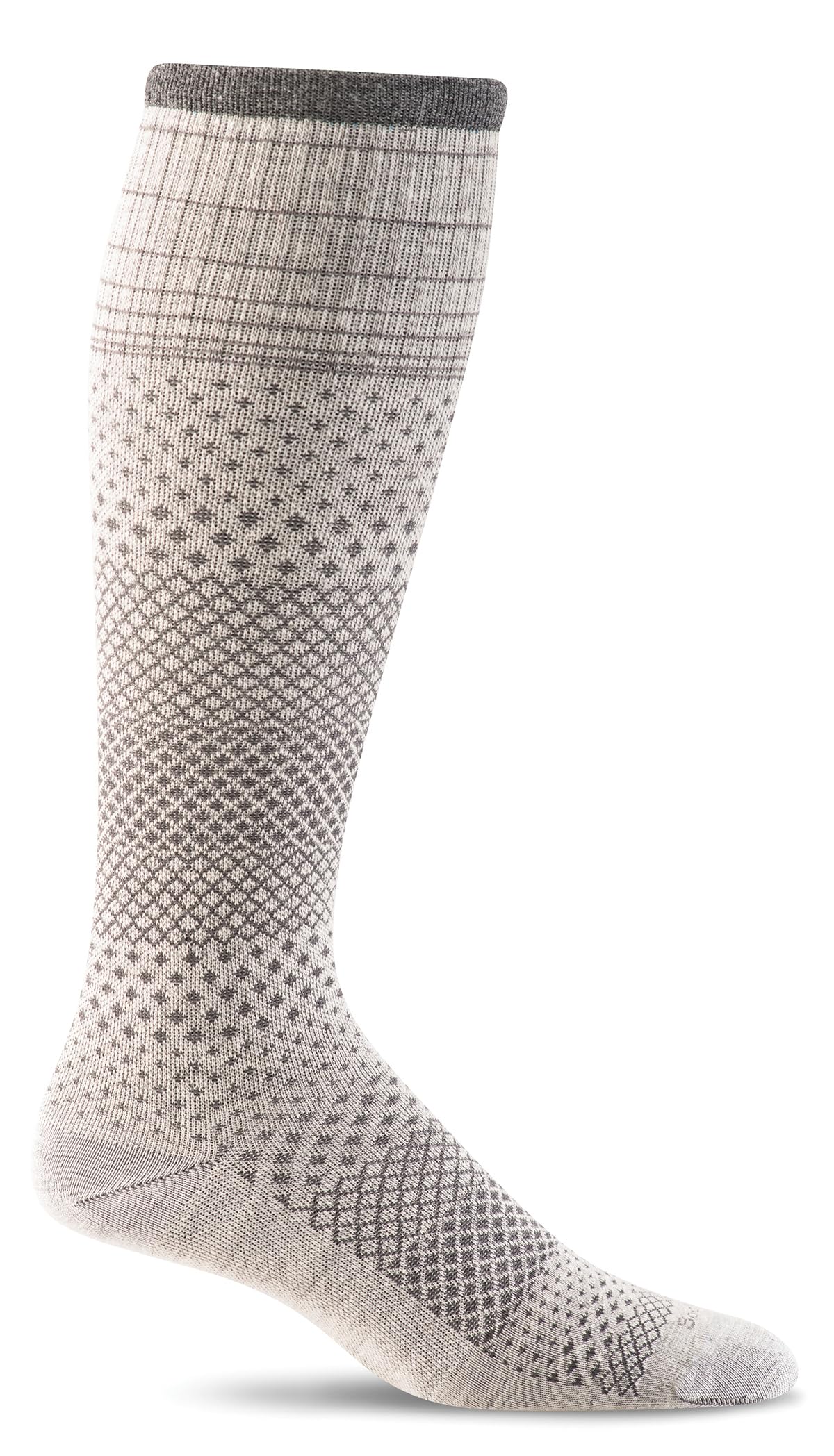
The Sockwell Micro Grade combines 32% merino wool with rayon from bamboo and stretch nylon to create a fabric that actively regulates temperature rather than just wicking moisture. Wool’s natural crimp traps air for insulation when it’s cool and releases heat when it warms up, making this sock remarkably comfortable across 60°F swings. The graduated compression sits at a moderate 15-20 mmHg, ideal for all-day wear without feeling restrictive. Users consistently report no swelling after 12-hour nursing shifts and 10.5-hour flights, with feet staying dry and cool.
The seamless toe closure eliminates the pressure point that causes blisters on long walks or hikes, and the four-zone graduated compression provides targeted support from the ankle up through the calf. The turn-welt top band stays put without digging in, even on longer legs. At a mid-range price, this sock delivers premium breathability and durability — reviewers note the wool blend holds its shape and elasticity through dozens of wash cycles.
The only catch is sizing: the M/L fits a size 8 foot and 12-inch calf well, but some users between sizes find the calf compression mild. For hot climates or high-intensity activity, the wool might feel slightly warmer than a pure Coolmax or bamboo option, but the temperature regulation is superior for variable conditions. This is the most versatile breathable compression sock on the market.
Why it’s great
- Merino wool provides active temperature regulation in heat and cold
- Seamless toe prevents blisters and irritation
- Durable construction holds shape after repeated washing
Good to know
- Sizing can be tricky between calf and foot measurements
- Wool may feel warm in extreme heat compared to synthetic options
2. Zensah Tech+ Compression Socks
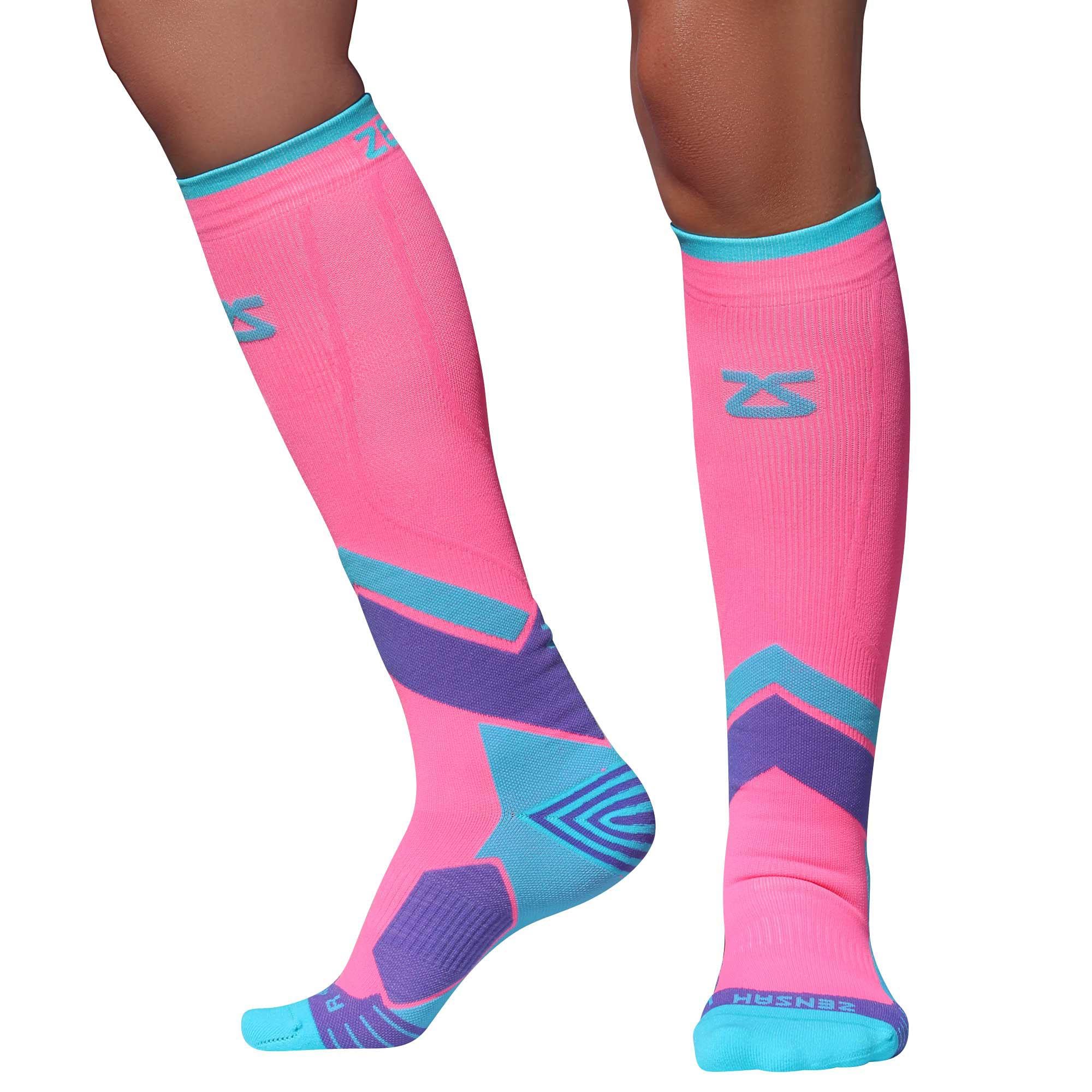
Zensah Tech+ socks are engineered for athletes who need maximum breathability during high-output activity. The 82% polyamide / 18% elastane blend is lightweight and four-way stretch, with a knit that allows air to circulate freely around the calf. This is the coolest-feeling synthetic compression sock tested — runners wearing them in 7°F weather noted they stayed warm without overheating, and moisture-wicking performance eliminated blisters on 5+ mile runs.
The anatomical footbed and sewn-in arch support patches provide graduated compression that stabilizes the calf muscles and reduces shin splint vibration. The seamless toe is flawless, with no stitching to cause hot spots. Made in Italy, the construction quality is evident in the dense, durable knit that survives 100+ runs without developing holes or losing elasticity. The inside-out technique is recommended for putting them on, which is standard for true graduated compression socks.
The top band has been redesigned narrower than previous versions, which can dig into the calf if not positioned carefully — users with larger calves may prefer a wider cuff design. The price point is premium, but the longevity and performance justify the investment for serious runners and frequent travelers. If you need a sock that stays cool under intense motion, this is the pick.
Why it’s great
- Ultra-breathable knit stays cool during high-intensity running
- Seamless toe eliminates blister risk
- Durable enough for 100+ runs with no degradation
Good to know
- Narrower top band can dig into calf if not adjusted properly
- Higher price point and requires careful sizing
3. HOLLOW Alpaca Compression Socks
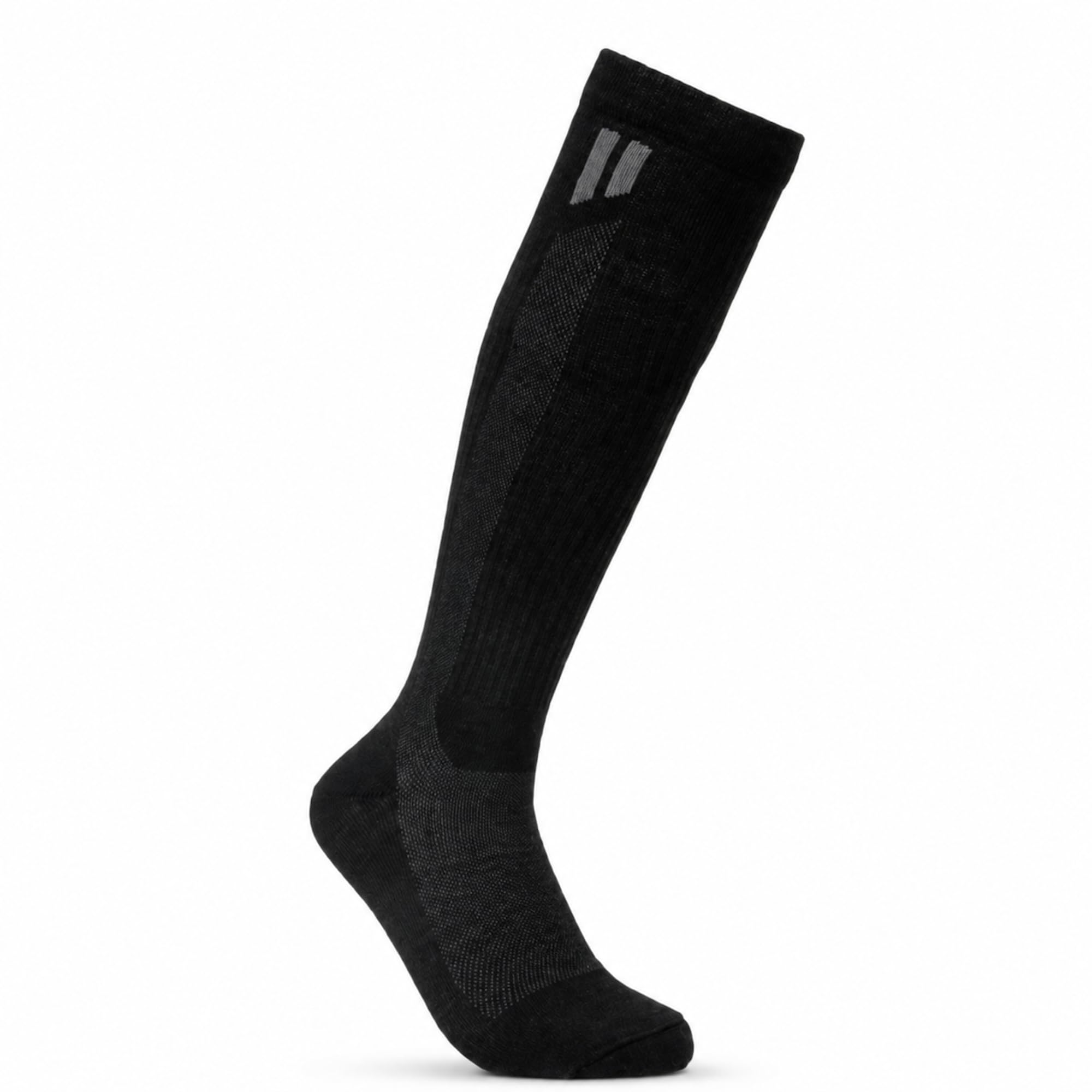
HOLLOW uses an alpaca fiber blend — alpaca fibers are hollow, which creates microscopic air pockets that insulate when cold and vent heat when warm. This sock is the most temperature-neutral option on the list: users report wearing it comfortably in tactical boots in hot conditions without sweaty toes, and in cold cars without cold feet. The 15-20 mmHg compression is gentle enough for easy on/off while still preventing swelling and fatigue during long car rides or shifts.
The stretch knit accommodates a wider range of calf sizes better than most competitors, and the reinforced heel and toe add durability without adding bulk. The fabric is soft and lanolin-free, making it suitable for sensitive skin. Users with diabetes or foot swelling issues specifically recommend these because the moderate compression doesn’t cut off circulation while still providing noticeable support.
The sizing is the main friction point: the gray color runs larger than the black, and the wide size barely accommodates 17.5-inch calves despite claiming 18-20 inches. Hand washing is recommended — machine washing causes fuzziness. The price is premium, but the USA-made construction and temperature-regulating performance make it a strong contender for users who need a sock that works in both summer and winter.
Why it’s great
- Hollow alpaca fibers provide natural temperature regulation
- Gentle 15-20 mmHg compression is easy to put on and remove
- Reinforced heel and toe add durability without bulk
Good to know
- Color-specific sizing inconsistencies exist between gray and black
- Hand washing required to maintain fabric integrity
4. SB SOX Compression Socks (20-30 mmHg)

SB SOX provides the strongest compression in this lineup at 20-30 mmHg, making it the go-to for medical-grade needs like DVT prevention and edema during long flights. The 80% nylon / 20% spandex construction is lightweight but not as airy as natural-fiber options — however, the knit uses a mesh-like pattern along the instep that allows some airflow. Users report zero swelling after international flights and extreme comfort during 12-hour standing shifts.
The graduated compression is consistent from ankle to knee, with reinforced heel and toe cushioning that adds comfort without bulk. The wide calf sizing options (up to 24-inch circumference) accommodate larger legs without the top band cutting in. Reviewers note the socks maintain elasticity for 6+ years when air-dried, which is exceptional durability for this price point.
The main trade-off is breathability: nylon holds more heat than merino or bamboo, so users in hot climates may find these slightly warm for all-day wear. The toe seam is not seamless, which can be noticeable in the toe box. Hand wash only is recommended. If you need the highest compression level and have a larger calf, this is the most reliable option.
Why it’s great
- Highest compression level (20-30 mmHg) for medical-grade support
- Exceptional durability — maintains elasticity for years
- Wide calf fit up to 24-inch circumference
Good to know
- Nylon blend traps more heat than natural fiber options
- Toe seam is not seamless and hand washing is required
5. BRISIRA Coolmax Bamboo Viscose Compression Running Socks

BRISIRA combines Coolmax — a moisture-wicking polyester — with bamboo viscose to create a sock that dries faster than any other option in this comparison. The ankle-low cut is designed specifically for runners who want calf freedom while still getting arch compression. The cushioned footbed absorbs impact without adding bulk, and the seamless toe prevents the hot spots that plague distance runners.
The compression is moderate and focused on the arch band rather than full-calf graduated pressure, making these ideal for plantar fasciitis relief and shin splint prevention during 14-16 hour shifts on concrete. Left and right foot-specific design ensures an anatomical fit. Reviewers report the socks survive many washes without losing shape or compression — a consistent complaint about cheaper athletic socks.
The main limitation is the ankle height: if you need knee-high compression for travel or edema, these won’t work. The size range is narrower than knee-high options, and users between sizes may need to size up for proper arch support. The price is competitive for a 3-pack of performance athletic socks. For runners and hikers who prioritize keeping feet dry above all else, this is the clear winner.
Why it’s great
- Coolmax/bamboo blend dries faster than any other sock tested
- Cushioned footbed with arch support for plantar fasciitis relief
- Left/right specific anatomical fit prevents shifting
Good to know
- Ankle height provides no calf compression
- Size range is narrower than knee-high options
6. Doctor’s Select Bamboo Viscose Light Compression Socks
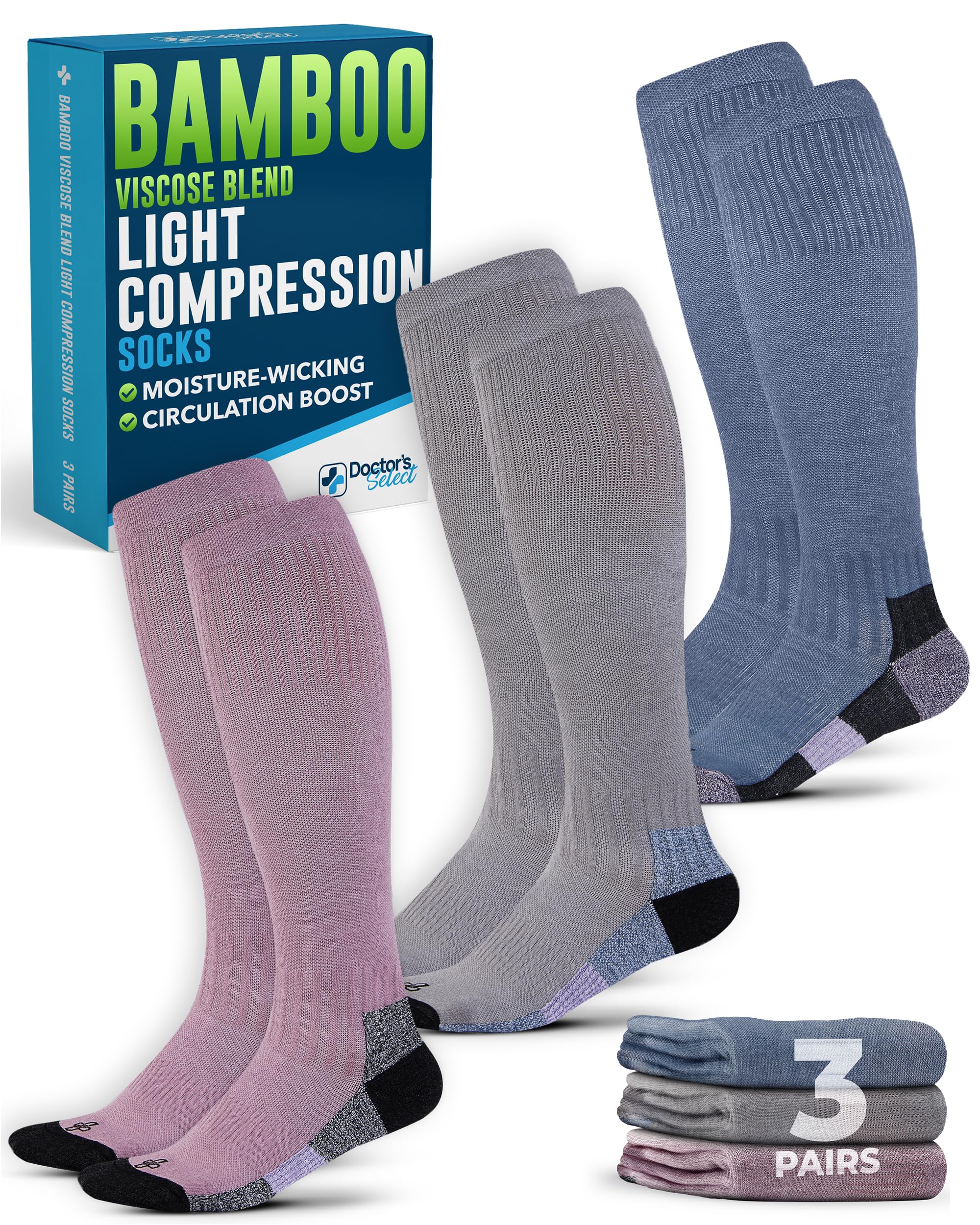
Doctor’s Select uses bamboo viscose in a lightweight knit that feels significantly cooler and softer than standard nylon compression socks. The 8-15 mmHg compression is the lowest in the lineup — it provides a gentle “hold” rather than a firm squeeze, making these the easiest to put on and wear for extended periods without feeling restricted. Users with sensitive legs or those new to compression consistently describe the fabric as “soft and lightweight instead of hot and itchy.”
The breathability is excellent: reviewers in southern Florida noted the socks are too warm for that climate, but for most users the bamboo viscose wicks moisture effectively during 9-hour flights and 7+ mile walks. The graduated compression prevents swelling without the tightness that causes discomfort. The floral design is woven into the fabric rather than printed, so it doesn’t peel or fade after washing.
The trade-off is the light compression: users who need 20+ mmHg for medical conditions will find these insufficient. The knit is relatively thin, which reduces durability compared to denser options — some users report the floral pattern leaving temporary imprints on the skin, though this doesn’t affect performance. For everyday comfort and gentle support in a breathable package, this is a strong value.
Why it’s great
- Bamboo viscose knit is exceptionally soft and lightweight
- Easy to put on and remove with gentle 8-15 mmHg compression
- Woven floral design doesn’t peel or fade
Good to know
- Too warm for very hot climates like southern Florida
- Light compression insufficient for medical-grade needs
7. Physix Gear Compression Socks 20-30 mmHg

Physix Gear offers a 20-30 mmHg compression sock at a budget-friendly price that competes with mid-range options in both comfort and effectiveness. The nylon-spandex blend is soft and high-quality, with a floral design woven into the fabric rather than printed. The graduated compression is effective enough to eliminate swelling and pain for users with knee osteoarthritis and LCL/MCL injuries — one reviewer reported pain-free 12-hour shifts with 12,000 steps after switching to these.
The fit is snug but not restrictive, with arch support panels that prevent sliding. Users with wide feet (size 11.5) and larger calves find the XL sizing works well. The fabric holds up to frequent washing without losing elasticity, and the woven pattern doesn’t peel. The price per pair is lower than most competitors, making these an accessible entry point for anyone needing strong compression.
The main drawback is length: some users find the socks too long, reaching the knee bend and creating wrinkles at the ankle that cause deep skin grooves. The toe box is slightly small, with the seam potentially noticeable on the pinky toe. For the price and compression level, these are a solid choice for users who fit the size chart well, but sizing precision is critical.
Why it’s great
- Strong 20-30 mmHg compression at a budget-friendly price
- Effective for eliminating swelling during long shifts
- Woven floral design holds up to washing
Good to know
- Can be too long, causing ankle wrinkles and skin grooves
- Toe box slightly small with noticeable seam
FAQ
What mmHg level is best for all-day breathable wear?
How do I know if my compression socks are actually breathable?
Can I wear breathable compression socks in hot weather?
Why do some compression socks cause blisters or skin irritation?
Final Thoughts: The Verdict
For most users, the best breathable compression socks winner is the Sockwell Micro Grade because its merino wool blend provides unmatched temperature regulation across diverse conditions while delivering effective graduated compression. If you need maximum airflow for high-intensity running, grab the Zensah Tech+. And for natural fiber temperature control that works in both summer and winter, nothing beats the HOLLOW Alpaca.