
Our readers keep the lights on and my morning glass full of iced black tea. As an Amazon Associate, I earn from qualifying purchases.
Specs are compiled from manufacturer listings and verified buyer reviews and can change over time — please confirm the key details on the product page before buying.
The first few months with a baby are a blur of feeding, changing, and that quiet, anxious checking to see if they’re still breathing. A breathing monitor for infants exists to replace that midnight hovering with a quiet, data-backed signal that all is well. This guide breaks down the different ways these monitors work—from wearable clips to under-mattress sensors to smart cameras—so you can match a device to how your baby sleeps and how much information you want.
I’m Min — the founder and writer behind Gadgets Feed. This guide is built by comparing the manufacturers’ published specifications and the patterns across verified customer reviews, so you get each pick’s real strengths and trade-offs instead of marketing spin.
We’ve focused on monitoring tech that uses motion sensors or AI video analysis to alert you to pauses in breathing, and the key is matching the device to your baby’s sleep habits. Here’s our breakdown of the best breathing monitor for infants, from wearable motion detectors to high-tech camera systems.
Our Picks at a Glance
How To Choose The Best Breathing Monitor For Infants
You want to know your baby is breathing, but every monitor tracks that in a different way. Your choice depends on three trade-offs: a sensor on your baby or under the mattress, how you handle false alarms, and if you want video and sleep data on top.
Wearable vs. Contact-Free
Wearable clips attach to the diaper and sense the tiny rise and fall of your baby’s belly. They move with your baby, which makes them great for travel, but they rely on being placed correctly—and they can trigger false alarms if they slip off. Contact-free options, like under-mattress sensor pads or AI cameras, do nothing to your baby at all. They sit below or beside them, so there’s nothing to detach or misplace, but they typically only work while your baby is in the crib or bed where the sensor is installed.
Two-Stage Alerts and False Alarms
Most dedicated breathing monitors use a two-stage alert. First, a gentle vibration tries to rouse your baby when no movement is detected for a set period (often 15 or 20 seconds). If that doesn’t work, a louder audible alarm sounds to wake you. False alarms are the biggest complaint across every type of monitor. They’re usually caused by deep sleep, when a baby’s breathing is so shallow it isn’t detected, or by a sensor that has shifted out of place. Look for a monitor with adjustable sensitivity—or at least one where the alarm noise is loud enough that a false alarm is annoying rather than terrifying.
The Extra Layer: Cameras and Apps
Smart cameras add video, two-way audio, and often AI-driven breathing analysis to the mix. They can track sleep patterns over time and send alerts to your phone, which is a huge convenience. The catch is that they depend on a stable Wi-Fi connection and a reliable app—and app glitches are a common theme in reviews. If you want the safety net of a dedicated breathing sensor plus the convenience of seeing your baby on your phone, be prepared for two devices or a higher price. If you just want the most reliable alert, a dedicated sensor is often the simpler, more dependable choice.
Quick Comparison
| Model | Best For | Monitoring Type | Alert Method | Key Extra | Amazon |
|---|---|---|---|---|---|
| Snuza Hero SE★ Best Overall | Portable, diaper-clip confidence | Wearable Motion | Vibration + Audible | 6-month battery | Amazon |
| Levana Oma SenseBudget Choice | Budget diaper-clip monitoring | Wearable Motion | Vibration + Audible | No skin contact | Amazon |
| Babysense 7Crib Saver | Crib-based, non-wearable tracking | Under-Mattress Pads | Audible Alarm | Full crib coverage | Amazon |
| BOOPOO Smart Monitor | Budget AI video + breathing tracking | AI Video Analysis | Phone App Alert | 32GB Storage | Amazon |
| Sense-U Smart Sock 2 | Heart rate tracking on a budget | Wearable Optical Sensor | On-device & App Alerts | Heart Rate + Sleep | Amazon |
| Lollipop Monitor | Smart video with contact-free breathing | AI Video Analysis | Phone App Alert | True Cry Detection | Amazon |
| Nanit Smart Monitor | Comprehensive sleep coaching + video | AI Video Analysis | Phone App Alert | Breathing Wear Tracking | Amazon |
| Philips Avent Premium | Dedicated screen + contact-free tracking | SenseIQ Breathing | Audible + App Alert | 5″ HD Screen | Amazon |
| Owlet Dream Duo 3 | Medical-grade pulse oximetry + video | Wearable Pulse Ox | Base Station + App Alerts | FDA-Cleared Sock | Amazon |
In‑Depth Reviews
1. Snuza Hero SE
Our pick — 4.5★ from 550+ verified ratings; the strongest balance of quality and price.
A diaper-clip motion sensor with a two-stage alert that gives anxious parents reliable confidence.
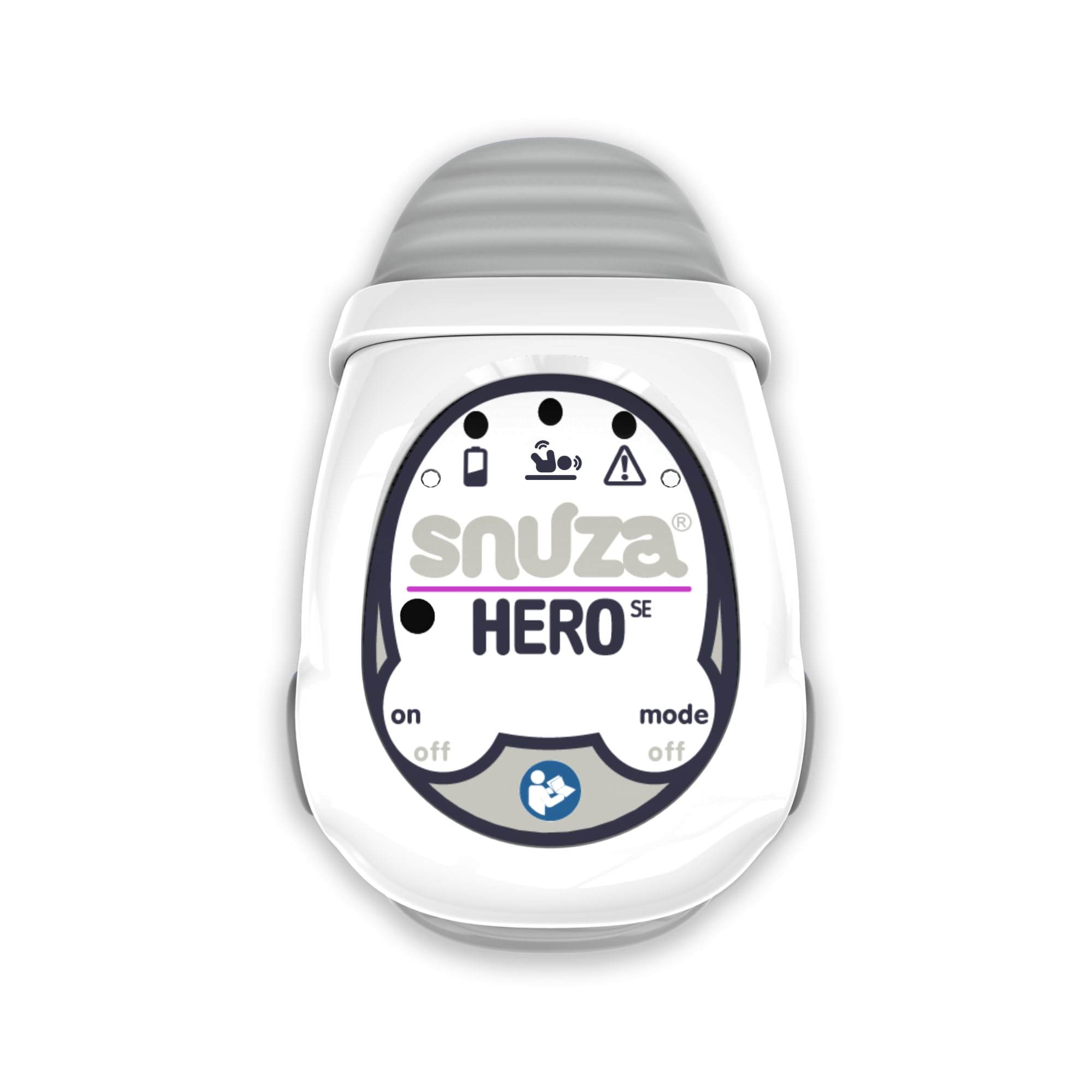
confidence is the headline feature here. The device clips onto your baby’s diaper and uses a patented sensor to detect the rise and fall of their belly. If no movement is detected for 15 seconds, it vibrates to try to rouse your baby. If there’s still no movement after 5 more seconds, a loud alarm sounds so you can check on your child. This two-stage alert is gentle first, loud only when it matters.
There’s no Wi-Fi, no app, no cords, and no sensor pads to fiddle with. You switch it on, clip it on, and it works—buyers report it’s “so easy to clip on and use, even in the dark.” A flashing green light confirms it’s working, and an optional audible tick pairs with an audio monitor. At just 1.38 ounces, it fits in your diaper bag with the included carry case for naps on the go.
The one thing that stands out in reviews is how effective it is at the core job. Effectiveness is the most common thing owners praise, and it directly translates into less anxiety and better sleep for parents. It runs on a replaceable lithium-ion battery that lasts up to 6 months, so there’s no nightly charging routine to worry about. The trade-off for a few is the potential for false alarms, often when the device is covered by thick layers or if it’s clipped on incorrectly. It’s designed for healthy infants and isn’t suitable for co-sleeping or bed-sharing, so it’s a crib or bassinet tool first and foremost.
What Wins Parents Over
- Genuinely effective at detecting movement and providing nightly reassurance
- Incredibly simple operation—no Wi-Fi, app, or cords to set up
- Long 6-month battery life on a single replaceable cell
The Trade-Offs to Know
- Can trigger false alarms if placed incorrectly or under thick layers
- Button placement is awkward per some owners
- Not suitable for co-sleeping or bed-sharing
Your best bet if: you want a simple, portable, and proven motion detector that clips to the diaper and works anywhere—no app required.
Look elsewhere if: you want the additional data and video that only a smart camera system provides.
2. Levana Oma Sense
A budget diaper-clip monitor that requires no skin contact, making it gentle on newborns.
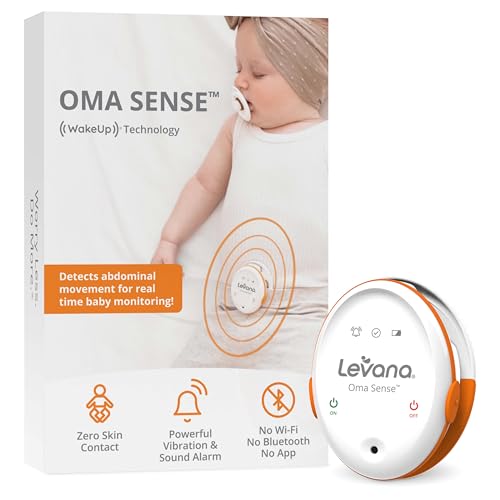
If you like the idea of a wearable clip but want to avoid anything touching your baby’s skin, the Oma Sense is a smart middle ground. It’s designed in Canada and slips over the diaper, pants, or a buttoned-up onesie, requiring zero skin contact. This eliminates the worry about irritation while keeping the sensor close enough to monitor the subtle abdominal movements of breathing.
Like the Snuza, it uses patented Wakeup Technology to monitor movement. When it detects no abdominal movement for 15 seconds, a randomized series of vibrations begins to gently rouse your little one and stimulate normal breathing to resume. If that doesn’t re-establish movement within 5 seconds, a loud audible emergency alarm sounds to alert you. It also operates with zero Wi-Fi, radio, or Bluetooth frequencies, so there’s no wireless interference to worry about. A reassuring flashing blue light lets you know everything is functioning as it should.
Owners mention it’s a reliable companion for newborn monitoring. One parent said: “It stayed on well and detected the heart beat. Good product.” Owners praise the overall quality and the confidence it brings. The recurring caveat is that the alarm volume could be louder—heavy sleepers might miss the quieter beeps, so use it in a room where you’ll hear it. It’s designed for infants between 0-6 months old.
Reasons It’s a Smart Pick
- No skin contact makes it comfortable for sensitive newborns
- Simple, no-app design avoids wireless false alarms
- Vibration alert gently stimulates baby before the loud alarm
Things to Consider
- Alarm volume is modest; very heavy sleepers may miss it
- Some customers note it stops working intermittently
- Best for the 0-6 month age range
Reach for this if: you want a dedicated, affordable motion sensor that’s comfortable for a newborn and doesn’t depend on an app.
Think twice if: you sleep very deeply and need an extremely loud siren-style alarm to wake you.
3. Babysense 7
A contact-free under-mattress sensor system that provides full crib coverage without touching the baby.
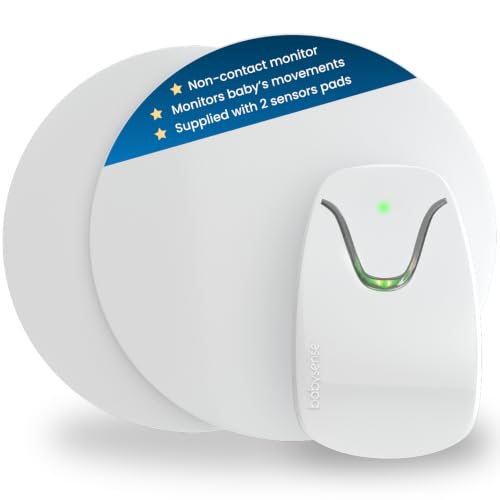
For parents who are uneasy about clipping anything to their newborn, the Babysense 7 uses a completely different approach. It’s a non-contact system with two sensitive sensor pads that sit under the mattress, providing full crib coverage. The passive sensors detect your baby’s movements right through the mattress, so there’s absolutely no direct contact with the infant—nothing to slip off and no skin contact to worry about.
The system is designed to notify you if no movement is detected within 20 seconds or if your baby’s movements slow down. This makes it a strong match for tummy-sleeping babies and for parents dealing with SIDS anxiety. Reviews highlight how “amazingly sensitive and reliable” it is, with several owners crediting it with giving them the confidence to sleep. The dual sensor setup is a key advantage, as it covers the entire crib area and avoids the “sensor gap” issue you might get with a single pad.
Because it’s not wearable, your baby can roll around freely, but it only works while your baby is in the crib. It’s battery-powered, so there’s no cord near the crib. Its high sensitivity can occasionally cause false alarms—for example, if a fan blows air onto the crib within 10 feet, or if your baby is in a very deep sleep. For most owners, the safety net outweighs the occasional false start.
Why It Stands Out
- Truly contact-free—no wearable clip or skin contact
- Two under-mattress sensors provide full crib coverage
- Highly sensitive detection, great for preemies or NICU grads
Who It Isn’t For
- Only works when baby is in the crib—no travel or on-the-go use
- High sensitivity can cause false alarms in some environments
- Reliability has mixed feedback from owners
Choose this one if: your priority is a non-invasive sensor under the mattress that your baby can’t kick off or feel.
skip it if: you need a monitor that travels with you to grandma’s house or for daytime naps outside the crib.
4. BOOPOO Smart Baby Monitor

A 2K HD camera with AI breathing analysis and 32GB local storage, no subscription required.
The BOOPOO monitor takes a completely different path to breathing tracking. Instead of a wearable sensor, it uses advanced AI technology that analyzes video and audio from the camera to estimate your baby’s breathing. This gives you real-time and historical data on breathing frequency and duration, all without anything touching your baby. It’s a contact-free solution that also happens to be a full-featured 2K HD baby camera.
On the video side, it delivers 2K HD motion video with night vision, two-way audio, a 152-degree wide-angle lens, and support for 5GHz/2.4GHz Wi-Fi. It includes 12 soothing lullabies and a 3-level nightlight to help promote nighttime serenity. The built-in 32GB local storage means your data stays private on the device, with no hidden fees or subscriptions. You can even expand the app interface to support up to 4 monitors and share access with family members.
Owners praise the camera quality, specifically noting the crisp 3MP resolution and clear night vision. The AI breathing tracker is a “nice extra” for parents who want data alongside the video feed. The major caveat is the app. Multiple reviewers point out that while everything works initially, the app becomes unreliable—forcing frequent password re-entry or timing out—especially after a period of ownership. The hardware is solid, but the app experience is what you should go in knowing might frustrate you.
What Makes It a Good Value
- Combines a 2K HD video monitor with AI breathing analysis
- 32GB local storage means no monthly cloud fees
- Contact-free tracking—no wearables to fall off or annoy baby
Where It Falls Short
- App reliability is a recurring issue for owners
- Requires a stable Wi-Fi connection to function
- Lacks the dedicated loud alarm of a standalone sensor
Best for: parents who want a modern, app-driven camera with breathing analytics as a bonus, not the primary safety system.
Consider passing if: you want a dedicated loud alarm and don’t want to rely on a smartphone app for critical alerts.
5. Sense-U Smart Sock 2
A foot-worn PPG sensor that tracks heart rate and sleep patterns at a more affordable price.
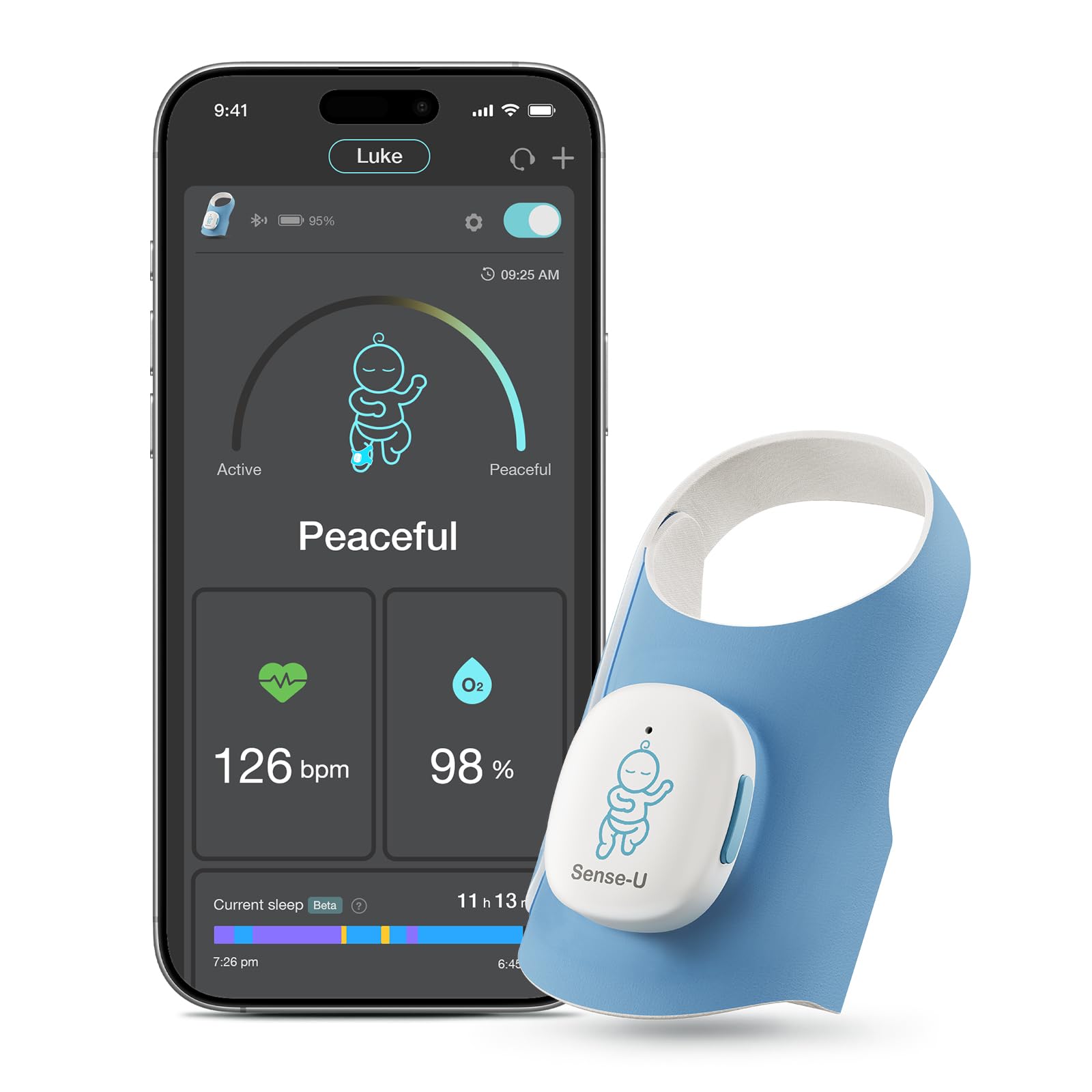
If you’re looking for the data-rich experience of a smart sock but your budget is mid-range, the Sense-U Smart Sock 2 is built to deliver. It uses advanced transmissive PPG sensing technology—which measures blood flow through the skin—to track your baby’s heart rate and sleep patterns with improved precision. This isn’t just a movement detector; it’s a window into your baby’s cardiovascular activity while they rest.
The device is a soft, breathable, baby-friendly fabric “shoe” that fits securely on the foot, with two size options designed for babies aged 1 to 12 months. It works right from the start with on-device light indicators and built-in audible alerts. When you pair it with the free Sense-U Baby App, you open up expanded insights including deep/light sleep analysis, nap tracking, sleep efficiency, and wake times. This gives you a clear picture of how your baby rests, not just whether they’re moving.
Owners who used it after a NICU stay report it eased their anxiety significantly, praising the accurate O2 and heart rate readings. Battery life gets positive mentions, typically lasting through the night and into a morning nap on a single charge. The trade-offs are the familiar ones for smart wearables: a few shoppers say connectivity or accuracy hiccups, and one warns against overtightening the velcro, which can interfere with the signal. It’s a strong, more affordable alternative to the premium sock monitors.
Why Parents Like It
- Tracks heart rate and sleep patterns, not just movement
- Battery typically lasts all night and into a morning nap
- More affordable path to sock-style monitoring
Things to Watch
- Connectivity and accuracy have mixed reviews
- Sizing gap between the two options can be an issue
- Needs the app for the full range of sleep insights
Go for this if: you want heart rate data and sleep analytics but aren’t ready to pay top dollar for the premium sock brands.
pass on it if: you’re easily frustrated by occasional app or sensor connection quirks.
6. Lollipop Baby Monitor
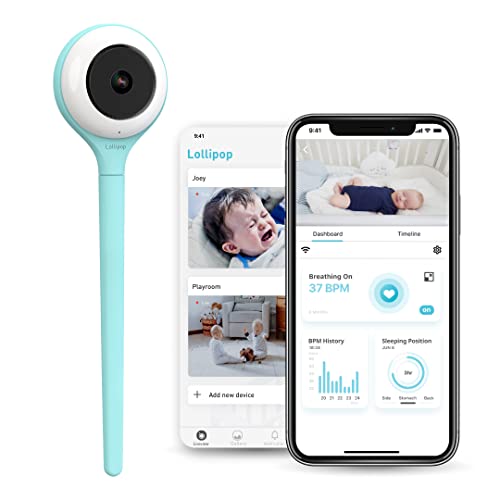
A design-forward 1080p smart camera with contact-free AI breathing tracking via a 7-day free trial.
The Lollipop is a full-featured smart Wi-Fi camera that’s as much about design as it is about function. Its cute, modern look fits neatly into a nursery, but the real substance is the tech. It streams 1080p Full HD video to your tablet or smartphone from anywhere, and its “True Crying Detection” is designed to tell the difference between ambient noises like wind and when your child actually needs you. This alone makes it a step above basic audio monitors.
Where it gets interesting for breathing monitoring is the Lollipop Care subscription plan. This add-on includes a 7-day free trial, and it enables contactless breathing monitoring using AI technology. You can view your baby’s respiratory rate and sleeping position history without any extra wearable sensor. The camera does all the work by analyzing subtle movements. This lets you get the sleep data you crave without putting anything on your baby.
Beyond that, the forever-free plan includes downloadable 30-second triggered-event videos, crossing detection to alert you if baby’s leg gets stuck, 12 lullabies and nature sounds, push-to-talk, and account sharing. Reviewers consistently rave about the picture quality and dreamy night vision. With a huge base of owners sharing feedback, it’s among the most popular smart cameras. The main caveat is that the full breathing-tracking features require the subscription after the trial, and the app can occasionally have connectivity hiccups.
The Appeal
- Beautiful design with crisp 1080p video and night vision
- AI breathing monitoring requires no wearable sensor
- Easy setup—can be installed without drilling holes in walls
Points to Ponder
- Advanced breathing tracking is tied to a subscription plan
- Relies on your home Wi-Fi network
- Some buyers report occasional connectivity issues
Pick this up if: you want a gorgeous, reliable smart camera for video and want to try contact-free breathing tracking with a free trial.
Look elsewhere if: you want breathing monitoring as a permanent feature without a subscription fee.
7. Nanit Smart Baby Monitor
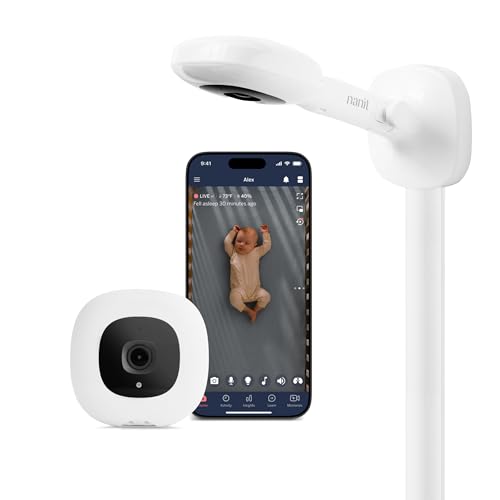
A 1080p smart camera with AI sleep coaching and optional Breathing Wear for respiratory tracking.
The Nanit isn’t just a camera; it’s a sophisticated sleep-tracking system. It automatically tracks sleep duration, efficiency, and disturbances, then uses AI to provide insights and NextNap predictions to help you tune your baby’s routine. This makes it a powerful tool for parents who want to understand their baby’s sleep patterns, not just watch them. It’s like having a data analyst for your baby’s nursery.
For breathing monitoring, it uses a clever hybrid approach. The camera broadcasts 1080p HD video with infrared night vision to your smartphone, Alexa, or Google Home. To track breathing, it relies on the Nanit Breathing Wear—special sleepwear designed to be tracked by the camera. This gives you respiratory monitoring without a wearable sensor clipped to a diaper or a sock on a foot.
Security is a major selling point. It uses bank-level 256-bit AES encryption and two-factor authentication, keeping your family’s data protected over Wi-Fi. You can add multiple users with control permissions, ideal for coordinating with grandparents or a babysitter. Owners are consistently impressed with the clear video and how it “reduces new-parent anxiety.” The biggest consideration is that advanced insights and video look-back require a free trial of the paid Nanit Insights plan, and the price is firmly premium.
What Impresses
- Advanced AI sleep insights and automatic tracking
- Secure connection with bank-level 256-bit AES encryption
- Optional Breathing Wear tracks respiration without a diaper clip
The Big Picture
- Premium price, with some features locked behind a trial
- Notifications can be frequent until customized
- Relies on a steady Wi-Fi connection
Invest in this if: you see your baby monitor as a long-term sleep coaching tool and want a highly secure, multi-user system.
Weigh it against: cheaper options if you only need a basic video feed and a loud alarm.
8. Philips Avent Premium Connected Monitor

A dedicated 5-inch screen monitor with contact-free breathing tracking built in.
Unlike the phone-app-dependent options above, this Philips Avent monitor comes with a dedicated 5-inch HD parent unit. This is a huge plus if you prefer a purpose-built screen that’s always on, rather than having to open an app and keep your phone charged. The camera itself streams 1080p video with a stable connection that has a range of up to 1300 feet, so you can wander around the house without losing the feed.
For breathing monitoring, it leverages SenseIQ Technology. This system analyzes millions of pixels per second to spot the tiniest of motions, allowing it to track your baby’s sleep and breathing rate without any wearable on the baby. It’s a completely contact-free solution that works right from the start. The included 2-in-1 wall and crib mount makes it easy to position the camera for the best view of your baby’s chest.
It also features a cry analyzer that detects and translates five distinct cries using a scientifically proven algorithm, so you get an idea of what your baby might need. The video quality is a highlight, with owners praising the crisp picture and crisp night vision. The main trade-off is that some owners find the breathing rate tracking less accurate than expected, and like many connected devices, connectivity can occasionally be a mixed bag. It’s a premium package that pairs the reliability of a dedicated screen with the intelligence of a smart monitor.
Reasons to Choose
- Includes a dedicated 5-inch HD screen—no phone needed
- Wearable-free breathing and sleep tracking via SenseIQ
- Long 1300-foot range and private encrypted connection
What to Note
- Breathing rate accuracy has mixed feedback
- Premium price point for the full kit
- Cry translation feature is provided by an external service
The right call if: you prefer a dedicated screen and a camera that tracks breathing without a wearable sensor.
Not the one if: your priority is a budget price or you specifically want pulse oximetry data like oxygen levels.
9. Owlet Dream Duo 3

The gold standard pairing an FDA-cleared sock with a 2K HD camera.
This is the most advanced monitoring system we’ve reviewed. The Owlet Dream Duo 3 combines the FDA-cleared Dream Sock with the 2K HD Dream Sight camera to give you a complete view of your baby’s health and safety. The Dream Sock uses medical-grade pulse oximetry to track your baby’s pulse rate and oxygen level while they sleep. This is a significant step up from movement tracking—it’s measuring the actual vital signs that matter most.
You’ll receive real-time alerts if your baby’s readings leave preset zones, allowing you to respond with confidence. The included camera features a 130-degree wide-angle lens and 4x zoom, delivering sharper detail than a standard 1080p monitor. The whole system operates through a single, unified app, where you can customize notifications for sound, movement, and crying, and even track room temperature and humidity.
This is the monitor that parents refer to as “worth its weight in gold,” especially for those with newborns or a history of BRUE events. The confidence from seeing accurate oxygen levels is class-leading. The sock provides medical-grade tracking up to 18 months, and the camera works well beyond. The downside, however, is significant: the system is the most expensive on this list, and several owners mention the base station can be prone to disconnecting from Wi-Fi. It’s also limited to U.S. versions.
The Ultimate in Reassurance
- FDA-cleared Dream Sock tracks pulse rate and oxygen level
- 2K HD camera with a 130-degree lens and 4x zoom
- Unified app for vital signs, video, and room environment
Weighing the Cost
- Highest price point by a significant margin
- Occasional connectivity issues with the base station
- Sock range is limited to the charging dock for nighttime use
Spend the extra on this if: you want the most medically advanced tracking available for a newborn and the budget allows for the premium system.
Pass on it if: you’re on a tighter budget and just need a reliable motion alarm—the lower-cost options handle that basic need well.
Understanding the Specs
Detection Method
This is the core of any monitor. As we’ve seen, there are three main approaches: wearable motion sensors that clip to the diaper, under-mattress pressure pads that sense movement through the mattress, and optical sensors like pulse oximetry socks that measure blood oxygen and heart rate. AI video analysis is a newer, fourth method that uses a camera’s pixel data. Each has real-world consequences. Wearables need correct placement and can cause false alarms; pads are contact-free but only work in one crib; pulse oximetry gives you the most data but is the most expensive; and AI cameras offer convenience but depend on a stable app and Wi-Fi.
The Two-Stage Alert System
When a monitor detects a pause in movement or a dip in vital signs, how does it alert you? The most reassuring systems use a two-stage approach. First, a gentle vibration is used to try and stimulate your baby. This is designed to nudge them out of a deep sleep or a shallow breathing phase without waking you unnecessarily. If that doesn’t work, a loud, audible alarm sounds to wake you up. This is a crucial spec to understand because it explains why a monitor might buzz silently before it starts screaming, and it’s the feature that minimizes the impact of false alarms.
Contact vs. Contact-Free
Some monitors must touch your baby to work, while others observe from a distance. Wearable clips and socks fall into the contact category—they can fall off, need to be placed just right, and some babies may find them bothersome. Contact-free solutions like under-mattress pads and cameras have nothing on your baby at all. This is a matter of personal comfort and philosophy. The trade-off is that contact-free options usually only work when your baby is in the specific crib or bed where the camera or pads are set up, whereas wearables can travel with you.
App Dependence and Wi-Fi
Many modern monitors, especially smart cameras, rely on a smartphone app and a home Wi-Fi network. The advantage is remote viewing, sleep analytics, and customizable notifications. The disadvantage is that you’re depending on your router’s stability and the app’s reliability. Dedicated monitors with a parent unit (like a 5-inch screen) operate on a private connection, which can be more reliable but doesn’t offer the same data-rich insights. Decide how much you value sleep analytics against your tolerance for tech glitches.
FAQ
What is the difference between a movement monitor and a breathing monitor?
Are breathing monitors safe for my baby?
Why does my monitor give false alarms?
Can I use a wearable monitor for co-sleeping or bed-sharing?
How long do the batteries last on wearable monitors?
Is a video monitor with AI breathing tracking as good as a dedicated sensor?
Can I share the monitor feed with grandparents or a babysitter?
What is a transmissive PPG sensor in a smart sock?
Do these monitors work without Wi-Fi?
For a premature baby, the Owlet Dream Duo 3 is the most reassuring choice because its FDA-cleared Dream Sock tracks pulse rate and oxygen level with medical-grade pulse oximetry, while the Babysense 7 under-mattress sensor is a strong contact-free alternative with high sensitivity for preemies and NICU grads.
Final Thoughts: The Verdict
For most people, the breathing monitor for infants winner is the Snuza Hero SE because it delivers the core confidence—reliable movement detection with a two-stage alert—in a simple, portable clip that runs for up to 6 months on a single battery. If you want the medical-grade data of oxygen and pulse tracking, the Owlet Dream Duo 3 is the premium pick. And if you prefer a contact-free sensor under the mattress for full crib coverage, the Babysense 7 is the one to reach for.
How We Picked
We do not accept paid placement. Every pick is matched to a real buyer and a real use-case; we do not hands-on test units.
Sources & Methodology
Specifications: manufacturer listings and product documentation. Review insights: verified customer reviews, as of August 2026. Pricing: not shown on this page (it changes often); check the current price via the retailer link.
As an Amazon Associate, Gadgets Feed earns from qualifying purchases. This does not affect which products we feature.