
Building a fire pit with standard concrete or clay bricks is a recipe for spalling, cracking, and explosive bursts when moisture trapped inside turns to steam. True fire pit bricks—also called refractory or insulating firebricks—are formulated with alumina and silica to absorb thermal shock cycles without degrading. Selecting the wrong density or temperature rating directly compromises both safety and longevity of the structure.
I’m Min — the co-founder and writer behind Gadgets Feed. By cross-referencing temperature ratings, dimensional uniformity, and real-world durability reports across dozens of product listings, I’ve assembled the data that separates furnace-grade refractories from decorative pavers that shouldn’t be near an open flame.
Whether you’re lining a wood stove, protecting the floor of a backyard fire pit, or building a pizza oven archway, the right material makes the difference between a safe hearth and a failed project. This guide ranks the best bricks for fire pit based on thermal capacity, density class, and ease of installation.
How To Choose The Best Bricks For Fire Pit
Not every brick that says “fire” on the label can handle direct flame contact repeatedly. The three pillars of selection are temperature rating, material density, and dimensional consistency. Overlooking any of these will lead to premature crumbling or dangerous heat transfer to the surrounding structure.
Temperature Rating vs. Actual Use
A brick rated to 2200°F works fine for wood-burning fireplaces and most fire pits, but blacksmith forges and high-output pizza ovens push beyond that ceiling. Bricks rated to 2760°–3000°F use fireclay (chamotte) instead of vermiculite and handle sustained high heat without softening. Never assume a higher number is always better—denser fireclay bricks absorb and radiate more heat than lightweight insulators, which changes your fire pit’s character.
Density: Insulating vs. Dense Fireclay
Lightweight insulating bricks (often vermiculite-based) reflect heat toward the firebox, making them ideal for wood stoves where you want maximum heat inside the appliance. Dense fireclay bricks store heat and release it slowly after the fire dies—better for pizza ovens and hearths where retained warmth is desirable. The tradeoff is weight: a dense fireclay brick weighs roughly four times more than an insulating brick of the same size.
Water and Outdoor Exposure
Most refractory bricks are porous and not waterproof. When installed in an outdoor fire pit without a cover or drainage layer, moisture absorbed by the brick turns to steam during the next fire, causing spalling or even explosive fracturing. If your fire pit lives exposed to rain, prioritize bricks that explicitly state weather resistance, or plan for a permanent cover and a gravel base underneath the fire ring insert.
Quick Comparison
On smaller screens, swipe sideways to see the full table.
| Model | Category | Best For | Key Spec | Amazon |
|---|---|---|---|---|
| USM-5 Heavy Duty Firebricks | Dense Fireclay | High-heat pizza ovens & forges | 2760°F rating, 4 lbs per brick | Amazon |
| CFKJ 12-Piece Insulating Brick | Insulating | Wood stove & fireplace interiors | 2300°F rating, alumina-silica | Amazon |
| YANRUIPRO 12-Pack Bricks | Insulating | DIY fire pit liners & hearths | 2200°F rating, 12 bricks, 8.7 kg | Amazon |
| Iron Forge Tools Smokeless Ring | Steel Ring Insert | Permanent smokeless fire pit builds | 27.5 lb, 36×10 inch ring | Amazon |
| SoulMate 36-Inch Smokeless Ring | Steel Ring Insert | Budget-friendly backyard pit shell | Ventilation holes, 8-piece assembly | Amazon |
| OutVue 36-Inch Square Ring | Steel Ring Insert | Square brick surround projects | 36x36x10.3 inch, 21.3 lb steel | Amazon |
| dndsim 12-Pack Woodstove Bricks | Insulating | Budget replacement for stove liners | 2200°F rating, 1.21 lb per brick | Amazon |
In‑Depth Reviews
1. USM-5 Heavy Duty Firebricks 5-Pack

This 5-pack of dense fireclay bricks carries a refractoriness of 2760°F, which places it firmly in the chamotte category rather than lightweight insulating brick. Each brick weighs approximately 4 pounds—roughly 3x heavier than an equivalent vermiculite block—meaning it absorbs and radiates heat rather than reflecting it back into the firebox. That makes these bricks ideal for pizza oven floors, blacksmith forge linings, or steel furnace hearths where thermal mass matters more than insulation.
Users report cutting these bricks with a masonry blade for custom fits inside a Lopi Revere insert and a BBQ smoker firebox. The thermal conductivity improvement over traditional fireclay is measurable: flames transfer through the brick faster, reducing hot spots inside the chamber. Multiple reviewers confirmed that even cracked bricks continue to function because the dense material holds its shape under compression.
One caution—these bricks are not waterproof and will spall if left exposed to rain without a cover. The pack size (5 units) covers roughly 1.9 square feet at 4.5-inch width, so order multiple packs for full hearth coverage. Use only fireclay or alumina mortar for installation; standard cement mixes will fail at these temperatures.
Why it’s great
- 2760°F rating handles forge-level heat without softening
- Dense fireclay stores and radiates heat for oven applications
- Cuttable with standard masonry tool for precise fits
Good to know
- Only 5 bricks per pack—buy multiples for full linings
- Not waterproof; requires cover or indoor installation
2. CFKJ 12-Piece Insulating Fire Brick

Composed of alumina and silica rather than vermiculite, these 9×4.5×1.25-inch insulating bricks hit a sweet spot between lightweight handling and thermal resilience. The 2300°F rating covers wood stoves, kilns, and most fireplace inserts without the extreme density of fireclay.
One review described using these bricks to build a firewall inside a Mid-Century Modern fireplace, pairing them with heat-safe mortar for structural support. Another user ran them for six months in a charcoal grill bottom under intense heat and reported no cracking or degradation. The bricks are brittle by nature, however—handling them roughly or stacking on an uneven surface can snap corners clean off.
The pack of 12 provides enough coverage for a standard wood stove firebox floor (roughly 3.4 square feet). Because these are insulating bricks, they reflect heat inward rather than absorbing it, making them a strong choice for anyone trying to maximize appliance efficiency rather than thermal mass.
Why it’s great
- Alumina-silica construction offers better durability than basic vermiculite bricks
- Light enough to stack dry without heavy mortar joints
- 2300°F rating suits most residential wood and coal appliances
Good to know
- Brittle—corners can chip during shipping or handling
- Not designed for outdoor fire pits without cover
3. YANRUIPRO 12-Pack Fire Bricks
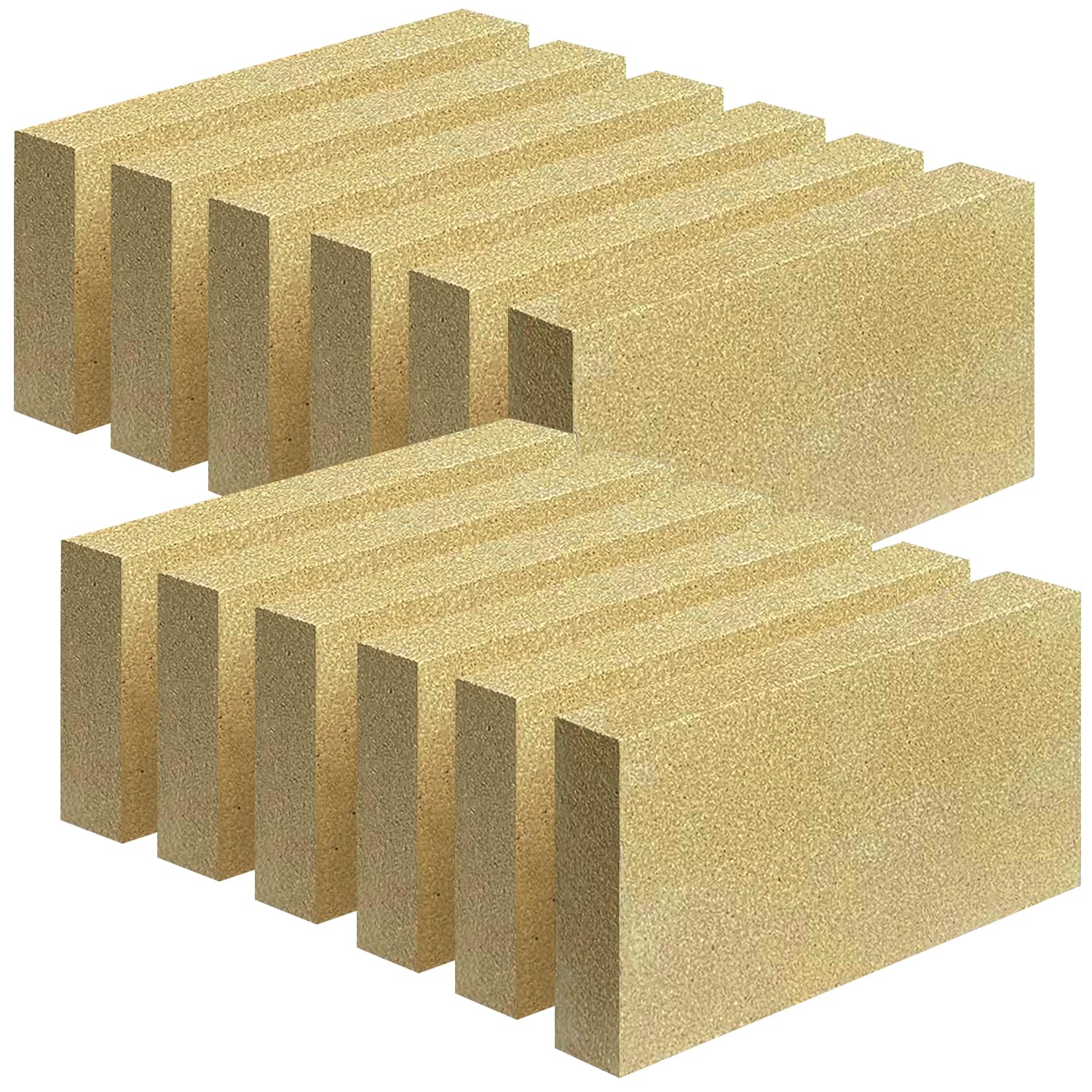
This 12-brick pack delivers a 2200°F temperature ceiling using high-quality clay rather than pure vermiculite. Multiple purchasers specifically mentioned using these bricks under a Breeo fire pit with a sand base—after several fires they observed no damage and no black marks on the brick surfaces. The material cuts easily with a hand saw or wood saw, which makes custom sizing for irregular firebox floors straightforward.
The key difference between this set and cheaper alternatives is the clay density: users who replaced budget-brand bricks mid-winter reported that these outlasted the cheaper competition by a significant margin. One reviewer noted that while the bricks are fragile (one arrived cracked in the box), the company honored a return quickly. The 8.7-kilogram total weight indicates these are denser than pure vermiculite blocks, which correlates with better longevity under repeated thermal cycling.
The product listing explicitly warns against use in forging ovens due to the 2200°F limit, and also states the bricks are not waterproof. For a backyard fire pit that stays covered when not in use, these represent a strong mid-range option with proven field results.
Why it’s great
- Denser clay composition outlasts basic vermiculite bricks in fire pit use
- Easy to cut with standard hand saw for custom fits
- Proven durability under Breeo fire pit conditions
Good to know
- Brittle during transit—some units arrive with hairline cracks
- Cannot be used for forge or foundry-level heat
4. Iron Forge Tools Smokeless Firepit Ring

This 36-inch round fire pit ring is a steel insert rather than a refractory brick, but it directly replaces the need for bricks in many fire pit builds. At 27.5 pounds, the heavy-gauge metal is appreciably thicker than the stamped-steel rings found at big-box retailers. The patented smokeless design channels secondary combustion air through the ring body, reducing visible smoke output during burns.
Users report installing this ring inside a stone surround and seeing a noticeable reduction in smoke compared to an open fire pit without a liner. One reviewer specifically mentioned omitting the last two bolts to make the ring fit pit diameters between 24 and 38 inches, adding versatility for non-standard brick surrounds. The ring stands 10 inches tall, which keeps logs contained and prevents embers from spilling onto the surrounding patio.
Minor surface rust appeared in one review where the hottest zone of the metal met direct flame contact, but the structure remained intact. This ring is designed as a permanent, non-portable installation—once set in gravel or sand, it should not be moved. Pairing this ring with a base layer of the insulating bricks above creates a hybrid system with excellent heat management.
Why it’s great
- 27.5 lb gauge steel resists warping better than budget rings
- Smokeless design improves air intake for cleaner burns
- Universal fit range (24–38 in) with adjustable bolt placement
Good to know
- Minor surface rust can develop in hottest direct flame zone
- Not portable—designed for permanent in-ground or above-ground install
5. SoulMate Outdoor 36-Inch Smokeless Ring
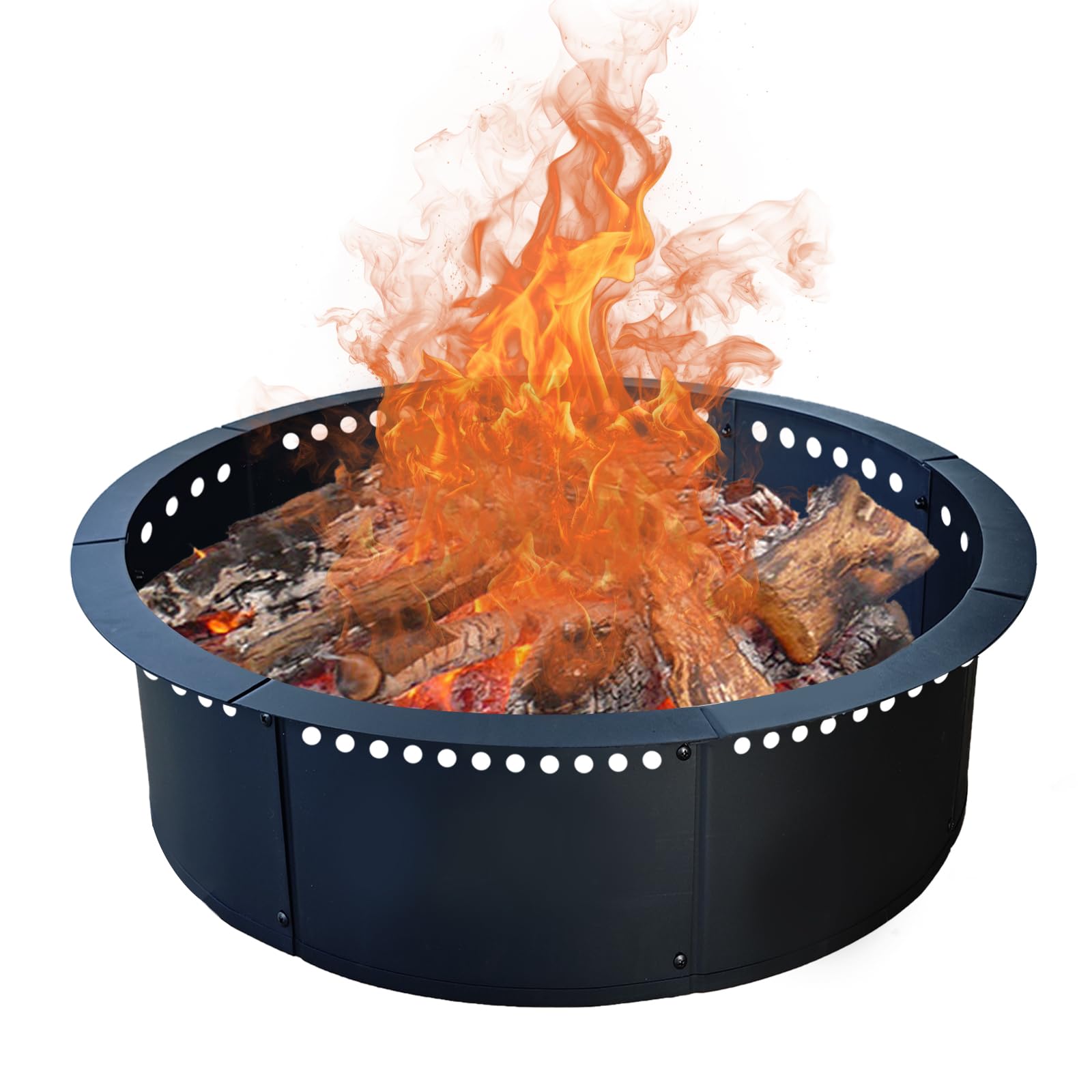
With a 40-inch outer diameter and 36-inch inner workspace, this steel ring insert provides more clearance between the fire and surrounding brickwork than many competing models. The 8-piece segmented design assembles in minutes using included screws, and the top ventilation hole pattern promotes secondary combustion for reduced smoke output. The ring stands 8.5 inches tall, slightly shorter than the Iron Forge option, which works better when you want a lower profile in a sunken pit.
One DIY builder paired this ring with a stone surround and noted that the project came in under budget compared to a Lowe’s fire pit kit. Another reviewer praised the low smoke production once the fire reached steady burn—the vent holes create a visible air curtain near the rim. The ring lacks a bottom (standard for this category), so a layer of sand or gravel underneath is required to protect the ground from direct heat.
The 16-pound weight makes this the lightest steel ring in this roundup, which simplifies transport during initial setup but may be less resistant to denting if moved after installation. Owners report that the black paint finish holds up well through the first several burns with no flaking.
Why it’s great
- Large 36-inch inner diameter accommodates substantial log stacks
- Ventilation holes improve airflow for cleaner combustion
- Quick assembly with screw-together segments
Good to know
- Lighter gauge steel may dent if ring is moved after installation
- No bottom included—must provide sand or gravel base
6. OutVue 36-Inch Square Fire Pit Ring

Most fire pit rings are round, but square designs mate more naturally with brick or block surrounds where 90-degree corners are easier to cut and stack. This OutVue ring measures 36 inches on each side with a height of 10.3 inches, constructed from heavy-duty steel with a high-temperature black paint finish. At 21.3 pounds, the metal thickness sits between the budget and premium tiers—substantial enough to resist warping through standard wood fires.
Reviewers specifically built brick walls around this insert, with one calling it “like a tank” compared to their previous smaller ring. The 4-piece design assembles in roughly 15 minutes using screws, and the open bottom requires a gravel or sand base underneath. One user noted that cinderblock builds leave 1–2-inch gaps that need matching capstones to close the space between block and ring.
The square shape provides 9 square feet of internal burn area, roughly 15% more usable space than a 36-inch round ring of the same diameter. After initial burns, owners reported no visible warping or paint peeling, which speaks to the quality of the high-temperature coating.
Why it’s great
- Square shape simplifies brick surround construction with 90-degree corners
- Heavy steel resists warping through repeated wood fires
- Large 9 sq ft internal burn area
Good to know
- Cinderblock builds may leave gaps needing matching capstones
- No bottom panel—requires sand or gravel base layer
7. dndsim 12-Pack Woodstove Firebricks

This 12-brick set at the entry-level price point uses pressed vermiculite construction, which gives the bricks a lightweight, foam-like texture compared to fireclay or alumina-silica alternatives. The 2200°F temperature rating covers typical wood stove and fireplace applications, and several users confirmed they work well in a maple syrup evaporator and a smelter. The vermiculite composition reflects heat rather than absorbing it, which improves appliance efficiency when used as a liner.
One critical detail: these bricks require a heat treatment cycle after installation to harden the vermiculite binder. Without that initial burn-in, the bricks can disintegrate if they get wet. A reviewer specifically warned against exposing them to moisture before the first fire, noting they are softer and more absorbent than traditional fireclay. Once properly cured, users report they hold up well against prolonged high heat.
At 1.21 pounds per brick, these are the lightest units in this guide, which makes handling and cutting easier. However, the tradeoff is lower mechanical strength—they cannot support heavy loads like a forge base or pizza oven floor. For a straight wood stove firebox replacement, they offer reliable performance at the lowest cost per brick.
Why it’s great
- Lowest cost per brick for budget-conscious firebox replacements
- Lightweight vermiculite reflects heat inward for better stove efficiency
- Proven performance in smelters and maple evaporators
Good to know
- Must be heat-cured after installation or they can disintegrate if wet
- Too soft and brittle for structural or load-bearing use
FAQ
Can I use regular red brick for a fire pit instead of firebrick?
How deep should the sand or gravel base be under fire pit bricks?
What does the 2300°F rating mean for a backyard fire pit that never gets that hot?
Final Thoughts: The Verdict
For most users, the best bricks for fire pit winner is the USM-5 Heavy Duty Firebricks 5-Pack because the 2760°F fireclay construction handles the widest range of applications from pizza ovens to blacksmith forges without degradation. If you need a lightweight insulating brick for a wood stove liner, grab the CFKJ 12-Piece Insulating Fire Brick. And for a permanent backyard fire pit where bricks serve as the surround rather than the floor, nothing beats the built-in smokeless engineering of the Iron Forge Tools Smokeless Firepit Ring.