
A great brisket demands a machine that can hold a steady 225°F through a 12-hour overnight cook without constant tinkering. Cheap smokers leak heat, spike temperatures, and produce meat that is dry on the flat and under-rendered in the point. The difference between competition-level bark and a tough, leathery exterior is entirely down to your smoker’s ability to maintain consistent airflow and thermal mass. This guide isolates the essential traits—airtight seals, stable fuel delivery, and accurate temperature monitoring—that separate purpose-built brisket smokers from multi-purpose grills that happen to have a smoke setting.
I’m Min — the co-founder and writer behind Gadgets Feed. I’ve spent hundreds of hours analyzing offset geometry, pellet-feed auger reliability, charcoal burn rates, and real-world customer data across the full spectrum of backyard smokers to build this guide.
Whether you prefer charcoal offset momentum, gravity-feed digital precision, or app-connected pellet convenience, the best brisket smoker is the one that delivers a 40°F temperature delta or less across the cooking surface for the full duration of a packer.
How To Choose The Best Brisket Smoker
Choosing a smoker for brisket starts with understanding that a full packer weighs 12 to 18 pounds and needs 10 to 16 hours of uninterrupted cooking. The smoker must be large enough to fit the meat on a single rack without curling against the lid, stable enough to not drop or spike more than 20°F during the stall, and fuel-efficient enough to avoid a 3 a.m. refill. These three constraints—capacity, stability, and runtime—should be the lens through which you evaluate every model below.
Offset Geometry and Airflow Path
Traditional offset smokers pull heat from a separate firebox through the cooking chamber to an exhaust stack on the opposite side. The distance the heat travels creates a natural gradient: the firebox end runs hotter and the stack end runs cooler. A well-designed reverse-flow system (like the Oklahoma Joe’s Longhorn) forces heat and smoke to travel the full length of the chamber under a steel baffle plate before flowing back over the food, reducing the end-to-end temperature delta to under 15°F. For brisket, which sits on one rack for the entire cook, that even heat distribution directly translates to a uniform bark and rendered fat across the whole cut.
Fuel Type: Charcoal vs. Pellet vs. Gravity-Fed
Charcoal offsets give you the deepest smoke flavor because you can add wood splits directly on the coals, creating a rolling white smoke that deposits flavor early in the cook. The trade-off is constant fire management—you need to learn how to read the flame and adjust air inlets. Pellet grills offer set-and-forget convenience through auger-fed electric ignition and PID temperature control, though the smoke flavor is lighter because the pellets burn more completely. Gravity-fed charcoal smokers (such as the Masterbuilt 1050) split the difference: they use a vertical hopper full of lump charcoal that drops fuel by gravity into a burn pot, with a fan controlling the burn rate. This delivers charcoal-level smoke flavor with digital temperature precision.
Cooking Surface and Vertical Clearance
A standard 15-pound brisket flat is roughly 14 inches long and 8 inches wide, but a whole packer requires more headroom. The smoker lid must sit at least 10 to 12 inches above the grate to avoid the point touching the lid, which blocks airflow and produces a pale, steamed spot. Models with multi-tier racks can handle two briskets at once, but the main cooking grate should offer at least 700 square inches of open surface to lay a single full packer flat without folding or trimming aggressively.
Quick Comparison
On smaller screens, swipe sideways to see the full table.
| Model | Category | Best For | Key Spec | Amazon |
|---|---|---|---|---|
| Masterbuilt Gravity Series 1050 | Charcoal/Gravity | Deep smoke with digital precision | 1,050 sq in, 16 lbs lump capacity | Amazon |
| recteq Flagship 1600 | Pellet | Massive capacity and PID control | 1,667 sq in, 40 lb hopper | Amazon |
| Camp Chef Woodwind Pro 36 | Pellet | Pellet convenience with real wood smoke | 1,236 sq in, Smoke Box included | Amazon |
| Traeger Ironwood 650 | Pellet | WiFi monitoring and super smoke mode | 650 sq in, D2 drivetrain | Amazon |
| Traeger Pro 780 | Pellet | Reliable mid-size pellet smoker | 780 sq in, 18 lb hopper | Amazon |
| Pit Boss 850 Navigator | Pellet | Budget-friendly Wi-Fi connectivity | 932 sq in, 30 lb hopper | Amazon |
| Oklahoma Joe’s Longhorn Reverse Flow | Charcoal Offset | Even heat across long cooks | 1,060 sq in, reverse-flow baffle | Amazon |
| Oklahoma Joe’s Highland Offset | Charcoal Offset | Traditional offset with good value | 900 sq in, porcelain-coated steel | Amazon |
| Char-Broil Bullet 16″ | Charcoal Bullet | Portable entry-level smoker | 388 sq in, dual-carry handles | Amazon |
In‑Depth Reviews
1. Masterbuilt Gravity Series 1050

The Masterbuilt 1050 is the best brisket smoker for anyone who wants deep charcoal smoke flavor without spending the night in a lawn chair. The gravity-fed hopper holds up to 16 pounds of briquettes or 10 pounds of lump charcoal, which feeds the burn pot by gravity while a digital fan precisely regulates airflow. The result is that the cook chamber reaches 225°F in about 8 minutes and holds steady within 5°F for hours. Real owners report 8+ hours of unattended cooking on a single hopper load — enough to power through a brisket’s stall phase without any manual fuel adjustment.
The 1,050 square inches of cooking space spread across four porcelain-coated racks can handle two full packer briskets plus a rack of ribs on the upper warming rack. The reversible cast iron grates also give you a searing option at up to 700°F for finishing the point or cooking burgers after the brisket rests. The Masterbuilt app provides remote temperature monitoring via dual meat probes, and the shutdown cycle automatically chokes off oxygen to the fire for safe, ash-free extinguishing. Owners who have logged over 1,000 hours report a single failure pattern — the lid proximity switch — which is easily bypassed or replaced.
The assembly process is grueling, taking 3 to 4 hours, and the included posters use a glue that can damage the paint if removed. Season the unit twice before your first cook to burn off manufacturing oils, and immediately tighten all U-bolts on the hopper and door clamps to ensure the safety switches engage the fan. The app occasionally loses connection between actions but recovers quickly. At this price point, no other smoker delivers full charcoal combustion with PID-level temperature accuracy and smartphone monitoring.
Why it’s great
- True charcoal smoke flavor with digital temperature control; reaches 225°F in 8 minutes
- Two meat probes and app connectivity for remote cook monitoring
- Massive 1,050 sq in capacity fits two full packers plus extra food
Good to know
- Assembly is complex and can take 3+ hours with minimal instructions
- Lid proximity switch and ash door sensor are known weak points after heavy use
- Poster glue can peel paint; remove carefully during setup
2. recteq Flagship 1600
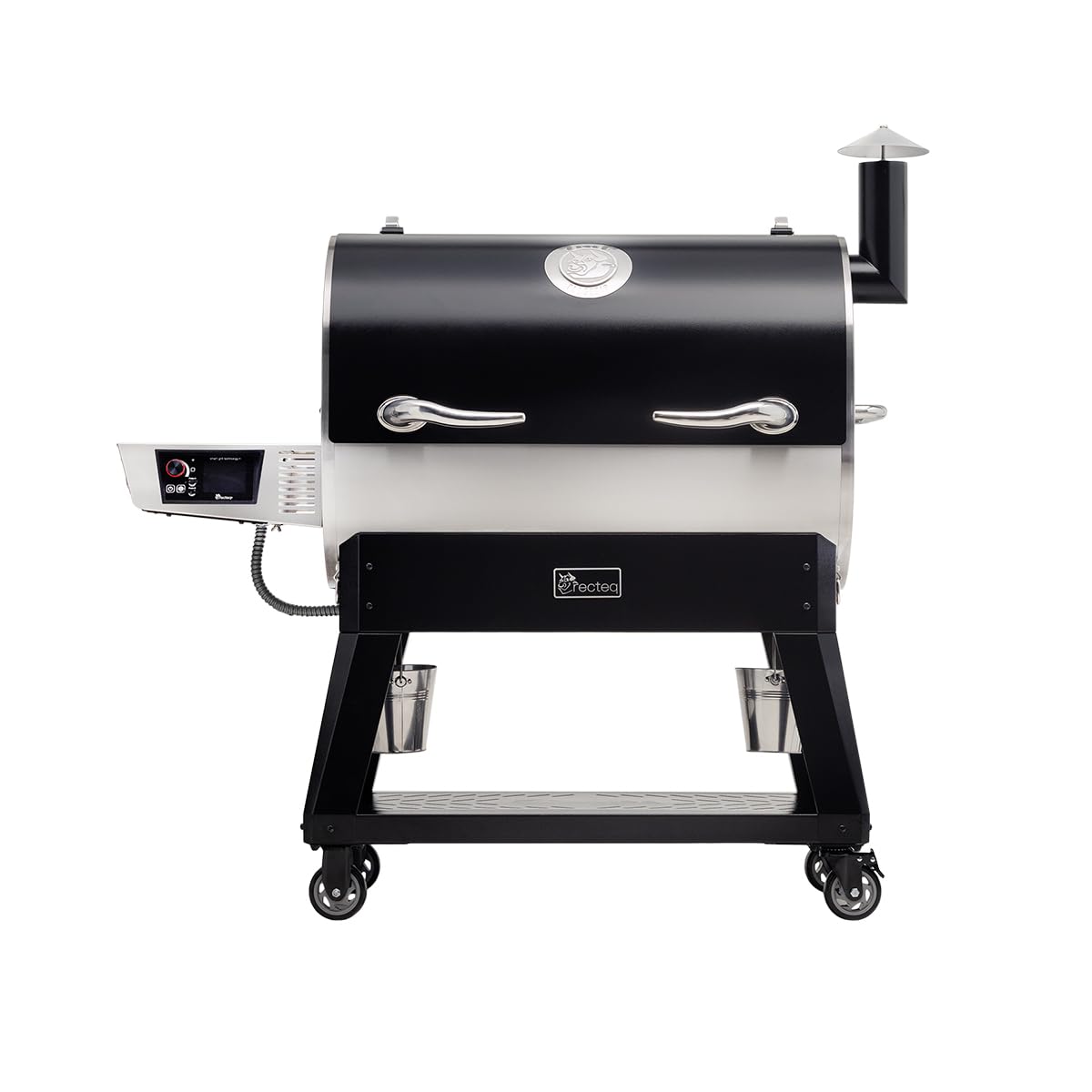
The recteq Flagship 1600 is engineered for backyard enthusiasts who regularly cook for crowds. Its 1,667 square inches of total cooking surface — split between a massive main grate and an upper rack — can handle four whole packer briskets simultaneously, making it the clear capacity champion on this list. The 40-pound hopper enables marathon unattended runs of up to 40 hours at 225°F, so you can load it on Friday night and wake up to a perfect smoke ring on Saturday morning without ever touching the hopper lid. The high-grade stainless steel construction resists rust in humid climates and supports a 700°F maximum temperature for high-heat searing.
The PID algorithm on the recteq is the gold standard for pellet temperature stability: real users report the internal chamber stays within 5°F of the target set point regardless of outside wind or ambient temperature. The Wi-Fi app integrates dual meat probes, custom saved recipes, and push notifications for cook milestones. Owners have reported no temperature-related issues across dozens of long cooks, and the customer service reputation is exceptional — one user received a replacement part shipped the next business day after noting a minor RTD wire concern. The unit is heavy at 230 pounds, so it will not shift or wobble during transport across uneven patios.
The one compromise is that pellet smokers in general cannot match the aggressive smoke flavor of a charcoal offset. The recteq produces a clean, efficient burn that is excellent for poultry and pork but may leave brisket fans wanting a thicker smoke ring. Opening the temperature ramp from 225°F to searing takes longer than a gas grill. The control board layout is intuitive but basic compared to touchscreen competitors. If maximum temperature stability and giant capacity are your priority, the Flagship 1600 is the most bulletproof pellet platform available today.
Why it’s great
- 1,667 sq in capacity fits four briskets at once for large gatherings
- Rock-solid PID temperature control within 5°F of set point
- 40 lb hopper enables 40-hour unattended cooks
Good to know
- Lighter smoke flavor than charcoal due to efficient pellet combustion
- Slow temperature climb from low smoke to high sear temperatures
- 230 lb weight requires a permanent patio location
3. Camp Chef Woodwind Pro WiFi 36

The Woodwind Pro solves the single biggest complaint about pellet cookers: the lack of deep, rolling smoke. Camp Chef integrated a dedicated “Smoke Box” drawer that slides into the cooking chamber where you can add wood chunks, charcoal, or even dried herbs to generate real combustion smoke during the cook. This means the primary heat comes from clean-burning pellets for temperature stability, but you still get the billowy white smoke that deposits heavy flavor onto a brisket during the first 4 hours of the stall. The 1,236 square inches of cooking space on two levels comfortably holds two full packers plus sides on the optional third shelf.
The down-and-out ventilation airflow design pulls heat from the firepot across the entire cook chamber before exhausting at the far end, which minimizes the left-to-right temperature gradient common in pellet grills. Owners report the internal temperature stays within 10°F to 15°F of the set point, though the area directly above the combustion zone can run slightly hotter. The Gen 2 PID controller gives you four smoke output settings — from barely visible to thick and aggressive — through a dial rather than percentage numbers, making it intuitive to dial in the exact amount of smoke the brisket needs without oversmoking the bark.
Assembly is straightforward compared to other large pellet grills, taking about 45 minutes with clear labeling on the hardware. The stainless steel body resists rust, and the grease management system routes drips away from the firepot entirely, reducing flare-ups. Some users have reported that the Wi-Fi connection can be finicky if your router only offers 5 GHz bands — the grill requires 2.4 GHz for connectivity. If you want a pellet smoker that finally captures the traditional smoky flavor profile of an offset while keeping the convenience of an auger system, the Woodwind Pro is the best example of that compromise on the market.
Why it’s great
- Integrated Smoke Box lets you burn wood chunks for heavy smoke flavor
- Four smoke intensity settings for dialing in the perfect bark
- 1,236 sq in capacity and stainless steel construction
Good to know
- Wi-Fi requires 2.4 GHz network; some router compatibility issues reported
- Hot spot directly above combustion area can reach 450°F
- Premium price point places it above most mid-range pellet grills
4. Traeger Ironwood 650

The Ironwood 650 is the refined sweet spot in Traeger’s lineup for families who cook brisket 3 to 4 times a month. The D2 drivetrain uses a brushless DC motor and a downdraft exhaust system that forces smoke to circulate downward over the food before exiting, improving smoke contact compared to older Traeger models. The 650 square inches of usable cooking space is enough for a single 15-pound packer plus two racks of spare ribs on the upper grate, or two smaller flats side by side. The Super Smoke mode, activated through the WiFIRE app, pulses the auger to dump extra pellets into the firepot at lower temperatures to generate thicker smoke specifically for the first 3 to 4 hours of a brisket cook.
Real owner reports confirm the Ironwood holds set temperature within 10°F across the cooking surface, even in cold-weather conditions. The double-wall insulation and full gasket kit keep heat loss minimal when opening the lid. The Wi-Fi connectivity and Traeger app provide remote monitoring through the included meat probe, along with guided cook programs that walk you through trimming, seasoning, and temperature targets for specific cuts. Owners upgrading from older Traeger models specifically mention the improved smoke circulation as the reason they switched — the Pro 22 and earlier models produced significantly lighter smoke due to top-down exhaust.
The 18-pound hopper is smaller than the Pit Boss 850’s 30-pound capacity, so you may need a refill during a very long overnight cook if you run the smoker below 200°F. The maximum temperature of 500°F means you cannot sear a steak directly on the grill, though the Ironwood’s flavor is best suited for low-and-slow cooking anyway. The app can occasionally lag when transitioning between Wi-Fi and cellular networks. For a family of four that prioritizes consistent results, easy cleanup via porcelain grates, and the peace of mind of Traeger’s widespread dealer network, the Ironwood 650 is the sensible choice.
Why it’s great
- D2 drivetrain with downdraft exhaust for superior smoke circulation
- Super Smoke mode for extra-heavy smoke during brisket’s first phase
- Wi-Fi and app provide real-time monitoring and guided cook programs
Good to know
- 18 lb hopper is small; may need refill on overnight cooks below 200°F
- 500°F max temperature limits direct searing capability
- App connectivity can experience lag on cellular networks
5. Traeger Pro 780
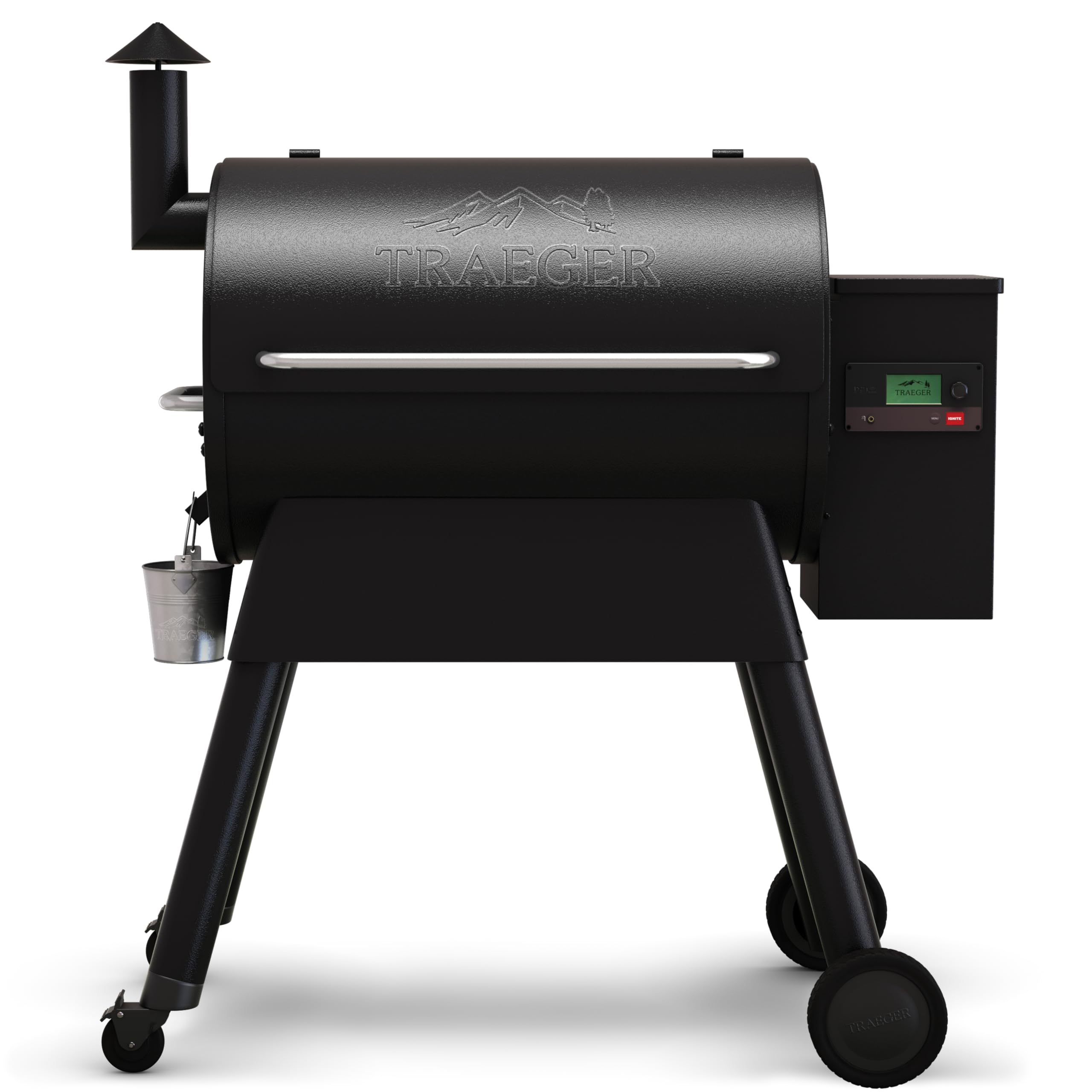
The Pro 780 is Traeger’s most popular mid-range pellet grill for a reason: it packs the same WiFIRE connectivity and D2 controller as the Ironwood into a slightly larger cooking surface at a more accessible investment. The 780 square inches of cooking space can hold a single full packer brisket plus a pan of beans or an extra rack of ribs on the upper grate. The D2 drivetrain starts the grill faster than the previous Pro series, and TurboTemp mode recovers the target temperature quickly after you open the lid to spray the brisket or wrap the flat. The all-weather build with powder-coated steel and heavy-duty wheels means you can leave it outside year-round under a basic cover.
Real customers consistently praise the ease of use: load the hopper with 18 pounds of pellets, set the dial to 225°F, and walk away. The wired meat probe reads within 5°F of a calibrated Thermapen, which is accurate enough for monitoring the flat through the stall. The Traeger app provides step-by-step recipes with specific pellet recommendations and timing estimates. One common experience among owners is that the smoke flavor is noticeably lighter than what a charcoal offset produces, but the convenience trade-off is worth it for midweek cooks and overnight cooking without waking up to feed the fire.
The 18-pound hopper is smaller than the Camp Chef or Pit Boss options at this price level, and the Pro 780 does not include the Super Smoke mode that the Ironwood offers. Assembly requires two people due to the heavy steel construction, but it only takes about an hour. The temperature range tops out at 500°F, which is sufficient for high-heat grilling but not true searing. If you want a reliable, well-supported pellet smoker that serves a family well for brisket and general barbecue cooking without any surprises, the Pro 780 is a proven workhorse.
Why it’s great
- WiFIRE connectivity with D2 drivetrain for reliable temperature control
- 780 sq in capacity handles a full packer plus sides
- TurboTemp recovers heat quickly after lid openings
Good to know
- Lighter smoke flavor than charcoal or the Camp Chef Woodwind Pro
- Lacks Super Smoke mode found on the Ironwood series
- 18 lb hopper may need refill during extra-long overnight cooks
6. Pit Boss 850 Navigator
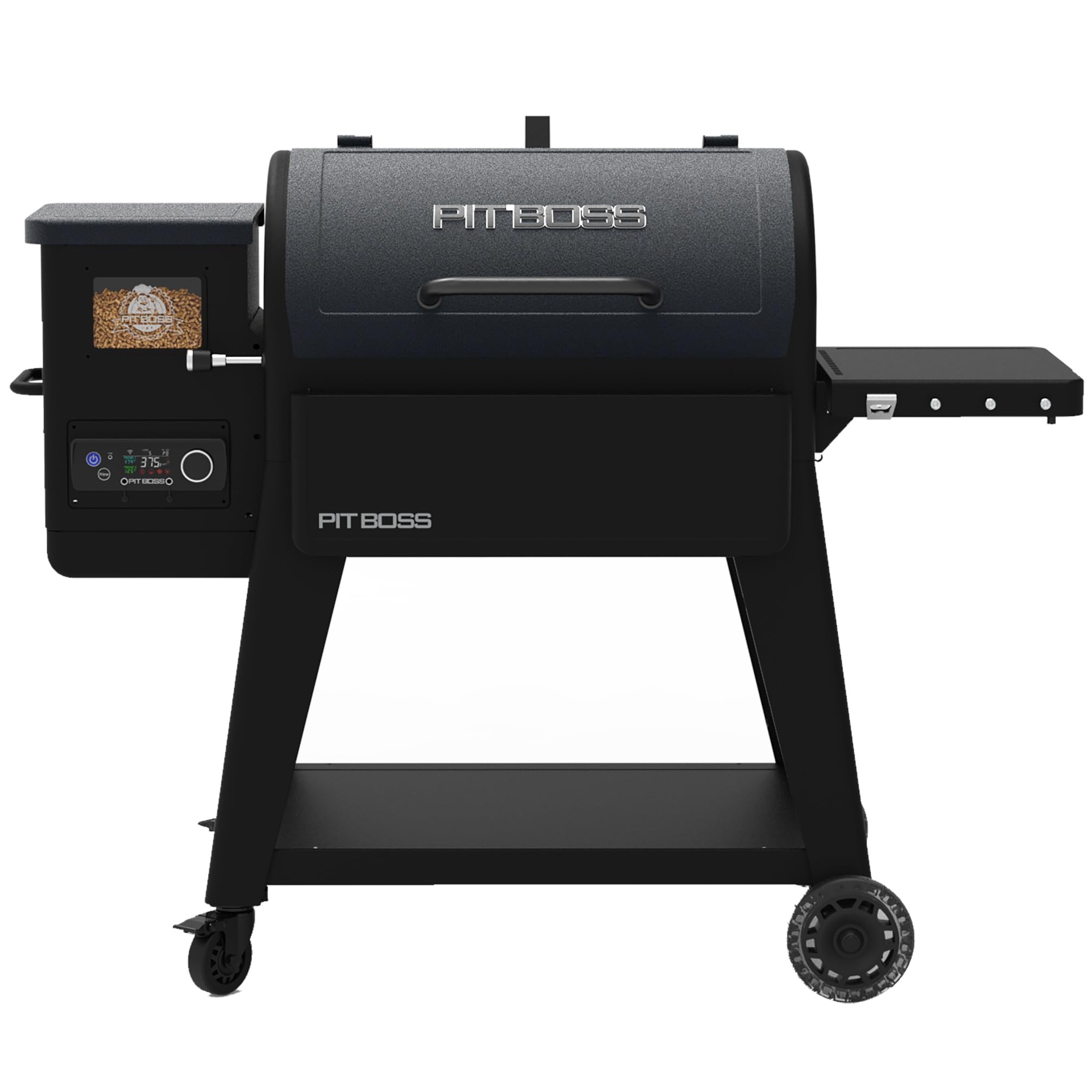
The Pit Boss 850 Navigator delivers Wi-Fi and Bluetooth connectivity at a price point that undercuts nearly every other connected pellet grill on this list. The 932 square inches of cooking space is generous for the price, fitting two full packer briskets side by side on the main grates plus a tray of mac and cheese on the upper rack. The 30-pound hopper is 66% larger than the Traeger Pro 780’s 18-pound hopper, meaning you can start a brisket at 6 a.m. and run uninterrupted past dinner without a single pellet refill. The LCD digital controller manages the 180°F to 500°F temperature range with fan-forced convection for even heat distribution across the cooking chamber.
Owners report that the Navigator holds temperature consistently within 10°F to 15°F of the set point, which is acceptable for brisket at the budget-friendly tier. The built-in dual meat probes allow you to monitor both the flat and the point simultaneously through the app. The folding front and side shelves provide prep space that larger models in this price range often lack, and the bottom shelf offers dedicated storage for a pellet bucket and tools. Assembly time averages 45 minutes with one person, though some users caution that the included instructions can be unclear regarding the wiring harness routing for the digital controller.
The most common owner complaints center on the assembly experience — one user reported a missing Allen wrench and a part that required a call to customer support. The flame broiler system works well for direct grilling but can create hot spots if you crowd the cooking surface. The steel construction is decent for the tier but not as thick as the recteq or Traeger Ironwood, so temperature recovery after opening the lid takes slightly longer. If you want Wi-Fi enabled cooking, a large cooking surface, and a 30-pound hopper without spending for a premium badge, the 850 Navigator is the best value-connected pellet grill for brisket today.
Why it’s great
- 30 lb hopper handles overnight brisket cooks without refueling
- 932 sq in cooking surface fits two full packers side by side
- Wi-Fi and Bluetooth connectivity at a value-tier price point
Good to know
- Assembly instructions can be confusing; some users reported missing hardware
- Steel body is thinner than premium models, slowing heat recovery
- Flame broiler system can create hot spots on the cooking surface
7. Oklahoma Joe’s Longhorn Reverse Flow

The Longhorn Reverse Flow is the definitive choice for the enthusiast who insists that brisket must be smoked over live charcoal and wood splits. Its 1,060 square inches of cooking space is divided between a 751-square-inch primary chamber and a 309-square-inch secondary warming rack, which can hold one full packer plus a second smaller flat or a pan of vegetables. The reverse-flow baffle system forces heat and smoke to travel the full length of the cook chamber under a steel plate, then flow back up over the food, reducing the end-to-end temperature gradient to under 10°F. This is significantly more even than a standard offset of the same size, where the firebox side often runs 40°F hotter than the stack side.
The heavy-gauge steel construction weighs 226 pounds and rides on large wagon-style wheels, making it stable enough to leave in place while still movable for cleaning. The firebox door opens independently from the main chamber, allowing you to add wood splits or charcoal without letting heat escape from the cook chamber. Collectors of real-world experience note that the paint on the firebox will blister and peel during the initial burn-in, which is cosmetic and does not affect performance. Applying high-temperature gasket tape around the firebox and cooking chamber doors is the single most effective mod to eliminate smoke leakage and improve temperature stability.
This smoker requires active fire management — you cannot set it and forget it. You will adjust the exhaust damper and firebox intake regularly to maintain 225°F to 250°F, especially in windy conditions. The stock lid-mounted thermometer reads approximately 40°F low compared to grate-level temperature, so a third-party wireless probe setup like a Thermoworks Signals is essential for accurate brisket cooking. The reverse-flow baffle plates can accumulate grease and are difficult to clean; covering them with heavy-duty aluminum foil before each cook solves that. If you want authentic offset brisket flavor with adjustable reverse-flow geometry, the Longhorn is the best mid-range offset money can buy.
Why it’s great
- Reverse-flow baffle reduces end-to-end temperature gradient to under 10°F
- 1,060 sq in capacity handles two briskets or one plus multiple sides
- Heavy-gauge steel with independent firebox door for easy fuel access
Good to know
- Requires active fire management and gasket modifications for best results
- Paint blisters on firebox during first few cooks (cosmetic only)
- Stock thermometer reads 40°F low; a third-party probe system is necessary
8. Oklahoma Joe’s Highland Offset Smoker

The Highland Offset is the lowest-priced true offset smoker that still offers enough capacity to cook a full packer brisket, making it the gateway for hobbyists who want to learn live-fire smoking without spending thousands. The 900 square inches of cooking space — 619 on the primary grate plus 281 on the secondary — is enough for a 15-pound brisket plus a tray of beans or a pan of mac and cheese on the upper rack. The porcelain-coated steel lid and body retain heat well once the fire is established, and the adjustable dampers on both the firebox intake and the exhaust stack give you granular control over airflow. The professional temperature gauge sits at grate level, providing a more accurate reading than the lid-mounted alternative on the Longhorn.
Real owners consistently point out that the Highland is a capable brisket cooker but benefits from the same modifications as the Longhorn: high-temperature gasket tape around the firebox door and the main cooking chamber lid will cut smoke leakage dramatically. The firebox paint will also blister during the first few uses, which is cosmetic. The thin steel on the firebox makes temperature maintenance more labor-intensive than insulated offset smokers that cost three times as much — you will need to add small splits of wood every 30 to 45 minutes to keep the chamber at a steady 225°F. The left-to-right temperature differential can be 60°F to 75°F if you load the firebox unevenly.
Assembly is straightforward and takes under an hour with the labeled hardware, though the packaging is a known weak point — numerous users report cosmetic dents and scuffs in transit. The 2-year warranty covers all parts, which is reassuring for first-time offset owners. If you want to learn authentic offset smoking techniques for brisket on a budget that leaves room for a good wireless thermometer and a bag of high-temp gasket material, the Highland is the best starting point on the list. It will not match the stability or capacity of the Longhorn, but it will teach you fire management in a way that no pellet grill ever can.
Why it’s great
- Lowest entry cost for a true offset smoker with brisket-capable 900 sq in capacity
- Grate-level thermometer reads more accurately than lid-mounted alternatives
- Simpler assembly than the Longhorn, with labeled hardware
Good to know
- Thin firebox steel requires frequent wood additions to maintain 225°F
- Packaging is poor; cosmetic damage in transit is common
- Left-to-right temperature differential can reach 60°F to 75°F
9. Char-Broil Bullet Charcoal Smoker 16″

The Char-Broil Bullet is the most affordable dedicated smoker on this list and is designed for the entry-level cook who wants to smoke a single brisket flat or a pork shoulder without committing to a full-sized offset or expensive pellet machine. The 16-inch diameter provides 388 square inches of cooking space across two porcelain-coated wire grates, which is tight for a whole packer but works for a trimmed 8- to 10-pound flat. The water pan acts as a thermal ballast, absorbing temperature swings and releasing steady moisture throughout the cook. Real owners report that the Bullet maintains 225°F to 240°F for 10+ hours on a single charcoal load without any modifications.
The porcelain-coated steel construction has proven durable in outdoor conditions — one owner reports storing it uncovered for 4 years with no structural rust. Assembly takes about 15 minutes, and the dual-carry handles make it easy to move the 20-pound unit from storage to the patio. The innovative air control system lets you adjust the intake and exhaust dampers to fine-tune the temperature without opening the lid. A common first mod is adding gasket material around the door and the middle section seal, which reduces a small amount of smoke leakage and improves temperature stability in windy weather.
The Lid-mounted thermometer reads roughly 40°F lower than the grate temperature — the same issue as the expensive offset smokers — so a wired probe is essential for accurate brisket monitoring. The 388 square inches will not fit a full 18-pound packer, and the 16-inch diameter means a large brisket will curl against the sides. It cannot sear, and there is no secondary rack for extra sides. For someone testing whether they enjoy the low-and-slow smoking process without spending more than , the Char-Broil Bullet is a capable, well-reviewed starting point that holds its resale value if you upgrade later.
Why it’s great
- Budget-friendly entry point that holds 225°F for 10+ hours on a single charcoal load
- 15-minute assembly and lightweight 20 lb construction for portability
- Water pan thermal ballast smooths temperature fluctuations
Good to know
- 388 sq in capacity fits only trimmed flats, not full packer briskets
- Lid thermometer reads 40°F low; a wired probe is required
- Cannot sear and has no secondary rack for sides
FAQ
What grate temperature should I target for a full packer brisket?
Is a reverse-flow offset really better than a standard offset for brisket?
Can I smoke a full packer brisket on a 16-inch bullet smoker?
Final Thoughts: The Verdict
For most users, the best brisket smoker winner is the Masterbuilt Gravity Series 1050 because it combines real charcoal smoke flavor with PID digital temperature stability and app monitoring, removing the biggest barriers to consistent overnight brisket. If you want tremendous capacity and a rock-solid temperature hold for events, grab the recteq Flagship 1600. And for authentic offset bark with minimal end-to-end temperature gradient, nothing beats the Oklahoma Joe’s Longhorn Reverse Flow.