
Our readers keep the lights on and my morning glass full of iced black tea. As an Amazon Associate, I earn from qualifying purchases.
Specs are compiled from manufacturer listings and verified buyer reviews and can change over time — please confirm the key details on the product page before buying.
Painting trim is the test that separates a weekend job from a professional-looking finish. One wrong brush, and you are fighting jagged edges, stray bristles, and a line that bleeds onto the wall. The real trick is picking a brush that holds enough paint to cover a long stretch without stopping, yet keeps a razor-sharp tip for that clean meet-up between trim and wall.
I’m Min — the founder and writer behind Gadgets Feed. This guide is built by comparing the manufacturers’ published specifications and the patterns across verified customer reviews, so you get each pick’s real strengths and trade-offs instead of marketing spin.
For a smooth, streak-free line on latex trim, the Purdy Nylox Glide 2 in. is worth buying: it has soft flagged nylon bristles (split-end tips that hold paint evenly) and a comfortable alderwood handle, earning it a 4.7/5 rating from 719 buyers. If you need an ergonomic brush for all-day work, the Zibra Angled 2.5-inch with its hourglass handle is your pick. For oil-based paints, the Purdy 2″ Angle Sash Ultra Smooth with natural china bristle delivers the smoothest coat. Each brush for painting trim here is chosen for a specific job, so you can match the bristle type and width to your project.
Our Picks at a Glance


How To Choose The Best Brush For Painting Trim
Trim work is all about the line you leave behind. A brush that is too wide may slop paint onto the wall. A brush with stiff, harsh bristles can leave streaks on smooth casing. Three specs decide whether you get a clean edge or a cleanup job.
Bristle Material and Flex
Bristles fall into two broad camps. Natural china bristle works well with oil-based paints because it holds its shape and lays down a smooth film. Synthetic filaments like PBT (polybutylene terephthalate) or nylon are better with water-based latex paints — they do not soften or swell in water. Look for flagged bristles (split tips that act like tiny paint sponges) if you want a smoother finish with fewer brush marks.
Brush Width
For most trim — baseboards, door casings, window sashes — a 2-inch or 2.5-inch angled brush gives you the best control. A 3-inch brush covers more surface in one pass but demands a steadier hand around narrow moldings. Narrower brushes (1.5-inch) suit tiny miter joints and corners where you need surgical precision.
Handle Shape and Grip
You hold a trim brush for long stretches. A beech wood or hourglass-shaped handle reduces hand fatigue because your fingers settle into a natural resting position. Some handles have a laser-engraved texture that keeps your grip secure even when your hands get sweaty.
Quick Comparison
| Model | Best For | Brush Width | Bristle Type | Handle Material | Amazon |
|---|---|---|---|---|---|
| Proform Picasso Oval 2-1/2 Inch★ Best Overall | Holding More Paint per Dip | 2.5 Inches | Advantage PBT® | Standard | $14.19$17.99Amazon |
| Purdy Nylox Glide 2 in.Also Great | Smooth Latex Finishes | 2 Inches | Flagged Nylon | Alderwood | $14.48$18.99Amazon |
| Zibra Angled 2.5-inch | All-Day Comfort on Trim | 2.5 Inches | Flagged Bristle | Hourglass | $13.47Amazon |
| ROLLINGDOG Oval 2.5 Inch | Reducing Fatigue on Long Jobs | 2.5 Inches | SRT Synthetic | Beech Wood | $13.99Amazon |
| Purdy Angle Sash 2″ | Oil-Based Paint Projects | 2 Inches | White China Bristle | Alderwood | $13.50Amazon |
| Stinger Classic 2 Inch | Precision Cutting-In Lines | 2 Inches | PBT Bristle | Beech Wood | $12.95Amazon |
| ROLLINGDOG 3 Inch Angled | Fast Coverage on Wide Trim | 3 Inches | Solid Round Tapered | Beech Wood | $12.99Amazon |
In‑Depth Reviews
1. Proform Technologies PIC1-2.5 Picasso Oval Angle Sash Paint Brush, 2-1/2-Inch
Our pick — over 4.5★ from 850+ verified ratings; the strongest balance of quality and price.
The oval ferrule packs more paint into each dip — so you cover longer strokes on your trim before you need to reload.
The oval shape of this Proform brush is not just for looks. The oval ferrule (the metal band that holds the bristles) creates a bigger reservoir of paint inside the brush without making the brush head wider. That means each loaded stroke covers more linear feet of trim before you need to dip again. The bristles are made from Advantage PBT proprietary filament blend (a synthetic material that resists softening in water-based paints and springs back to its original shape after each wash).
The brush width is 2.5 inches, which is a solid size for both baseboards and door frames. Buyers give it a 4.6/5 from 857 reviews, noting that the bristles hold their edge well. At 0.3 pounds it is the heavier brush here — noticeably more substantial than the Purdy Nylox — which gives it a solid feel but can cause fatigue on very long sessions if you are not used to the weight. For speed painters covering a whole house, this brush’s paint-holding ability beats the Purdy Nylox, but the Nylox is lighter for fine detail work.
What Works
- Oval ferrule holds more paint for longer uninterrupted strokes
- PBT filament blend resists softening and keeps its shape
- High rating of 4.6/5 from over 850 buyers
Consider This
- Heavier than competing 2.5-inch brushes — 0.3 pounds, so your hand feels the weight over hours
Best suited for: Painters who want to cover long stretches of trim with fewer refills and like a brush with some heft.
Not ideal if: You prefer a very lightweight brush for hours of overhead or detail work.
2. Purdy Nylox Glide 2 in. Angular Trim Soft Paint Brush
The 2-inch angled brush that glides through latex without leaving a single streak — and earns the highest rating in this lineup.
For latex paint — the kind most people use on trim — this Purdy brush is the one professionals reach for first. The flagged nylon bristles (filaments with split-end tips that release paint smoothly) lay down a smooth, level coat without visible brush marks. That makes a huge difference on a wide door casing where every stroke is on display. The brush width is 2 inches, which is tight enough for a window sash yet still fast for a baseboard run.
Buyers report that the brush holds a surprising amount of paint for its size and releases it evenly, so you are not constantly dipping back into the can. The alderwood handle feels natural in the hand. The Purdy Nylox is the top-rated brush here — 4.7/5 from 719 reviews — and it is noticeably better at laying down a streak-free coat of latex paint than the Zibra 2.5-inch brush, whose thicker width can leave a heavier bead. The catch is that this brush is built for latex paint only; its nylon bristles will soften and lose their shape if used with oil-based paints.
Why It Wins
- Soft flagged nylon bristles leave a smooth finish on latex paint, not brush marks
- Alderwood handle provides a comfortable, balanced grip
- Rated 4.7/5 from 719 reviews — the highest rating in this list
The Limit
- Material type is nylon — not ideal for oil-based paints; it will go limp
Who needs this: Anyone painting latex trim who wants a factory-smooth finish without fighting brush marks.
Look elsewhere if: You are using oil-based enamels — this brush is formulated for latex.
3. Zibra Angled Paint Brush for Painting Trim, 2.5-inch

An hourglass-shaped grip that fights hand cramps during a full-day cutting-in session, and Zibra claims it packs 25% more paint per dip.
Zibra built this 2.5-inch angled brush around the hand that holds it. The hourglass handle is shaped so your thumb and fingers rest in a natural curve, which reduces the cramping you get with a straight cylindrical handle. That matters when you are painting the trim across an entire house. The brush uses Smooth Filament Technology, and Zibra claims the smaller filaments allow for better paint pack-out — meaning you pick up more paint per dip and the brush releases it in a controlled, smooth flow.
The construction is pro-grade: aluminum inserts, epoxy glue, and threaded nails keep the bristles from loosening over time. Buyers give it a 4.6/5 rating from 568 reviews. One downside is that at 2.5 inches it is a touch wider than a 2-inch sash brush like the Purdy Nylox, so cutting into a tight window corner requires a bit more attention than the narrower picks. If you use both latex and oil-based paints, this brush works with both, unlike the Purdy Nylox which is latex-only.
Standout Features
- Ergonomic hourglass handle reduces hand fatigue on long jobs
- Aluminum insert and epoxy glue for long-term durability
- Works with all paint types: latex, oil, stain
Trade-Off
- 2.5-inch width demands a steadier hand around narrow window sashes vs. a 2-inch brush
Ideal for: DIYers and pros covering large trim areas who need all-day comfort without hand fatigue.
skip it if: You mostly paint small window mullions where a narrower 2-inch brush gives better control.
4. ROLLINGDOG 2.5 Inch Oval Angled Paint Brush
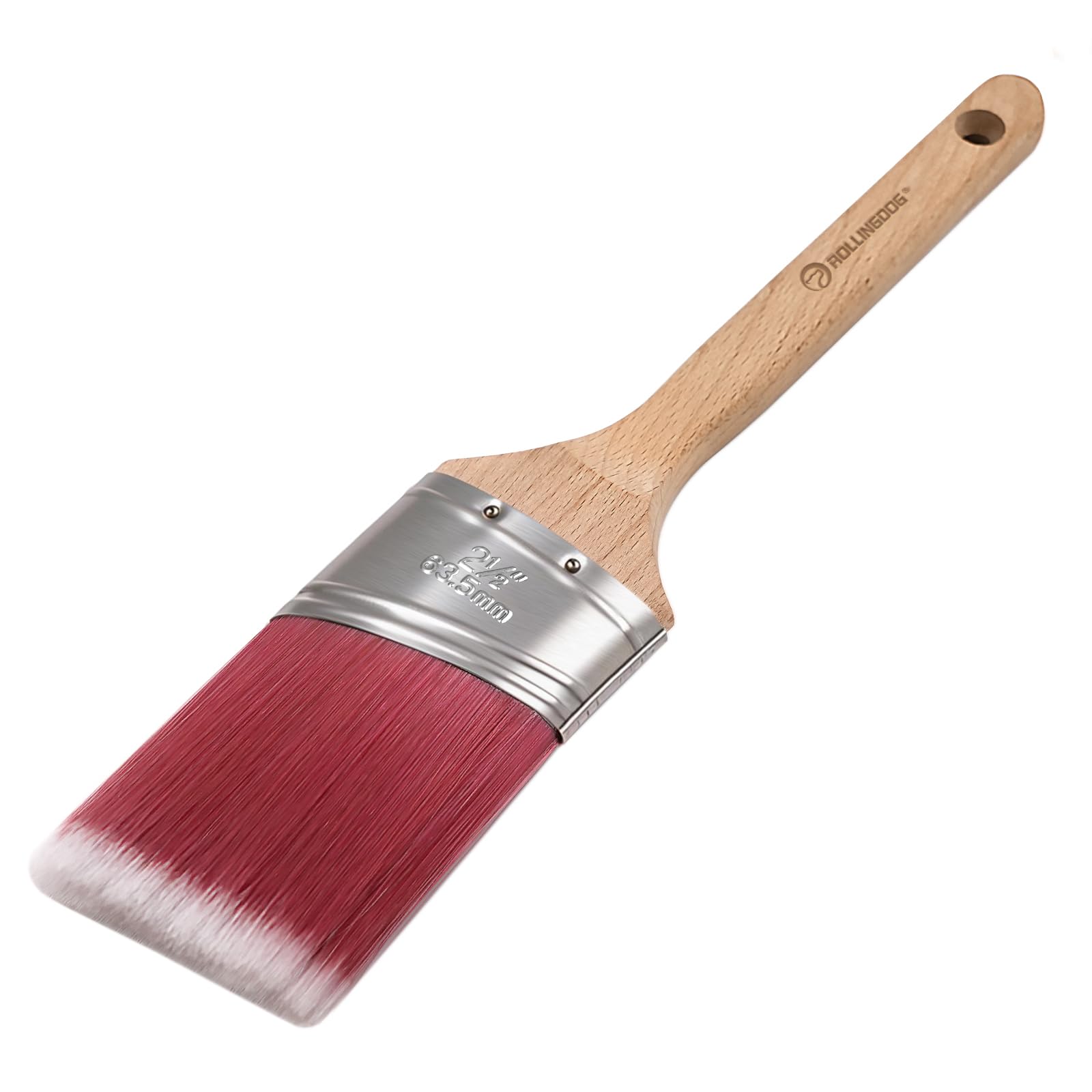
A long beech wood handle that shifts the weight back, so your hand stays comfortable through a full room of cutting-in.
This ROLLINGDOG oval brush uses a longer beech wood handle than most. That extra length shifts the balance point rearward and gives you more leverage, which reduces the fatigue on your fingers and wrist when you are holding the brush away from your body — exactly how you paint a baseboard without bending over. The bristles are SRT synthetic filaments (machine-roughed to create fine tips). Those fine tips help the brush make precise contact with the edge of the trim, giving you a clean cut-in line.
The oval shape serves the same purpose as the Proform Picasso: it boost paint adhesion so you can load more paint and cover more area per stroke. The stainless steel ferrule keeps the filaments securely in place. Buyers rate it 4.5/5 from 28 reviews. One reviewer note: the brush cleans out quickly under running water, which preserves the shape of the bristles for the next project. The downside is a still-small review count, so we are working with a smaller sample than the more established models like the Zibra with 568 reviews.
Why It Works
- Long ergonomic handle reduces hand fatigue vs. standard-length handles
- SRT synthetic filaments with fine tips for precision cutting
- Stainless steel ferrule adds durability
The Caveat
- Only 28 ratings — less user feedback than more established competitors like the Zibra
Reach for this if: You do a lot of cutting-in on baseboards and want a balanced oval brush with a fatigue-fighting handle.
Look elsewhere if: You prefer a well-known model with thousands of reviews behind it.
5. Purdy 2″ Angle Sash Ultra Smooth, White China Bristle
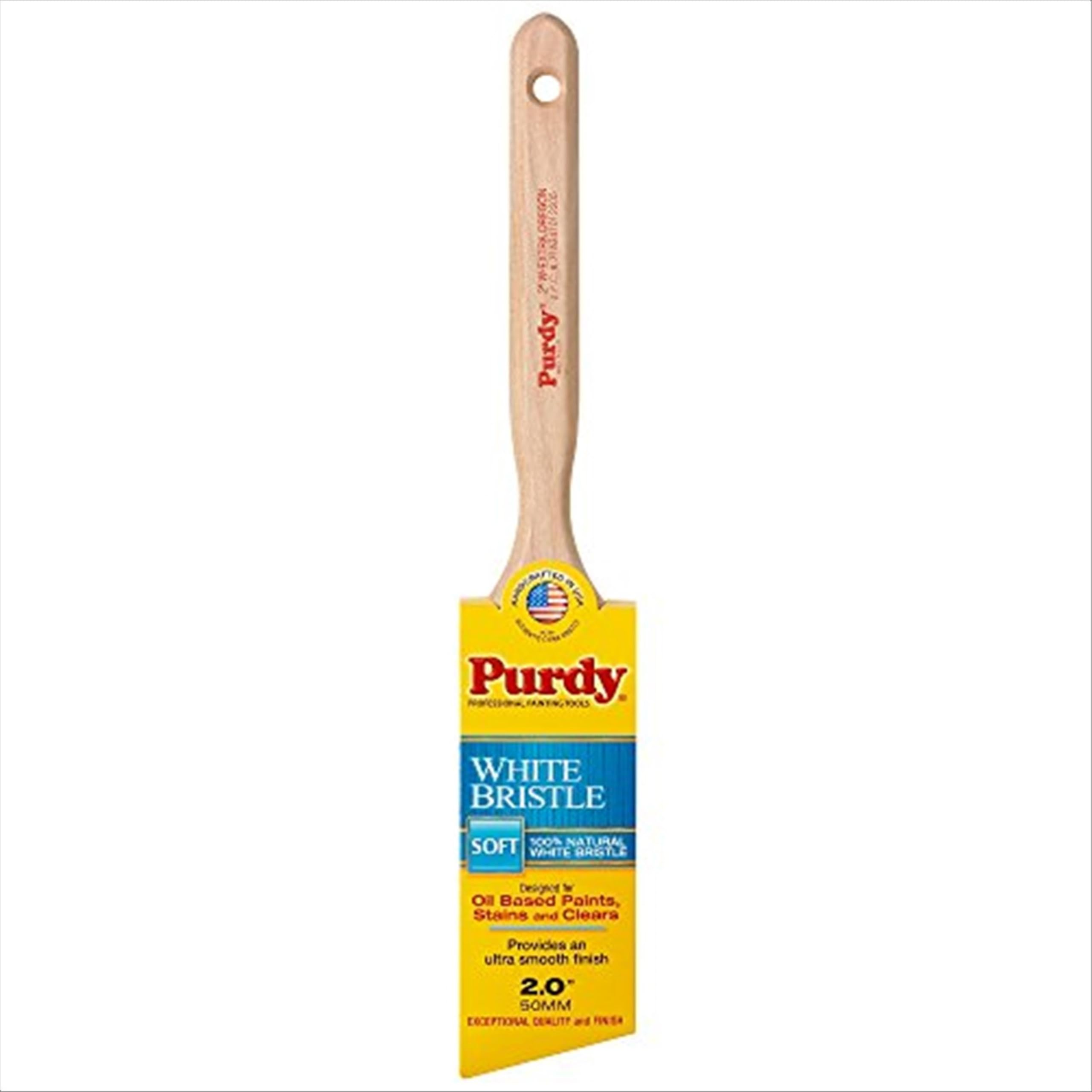
The natural-china bristle brush that oil-paint loyalists reach for when nothing else lays down a smooth coat on trim.
Natural white china bristle has a different feel than synthetic filaments. It is stiffer, it holds a chiseled edge better, and it does not get floppy in oil-based paint like nylon can. That makes this 2-inch Purdy angle sash brush the right pick if your trim is getting an oil-based enamel or varnish. The brush is made in the United States and uses an alderwood handle that is comfortable for extended use.
At 3.2 ounces it is noticeably lighter than the ROLLINGDOG 3-inch brush (7.36 ounces), so you can make fine movements without arm fatigue. The 2-inch width is standard for trim work and gives you the control needed for window sashes and narrow casings. Buyers give it a 4.6/5 from 470 reviews, and many note that the brush holds its shape wash after wash. Just remember that china bristle is designed for oil-based paint — it is not the right choice for latex or water-based finishes. If you are using latex, the Purdy Nylox Glide is a better match.
Strong Points
- Natural china bristle lays down oil-based paint smoothly without softening
- Lighter than many angled brushes at 3.2 ounces, reducing hand fatigue
- High 4.6/5 rating from 470 buyers
Keep in Mind
- Paint type is oil — not suitable for latex or water-based paints; bristles will go limp
Pick this for: Oil-based trim enamels and varnishes where a natural-bristle brush delivers the smoothest finish.
pass on it if: You are using latex paint — the bristles will soften and lose their edge.
6. Stinger Classic – Professional Angle Paint Brush, 2 Inch
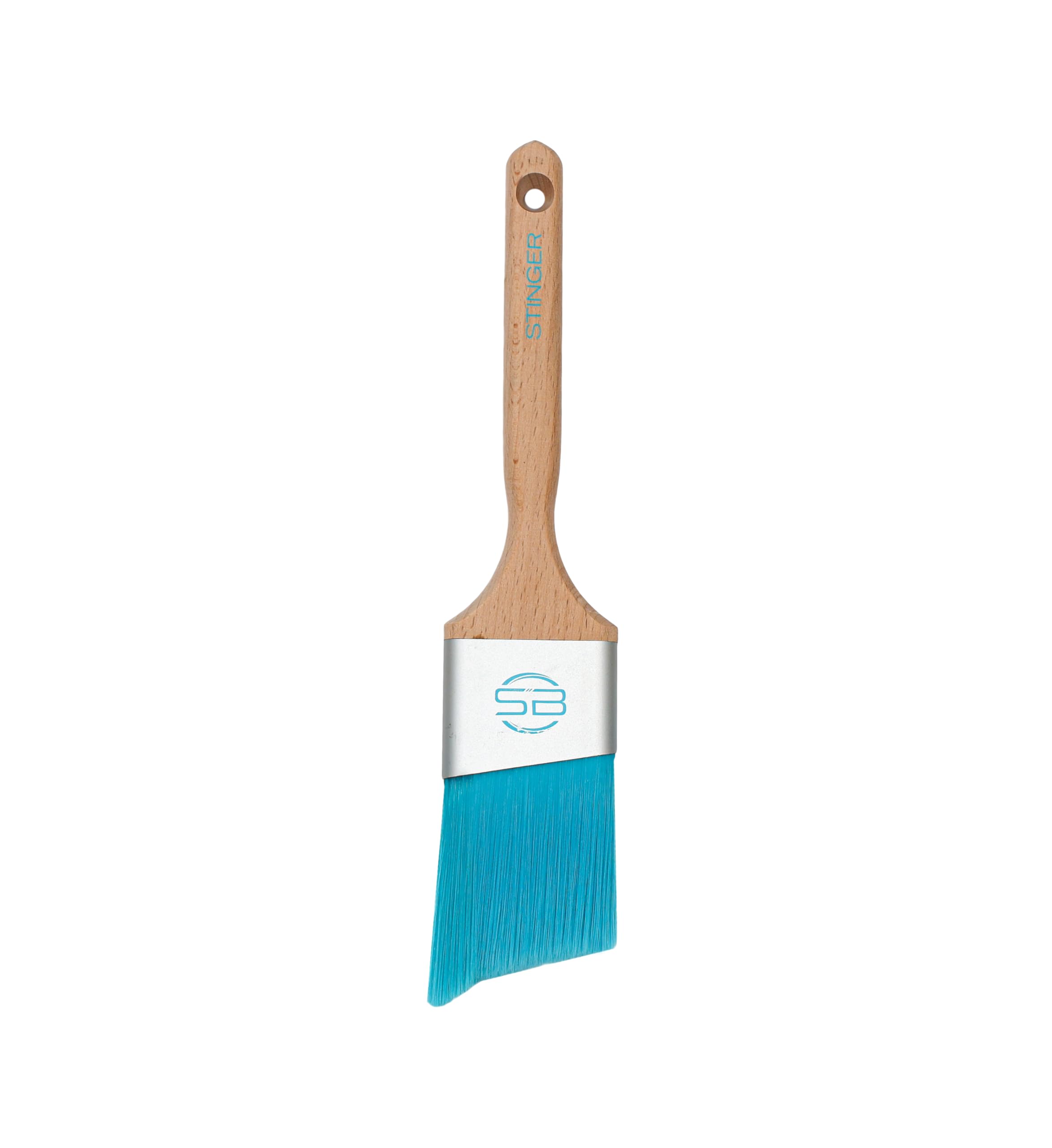
A patented extended-tip brush that gives you the fine-point control to cut a line that looks taped — without using tape.
The Stinger Classic stands out because of its patented Stinger Tip technology. The tip uses extended filaments that are longer than the rest of the bristles, so the very end of the brush acts like a fine pen tip. That extra reach lets you place paint exactly on the edge where trim meets wall, without the body of the brush hitting the surface. It is a clever workaround for one of the hardest parts of trim painting: getting a clean line without tape.
The brush uses PBT filaments (polybutylene terephthalate, a synthetic material that works well with water-based paints and cleans up easily). The handle is made from solid beech wood with an extruded aluminum ferrule (the metal band securing the bristles). It is a 2-inch brush, so it is nimble around sashes and corners. Buyers rate it 4.1/5 from 18 reviews. One limitation is the lower review count — 18 ratings is not enough to see long-term durability trends — but the Stinger Tip design is a genuinely different approach to precision cutting that experienced painters will appreciate more than the standard-tipped Purdy Nylox.
The Edge
- Extended Stinger Tip filaments improve control on cut-in lines, reducing need for tape
- PBT bristles are easy to clean with water-based paints
- Solid beech wood handle with aluminum ferrule
The Question Mark
- Only 18 customer ratings — still an emerging product with a small sample size
Best for: Painters who want extra precision on cut-in lines without using painter’s tape.
Not for: Someone who wants a proven brush with a long track record of reviews.
7. ROLLINGDOG 3 Inch Angled Paint Brush

The 3-inch wide brush that eats up baseboard runs fast — at 3 inches versus 2 inches — but needs a steady hand around corners.
At 3 inches wide, this ROLLINGDOG brush is the widest angled brush in this lineup. It measures 3 inches across, compared to the Stinger Classic’s 2 inches. That extra surface area is a time-saver when you are painting long stretches of trim, like a continuous baseboard run across a living room. The bristles use a stiff flex with solid round tapered filaments (filaments that get thinner toward the tip, helping the brush keep a sharp edge). ROLLINGDOG says they hold more paint and release it well without bristle loss.
The laser-engraved design on the beech wood handle provides a secure grip, and the brush works with both water and oil-based paints. Buyers give it a 4.4/5 from 304 reviews. One pros-and-cons reality is that the stiffer bristles are great for holding the brush shape but feel less forgiving than a softer flagged bristle on detailed corners. The weight is 7.36 ounces, versus the Purdy Angle Sash at 3.2 ounces, so you feel it more in your hand over a long session. Choose this for speed on straight runs; for intricate molding, pick the 2-inch Purdy Nylox instead.
Speed Advantage
- 3-inch width versus 2-inch: each stroke covers more surface
- Works with oil and water-based paints
- Laser-engraved handle provides secure grip
The Cost of Speed
- Heavier at 7.36 ounces — more tiring on long jobs
- Stiff bristles are less forgiving on tight corners vs. softer flagged bristles
Choose this if: You have lots of straight trim to cover quickly and want a brush that works with any paint type.
Pass on it if: Your trim work has a lot of tight corners and miter joints where a narrow brush is easier to maneuver.
Understanding the Specs
Angled Sash vs. Straight Cut
An angled sash brush has the bristles cut at a diagonal. That angle lets you hold the brush flat against the trim while the tip reaches into the corner where trim meets the wall. It is the standard shape for trim work. A straight-cut brush works better for broad flat surfaces like doors, where you want every bristle touching the surface evenly.
Flagged and Tapered Bristles
Flagged bristles have split ends, like a tiny fork at the tip of each filament. Those split ends hold more paint and release it more evenly, leaving a smoother finish with fewer brush marks. Tapered bristles get thinner toward the tip, which helps the brush keep a sharp, precise edge for cutting in against the wall. Both features are signs of a high-quality trim brush.
FAQ
What size brush is best for painting trim?
Should I use natural bristle or synthetic for trim painting?
How do I clean a trim brush so it lasts for years?
What does “flagged bristle” mean on a paint brush?
Can I use the same brush for latex and oil-based paint?
Is a heavier brush better for painting trim?
What handle shape is most comfortable for trim painting?
How often should I replace my trim brush?
Final Thoughts: The Verdict
For most buyers, the brush for painting trim that delivers the best balance of smooth finish, comfortable grip, and proven performance is the Purdy Nylox Glide 2 in. Angular Trim Soft Paint Brush because it pairs soft flagged nylon bristles with a comfortable alderwood handle and the highest customer rating in the lineup. If you want a brush with a fatigue-fighting hourglass handle, grab the Zibra Angled 2.5-inch. And for painting oil-based trim enamel with a natural bristle brush, the standout is the Purdy 2″ Angle Sash Ultra Smooth China Bristle.
How We Picked
We do not accept paid placement. Every pick is matched to a real buyer and a real use-case; we do not hands-on test units.
Sources & Methodology
Specifications: manufacturer listings and product documentation. Review insights: verified customer reviews, as of July 2026. Pricing: not shown on this page (it changes often); check the current price via the retailer link.
As an Amazon Associate, Gadgets Feed earns from qualifying purchases. This does not affect which products we feature.
Related Guides
Product prices and availability are accurate as of the date/time indicated and are subject to change. Any price and availability information displayed on Amazon at the time of purchase will apply to the purchase of this product. As an Amazon Associate I earn from qualifying purchases.
CERTAIN CONTENT THAT APPEARS ON THIS SITE COMES FROM AMAZON. THIS CONTENT IS PROVIDED "AS IS" AND IS SUBJECT TO CHANGE OR REMOVAL AT ANY TIME.
Amazon and the Amazon logo are trademarks of Amazon.com, Inc. or its affiliates.