
Our readers keep the lights on and my morning glass full of iced black tea. As an Amazon Associate, I earn from qualifying purchases.
Specs are compiled from manufacturer listings and verified buyer reviews and can change over time — please confirm the key details on the product page before buying.
Primer is thick and grippy, and it quickly shows every flaw in your brush. The short answer: the Wooster Q3211-2 Shortcut Angle Sash is the safest first pick for most priming jobs. Its 2-inch angled head reaches into corners, and its synthetic blend handles both water-based and oil-based primers. The rest of this list covers the narrow cases where another brush works better — fine trimming, flat wall work, or bulk touch-up.
I’m Min — the founder and writer behind Gadgets Feed. This guide is built by comparing the manufacturers’ published specifications and the patterns across verified customer reviews, so you get each pick’s real strengths and trade-offs instead of marketing spin.
Primer is thicker than topcoat paint, so a brush that spreads it cleanly needs firm, dense bristles that hold a heavy load without dripping. The picks below do that best, explained in plain terms so you can grab the right one on your first trip to the store. Every spec for the best brush for primer stays honest, and every trade-off stays in view.
Our Picks at a Glance

How To Choose The Best Brush For Primer
Primer is a heavier, tackier liquid than the finish coat that goes over it. That single fact drives every choice you make here. A brush with floppy bristles will smear primer rather than push it, and it will leave ridges that show through the topcoat. A brush with firm, densely packed bristles carries the load and releases it evenly.
Match the bristle firmness to the primer
Water-based primers tend to be thinner and dry fast, so a synthetic filament brush holds its shape and cleans up with water. Oil-based and shellac primers are thicker and grab harder, which makes a flagged tip (bristles whose ends are split into fine flags that spread paint) the difference between a smooth pass and a streaky one. Firmness is the thing serious buyers check first.
Pick a width that fits the surface
A 2-inch angled brush is the workhorse width for cutting in along trim, corners, and door frames. A 3-inch flat brush covers wall and door faces faster but gives up some of that corner control. Narrow fitch brushes in the half-inch to one-inch range are for edges, touch-up, and detailed cutting in around cabinets.
Decide between a single brush and a pack
If you are priming one room, one good brush you can clean and reuse beats a bag of cheap ones. If you are priming a whole house, a rental, or a stack of cabinet doors, a multi-pack lets you switch sizes without stopping to wash between passes. Both approaches show up on this list.
Quick Comparison
| Model | Best For | Brush Width | Bristle Type | Pack Size | Amazon |
|---|---|---|---|---|---|
| Wooster Brush Q3211-2 Shortcut Angle Sash★ Best Overall | All-round priming and cutting in | 2 inches | Synthetic, angled | Pack of 3 | Amazon |
| Slant Lining Fitch Trim Paint BrushesPrecision Set | Fine trim and cabinet edges | 0.5 inches | Angled, nylon | 6 Count | Amazon |
| Purdy 144080220 Nylox DaleSmooth Finish | Smooth finish on trim and doors | 2 inches | Flagged, nylon | Single brush | Amazon |
| Zibra Flat Paint Brush for Top Coats | Flat wall and door faces | 3 inches | Flagged | Single brush | Amazon |
| LAPXSNZD 3 inch Flat Paint Brushes | Bulk work and reuse | 3 inches | Flat synthetic | 6 Pack | Amazon |
| PinStone 3 Pack Professional Paint Brushes Set | Cabinet and furniture priming | 1 inch | Flagged | 3 Pack | Amazon |
| Bates Paint Brushes 2.5-Inch | High-volume edging | 2.5 inches | Angled, synthetic | 12 Pack | Amazon |
| Pro Grade 2 Inch Angle Paint Brush | Whole-house cut-in work | 2 inches | Angle, medium stiff | 12 Pack | Amazon |
In‑Depth Reviews
1. Wooster Brush Q3211-2 Shortcut Angle Sash Paintbrush, 2-Inch, White | Pack of 3
Our pick — 4.5+★ from 850+ verified ratings; the strongest balance of quality and price.
Three 2-inch angled sash brushes that cut a sharp primer line without wrecking your wrist.
You get three brushes here, each with a 2-inch angled head and a synthetic blend that works with all paints and water-based stains. That “all paints” label is why this set sits at the top: load it with a water-based bonding primer on Monday and an oil-based primer on Tuesday, and the bristles won’t go soft. The 2-inch width is the balance for cutting in along baseboards and door casings, so your edges stay clean without a second pass.
The purple Shergrip handle is the quiet hero of this pick. It is built to add comfort and maneuverability in tight spaces, which is exactly what happens when you are reaching behind a toilet or into a cabinet corner with a loaded primer brush. Owners consistently praise the Shergrip handle for cutting down on hand cramping during long priming sessions. Cutting in sharp edges and corners cleanly is the other thing that keeps coming up.
Where this brush earns its keep is repeat use. Primer is the messiest coat you will apply, and the brush has to survive it and come back for the topcoat. Cleaning is straightforward, the three-brush pack means you always have a dry backup, and at 2.4 ounces per brush it does not tire your arm on a ceiling line. Compared with the Zibra flat brush below, this one gives up wall coverage speed — the Zibra is 3 inches wide to this brush’s 2 — but it wins on corner control.
What earns the top slot
- Synthetic blend is rated for all paints and water-based stains, so one brush covers both primer types
- 2-inch angled head reaches into corners and along trim where a flat brush cannot
- Shergrip handle reduces wrist strain during long priming sessions
- Three brushes per pack at 2.4 ounces each — light enough to hold overhead
Where it asks for patience
- 2-inch width covers wall faces slowly compared with a 3-inch flat brush
- You will still want a separate wide brush for large flat primer areas
Reach for it when: you are priming trim, doors, or cabinets and want one brush that handles both water-based and oil-based primer without fuss.
Pair it with: a wider flat brush if wall faces are part of the job, because 2 inches is a trim tool, not a wall tool.
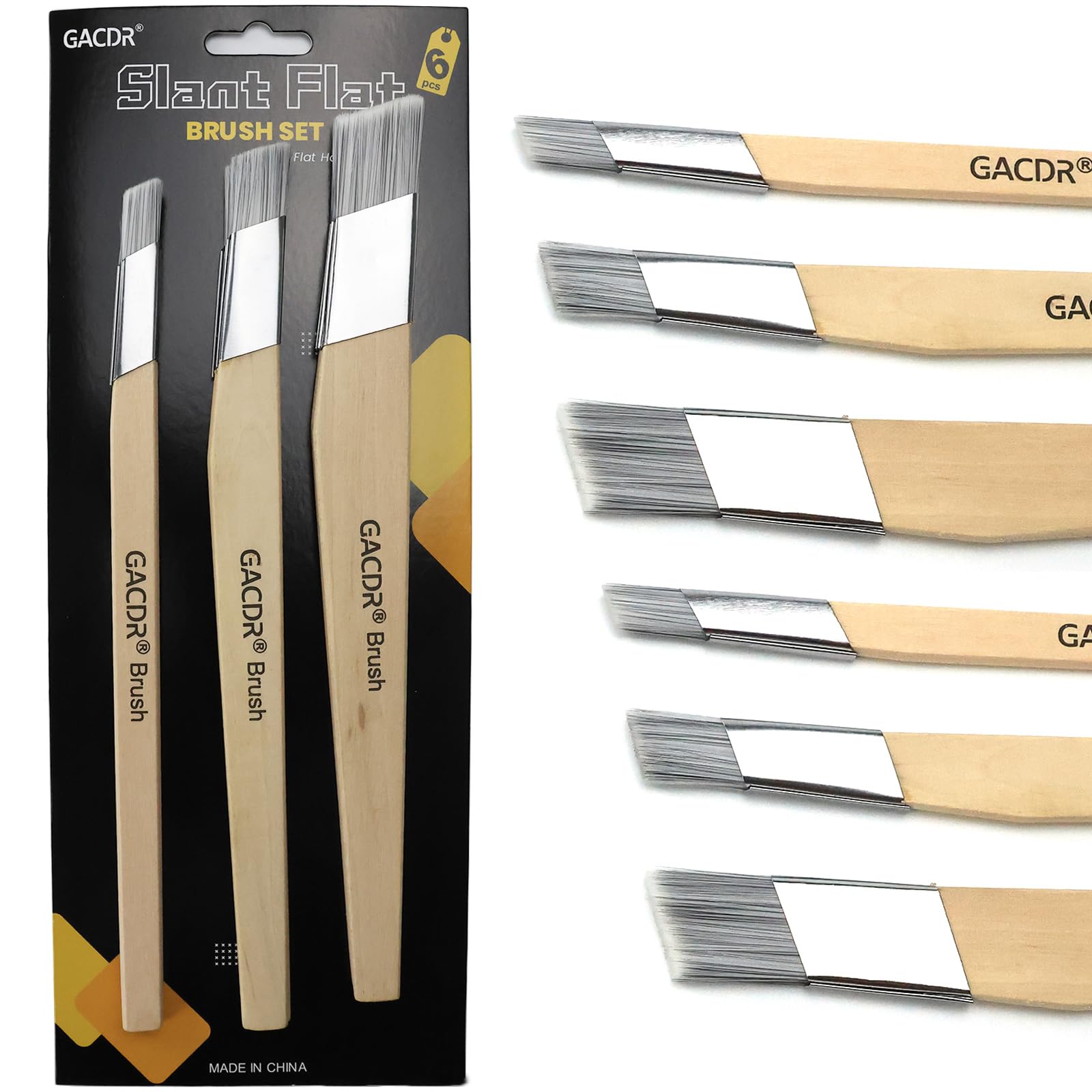
2. Slant Lining Fitch Trim Paint Brushes, Pack of 6, 0.5″, 0.75″, 1″
Six narrow brushes that get primer into places a 2-inch sash brush simply cannot reach.
This is the finest set on the list, literally. The narrowest brush is 0.5 inches wide, against the 3-inch flat brush further down — that is a 6.0x gap in head width, and it tells you exactly who this set is for. You get two of each size across 0.5, 0.75, and 1 inch, all with angled, micro-tipped synthetic bristles built for control.
The job these do best is cutting in around cabinets and along the edges of trim. Firm micro-tipped bristles hold primer without splaying, so the line stays sharp on the first pass instead of needing a second correction. Each brush has a wooden handle and a rust-proof stainless steel ferrule (the metal band that locks the bristles to the handle), which keeps the head tight when you are pushing thick primer into a corner.
The honest limit is coverage. Six small brushes will not prime a wall, and the listed paint type is watercolor — a hint that these are aimed at fine edges and detail rather than full-body priming. Precision is what wins people over here, and it draws the strongest praise of any quality in this set. Buy it as a detail companion, not your only brush.
Where it shines: cabinet frames, window mullions, baseboard ends, and any edge where a fat brush would slop primer onto the wrong surface.
The honest catch: the 0.5-inch head is slow work by design. Plan on this being your edge brush and keep a wider one loaded for the open areas.
Go this route: if your priming project is all edges — cabinets, trim, and tight corners — and you would rather have six sizes than one big brush.
Leave it on the shelf: if you need to cover square footage, because none of these six brushes is built for that.
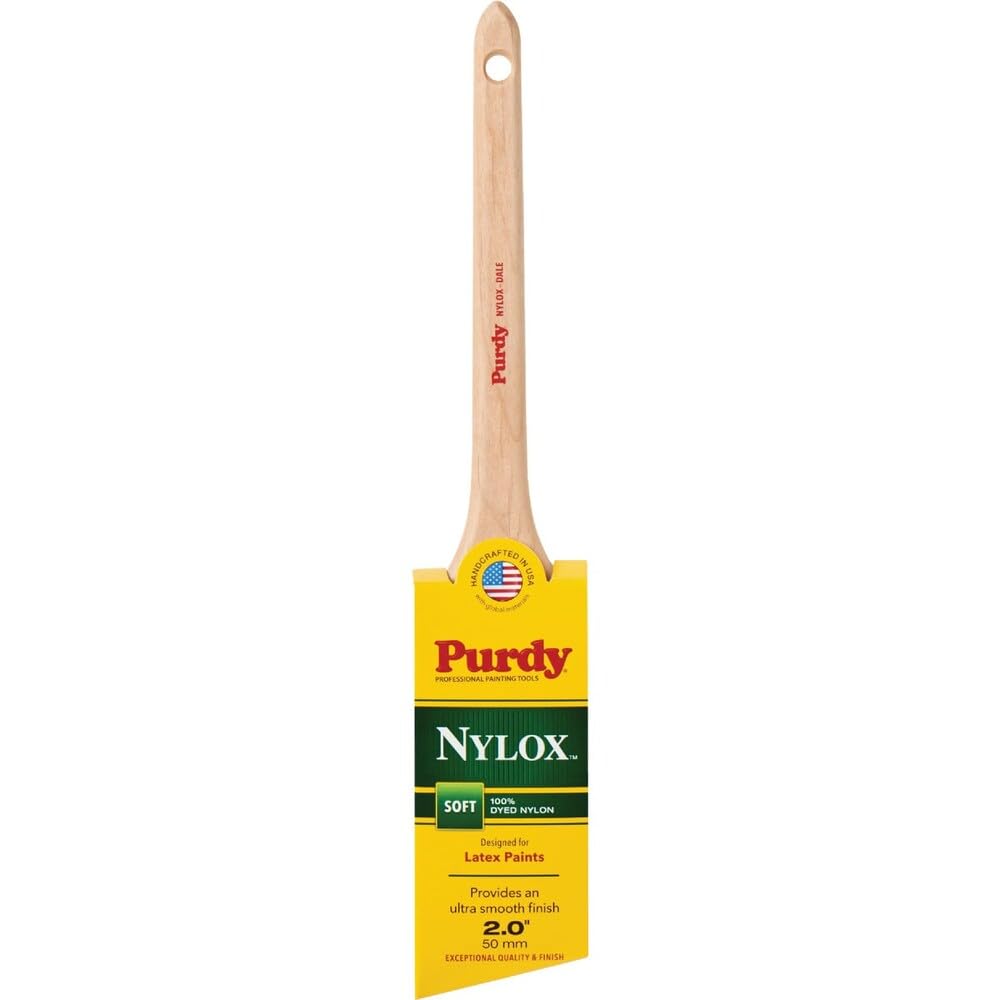
3. Purdy 144080220 Nylox Dale Paint Brush, 2 in.
A 2-inch nylon brush that leaves primer flat enough to make the topcoat look sprayed on.
Purdy builds this brush specifically for latex paint and primers, which is a direct hit on the keyword. The bristles are 100% nylon, tipped and flagged at the ends so they spread primer into a smooth film rather than dragging it into ridges. It weighs 22.68 g, so your hand stays fresh through a full round of door edges.
Where it pulls ahead of the Wooster above is finish quality. Nylon filaments leave fewer brush marks, and the softer face is more forgiving if you are priming a surface you plan to topcoat in a semi-gloss or high-gloss sheen where every ridge would catch the light. Alderwood handles and a stainless steel ferrule round out the build, and the brush is made for interior windows, doors, and trim.
The one place to go in with eyes open is bristle durability. Reports run both ways — some batches hold up over the long haul, others lose center bristles mid-job. Treat it as your finish brush rather than your heavy-scrubbing brush, rinse it thoroughly after primer, and it will serve you well. Value is also a mixed picture depending on where you buy it.
The editorial read: soft, tipped nylon gives the smoothest primer lay-down of any single brush here, which matters most on doors and trim you will topcoat in a sheen.
The fair caveat: expect to inspect the head after each wash — center-bristle shedding is the recurring note, not a universal one.
Best fit: detail-focused painters priming doors and trim that will get a glossy topcoat where smoothness shows.
Think twice: if you want a brush you can abuse with heavy scrubbing, because the flagged nylon is built for finesse.
4. Zibra Flat Paint Brush for Top Coats, Flat Surfaces, Walls and Doors, 3-inch
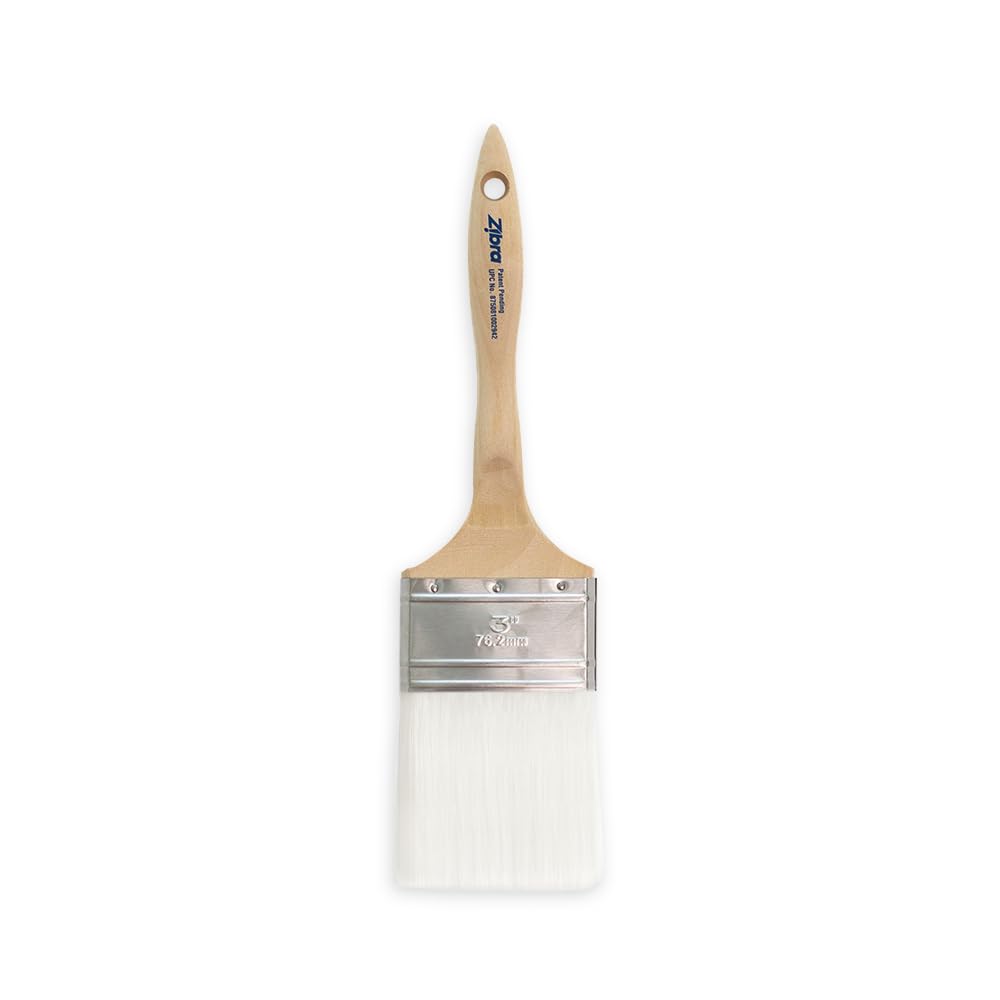
The widest head here, built to lay primer across flat doors and wall faces in fewer passes.
The number that sets this brush apart is 3 inches — the same width as the LAPXSNZD flat brush below, and a full inch wider than the 2-inch sash brushes that dominate this list. It weighs 0.16 kg, lighter than the 0.36 kg LAPXSNZD, so the extra width does not come with extra arm fatigue. The flat head is aimed at trim, flat surfaces, and furniture, and it handles all paints and stains.
Zibra’s filament technology is the reason this brush can pick up a heavy primer load. Its smaller filaments pack 25% more bristle into the same head than industry standard brushes, which gives stronger primer pick-up and controlled release. For primer specifically, that is exactly what you want: a full load that goes onto the surface instead of dripping off the tip.
The hourglass handle is shaped to reduce hand cramping, and the construction uses aluminum inserts, epoxy glue, and threaded nails rather than relying on a simple staple. Bear in mind this is a single brush, not a multi-pack, so it is the pick for someone priming one door collection or one wall who wants width and smoothness over spare brushes.
Why the width wins
- 3-inch flat head covers door and wall faces faster than a 2-inch sash brush
- 25% more pack-out from smaller filaments means stronger primer pick-up and controlled release
- Hourglass handle designed to cut hand cramping on long passes
- Epoxy glue and threaded nails hold the head together under heavy primer loads
What to keep in mind
- Single brush only — no backup for a two-color or multi-room primer job
- Flat head gives up the corner control of an angled sash brush
Made for: priming flat doors, panels, and wall faces where a wide, smooth pass matters more than corner precision.
Not the one for: tight trim runs and inside corners — grab the Wooster or the fitch set for those.
5. LAPXSNZD 3 inch Flat Paint Brushes, 6 Pack

Six 3-inch flat brushes you can prime with, rinse, and grab again for the topcoat.
Six 3-inch flat brushes is a lot of coverage for a bulk pack, and that is the whole pitch here. The synthetic fill is set in epoxy resin with a lightweight plastic handle, and the brushes are described as economical multi-purpose tools for cleanup and reuse. For a rental turnover or a deck that needs a primer coat front and back, having six means you are never waiting on a brush to dry.
At 0.36 kg, this pack is significantly heavier than the Zibra’s 0.16 kg single brush — that is the trade-off of buying six at once. Each individual brush is still a standard 3-inch flat, so the extra weight is in the total set, not in your hand per pass. They handle walls, trim, cabinets, doors, fences, and touch-ups, which is the range a bulk primer brush needs to cover.
The recurring note across the review pages is bristle durability. Some brushes hold their fill through use, others drop bristles as you go. If you go in expecting these as semi-disposable primer brushes rather than heirloom tools, that fits the economics perfectly. Just run a quick comb-through before your first load to shake out anything loose.
Value read: six 3-inch brushes built for reuse, which means you can dedicate one to primer and keep the rest for topcoat without cross-contaminating colors.
The trade-off: loose bristles show up on some units — comb each brush before the first load and you sidestep it.
Smart buy for: landlords, renters, and anyone priming a large area who values having spare brushes on hand.
Skip if: you want a single precise sash brush for trim — the flat head here is a coverage tool.
6. PinStone 3 Pack Professional Paint Brushes Set, 1″, 1.5″, 2″

Three flagged-tip brushes sized for cabinet doors, built to hold primer without shedding it.
Shedding is the enemy when you prime cabinets, because a stray bristle in a fresh primer coat means sanding it out later. PinStone lists no shedding and no clumpy streaks as the headline, backed by thicker flagged tips that hold more paint and give greater coverage. You get a 1-inch, a 1.5-inch, and a 2-inch flat brush — the trio that covers cabinet frames, doors, and the rails between them.
The rubber handle is the detail that separates this set on long jobs. It is solvent-resistant, with a thumb groove and non-slip holes and stripes for stable control, and it is shaped to relieve hand fatigue during tedious work. When you are brushing primer into six cabinet boxes and a dozen doors, that grip earns its keep. The stainless steel ferrule is welded with no nails, so there is less hiding dirt and a simple water rinse gets it clean for reuse.
One structural detail note for primer specifically: a 1-inch brush is the starting width of this set, well under the 2-inch sash brushes at the top of the list. If your job is cabinet faces and edges, that narrow start is exactly right. What reviewers rave about here is the finish: a smooth glide that soaks up primer without dripping, the difference between clean cabinet primer and a puddle at the door seam.
Why it fits cabinets: flagged tips hold a full primer load without dripping, and the 1-inch to 2-inch spread covers frames and doors without switching tools.
One thing to plan for: the solvent-resistant rubber handle is the comfort feature, not a heavy-scrubbing feature — save the scrubbing for a stiff-bristled brush.
Ideal for: cabinet and furniture priming where shedding and streaks are the two things you cannot afford.
Look elsewhere: if wall faces are in the job, since the widest brush here is 2 inches.
7. Bates Paint Brushes, 2.5-Inch, 12 Pack Angle Brushes

Twelve 2.5-inch angled brushes — enough that you can keep a fresh one loaded for every room.
Twelve brushes out of one pack is a different kind of value than a single premium brush, and it suits a whole-house primer job where you would rather rotate brushes than wash constantly. Each is a 2.5-inch angled brush with durable synthetic bristles, a lightweight wooden handle, and a rust-resistant stainless steel ferrule. The angle is for edging and trimming, which is where a lot of primer work actually happens.
The 2.5-inch width sits between the 2-inch sash brushes and the 3-inch flat brushes on this list, giving a bit more coverage along ceilings and baseboards without giving up corner control. The synthetic bristles are rated to deliver even paint without streaks, and the whole set is designed for both professional and DIY use. Reviewers repeatedly note the super soft bristles and how easily they clean up between coats.
The one thing to weigh honestly is durability. Some brushes hold up nicely, others lose several bristles during use — the mixed reports you would expect from a volume pack aimed at economics. Treat them as long-running disposables and you will get solid value. For edging on trimwork corners, ceilings, and baseboards, “performance for the money” is the fair verdict on this set.
Where twelve wins
- 12 angled brushes so you can keep one loaded per room and skip constant washing
- 2.5-inch width balances coverage and corner control better than a straight 2-incher
- Super soft synthetic bristles ease cleaning between primer and topcoat
Weigh before you buy
- Bristle shedding turns up on some brushes in the pack
- The 1.24 kg total set is heavy to store and carry between jobs
Reach for it: if you are priming a whole house or a rental and want a brush loaded and ready in every room.
Look past it: if you want one brush built to last years — the economics here favor rotation, not longevity.
8. Pro Grade Paint Brushes, 2 Inch Angle Paint Brush, 12 Pack

A dozen 2-inch angle brushes with thick synthetic filament that carries a heavy primer load.
Thick synthetic filament is the feature to focus on here, because it is what lets a brush carry more primer across the wall before you reload. That saves time and cuts streaks in the finish. You get twelve 2-inch angle brushes, each with a thinner tip at the ends for better precision on cut-in work — the exact motion you repeat along every ceiling line and corner while priming.
For a primer job, medium stiff bristles are the right middle ground. They push thick primer into the surface without flexing away, and they still release cleanly at the end of a pass. Each brush has a durable wooden comfort grip handle, and the brushes are rated for acrylic, decorative, oil, and specialty paints, plus interior and exterior work. Wash and reuse is built into the design.
What sets this pack apart from the Bates 12-pack is its stated comparison to brand-name brushes. Reviewers rate its quality and functionality alongside the name brands, and it is the widest skill spread on this list. Bristle retention gets some mixed notes, as it does with any volume pack, so a quick pre-load comb is worth the ten seconds. Given the twelve-brush count, you have plenty to rotate through.
The case for it: twelve 2-inch angle brushes with thick filament that carries more primer per load, priced for high-volume work where one brush would run out fast.
The honest note: bristle retention varies, so inspect each head before its first load and rotate.
Pick it for: full-house primer runs along walls and trim where you want a loaded brush ready at every corner.
Pass on it: if you want a single premium brush for a small trim job — buy the Wooster pack instead.
Understanding the Specs
Brush Width
Width is the number that decides whether a brush is a trim tool or a coverage tool. A 2-inch angled sash brush is the standard for cutting in along trim and door frames. A 3-inch flat brush moves faster on doors and wall faces but gives up corner precision. Narrow fitch brushes in the 0.5 to 1-inch range are for edges and touch-up. Match the width to the surface you are priming, and you will not fight the tool.
Bristle Type and Filament
Synthetic filaments hold up well with water-based primers and clean up with a rinse. Flagged bristles have split ends that spread primer into a smooth film, which is why they leave fewer streaks. Medium stiff bristles push thick primer into the surface, while soft nylon gives a smoother finish on trim you will topcoat in a glossy sheen. Natural fill needs more careful cleaning with oil-based products.
Ferrule and Handle
The ferrule is the metal band holding the bristles to the handle. Stainless steel and rust-proof ferrules keep the head tight when primer is pushing against the bristles. Welded ferrules with no nails leave less space for dirt to hide. Handles matter for long jobs: a rubber-grip or an ergonomic hourglass shape reduces hand cramping during repeated passes, and a wooden handle is lighter in the hand.
Pack Size and Reuse
A single brush suits one room and rewards gentle cleaning. A multi-pack suits whole-house primer projects where you would rather switch brushes than stop to wash. Six and twelve packs make sense when primer is one stage in a longer paint job. Whatever the pack size, rinse the brush right after the primer coat, because a stiff brush left loaded will not come clean.
FAQ
Can I use the same brush for primer and topcoat paint?
What width brush is best for priming trim and baseboards?
Does a soft or firm bristle work better with thick primer?
Will a synthetic bristle brush work with oil-based primer?
How many brushes do I need to prime a whole room?
Why do my brushes shed bristles into the primer?
Is a flat brush or an angled brush better for cutting in primer?
How long should a primer brush last before I replace it?
Can I prime cabinets with a 3-inch flat brush instead of an angled sash brush?
Do I need different brushes for water-based and oil-based primer?
Final Thoughts: The Verdict
For most priming jobs, reach for the brush for primer that handles the widest range: the Wooster Q3211-2 Shortcut Angle Sash. Its synthetic blend handles both water-based and oil-based primers, and its 2-inch angled head cuts clean lines along trim and doors. If your project is almost all edges, grab the Slant Lining Fitch set for its 0.5 to 1-inch precision heads. For priming flat doors or wall faces, the Zibra 3-inch flat brush lays it down smoothest. Wherever you land, the crowd favorite here holds 4.5+ stars across 800+ ratings on Amazon — a fair signal it works as advertised for the way most people prime.
How We Picked
We do not accept paid placement. Every pick is matched to a real buyer and a real use-case; we do not hands-on test units.
Sources & Methodology
Specifications: manufacturer listings and product documentation. Review insights: verified customer reviews, as of November 2026. Pricing: not shown on this page (it changes often); check the current price via the retailer link.
As an Amazon Associate, Gadgets Feed earns from qualifying purchases. This does not affect which products we feature.