
Wireless freedom in a gaming headset is supposed to mean zero compromise — no tripping over cables, no desk clutter, and total freedom of movement. Yet the reality for many BT gaming headsets is a lottery of laggy audio, muddy microphones, and battery life that dies mid-raid. The right pair changes everything, locking in low-latency audio, crystal-clear comms, and enough endurance to outlast any session.
I’m Min — the co-founder and writer behind Gadgets Feed. I spend my days dissecting wireless protocols, driver response curves, and battery cell chemistry to separate real gaming-grade hardware from marketing noise.
This guide evaluates seven models across latency, driver quality, battery endurance, and mic clarity to help you find the best bt gaming headset that actually delivers on its wireless promise without breaking your budget or your game.
How To Choose The Best BT Gaming Headset
Picking the wrong wireless gaming headset usually comes down to a single overlooked spec — the wireless protocol. Standard Bluetooth adds enough latency to throw off your aim in competitive shooters, while a dedicated 2.4GHz connection or Bluetooth 5.3 keeps audio in sync with the action. Beyond that, driver quality, mic clarity, and battery life define whether a headset feels premium or disposable.
Prioritize Low-Latency Wireless Over Standard Bluetooth
Bluetooth 5.0 or 5.3 alone can introduce 100–200ms of delay — fine for music, terrible for reacting to a footstep. Look for headsets that include a 2.4GHz wireless dongle, which cuts latency to under 20ms. The best models offer dual connectivity, letting you stay on low-latency 2.4GHz for game audio while taking calls via Bluetooth simultaneously.
Check Driver Size and Diaphragm Material
The 50mm driver is the standard for gaming headsets, but the diaphragm material matters just as much. Titanium-coated or neodymium drivers reproduce high-frequency details like footsteps and reloads with more clarity than standard paper or mylar cones. A good driver delivers punchy bass without drowning out the mids that carry spatial cues.
Battery Life and Charging Speed Matter More Than You Think
Look beyond the headline battery number. A headset with 30 hours of life might drop to 15 with RGB lighting active, while a 70-hour model with fast charging can top up three hours of play in under 15 minutes. Hot-swappable battery systems, like the Infinity Power System, eliminate downtime entirely by letting you swap a depleted pack for a fresh one.
Quick Comparison
On smaller screens, swipe sideways to see the full table.
| Model | Category | Best For | Key Spec | Amazon |
|---|---|---|---|---|
| SteelSeries Arctis Nova Pro | Premium | Unlimited Playtime | Hot-swap batteries + ANC | Amazon |
| SteelSeries Arctis Nova 7P | Premium | PS5 & Dual Audio | Neodymium 40mm drivers | Amazon |
| Logitech G522 | Premium | Audio Customization | 48kHz/24-bit PRO-G drivers | Amazon |
| Razer BlackShark V3 | Mid-Range | Ultra-Low Latency | 10ms HyperSpeed Gen-2 | Amazon |
| ASUS ROG Pelta | Mid-Range | Lightweight Comfort | 309g / 70hr battery | Amazon |
| HyperX Cloud Flight 2 | Mid-Range | Extreme Battery Life | 100hr 2.4GHz (RGB off) | Amazon |
| HyperX Cloud Flight | Budget | Console-Grade Wireless | 30hr / 50mm drivers | Amazon |
In‑Depth Reviews
1. SteelSeries Arctis Nova Pro Wireless

The Arctis Nova Pro Wireless is the closest thing to an endgame headset for players who refuse to wait for charging. Its Infinity Power System ships with two batteries — one powers the headset while the other charges in the DAC base station, so you can swap in under a second and keep playing indefinitely. The Premium High Fidelity Drivers deliver a remarkably clean soundstage, and the 4-mic hybrid ANC filters out room noise well enough to maintain immersion during intense matches.
The ClearCast Gen 2 microphone is the weakest link here — voice pickup is serviceable for comms but lacks the richness of dedicated streaming mics. The Sonar software unlocks a Pro-grade Parametric EQ that lets you dial in everything from bass extension to treble air, and the twin USB ports on the base station let you toggle between a PC and a PlayStation with one button press. The 20-hour per-battery rating is conservative; with RGB off and ANC on, expect closer to 22 hours before the first swap.
Comfort is excellent for marathon sessions, though the ear cup openings are a touch narrow for larger ears. The charging port sits behind a removable cover on the left cup, which is an odd design choice for a premium product. Despite those quirks, the Nova Pro Wireless earns its spot for the sheer convenience of never stopping your game to plug in.
Why it’s great
- Hot-swappable battery system eliminates downtime
- Hybrid ANC with Transparency Mode handles noisy environments
- Dual USB ports for instant PC/console switching
Good to know
- Microphone quality lags behind more affordable rivals
- Ear cup openings are snug for larger ears
- Charging port placement under a cover is inconvenient
2. SteelSeries Arctis Nova 7P Wireless

The Arctis Nova 7P strikes a near-perfect balance between price and performance for PlayStation and PC gamers. Its neodymium magnetic drivers deliver an ultra-detailed soundscape — crystal-clear highs for footsteps, punchy mids for dialogue, and controlled bass that never muddies the spatial cues. The dual audio stream capability is a standout feature: you can run low-latency 2.4GHz from the USB-C dongle for game audio while simultaneously taking Discord calls or playing music via Bluetooth from your phone.
The 38-hour battery life is honest — it holds up well with RGB off and normal volume levels, and the USB-C fast charging delivers six hours of play from a 15-minute top-up. The retractable ClearCast Gen 2 microphone is neatly hidden when not in use and produces clear voice capture for both game chat and work calls. The fit is slightly looser than the Nova Pro, which some players prefer for long sessions, and the AirWeave memory foam ear cushions stay breathable even in warm rooms.
One recurring complaint centers on the USB-C dongle shape, which can block adjacent ports on tight laptop layouts. The Bluetooth also does not automatically disconnect when the headset powers down, so you may need to manually toggle it off to prevent battery drain. Still, the Nova 7P delivers exceptional positional audio and flexible connectivity at a mid-range price that undercuts most competitors with similar driver quality.
Why it’s great
- Simultaneous 2.4GHz game audio + Bluetooth calls
- Neodymium drivers provide excellent spatial detail
- USB-C fast charging recovers 6 hours in 15 minutes
Good to know
- Dongle shape may block adjacent USB ports
- Bluetooth does not auto-power-off with the headset
- Ear cups run slightly warm after extended use
3. Logitech G522 Lightspeed Wireless

Logitech’s G522 packs a surprising amount of audio fidelity into a 280-gram frame. The PRO-G audio drivers produce a clean 48kHz/24-bit signal with notably low distortion, giving you punchy bass without sacrificing the mids and highs needed for competitive awareness. The tri-connectivity — Lightspeed wireless via the USB-A dongle, Bluetooth, or wired USB-C — ensures you can use it with anything from a PC to a Nintendo Switch without dongle swapping.
The full-bandwidth 48kHz/16-bit microphone is a genuine step up from most gaming headsets in this tier. Blue VO!CE software integration gives you access to noise gating, EQ, and compressor presets that make your voice sound broadcast-ready without extra gear. The LIGHTSYNC RGB is fully customizable through G HUB and can be set to react to in-game events, though running it at full brightness cuts the 60-hour battery estimate by nearly half. The washable suspension headband is a thoughtful touch for hygiene during long-term use.
Where the G522 falls short is maximum volume — some users find it quieter than rival headsets, especially for music listening. The default EQ profile is tuned for gaming and sounds thin on bass-heavy tracks until you tweak it. The all-plastic build feels sturdy enough but doesn’t match the premium tactile quality of the SteelSeries or Razer options at similar price points.
Why it’s great
- 48kHz/24-bit PRO-G audio with low distortion
- Blue VO!CE software for pro-level mic tuning
- 280g lightweight design with washable headband
Good to know
- Lower max volume than some competitors
- Default EQ sounds thin for music
- Plastic build lacks premium tactile feel
4. Razer BlackShark V3 Wireless
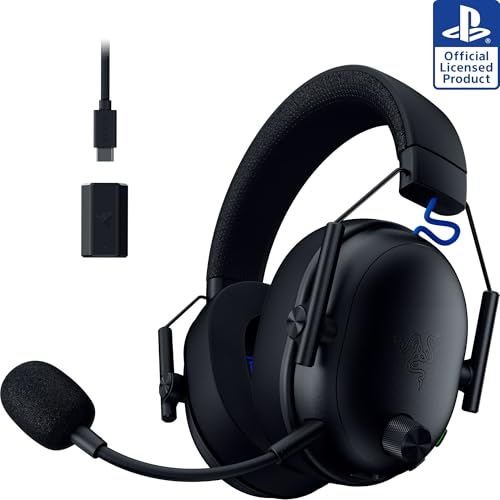
The BlackShark V3 Wireless is Razer’s answer to competitive gamers who need every millisecond. The HyperSpeed Wireless Gen-2 technology claims latency as low as 10ms, which is nearly indistinguishable from a wired connection — crucial for rhythm games, competitive shooters, and any scenario where audio-visual sync matters. The TriForce Titanium 50mm drivers use a titanium-coated diaphragm that reproduces high-frequency details like reloads and distant footsteps with exceptional precision.
The detachable HyperClear Super Wideband 9.9mm microphone is the star of the show here. It captures a broader frequency range than typical gaming mics, making your voice sound fuller and more natural to teammates. The headset also supports simultaneous Bluetooth and 2.4GHz audio, so you can keep your game feed on the low-latency dongle while taking a call from your phone. The pro-tuned FPS profiles are genuinely useful — you can save custom EQ settings directly to the headset, eliminating the need for software on tournament PCs.
The set-up instructions are a weak point — the USB-C dongle arrives tucked inside the packaging in a spot that’s easy to overlook, and there is no included USB-A adapter for older devices. The passive noise cancellation is decent but not ANC-level, so loud roommates may still bleed into your game. Battery life is strong in real-world use, comfortably exceeding ten hours daily for nearly a week on a single charge.
Why it’s great
- 10ms HyperSpeed wireless for near-wired latency
- Titanium-coated 50mm drivers for precise highs
- Super Wideband mic captures natural voice detail
Good to know
- Setup instructions are unclear about dongle location
- No USB-A adapter included in the box
- Passive noise cancellation, not active
5. ASUS ROG Pelta Wireless

The ASUS ROG Pelta is engineered for gamers who prioritize comfort during all-day sessions. At just 309 grams, it is one of the lightest wireless gaming headsets available, and the three-level adjustable elastic headband distributes weight evenly across the crown instead of clamping on the sides. The 50mm titanium-plated diaphragm drivers deliver a 20Hz–20kHz frequency response with a slightly neutral sound signature — bass is present but not overwhelming, making positional audio in FPS games especially clear.
The 10mm detachable super-wideband microphone is surprisingly good for voice clarity, with background noise rejection that keeps keyboard clatter out of comms. The tri-mode connectivity — Bluetooth, 2.4GHz via ROG SpeedNova, and USB-C wired — covers every platform from PC to PlayStation to mobile. The 70-hour battery life in 2.4GHz mode with RGB off is among the best in this class, and a 15-minute charge recovers three hours of playtime.
Where the Pelta loses some ground is in build feel — the body uses more plastic than the SteelSeries or Razer headsets, which makes it feel less premium despite being durable in practice. The default sound profile leans slightly bright, and some users will want to EQ down the treble for longer listening sessions. The microphone, while clear, lacks the super-wideband range of the Razer BlackShark V3 for truly studio-grade voice capture.
Why it’s great
- 309g featherweight design for fatigue-free wear
- 70-hour battery with 15-min fast-charge recovery
- Excellent background noise rejection on the mic
Good to know
- Plastic build lacks premium tactile feel
- Default treble may sound harsh to sensitive ears
- Mic lacks super-wideband range of pricier rivals
6. HyperX Cloud Flight 2
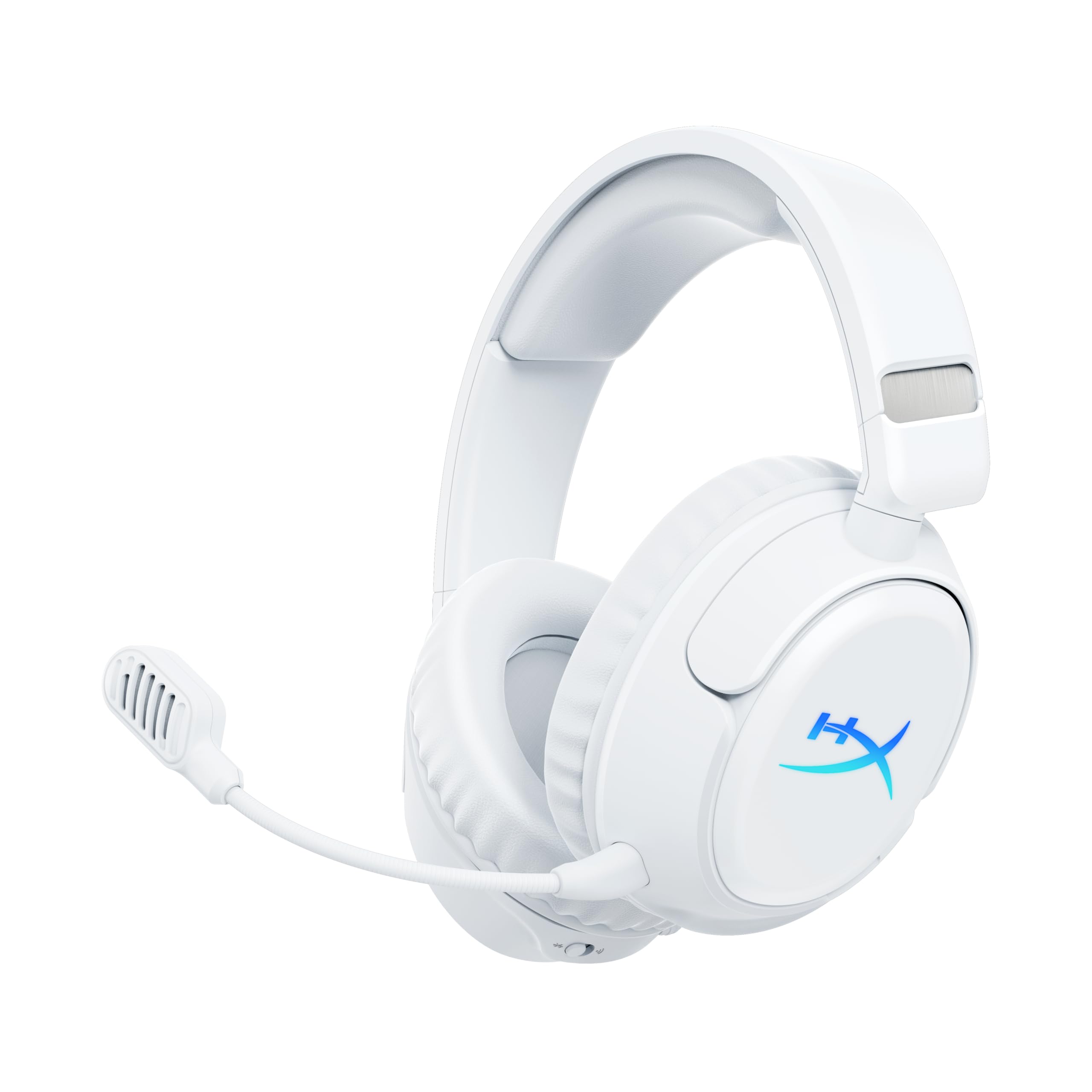
The HyperX Cloud Flight 2 is the endurance champion of this lineup. HyperX rates the battery at up to 100 hours on 2.4GHz with lighting off — a figure that holds up in real-world testing, with one user reporting 70% remaining after 30 days of three-to-five-hour daily use. Even with full RGB glow enabled, the headset manages around 23 hours, which is still competitive. The Bluetooth 5.3 implementation provides a stable connection with extended range up to 20 meters, and the Instant Pair feature works seamlessly with select OMEN laptops without requiring a dongle.
The magnetic earcup plates with full-panel RGB are a welcome customization option — you can pop them off and swap colors or styles without tools, and save one lighting profile directly to the headset via NGENUITY software. The angled 50mm drivers deliver esports-level audio with punchy lows and clear positional cues, though the sound leans slightly toward bass-heavy tuning that can obscure mid-range details in busy mixes. The detachable 10mm boom mic has an LED mute indicator that is visible in peripheral vision, and there is a built-in internal microphone for a cleaner look when you don’t need the boom.
The biggest controversy with the Cloud Flight 2 is battery inconsistency — most users report exceptional endurance, but a small number have experienced rapid drain from 100% to dead within minutes. This may be a firmware calibration issue that HyperX can address, but it is worth noting for potential buyers. Comfort is typical HyperX quality with memory foam ear pads and steel sliders, and the multi-platform compatibility via USB-C dongle plus adapter covers PC, PS5, PS4, and Switch out of the box.
Why it’s great
- 100-hour battery in 2.4GHz mode with RGB off
- Swappable magnetic earcup plates with full RGB
- Bluetooth 5.3 with 20-meter range
Good to know
- Bass-heavy tuning can mask mid-range details
- Rare battery drain issues reported by some users
- RGB cannot be fully controlled via the mobile app
7. HyperX Cloud Flight

The original HyperX Cloud Flight remains a solid entry-level wireless option for console gamers on a tight budget. The 50mm dynamic drivers produce the same signature HyperX sound — warm, non-fatiguing, with enough bass to make explosions feel weighty without overwhelming the mix. The 30-hour battery life is honest for the price tier and will comfortably cover a weekend of gaming between charges. The 90-degree rotating ear cups with LED lighting add a polished look that belies the headset’s accessible positioning.
The detachable noise-cancelling microphone is a mixed bag — it does a decent job filtering out ambient room noise, but the voice pickup quality is noticeably thinner and more muffled than the mic on the Cloud Flight 2 or the Razer BlackShark V3. Several users report teammates complaining about audio quality, and the issue appears to be hardware-limited rather than something EQ can fix. The wireless connection is rock-solid 2.4GHz via USB dongle, with Bluetooth 5.0 providing backup for mobile use.
Comfort is where the Cloud Flight shines — memory foam ear cushions and premium leatherette keep pressure low even during extended sessions, and the steel sliders feel durable despite the plastic body. The USB Micro charging port is a notable inconvenience in an era where everything else has moved to USB-C, and the lack of simultaneous Bluetooth and 2.4GHz means you cannot take calls while gaming. For the price, though, it delivers reliable wireless gaming audio with HyperX’s proven comfort formula.
Why it’s great
- HyperX signature comfort with memory foam pads
- 30-hour battery covers weekend gaming sessions
- Solid 2.4GHz wireless with no noticeable lag
Good to know
- Microphone quality is thin and muffled
- Uses USB Micro instead of USB-C
- No simultaneous Bluetooth + 2.4GHz audio
FAQ
Is Bluetooth good enough for competitive gaming?
How long should a gaming headset battery last per charge?
Does RGB significantly reduce battery life?
Final Thoughts: The Verdict
For most users, the best bt gaming headset winner is the SteelSeries Arctis Nova Pro Wireless because its hot-swappable battery system solves the single biggest pain point of wireless gaming — running out of power mid-session. If you want the best balance of sound quality and weight, grab the ASUS ROG Pelta. And for budget-conscious players who still want 2.4GHz wireless reliability, nothing beats the HyperX Cloud Flight.