
You push play on your favorite track, and what comes out of your current speakers is a muddy, boxy mess—the bass is flabby, the vocals are tucked behind a veil of distortion, and all the detail you know is in the recording simply isn’t there. That hollow feeling isn’t about your ears; it’s about the hardware tasked with turning electricity into sound. The right set of powered speakers can transform your listening experience, but with so many options claiming big performance for small budgets, finding a pair that delivers genuinely flat response and usable low-end extension without breaking the bank is the real challenge.
I’m Min — the co-founder and writer behind Gadgets Feed. I’ve spent dozens of hours analyzing frequency response graphs, driver materials, amplifier topologies, and real-user measurements to separate the true performers from the gimmicks in the active speaker space.
This guide breaks down the six most compelling powered speaker options available right now. Whether you are building a desktop studio, upgrading your vinyl setup, or just tired of laptop speakers, I have researched the specs, read the long-term reviews, and compared the critical details so you can confidently pick the best budget active speakers for your exact setup.
How To Choose The Best Budget Active Speakers
Not all powered speakers are created equal. A low price tag often hides compromises in amplifier noise floor, crossover design, or driver quality. Here are the three factors that separate a great value from a regrettable purchase.
Driver Size and Cabinet Construction
The driver is the heart of the speaker. A larger woofer—typically 4 to 5.25 inches for this category—can move more air, which translates to deeper bass. But the woofer is only as good as the cabinet it sits in. Solid MDF or real wood cabinets resist panel resonance far better than thin plastic enclosures, keeping the sound clean and the bass tight even at moderate volumes. A speaker with a 5.25-inch polypropylene woofer in a thick MDF cabinet will almost always outperform a 4-inch driver in a flimsy box.
Amplifier Power and Connectivity
The internal amplifier’s job is to drive the speaker cleanly. Look at RMS wattage rather than peak power—continuous output is what you actually hear. Class D amplifiers are common in this price tier because they run cool and efficient. Beyond power, check your input needs. Optical input gives you a direct connection to your TV without the noise of a headphone jack. Balanced TRS or XLR inputs are a must if you ever plan to use these with a studio interface. Bluetooth 5.0 or higher with aptX support ensures wireless streaming retains audio fidelity.
Frequency Response and Sound Signature
Frequency response numbers tell you the range of sound a speaker can produce, but the shape of that response matters more. Aim for a speaker with a response that stays flat or has a gentle slope below 80 Hz. A speaker rated down to 60 Hz will deliver bass you can feel for acoustic drums and bass lines, while one that only reaches 90 Hz will sound thin. Beware of marketing that lists a very low number without a ±dB tolerance—that spec is often measured at a huge dip and is not usable.
Quick Comparison
On smaller screens, swipe sideways to see the full table.
| Model | Category | Best For | Key Spec | Amazon |
|---|---|---|---|---|
| Edifier MR3 | Monitor | Desktop production with app EQ | 52Hz–40kHz response, 18W x 2 RMS | Amazon |
| Rockville APM5D | Studio Monitor | Home studio with USB interface | 5.25″ woofer, 250W peak, DSP crossover | Amazon |
| KRK ROKIT7G4 | Professional | Accurate mixing with Kevlar drivers | 7″ Kevlar woofer, DSP-driven EQ | Amazon |
| ADAM Audio T5V | Recording Monitor | Critical listening with U-ART tweeter | U-ART tweeter, 45Hz bass reflex | Amazon |
| Micca PB42X | Bookshelf | Vocal clarity with subwoofer expansion | Carbon fiber woofer, 15W x 2 RMS | Amazon |
| Majority D40 | Multimedia | Versatile connectivity on a strict budget | 60W amplifier, 4″ bass driver | Amazon |
In‑Depth Reviews
1. Edifier MR3 Powered Studio Monitor Speakers

The Edifier MR3 is the most complete package in this category, offering Hi-Res Audio certification with a frequency response that extends from 52Hz up to 40kHz. This wide range ensures that you hear the full harmonic content of your music, from the fundamental thump of a kick drum to the airy shimmer of a hi-hat. The 3.5-inch mid-low drivers paired with 1-inch tweeters deliver a balanced, neutral sound that works equally well for audio production and casual listening.
Connectivity is a standout feature here. The MR3 includes balanced TRS inputs, a feature rarely seen at this price point, alongside standard RCA and AUX inputs. The integrated Bluetooth 5.4 supports multi-point connection, letting you switch between a computer and a phone without re-pairing. A dedicated headphone output and the ability to switch between Music, Monitor, and Custom EQ modes via the Edifier ConneX app give you precise control over the sound signature in any room.
Build quality is excellent, with MDF cabinets that reduce unwanted panel resonance. The peak SPL of 92.5dB means these speakers can fill a medium-sized room with clean, undistorted audio. For the asking price, the MR3’s combination of Hi-Res certification, professional-grade inputs, and app-based sound shaping is unmatched in this tier.
Why it’s great
- Hi-Res Audio certified for accurate, extended treble response
- Balanced TRS inputs enable professional studio integration
- Customizable EQ via the ConneX mobile app
Good to know
- Bluetooth volume is not fully controllable by the source device
- 3.5-inch drivers limit extreme low-end slam compared to larger models
2. Rockville APM5D 5.25″ Studio Monitor Speakers
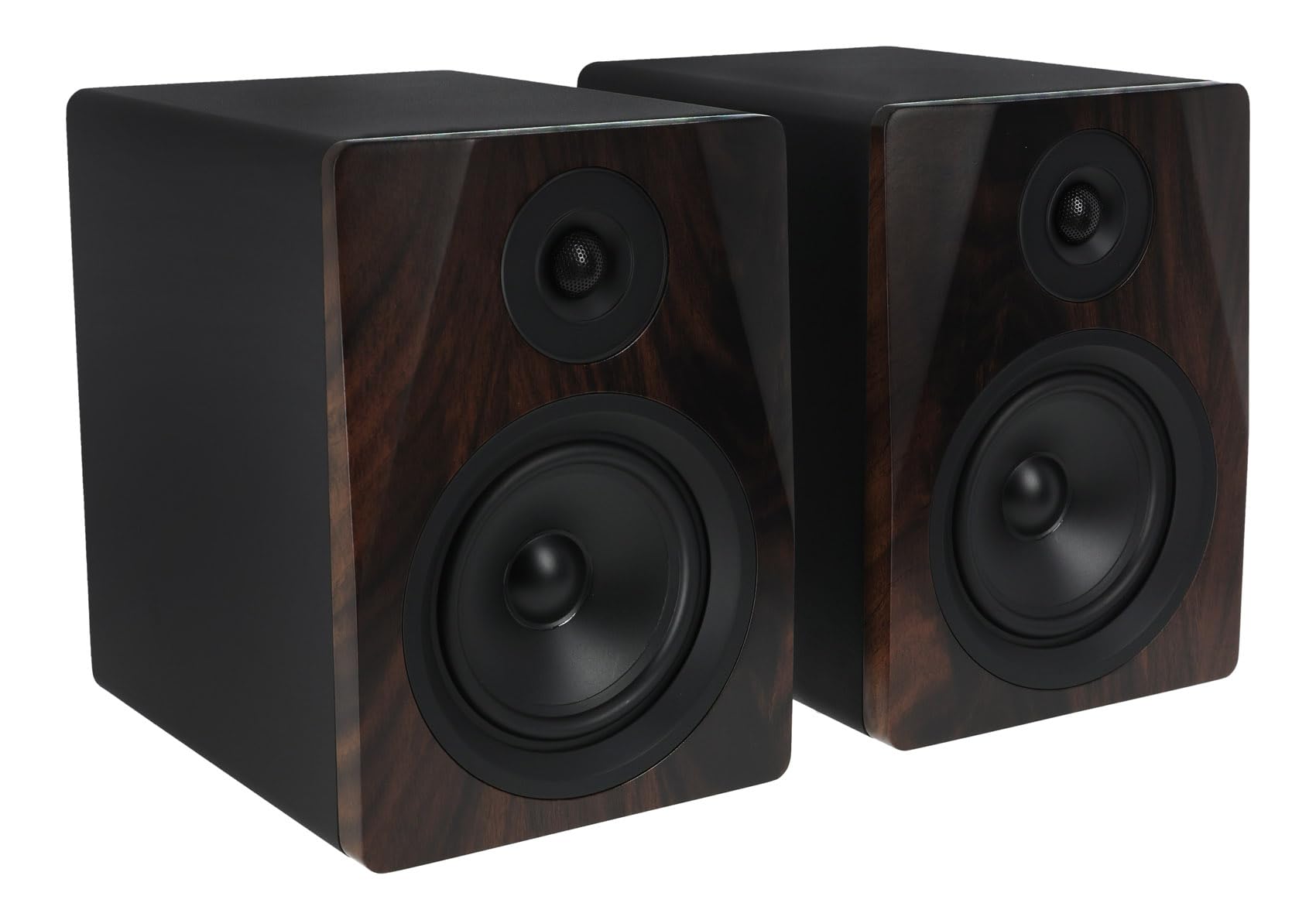
The Rockville APM5D punches well above its price class with a 5.25-inch polypropylene cone woofer and a ¾-inch silk dome tweeter powered by a Class-D bi-amped design rated at 250 watts peak. The larger woofer diameter gives it a clear advantage in bass extension and impact over smaller competitors, making it a serious contender for anyone who wants to feel their low-end without adding a separate subwoofer.
The MDF wood cabinet is 0.5 inches thick with a 1-inch front baffle, significantly reducing coloration from cabinet resonance. It features a computer-optimized crossover network and an ADAU1701 DSP chip that keeps the frequency response accurate. The included high-speed USB audio interface allows a direct digital connection to your computer, bypassing the often noisy analog output of budget sound cards and motherboards.
Real-world performance from verified buyers confirms the clarity and depth this unit delivers. The rear-firing bass port extends low-frequency output, though placement away from walls is recommended to avoid muddiness. With XLR, ¼-inch TRS, RCA, and USB inputs, this pair is the most versatile option for a home studio or a serious desktop listening setup in this price range.
Why it’s great
- 5.25-inch woofer provides deeper bass than typical 4-inch competitors
- Built-in USB audio interface reduces signal noise from computer outputs
- Thick MDF cabinet construction minimizes resonance and distortion
Good to know
- Larger form factor may be too big for cramped desktop setups
- Rear-firing port requires careful placement for optimal bass response
3. KRK ROKIT7G4 Powered Monitor

The KRK ROKIT7G4 is the entry point into professional-grade monitoring within a budget-conscious buying guide. Its 7-inch Kevlar woofer and 1-inch Kevlar tweeter are designed and built in-house, delivering a level of transient response and detail that smaller drivers cannot match. The larger cone area produces authoritative bass that lets you accurately judge low-frequency content in your mixes without guesswork.
An integrated Class-D amplifier provides clean, efficient power, while the onboard LCD visual DSP-driven EQ allows you to tailor the frequency response to your room’s acoustics. This is a critical feature for home studios or untreated listening spaces where room modes can exaggerate or cancel certain bass frequencies. The ability to apply room correction adjustments directly on the speaker is a professional tool typically reserved for much more expensive monitors.
Customer feedback highlights the exceptional clarity and flat response that makes long listening sessions less fatiguing. However, some users have reported reliability concerns with power supply components over extended periods. For the money, the ROKIT7G4 offers professional-level accuracy and a generous driver size that justifies its position as the premium pick for serious home producers.
Why it’s great
- Large 7-inch Kevlar woofer provides deep, accurate low-end reproduction
- Onboard DSP-driven EQ with LCD display for room correction
- Professional-grade sound reproduction for confident mixing decisions
Good to know
- Reliability reports are mixed, with some units failing after a few years
- Requires adequate desk or stand space due to the larger footprint
4. ADAM Audio T5V Studio Monitor
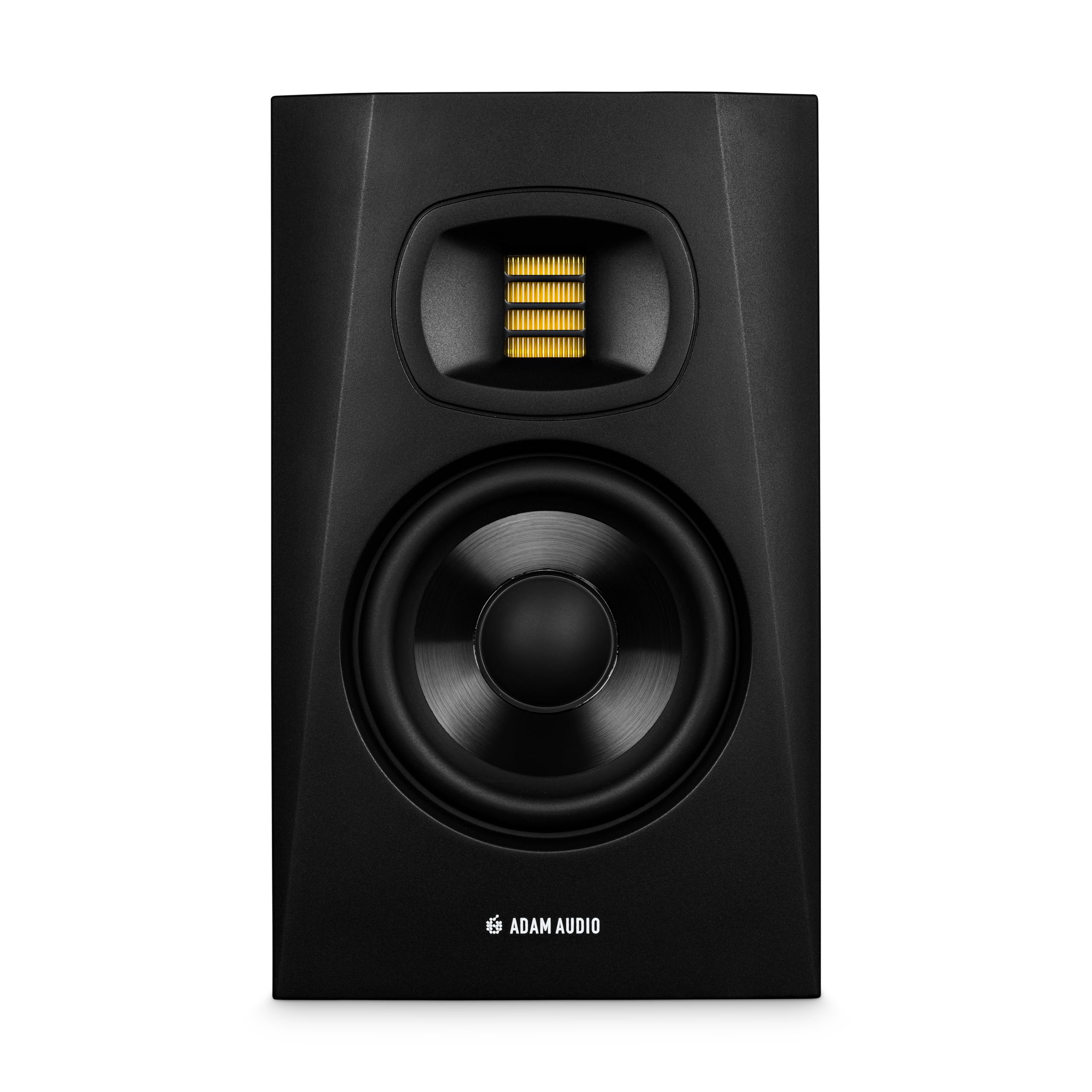
The ADAM Audio T5V stands apart from every other speaker in this lineup because of its U-ART (Unique Accelerated Ribbon Technology) tweeter. Unlike traditional dome tweeters, the U-ART design folds a ribbon diaphragm to move four times more air, resulting in extraordinarily detailed and transparent high frequencies. For critical tasks like mixing, editing, or sound design, this tweeter reveals artifacts and nuances that standard speakers mask entirely.
The T5V features a 5-inch polypropylene woofer in a beveled cabinet with a rear-firing bass reflex port that extends response down to 45Hz. The included high- and low-shelf DSP-based filters let you adapt the speaker to different room placements, reducing the impact of boundary bass boost or treble reflections. With 70 watts of total power, it delivers ample headroom for near-field use without distortion.
Buyers consistently praise the soundstage clarity and the confidence these monitors inspire. The cabinet is notably solid, and the build quality reflects ADAM Audio’s Berlin engineering standards. While the T5V is sold individually, a stereo pair is the true recommendation for anyone serious about accurate monitoring. The detailed tweeter and extended bass make it a top-tier choice for mix engineers on a budget.
Why it’s great
- U-ART ribbon tweeter offers unmatched high-frequency detail and air
- DSP-based room adaptation filters for placement flexibility
- Extended low-end response down to 45Hz for a 5-inch driver
Good to know
- Sold as a single unit, so a stereo pair doubles the cost
- Ribbon tweeter has a different dispersion pattern requiring careful placement
5. Micca PB42X Powered Bookshelf Speakers

The Micca PB42X is a no-nonsense workhorse for desktop listening. It uses a balanced woven carbon fiber woofer combined with a silk dome tweeter in a ported enclosure that delivers extended bass with low distortion. The real magic here is the crossover design, which produces an incredibly open and balanced sound with natural mids and clear, sweet treble—vocal-driven music sounds particularly lifelike.
The built-in Class-D amplifier provides 15 watts per channel, which is modest on paper but clean and sufficient for near-field listening in residential rooms. The PB42X lacks Bluetooth and optical inputs, focusing instead on analog RCA connectivity. This helps keep the signal path simple and the price low, but it does mean you will need a separate DAC or audio interface for a clean digital feed.
Customer feedback consistently highlights the speaker’s exceptional clarity and the value proposition of its sound quality versus price. The main trade-off is bass extension; the PB42X rolls off gracefully around 80Hz, so adding a subwoofer is recommended for bass-heavy genres. For anyone prioritizing vocal intelligibility and a neutral soundstage, the PB42X remains a compelling choice years after its release.
Why it’s great
- Woven carbon fiber woofer delivers tight, controlled bass with low distortion
- Exceptional vocal clarity and transparent midrange for the price
- Magnetic grills provide a clean aesthetic without visible fasteners
Good to know
- Bass roll-off begins around 80Hz; a subwoofer is recommended for full-range sound
- Lacks built-in Bluetooth or digital inputs; wired analog connection only
6. Majority D40 Active Bookshelf Speakers

The Majority D40 proves that you don’t need a big budget to get a genuinely satisfying listening experience. Its 60-watt amplifier drives a pair of solid wood cabinets equipped with 4-inch bass drivers, producing clear audio with surprising low-end heft for the size. The D40 covers all the essentials with Bluetooth, optical, RCA, USB, and even SD card playback, making it the most connectivity-rich option in the entry-level tier.
One of the most appreciated features is the included remote control with bass and treble adjustments, allowing you to tailor the sound without leaving your seat. The side-mounted digital controls are intuitive, and the headphones out adds private listening capability. The speakers are compact at roughly 7 x 5.4 x 8.8 inches, fitting easily on a small desk or bookshelf.
Verified buyers report impressive clarity and robust bass for the asking price, with many noting the unit performs far above its cost class. The main criticisms center on a loud Bluetooth disconnect voice prompt that cannot be silenced and a short fixed cable between the left and right speakers. For a low-cost multimedia setup that connects to everything, the Majority D40 delivers outstanding value.
Why it’s great
- Exceptional value with versatile connectivity including USB and SD card playback
- Solid wood cabinets reduce resonance and improve audio clarity
- Included remote with bass/treble controls adds convenience
Good to know
- Loud Bluetooth connection prompts cannot be disabled
- Fixed left-right speaker cable limits placement flexibility
FAQ
Can I use studio monitors directly with my computer’s headphone jack?
How do I place powered speakers to get the best bass response?
Final Thoughts: The Verdict
For most users, the best budget active speakers overall winner is the Edifier MR3 because it combines Hi-Res Audio certification, versatile balanced inputs, and app-based EQ control in a compact, well-built package. If you want deeper bass and a built-in USB interface for a clean digital signal, grab the Rockville APM5D. And for the purest high-frequency detail when mixing or mastering, nothing beats the ADAM Audio T5V with its unique U-ART ribbon tweeter.