
That morning ritual—waking up to the sound of steam hissing, the smell of freshly ground beans, and the sight of golden crema pooling on top of a perfectly pulled shot—shouldn’t be reserved for cafés with pricey equipment. The real challenge for home baristas on a tighter budget is finding an automatic espresso machine that delivers consistent 9-bar extraction pressure without cutting corners on the grinder, the steam wand, or the durability of the brew group.
I’m Min — the co-founder and writer behind Gadgets Feed. After hours upon hours of cross-referencing pump specs, burr grinder materials, PID temperature control data, water tank capacities, and real user extraction reports across dozens of machines, I’ve separated the models that genuinely produce thick crema from those that just look the part on a countertop.
Whether you are upgrading from a stovetop moka pot or searching for your first bean-to-cup setup, this guide to finding the right best budget automatic espresso machine walks you through the specs that actually matter for long-term daily use.
How To Choose The Best Budget Automatic Espresso Machine
Buying an automatic espresso machine on a budget means you are trading either raw power, build materials, or convenience features for a lower entry price. The trick is knowing which trade-off actually hurts your daily shot quality and which one is a fair compromise. Here are the specific levers to pull.
Pump Pressure: 15 Bar vs. 20 Bar
Many budget machines advertise a 20-bar pump, but standard espresso extraction ideally happens around 9 bars at the group head. A 20-bar pump usually includes an over-pressure valve (OPV) that dumps excess pressure, so the advertised number is just the pump’s ceiling—not the force applied to the puck. What matters is whether the machine has an OPV set correctly, and whether the 15-bar pump is a vibratory pump with consistent pressure during the full shot cycle.
Grinder: Integrated Conical Burr vs. External
An integrated conical burr grinder saves counter space and money, but you are locked into one machine’s grind quality. Look for stainless steel burrs (3Cr13 or better), at least 8 adjustable grind settings, and an anti-clog chute design that handles oily dark roasts without stalling. Cheaper machines often use ceramic burrs that dull faster—verify the material before purchasing.
The Portafilter Standard: 54mm vs. 58mm vs. 51mm
A 58mm commercial-standard portafilter (found on the Breville Barista Express and KitchenAid) accepts larger doses—18 to 22 grams—and uses standard accessories like tampers and replacement baskets. The 51mm or 54mm portafilters common on entry-level machines hold less coffee (12-15g) and make finding third-party upgrades difficult. For consistency and repairability, a 58mm portafilter is worth the premium.
Milk Frothing: Manual Steam Wand vs. Automatic Frother
A manual steam wand with a single-hole tip gives you control over microfoam texture for latte art, but requires technique and immediate cleaning. Automatic frothers (like the De’Longhi Magnifica’s Pannarello) produce thicker foam with less skill but struggle with silky microfoam. For a budget automatic machine, a wand with decent steam pressure—not just temperature—is the real differentiator.
Quick Comparison
On smaller screens, swipe sideways to see the full table.
| Model | Category | Best For | Key Spec | Amazon |
|---|---|---|---|---|
| Breville Barista Express BES870XL | Semi-Auto | Consistent third-wave shots at home | PID control + 58mm portafilter | Amazon |
| De’Longhi Magnifica Evo ECAM29043SB | Super-Auto | True one-touch bean-to-cup convenience | 13 grind settings + bypass doser | Amazon |
| De’Longhi La Specialista Arte Evo | Semi-Auto | Cold brew in under five minutes | 8 grind settings + active temp control | Amazon |
| KitchenAid Semi-Auto KES6403 | Semi-Auto | Compact build with dual temp sensors | 58mm portafilter + 15-bar pump | Amazon |
| Electactic 15-Bar Almond | Semi-Auto w/ Grinder | Dark roast compatibility with anti-clog path | 2.3L tank + helical auger | Amazon |
| Electactic 15-Bar Gloss Black | Semi-Auto w/ Grinder | Wider polished chute for oily beans | 58mm portafilter + tamper set | Amazon |
| AIRMSEN 20-Bar Burr Grinder | Semi-Auto w/ Grinder | Touchscreen operation with 10 grind settings | 3Cr13 stainless steel burrs | Amazon |
| Philips Baristina BAR300/60 | Bean-to-Cup | Ultra-compact countertop with one-swipe workflow | 16-bar pump + automatic tamp | Amazon |
| CASABREWS Ultra 20-Bar LCD | Semi-Auto | Beginners wanting a clear LCD display guide | 73 oz tank + 4 temp settings | Amazon |
In‑Depth Reviews
1. Breville Barista Express BES870XL
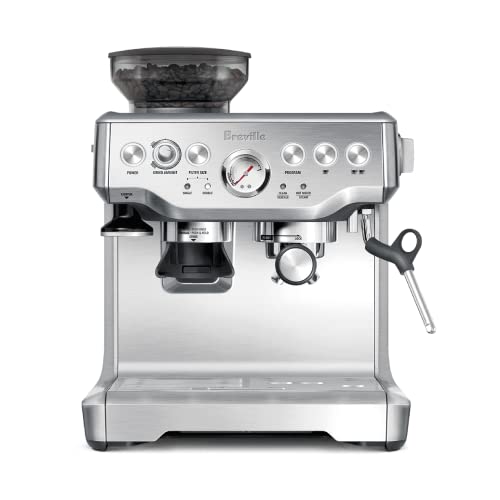
The Breville Barista Express uses a PID-controlled heating system that maintains water temperature within ±2°F of the target, ensuring every shot extracts at the same thermal baseline—a rare feature at this price point. Its integrated conical burr grinder delivers on-demand dosing directly into a 54mm portafilter, and the Razor dose trimming tool removes excess grounds to eliminate channeling before the 15-bar Italian pump takes over.
The adjustable grind size dial (the external collar) and separate grind amount control let you dial in different roast levels without memorizing clicks, and the included single and dual-wall filter baskets accommodate both fresh beans and pre-ground coffee. The manual steam wand produces microfoam dense enough for latte art, though the wand is not swivel-jointed so positioning a standard milk pitcher requires a slight angle adjustment.
Long-term owners report that after daily use spanning four to six years, the most common maintenance items are replacing the group head gasket and the solenoid valve—both inexpensive repairs covered by DIY videos. The brushed stainless steel exterior shows wear over time, but the internal brass components and OPV keep extraction quality stable far longer than most budget machines.
Why it’s great
- PID temperature control ensures consistent extraction across consecutive shots
- 54mm portafilter with included single, dual-wall, and dual-wall dual baskets
- Pressure gauge lets you visually confirm extraction is in the espresso window
- Integrated tamper and Razor tool simplify the puck prep workflow
Good to know
- Dialing in a new bag of beans easily wastes a quarter of the bag in test shots
- Grinder chute can retain a few grams of grounds if the chute is not brushed clean weekly
- Steam wand is fixed, requiring you to rotate the drip tray to froth comfortably
- Water filter needs replacement every 60 uses or two months
2. De’Longhi Magnifica Evo ECAM29043SB

True super-automatic convenience means you load whole beans, press a button, and walk away—and the Magnifica Evo delivers that with five one-touch recipes (Espresso, Coffee, Americano, Long, and Iced Coffee). Its conical burr grinder offers 13 grind settings, which is an unusually wide range for a sub- super-auto and lets you fine-tune extraction pressure for different bean origins.
The manual frother on the Evo is a departure from De’Longhi’s older Pannarello designs; it gives you direct steam control for stretching milk into microfoam rather than the foamy bubbly texture of automatic frothers. The bypass doser on the front allows you to use pre-ground decaf without emptying the bean hopper, and the integrated cleaning cycle automatically flushes the brew group with hot water after each shutdown.
Some users note the water tank indicator and bean-level sensor can pause a brew cycle mid-shot when they trigger prematurely, but the removable, dishwasher-safe brew group makes weekly maintenance significantly easier than semi-automatic machines. The plastic chassis keeps weight manageable at 20.8 pounds, but internal build quality surpasses the Philips Baristina for long-term reliability based on extended user reports.
Why it’s great
- Genuine bean-to-cup workflow with no tamping or dosing steps
- 13 grind settings offer control rarely seen on entry-level super-autos
- Manual frother steams milk with actual texture, not just bubbles
- Bypass doser works for pre-ground decaf beans
Good to know
- Low water or bean indicators can interrupt a shot mid-cycle
- Descaling cycle takes roughly 45 minutes and requires full attention
- Original unit arrived with a dead water pump for some buyers (second unit resolved)
- Plastic exterior feels less substantial than stainless steel alternatives
3. De’Longhi La Specialista Arte Evo

The Arte Evo stands out in the mid-range tier because it includes De’Longhi’s Cold Extraction Technology—a proprietary cycle that brews concentrated cold coffee in under five minutes using measured flow and pressure rather than time soaking. That feature alone makes it the only machine on this list capable of producing genuine cold brew without requiring a separate carafe or immersion system.
Beyond cold brew, the machine uses Active Temperature Control (ATC) with three infusion temperature settings, so you can match the brewing temperature to roast darkness—darker roasts usually need lower temperatures to avoid bitterness, while lighter roasts benefit from higher heat. The built-in conical burr grinder has eight settings, and the included barista kit (tamping mat, dosing funnel, and adjustable tamper) reduces mess during the puck prep step.
The commercial-style steam wand is slightly better positioned than the fixed wand on the Breville design, though some users wish it had more vertical range for taller pitchers. The pressure gauge on the front panel helps you stay in the 9-bar range during extraction, and the hot water spout doubles as an Americano helper. With a 21.5-pound weight and stainless steel construction, it feels substantially more durable than the predominantly plastic alternatives at similar price points.
Why it’s great
- Cold extraction produces real cold brew concentrate in under five minutes
- Three PID-based temperature settings for roast-specific extraction
- Pressure gauge helps new baristas visualize extraction quality
- Stainless steel construction and included barista kit feel premium
Good to know
- Grinder motor is slightly loud during operation
- Steam wand range is somewhat limited for very tall milk pitchers
- Auto shut-off timer can be too fast for multi-drink back-to-back sessions
- Dark roasts require a coarser grind setting (7-8) to prevent jams
4. KitchenAid Semi-Automatic Espresso Machine KES6403

KitchenAid skips the built-in grinder to keep this machine small—just 6.38 inches deep—making it the most counter-friendly semi-automatic in this roundup for tight galley kitchens. What it lacks in an integrated grinder it makes up for with dual smart temperature sensors that monitor both the thermoblock and the group head, reducing the temperature drift that ruins second and third shots in cheaper single-sensor machines.
The commercial-grade 58mm portafilter is the same diameter used by café-grade La Marzocco and Rocket machines, meaning you can upgrade to precision baskets like VST or IMS without buying a new portafilter body. It ships with four filter baskets (single/double wall for both single and double doses), a solid stainless steel tamper, and a cleaning brush. The 15-bar Italian pump includes an OPV, so the actual brew pressure stays in the 9-bar range even though the pump rating is higher.
The auto-clean function runs a full cycle in about 15 minutes, flushing brew paths with hot water and detergent. The steam wand has decent pressure but limited swivel, and the water tank lid can be fussy to seat properly after refilling. Several user reports mention the group head gasket failing out of the box on some units, so inspect the seal during the first use and contact KitchenAid if the portafilter leaks.
Why it’s great
- True 58mm portafilter accepts third-party baskets and tampers
- Dual temperature sensors maintain stable extraction across multiple drinks
- Slim footprint fits in tight counter spaces without sacrificing build quality
- Includes four filter baskets plus a stainless steel milk pitcher
Good to know
- Water tank lid is finicky to reattach after refills
- Shot volume reprogramming may stop short of the desired yield
- Some units ship with a defective group head gasket
- No built-in grinder—requires a separate grinder investment
5. Electactic 15-Bar Almond (CM8031)
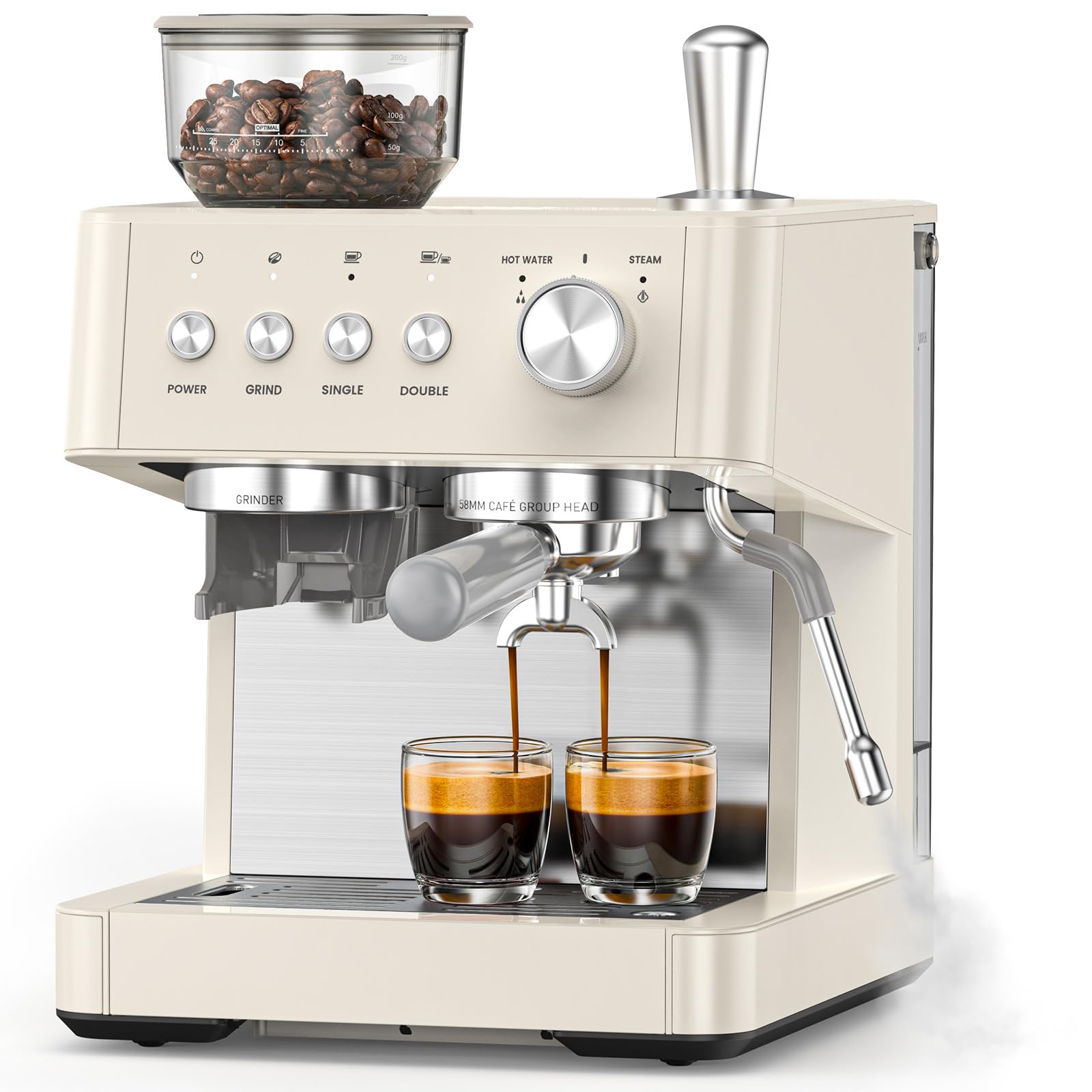
The Electactic Almond model tackles the single biggest pain point of integrated grinder machines—clogging from oily beans—with a 20% wider polished grinder chute and a reinforced helical auger design that pushes ground coffee through the path rather than letting it cake inside. This matters if your daily driver is a dark roast with high oil content, which often stalls cheaper grinders within a month.
The machine uses a 15-bar Italian pump and includes pre-infusion at the start of the cycle to saturate the puck before full pressure hits, reducing channeling. The steam wand is a manual swivel-pivot design that produces textured milk for lattes, and the removable drip tray and 2.3-liter tank make cleanup less disruptive during heavy use. The included 58mm portafilter comes with single-wall and dual-wall baskets, plus a stainless steel milk pitcher and cleaning tools.
User feedback indicates the machine requires an initial dial-in period—about five to eight shots—to find the optimal grind setting for your preferred roast. Once set, the consistency is reported to rival machines costing significantly more. The gloss almond finish is a fresh alternative to the standard silver or black, though the metallic coating can show water spots if not wiped regularly.
Why it’s great
- Wider auger and polished chute prevent clogs from oily dark roasts
- 15-bar pump with pre-infusion reduces channeling for beginners
- 2.3L water tank minimizes refill frequency for daily multi-drink households
- Includes full accessory kit: portafilter, baskets, tamper, milk pitcher, cleaning tools
Good to know
- Initial setup requires multiple test shots to dial in grind coarseness
- Grinder can still overflow the basket if the dose setting is too high
- The process requires three steps—grind, shot, then manual hot water for Americano
- Metallic finish needs regular wiping to stay clean
6. Electactic 15-Bar Gloss Black (2026 Upgrade)
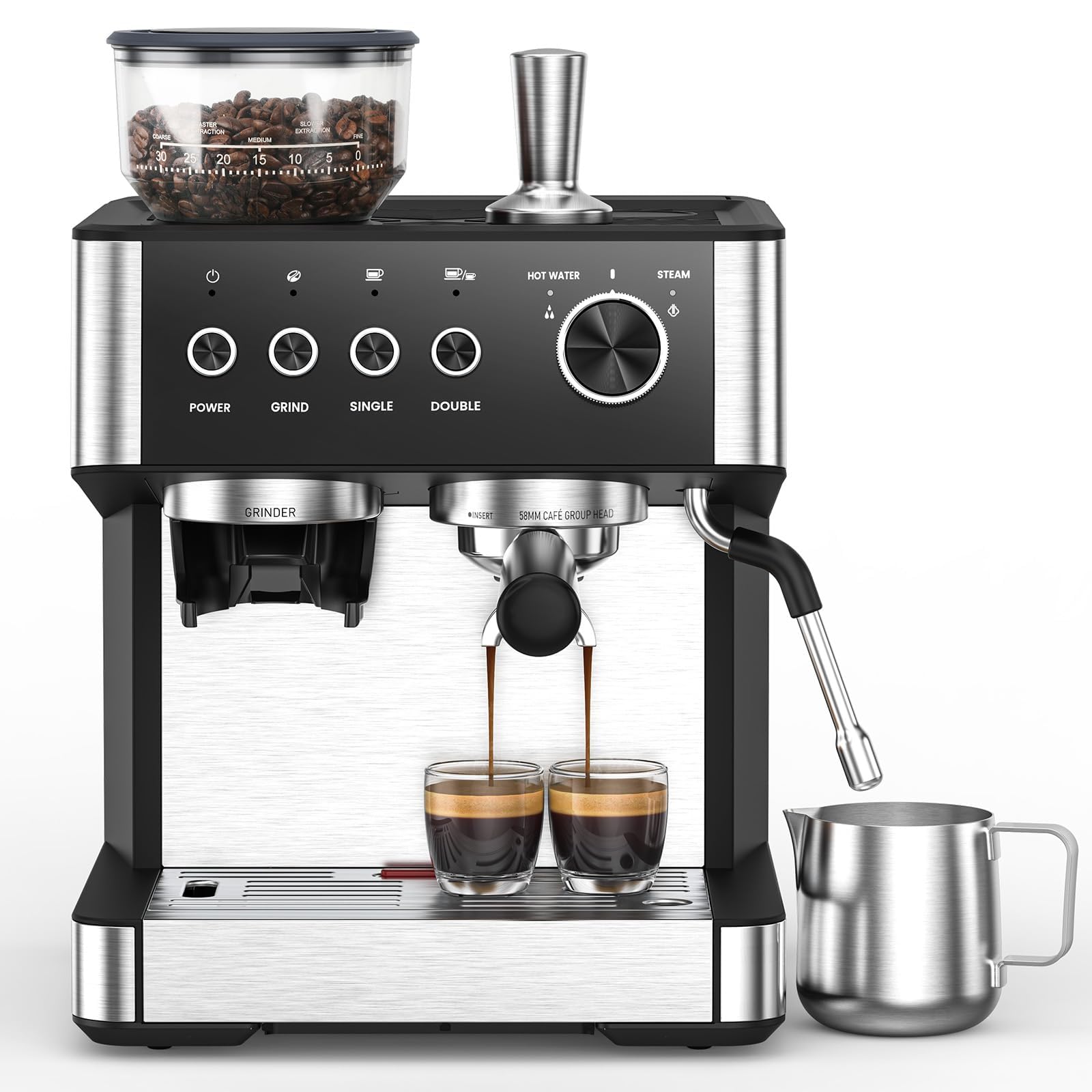
This Gloss Black variant shares the same upgraded anti-clog grinder architecture as the Almond model—the 20% wider polished chute and reinforced helical auger that ejects grounds instantly—but at a slightly lower entry price. The grind path improvement is the defining spec here: it solves the problem of stale grounds accumulating in the chute and spoiling next morning’s shot.
The 58mm portafilter is made of stainless steel and feels sturdy when locking into the group head, and the included single and dual-wall filter baskets give you flexibility between fresh beans and supermarket pre-ground. The manual steam wand articulates to the side for better positioning, and the detachable drip tray has a clear water line indicator so you know when to empty it. The 2.3-liter tank is generous for this class and keeps refills manageable.
Reports of defective units appear in the feedback—some machines arrived with a dead pump or a portafilter that would not seal—but the hardware design itself matches the functionality of machines priced a tier higher. If you enjoy medium to dark roasts and want a grind-and-brew workflow without manually tamping, this machine integrates the steps while still allowing you to intervene on dose and grind size.
Why it’s great
- Polished chute and helical auger design actively push grounds out, preventing jams
- 58mm portafilter accepts standard accessories and baskets
- 2.3L water tank is among the largest in this price segment
- Gloss black finish matches modern kitchen aesthetics
Good to know
- Quality control issues mean some units arrive defective
- The machine is heavy (18 pounds) and hard to repack if returning
- Grinder noise is noticeable during the grind cycle
- Requires a learning curve for grind setting optimization
7. AIRMSEN 20-Bar Burr Grinder
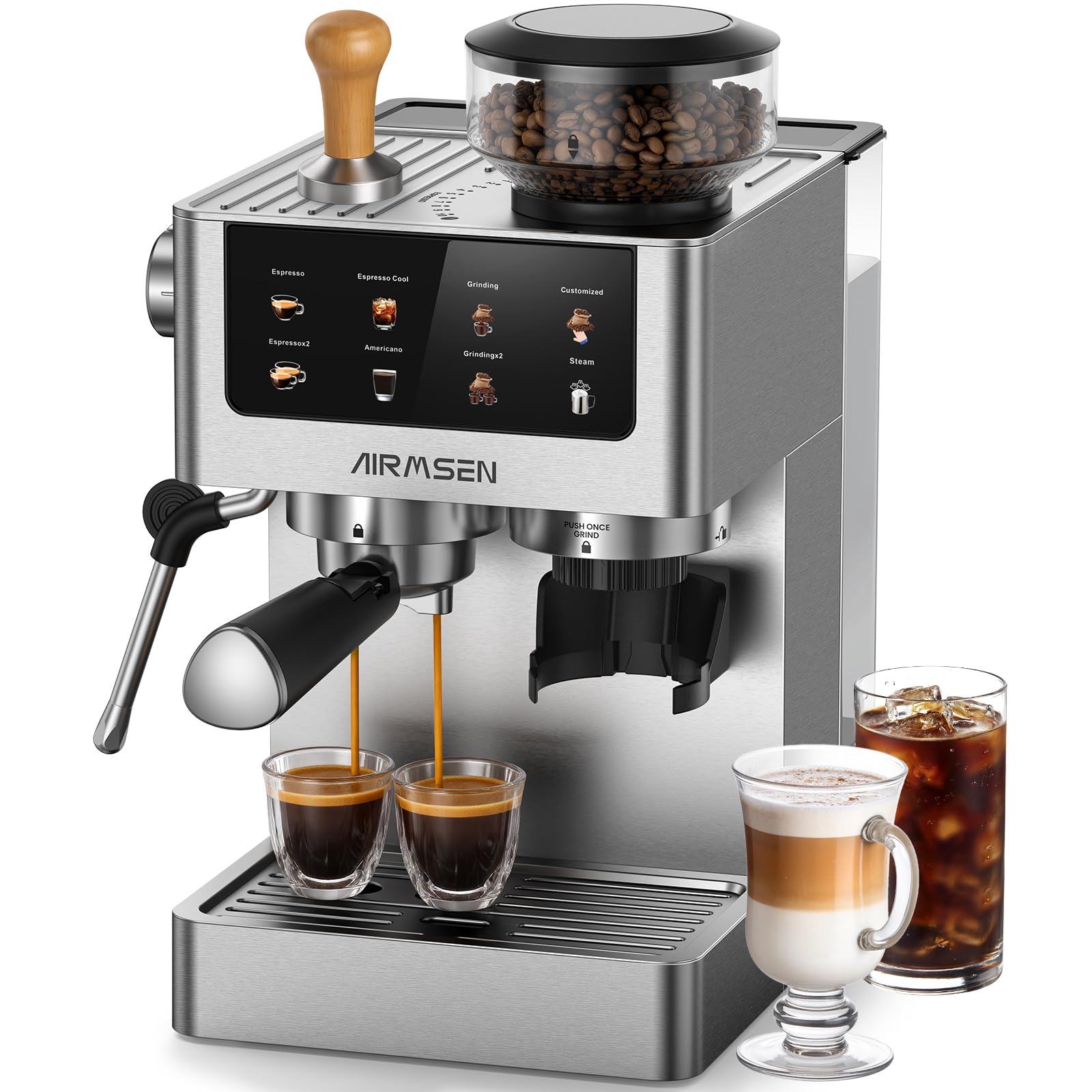
The AIRMSEN machine integrates a conical burr grinder with ten adjustable settings, using 3Cr13 stainless steel burrs rated for over 10,000 cups before dulling. This is a significant material upgrade over the ceramic burrs found in some similarly priced machines—3Cr13 resists corrosion better and holds its cutting edge longer through heavy daily use. The dual anti-static tech (ionizer and a ring) reduces coffee dust flying around during the grind cycle.
The touchscreen panel is the main interface, letting you select single or double shots and adjust the 20-bar pump with pre-infusion to saturate the grounds before ramping to full pressure. The manual steam wand detaches for rinsing, and the 61-ounce water tank is on the larger side for machines with an integrated grinder. The stainless steel casing wraps around four sides, giving a more uniform look than plastic chassis with metal faceplates.
One common behavioral note: the grinder sometimes continues dropping grounds into the portafilter during the middle of the brew cycle, leading to overfilling and mess. Setting the grind one step coarser than you think and stopping the grind manually before the basket overflows improves results. Customer service responses indicate the company proactively replaces defective units rather than making users troubleshoot for weeks.
Why it’s great
- 3Cr13 stainless steel burrs are tougher and longer-lasting than ceramic
- Ten grind settings give you fine control over extraction from fine espresso to French press
- Touchscreen interface reduces button confusion and guides shot dosing
- Anti-static technology keeps the counter noticeably cleaner than other grinders
Good to know
- Grinder can overflow the basket if allowed to run unchecked during the shot
- Initial setup requires careful grinding into a cup first to measure dose
- Some units shipped with water pump failures that required replacement
- Customer support is not available on weekends per user feedback
8. Philips Baristina BAR300/60

Philips designed the Baristina for one specific workflow: a single swipe of the handle triggers the internal grinder and automatic tamping mechanism, then the 16-bar pump brews directly into the portafilter. The entire process—from whole beans to a finished espresso shot—takes less than 60 seconds and eliminates the need to measure, tamp, or level. This is the shortest path to espresso on this list for anyone who values speed over manual control.
The machine is compact at just 7.09 inches wide and uses over 50% recycled plastics externally (excluding water-contact parts), which keeps the carbon footprint low. The bean hopper is small, holding maybe enough for four to five single shots before refill, but that also means beans stay fresh longer because they are not sitting in a large hopper for weeks. The clear water tank at 1.2 liters is small by category standards, so plan for daily refills if you make multiple drinks.
Durability reports are mixed: some units have stopped working after six to eight months due to water leaking from the portafilter or the internal pump losing pressure. The single-shot-only design prevents you from pulling a double without running two back-to-back cycles, and the lack of grind size adjustment means you are stuck with whatever coarseness the factory set. For someone moving from a pod system who wants fresh grounds and no technique learning, it works brilliantly—just be prepared for a shorter lifespan.
Why it’s great
- One-swipe workflow is the fastest path from bean to cup without pods
- Extremely compact footprint fits even cluttered countertops
- Built over 50% from recycled plastics reduces environmental impact
- Automatic tamping mechanism eliminates the main learning barrier for new users
Good to know
- Single-shot only—you must run two cycles for a double espresso
- Durability issues reported around six to eight months of use
- No grind size or dose adjustment—works best with medium roasts
- Plastic construction feels less robust than metal-bodied competitors
9. CASABREWS Ultra 20-Bar LCD
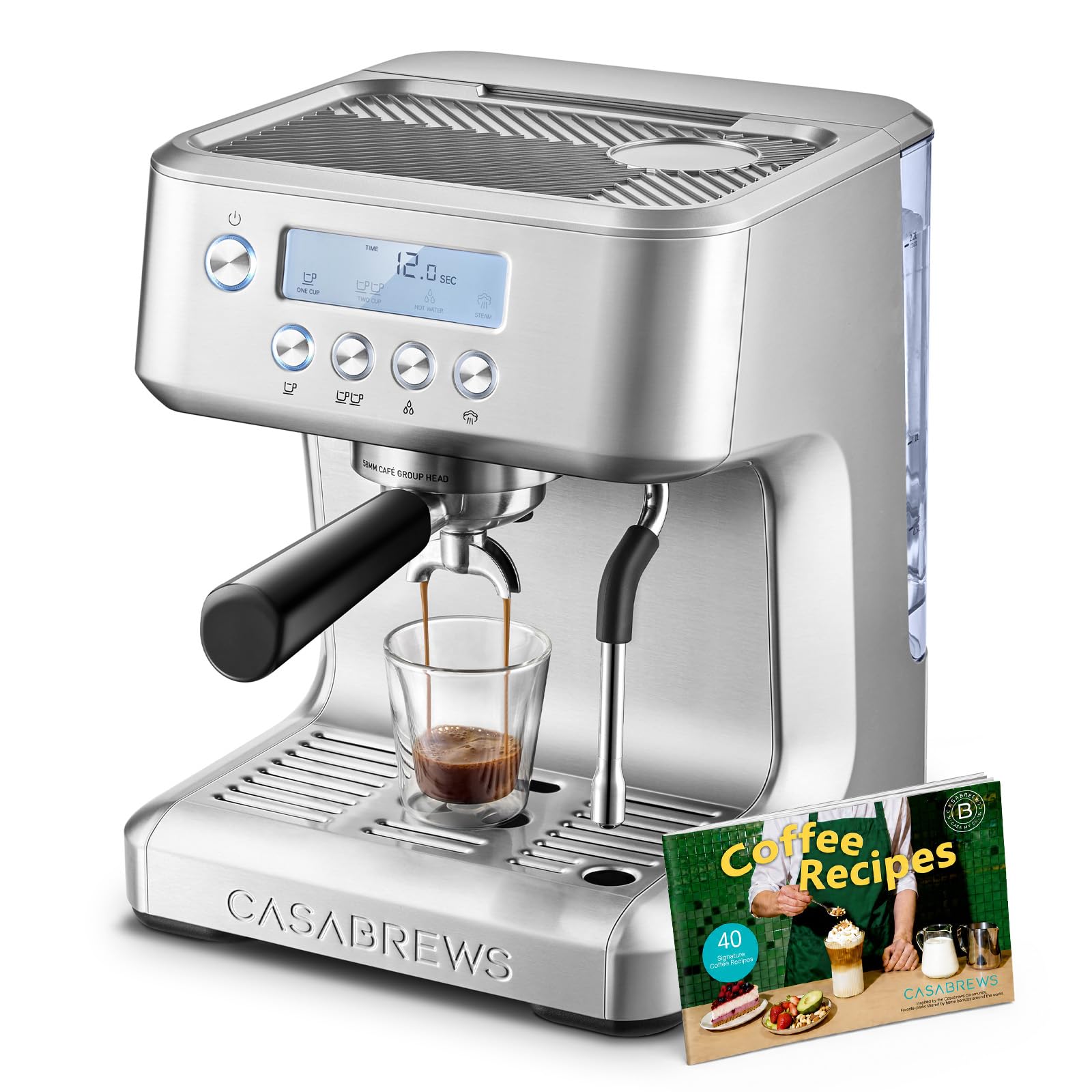
The CASABREWS Ultra is one of the few budget machines that lets you adjust the brewing temperature across four settings via a clear LCD display, which is genuinely helpful for dialing in lighter roasts that need higher heat versus darker roasts that benefit from lower extraction temperatures. The 20-bar Italian pump and 1350-watt boiler heat up in under 40 seconds, and the 73-ounce water tank is the largest reservoir in this entire roundup—ideal for households that go through multiple drinks daily.
It uses a 51mm portafilter instead of the more standard 58mm, meaning accessory upgrades are limited to original CASABREWS parts, but the all-metal construction of the portafilter and the included single and double-shot baskets offer adequate performance for the price. The steam wand produces decent microfoam for a budget unit, though it is not a swivel design so positioning requires tilting the pitcher slightly.
The solenoid valve auto-flushes excess water about 20 seconds after brewing stops, which helps keep the group head clean but also leaves a small puddle in the drip tray if you don’t wait. The brushed stainless steel exterior looks more expensive than the price suggests, and the LCD panel provides step-by-step guidance for steam, hot water, and the pre-programmed shot volume. For a first espresso machine buyer who wants visual feedback and a large tank, this is the easiest recommendation on the list.
Why it’s great
- Adjustable brewing temperature (four settings) is rare in this price bracket
- 73-ounce water tank is the largest in this guide—fewer daily refills
- LCD display guides beginners through steam, hot water, and shot settings
- All-metal portafilter and brushed stainless exterior feel premium
Good to know
- 51mm portafilter limits third-party accessory compatibility
- Solenoid valve flush leaves a water puddle if you remove the cup too early
- Plastic tamper in the box is functional but cheap—budget for a metal replacement
- Steam wand is non-swivel, requiring awkward pitcher angles for frothing
FAQ
Is a 20-bar pump always better than a 15-bar pump for a budget espresso machine?
Can I use pre-ground coffee in a machine with a built-in grinder?
How often do I need to descale a budget automatic espresso machine?
What does pre-infusion do and why should I care about it?
Is a stainless steel boiler or thermoblock better in this price range?
Final Thoughts: The Verdict
For most users, the best budget automatic espresso machine winner is the Breville Barista Express BES870XL because its PID temperature control, integrated conical burr grinder, 54mm portafilter with Razor tool, and pressure gauge provide the most repeatable shot quality without crossing into four-figure territory. If you want true one-touch bean-to-cup convenience with fresh grinding and auto-clean, the De’Longhi Magnifica Evo ECAM29043SB delivers a super-automatic workflow with 13 grind settings. And for cold brew enthusiasts who also want hot espresso, nothing beats the De’Longhi La Specialista Arte Evo.