
Finding a camera that shoots proper 4K video without forcing you to take out a second mortgage is the central tension of the sub- videography world. The entry-level market is flooded with hybrids that prioritize still photography, leaving videographers with awkward crop factors, recording time limits, and mediocre codecs that crush detail before you even hit export.
I’m Min — the co-founder and writer behind Gadgets Feed. I’ve spent countless hours combing through spec sheets, parsing real-world autofocus performance tests, and cross-referencing lens ecosystems to separate the viable cinema tools from the spec-sheet mirages in the budget videography space.
Whether you’re filming interviews, run-and-gun vlogs, or short documentaries, this guide cuts through the noise to deliver the definitive list of options for anyone searching for the best budget camera for videography.
How To Choose The Best Budget Camera For Videography
Selecting a cheap videography camera is more than comparing megapixel counts. You need to prioritize video-specific features that are often an afterthought for stills-first cameras, including recording limits, bitrates, stabilization, and audio inputs.
Sensor Size and Low-Light Performance
The physical size of the sensor (1-inch, Micro Four Thirds, or APS-C) dictates how much light it can gather and how much background blur you can achieve. A larger APS-C sensor, like the one found in most mid-range mirrorless bodies, offers a significant advantage in noise control when shooting indoors or at dusk compared to a smaller 1-inch sensor. For narrative or interview videography, this flexibility is non-negotiable.
Recording Specs: Resolution, Frame Rate, and Crop Factor
Not all 4K is created equal. Some budget cameras apply a heavy crop when recording 4K, which distorts your field of view and makes wide-angle shots harder to achieve. Others limit frame rates to 24p or 30p in 4K, reserving higher frame rates for 1080p. A camcorder often offers a uncropped 4K readout, while some DSLRs force a 1.5x to 2x crop. Always check if the 4K footage is oversampled from a higher resolution for maximum sharpness.
Autofocus and Manual Controls
Reliable autofocus with face or eye tracking reduces retakes and keeps your subject sharp when you’re behind the camera. Phase-detect AF, especially Dual Pixel AF on Canon bodies or Hybrid AF on Nikons, provides smooth, non- hunting focus pulls. For creators who prefer manual control, critical features include peaking, zebras for exposure, and a dedicated manual aperture ring on the lens.
Quick Comparison
On smaller screens, swipe sideways to see the full table.
| Model | Category | Best For | Key Spec | Amazon |
|---|---|---|---|---|
| Canon VIXIA HF G70 | Camcorder | Event videography | 20x Optical Zoom, Dual SD | Amazon |
| Nikon Z50 II | Mirrorless | Creative presets | 4K 60p, 20.9MP APS-C | Amazon |
| Nikon D500 | DSLR | High-speed action | 153-Point AF, 10 FPS | Amazon |
| Nikon Z 30 Kit | Mirrorless | Vlogging & streaming | 4K 30p, Flip Screen | Amazon |
| Canon EOS R100 | Mirrorless | Entry level 4K | 4K 24p, RF Mount | Amazon |
| Sony ZV-1F | Point & Shoot | Travel vlogging | 1-inch Sensor, 20mm | Amazon |
| Canon T7 Bundle | DSLR | Hybrid beginners | 1080p, Dual Lenses | Amazon |
In‑Depth Reviews
1. Canon VIXIA HF G70 4K Camcorder
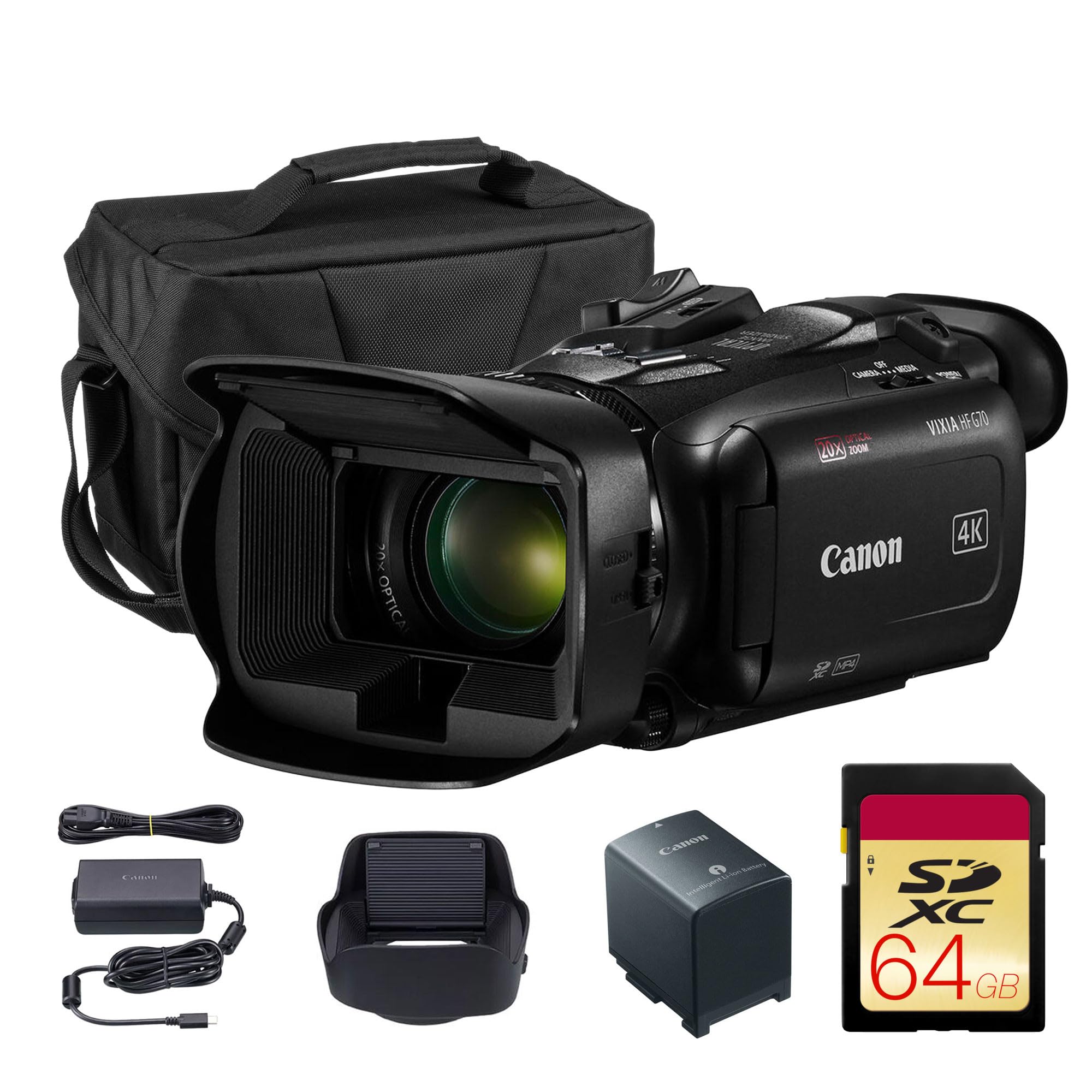
The Canon VIXIA HF G70 is a dedicated camcorder that sidesteps the crop-factor headache that plagues many stills cameras when shooting 4K. Its 1/2.3-inch CMOS sensor with a DIGIC DV 6 processor delivers genuine UHD footage without the heavy pixel binning common in entry-level mirrorless bodies, providing a clean, sharp 4K image right out of the box.
The 20x optical zoom lens is the standout feature here, offering reach from wide to telephoto without any loss of resolution. This makes it a killer tool for event videography, interviews, and school theater performances where you can’t reposition the camera. The dual SD card slots allow for relay recording on long shoots or simultaneous backup, a redundancy feature rarely seen at this price point.
While the sensor is smaller than the APS-C chips in mirrorless cameras, the G70’s strength lies in its purpose-built ergonomics. The touchscreen interface is responsive, the manual control ring allows for smooth zoom pulls, and the HDMI output is clean for external recording. If pure video workflow is your priority over stills, this camcorder is the most focused tool on this list.
Why it’s great
- True 4K with no sensor crop
- 20x optical zoom is unmatched for reach
- Dual SD slots for relay recording
Good to know
- Smaller sensor struggles in extreme low light vs APS-C
- Image stabilization is good but not gimbal-level smooth
2. Nikon Z50 II with Two Lenses

The Nikon Z50 II is a compact mirrorless body that packs a 20.9-megapixel DX-format (APS-C) sensor, which is several times larger than a typical phone sensor, giving you superior light gathering and depth of field control for cinematic video. It shoots 4K UHD at up to 60p, a significant upgrade for budget-minded videographers who want smooth slow-motion without dropping to 1080p.
The dual-lens kit includes the NIKKOR Z DX 16-50mm f/3.5-6.3 VR and the 50-250mm f/4.5-6.3 VR, covering wide to telephoto for run-and-gun versatility. The autofocus system is a hybrid phase-detection and contrast-detection design with 231 points, and it can detect and track people, dogs, cats, birds, and vehicles, keeping your subject tack sharp during movement.
One of the most creative features is the Picture Control button, giving you access to 31 built-in presets that can be customized or downloaded from the cloud. You can also record 120p slow-motion in Full HD for dramatic effect. This camera is built for creators who want to nail a look in-camera and streamline their edit, though its lens system is smaller than the full-frame Z mount.
Why it’s great
- 4K 60p with no heavy crop
- Excellent subject-detection AF
- 31 in-camera color presets
Good to know
- Kit lenses are slow aperture (f/3.5-6.3)
- Battery life is average for mirrorless
3. Nikon D500 DX-Format Digital SLR (Body Only)

The Nikon D500 is a professional-grade DSLR with a 20.9MP DX-format sensor and the EXPEED 5 processor, purpose-built for speed. It shoots 4K UHD video at 30 fps, but its true videography strength lies in its 153-point autofocus system from the D5 flagship, which gives you locked-on tracking for fast-moving subjects even in dim conditions.
The body is weather-sealed and built like a tank, with a 3.2-inch tilting touchscreen that is highly responsive even when using gloves. The 10 fps burst shooting is overkill for video, but the massive buffer lets you capture up to 200 consecutive frames for time-lapse sequences. Native ISO extends to 51200, expandable to 1640000, making it a low-light beast for documentary or run-and-gun shooting.
Where the D500 truly shines is its compatibility with F-mount lenses, an enormous ecosystem you can buy used for cheap. It lacks a built-in flash but has a hotshoe for an external monitor or mic. It uses a EN-EL15 battery that offers excellent longevity. The wireless connectivity via built-in Wi-Fi and Bluetooth is functional, though the SnapBridge app has limited iOS availability.
Why it’s great
- Professional-grade 153-point AF system
- Excellent high-ISO performance up to 51200
- Weather-sealed, durable build
Good to know
- Body only — you need to buy lenses separately
- 4K maxes out at 30 fps, no 60p
4. Nikon Z 30 with Two Lenses

The Nikon Z 30 is a compact mirrorless camera explicitly designed for vloggers, streamers, and content creators. It features a 20.9MP DX-format CMOS sensor and can shoot 4K 30p video with no recording time limit, a crucial feature for long interviews or livestreams. The flip-out selfie monitor with a red REC tally light makes it easy to frame yourself while speaking.
The dual-lens kit includes the 16-50mm wide-angle zoom and a 50-250mm telephoto zoom, covering a huge focal range for a single purchase. The built-in stereo microphone has adjustable sensitivity, and the camera works as a plug-and-play webcam over USB-C for smooth 1080p 60p streaming, or 4K 30p over HDMI. This is a rare feature set for a camera in its tier.
Users report excellent 1080p 50fps video quality with realistic colors and superior ergonomics compared to competing Sony APS-C bodies. The autofocus includes eye tracking for people and pets. The main sacrifice is the lack of an electronic viewfinder and headphone monitoring jack, but if your primary use is vlogging or streaming, the Z 30 is one of the best values on the market.
Why it’s great
- No recording time limit on 4K
- Flip-out selfie screen with tally light
- USB-C streaming in 1080p 60p
Good to know
- No electronic viewfinder
- No headphone monitoring jack
5. Canon EOS R100 Mirrorless Camera Kit

The Canon EOS R100 is the smallest and lightest body in the EOS R series, making it a highly portable entry point into the RF lens system. It features a 24.1-megapixel APS-C CMOS sensor with a DIGIC 8 processor capable of 4K video at 24 fps. The lens kit bundles an RF-S 18-45mm F4.5-6.3 IS STM zoom lens, which provides a versatile focal range for general videography.
The autofocus system uses Dual Pixel CMOS AF covering up to 143 zones with human face and eye detection, providing smooth and accurate tracking for video interviews or slow-moving subjects. It also supports animal and vehicle detection for pet and automotive shoots. The camera can shoot HD video at up to 120 fps for slow-motion effects.
Where the R100 makes compromises is its 4K crop factor and the lack of a fully articulated screen (it is fixed). The 4K recording is also limited to 24p, and the battery life is adequate but not stellar. For beginners stepping up from a phone who want access to Canon’s excellent color science and lens library, this is a solid, affordable mirrorless starter.
Why it’s great
- Very lightweight and portable body
- Dual Pixel CMOS AF with eye detection
- Accessible entry into Canon RF mount system
Good to know
- Fixed rear screen, not fully articulating
- 4K recording is limited to 24 fps
6. Sony ZV-1F Vlog Camera

The Sony ZV-1F is a dedicated point-and-shoot for vloggers, built around a large 1-inch sensor and an ultra-wide 20mm F2 lens that ensures everything stays in frame even at arm’s length. The wide aperture provides good background defocus for cinematic interviews, and the sensor size gives it a noticeable dynamic range advantage over any phone camera in the same class.
The camera features Sony’s reliable Eye-AF autofocus tracking, a side-articulating touchscreen, and a directional 3-capsule microphone with a supplied windscreen for clear on-camera audio. The Product Showcase mode instantly racks focus to an object held in front of the lens, a killer feature for unboxing or review content. It shoots 4K video at up to 30 fps.
The biggest limitation is the fixed lens — there is no optical zoom. The digital stabilization is decent for static shots but produces shaky footage when walking. Battery life is around 45 minutes, requiring spare batteries for full-day shoots. If you prioritize compact size, built-in ND filter, and excellent audio for talking-head content, the ZV-1F is the top pocketable companion.
Why it’s great
- Ultra-wide 20mm F2 lens for vlogging
- Excellent directional microphone with windscreen
- Product Showcase mode for focus transitions
Good to know
- Fixed lens with no optical zoom
- Short battery life (~45 minutes)
7. Canon T7 EOS Rebel DSLR Bundle
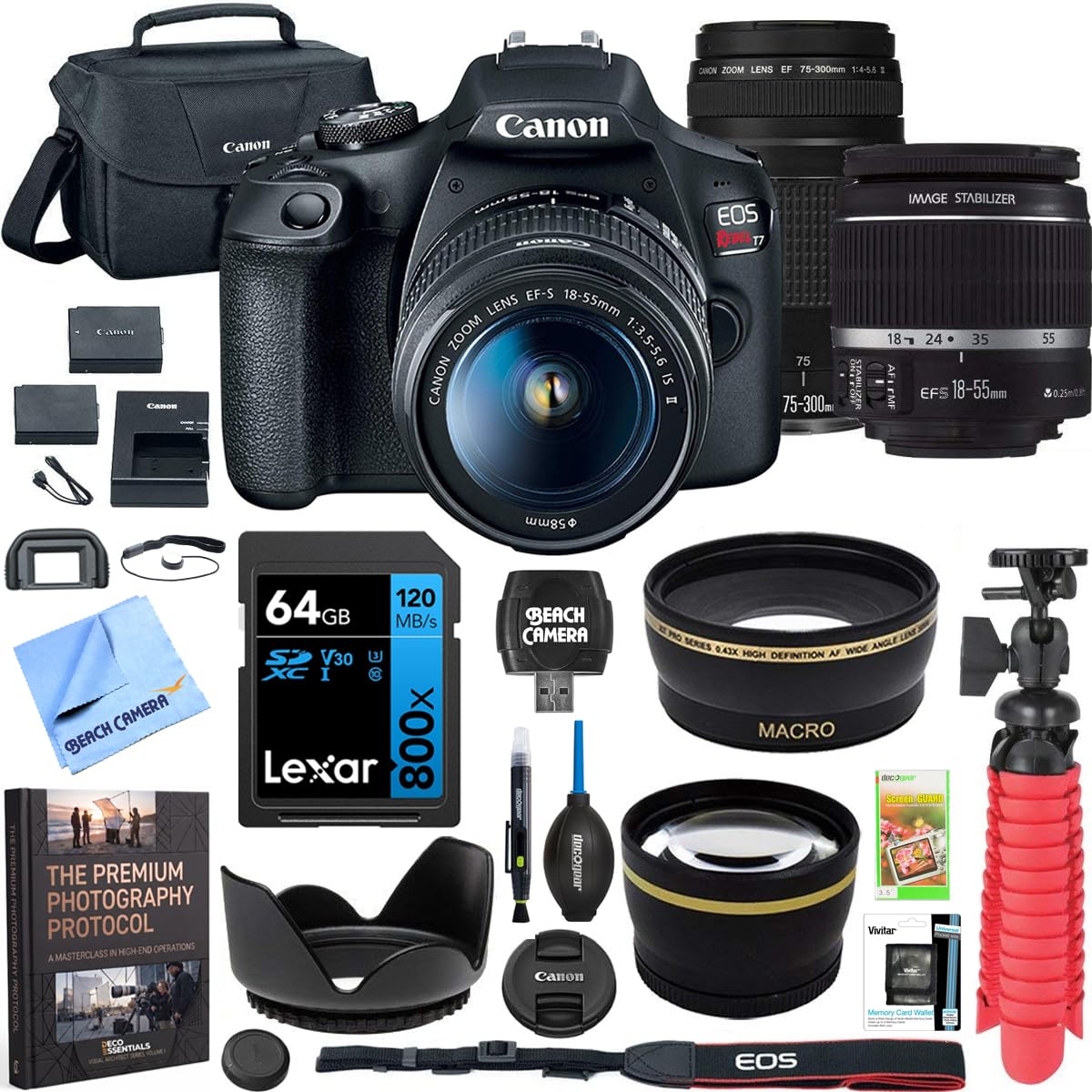
The Canon EOS Rebel T7 DSLR is a budget workhorse with a 24.1-megapixel APS-C CMOS sensor and DIGIC 4+ image processor. While it is limited to Full HD 1080p video at 30 fps, it offers a robust hybrid stills/video shooting experience that is incredibly accessible for beginners. This bundle includes both an 18-55mm IS II lens and a 75-300mm III telephoto zoom, covering wide and long focal lengths.
The 9-point AF system with AI Servo AF and optical viewfinder makes it easy to frame and track moving subjects, though it lacks the modern Dual Pixel AF smoothness of Canon’s newer bodies. It includes built-in Wi-Fi and NFC for quick transfers and remote shooting from a phone. The bundle also throws in a tripod, bag, memory card, extra battery, and cleaning kit, which significantly increases its out-of-box utility.
On the downside, the DIGIC 4+ processor means the T7 cannot record 4K video at all, which is a significant restriction for modern videography. The continuous shooting is capped at 3 fps, and the battery drains quickly with extended use. However, if you are on the tightest of budgets and primarily want a capable 1080p camera with a massive accessory bundle, the T7 is a passable entry point.
Why it’s great
- Very low entry price with dual lenses and accessories
- Large 24.1 MP APS-C sensor for photos
- Built-in Wi-Fi and NFC
Good to know
- No 4K video recording (1080p only)
- Slow 3 fps burst and weak battery life
FAQ
Do I need a camera with a flip screen for vlogging?
What is the 4K crop factor and why does it matter?
Can I use older lenses on modern mirrorless cameras for videography?
Final Thoughts: The Verdict
For most users, the best budget camera for videography winner is the Canon VIXIA HF G70 because it offers a true, uncropped 4K image with a massive 20x optical zoom and dual SD slots for backup recording, all without the crop factor and recording limits that plague stills hybrids. If you want the creative freedom of interchangeable lenses and 4K 60p slow-motion, grab the Nikon Z50 II. And for dedicated vloggers who need a compact pocket camera with a built-in ND filter and a wide-angle lens, nothing beats the Sony ZV-1F.