
Our readers keep the lights on and my morning glass full of iced black tea. As an Amazon Associate, I earn from qualifying purchases.
Specs are compiled from manufacturer listings and verified buyer reviews and can change over time — please confirm the key details on the product page before buying.
Waking up with a sore hip or a numb shoulder is the fastest way to ruin a camping trip. A good budget camping mat fixes that, but the choice between thick foam and a packable air pad changes everything about how you sleep and what you carry. This guide breaks down nine top options to match your camping style.
I’m Min — the founder and writer behind Gadgets Feed. This guide is built by comparing the manufacturers’ published specifications and the patterns across verified customer reviews, so you get each pick’s real strengths and trade-offs instead of marketing spin.
Whether you are car camping with the family or backpacking miles to a remote site, the right budget camping mat balances comfort, weight, and pack size to deliver the restful night you need for tomorrow’s adventures.
Our Picks at a Glance
How To Choose The Best Budget Camping Mat
The biggest choice is foam versus air. Foam mats are heavier and bulkier, but they can’t leak and they cushion like a real bed. Air pads pack down tiny and light, but they rely on a valve holding all night. Your choice of camping style decides which one fits you.
Match the mat to your trip
For car camping, a memory foam mat is a luxury — the 7.8-pound HomeMate feels like a real mattress, and weight doesn’t matter when it rides in the trunk. If you are backpacking, that same foam mat would be a burden; a 1.8-pound inflatable pad is the smart pick because every pound on your back matters. Think about how far you walk from the car before you decide.
The spec that controls your warmth
The R-Value number measures how well a pad blocks cold from the ground. A higher R-Value means less heat escapes into the earth beneath you. The Sea to Summit Camp Plus is a 4-season pad with a 4.2 R-Value, so it keeps you warm on all but the coldest ground. Pads without a listed R-Value are often fine for summer, when the ground hasn’t sucked the warmth out of the soil yet.
Know how you’ll inflate it
Mouth inflation is the cheapest but slowest, and blowing into a valve can add moisture to the pad. Built-in foot pumps are the convenience winner here — you step on a chamber to push air in, and several of these pads inflate in under 60 seconds. This saves your breath and your lungs, which matters more at altitude.
Quick Comparison
| Model | Best For | Thickness | Weight | Inflated Size | Amazon |
|---|---|---|---|---|---|
| HomeMate Memory Foam Pad★ Best Overall | Car camping comfort | 3 inches | 7.8 pounds | 72″L x 24″W | Amazon |
| Oramoose 4″ Backpacking PadBest Value | Side sleepers on a budget | 4 inches | 1.9 pounds | 79″L x 27.5″W | Amazon |
| Pretyw Ultralight 4″ PadSleek & Quick | Quick-inflate comfort | 4 inches | 1.8 pounds | 79″L x 27.5″W | Amazon |
| Overmont 4.7″ Pad | Thick support on uneven ground | 4.7 inches | 1.98 pounds | 75″L x 27.5″W | Amazon |
| Gear Doctors Ether | Featherweight minimalists | 3.35 inches | 17.5 oz | 76″L x 25″W | Amazon |
| Amazon Basics Sleeping Pad | Budget entry-level | 2.2 inches | 1.4 pounds | 75″L x 22.4″W | Amazon |
| Pretyw Double Pad | Couples camping together | 4 inches | 3 pounds | 78″L x 54″W | Amazon |
| CYMULA Memory Foam Pad | Cold-weather car camping | 3 inches | 6.4 pounds | 72″L x 24″W | Amazon |
| Sea to Summit Camp Plus SI | 4-season warmth seekers | 1.5 inches | 2.4 pounds | 72″L x 25.2″W | Amazon |
In‑Depth Reviews
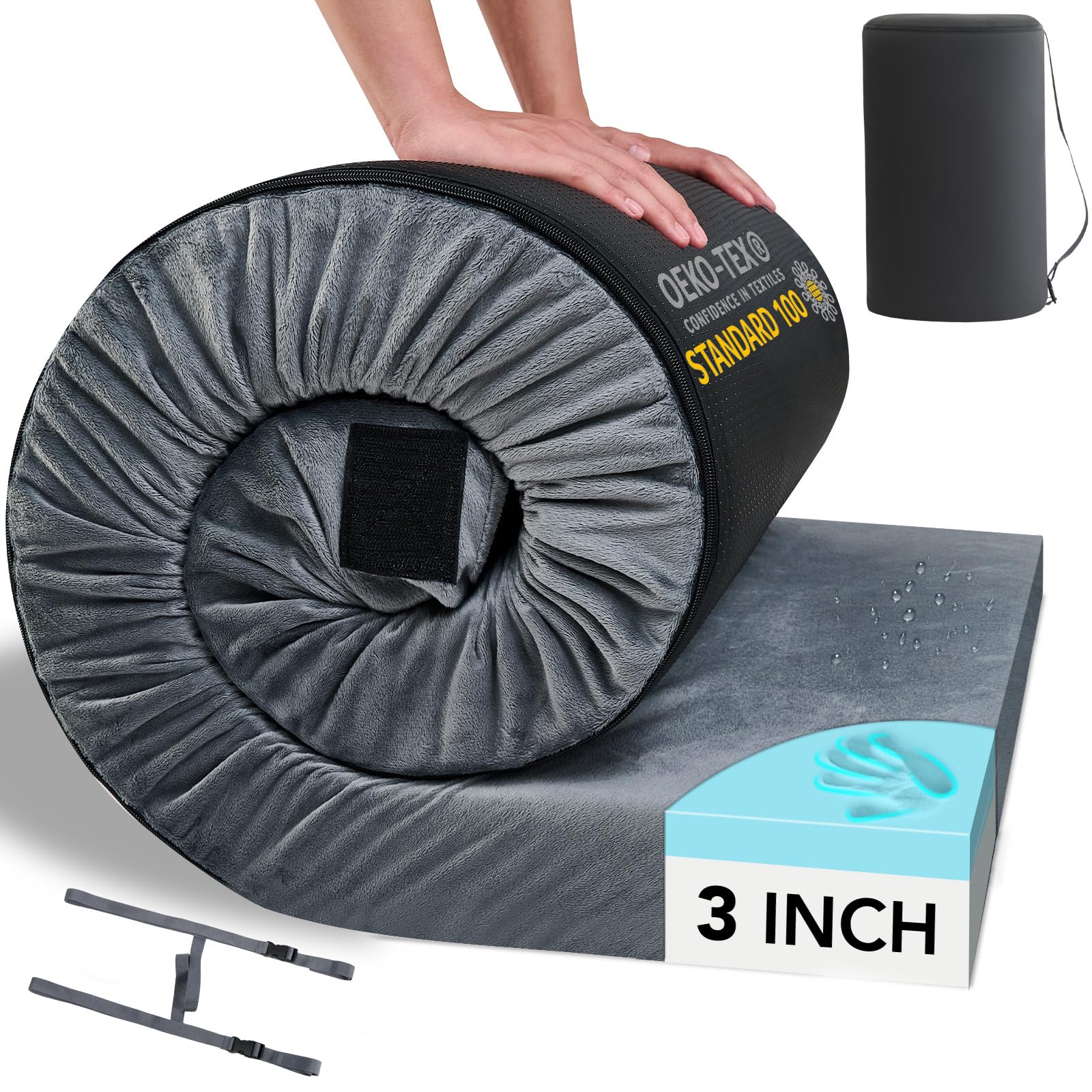
1. HomeMate Memory Foam Camping Mattress Pad
Our pick — 4.5★ from 700+ verified ratings; the strongest balance of quality and price.
The car-camper’s dream: 3 inches of memory foam that turns rough terrain into a real bed.
If you drive to camp and want to sleep like you’re home, this pad is your best bet. Its 3-inch thick memory foam over high-density support foam lets your hips and shoulders sink into softness instead of pressing into hard ground. Owners say it ends morning back pain, with one calling it “swaddled in cotton candy.” — even a senior pet owner uses it on the floor to keep the dog off the bed.
Comfort is what wins people over here, with it being the most-praised feature by far. Versatility is the second act: people use it on cots, couch toppers, hospital chairs, and even as a guest bed. The waterproof, anti-slip base handles damp ground, while the removable, washable cover and roll-up straps with a storage bag make cleanup simple. The trade-off is weight — at 7.8 pounds, it’s a trunk item, not a backpack item, and it is 4.3x heavier than the ultralight Oramoose pad above.
It’s a 4.5-star crowd favorite with more than 700 owners behind it. The full-size version here measures 72″L x 24″W, and owners note it could be a little wider for broad-shouldered sleepers. The foam arrives compressed and needs about 72 hours to fully expand to its 3-inch thickness, so plan your first trip around that.
Why the hype is real
- Memory foam cushions pressure points better than any air pad at this price
- Removable cover zips off for machine washing
- Versatile enough for tents, car beds, cots, and guest rooms
The honest trade-offs
- 7.8 pounds is heavy — strictly car or RV camping
- Takes up to 72 hours to fully expand after unpacking
- 24-inch width is snug for larger sleepers
Reach for this if: you drive to your campsite and prioritize a bed-like sleep over packability.
Look elsewhere if: you need to strap a pad to your backpack — the 7.8-pound weight is too much for hiking.
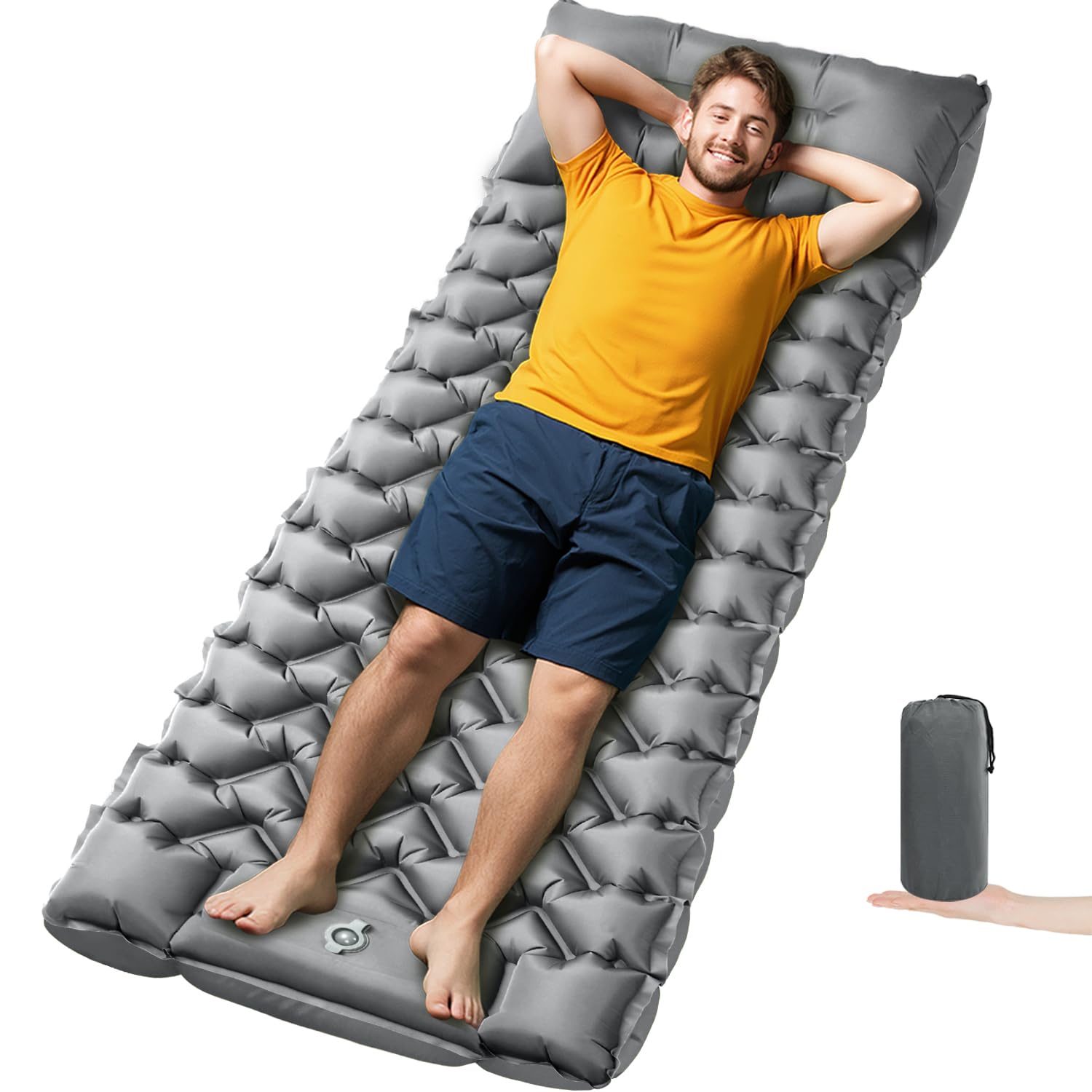
2. Oramoose 4″ Backpacking Sleeping Pad
Four inches of firm air support that banishes hip and shoulder pain for side sleepers.
Side sleepers feel every rock through a thin pad, and the 4-inch thickness here is exactly the fix. Its 4-inch thickness lifts hips and shoulders off the ground., and the integrated neck pillow completes the setup so you don’t need to pack a separate one. At 1.9 pounds with a packed size of 9.4×4.3 inches — about a water bottle — it’s a genuinely backpack-friendly load.
The built-in foot pump is the standout feature for practical reasons. Buyers report it inflates in about 2 minutes and 36 seconds with no mouth-blowing, and the advanced valve holds air for a full night without mid-sleep top-offs. Buyers sum it up as “lightweight, sturdy, comfy, affordable” with excellent air retention — a rare combo at this price point. The rugged 40D nylon bottom shrugs off sharp rocks, roots, and pet claws, so you don’t have to baby it.
It’s a 4.2-star pad with over 650 ratings, valued for its quality and ease of use. Quality is the most-praised aspect, with ease of use a close second. The honest caveat is noise — the material is notably crinkly and loud when you shift in the night, which light sleepers may find annoying. The pillow is also on the thin side, and the pad runs narrower than the images suggest at 27.5 inches wide when deflated.
Solid all-rounder: 4 inches of firm support with a foot pump and 1.9-pound weight puts it wildly ahead of budget foam alternatives in portability.
Know before you buy: the crinkly fabric is audible with every turn — fine for deep sleepers, less ideal for light ones.
Pick this if: you’re a side sleeper who backpacks and wants a firm, comfortable pad that’s still light.
A fair warning: it sleeps loud — the crinkling may bother you if you’re a light sleeper.
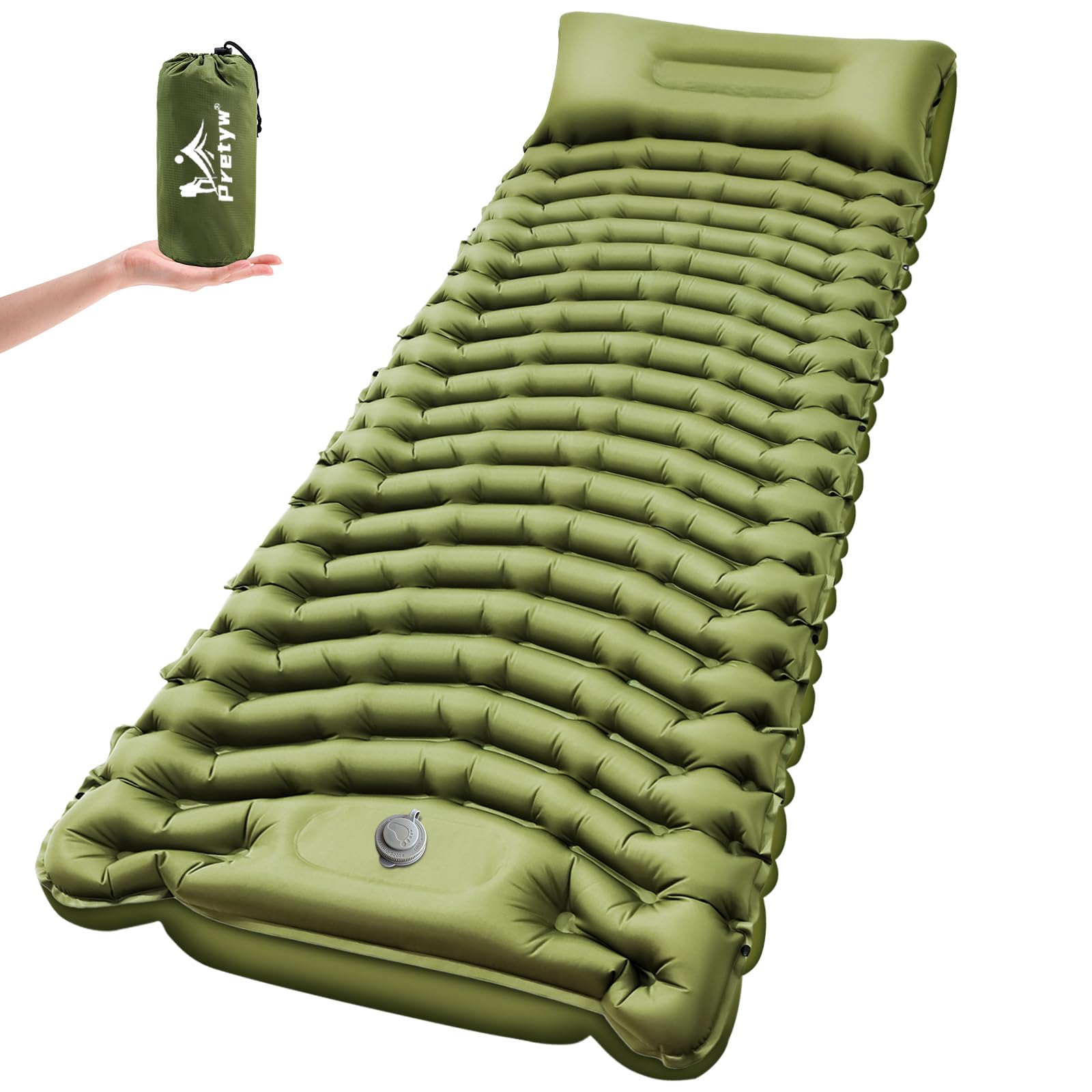
3. Pretyw Ultralight Camping Sleeping Pad
A 1.8-pound pad that inflates in 30 seconds and deflates in one, perfect for fast-paced trips.
For campers who hate fiddling with gear, this pad saves you time on the trail. Its built-in foot pump inflates the 4-inch thick surface in just 30-60 seconds, and the quick-release valve deflates it in about one second. At only 1.8 pounds, it’s even lighter than the already-light Oramoose, making it among the most portable options here.
What makes this pad clever is its connectability. Side buttons let you link two, three, or more pads together to make a double or triple mattress, which camping families will love for creating a massive shared sleep area. The 79 x 27.5-inch surface is generous for a single adult, and the multi-layer 40D nylon with TPU coating is both durable and waterproof. It’s a 4.2-star pad with over 500 backs from owners who praise its quality — the top aspect — and comfort.
The wave pattern supports back, side, and stomach sleepers without forcing a fixed position.. The firmness is described as plush, which suits most people but may be too soft for those who prefer a rock-solid surface. Owners consistently note it holds air all night, which is the most important job of an air mattress.
Speed demon: 30-second inflation, 1-second deflation, and a 1.8-pound pack weight make this the fastest setup in the lineup.
Bonus feature: snap side buttons let you join multiple pads into one giant sleep surface for family trips.
Best for: campers who want a quick, lightweight pad and like the idea of connecting multiple units for group trips.
skip it if: you need a firmer, more supportive feel that plush air pads don’t deliver.
4. Overmont Ultralight Camping Sleeping Pad
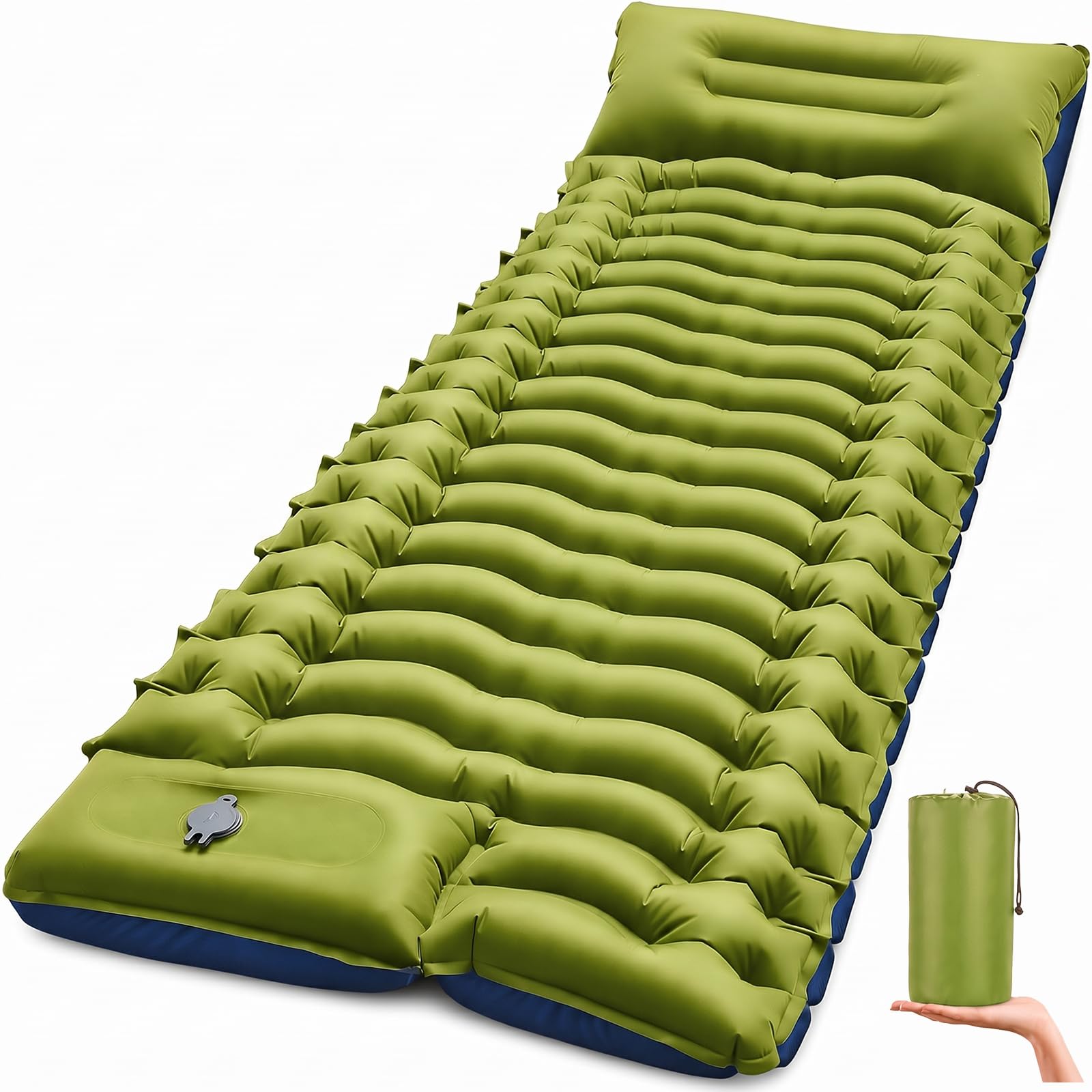
The thickest air pad here at 4.7 inches, isolating you from rocks and uneven ground.
When the campsite floor is a minefield of roots and stones, thickness is your best friend. This pad’s 4.7 inches of inflated air is the tallest in this lineup, lifting you well above uneven terrain. Wave-shaped cells and an integrated pillow support your neck, back, and hips in any sleep position. — it’s a 4.4-star pad that owners say is comfortable and easy to pack.
The 30-second built-in foot pump is easy for a child to operate — one parent reports their daughter inflated it all by herself and rolled it back into the bag. The dual-layer anti-leak valve locks air in all night, and the quick-release valve gets you packed fast. With a 300-pound capacity and tear-resistant 75D pongee fabric over multi-layer TPU, it handles rugged terrain without flinching. At 1.98 pounds, it carries the extra height without a heavy penalty.
Owners rank comfort as the top aspect, with portability following. The trade-off is the fabric — it’s described as slippery on slopes, so a fitted sheet helps keep you in place. Some owners also note the snaps don’t hold together well. It’s slightly heavier than the Pretyw at 1.98 pounds, but that extra height makes a real difference on rough ground.
Luxury height: at 4.7 inches, this is the thickest air pad here — ideal for side sleepers and rough terrain.
A fair note: the slippery fabric can slide on sloped ground; a sheet or cover fixes it.
Choose this if: you sleep on uneven ground and want maximum lift without carrying a foam slab.
Think twice if: you camp on slopes — the slick surface might have you sliding overnight.
5. Gear Doctors Ether Ultralight Pad
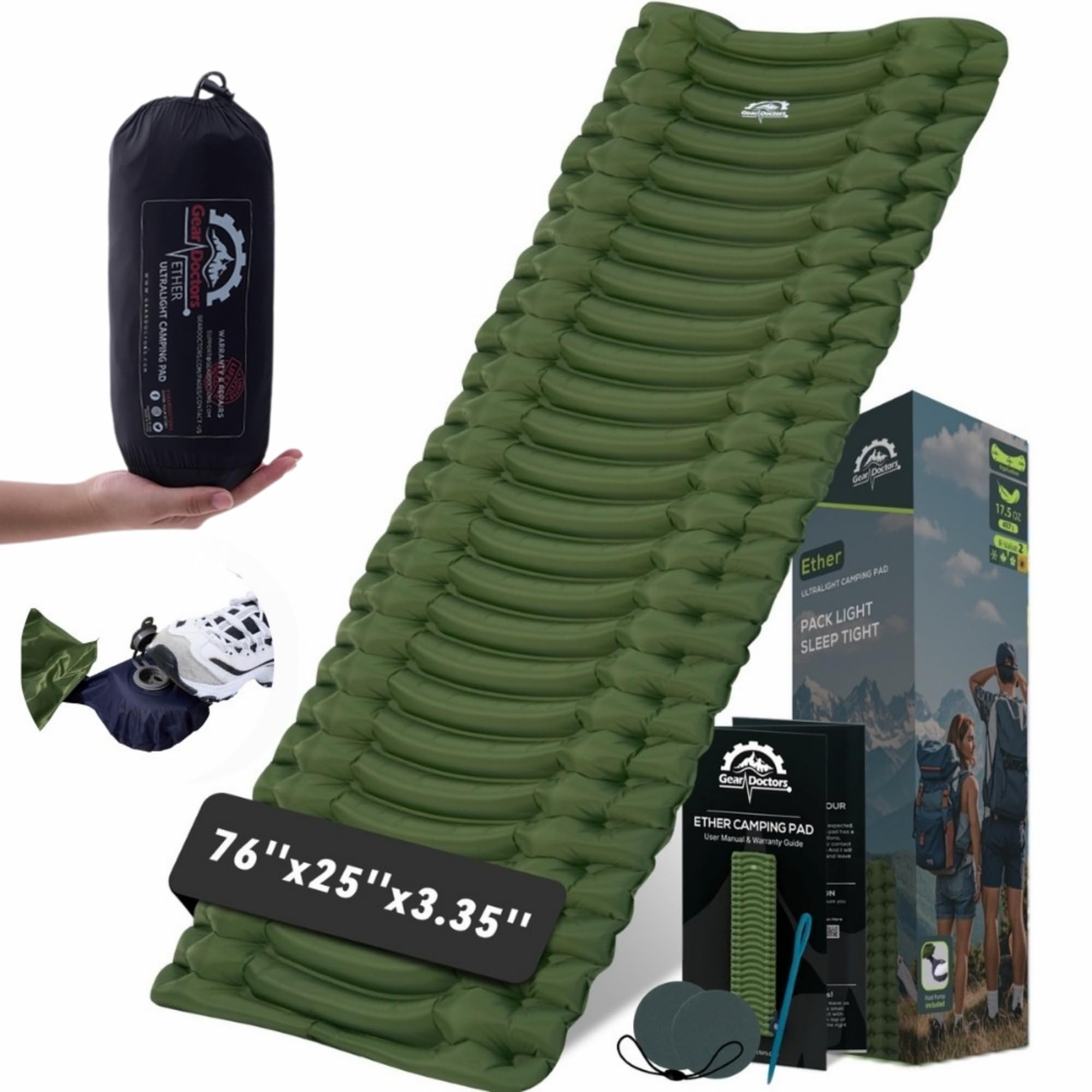
The featherweight that climbs without wheezing — 17.5 ounces packs to water-bottle size.
For backpackers who count every ounce, this is the pad that disappears into your pack. At just 17.5 ounces, it’s lighter than the Oramoose and Pretyw, and it compresses to a tiny 8.6-inch tall x 3.1-inch diameter cylinder. When inflated, it expands to 76 x 25 inches with ergonomic contours — 3.35 inches at the edges tapering to 2.36 inches in the center, a design that hugs your body and prevents slipping. It supports up to 440 pounds, which is the highest capacity in this lineup.
You can inflate this pad in under 90 seconds using the detachable foot pump sack, so you never touch your lips to a valve. The heavy-duty 20D nylon with water-resistant TPU is built to last, and the company backs it with a low-maintenance lifetime replacement — no return needed. Owners love the value, with quality and comfort being the most-praised aspects by far. One hiker reported it held air for 18 hours at 72°F, and another said it held for four days.
It’s a 4.1-star pad that’s become a favorite among ultralight hikers. The recurring note is that the foot pump can be finicky — several owners find mouth inflation easier, and one had a seam leak that was quickly replaced by customer service. It’s a 2-season pad with a 2-R value insulation, so it’s best for spring and summer rather than deep winter.
Trail-ready strengths
- 17.5 oz and water-bottle packed size is class-leading for backpacking
- 440-pound capacity handles heavier sleepers
- Lifetime replacement warranty backs the durable 20D nylon
Watch these limits
- Foot pump is finicky — mouth inflation often works better
- Only rated for 2 seasons, not winter camping
Grab this if: you’re a gram-counting backpacker who wants the lightest sleep system possible.
Not the one if: you camp in cold weather — it’s a 2-season pad without winter insulation.
6. Amazon Basics Camping Sleeping Pad

The entry-level backcountry pad that keeps your budget intact at just 1.4 pounds.
If you’re just starting out and unsure if camping is your hobby, this is the low-risk way to find out. The Amazon Basics pad is the lightest here at 1.4 pounds, and its Insta-Pump Technology inflates the 75 x 22.4-inch surface in under 60 seconds with no extra gear. It’s a 4.0-star pad with a huge following of nearly a thousand owners, making it the most-reviewed budget option in this guide.
The 190T polyester fabric is water-resistant and moisture-proof, and the pad packs down to a compact 12 x 4 x 4 inches with the included stuff sack. Owners use it for everything from airport layovers to car camping, and the mid-range plush firmness was even compared to a firm mattress. It’s compatible with Amazon Basics sleeping bags to create a full budget sleep system — a simple, no-fuss approach for beginners.
Portability and value for money are the most-praised aspects here. The honest downsides start with thickness — at just 2.2 inches, it doesn’t isolate you from cold or rough ground as well as the 4-inch pads. Air retention is a mixed bag in owner reports, with some finding it flat by morning. A few units also had non-functional pumps, though mouth inflation worked fine. It’s genuinely light and affordable, and that’s the trade-off you accept.
Perfect starter pad: 1.4 pounds, under- pricing, and a foot pump make this the least intimidating first purchase.
Know its limits: the 2.2-inch thickness and mixed air retention mean cold campers should look to thicker options.
Ideal for: beginners, travelers, and anyone who wants a light, cheap pad for occasional summer use.
Reconsider if: you camp in cold weather — the thin build doesn’t insulate against cold ground.
7. Pretyw Double Camping Sleeping Pad
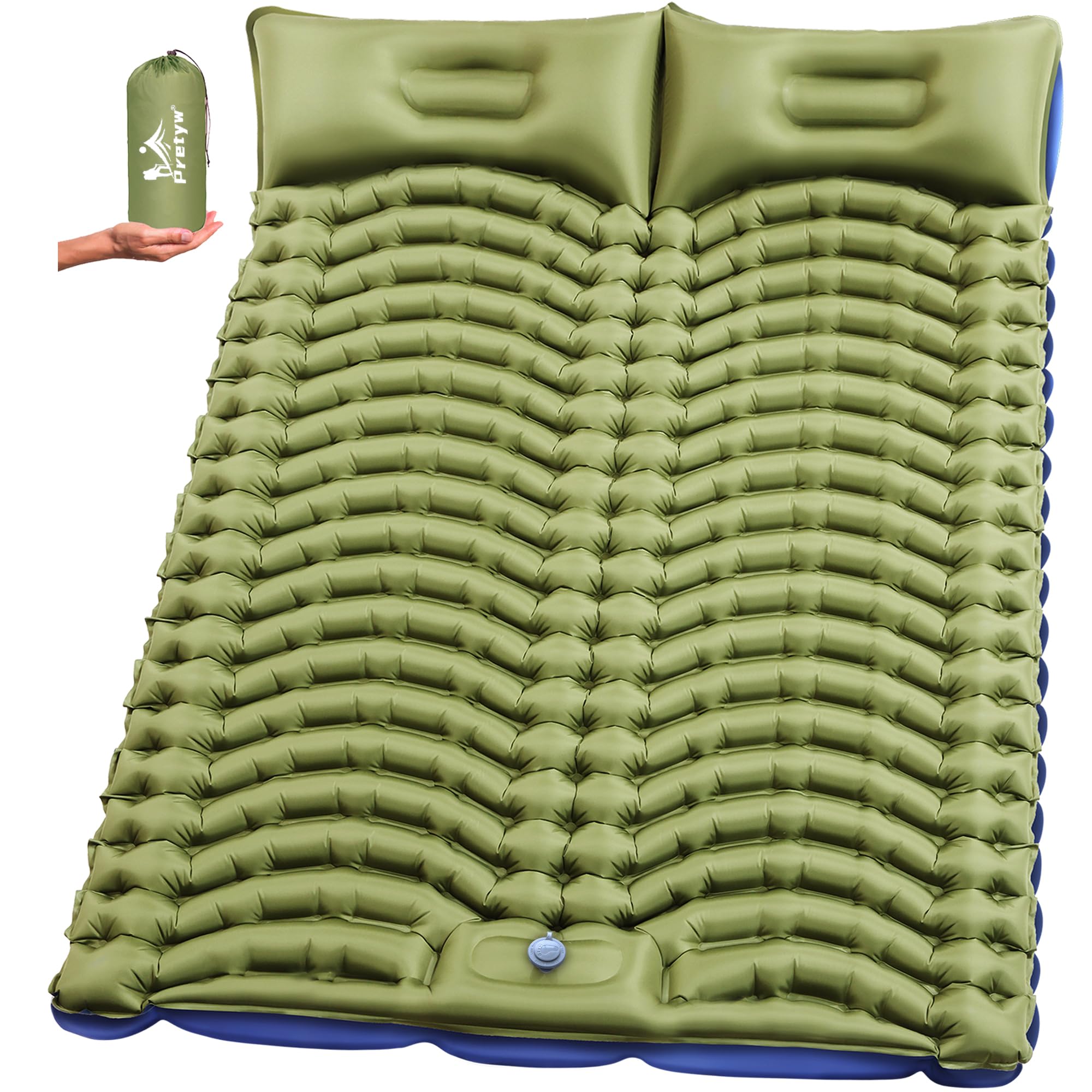
A spacious two-person air mattress that inflates with a foot pump, no separate pump needed.
Room to sprawl without rolling into your tent partner’s thermal — that’s the luxury this double pad brings. The 78 x 54-inch surface inflates to 4 inches thick, giving two adults ample space and strong support. Built-in pillows at the head complete the setup, and the ergonomic pressure-relief wave pattern supports back, side, and stomach sleepers. It’s a 4.2-star pad with nearly 700 owners praising its reliability and ease of use.
The built-in foot pump inflates the full double surface in 1-3 minutes with no hands or mouth involved. Owners mention it’s comfortable even on hard, uneven ground, and it deflates fast for a compact pack-down into the 10 x 5.9-inch carry bag. At just 3 pounds, splitting it between two backpackers makes it a viable option even for hiking trips, though it’s most at home in car camping setups.
Quality and ease of use are the two most-praised aspects here, with camping-friendliness close behind. The ultra-thick 40D nylon with multi-layer TPU won’t tear on rough terrain, and cleaning is a simple wipe-down. It performs well in wet or rainy conditions, which is a major plus for couples who don’t want a soggy night. The main consideration is that 15.09 cubic feet of air takes a bit of work to fully pack down, so give yourself a few extra minutes at breakdown.
Made for two
- 78 x 54-inch surface fits two adults comfortably with built-in pillows
- Foot pump inflates in minutes without separate gear
- 40D nylon holds up on rough terrain
Couples trade-offs
- Full deflation and repacking takes time and patience
- 3 pounds split between two is fine, heavy for one
Best for: couples or friends who camp together and want one shared sleep surface instead of two singles.
Skip if: you always camp solo — the double size is wasted space and extra pack bulk.
8. CYMULA Memory Foam Camping Mattress
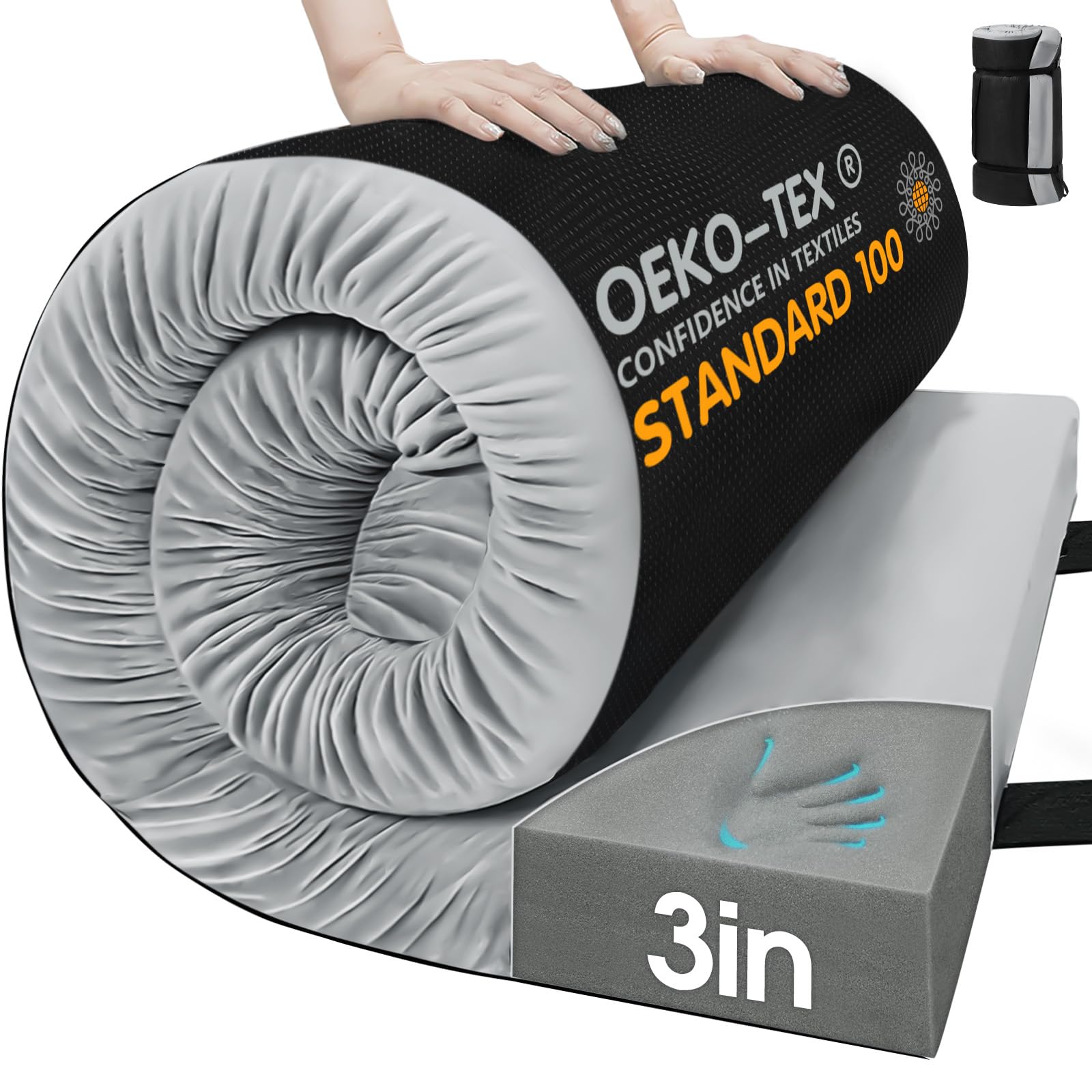
A 6.4-pound memory foam slab that kept Cub Scouts warm in 30°F temps.
When the mercury drops, air pads lose heat and foam wins. This 3-inch thick memory foam pad is the cold-weather specialist here, with owners reporting it kept families warm in 30°F temperatures during Cub Scout campouts. The carbon fiber memory foam cushions pressure points on any hard surface., while the breathable fabric cover works across all seasons. It’s a 4.3-star pad that owners call superior to air mattresses for fall and winter camping.
The removable, washable cover zips off for easy machine cleaning — a practical feature for dusty campsites. The non-slip bottom has rubberized dots that grip your camping cot or tent floor so the pad stays put all night. Owners praise its quality and value for money, and it rolls up easily with the straps for storage. Some owners found it so comfortable they questioned why they’d ever buy an expensive mattress again.
One owner described it as forming to their back “like Tempur-pedic,” a strong comparison for a foam camping pad. The honest trade-offs start with weight — at 6.4 pounds, it’s lighter than the HomeMate’s 7.8 pounds but still strictly a car-camping item. The foam also arrives vacuum-sealed with a strong odor that needs ventilation before first use, and some owners wish it were firmer or a full 4 inches thick.
Winter warrior: the 3-inch memory foam blocks cold ground better than thin air pads, proven in 30°F campouts.
Plan ahead: the vacuum-sealed foam has a strong smell at first — air it out before your trip.
Reach for this if: you car camp in fall or winter and want warm, foam-based comfort that won’t deflate.
Not for you if: you need a pad to carry on your back — the 6.4-pound weight is too heavy for hiking.
9. Sea to Summit Camp Plus SI Mat
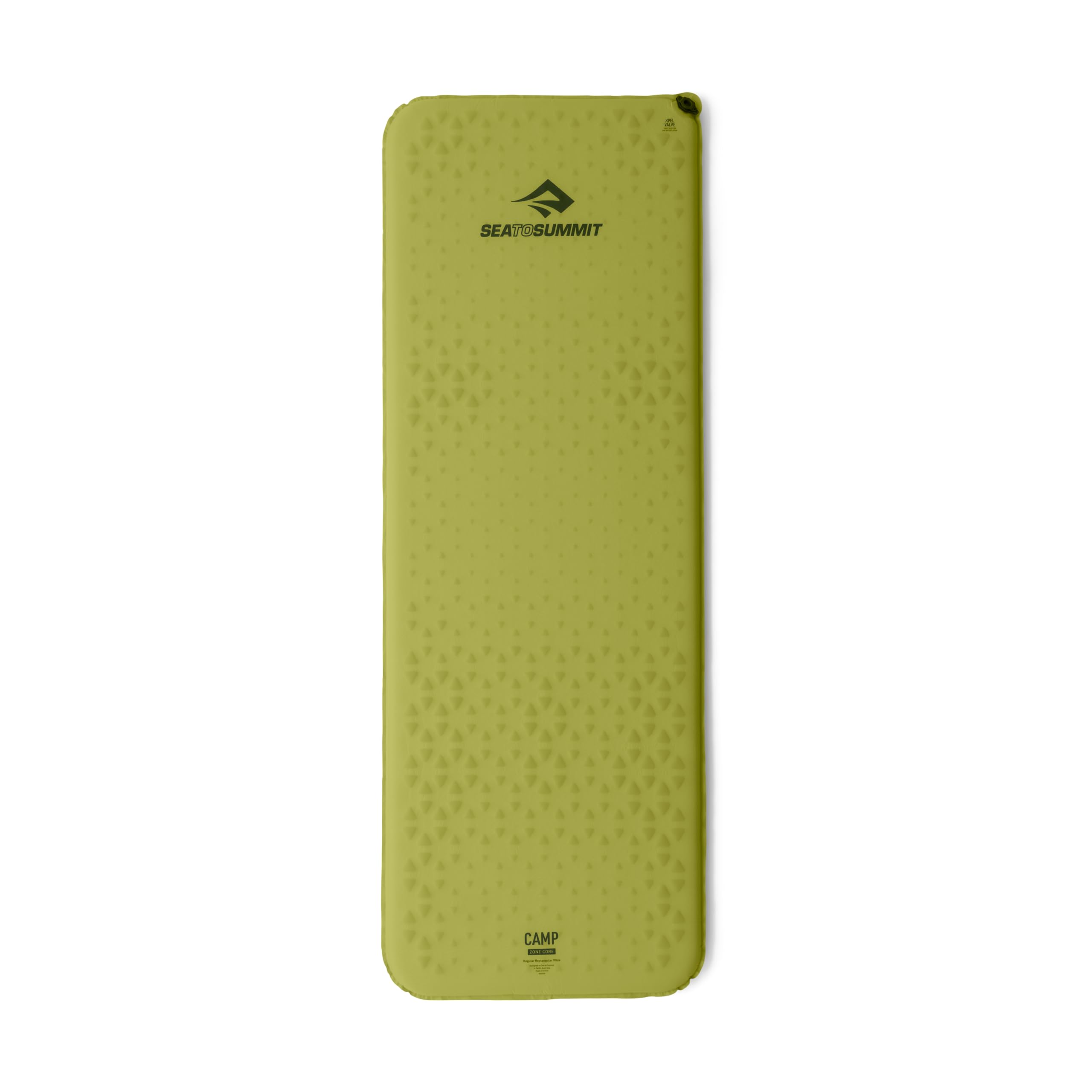
A self-inflating foam mattress with a 4.2 R-Value that blocks cold from all but the iciest ground.
This is the pad for campers who refuse to compromise on warmth. The 4.2 R-Value means it insulates from all but the coldest ground, making it a true 4-season option — owners confirm it “worked as advertised to insulate me from the ground” in below-freezing conditions. The 1.5-inch thick latex foam is a different breed from the air pads above: it self-inflates, provides stable foam support, and is quiet to move on. It’s a 4.5-star pad that owners describe as “high quality and long lasting.”
The rectangular 72 x 25.2-inch shape offers extra sleep surface for side sleepers, and the multi-function reversible valve allows fast inflation, one-way deflation, and fine-tuning of air pressure. It weighs 2.4 pounds and packs to 13.4 x 5.9 inches, with a certified recycled 75D polyester face fabric built to last. The included PillowLock patches, field repair kit, and stuff sack make it a complete package right from the start.
Owners praise its comfort, warmth, and portability, with quality as the top aspect. The self-inflating feature is the one mixed note — it takes time for the foam to expand, and some customers note it needs a little help to fully inflate. It’s also best suited to lighter users, with one owner noting it’s ideal for around 125 pounds but may not suit heavier campers. This is the premium pick here, and the price reflects that.
Warmth that works
- 4.2 R-Value insulation handles below-freezing conditions
- Self-inflating latex foam is quiet, stable, and comfortable
- Rectangular shape gives side sleepers extra space
Consider these
- Self-inflation takes time and sometimes needs a helping breath
- Best suited to lighter users around 125 pounds
Select this if: you camp in cold weather and want reliable 4-season insulation without the bulk of a full foam slab.
pass on it if: you’re a heavier camper or want a pad that’s fully inflated instantly — foam expansion takes patience.
Understanding the Specs
R-Value (Insulation Rating)
This number tells you how well a pad blocks cold from the ground. Higher is warmer — the Sea to Summit’s 4.2 R-Value handles freezing conditions, while pads without a rating are typically summer-only. If you camp in cold weather, don’t skip this spec; it’s the difference between a warm night and a shivering one.
Thickness and Weight
Thicker pads (4+ inches) lift you off rocks and cushion your hips, but they weigh more. The Oramoose and Pretyw hit 4 inches at under 2 pounds — the balance for backpackers. The 7.8-pound HomeMate foam is pure comfort for car camping but impossible to hike with. Match thickness and weight to how far you carry the pad.
FAQ
What does R-Value mean on a camping mat?
Is a foam mat or an air pad better for camping?
How long does a built-in foot pump take to inflate a pad?
Will a budget camping mat keep me warm in winter?
How much weight can these camping mats support?
How long does a memory foam pad take to expand?
Can I connect multiple camping pads together?
Why does my inflatable pad lose air overnight?
Final Thoughts: The Verdict
For most buyers, the budget camping mat winner is the HomeMate Memory Foam Pad because its 3-inch thick foam turns any tent floor into a real bed, with a removable washable cover and waterproof base for easy care. If you want a packable pad for backpacking, grab the Oramoose 4″ Pad at just 1.9 pounds. And for cold-weather car camping, the CYMULA Foam Pad is the one to reach for, with owners reporting warm nights in 30°F temps. The crowd favorites — HomeMate, CYMULA, and Sea to Summit — all sit at 4.5-star territory, so pick by how you camp and where you sleep.
How We Picked
We do not accept paid placement. Every pick is matched to a real buyer and a real use-case; we do not hands-on test units.
Sources & Methodology
Specifications: manufacturer listings and product documentation. Review insights: verified customer reviews, as of September 2026. Pricing: not shown on this page (it changes often); check the current price via the retailer link.
As an Amazon Associate, Gadgets Feed earns from qualifying purchases. This does not affect which products we feature.