
Our readers keep the lights on and my morning glass full of iced black tea. As an Amazon Associate, I earn from qualifying purchases.
Specs are compiled from manufacturer listings and verified buyer reviews and can change over time — please confirm the key details on the product page before buying.
Upgrading your factory car audio on a budget is a minefield of inflated wattage claims and fragile paper cones. The real battle isn’t finding loud speakers, it’s finding ones that stay clear and survive your amp’s power without distorting or blowing out. This guide cuts through the noise to show you which budget-minded drivers actually deliver clean midrange and vocals without falling apart.
I’m Min — the founder and writer behind Gadgets Feed. This guide is built by comparing the manufacturers’ published specifications and the patterns across verified customer reviews, so you get each pick’s real strengths and trade-offs instead of marketing spin.
Whether you’re chasing louder vocals, deeper bass, or a simple plug-and-play swap, here is the clear-eyed breakdown of the best budget car speakers worth your time and money.
Our Picks at a Glance


How To Choose The Best Budget Car Speakers
Most budget speakers aren’t bad, they’re just misunderstood. The key is matching the speaker’s real power handling (RMS) to what your head unit or amp actually sends, and picking the right driver type for the job.
Match the Power, Not the Hype
A speaker’s peak wattage number is marketing. The RMS (Root Mean Square) rating is the continuous power it can handle, which is the number that matters. Pair a speaker with an amp that overpowers its RMS, and you’ll hear distortion before you hear a pop.
Coaxial vs. Dedicated Midrange
Coaxial speakers combine a woofer and tweeter into one unit for a simple all-in-one swap from your factory unit. Dedicated midrange drivers skip the tweeter to focus purely on vocals and instruments, which shines when you have a separate tweeter or subwoofer in your system already.
Quick Comparison
| Model | Best For | Type | Power (RMS) | Size | Amazon |
|---|---|---|---|---|---|
| DS18 PRO-GM6.4★ Best Overall | Vocal Clarity | Midrange | 140W | 6.5″ | Amazon |
| RECOIL MS65-4PPro Audio Pick | High-Power Mids | Midrange | 300W (Pair) | 6.5″ | Amazon |
| ORION CM654Bullet Midrange | Bullet-Tweeter Output | Midrange | 250W | 6.5″ | Amazon |
| RECOIL RCX65 | Value Coaxial | Coaxial | 100W (Pair) | 6.5″ | Amazon |
| BOSS CH6520B | Bass on a Budget | Coaxial | — | 6.5″ | Amazon |
| Pioneer TS-F6935R | Name-Brand Swap | 3-Way Coaxial | 30W | 6″ x 9″ | Amazon |
| Kenwood KFC-1666R | Easy Fitment | 2-Way Coaxial | 30W | 6.5″ | Amazon |
| BOSS CH6930B | Big-Basket Bass | 3-Way Coaxial | — | 6″ x 9″ | Amazon |
| Kenwood KFC-6966S | Rear Deck Power | 3-Way Coaxial | 90W (Pair) | 6″ x 9″ | Amazon |
In‑Depth Reviews
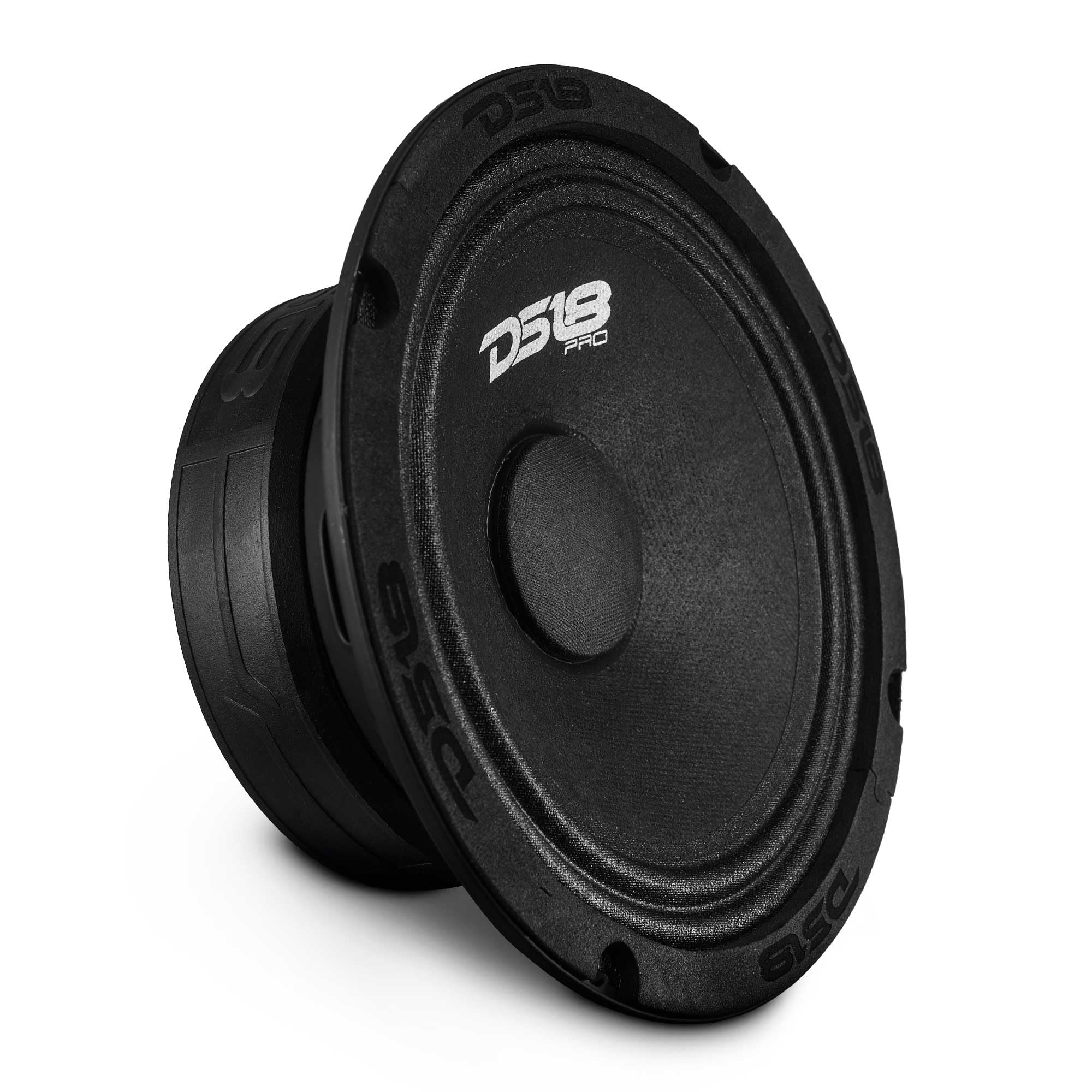
1. DS18 PRO-GM6.4 Loudspeaker
Our pick — over 4.5★ from 400+ verified ratings; the strongest balance of quality and price.
The dedicated midrange that makes vocals cut through road noise without breaking a sweat.
This DS18 driver is built for one job: reproducing the human voice and instruments with stunning clarity. It handles a serious 140W RMS at 4 Ohms, giving you real headroom before distortion creeps in. A 1.5-inch high-temperature Kapton voice coil is the secret to its resilience, managing heat so the speaker keeps its composure even when you push it.
Owners confirm it delivers 125W per channel cleanly with an 80Hz high-pass crossover., making it a fantastic upgrade over stock paper cones. A reviewer swapping out 100W RMS mids found the DS18 louder and clearer, with headroom for double the power.. The trade-off is that this is a single speaker, so you’ll need to order two for a stereo pair — a detail that has caught a few shoppers off guard.
Because it’s a midrange driver, don’t expect subwoofer-level lows. It’s meant to be paired with a sub or dedicated bass driver for the full spectrum. Owners also advise adding baffles or sound deadening to get the most out of its output.
What Owners Rave About
- Incredible volume and “awesome mids” for the price point
- Handles up to 125W per channel cleanly with proper crossover
- High-quality Kapton voice coil for long-term heat resistance
Keep in Mind
- Sold as a single speaker, not a pair
- Larger size may need spacers to avoid window/regulator damage
- Designed for mid-bass; not a full-range or subwoofer replacement
the balance: If you’re building a system with a separate tweeter and sub, this is the vocal powerhouse you want in your doors.
The Reality Check: If you need a simple plug-and-play full-range upgrade, this driver will leave you wanting more bass — look at a coaxial instead.
2. RECOIL MS65-4P Midrange Speakers
The budget midbass that punches far above its class with pro-audio level output.
RECOIL blends pro audio and car audio DNA into a 6.5-inch midrange that delivers a massive 600W Max Power with 300W RMS for the pair. That’s serious headroom for a door speaker, letting you crank the volume on the highway without the sound falling apart. The 1.5-inch high-temperature Kapton voice coil is built to survive the heat from extended high-volume sessions.
Reviewers consistently describe the sound as clear, crisp, and powerful, with One reviewer noted it rivals Deaf Bonce speakers in cleanliness.. Another owner says they sound like far more expensive units.. The catch is they’re power-hungry — they really come alive with an external amp pushing over 100W RMS per channel. Without that amp, you won’t open up their full potential.
These are midrange drivers, so they favor the mids over deep sub-bass. Some owners pair them with an 8-inch midbass or subwoofer to cover the low end. Fitment is mostly straightforward, though a few cars like the Audi S6 required a slight trim to the door opening.
Why It Impresses
- 300W RMS pair rating means serious volume capability
- Praised as “clean as ” competition-grade speakers
- High-temperature Kapton voice coil for durability
The Trade-Off
- Requires a powerful amp to sound its best
- Lacks deep low-end punch without a subwoofer
- Some vehicles need minor trim work for installation
Built for the Enthusiast: If you already have an amp and want midrange that keeps up with a sub, this is your speaker.
Not for the Casual Swapper: If you’re running a stock head unit with no amp, the DS18 is a more forgiving choice.
3. ORION Cobalt CM654 Loudspeakers
A bullet-tweeter midrange that fires highs forward while keeping the mids punchy.
ORION’s Cobalt CM654 is a specialist. This 6.5-inch midrange uses a bullet design to push high frequencies straight ahead without sacrificing the low-to-mid range, giving you a dynamic soundstage. It’s rated for 1000W Max Power and 250W RMS at 4 Ohms, making it one of the highest-rated drivers in this lineup and ideal for a system that gets serious about volume.
An efficiency of 96.67 dB means it converts power into sound very effectively, so it gets loud without demanding excessive wattage. The high-frequency presence is a standout, with owners praising the “great mid-range” and performance that outperforms JVC 6×9 speakers in direct comparison. Its 1.5-inch high-temperature voice coil rounds out a build designed for abuse.
The fit is the main variable here. Its overall diameter of 6.54 inches and mounting depth of 2.75 inches means it’s slightly larger than standard 6.5-inch drivers, so some doors need a little persuasion to close. This is a midrange driver, not a full-range coaxial, so expect it to shine when paired with a subwoofer and dedicated tweeters.
Standout Strengths
- 250W RMS per speaker for massive headroom
- 96.67 dB sensitivity for efficient, loud output
- Bullet tweeter delivers detailed high frequencies
Consider This
- Slightly larger mounting diameter causes fitment issues in some doors
- Needs a subwoofer for deep bass reproduction
- Best paired with an external amplifier
For the SPL Builder: If you’re crafting a loud, clear front stage and don’t mind some trimming, this delivers elite output.
Check Your Door: If a perfect stock fit is non-negotiable, you might prefer a drop-in coaxial.
4. Pioneer F-Series TS-F6935R Speakers

The crowd-favorite factory replacement that brings balanced name-brand sound to stock power.
If you want a trusted name plate and an easy swap, this Pioneer set is the most popular choice on this list. It’s a 6″ x 9″ 3-way coaxial with a woofer, midrange, and tweeter, designed to deliver balanced audio across the frequency range. The 230W Max power (30W nominal) rating is modest, but the 87dB sensitivity means it produces loud, distortion-free music even with the limited power of a stock head unit.
These are engineered for standard 6″ x 9″ openings, making them a versatile replacement in many cars and trucks. Buyers report the “clear sound, strong bass, and excellent overall performance” make a huge improvement over factory units. The spring-clip terminals and included wiring make installation straightforward, though some owners note the need for a spacer or wiring adapter depending on the vehicle.
Here’s the honest catch: they’re efficient, not powerful. If you’re feeding them with an external amp and chasing serious volume, these will hit their limit. They shine brightest as a direct replacement for blown OEM speakers, delivering crisp, punchy sound without needing any additional equipment.
The High Points
- Trusted Pioneer name with a huge owner base
- 87dB sensitivity makes them loud on stock power
- Easy installation with spring-clip terminals
The Limits
- 30W nominal power handling caps high-volume headroom
- Some vehicles require spacers or wiring adapters
- Not the choice for building a high-power SPL system
Perfect for Daily Drivers: If you want a reliable, better-sounding replacement for your factory speakers without adding an amp, this is your pick.
Think Bigger: If loudness is your top priority over ease, step up to a higher-RMS driver like the RECOIL MS65-4P.
5. Kenwood KFC-1666R Road Series Speakers

The balanced-sound specialist with a shallow depth that drops into tight factory spots.
Kenwood’s Road Series brings a 300W peak, 2-way coaxial design to the table with a cloth woofer cone and balanced dome tweeter. The nominal power is 30W RMS with a 40Hz – 22kHz frequency response, which delivers “pristine highs, deep lows, and powerful bass” without distortion. The design philosophy here is balance — it’s an ideal upgrade for front or rear positions.
The biggest practical strength is its fitment. The heavy-duty magnet design and shallow depth make installation easy, and the included grilles offer protection. A Honda Element owner confirmed the hole pattern matched all four door locations with zero drilling., which is a rare level of drop-in compatibility. Others praised the “great highs” and ease of use.
While most owners are happy, the durability conversation is mixed — a rare report of a speaker failing quickly exists. However, the overwhelming pattern is one of long-term satisfaction, with one buyer so impressed they bought a second pair. It’s a solid, dependable mid-range performer for someone who values a balanced soundstage over brute force.
What Shines
- Drop-in fit for many vehicles without modification
- Clear, balanced sound with great high-frequency detail
- Shallow depth simplifies door installation
Be Aware
- 30W RMS limits headroom for very loud listening
- Build quality feedback is mixed on long-term durability
- Not designed for high-powered aftermarket amps
Ideal for the Easy Upgrade: If you want a guaranteed, no-drill fit with refined sound, the Kenwood is a fantastic choice.
Forget It If: You’re planning a high-SPL competition build — this is a musical speaker, not a SPL monster.
6. RECOIL RCX65 Echo Series Speakers
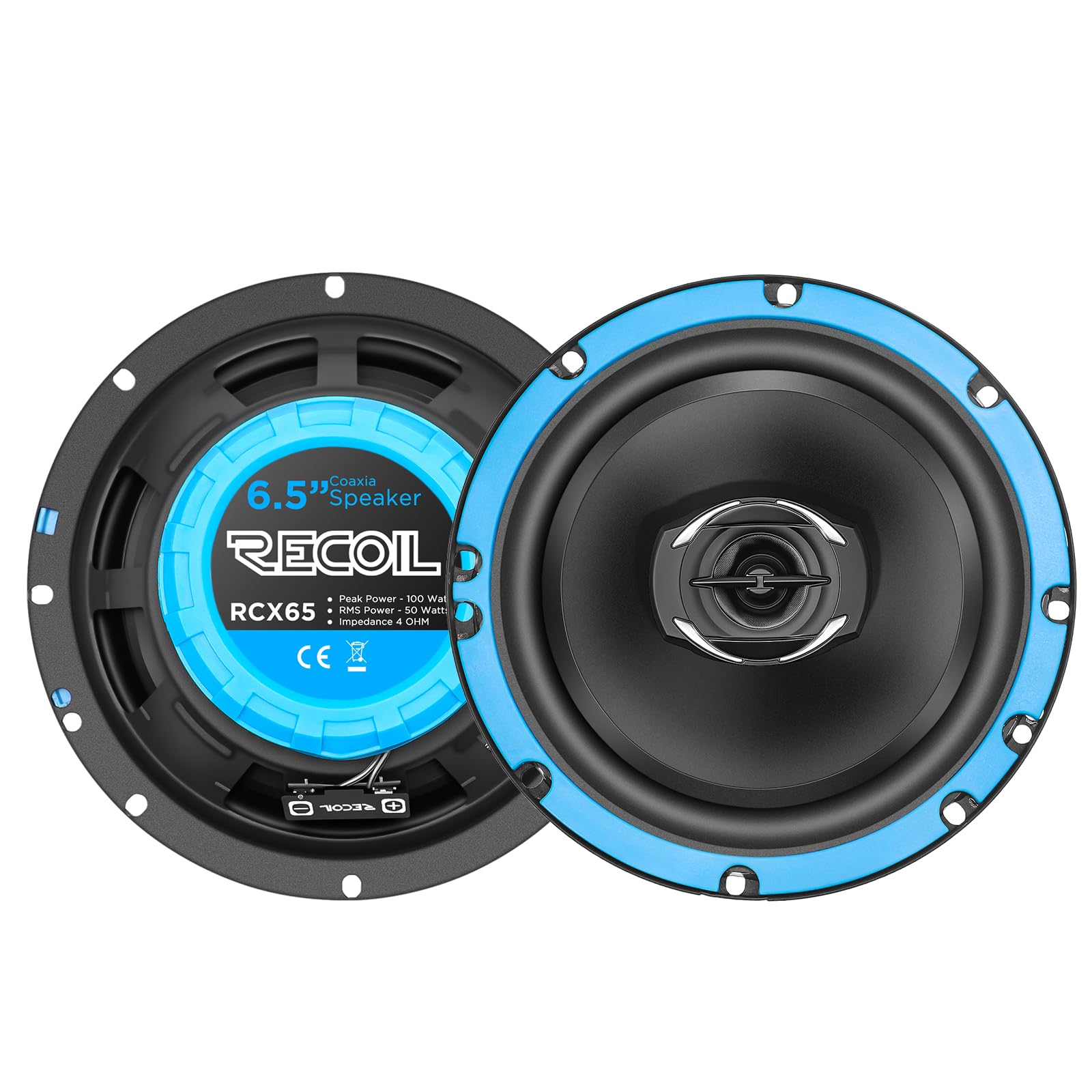
The budget coaxial that proves you don’t need to spend triple for quality sound.
The RECOIL Echo Series is a 2-way full-range coaxial (a speaker that handles both mid-range and treble in one unit) that delivers the best pure value in this lineup. It handles 200 Watts Peak and 100 Watts RMS as a pair, so it can take more power than most drop-in upgrades without distorting. The lightweight polypropylene cones keep things accurate, while butyl rubber surrounds add durability and deeper mid-bass impact, so your music stays clear even at higher volumes.
Owners are quick to point out the “clear sound” and quality feel for the price. One owner running them on a stock radio with no amplifier called the clarity unbeatable. The “top quality wire connectors” are a noted touch. However, there’s a critical setup warning that keeps coming up: to avoid blowing these, you need to set your amp’s crossover properly.
As the owners’ reviews put it: “For ALL the people blowing these speakers up you needed to set your crossovers on your amp to atleast 120hz so they can handle the power of around 50 to 60 watts.” Once a 12dB high-pass filter (a setting that blocks low frequencies below a set point) was set at 120Hz, the same user reported zero issues. This is a great option if you’re careful with your amp settings, but not for those who just crank everything up.
The Value Wins
- 100W RMS pair handling is generous for the price
- Butyl rubber surrounds for durable, deeper bass
- Praised as better than many higher-priced name brands
The Fine Print
- Requires disciplined crossover settings to prevent blowing
- Durability is a mixed bag if overdriven
- Some fitment quirks reported in specific vehicles
Smart Money: the balance for amp owners who know their crossover settings and want big value.
A Word of Caution: If you’re plugging these into an amp with no crossover knowledge, you risk killing them quickly.
7. BOSS Audio Systems CH6520B Speakers

The bass-forward 6.5-incher that rattles windows while keeping vocals clear at full tilt.
BOSS Audio builds this 2-way 6.5-inch pair to hit hard where it counts. The poly injection cone and rubber surround combo is tuned for strong low-end punch, and the reviews back it up. Buyers describe it as “budget-friendly, strong bass rattles windows, vocals stay clear at max volume.” It’s a full-range speaker, so you get everything in one package.
With a frequency response of 100 Hz to 18 kHz and a sensitivity of 90 dB @ 1 watt/1 meter, it’s efficient enough to get loud on a stock stereo. The 1-inch voice coil and 1-inch polyimide tweeter round out the build. It comes as a pair, so you can upgrade both doors at once. They’re a solid step up from the “cheap, paper speakers that come with most cars.”
The main concerns center on long-term reliability, with isolated reports of the wire or components failing on its own. Also, the mounting depth of 2.1 inches might require minor fitting adjustments in some doors. The 3-year platinum online dealer warranty is a nice safety net, provided you purchase through Amazon and keep the paperwork.
Why It Wins Fans
- Strong bass response for the size and price
- 90dB sensitivity works well with factory head units
- Comes as a complete pair for a simple swap
The Caveats
- Mounting depth may need adjustment for a perfect fit
- Occasional durability concerns with the wiring
- Frequency response doesn’t dig as deep as higher-end units
The Punchy Upgrade: A great first step up from factory paper cones if you crave more bass on a tight budget.
Think Twice If: You demand audiophile-level clarity over sheer bass kick — look at the Kenwood for that.
8. BOSS Audio Systems CH6930B Speakers
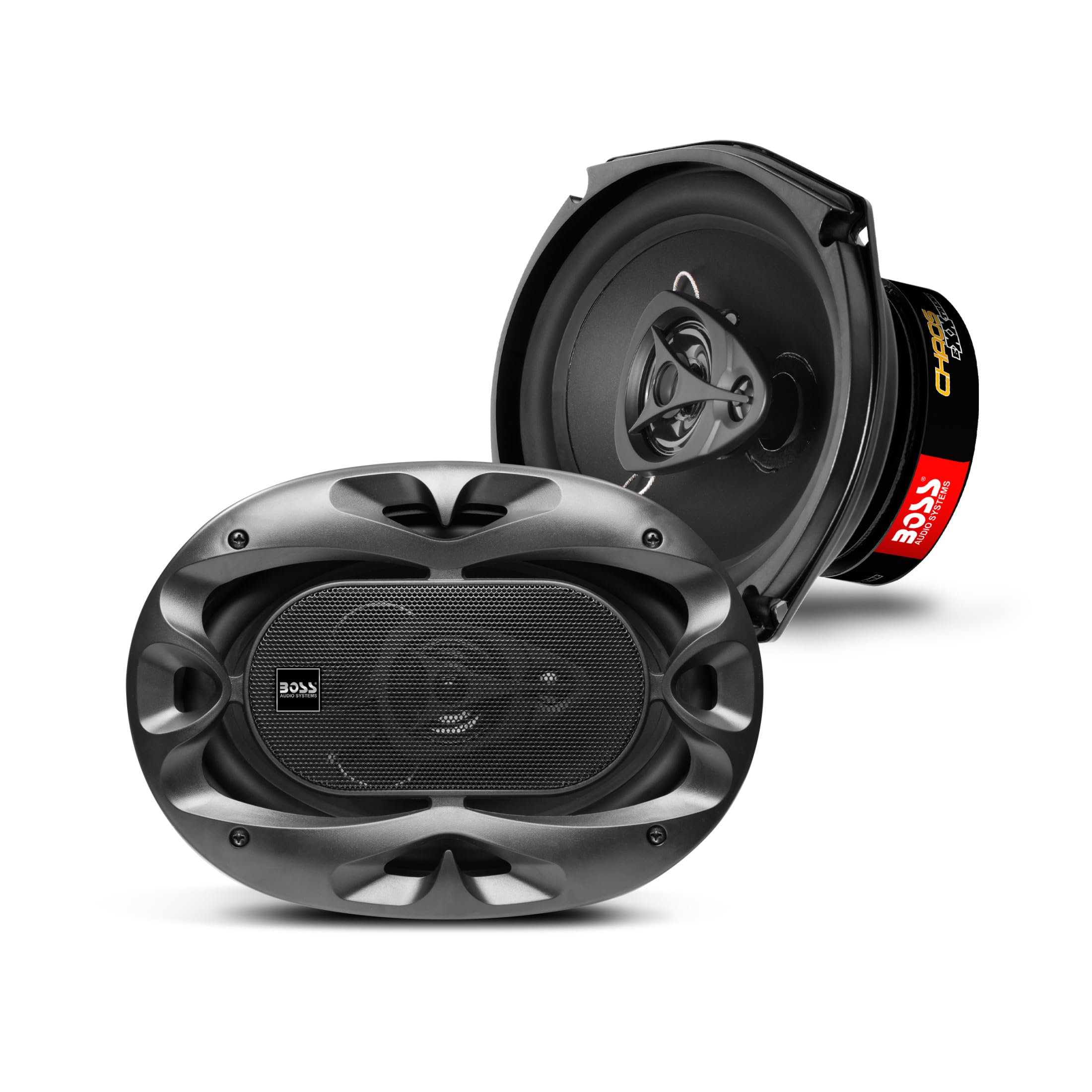
The 6×9 powerhouse that delivers near-subwoofer bass from a simple factory slot.
Stepping up to the larger 6″ x 9″ platform, the BOSS CH6930B brings a significant presence to your rear deck or doors. It’s a 3-way design with a poly injection cone, rubber surround, and a dedicated 2-inch polyimide cone midrange alongside a 0.75-inch piezo tweeter. This configuration is designed to give you full-spectrum sound without needing extra drivers.
The big draw here is the bass. Owners say it delivers near-subwoofer bass, calling the low end “fantastic.”. The 92 dB sensitivity rating means it gets reasonably loud even without a dedicated power amp — One buyer ran them off a stock JVC head unit and was impressed with the output.. The frequency response of 50 Hz to 20 kHz pushes low for a 6×9.
There are a few honest notes to consider. The advertised 6×9 dimensions can run slightly small, prompting some owners to make minor adjustments to the mounting holes for a secure fit. The bass output, while strong, isn’t a replacement for a true subwoofer cone area. And while the built-in tweeters work, one owner chose to add extra tweeters for even more high-end sparkle.
Big-Speaker Payoff
- Impressive bass output for a passive 6×9 speaker
- High 92dB sensitivity pairs well with stock radios
- 3-way design covers a wide frequency range
Fitment Notes
- Actual dimensions can be slightly smaller than standard, requiring adjustments
- Bass is strong but not true subwoofer depth
- Piezo tweeters can sound bright to some ears
For the Bass Seeker: If you have 6×9 slots and want the most low-end thump without a sub, this is your best bet.
If You’re a Purist: The slight size discrepancy might annoy you — precision installers may prefer the Kenwood 6x9s.
9. Kenwood KFC-6966S Speakers

The rear-deck workhorse that takes serious amp power and plays distortion-free.
This Kenwood KFC series pair is built for those who already have an amplifier or want more headroom from their 6x9s. With a peak handling of 800 watts and a continuous RMS of 90 watts for the pair, it’s among the most sturdy options here, so it can handle loud, sustained playback without strain. It uses a polypropylene mid-woofer cone and foam/rubber surround, a classic recipe for clean mid-bass and longevity, meaning your music stays punchy and the speakers last longer.
The frequency response of 35 – 20,000 Hz shows this speaker can reach deeper than most, making it a strong choice for a front stage or rear fill. Owners mention they “fit great, sounds great” and appreciate the lack of distortion even when pushed. One buyer called them a “new sound experience,” noting they easily outperform factory units. The build quality is a consistent point of praise.
The main caveat is fitment. While the 6-1/16″ x 8-3/4″ cutout is standard, the mounting holes and top-mount depth of 3 inches can clash with specific vehicles. A 2003 Camry owner found the holes misaligned with the rear deck, needing drilling and spacers.. It’s not a universal drop-in, so checking your specific car’s mounting pattern is essential before ordering.
Why It Stands Out
- 90W RMS pair rating is serious headroom for a 6×9
- 35Hz frequency response digs deep for rich bass
- Strong build quality and distortion-free performance
Know Before You Buy
- Mounting holes often require drilling or spacers
- Top-mount depth can be tricky in some cars
- Best performance requires a capable amplifier
The System Builder’s Pick: If you’re running an amp and need 6x9s that can take the power, this Kenwood is a reliable powerhouse.
Check First: if you want a guaranteed bolt-in fit with zero modification, the BOSS CH6930B is the safer bet.
Understanding the Specs
RMS Power vs. Peak Power
Peak power is what a speaker can survive in a split-second burst; it’s a marketing number. RMS (Root Mean Square) is the continuous power a speaker can handle safely. Matching your amp’s RMS output to the speaker’s RMS rating is the single most important step to avoid distortion and blown drivers.
Crossover Settings
A crossover filters frequencies sent to a speaker. Setting a high-pass filter (HPF) on a midrange or coaxial speaker around 80Hz to 120Hz stops the deepest bass from reaching it — bass that midrange drivers physically can’t reproduce and that wastes power and generates heat. This is the key to making budget speakers last.
FAQ
What does RMS power mean for car speakers?
Will a midrange speaker sound good without a subwoofer?
What crossover frequency should I set for my midrange speakers?
How do I know if a 6×9 speaker will fit my car?
Is a 2-way or 3-way speaker better?
Why do my new car speakers sound distorted at high volume?
Can I run high-power midrange speakers on a stock head unit?
What is speaker sensitivity and why does it matter?
Final Thoughts: The Verdict
For most buyers, the budget car speakers winner is the DS18 PRO-GM6.4 because it offers class-leading vocal clarity and sturdy power handling for the price. If you want a simple, reliable drop-in swap with a trusted brand name, grab the Pioneer TS-F6935R. And for those prioritizing bass from a 6×9 slot, the BOSS CH6930B is the one to reach for.
How We Picked
We do not accept paid placement. Every pick is matched to a real buyer and a real use-case; we do not hands-on test units.
Sources & Methodology
Specifications: manufacturer listings and product documentation. Review insights: verified customer reviews, as of August 2026. Pricing: not shown on this page (it changes often); check the current price via the retailer link.
As an Amazon Associate, Gadgets Feed earns from qualifying purchases. This does not affect which products we feature.