
Our readers keep the lights on and my morning glass full of iced black tea. As an Amazon Associate, I earn from qualifying purchases.
Specs are compiled from manufacturer listings and verified buyer reviews and can change over time — please confirm the key details on the product page before buying.
Buying budget closed back headphones usually means choosing between a muddy bass blob and a tinny hiss-box. This guide separates true studio-grade bargains from cheap also-rans, so you can pick a pair that helps you mix, edit, or enjoy music without sound leaking into the room.
I’m Min — the founder and writer behind Gadgets Feed. This guide is built by comparing the manufacturers’ published specifications and the patterns across verified customer reviews, so you get each pick’s real strengths and trade-offs instead of marketing spin.
Finding the right budget closed back headphones means weighing sound accuracy, comfort, and build quality against a strict price ceiling, and this guide does exactly that.
Our Picks at a Glance


How To Choose The Best Budget Closed Back Headphones
Closed-back headphones seal your ears from outside noise and keep your music from leaking out to annoy others nearby. That makes them the default for recording vocals, tracking instruments, and listening in shared spaces where open-backs would broadcast your playlist.
Sound Signature: Accuracy vs. Excitement
Your first decision is if you want a flat, honest sound for mixing or a boosted, notable sound for casual listening. A flat response reveals exactly what’s in the recording, so engineers and editors choose it. A bass-boosted consumer sound is more fun for music but hides mix flaws and can tire your ears over long sessions.
Build Quality and Comfort for Long Sessions
You’ll wear a studio headphone for hours, so clamp force and padding matter as much as the drivers. Look for plush ear cushions and an adjustable headband that spreads the weight, and check if the cable is detachable — a removable cord is the best way to extend the life of a budget pair when the wire finally gives out.
Quick Comparison
| Model | Best For | Driver Size | Frequency Response | Cable Type | Amazon |
|---|---|---|---|---|---|
| OneOdio A71★ Best Overall | Versatile wired value | 40mm | — | Coiled, Detachable | Amazon |
| Mackie MC-100Best Value | Home studio tracking | — | 15Hz – 22kHz | — | Amazon |
| Numark HF175DJ’s Choice | DJ cueing | 40mm | — | 3m, Retractable | Amazon |
| LyxPro HAS-30 | Comfort-first listening | — | — | Straight & Coiled | Amazon |
| KRK KNS 8400 | Detail-critical mixing | 40mm | — | Detachable | Amazon |
| JVC HARX900 | Bass-heavy listening | 50mm | 7-26,000Hz | — | Amazon |
| Sennheiser HD 280 Pro | Noise isolation | — | 8 – 25000 Hz | Coiled | Amazon |
| AKG K72 | Lightweight comfort | 40mm | 16Hz – 20kHz | — | Amazon |
| PreSonus HD9 | High-power handling | 45mm | 10 Hz – 26 kHz | 10 ft, Single-sided | Amazon |
In-Depth Reviews
1. OneOdio A71 Hi-Res Wired Over-Ear Studio Headphones
Our pick — 4.5★ from 17,000+ verified ratings; the strongest balance of quality and price.
The crowd-favorite value king with a neutral voice that suits mixing, editing, and everyday listening
With over 17,000 buyers behind it, the OneOdio A71 is the safest money you can spend on a wired pair. Its 40mm drivers deliver a neutral, mid-focused sound that owners say is clear for mixing and editing, and the light, foldable frame makes it easy to toss into a bag for travel or a session elsewhere.
You get a long-style 6.6-9.8 ft coiled cord along with both 6.35mm and 3.5mm plugs, so it connects to amps, computers, and phones without needing an adapter. The earcups swivel 90° for single-ear monitoring — a feature DJs and podcasters will immediately appreciate — and a shared audio port lets a second person plug in without a splitter.
The thing everyone raves about is the sound quality, and it’s backed by a cushion of comfort and value. Owners note that while over-ear fit is praised by many, a few find the fit tight, and there are mixed reports on long-term durability — some say they last for years, others report breakage within weeks. The hot topic of a defective mic cable on some units is a minor annoyance, but the included 6.35mm cable works fine.
What wins people over
- Neutral, clear sound that’s perfect for mixing and editing
- Versatile connections: 6.35mm, 3.5mm, and a shared audio port
- Comfortable, light, foldable, and easy to store
What some hit
- Fit can feel tight for some head shapes
- Durability reports are mixed long-term
- Occasional defective mic cable on a unit
Reach for it: If you want one wired pair that does everything — studio work, DJing, and casual listening — this is the one.
Step back if: You need a guaranteed ultra-loose fit for a very large head.
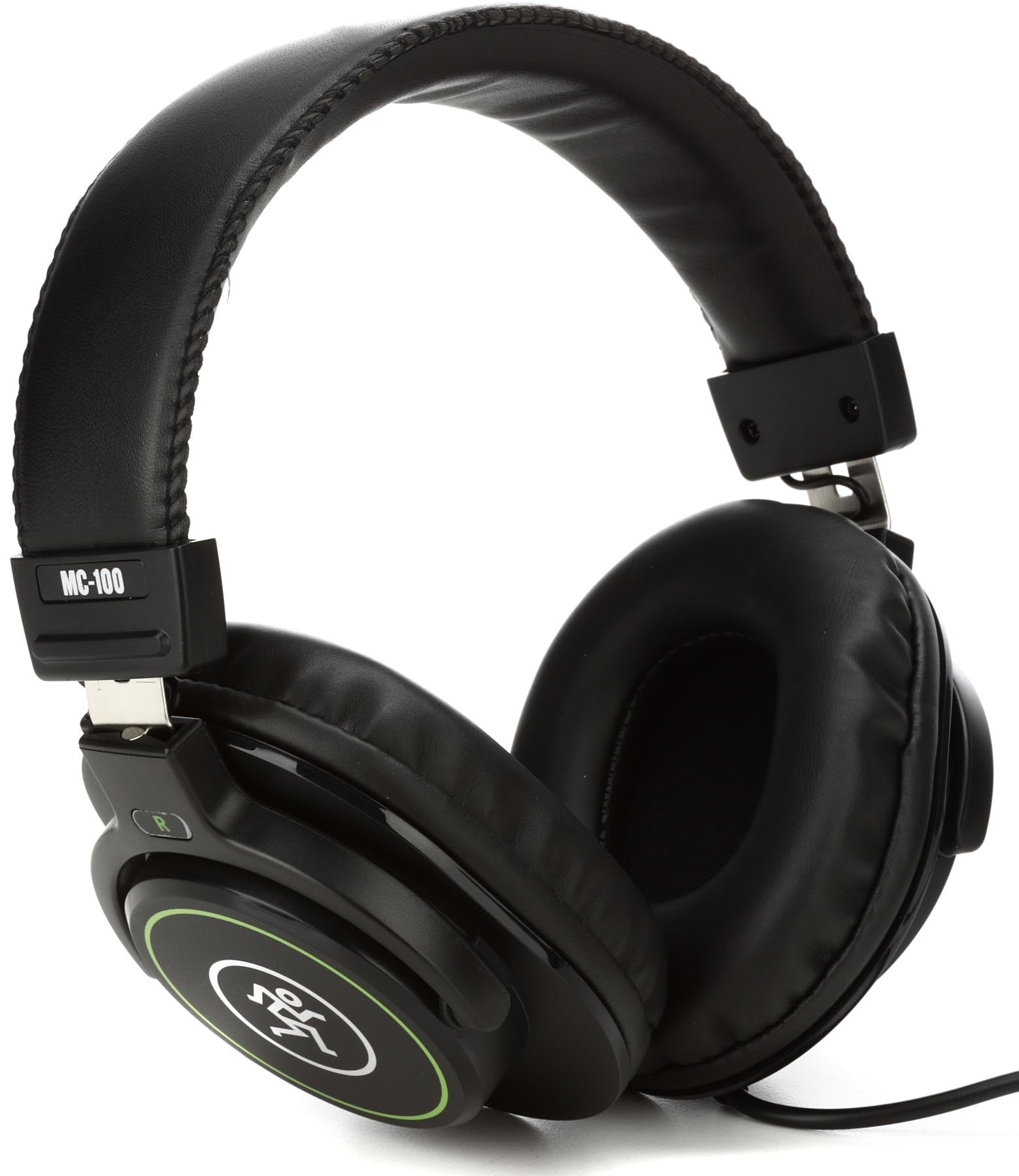
2. Mackie MC Series Professional Closed-Back Headphones (MC-100)
Signature Mackie studio sound that’s warm, clear, and kind to your wallet
Mackie’s reputation in studio gear carries into this budget headphone, which delivers a warm signature sound without the shrill high-end treble that ruins cheap cans. Its frequency range spans 15Hz to 22kHz, covering the full audible band with enough clarity to get you going on a home recording project.
You can wear the MC-100 for hours thanks to the soft padded headband and conforming ear pads, though some note a slight ear tension after a long session. The long cord is a highlight for those who move around, and the closed-back design provides excellent noise isolation for tracking vocals or podcasts.
The feedback shows great bass, but pushing it too hard will cause distortion — a fair compromise at this level. Owners consistently call it unbeatable value, even comparing it favorably against higher-end Mackie models. The logo wearing off after two months is cosmetic, not functional, and durability is unproven but impressive so far.
The takeaway: A warm, comfortable studio workhorse that flatters the budget without lying about the bass.
Choose it for: Home recording, podcasting, and long listening sessions where you want honest sound.
Skip if: You plan to crank the low end hard, because it will distort when boosted.
3. Numark HF175 Closed-Back DJ Headphones
A durable DJ tool with swiveling cups and a hefty 3m cable for the booth
Built for the DJ booth, the HF175 pairs 40mm neodymium magnet drivers (strong magnets that move the speaker cone) with a sturdy stainless steel and stitched leather headband. That combination delivers clear, powerful sound that owners say is very loud, and the closed-back design with swiveling ear cups suits monitoring, editing, and podcasting.
A 3m cable with a TRS 3.5mm plug and a 6.35mm adapter means you can stay wired across a wide stage or desk setup. The soft padded ear cushions help block ambient noise, keeping the mix in your ears and the crowd noise out. It’s also listed as foldable, adding some travel convenience between gigs.
Where it gets honest is the low end — buyers report the low frequencies feel very colored and can overwhelm the mid and hi ranges, making it difficult to mix cleanly, though it’s absolutely doable. That’s a trade-off for the DJ-fun sound profile. Durability is the main concern, with some reporting they stopped working and opinions on value divided.
Who it fits: DJs and casual listeners who want a loud, punchy sound and don’t need clinical accuracy.
The honest caveat: The colored low end isn’t ideal for critical mixing.
Ideal for: DJ cueing and high-volume listening where swivel and loudness matter.
Not for: Precision-oriented audio engineers on a tight deadline.
4. LyxPro HAS-30 Closed Back Over-Ear Professional Recording Headphones

Memory-foam comfort that lets you wear these for hours without ear fatigue
The LyxPro HAS-30 is the pick for marathon listening sessions, with memory foam padding wrapped in leather that owners say doesn’t cause sweating. At 10.5 ounces, it’s light enough to disappear on your head, and the foldable design with a sturdy carrying case makes it a good travel companion.
Sound quality is this pair’s other headline — buyers call it incredible, with one noting how it brings clarity to the mix of notes. The closed-back design offers excellent noise isolation, effectively drowning out most sounds around you. You get two removable cables (straight and coiled) plus a 3.5mm to 1/4″ adapter, so you’re covered across devices.
Expect a break-in period of roughly 40 hours where the bass stays boomy and treble harsh, but after that the tight bass and clear mids shine through. The fit is tight around the neck, and while one long-term owner’s left ear cup failed after about nine months, others report years of use. It comes with a 1-year manufacturer warranty for confidence.
The highs
- Extremely comfortable memory foam/leather pads with no sweating
- Excellent noise isolation that blocks most external sound
- Comes with case, two cables, adapter, and replaceable pads
The trade-offs
- Needs about a 40-hour break-in before it sounds its best
- Fit is tight around the neck area
- One durability report of a left ear cup failing at 9 months
Best for: Comfort-first listeners who spend hours in headphones and value plush padding.
Think twice if: You want instant high-fidelity sound without any break-in effort.
5. KRK KNS 8400 On-Ear Closed Back Circumaural Studio Monitor Headphones

The flat-EQ mix master that reveals detail other budget cans hide
If accuracy is your obsession, the KNS 8400 delivers a flat EQ that owners say lets them rediscover their music collections, revealing subtle details like breathing and sleeve movement in recordings. It’s voiced to stay true to the character of KRK’s class-leading studio monitors, with 40mm drivers built for the studio. It needs roughly a 20-to-24-hour burn-in to settle in, after which the bass is clear and not overpowering.
The detachable in-line volume control and removable cable make this a practical tracking tool, and the memory foam earpads offer good noise isolation. It’s light and comfortable for hours at a time, though owners mention the head padding feels slightly heavy or hard on top of the head.
This is a studio instrument, not a bass-boosted consumer toy — owners warn that those comparing it to bass-heavy cans will be disappointed because the bass is accurate, not inflated. The bass below 130Hz is slightly rolled off, which makes low-end mixing in the 40-70Hz range tricky, and build quality gets mixed feedback. It’s widely considered a rival to the ATH-M50, and it doesn’t require an amp to sound good.
The verdict: An audiophile-grade flat response for mixing and tracking that demands a bit of patience during break-in.
Reach for it: If you’re mixing, tracking, or analyzing audio and want uncolored honesty.
Look elsewhere if: You crave thumping bass for pure enjoyment, because this is accurate, not additive.
6. JVC HARX900 High-Grade Full-Size Headphone
Giant 50mm drivers and a punchy bass that shakes the mix
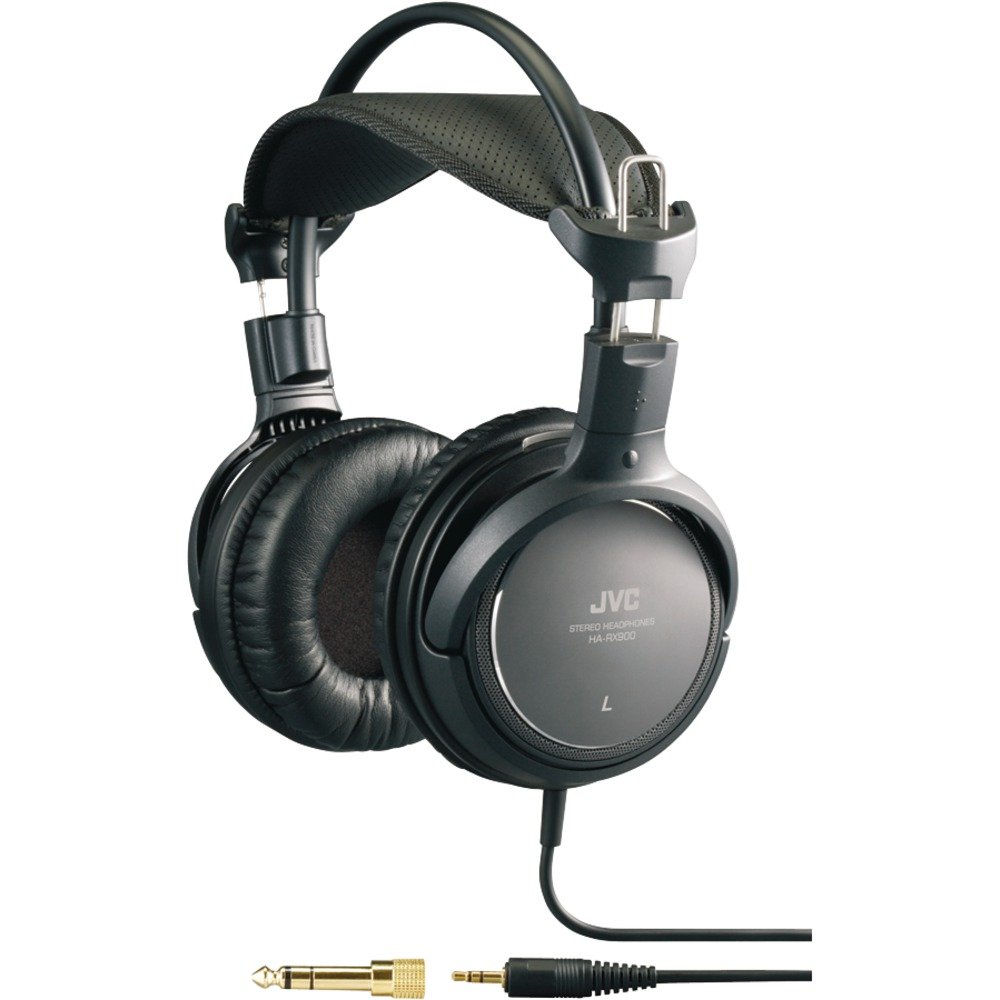
The JVC HARX900 is a different beast, rocking the biggest drivers on this list at 50mm with a frequency response stretching from 7Hz to 26,000Hz. It delivers heavy, punchy bass with clear highs and mids, and the 64-ohm impedance with 106dB sensitivity means it plays loud and full without needing a massive amp.
The metal headband with a pressure dispersion mesh pad provides a feeling of sturdiness and comfort around the ears, with padding that allows hours of wear. But this is a stationary headphone — the long, thick cord needs bundling, and the ear cups are huge at 4.5″ in diameter and 2″ deep, making it bulky for travel. It’s built for a desk, not a commute.
from the start, the felt “acoustic lens” can kill the highs and mids, and owners say it needs a burn-in of 12-40 hours to sound its best. The most enthusiastic owners describe a felt filter mod that removes the restriction and transforms the sound. Dynamic, powerful, and slightly hot after hours of wear, it’s a steal for bass lovers who don’t mind a bit of DIY.
The read: A warm, bass-forward giant that rewards patient owners with a wide soundstage and serious low-end.
Heads-up: It’s bulky, hot after hours, and may need a simple mod or burn-in to truly shine.
Ideal for: Stationary, bass-loving listeners who want the biggest drivers in the budget tier.
Not for: Portable use or anyone who won’t tolerate a burn-in period.
7. Sennheiser HD 280 Pro Professional Headphones (Renewed)

A pro studio staple that blocks up to 32dB of outside noise
The Sennheiser HD 280 Pro is a legendary studio workhorse, and this renewed version keeps the iconic sound at a budget-friendly price. It’s a dynamic, closed-ear design that blocks up to 32dB of outside sound — the best noise isolation spec on this list — making it a top choice for tracking in noisy environments.
With a frequency response of 8Hz to 25,000Hz, a 64-ohm nominal impedance, and 113dB sound pressure level, it covers the full spectrum clearly and plays loud. Owners say the sound is crisp and covers frequency ranges very well, with outstanding panning and full bass that works even for listening to audio books in bed. At 285g without the cable, it’s light but sturdy.
The main fit complaint is that it’s tight on the head, and the non-detachable coiled cord can get in the way and feel heavy. The cord is 3.3 to 9.8 feet coiled, which is flexible for desk setups. Because it’s a renewed product, condition varies, but customers note the look is as good as new. Ear pads and headband padding are replaceable, extending its life.
The strengths
- Superb noise isolation up to 32dB attenuation
- Light and sturdy at 285g without cable
- Covers all frequency ranges with clear, full sound
The compromises
- Fit is tight on some heads
- Non-detachable coiled cord
- Renewed unit condition can vary
Best for: Drummers, field recorders, and anyone recording around loud acoustic sources.
Weigh the risk: The tight clamp and fixed cord are worth living with given the isolation.
8. AKG K72 Closed-Back Wired Studio Headphones

A feather-light AKG classic with a self-adjusting headband for a perfect fit
The AKG K72 brings a self-adjusting headband that automatically contours to your head, delivering a comfortable, personalized fit that owners say works well even for people with larger heads. It’s a lightweight, over-ear design that boost comfort for long practice sessions, whether you’re playing guitar or mixing a track.
Behind the comfort sits a precisely balanced response with professional 40mm drivers that extend across a 16Hz to 20kHz frequency range. The closed-back design boost isolation, and its 5-millisecond audio latency keeps it in sync for recording. Owners describe the sound as pleasant with a quality low end, especially on the bass.
The honest weak spot is durability. While some owners say they’re “very durable” and have owned three pairs over the years, others report the ear cushions can fall off or the unit can break. The fit is snug for some, and the quality and sound get mixed feedback overall. For the price, it’s still a solid entry-level studio pick.
The bottom line: An exceptionally comfortable, well-priced AKG that’s best for beginners, with durability as the known risk.
Go for it: If you want a comfortable, self-fitting pair for practice and light studio work.
Proceed with care: The mixed durability reports make this a “buy with a bit of caution” pick.
9. PreSonus HD9 Professional Monitoring Headphones

Massive power handling and accurate bass for serious monitoring
The PreSonus HD9 is built for pro-level monitoring with high-power handling of 1,800mW at 40Ω (900mW per channel), meaning it takes whatever your interface throws at it without flinching. Its 45mm dynamic neodymium drivers deliver a tailored frequency response of 10Hz to 26kHz, with an accurate low end that owners say translates well across systems.
The closed-back, circumaural design with two-way 180° cup rotation makes it practical for single-ear monitoring in a recording session. A 10-foot straight, single-sided cable keeps it untangled, and a gold-plated 1/8 inch-to-¼ inch adapter plus a storage bag come included. Owners call it cheaper than the ATH-M50x yet sounding better, with tight bass and clear highs.
Comfort is solid for mixed sessions, though the cushions cause some ear fatigue and sweating over longer periods. The noise isolation is effective with minimal sound leakage. The recurring honest concern is durability, with several owners reporting breakage within four months of use, and the cord length gets mixed feedback even as most appreciate it.
The verdict: An accurate, high-headroom monitor that competes with pricier pairs but with durability as its Achilles’ heel.
Choose it: For serious mixing where accurate bass and high-power handling take priority.
Be aware: Longevity is the risk — some report breakage within months of ownership.
Understanding the Specs
Driver Size and Material
The driver is the speaker inside the ear cup, and its size in millimeters (like 40mm or 50mm) dictates how much air it can move. Bigger drivers generally push more bass and handle higher volumes, but size isn’t everything — the tuning and the magnet material (like neodymium, which is strong and lightweight) matter just as much for accuracy.
Impedance and Sensitivity
Impedance, measured in ohms, tells you how much power the headphones need from your device. Lower impedance (like 32-40Ω) works fine with phones and laptops, while higher impedance (64Ω and up) may want a headphone amp to shine. Sensitivity, in dB per milliwatt, tells you how loud they get for a given power — higher is easier to drive.
Frequency Response
This spec, shown as a range like 20Hz to 20kHz, describes the span of pitches the headphones can reproduce. Human hearing typically spans 20Hz to 20kHz, so a wider range (like 7Hz to 26kHz) means the drivers are technically capable of extending beyond the audible band. It’s a spec to note, but the tuning curve matters more than the raw range.
Isolation vs. Sound Leakage
A closed-back design seals the ear cup, blocking external noise and preventing your audio from leaking out. This is crucial for recording, because it stops the headphones from bleeding into a microphone. It also makes closed-backs the right choice for shared spaces and travel, at the cost of a less “open” and airy soundstage compared to open backs.
FAQ
Why should I choose closed-back headphones over open-back?
Do I need an amplifier for budget closed-back headphones?
What does a “flat” or “neutral” sound signature mean?
Why does my new headphone sound bad? Is there a break-in period?
Why is a detachable cable so important on budget headphones?
What is the difference between a 3.5mm and a 6.35mm jack?
Are higher impedance headphones always better quality?
Can I use studio closed-back headphones for gaming?
Final Thoughts: The Verdict
Across the board, the best budget closed back headphones is the OneOdio A71 because it delivers a neutral, versatile sound, comfortable foldable build, and every connection you could need at a price that’s tough to top. If you want warm, studio-grade sound with a great reputation, grab the Mackie MC-100. And for unbeatable noise isolation that lets you record anywhere, the Sennheiser HD 280 Pro is the one to reach for.
How We Picked
We do not accept paid placement. Every pick is matched to a real buyer and a real use-case; we do not hands-on test units.
Sources & Methodology
Specifications: manufacturer listings and product documentation. Review insights: verified customer reviews, as of August 2026. Pricing: not shown on this page (it changes often); check the current price via the retailer link.
As an Amazon Associate, Gadgets Feed earns from qualifying purchases. This does not affect which products we feature.