
A computer microphone is the single most important tool for communicating clearly online, yet most people settle for the muffled, echo-prone audio from their laptop’s built-in array. Whether you are joining a remote stand-up, recording a podcast chapter, or coordinating a clutch play in a ranked match, a dedicated microphone transforms your voice from a distant rasp to a present, intelligible signal that your listeners can actually tolerate for extended periods.
I’m Min — the co-founder and writer behind Gadgets Feed. My research focuses on isolating the measurable specs, real-world pickup patterns, and noise-rejection capabilities that separate a functional microphone from a regrettable purchase in this specific price tier.
After evaluating dozens of models on frequency response, pickup pattern performance, and build durability, this guide ranks the very best contenders to help you confidently choose the right budget computer microphone for your specific use case and workspace.
How To Choose The Best Budget Computer Microphone
Picking a microphone on a budget is not about finding the cheapest option; it is about identifying the specific compromises you can tolerate and the ones that will ruin your experience. Two mics at the same price point can sound radically different depending on the pickup pattern and the noise-cancellation algorithm they employ, so you need to know exactly which spec matters for your environment.
Pickup Pattern: Cardioid vs. Omnidirectional
The pickup pattern defines where the microphone listens. A cardioid or supercardioid pattern rejects sound coming from the rear and sides, which is ideal if you type loudly, have a desktop fan, or share a room with ambient chatter. Omnidirectional mics capture sound from all directions, making them better for multi-person conference calls but much worse at blocking out environmental noise during solo use.
Noise Cancellation: Hardware vs. Software
Look for whether the microphone uses a physical cardioid capsule to reject off-axis sound or relies on a software-based AI filter. Hardware rejection is passive and works without any processing delay, while AI noise cancellation can clean up keyboard clicks and fan hum but sometimes introduces artifacts or a slightly processed timbre to your voice. A product that offers both a directional pickup and a switchable noise-reduction mode gives you the most flexibility for different scenarios—game chat versus a formal meeting.
Build Quality and Mounting Options
A budget microphone that comes with a metal body and a weighted base will sit stable on a desk and survive accidental knocks. Plastic enclosures are lighter and cheaper but tend to transmit vibration noise more easily. Also consider whether the microphone has a standard ⅝-inch thread that allows you to attach it to a boom arm later, as this upgrade extends the microphone’s useful life far beyond its initial price point.
Quick Comparison
On smaller screens, swipe sideways to see the full table.
| Model | Category | Best For | Key Spec | Amazon |
|---|---|---|---|---|
| ZealSound K66 | Premium Budget | ASMR / Podcasting / Studio-Style Recording | Cardioid capsule, 40Hz-18kHz, zero-latency monitoring | Amazon |
| FIFINE K669B | Mid-Range Workhorse | Voice-Over / Streaming / Meetings | Metal body, cardioid, dedicated volume knob | Amazon |
| Razer Seiren V3 Mini | Compact Premium | Competitive Gaming / Discord | Supercardioid, tap-to-mute, built-in shock absorber | Amazon |
| AKG Ara | Pro-Grade Dual Pattern | Multi-Source Capture / Vlogging | 24-bit/96kHz, dual pattern, USB-C | Amazon |
| InnoGear Gaming Mic | Gaming-Focused Value | Twitch / PS5 / RGB Setup | Cardioid condenser, RGB modes, USB-C | Amazon |
| ANSTEN Conference Mic | Omnidirectional Puck | Group Calls / Court Reporting | Omni pickup up to 10ft, portable puck design | Amazon |
| AIRHUG 21 | Ultra-Compact Entry | Online Calls / Speech-to-Text | Omni, AI noise reduction, 48kHz sample rate | Amazon |
In‑Depth Reviews
1. ZealSound K66 Podcast Microphone

The ZealSound K66 punches far above its price tier by offering a genuine studio-style feature set including a cardioid capsule tuned for ASMR-level sensitivity, a wide 40Hz–18kHz frequency response, and a built-in 3.5mm headphone jack for zero-latency monitoring. The inclusion of a noise-reduction mode that you can toggle by holding the mute button allows you to switch between a warm, natural default and a tighter, background-suppressed output depending on your environment.
Its physical controls are the real differentiator: dedicated knobs for mic gain, headphone volume, and an echo effect give you hands-on sculpting without needing to open any software. The included USB-C and Lightning adapters mean you can plug it into an iPhone or iPad for mobile recordings, making it the most versatile unit in this lineup for creators who move between setups.
The weighted metal base and 360-degree rotating body keep the mic planted during heavy use, and the tap-to-mute function with a red LED indicator prevents hot-mic accidents during streams or meetings. For the price, this microphone delivers the deepest control and cleanest signal of any product in this guide.
Why it’s great
- Onboard echo, gain, and monitoring knobs for real-time sound shaping
- Zero-latency headphone jack for live ASMR and podcast tracking
- Includes USB-C and Lightning adapters for mobile device compatibility
Good to know
- Plastic body components despite the metal base
- No built-in hardware mute button shortcut on the body itself
2. FIFINE K669B USB Microphone

The FIFINE K669B has earned its reputation as the go-to budget workhorse through sheer consistency. Its metal housing and tripod stand feel significantly more durable than the all-plastic alternatives at the same budget, and the cardioid capsule does an admirable job of rejecting off-axis noise from keyboard clatter and desk fans without processing artifacts.
The volume knob on the body gives you quick access to output level during a call without fumbling through system settings, and the USB-B to USB-A/C cable ensures broad compatibility with older and modern computers alike. It is a true plug-and-play device with zero driver requirements—Windows, macOS, and PS4/PS5 recognize it instantly.
Where the K669B stands out is its longevity; users consistently report it working without degradation for several years, which is rare in this price bracket. It is not flashy—no RGB, no on-board effects—but for a clean, reliable voice capture that prioritizes build quality and function over gimmicks, this microphone is the most dependable choice in the mid-range.
Why it’s great
- Solid metal construction that survives desk drops and travel wear
- Integrated volume knob for on-the-fly adjustments without software
- Widely compatible with PCs, Macs, and PlayStation consoles via USB
Good to know
- No mute button on the microphone body
- Background noise rejection is good but not as tight as a supercardioid
3. Razer Seiren V3 Mini

The Razer Seiren V3 Mini proves that good things come in small packages. Its supercardioid pickup pattern is tighter than a standard cardioid, meaning it rejects more ambient room noise from the sides and rear—a huge advantage for gamers typing mechanical clicks or for streamers in shared rooms. The custom condenser capsule captures high-frequency detail cleanly, making voice chat sound present without the hollow boxiness of headset mics.
The tap-to-mute sensor is the standout usability feature: a single tap on the top of the mic instantly stops audio transmission, and the LED ring changes color to confirm your mute status. This is faster and more intuitive than hunting for a mute button on the body or on-screen. The built-in shock absorber in the tiltable stand handles minor desk bumps and vibrations better than similarly priced competitors.
While the Seiren V3 Mini lacks dedicated gain or volume dials, Razer Synapse software offers deeper control over sample rate and output mixes for users who want to tweak. Its ultra-compact footprint makes it ideal for cluttered desks or minimalist setups, and the detachable stand allows easy mounting on a boom arm when you outgrow the included base.
Why it’s great
- Supercardioid pattern provides best-in-class noise rejection for a desktop mic
- Tap-to-mute sensor is faster and more reliable than switch-based mutes
- Detachable shock-mount base reduces vibration noise from desk bumps
Good to know
- No physical gain or volume knob on the body
- Requires Razer Synapse for advanced configuration
4. AKG Ara Professional USB Microphone
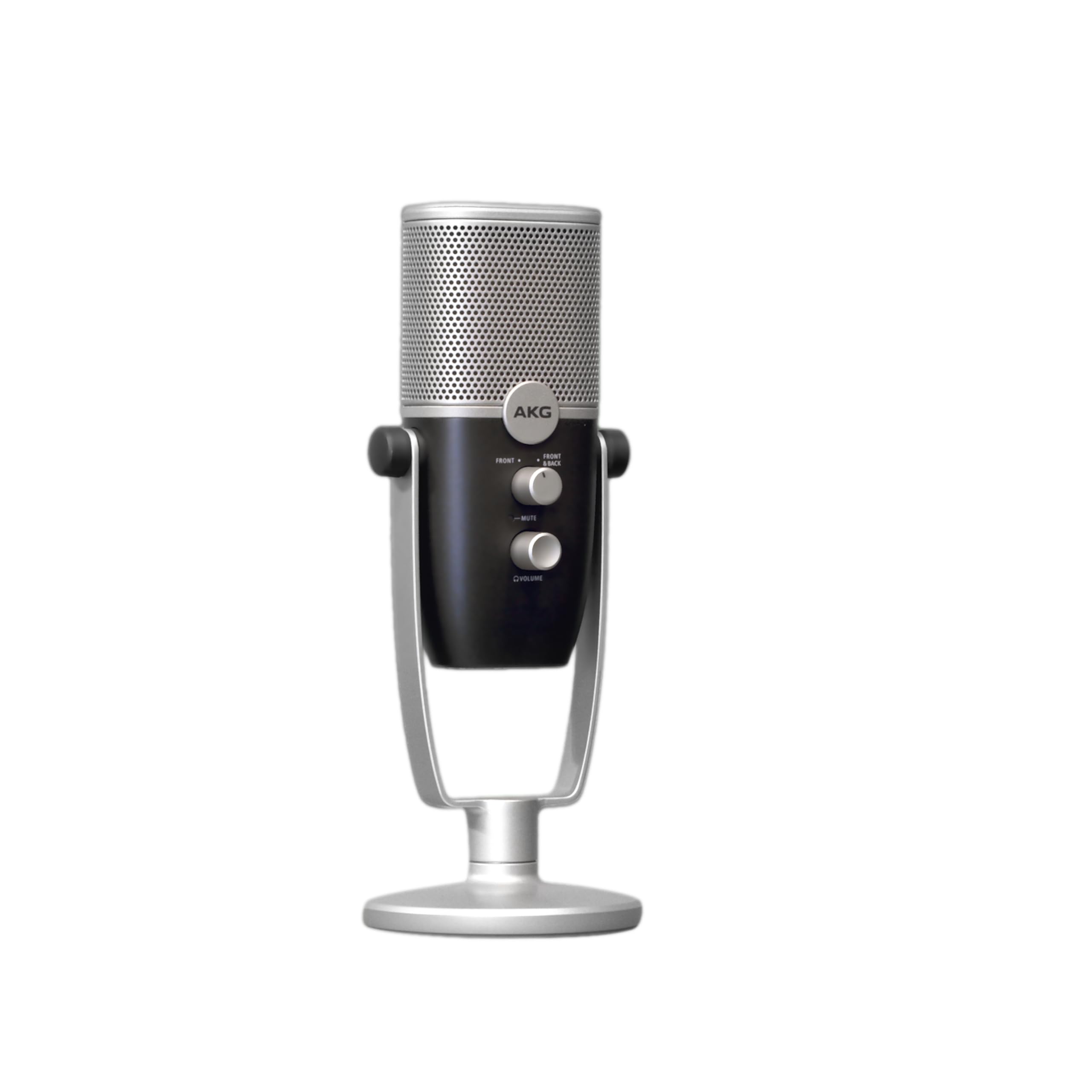
The AKG Ara brings pro-grade audio resolution to the budget segment with its 24-bit/96kHz sampling, which captures significantly more detail and headroom than the 16-bit/48kHz standard found on most competitors. The dual-capsule array offers two user-friendly capture modes, allowing you to switch between a focused cardioid pattern for solo podcasting and a broader pickup for two-person conversations without an extra mixer or software.
Zero-latency monitoring through the headphone output, combined with physical controls for mic gain and mute, gives you real-time feedback while recording—a critical feature for anyone doing voice-over or interview-style content. The USB-C connectivity and included stand adapter make it easy to mount on a desktop boom arm or traditional mic stand, and the stainless steel enclosure adds a reassuring heft that resists vibration.
The Ara’s sound signature is neutral and detailed, with better transient response than the plastic-bodied alternatives in this price range. It integrates natively with Mac, PC, iOS, and Android, so you can record high-resolution audio directly to a smartphone without an interface. For creators who prioritize audio fidelity and versatility over budget niche features, this mic delivers a clear upgrade path.
Why it’s great
- 24-bit/96kHz resolution records more detail than standard budget mics
- Dual pattern modes for solo or two-person recording without software
- USB-C connectivity with broad OS and mobile device support
Good to know
- Rotary pattern switch feels slightly stiff to adjust
- Background noise still present in game chat without post-processing
5. InnoGear Gaming USB Microphone

The InnoGear Gaming USB Microphone targets the aesthetic and functional needs of streamers and competitive gamers. The upgraded cardioid condenser capsule delivers 600% clearer amplification than basic omni mics, ensuring your callouts and commentary cut through game audio with authority. The multi-mode RGB lighting—solid, gradient, and breathing effects—syncs with your gaming rig to create a cohesive visual setup without breaking immersion.
Plug-and-play via USB-C means zero configuration on Windows, Mac, PS4, and PS5, and the large touch-sensitive mute button on top is positioned for easy access during frantic gameplay. The included shock mount, pop filter, and mic stand provide a complete package that saves you from buying separate accessories.
Build quality is a mix of alloy steel and plastic, keeping weight manageable while still feeling sturdy enough for daily use. The gain control knob at the base allows precise level adjustments, and the zero-latency monitoring port helps you catch background noise or plosives before they go live. For streamers who want a good-looking, fully equipped microphone that performs reliably under gaming pressure, this is a smart pick.
Why it’s great
- Four customizable RGB lighting modes for immersive streaming setups
- Includes shock mount, pop filter, and stand in the box
- USB-C connectivity works natively with PS5 and PC
Good to know
- Screw base may loosen over time with frequent adjustments
- Instructions are sparse and rely on photos for setup guidance
6. ANSTEN Conference USB Microphone

The ANSTEN Conference USB Microphone is built for a completely different use case than the directional mics above: its 360-degree omnidirectional capsule captures voices from every direction, making it ideal for group video calls, court reporting, and round-table discussions. The high-density sound-absorbing cotton inside filters out low-level echo and background static, producing a clean feed even in moderately noisy rooms.
The puck-shaped body is only 0.51 inches thick and weighs 50 grams, slipping into a laptop bag or briefcase without adding bulk. Despite its small size, the omnidirectional pickup maintains sensitivity up to 10 feet, so participants do not have to huddle around the mic. The single mute button with a ring LED provides instant visual confirmation of your privacy status.
It runs purely as a microphone—no speaker built in—and connects via USB-C for true plug-and-play on Windows and macOS. The lack of echo cancellation is a notable omission for two-way calls; ANSTEN recommends the AIRHUG 01 if echo suppression is essential. For its intended role as a portable group-call mic, the ANSTEN delivers clear, even pickup at an entry-level price point.
Why it’s great
- 360-degree omnidirectional pickup covers groups of 4-6 people
- Ultra-thin 50-gram puck design is extremely portable
- Built-in smart chip suppresses echo and background hum effectively
Good to know
- No echo cancellation for two-way conversations
- Not compatible with Linux, Android, Raspberry Pi, or Xbox
7. AIRHUG 21 USB Microphone

The AIRHUG 21 is the smallest and most affordable option in this guide, designed primarily for speech-to-text dictation and one-on-one online calls. Its 360-degree omnidirectional capsule picks up your voice clearly within a 6-foot radius without requiring you to lean toward the mic, and the AI noise reduction mode intelligently suppresses keyboard clicks, fan hum, and general background chatter.
The smart memory feature is thoughtful: the mic remembers your last sound mode (noise reduction or original) and restores it on each restart, so you never start a call muted or in the wrong mode. The LED indicator changes color based on the active mode, giving you clear status feedback without needing a display. The anti-slip mat keeps the disc stable on slick desk surfaces.
At 0.53 inches thick and 150 grams, it disappears into a bag pocket for travel. The 48kHz sampling rate delivers reasonable clarity for spoken applications, though the omnidirectional nature means it will pick up more room echo than a cardioid mic. For users who need a simple, ultra-compact microphone for daily calls, dictation, or online classes, the AIRHUG 21 is the most cost-effective entry point in this review.
Why it’s great
- Smart memory restores last-used sound mode and starts unmuted
- AI noise reduction effectively tames keyboard and fan noise
- Ultra-thin design fits easily into any bag or pocket
Good to know
- No echo cancellation for two-way communication
- LED stays lit whenever the mic is connected, even when idle
FAQ
Is a cardioid or omnidirectional microphone better for gaming?
Can I use a USB microphone with a PS5 or Xbox?
Final Thoughts: The Verdict
For most users, the budget computer microphone winner is the ZealSound K66 because it packs studio-quality controls like zero-latency monitoring, onboard echo and gain knobs, and broad device compatibility into a package that still respects a strict budget. If you want rugged all-metal build quality and no-fuss reliability, grab the FIFINE K669B. And for a compact supercardioid that blocks out side noise during intense gaming sessions, nothing beats the Razer Seiren V3 Mini.