
A reliable dive computer is the single most critical safety tool a recreational diver owns, yet the price tags on flagship models often exceed what many are willing to spend. The challenge is finding a unit that delivers accurate decompression calculations, a readable display, and dependable battery life without demanding a second mortgage on your gear fund.
I’m Min — the co-founder and writer behind Gadgets Feed. I’ve spent hundreds of hours analyzing technical specifications, decompression algorithms, battery chemistries, and real-world user feedback to separate the true value picks from the overpriced distractions in the scuba computer market.
Whether you’re a newly certified open-water diver or a seasoned weekend warrior on a tight gear budget, this guide to the best budget dive computer options will help you make a smart, safe, and wallet-friendly choice.
How To Choose The Best Budget Dive Computer
Buying a budget dive computer is an exercise in prioritizing safety-critical features over luxury extras. The cheapest unit is not always the best value if it lacks Nitrox support or uses a non-replaceable battery.
Decompression Algorithm and Adjustable Conservatism
The algorithm is the brain of your computer. Budget-tier models often use derivative algorithms like the Buhlmann ZH-L16C, which is the same engine found in many premium units. Look for models that let you adjust conservatism settings — this directly controls your no-deco limits and safety margin. Fixed-algorithm computers can be overly aggressive or unnecessarily restrictive.
Battery Type and User Replacement
User-replaceable batteries (CR2430 or CR2450) are a major advantage in the budget segment. You can swap them yourself before a dive trip without sending the unit to an authorized service center. Rechargeable lithium batteries are convenient but will eventually degrade, and replacement is often a factory-only operation that costs as much as a new budget computer.
Display Readability and Interface Complexity
A high-contrast, segment-based LCD with a backlight is essential for reading your depth, no-deco time, and ascent rate in low-visibility conditions. Single-button interfaces are simpler and more reliable but require memorizing button sequences. Multi-button models are more intuitive but add mechanical complexity and potential failure points.
Quick Comparison
On smaller screens, swipe sideways to see the full table.
| Model | Category | Best For | Key Spec | Amazon |
|---|---|---|---|---|
| Garmin Descent G1 | Premium Smartwatch | All-in-one dive & daily wear | 25-hour dive battery, GPS, HR | Amazon |
| Aqua Lung i200C | Mid-Range Bluetooth | App-controlled settings & logging | Bluetooth Smart, 4 modes | Amazon |
| Suunto Vyper Novo | Premium Wrist | Optional air integration & compass | 3-gas switching, 3D compass | Amazon |
| Genesis Centauri | Mid-Range Wrist | Rechargeable battery & Bluetooth | Rechargeable Li-ion, Bluetooth | Amazon |
| Suunto Zoop Novo | Entry-Level Wrist | Simplicity and durability | 100m depth rating, backlight | Amazon |
| Mares Puck Lite | Entry-Level Wrist | 100-dive logbook & Bluetooth | Buhlmann ZH-L16C, 800-seg display | Amazon |
| Mares Puck Pro Ultra | Entry-Level Wrist | Simple single-button Nitrox | Buhlmann ZH-L16C, Bluetooth | Amazon |
| Cressi Leonardo 2.0 | Entry-Level Wrist | Proven single-button reliability | CR2430 battery, 70-hour life | Amazon |
| Cressi Donatello | Entry-Level Wrist | Lowest-cost reliable computer | CR2430 battery, HD backlit | Amazon |
In‑Depth Reviews
1. Garmin Descent G1

The Garmin Descent G1 is the rare budget-adjacent dive computer that refuses to compromise on battery endurance. Its monochrome LCD sips power — delivering up to 25 hours in dive mode and a full 21 days in smartwatch mode — so you never face a dead battery on the morning of a two-tank charter. The sapphire lens and fiber-reinforced polymer case are genuinely rugged; this watch can survive a tumble across a boat deck and still look clean.
Dive functionality is comprehensive for its tier: recreational, gauge, freedive, and even technical modes are available, all running off a reliable algorithm. The wrist-based heart rate and Pulse Ox sensors provide useful training data between dives, and GPS/GLONASS tracks your entry and exit points automatically. For the diver who wants one device that transitions from the office to the ocean floor, the G1 hits a sweet spot that cheaper units simply cannot match.
The trade-off is the lack of wireless air integration — you won’t get tank pressure transmitted to your wrist. Some users also note that the Dive app, while solid, does not sync directly with SSI or PADI logbooks. But as a standalone computer and daily fitness tracker, the G1 delivers premium-tier versatility at a price that undercuts its own Descent G2 sibling by a significant margin.
Why it’s great
- Exceptional 25-hour dive battery life on a single charge
- Built-in GPS, HR monitor, and SpO2 for surface activity tracking
- Rugged sapphire lens with multiple dive modes including technical
Good to know
- No wireless air integration for tank pressure monitoring
- Black-and-white display; no color or touchscreen
- Higher price point compared to dedicated dive-only computers
2. Aqua Lung i200C

The Aqua Lung i200C brings Bluetooth connectivity to the mid-range segment without forcing you into a proprietary rechargeable battery. You can swap the standard coin cell yourself between trips, which is a massive practical advantage over sealed lithium units. The DiverLog+ app lets you adjust settings, view profiles, and log dives directly from your phone — no clunky PC software required.
With four dedicated operating modes — Air, Nitrox, Gauge, and Free Dive — the i200C covers the full spectrum of recreational diving. The user-replaceable battery retains your settings and calculations even when you swap power cells, so you never lose your cumulative dive data. The watch-style form factor is comfortable on most wrists, and the display offers good contrast in bright sunlight on the boat deck.
The biggest knock against the i200C is its documentation. Multiple users report that the printed manual is borderline unusable, and you will almost certainly need to watch YouTube tutorials to understand the button logic. Once set up, however, the computer is reliable and accurate — it tracked perfectly alongside a Suunto Cobra during repeat validation dives.
Why it’s great
- Full wireless app control for settings and dive log downloads
- User-replaceable battery with data retention between swaps
- Four dedicated modes: Air, Nitrox, Gauge, and Free Dive
Good to know
- Poorly written user manual; setup requires online tutorials
- Some units have reported battery and display glitches
- Button layout is not intuitive for first-time users
3. Suunto Vyper Novo

The Suunto Vyper Novo bridges the gap between recreational simplicity and advanced functionality by offering optional wireless air integration. You can add a transmitter to monitor cylinder pressure and remaining air time on your wrist — a feature typically reserved for computers costing twice as much. The integrated tilt-compensated 3D digital compass is another standout, letting you navigate wrecks and reef lines without surfacing.
Gas-switching between up to three gases (with oxygen up to 99 percent) makes the Vyper Novo suitable for enriched air and even some technical diving scenarios. The Suunto RGBM continuous decompression algorithm is conservative by design, which gives newer divers an extra margin of safety on multi-day repetitive dives. The compact wrist form factor at 134 grams is noticeably lighter than many competitors, reducing wrist fatigue over a week of boat dives.
The main drawback is Suunto’s software ecosystem. The DM5 desktop software works fine once configured, but the driver installation process is outdated and the company offers poor customer support. If you can tolerate a clunky desktop sync experience, the hardware itself is excellent — the Vyper Novo performed flawlessly for 12 dives in Palau with zero glitches.
Why it’s great
- Wireless air integration for cylinder pressure and remaining air time
- Integrated tilt-compensated 3D digital compass for navigation
- Gas-switching between up to three gases including high O2 mixes
Good to know
- Suunto DM5 desktop software has outdated drivers and poor support
- Air integration transmitter is sold separately and adds significant cost
- Display is monochrome and smaller than console-style computers
4. Genesis Centauri
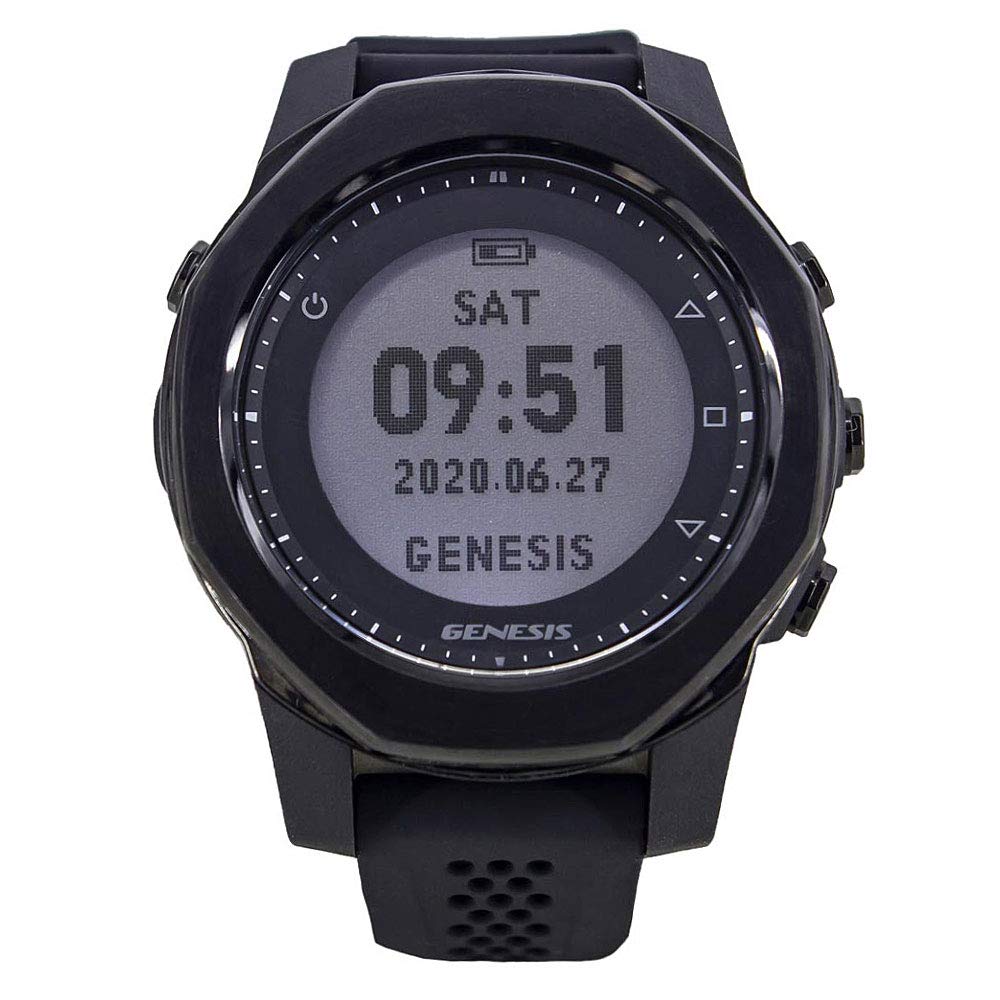
The Genesis Centauri is a compelling mid-range option that ditches the coin-cell battery in favor of a rechargeable lithium-ion pack. This means you never need to hunt for a CR2430 at a remote dive resort. The Bluetooth connectivity pairs with the Dive Story app for setting adjustments and log downloads, and after 28 dives in Komodo, users report the battery still had plenty of reserve.
The audible ascent warning alarm is loud enough to register even through a thick hood, which is a critical safety feature that some budget models skimp on. The wrist-mount design is comfortable, and the display is accurate underwater — it tracked depth and no-deco limits consistently across a week of liveaboard diving. The Centauri is essentially a rebranded version of the Deep 6 Excursion and Crest CR4, so spare parts and community knowledge are widely available.
The primary limitation is that the Dive Story app does not support exporting logs to other platforms like Subsurface. If you care about maintaining a permanent, platform-agnostic logbook, this is a real constraint. The vibration alarm is also weak; some users found it insufficient for low-visibility conditions where audible alarms may be muffled.
Why it’s great
- Rechargeable lithium battery eliminates coin-cell hassle
- Bluetooth app for easy dive log and settings management
- Accurate depth and no-deco tracking validated over multiple dives
Good to know
- Dive Story app does not export logs to third-party platforms
- Vibration alarm is too weak for reliable notification underwater
- Essentially a rebranded computer; no unique algorithm advantage
5. Suunto Zoop Novo

The Suunto Zoop Novo is the Volkswagen Beetle of dive computers — not flashy, not fast, but famously reliable. Its bulletproof plastic housing has been tested across thousands of dives worldwide, and the single-button interface is simple enough that you can operate it with thick neoprene gloves. The backlit display is crisp and readable in low-light conditions, and the automatic activation at just two feet of depth means you never forget to turn it on.
Operating modes include Air, Nitrox (21 to 50 percent FO2), Gauge, and a free-diving mode called Freedom. The algorithm is conservative, which is actually a safety benefit for recreational divers who want an extra safety margin on repetitive dives. The audible alarms for ascent speed and no-deco limit violations are loud and distinct, and the unit automatically adds required safety stops when you exceed limits.
The biggest limitation is that downloading dive logs requires a separate Suunto cable, which is not included and adds to the overall cost. The interface can also be finicky when changing settings — some users struggled to switch between metric and imperial units without a manual. But as a no-nonsense, set-it-and-forget-it computer for the diver who prioritizes reliability over bells and whistles, the Zoop Novo remains a top contender.
Why it’s great
- Extremely rugged plastic housing proven over thousands of dives
- Auto-activates at 2 feet depth — no manual startup required
- Conservative algorithm provides a generous safety margin for new divers
Good to know
- PC download cable sold separately and costs a significant fraction of the unit
- Single-button interface can be confusing for setting changes
- Bulkier wrist profile compared to newer slim models
6. Mares Puck Lite

The Mares Puck Lite uses a crystal-clear segment display with 800 individual segments — significantly higher resolution than typical budget LCDs — which produces sharp, high-contrast characters underwater. The chip-on-glass technology reduces the display thickness and improves viewing angles, so you can read your data even when the unit is canted on your wrist. The single-button navigation is deliberately minimalist, reducing the chance of accidental mode switches during a dive.
The Buhlmann ZH-L16C algorithm with adjustable gradient factors gives you control over your conservatism level, which is rare at this price point. Nitrox compatibility up to 50 percent O2 covers the most common enriched air blends used in recreational diving. The integrated Bluetooth interface syncs directly to both the Mares and SSI apps for dive log analysis, and the logbook stores up to 100 dives with full profiles and graphs.
Setup out of the box can be frustrating. Multiple users reported that changing units from metric to imperial was nearly impossible without consulting a third-party guide, and the unit ships with no printed instructions. The Puck Lite also feels slightly overpriced relative to the materials quality — the plastic case and strap do not convey the same durability as Suunto or Garmin alternatives in the same tier.
Why it’s great
- High-resolution 800-segment display offers excellent underwater visibility
- Buhlmann ZH-L16C algorithm with user-adjustable gradient factors
- Bluetooth sync to both Mares and SSI logging apps
Good to know
- No printed manual included; setup requires online research
- Plastic build quality feels less premium than price suggests
- Changing measurement units is unintuitive and poorly documented
7. Mares Puck Pro Ultra
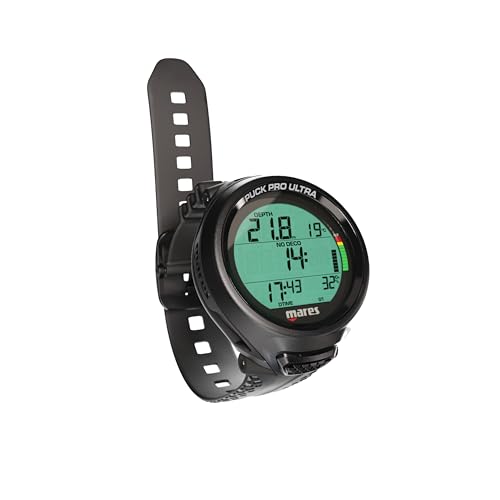
The Mares Puck Pro Ultra is a direct upgrade in algorithm power, running the Buhlmann ZH-L16C with dual gradient factors — the same decompression engine that powers many expensive technical diving computers. This gives you granular control over how aggressively or conservatively the computer manages your no-deco limits. For recreational divers who plan to eventually move into enriched air or deeper diving, this is a future-proof foundation.
The CR2450 user-replaceable battery is rated for up to 100 dives, meaning you can comfortably complete a full season on a single cell. The high-contrast screen is optimized for readability even in murky freshwater or low-visibility saltwater conditions. Bluetooth connectivity streamlines log downloads to the Mares app, and the single-button interface is genuinely simple once you spend 10 minutes with the manual.
The one-button design is the Puck Pro Ultra’s biggest double-edged sword. For divers who want quick access to multiple settings underwater, the lack of additional buttons can feel limiting — you must cycle through menus sequentially. The strap is also quite long, which is fine for drysuit divers but can leave an annoying excess of material for those wearing a 3mm wetsuit.
Why it’s great
- Buhlmann ZH-L16C with dual gradient factors for advanced decompression control
- User-replaceable CR2450 battery lasts up to 100 dives
- Excellent screen contrast in both freshwater and saltwater conditions
Good to know
- Single-button interface requires memorizing menu sequences
- Long strap can leave excess material on smaller wrists
- Limited to single-gas Nitrox; no multi-gas switching
8. Cressi Leonardo 2.0

The Cressi Leonardo 2.0 has earned a cult following among recreational divers for a simple reason: it just works, every time, with zero fuss. The single-button interface is the most intuitive in the budget segment — you can switch between Air, Nitrox, and Gauge modes without ever glancing at the manual. The adjustable FO2 settings from 21 to 50 percent and PO2 from 1.2 to 1.6 bar give you real flexibility with enriched air mixes.
The CR2430 button-cell battery delivers up to 70 hours of continuous operation, and replacing it yourself takes about 30 seconds. The audible alarm system is clear and distinct — fast ascent warnings and safety stop reminders are easy to hear even in rough surface conditions. Multiple users have validated the Leonardo 2.0’s accuracy by comparing it side-by-side with a Shearwater Peregrine across several dives and finding identical no-deco limit calculations.
The backlight is the weakest aspect of this unit. It is dim enough that you may struggle to read the display during night dives or in dark wreck environments. The strap is also excessively long — divers with smaller wrists will need to trim or replace it. And while the desktop IR interface for data transfer works, it is noticeably slower and more cumbersome than modern Bluetooth solutions.
Why it’s great
- Intuitive single-button interface requires almost no learning curve
- User-replaceable battery lasts 70 hours and costs just a few dollars
- Algorithm accuracy matches premium computers like the Shearwater Peregrine
Good to know
- Weak backlight is difficult to read in low-light and night dive conditions
- Strap is overly long for smaller wrists and may need trimming
- IR data transfer interface is slow compared to Bluetooth options
9. Cressi Donatello

The Cressi Donatello is the most affordable full-featured dive computer in this lineup, and it punches significantly above its weight class. The high-definition backlit display is genuinely impressive for the price — characters are sharp and the backlight is brighter than the Leonardo 2.0, making it a better choice for divers who plan to do night or deep-dark-water dives. The single-button interface is nearly identical to the Leonardo’s, so anyone familiar with Cressi’s ecosystem will feel right at home.
The Donatello supports both Air and Nitrox modes, user-selectable deep stops, and adjustable measurement units between imperial and metric. The CR2430 replaceable battery provides consistent power, and a battery life indicator alerts you before you run out. Optional IR interface for Bluetooth or USB data transfer is available separately, giving you a path to digital logbook integration if you want it.
The main concession at this price point is build quality. The plastic housing does not feel as dense or impact-resistant as the Suunto Zoop Novo’s shell. The strap also has a tendency to twist on the wrist during active swimming. And while the Donatello performed well for a full week of dives in Roatan, users noted that the packaging occasionally suggests the unit may have been handled before — inspect yours immediately upon arrival.
Why it’s great
- Bright HD backlit display outperforms many mid-range computers
- User-replaceable CR2430 battery with clear life-level indicator
- Supports Nitrox, deep stops, and imperial/metric units at the lowest price
Good to know
- Plastic housing feels less durable than Suunto or Garmin alternatives
- Strap can twist during active swimming, requiring adjustment
- Data transfer requires a separate purchased IR interface module
FAQ
Can I use a budget dive computer for Nitrox diving?
How long does a CR2430 battery typically last in a dive computer?
Are single-button dive computers difficult to operate underwater?
What depth rating do I need for recreational diving?
Can I download my dive logs from a budget dive computer?
Final Thoughts: The Verdict
For most divers, the best budget dive computer winner is the Garmin Descent G1 because it combines a 25-hour dive battery, GPS tracking, and daily fitness features in a package that undercuts premium Garmin dive watches by hundreds of dollars. If you want a dedicated dive computer with wireless air integration, grab the Suunto Vyper Novo. And for the purest value in a no-frills, set-it-and-forget-it computer, nothing beats the Cressi Leonardo 2.0.