
Finding a drone that delivers true 4K video without draining your savings used to be a compromise in stability, range, and flight time. The market is flooded with toys claiming 4K, but the real test is whether the footage remains usable after a gust of wind or a quick turn. This guide cuts through the noise to find the models that prioritize camera quality and flight reliability above marketing fluff.
I’m Min — the co-founder and writer behind Gadgets Feed. I’ve spent countless hours cross-referencing specifications, sensor types, gimbal systems, and real-world range data to identify which budget-friendly drones actually respect the “4K” label and deliver a stable flying experience.
Whether you are a beginner capturing family vacations or a hobbyist looking for a reliable secondary rig, this is the definitive guide to finding the absolute best best budget drone with 4k camera that offers real cinematic potential without breaking the bank.
How To Choose The Best Budget Drone With 4K Camera
A true 4K drone in the budget tier is defined by its stabilization system, sensor quality, and smart flight features. Ignoring these three pillars leads to shaky, unusable footage and a frustrating experience.
Stabilization: EIS vs. 3-Axis Gimbal
Electronic Image Stabilization (EIS) crops into the sensor to smooth out minor vibrations — it works best in calm conditions and can introduce a slight jello effect. A 3-axis mechanical gimbal physically counteracts the drone’s movements, providing professional-grade smoothness even in level-5 winds. For serious video work within a budget, prioritize models with a gimbal.
Sensor and Lens Quality
A 4K label means little with a tiny 1/3-inch sensor. Look for drones with larger sensors like a 1/2-inch CMOS (found in the Potensic ATOM and Ruko U11MINI) or a Sony IMX258 (Ameta S50 Lite). These deliver better dynamic range and low-light performance. A wide FOV (120° or 130°) is great for landscapes, while a 90° adjustable lens offers compositional flexibility.
GPS Intelligence and Safety Nets
GPS is non-negotiable for a budget 4K drone. It enables precise hovering, accurate Return-to-Home on signal loss or low battery, and smart modes like Follow Me and Waypoints. A drone without GPS is a toy that will drift away in the slightest breeze. Always confirm the drone has integrated GPS and a reliable auto-return function.
Quick Comparison
On smaller screens, swipe sideways to see the full table.
| Model | Category | Best For | Key Spec | Amazon |
|---|---|---|---|---|
| Potensic ATOM | Premium Budget | Cinematic 4K Stability | 3-Axis Gimbal + Sony CMOS | Amazon |
| Ruko U11MINI | Premium Budget | Longest Flight Time | 96 Mins (3 Batts) + Gimbal | Amazon |
| Bwine F7 Mini | Premium Budget | Built-in Touchscreen Controller | 5.5″ Screen + 3-Axis Gimbal | Amazon |
| Bwine F7GB2 Pro | Mid Range | High Altitude & Wind Resistance | L6 Wind + 2000m Altitude | Amazon |
| PLEGBLE PL-710 | Mid Range | 70 Min Flight + Screen Controller | 70 Mins (2 Batts) + 5″ Screen | Amazon |
| Karuisrc K600GPS | Mid Range | GPS Beginner Safety | 4.5″ Screen + EIS Camera | Amazon |
| Punieayi GPS Drone | Mid Range | 60 Min Flight + 5″ Screen | 60 Mins (2 Batts) + 5″ Screen | Amazon |
| TOPRCBOXS S8 | Entry Level | Budget All-in-One Kit | 60 Mins + 5″ Screen + EIS | Amazon |
| Ameta S50 Lite | Entry Level | Sony Sensor + Smart Modes | Sony IMX258 + GPS Follow | Amazon |
In‑Depth Reviews
1. Potensic ATOM

The Potensic ATOM sets a new benchmark for the budget 4K category. Its 3-axis brushless gimbal paired with a Sony CMOS sensor captures buttery-smooth 4K/30fps footage that rivals far more expensive drones. The mechanical gimbal physically decouples the camera from the drone’s movement, ensuring horizon lines stay flat even in level-5 winds — a critical advantage over EIS-only rivals.
The PixSync 3.0 digital transmission pushes a stable 1080p feed up to 6km, and the SurgeFly technology keeps the connection locked in interference-heavy environments. Visual Tracking and QuickShots (Rocket, Boomerang, Spiral) give beginners immediate access to cinematic angles without manual pilot skill. The 2330mAh battery delivers a true 32-minute flight, which is excellent for this class.
At under 249g, it requires no FAA registration, and the foldable design slips into a jacket pocket. The only real trade-off is the lack of a built-in controller screen — you must use your smartphone. For the purest combination of gimbal-stabilized 4K video and reliable long-range transmission, the ATOM is the undisputed champion.
Why it’s great
- True 3-axis mechanical gimbal for rock-steady 4K footage
- Sony CMOS sensor captures great dynamic range and low-light detail
- Reliable 6km digital transmission with strong anti-interference
- Visual Tracking and QuickShots for easy cinematic shots
Good to know
- Requires a smartphone for the live FPV feed
- Single battery included with standard kit
- Gimbal calibration needed after firmware updates
2. Ruko U11MINI

The Ruko U11MINI packs a full 96 minutes of flight time thanks to three intelligent 2200mAh batteries in the box. That’s nearly three times the airtime of most competitors in this segment. Beyond the battery, it features a 3-axis brushless gimbal paired with a 1/2-inch 48MP CMOS sensor, capturing 4K/30fps video and 8K stills that hold up surprisingly well against the sun.
The R2 digital transmission system offers a 20,000ft range without the Wi-Fi interference plaguing cheaper models. An AI-assisted takeoff and landing system uses GPS, barometric altitude hold, TOF sensors, and optical flow to handle tricky surfaces. The built-in beeper is a lifesaver for locating the drone in tall grass.
Weighing under 249g, it’s FAA-exempt and folds down to palm size. The 5-inch controller screen is non-touchscreen, which requires a bit of menu navigation, but keeps the phone free. Some users report joystick sensitivity needing a few flights to master. For extended shooting sessions without obsessing over the charger, the U11MINI is the undisputed endurance king.
Why it’s great
- 96-minute total flight time with 3 included batteries
- 3-axis mechanical gimbal delivers professional-grade smoothness
- 48MP sensor captures 8K photos and 4K/30fps video
- 20,000ft digital transmission with no Wi-Fi interference
Good to know
- Non-touchscreen controller requires button navigation
- Joysticks are quite sensitive for new pilots
- Propeller quality can be inconsistent across units
3. Bwine F7MINI
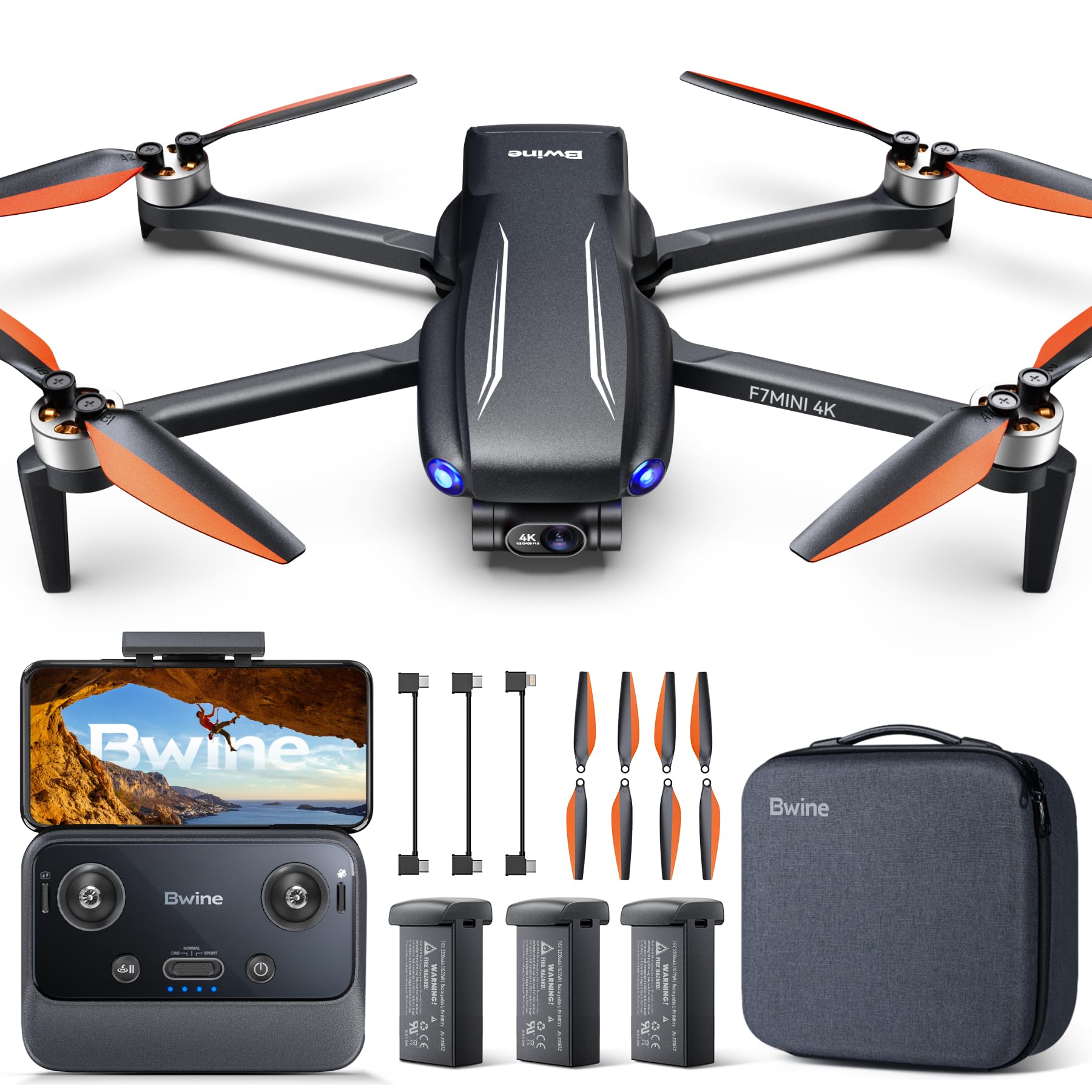
The Bwine F7MINI stands out with its integrated 5.5-inch HD touchscreen controller — a feature usually reserved for drones costing twice as much. This eliminates the need to tether your smartphone, saving battery life and providing a glare-resistant screen that works great outdoors. The 3-axis gimbal paired with a 48MP 1/2-inch CMOS sensor delivers ultra-smooth 4K/30fps video and 8K stills.
The digital transmission system boasts a 6km range with zero-latency FPV, and the 1503 brushless motors push the drone to 31mph while maintaining level-5 wind resistance. GPS features include a 0.5-meter accurate Follow Me mode, Waypoint, Orbit, and an auto-cruise function for steady tracking. The 120dB buzzer makes recovery easy if you land out of sight.
Three batteries provide a total of 96 minutes of airtime, and PD 3.0 fast charging cuts down ground time significantly. The controller’s touchscreen is responsive and bright, though downloading media to a phone is slower than a direct USB-C connection. For beginners who want a self-contained flying system without any phone hassle, the F7MINI is the smartest pick.
Why it’s great
- 5.5-inch HD touchscreen controller — no phone needed
- 3-axis gimbal + 48MP sensor for buttery 4K footage
- 96 minutes total flight with 3 fast-charging batteries
- 0.5m accurate GPS Follow Me and Waypoint modes
Good to know
- Media transfer from controller to phone is slow
- Touchscreen can be laggy in cold weather
- Uses Wi-Fi for transmission, not dedicated digital link
4. Bwine F7GB2 Pro

The Bwine F7GB2 Pro is built for flyers who push into challenging environments. The onboard 1806 brushless motors and specialized firmware allow it to operate at 2000 meters altitude with level-6 wind resistance — a spec unmatched in this price range. The 4K camera sits on a 3-axis gimbal with a larger CMOS sensor and 5x digital zoom for framing flexibility.
GPS functions are robust: Follow Me, Waypoint, and Orbit modes all work reliably, and the auto-return system triggers on low battery, signal loss, or manual command. The three 2600mAh batteries provide 75 minutes of total flight time, and they carry UL 2054 safety certification for peace of mind. The transmission range is rated at 10,000ft in ideal conditions.
Bwine includes a hard shell carrying case, eight spare propellers, and a full tool kit. The app supports direct sharing to social media with filters and background music. The drone weighs 550 grams — over the 249g limit — so it requires FAA registration. For pilots who need to fly in thin air or windy conditions without sacrificing video quality, the F7GB2 Pro is the specialist.
Why it’s great
- Certified for 2000m altitude and level-6 wind resistance
- 3-axis gimbal with larger CMOS for stable 4K video
- 75-minute total flight time with 3 UL-certified batteries
- Comes with a full kit: hard case, 8 props, and tools
Good to know
- Weighs 550g — requires FAA registration
- No built-in screen on the controller
- SD card compatibility can be picky
5. PLEGBLE PL-710
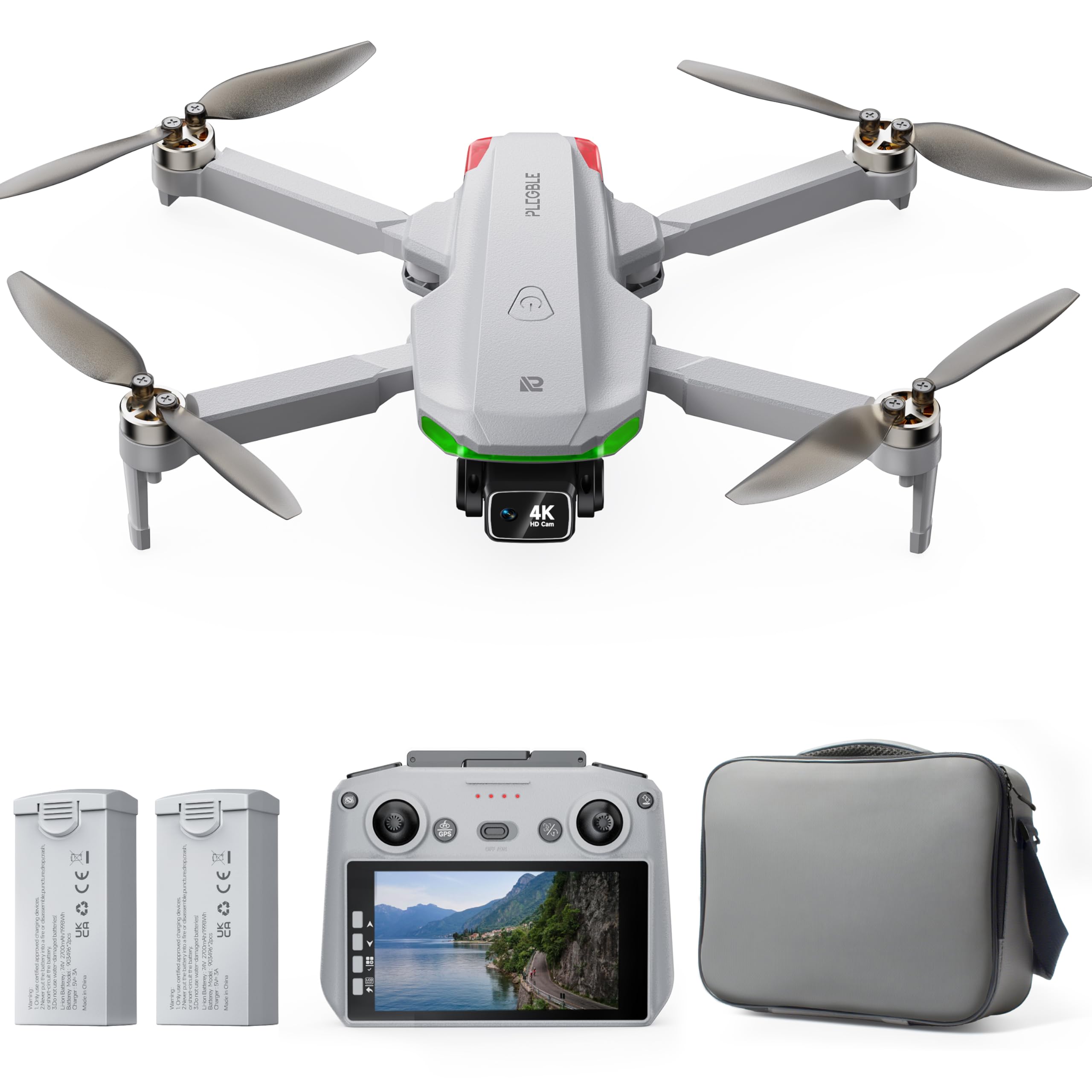
The PLEGBLE PL-710 targets users who want a complete flying experience without the phone tether. Its 5-inch HD screen on the remote provides zero-latency live FPV, and the interface allows direct photo and video preview as well as SD card formatting. The 4K/30fps camera features a 130° wide-angle lens with 90° adjustable tilt and EIS stabilization for smooth footage in light breezes.
Two 2700mAh batteries deliver a combined 70 minutes of flight, and the USB-C fast charging cuts recharge time significantly. GPS features include Smart Return to Home, Low Battery Return, and Signal Loss Return — essential safety nets for beginners. Follow Me, Waypoint, and Circle Flight modes offer creative hands-free filming options.
Weighing under 249g, the PL-710 is FAA-exempt and folds down to a compact size. The brushless motors provide level-5 wind resistance, allowing stable hover in moderate gusts. Some users note the “fast” mode is still relatively slow compared to premium drones, and the range is realistically around 600 meters. For casual flyers who value convenience and a self-contained controller, the PL-710 is an excellent mid-range option.
Why it’s great
- 5-inch built-in screen on controller — no smartphone needed
- 70 minutes total flight time with two big batteries
- Good EIS stabilization with 130° wide-angle lens
- Reliable GPS safety features for beginners
Good to know
- Realistic max range is about 600 meters
- “Fast” mode is still relatively slow
- EIS struggles in strong wind conditions
6. Karuisrc K600GPS
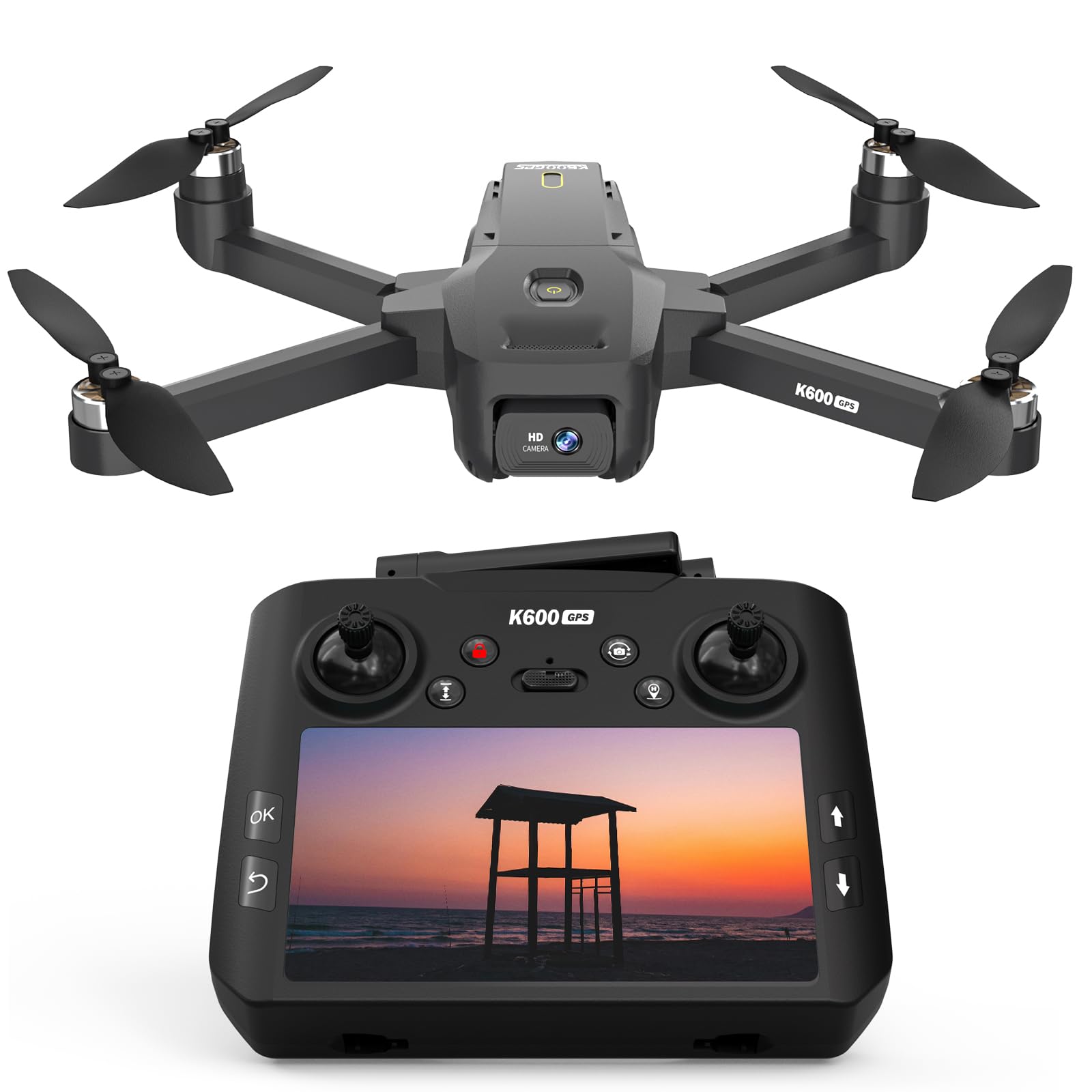
The Karuisrc K600GPS is designed for the first-time pilot who prioritizes safety and ease of use. The 4.5-inch controller screen provides a real-time FPV feed without needing a phone, and the GPS system locks onto satellites quickly for stable hover. The 12000RPM brushless motors provide solid wind resistance and smooth acceleration.
The 1080P adjustable camera is advertised as 4K compatible, but real-world performance is better described as sharp 1080P with EIS smoothing. The GPS features — Follow Me, Waypoint, and Fixed Point Fly — work reliably for hands-free filming. One-key takeoff/landing and altitude hold make it simple for kids or absolute beginners to get airborne safely.
Available at an entry-level price, the K600GPS includes a Type-C charging port for the battery and supports up to 32GB TF cards. The modular battery design is convenient for swapping. The main limitation is the Wi-Fi-based transmission, which caps real-world range around 300 meters. For a worry-free introduction to 4K drone flying, the K600GPS is a solid foundation.
Why it’s great
- Built-in 4.5-inch screen on the controller
- Reliable GPS with Auto Return and Follow Me
- Powerful 12000RPM brushless motors for stable flight
- Very beginner-friendly with one-key takeoff/landing
Good to know
- Real 1080P resolution, with 4K upscaling
- Wi-Fi transmission limits effective range
- Camera quality is average compared to gimbal models
7. Punieayi GPS Drone
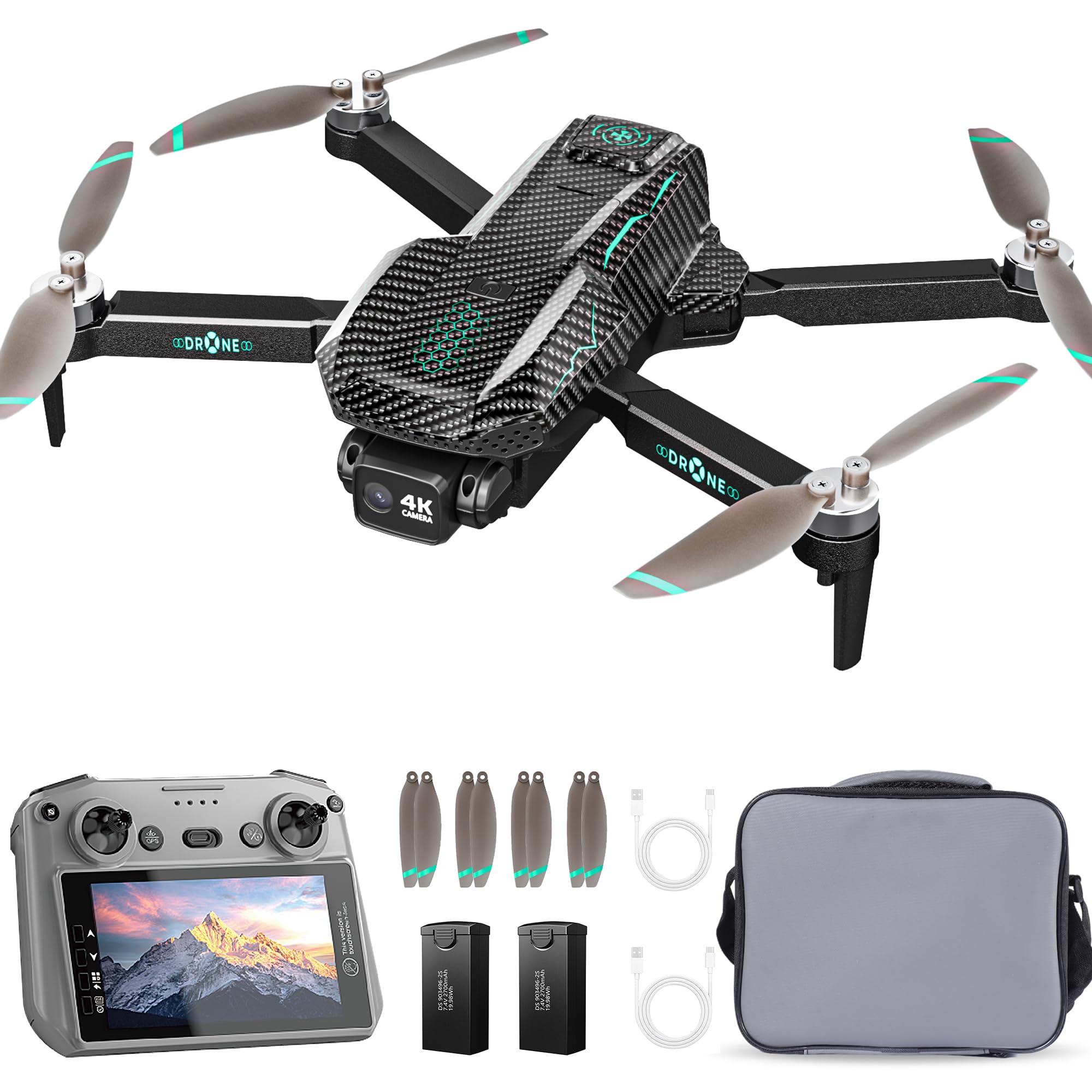
The Punieayi GPS Drone is a complete starter bundle that prioritizes flight time and convenience. It includes two 2700mAh batteries for a combined 60 minutes in the air, a 5-inch non-touchscreen controller for instant FPV, and a protective carrying case for storage. The 4K camera with 90° adjustable tilt shoots decently clear footage, though the sensor is smaller than more expensive options.
GPS functions are comprehensive: Circle Fly, Follow Me, and auto Return-to-Home triggered by low battery or signal loss. The drone holds position well in level-4 winds, and the brushless motors keep noise down. A nice touch is the included 8GB SD card, so you can start recording immediately out of the box.
Weighing 238 grams, it’s under the FAA registration threshold and folds down to a very portable size. Speed mode offers two levels — the default low speed is great for learning, while the high mode adds some fun. The controller requires a line-of-sight range of around 800 feet, and the lack of screensaver can sometimes cause confusion. For a beginner wanting everything in one box, this kit delivers solid value.
Why it’s great
- 60 minutes total flight with two high-capacity batteries
- 5-inch non-touchscreen controller with GPS data
- Includes 8GB SD card and carrying case
- Very beginner-friendly with intuitive controls
Good to know
- Smaller sensor struggles in low light
- Controller screen can be hard to see in direct sun
- Realistic flight range is under 1,000 feet
8. TOPRCBOXS S8
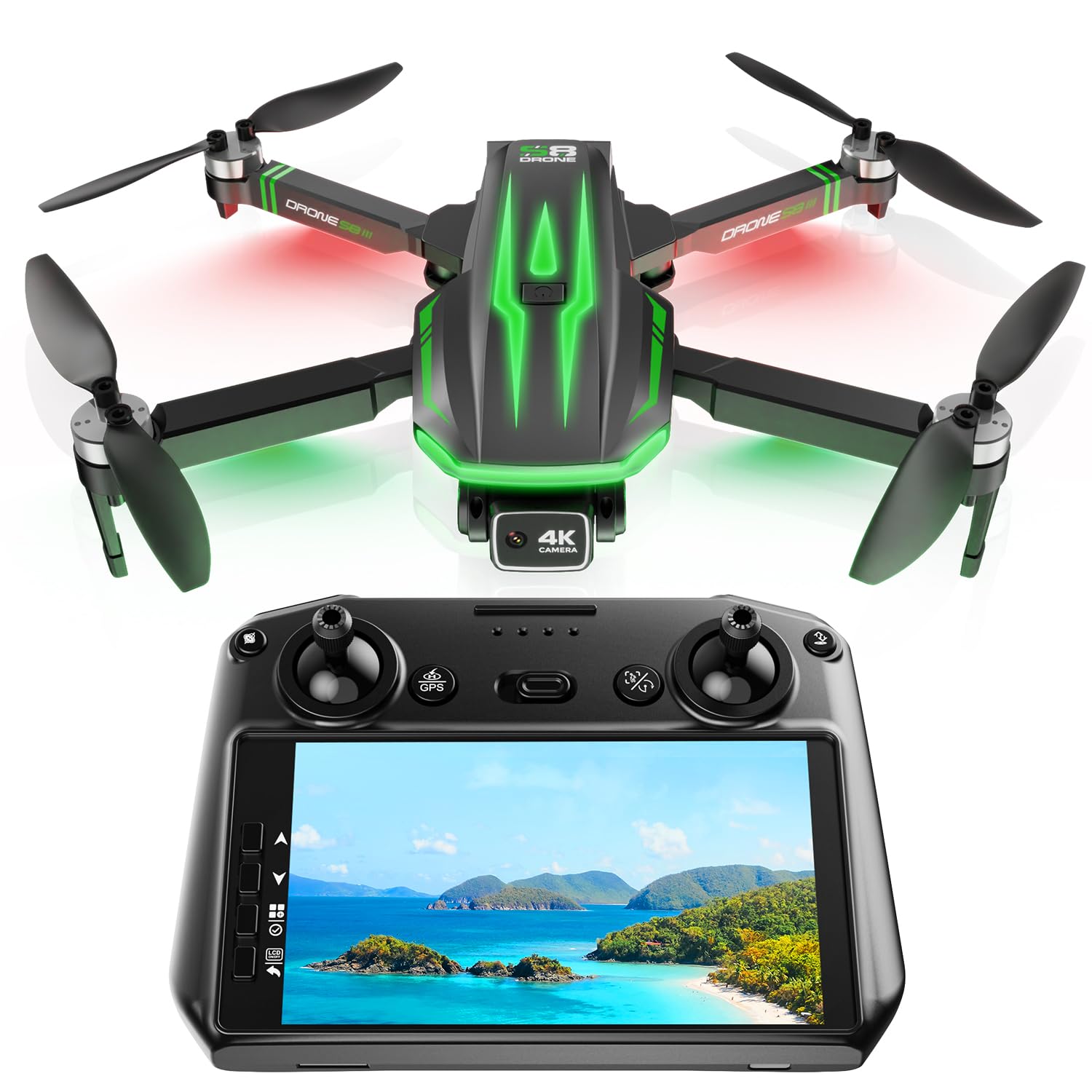
The TOPRCBOXS S8 is an aggressive value play that packs features usually found in higher tiers. The 5-inch controller screen provides instant FPV without a phone, and the two included batteries deliver 60 minutes of total flight. The 4K camera features a 90° electrically adjustable lens with a 120° wide-angle FOV, backed by EIS for decent vibration smoothing.
Beginner features are extensive: one-key takeoff/landing, altitude hold, headless mode, Follow Me, Waypoint, and Point of Interest. The brushless motors provide quiet and efficient propulsion, and the 5G Wi-Fi transmission claims a 600-meter range. The foldable design weighs under 249g, making it FAA-exempt and highly portable.
The build quality feels surprisingly robust with a plastic body that survives minor crashes. The controller screen is not a touchscreen, but the button interface is straightforward. Some users report that the auto-return function can be inconsistent, and the EIS introduces a bit of wobble in wind. For the budget-conscious buyer who wants the most features per dollar, the S8 is a compelling starting point.
Why it’s great
- 5-inch controller screen with instant FPV
- 60 minutes total flight with two batteries
- Wide 120° lens and 90° adjustable camera angle
- Light, foldable design under 249g with carrying bag
Good to know
- EIS stabilization struggles in moderate wind
- Auto-return reliability can be inconsistent
- Requires SD card reader for media transfer
9. Ameta S50 Lite
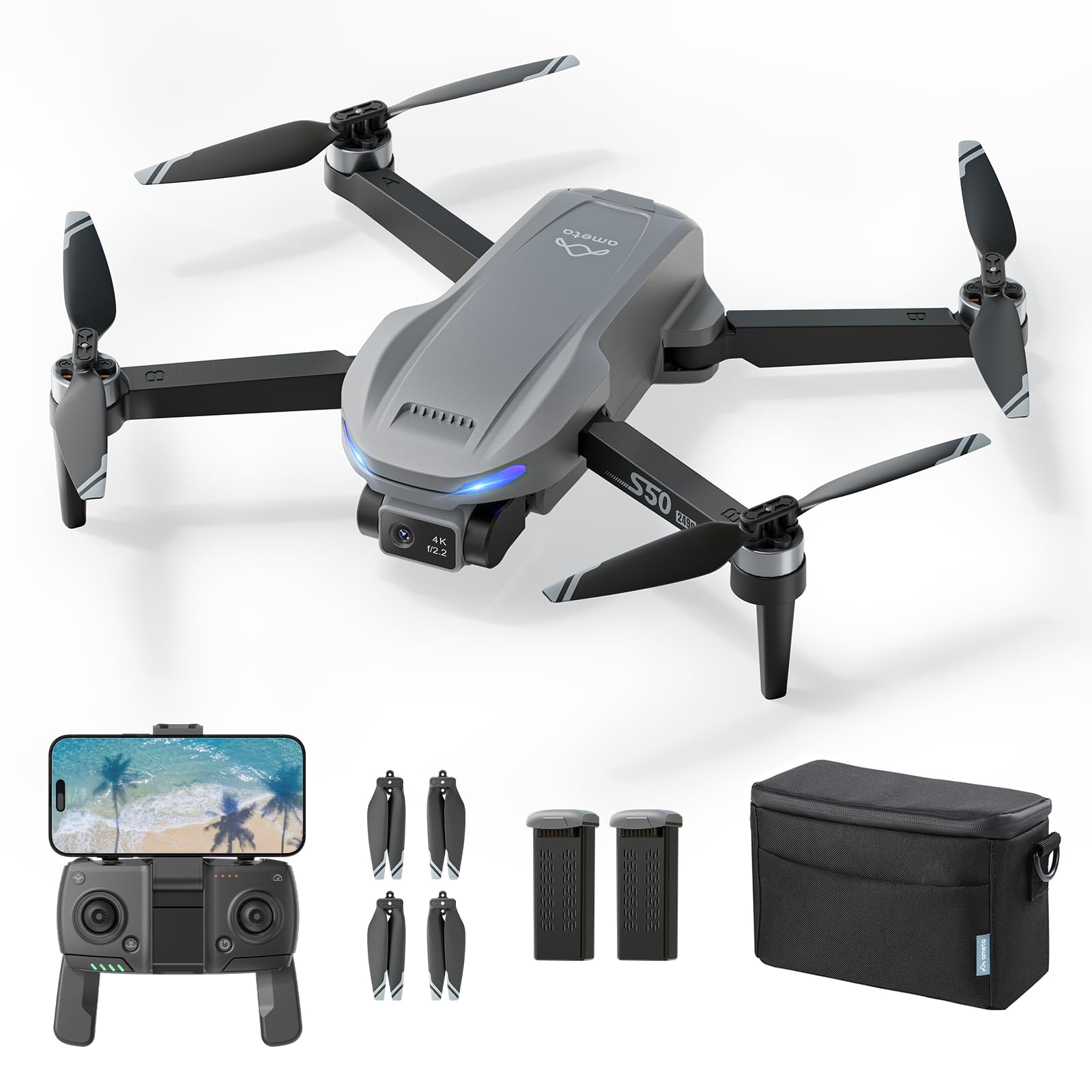
The Ameta S50 Lite distinguishes itself by packing a Sony IMX258 sensor into an entry-level frame. This 13MP sensor provides noticeably better dynamic range and color accuracy than typical budget camera modules, resulting in 4K footage with less noise and more detail. The 90° adjustable lens offers compositional flexibility, and the 5G Wi-Fi FPV stream is smooth up to 500 meters.
GPS integration enables one-key Return to Home, low battery return, and lost signal return. Follow Me and Waypoints Flight functions work well for hands-free recording. The drone includes smart shooting modes like Rocket, Circle Fly, Far Away, Panorama, Time-lapse, and Gesture Selfie — giving creatives plenty of options without manual piloting.
Two 2000mAh batteries deliver a total of 50 minutes of flight time, which is adequate for a single outing. The S50 Lite weighs 248 grams, just under the FAA registration limit. The Wi-Fi-based connection means range is realistically limited, and the lack of a gimbal means EIS is the only stabilization — adequate for calm days but not for wind. For creative hobbyists wanting the best sensor in the budget class, the S50 Lite is a standout.
Why it’s great
- Sony IMX258 sensor for superior image quality
- Smart shooting modes: Timelapse, Panorama, Rocket
- Reliable GPS Return-to-Home and Follow Me
- Lightweight under 249g — no FAA registration needed
Good to know
- Wi-Fi transmission limits effective real-world range
- No mechanical gimbal — EIS only for stabilization
- Video can be shaky in moderate wind
FAQ
Do I need to register a sub-250g drone with the FAA?
Why does my 4K footage look shaky without a gimbal?
Can I fly a budget 4K drone in windy conditions?
Is a built-in controller screen better than using a phone?
What does “EIS” mean on a drone camera spec?
Final Thoughts: The Verdict
For most users, the best budget drone with 4k camera winner is the Potensic ATOM because it delivers a genuine 3-axis mechanical gimbal and a Sony CMOS sensor in a lightweight, FAA-exempt package, producing gimbal-stabilized 4K footage that rivals drones costing twice as much. If you want the absolute longest time in the air, grab the Ruko U11MINI with its 96-minute total battery life. And for a completely phone-free flying experience with a sharp built-in screen, nothing beats the Bwine F7MINI.