
Finding good structure and holding fish from a kayak means dealing with limited deck space, no permanent transducer mount, and gear that needs to survive a capsize or constant splash. A dedicated fishing sonar for your sit-on-top or paddle craft must be lightweight, waterproof, and simple to deploy without drilling holes in the hull.
I’m Min — the co-founder and writer behind Gadgets Feed. I have spent many hours researching sonar specifications, analyzing wireless range claims, and cross-referencing real user depth tests for castable, portable, and mountable fish finders built specifically for kayak use.
This guide compares seven models that fit the paddling angler’s unique constraints, helping you pick the right budget fish finder for kayak without wasting money on features you cannot use on a small, moving platform.
How To Choose The Best Budget Fish Finder For Kayak
Your kayak presents unique constraints — limited dry storage, no permanent 12V source, constant water exposure, and the need to keep your hands on the paddle. The best sonar for you will balance wireless connectivity, power draw, and mounting method against your specific style of kayak fishing.
Mounting Style: Castable vs. Transom vs. Portable
Castable sonar pods like the Deeper PRO+ 2 or Garmin Striker Cast let you toss the transducer off your kayak with a dedicated rod — no drilling, no cables. Transom-mount options like the Humminbird PiranhaMAX 4 require a bracket glued or screwed to the hull but give you constant real-time data. Portable handheld units offer a middle ground with a suction or clamp mount but rely on internal batteries that need recharging between trips.
Wireless Range and Connection Stability
On a kayak your display unit or phone sits within 3 to 6 feet of the sonar sensor — much closer than on a bass boat. Bluetooth and Wi-Fi range matters less than connection reliability through chop and paddle splash. Look for units that maintain a steady link at least 50 feet away so you can cast the pod ahead and paddle toward it without signal dropout.
Battery Life and Power Management
Outings often last 4 to 8 hours, and you cannot swap batteries easily on the water. Units with internal USB-C rechargeable batteries should deliver at least 6 hours of continuous use. For units that run on AAs, plan on packing spares. The Garmin Striker Plus 4 can run on an external 5Ah lithium battery for a full weekend, while a pocket-sized castable pod like the FishPod 5X lasts about 2 hours when trolling behind the kayak.
Quick Comparison
On smaller screens, swipe sideways to see the full table.
| Model | Category | Best For | Key Spec | Amazon |
|---|---|---|---|---|
| Garmin Striker Plus 4 | Premium Mountable | Best Overall | 4.3″ screen, CHIRP sonar, GPS | Amazon |
| Humminbird PiranhaMAX 4 | Premium Mountable | Down Imaging Clarity | 4.3″ color display, Down Imaging | Amazon |
| Deeper PRO+ 2 | Premium Castable | GPS Bathymetric Mapping | Wi-Fi range 330 ft, GPS | Amazon |
| Garmin Striker Cast | Mid-Range Castable | Phone-Based Simplicity | 10+ hr battery, 200 ft range | Amazon |
| Yoocylii XF-08 | Mid-Range Portable | Integrated 3.5″ Display | 3.5″ LCD, 164 ft depth | Amazon |
| DANOPLUS DP-104 | Budget Castable | Entry-Level Value | 2.4″ LCD, 147 ft depth | Amazon |
| Hawkeye FishPod 5X | Budget Castable | App-Based AI Sonar | Bluetooth, 199 ft depth | Amazon |
In‑Depth Reviews
1. Garmin Striker Plus 4
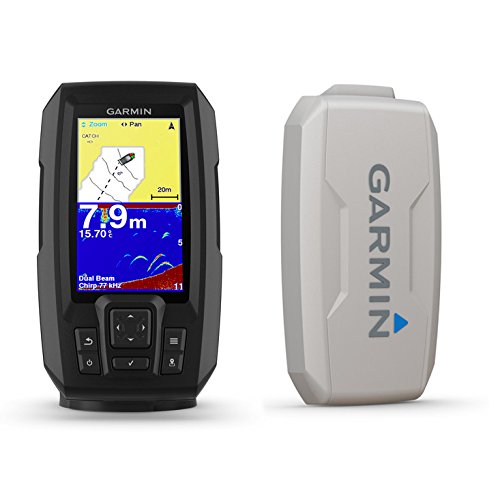
The Garmin Striker Plus 4 delivers a 4.3-inch QSVGA display that remains readable even under direct sunlight, a critical factor when you are squinting from a kayak seat. The dual-beam CHIRP transducer provides clear target separation down to 40 feet with the high-frequency cone and wider coverage at low frequency, making it easier to distinguish a suspended crappie from a submerged log.
Built-in Quickdraw Contours mapping lets you create 1-foot contour maps of your local lakes as you paddle. The rugged design survived a documented saltwater dunking from a kayak and continued operating months later. Its internal GPS supports waypoint marking for hotspots and route tracking along shorelines.
The interface requires some menu navigation — no button backlight makes low-light tweaks tricky. The transducer cable is relatively short; kayak users typically need to route it carefully through the hull scupper or use a 3D-printed adapter. On a 5Ah external battery, it ran 7 hours in freezing weather without dropping a bar.
Why it’s great
- Sunlight-readable 4.3-inch screen with crisp detail
- CHIRP sonar delivers excellent target separation
- GPS mapping creates custom contour charts
Good to know
- Complex menu system with no backlit buttons
- Requires external battery and transducer mount setup
- Transducer cable may be too short for some hulls
2. Humminbird PiranhaMAX 4

The PiranhaMAX 4 packs Down Imaging into a 4.3-inch color TFT screen that reveals submerged timber, brush piles, and rock ledges with photographic-like clarity. This is the only unit in this budget-oriented list that shows structure detail — not just fish arches — making it ideal for kayak anglers who want to target specific underwater cover rather than just scanning for suspended fish.
The dual-beam sonar lets you toggle between a 20-degree narrow cone for pinpoint detail and a 60-degree wide cone for broader coverage. The tilt-and-swivel mount works with standard kayak tracks or a simple RAM ball adapter. Customer reviews consistently report the menu is easy to navigate, and the screen remains visible in bright sun without needing a hood.
The included transom-mount transducer cable measures only about 6 feet, which falls short on larger kayaks or pontoons — a separate extension cable is needed. The corded electric power source assumes you have a 12V battery onboard. For kayak use, this means adding a small sealed lead-acid or lithium battery to your rigging.
Why it’s great
- Down Imaging shows detailed structure below the kayak
- Large 4.3-inch color screen with easy menus
- Dual-beam sonar for both wide search and narrow focus
Good to know
- Transducer cable is too short for some kayak setups
- Requires external 12V battery — not self-contained
- No GPS or mapping functionality
3. Deeper PRO+ 2
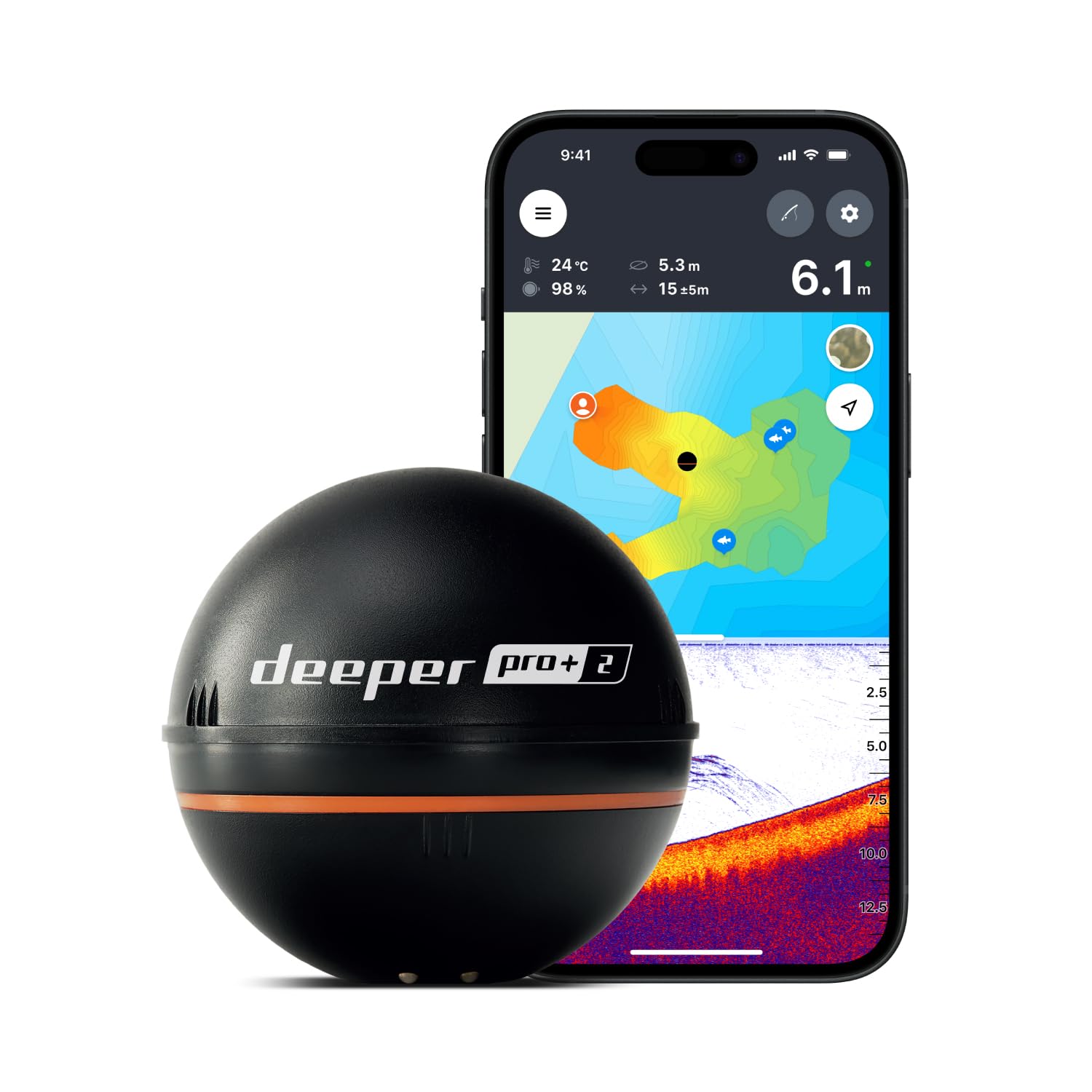
The Deeper PRO+ 2 pushes portable sonar into serious analytical territory with Wi-Fi connectivity that streams to your phone or tablet out to 330 feet. Its triple-beam system — wide, mid, and narrow — lets you scan expansive flats or drill into a specific 0.4-inch target gap, making it the most precise castable option for kayakers who want GPS bathymetric mapping without dragging a transducer wire.
The built-in GPS creates bottom contour maps that save directly into the Fish Deeper app, letting you build a library of your local honey holes. Battery life runs about 5 to 7 hours on a full charge, and the neoprene pouch and attachment bolts come included. You will need a stout rod — 50-pound braid at minimum — to cast this 3-ounce pod effectively.
Several users report connectivity drops when paddling through choppy water or near other anglers running sonar. The app pushes a pro subscription that unlocks historical data, which feels like a gated feature on a premium-priced unit. The internal battery is non-replaceable, and failure after the two-year warranty period requires paid diagnosis.
Why it’s great
- Triple-beam sonar with 0.4-inch target separation
- GPS bathymetric mapping via phone app
- Wi-Fi range up to 330 feet from the kayak
Good to know
- Non-replaceable internal battery with limited lifespan
- Requires heavy braided line and a casting setup
- App has paid pro tier for advanced features
4. Garmin Striker Cast
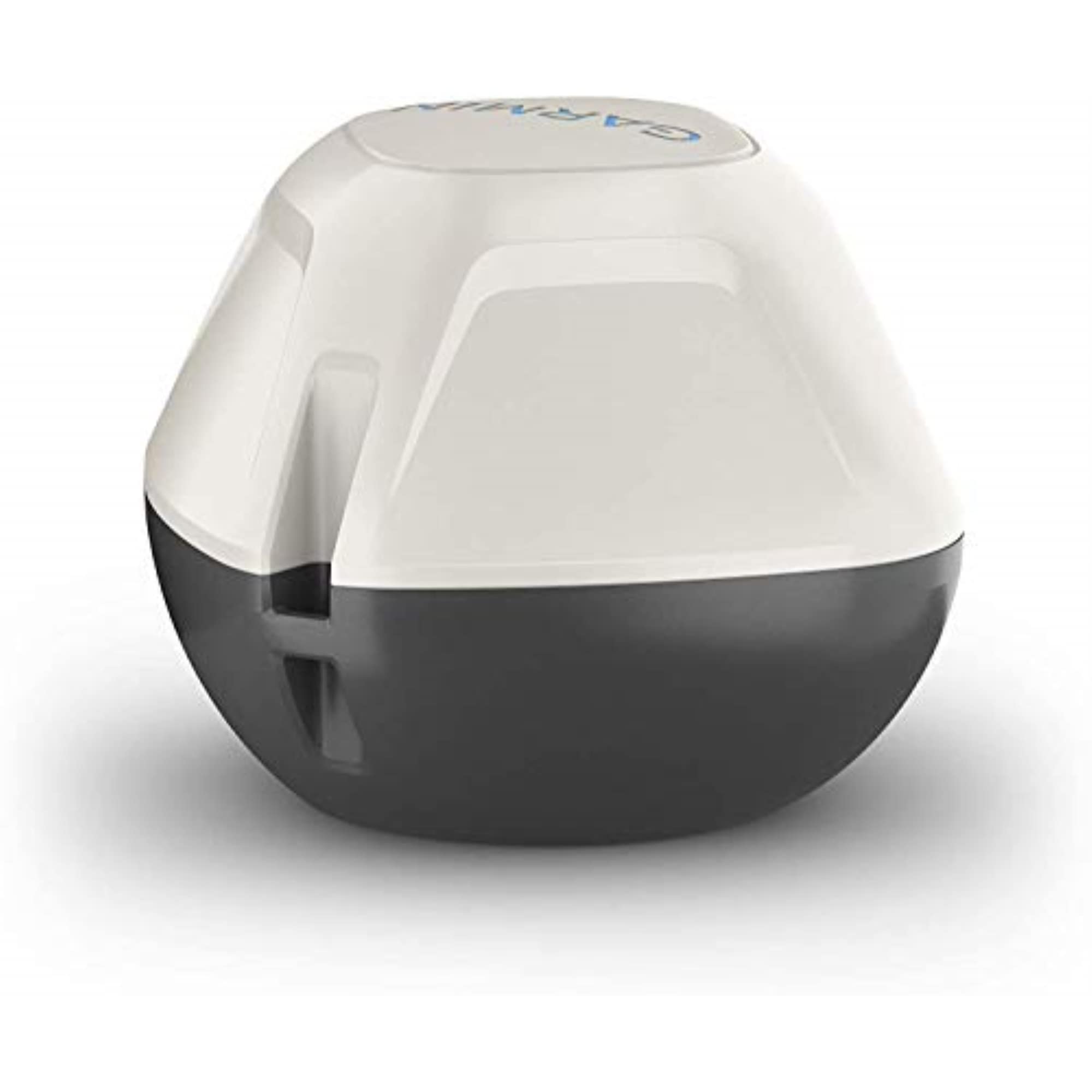
The Garmin Striker Cast eliminates the need for any display unit permanently on your kayak by streaming traditional 2D sonar and ice-fishing flasher modes directly to your smartphone via Bluetooth. Setup is genuinely simple — download the free app, pair the castable pod, and start seeing depth and fish arches within minutes. The integrated sonar activates automatically when it touches water and powers down when out, conserving the USB-rechargeable battery for 10-plus hours per charge.
Connecting up to 200 feet away from your phone means you can cast the pod far from the kayak and paddle toward promising structure. The included 20-foot tether lets you tow it behind the hull for continuous scanning. Real user feedback confirms accurate depth readings, water temperature display, and fish sizing icons that help target bigger specimens.
The wireless connection can drop intermittently when other sonar units operate nearby, such as during tournaments or crowded dock fishing. The phone-based screen drains your mobile battery, so a portable power bank is recommended. The app interface is basic — no GPS mapping or waypoint marking — limiting its utility for serious cartography.
Why it’s great
- Superb 10-hour battery life on USB rechargeable cell
- Auto-activates in water, zero setup on the kayak
- Free app with 2D sonar and flasher modes
Good to know
- Phone screen hard to read in direct sunlight
- Connection can drop near other active sonar units
- No built-in GPS or mapping features
5. Yoocylii XF-08
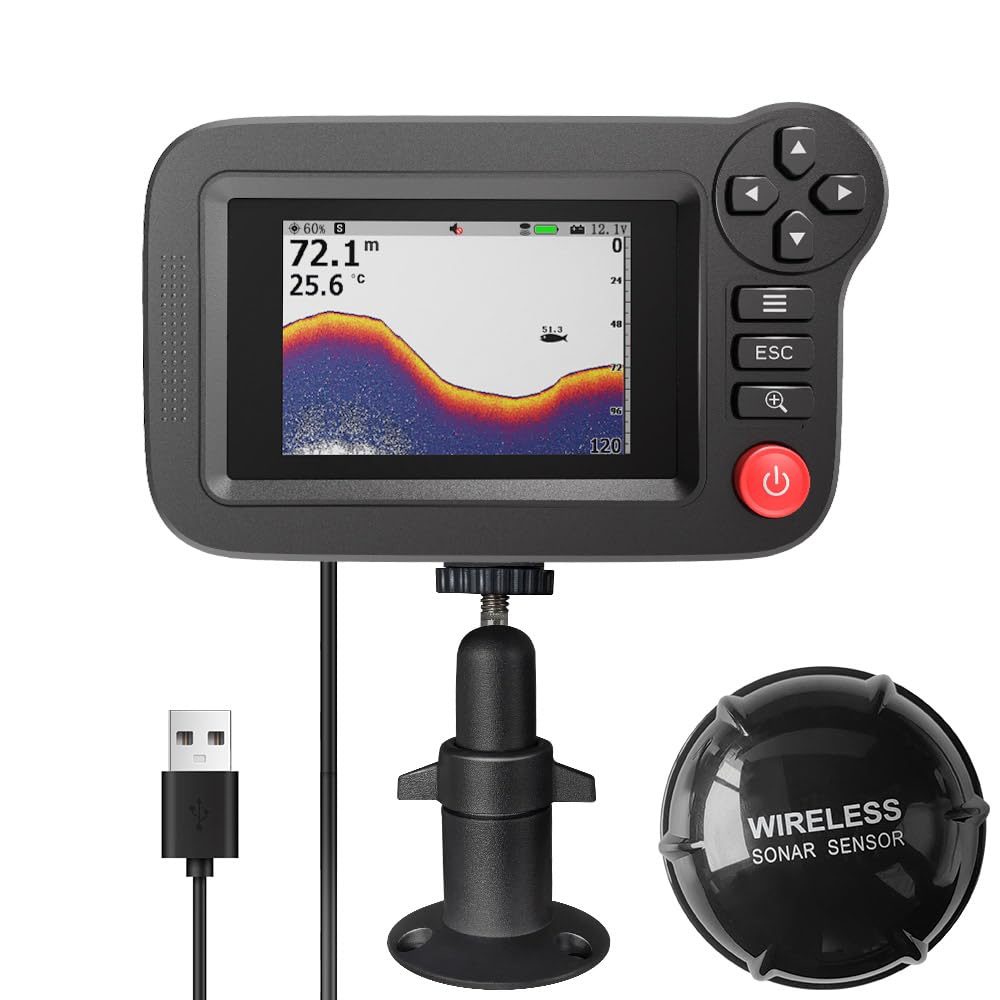
The Yoocylii XF-08 pairs a 3.5-inch color LCD display with a wireless sonar probe that communicates up to 656 feet and reads bottom contours down to 164 feet. The 480×320 resolution screen is sunlight-readable and lets you switch between meters and feet, Celsius and Fahrenheit. At 10.4 ounces, the handheld unit fits in a dry bag or mounts to a kayak bracket without overwhelming the deck.
The IP67-rated waterproof probe activates automatically in water and includes an attractive lamp that draws fish toward the kayak — a feature uncommon at this level. The sonar shows fish size icons (small, medium, large), water temperature, and bottom contours with shallow and deep alarms. Charging happens via USB or 12V cables, taking about 2 hours for a full charge that lasts a full day session.
Build quality has mixed feedback — the locking nut on the transducer bracket can strip under repeated use, and the antenna joint feels fragile when folding flat. The unit runs on four AA batteries as a backup, but it chews through them quickly. Lacking GPS, this is strictly for real-time sonar viewing rather than route mapping.
Why it’s great
- Large 3.5-inch color screen with 480×320 resolution
- IP67 waterproof probe with fish-attracting lamp
- Wireless range up to 656 feet from the kayak
Good to know
- Bracket nut prone to stripping under repeated use
- High battery drain when using AA backup power
- No GPS mapping capability
6. DANOPLUS DP-104

The DANOPLUS DP-104 offers the lowest entry point for a castable sonar system with a built-in 2.4-inch color LCD display and a rechargeable wireless sensor that detects depth down to 147 feet. The 90-degree sonar cone covers a solid swath beneath your kayak, and the fish alarm sounds when a target swims into the coverage zone, showing the fish’s size and depth on the screen.
The wireless sensor features an attractive lamp that turns on when it contacts water, drawing curious fish toward your kayak. Setup is straightforward — charge the sensor via the included magnetic USB cable, pair it with the display unit, and toss it overboard. Customer reports confirm accurate depth readings in ponds and lakes, and the bottom contour display scrolls smoothly even at typical paddle speeds.
The proprietary magnetic charger is a notable pain point — lose the cable and you cannot recharge without ordering a replacement. The fish alarm sometimes triggers on submerged grass or debris rather than actual fish, requiring you to interpret the sonar returns critically. The 0.33-pound main unit feels light and portable, but the small screen size can be hard to read in direct midday glare.
Why it’s great
- Complete castable system with integrated display
- Rechargeable sensor with 147-foot depth rating
- Fish-attracting lamp and fish alarm included
Good to know
- Proprietary magnetic charger — no USB-C or micro-USB
- Small 2.4-inch screen hard to read in bright sun
- Fish alarm can confuse submerged plants for fish
7. Hawkeye FishPod 5X

The Hawkeye FishPod 5X uses Bluetooth to stream sonar data to your smartphone, employing AI-driven modes — FishEcho, BottomScan, and Vertical Flasher — that filter out clutter and debris to highlight actual fish targets. Its 199-foot depth capacity covers most inland lakes and rivers where kayakers typically fish, and the four preset operating modes adjust the sonar display for shallow weed beds, deep drop-offs, or schooling fish automatically.
The TraxNut mounting system lets you attach the pod to any 1/4×20 threaded bracket, expanding compatibility with kayak accessory rails. The bobber-style floating design makes it easy to cast from the kayak using a 10-pound test line. The FishEcho mode in particular impressed users by tuning out dissolved air bubbles and paddle wake interference that plague other entry-level sonars.
Battery life is a significant limitation — you will get roughly 2 hours of continuous use when trolling the pod behind your kayak, which may not cover a full morning session. Connection stability can suffer occasional drops that require re-pairing the Bluetooth link. The unit pairs exclusively with your phone screen, so battery management on both devices becomes part of your pre-launch checklist.
Why it’s great
- AI sonar modes reduce clutter and false echoes
- TraxNut mount works with standard accessory rails
- 199-foot depth capacity for most inland waters
Good to know
- Only 2 hours of battery life trolling behind a kayak
- Bluetooth connection can drop during use
- Requires smartphone — phone battery drain is real
FAQ
Can I use a transom-mount fish finder on a kayak without drilling holes?
How deep can a budget castable fish finder read from a kayak?
Do I need a separate battery for a mountable kayak fish finder?
What is the best way to mount a transducer on a sit-on-top kayak?
Final Thoughts: The Verdict
For most users, the best budget fish finder for kayak is the Garmin Striker Plus 4 because it combines CHIRP sonar quality, GPS mapping, and a sunlight-readable screen in a package that adapts to kayak rigging. If you want a no-drill, castable solution with great battery life, grab the Garmin Striker Cast. And for GPS bathymetric mapping from a kayak without a permanent mount, nothing beats the Deeper PRO+ 2.