
A budget gravel bike is not a downgrade from a road bike; it is an upgrade in capability. This guide cuts through the marketing to find real builds that survive mixed-terrain abuse without demanding a second mortgage.
I’m Min — the co-founder and writer behind Gadgets Feed. After cross-referencing drivetrain tiers, frame materials, brake systems, and real-world rider feedback from over five hundred owner reviews, I have isolated the models that deliver genuine gravel performance at a price that makes sense.
Whether you are commuting on crushed limestone, exploring fire roads, or training for your first fondo on unpaved sections, the best budget gravel bike balances tire clearance, reliable shifting, and all-weather stopping power without cutting corners that leave you stranded.
How To Choose The Best Budget Gravel Bike
A budget gravel bike must prioritize three things: a frame that clears wide tires, brakes that stop you on loose surfaces, and a drivetrain that shifts reliably under load. Skip the paint-jobs and focus on these fundamentals.
Tire Clearance Is the First Filter
If the frame cannot fit a 700x38c tire with mudroom to spare, it is not a gravel bike — it is a road bike with marketing. Look for models that officially clear 40mm or wider. That gap absorbs vibration, provides traction on loose gravel, and lets you run lower pressures for comfort. A 28mm road tire on a gravel path feels like a shopping cart on cobblestones; the frame geometry alone won’t save you.
Brake Systems: Mechanical Disc vs. Hydraulic
On a budget, mechanical disc brakes dominate. They stop reliably in wet conditions and are far easier to maintain with basic tools than rim brakes. Hydraulic disc brakes, found on higher-tier models, offer one-finger modulation and self-adjusting pads, but they add cost and require bleeding. For entry-level gravel duty, a well-adjusted mechanical disc brake — ideally with a 160mm rotor — is sufficient. Avoid caliper rim brakes entirely; they clog with mud and lose grip on wet rims.
Drivetrain Priorities: Claris Before Tourney, Tiagra Before Sora
Shimano’s hierarchy matters here. Tourney sits at the bottom — functional but clunky, with downtube-style shifters on some builds. Claris R2000 offers a proper 2×8 setup with cable routing that keeps grit out. Sora R3000 adds a 9-speed cassette and a clutch-style rear derailleur. Tiagra pushes into 10-speed territory with smoother shifting under load. Within the budget segment, a bike equipped with Claris or Sora delivers the best value; avoid paying a premium for Tourney components.
Quick Comparison
On smaller screens, swipe sideways to see the full table.
| Model | Category | Best For | Key Spec | Amazon |
|---|---|---|---|---|
| SAVADECK Carbon Gravel | Premium | All-terrain performance | T800 carbon frame, 11-speed hydraulic disc | Amazon |
| SAVADECK Carbon Disc Road | Premium | Ultra-light pavement and light gravel | T800 carbon, 18-speed SORA | Amazon |
| Tommaso Illimitate | Mid-Range | Versatile commuting and training | Tiagra 20-speed, carbon fork | Amazon |
| Tommaso Sterrata | Mid-Range | Gravel with Claris reliability | Claris 24-speed, carbon fork | Amazon |
| Schwinn Phocus 1.6 Disc | Mid-Range | Entry road with disc reliability | Carbon fork, 16-speed Shimano | Amazon |
| Schwinn Sporterra RX | Mid-Range | True gravel geometry out of the box | 700x38c tires, mechanical disc brakes | Amazon |
| Mongoose Elroy Adventure | Mid-Range | Touring and bikepacking | 14-speed, disc brakes, frame bag included | Amazon |
| Tommaso Siena Gravel | Mid-Range | Entry-level gravel on a tight budget | Tourney 21-speed, aluminum frame | Amazon |
| Tommaso Imola Sport | Mid-Range | Road-focused rider wanting drop bars | Claris 24-speed, aluminum frame | Amazon |
| Schwinn Volare 1300 | Budget | Basic road riding on a shoestring | 14-speed, alloy frame, 28c tires | Amazon |
| Schwinn Network 3.5 | Budget | Casual hybrid riding | 21-speed, suspension seatpost | Amazon |
In‑Depth Reviews
1. SAVADECK Carbon Gravel Bike
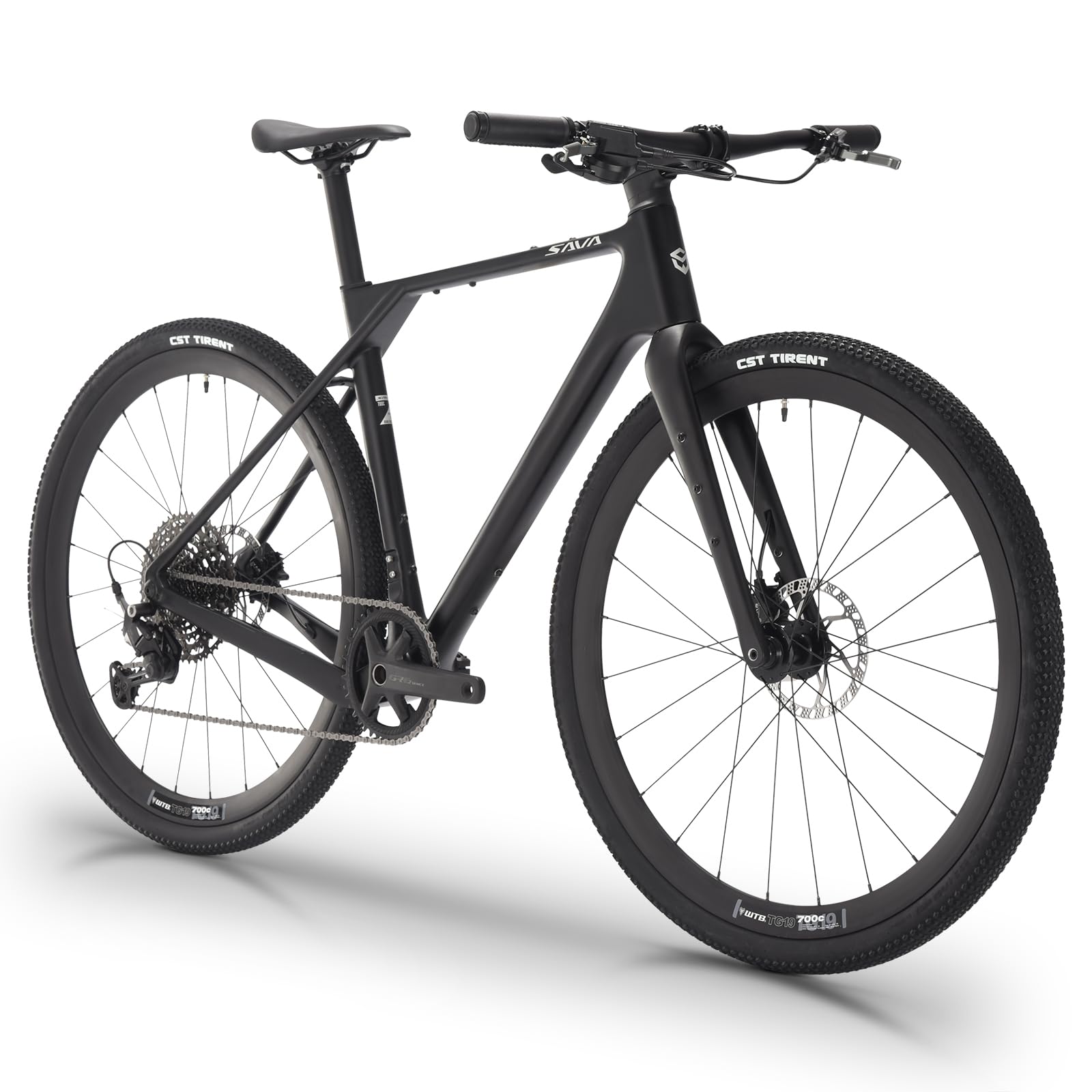
This bike represents a genuine leap for the budget gravel category. The T800 carbon frame and fork bring the build weight to 10.4 kg — significantly lighter than any aluminum competitor at this tier — while the Shimano U6000 11-speed groupset and hydraulic disc brakes deliver drivetrain and stopping performance that typically requires spending double. Owners report the bike requires almost zero adjustment out of the box, with brakes and derailleurs indexed correctly from the factory.
The 700x40c tires provide the tire clearance that defines a true gravel geometry. The tapered head tube and fully internal cable routing add torsional stiffness and a clean aesthetic. Riders at 6’1″ find the geometry comfortable for both road sections and loose gravel, and the hydraulic disc brakes offer consistent modulation even in wet conditions, which mechanical brakes cannot match.
This is the pick for riders who want a single bike capable of daily commuting, weekend gravel events, and light singletrack without compromise. The 11-speed cassette provides a wide enough range for steep climbs, and the carbon frame absorbs high-frequency vibration that would fatigue an aluminum rider over a long day. If your budget allows one serious purchase, this is it.
Why it’s great
- Full T800 carbon frame and fork at a sub-premium price
- Hydraulic disc brakes with real stopping power on loose surfaces
- Shimano U6000 11-speed drivetrain shifts under load without hesitation
Good to know
- Not intended for aggressive mountain bike trails or jumps
- Assembly tools included, but hydraulic brake check recommended
2. SAVADECK Carbon Disc Road Bike

At 9.6 kg (21.1 lb), this is the lightest bike in the lineup, thanks to its Toray T800 carbon frame, fork, rims, and seatpost. The Shimano SORA R3000 18-speed groupset provides crisp, reliable shifting for riders transitioning from entry-level builds. Continental 700x25c tires roll fast on pavement, though the 25mm width limits gravel capability to hardpack only — this is a road-first bike with gravel-adjacent pretensions.
The fully internal cable routing reduces wind resistance and keeps the cockpit clean. Riders report that assembly takes under 20 minutes, and the bike arrives with most components pre-installed. The bilateral oil disc brakes provide balanced stopping power, and the tapered head tube increases front-end stiffness for confident descending. Owners note that the included free pedals are functional but will be the first upgrade.
This bike is ideal for the rider who spends 80% of their time on pavement but wants the option to explore smooth, dry gravel paths. The carbon construction saves grams where it matters most — accelerating and climbing. If your gravel ambitions are mild and your weight weenie instincts are strong, this is the smartest compromise.
Why it’s great
- Sub-10kg build with full carbon frame, fork, and wheelset
- Shimano SORA groupset offers smooth 18-speed shifting
- Almost completely pre-assembled out of the box
Good to know
- 25mm tires limit off-road use to hardpack gravel only
- Generic assembly instructions can be misleading
3. Tommaso Illimitate Sport Performance Gravel Bike

The Illimitate is built around a Shimano Tiagra 4700 20-speed groupset, a step above the more common Sora and Claris found at this price point. The aluminum frame with a carbon fork keeps the weight reasonable while the mechanical disc brakes provide reliable, if not hydraulic-level, stopping power. Owners who have put over 1,200 miles on this frame report that it handles bumps, climbs, and commuting duties without fatigue.
One recurring observation is that this bike is heavier than a dedicated road machine, but the trade-off is durability. The frame feels sturdy beneath riders up to 290 lb, and the carbon fork does an excellent job damping road chatter from 32mm tires. The Tiagra drivetrain shifts with precision on climbs, and the wide cassette range means you won’t spin out on descents. Several owners note that the stock mechanical disc brakes are adequate but would benefit from a future upgrade to hydraulic.
This is the workhorse of the list — a bike that does not excel at any single discipline but handles road, gravel, and commuting competently. If you want a single bike for daily riding that can handle the occasional dirt path without complaint, the Illimitate is a proven, mile-friendly choice.
Why it’s great
- Shimano Tiagra groupset at a budget-friendly price point
- Carbon fork absorbs road vibration well
- Proven durability over thousands of miles
Good to know
- Heavier than many aluminum competitors
- Stock mechanical disc brakes are functional, not premium
4. Tommaso Sterrata Sport Performance Gravel Bike

The Sterrata delivers a full Shimano Claris 24-speed drivetrain — shifters, cassette, front and rear derailleur — which is a critical advantage over competitors that mix Claris shifters with Tourney components. The carbon fork reduces weight at the front end, and the geometry is described by owners as zippy enough for city riding while stable enough for touring on 40mm tires.
Riders at 6’1″ find the large frame fits well, and the triple front ring provides excellent climbing range for loaded touring. The bike arrives well-packed, but assembly requires some mechanical confidence — the brakes and derailleurs need fine-tuning out of the box. Owners caution that the stock setup may not be ride-ready without adjustment, but once dialed in, the drivetrain shifts reliably and the ride quality rivals bikes costing significantly more.
This is the choice for the rider who values component uniformity and wants a proper 2×8 gravel build. The Claris groupset offers better cable routing and more durable shifters than Tourney, and the carbon fork absorbs enough vibration to make all-day gravel rides comfortable. If you can handle basic assembly, the Sterrata rewards you with a near-premium ride feel at a mid-range price.
Why it’s great
- Full Shimano Claris drivetrain — no mixed-component compromises
- Carbon fork dampens gravel chatter effectively
- Triple front ring gives genuine climbing range for touring
Good to know
- Requires mechanical know-how for proper out-of-box setup
- Cable routing may need tidying during assembly
5. Schwinn Phocus 1.6 Disc Road Bike

The Phocus 1.6 pairs an aluminum frame with a carbon fiber road fork and Promax alloy dual pivot caliper brakes — a combination that keeps weight down while providing reliable, if not powerful, stopping. The 16-speed Shimano drivetrain with integrated Micro-shift shifters shifts adequately after a proper tune, and the high-profile alloy double-wall rims hold up well to daily riding. Owners who have put over 15,000 miles on this frame report it as surprisingly durable for its price bracket.
The geometry leans toward road rather than gravel, with a shorter wheelbase and more aggressive drop position. The included 700x25c tires are strictly for pavement. Riders who want gravel capability can mount up to 28mm tires, but that clearance is insufficient for loose surfaces. The caliper brakes — while light — lack the modulation of disc brakes on wet or dusty roads.
This is a solid entry-level road bike that happens to share some gravel-adjacent DNA through its disc brake compatibility and carbon fork. It belongs on this list for the buyer who needs a lightweight, reliable road machine with a carbon fork but does not intend to venture far from paved surfaces.
Why it’s great
- Carbon fiber fork reduces front-end weight significantly
- Durable frame with proven longevity (15k+ mile reports)
- Quick-release wheels make flat repairs easy
Good to know
- 28mm max tire clearance limits gravel capability
- Caliper brakes lack all-weather modulation of disc brakes
6. Schwinn Sporterra RX Gravel Bike

Schwinn designed the Sporterra RX with genuine gravel intent: an aluminum frame with a rigid fork, 700x38c multi-terrain tires, and alloy mechanical disc brakes. The 14-speed drivetrain uses a shifter/brake lever combo that keeps the cockpit clean, and the quick-release seatpost allows tool-free height adjustment. Owners report that the bike performs well on hardpack gravel and fire roads but struggles on loose sand — a limitation common to all 38mm tires at low pressure.
Assembly feedback is consistent: the bike arrives well-packed but requires careful tuning of the brakes and derailleurs. Several buyers noted that the front tire and handlebars were reversed from the factory, a quick fix with a hex key. The geometry fits riders from 5’8″ to 6’0″, and the drop bar position is comfortable for mixed-terrain riding. The saddle is the first component most owners replace after the first 40-minute ride.
For the rider who wants a purpose-built gravel bike without the premium price tag, the Sporterra RX delivers the clearance, braking, and geometry that matter. The mechanical disc brakes stop confidently in wet conditions, and the 38mm tires roll over crushed limestone without the skittishness of a road bike.
Why it’s great
- True gravel geometry with 38mm tire clearance from the factory
- Mechanical disc brakes provide reliable all-weather stopping
- Quick-release seatpost enables tool-free fit adjustment
Good to know
- Not suitable for loose sand or deep gravel
- Stock saddle is uncomfortable for rides over 40 minutes
7. Mongoose Elroy Adventure Bike

The Mongoose Elroy is a true adventure touring bike, not a road bike with wider tires. The 2×7 drivetrain with Shimano Tourney derailleurs and Microshift shifters provides reliable, if slow, gear changes. Mechanical disc brakes with 160mm rotors offer stopping power appropriate for loaded touring, and the frame features an integrated frame bag with an embroidered patch, a large front rack with a built-in bottle opener, and rear rack mounts. The aluminum frame with a steel fork keeps the ride smooth while carrying weight.
The geometry is more upright than a traditional gravel bike, making it comfortable for long days in the saddle. Owners at 5’11” and 240 lb find the 54cm frame stable and responsive. The 700c wheels accept tires up to 45c, giving serious tire clearance for rough gravel. The weakest link reported by multiple owners is the front disc brake, which can be finicky to adjust. The bike is heavy — around 32 lb — but that weight is expected for a touring-oriented build with a steel fork and integrated rack.
This is the pick for the rider who wants to carry gear — panniers, camping equipment, extra water bottles — on gravel roads. The internal cable routing and multiple bottle cage mounts (three on the frame, two on the fork) make it easy to customize. If your gravel adventures involve overnight trips, the Elroy is the most utility-focused option here.
Why it’s great
- Integrated front rack and frame bag ideal for bikepacking
- Disc brakes and 45c tire clearance for loaded touring
- Multiple water bottle mounts provide excellent range for long rides
Good to know
- Front disc brake can be difficult to adjust properly
- Heavy build at approximately 32 lb
8. Tommaso Siena Sport Performance Gravel Bike

The Siena is the most affordable true gravel bike in the Tommaso lineup, built around a Shimano Tourney 21-speed drivetrain and an aluminum frame with a rigid fork. The Tourney groupset works — shifts are functional — but the weight is noticeably higher than Claris or Sora builds. Owners who own multiple bikes rate this as the best value for the money, noting that it performs at half the price of a Canyon or Trek gravel bike.
The geometry leans toward an aggressive stretch: the 53cm frame has a reach comparable to a 56cm from other brands, which can cause upper body strain for shorter riders. Owners recommend budgeting for a shorter stem if you are between sizes. The bike arrives well-packed, and assembly is straightforward, though the integrated shifters take time to get used to for riders coming from flat-bar bikes. Some owners report that the shifting is slightly slow compared to higher-tier groupsets.
This is the entry point for gravel riding — the bike to buy if your budget is tight but you need genuine gravel geometry and disc brake compatibility. The Tourney drivetrain can be upgraded over time, and the frame is solid enough to justify those upgrades. Just plan on replacing the saddle and possibly the stem to dial in the fit.
Why it’s great
- True gravel geometry at the lowest entry price
- Solid aluminum frame that supports future component upgrades
- Disc brake ready for all-weather riding
Good to know
- Tourney groupset is heavy and shifts slower than higher tiers
- Reach may be too long for riders between sizes
9. Tommaso Imola Sport Performance Road Bike

The Imola is a road bike at heart — Shimano Claris 24-speed drivetrain, no suspension, caliper brakes — but its geometry and build quality make it a viable option for light gravel duty if you swap the tires. Owners with over 1,000 miles report no mechanical issues, and the frame welds and paint quality rival entry-level bikes from Trek and Cannondale. The bike arrives with the drivetrain tuned and wheels true, a rarity at this price.
The Caliper brakes are the limitation: they lack the modulation and mud clearance of disc brakes. The stock 25mm tires are unsuitable for anything beyond hardpack gravel. However, the frame has clearance for up to 28mm tires, and many owners have successfully run 28mm gravel tires for light off-road use. The Claris drivetrain shifts cleanly and the geometry at 5’10” is described as comfortable for all-day rides.
This pick is for the road cyclist who occasionally encounters unpaved sections and wants a lightweight, reliable bike that won’t fall apart on crushed limestone. If you are willing to invest in 28mm gravel tires and accept the braking compromises, the Imola delivers outstanding build quality for the money.
Why it’s great
- Excellent frame build quality with smooth welds and paint
- Shimano Claris drivetrain shifts reliably under load
- Arrives well-tuned with true wheels out of the box
Good to know
- Caliper brakes lack modulation for off-road conditions
- Stock 25mm tires must be replaced for any gravel use
10. Schwinn Volare 1300 Road Bike

The Volare 1300 is the most affordable bike on this list, and its limitations are clear: 14-speed Tourney-level drivetrain, caliper brakes with unresponsive levers, and 28c road tires that are useless on any surface looser than pavement. The aluminum frame is lightweight and stiff, and the 700c wheels roll smoothly on paved roads. Owners say the bike is easy to assemble and rides well for the price, but the component quality is visible in the shifting hesitation and brake lever feel.
The biggest issue reported is the brake lever design — the levers are made for V-brakes but paired with side-pull calipers, resulting in poor braking performance. Owners recommend a brake upgrade as the first modification. The 28c tires offer minimal grip on gravel, and the seat is uncomfortable for rides longer than 30 minutes. On the plus side, the frame is sturdy, the wheels are true, and the Shimano Tourney drivetrain works for basic riding.
This is not a gravel bike. It is included here as the absolute floor for the category — a bike that can be used for paved commuting and very light crushed limestone paths after tire and brake upgrades. If your budget is this constrained, plan on spending another – on essential modifications to make it usable for mixed-terrain riding.
Why it’s great
- Lightweight aluminum frame at the lowest entry price
- Wheels arrive true and balanced from the factory
- Easy assembly for beginners
Good to know
- Brake lever and caliper mismatch requires aftermarket fix
- 28c tires are unsafe on loose gravel surfaces
11. Schwinn Network 3.5 Hybrid Bike

The Network 3.5 is a hybrid bike, not a gravel bike. It uses 21-speed twist shifters, a suspension seatpost, and alloy linear pull brakes — components that prioritize comfort cruising over performance riding. The 18-inch alloy hybrid frame and 28-inch wheels fit riders from 5’4″ to 6’2″, making it one of the most size-inclusive options on this list. Owners at 6’2″ report the bike is durable and comfortable after years of daily use.
The twist shifters are functional but imprecise, especially on hills where quick gear changes matter. The linear pull brakes stop adequately in dry conditions but lose grip in wet weather. The bike includes a kickstand, reflectors, and a suspension seatpost — all features that signal recreational use rather than gravel training. The frame has no disc brake mounts, so upgrading to disc brakes is not possible.
This bike belongs on the list only as a reference point for what a true gravel bike is not. If your riding is limited to paved bike paths and smooth park trails, the Network 3.5 is a comfortable, affordable commuter. But if your definition of gravel includes loose surfaces, hills, or speed, you need a bike with disc brakes and proper tire clearance.
Why it’s great
- Comfortable upright geometry with suspension seatpost
- Fits a wide range of rider heights (5’4″ to 6’2″)
- Includes kickstand and reflectors for casual use
Good to know
- Linear pull brakes lose stopping power in wet conditions
- No disc brake mounting points limit upgrade potential
FAQ
Can I use a budget gravel bike for road riding every day?
How much does a proper budget gravel bike weigh?
Should I buy a budget gravel bike or upgrade a used road bike?
Final Thoughts: The Verdict
For most users, the best budget gravel bike winner is the SAVADECK Carbon Gravel Bike because its T800 carbon frame, hydraulic disc brakes, and Shimano U6000 11-speed drivetrain deliver performance that punches far above its price bracket. If you want a bombproof workhorse with Tiagra shifting, grab the Tommaso Illimitate. And for hardcore touring with integrated racks and 45c tire clearance, nothing beats the Mongoose Elroy Adventure Bike.