
A dead battery on your phone or a lost trail marker can turn a weekend hike into a survival scenario. When you need reliable navigation without a premium price tag, a purpose-built hiking GPS offers non-cellular satellite connectivity, rugged weatherproofing, and battery life measured in days — not hours. Unlike a smartphone, these devices are designed to work when you’re miles from the nearest tower, in rain, snow, or under dense tree cover.
I’m Min — the co-founder and writer behind Gadgets Feed. My research process for this guide involved cross-referencing satellite acquisition times, battery endurance reports, and real-world feedback from hikers who have tested these units on everything from Appalachian switchbacks to Pacific Crest stretches.
From emergency SOS beacons to multi-GNSS handhelds with preloaded topographic maps, this guide breaks down the best options available today. You’ll find the best budget hiking gps models that balance essential navigating features with genuine affordability.
How To Choose The Best Budget Hiking GPS
Picking the right hiking GPS on a budget requires understanding where your money delivers the most safety and convenience. The cheapest tracker might lack a reliable SOS function, while the most expensive handheld could have mapping features you never use. Focus on three core pillars: connectivity, navigation capability, and battery endurance.
Satellite Connectivity vs. Standalone Navigation
A satellite communicator like the ZOLEO or Spot Gen 4 lets you send text messages and SOS alerts via satellite networks but requires a subscription and a paired smartphone for maps. A standalone handheld GPS like the Garmin eTrex or GPSMAP series plots your position on its own screen using preloaded maps — no phone needed. If you hike in remote areas with zero cell signal, a satellite messenger is a safety essential. If you primarily follow established trails and just want to know where you are, a navigation-focused handheld with a color screen and topo maps is the better choice.
Battery Life and Power Source
Budget-friendly GPS units often use AA batteries (alkaline or lithium), which are easy to replace on a multi-day trip. Others feature rechargeable lithium-ion packs with USB-C charging. Look for a minimum of 20 hours of continuous use in standard mode. Expedition modes on units like the Garmin eTrex SE can stretch that to over 100 hours by reducing screen updates and satellite polling frequency. For week-long treks, AA-powered units give you the flexibility to carry spare cells rather than hunting for a wall outlet.
Mapping, Waypoints, and Accuracy
Not all budget GPS devices include built-in maps. Some entry-level models only display coordinates, compass headings, and track logs — you must upload your own routes from a computer. Mid-range options come preloaded with topographic maps (USA Topo, TopoActive) and support for waypoints, route navigation, and geocaching. For accuracy, multi-GNSS support (GPS + GLONASS + Galileo + BeiDou) provides faster satellite locks and better positioning under heavy tree canopy or in steep canyons compared to GPS-only units.
Quick Comparison
On smaller screens, swipe sideways to see the full table.
| Model | Category | Best For | Key Spec | Amazon |
|---|---|---|---|---|
| Garmin GPSMAP 65 | Handheld Navigator | Multi-band accuracy | Multi-Band GNSS | Amazon |
| Garmin Montana 680 | Touchscreen Handheld | Large display & camera | 4-inch touchscreen | Amazon |
| Garmin eTrex 32x | Color Topo Navigator | Preloaded TopoActive maps | 3-axis compass & altimeter | Amazon |
| ZOLEO Satellite Communicator | Satellite Messenger | Two-way texting & SOS | 200-hour battery life | Amazon |
| Bushnell BackTrack Mini | Waypoint Return | Simple trail backtracking | 35-hour battery life | Amazon |
| Garmin eTrex SE | Entry-Level Navigator | Battery endurance | 168-hour battery life | Amazon |
| NiesahYan A6 | Compact Tracker | Small size, multi-GNSS | 20-hour battery life | Amazon |
| NiesahYan 3.2″ Topo GPS | Budget Topo Handheld | Preloaded USA Topo maps | 36-hour / IP66 | Amazon |
| Spot Gen 4 | Satellite Messenger | One-way SOS & check-in | Globalstar satellite | Amazon |
In‑Depth Reviews
1. Garmin GPSMAP 65

The Garmin GPSMAP 65 is the most accurate unit in this roundup thanks to its multi-band frequency support across GPS, GLONASS, Galileo, and QZSS satellites. This means it maintains a lock even in dense forests, steep canyons, and urban environments where single-frequency devices struggle. The 2.6-inch sunlight-readable color display is easy to read at a glance, and the physical buttons work reliably with gloves or in wet conditions.
Preloaded TopoActive maps and federal public land boundaries (US) provide off-the-shelf navigational utility. Battery life reaches up to 27 hours in Battery Save mode using two AA batteries — standard lithium cells extend that further. Bluetooth connectivity pairs with the Garmin Explore app for trip planning, smart notifications, and wireless data transfer. The IPX7 water rating means it survives submersion in one meter of water for 30 minutes.
While the interface is not as modern as a smartphone app, experienced hikers will appreciate the dedicated hardware and predictable operation. Firmware updates are essential out of the box to fix known bugs, and the Garmin desktop software requires patience. For anyone needing precise positioning without recurring subscription fees, this is the strongest mid-range performer available.
Why it’s great
- Multi-band GNSS delivers ~6-foot accuracy in challenging terrain
- Routable TopoActive maps included — no extra downloads
- Physical buttons for gloved operation in rain or snow
Good to know
- Garmin desktop software (BaseCamp) is clunky and crash-prone
- Default map detail level is set low — must adjust in settings
- No electronic compass or barometric altimeter (65s version has them)
2. ZOLEO Satellite Communicator

The ZOLEO is a satellite communicator that pairs with your smartphone via Bluetooth to send two-way SMS texts and emails over the Iridium satellite network. It also works over cellular and Wi-Fi when available, using the lowest-cost connection automatically. The SOS button triggers a 24/7 emergency monitoring center with your GPS coordinates, and you can add a Field Rescue Membership from Global Rescue for medical extraction coverage.
Battery life is exceptional at over 200 hours between charges, and the IP68 rating means it is dust-tight and submersible in 1.5 meters of water for 30 minutes. The device weighs only 12 ounces and includes a carabiner for clipping to a backpack strap. Each unit gets its own dedicated SMS number and email address so contacts can reach you directly while off-grid. Subscription plans start at per month for active use, with a /month idle option when you’re at home.
Setup instructions are somewhat vague, but the ZOLEO app is intuitive after initial configuration. It does not include mapping or navigation features — it’s a pure safety communicator. GPS coordinate dropouts occasionally affect check-in pings under heavy canopy. For hikers who prioritize staying in touch and having an SOS lifeline over turn-by-turn mapping, this is the most affordable satellite option.
Why it’s great
- Two-way messaging over Iridium satellite — works globally except polar regions
- Unlimited check-in messages included in every plan
- Rugged IP68 build with exceptional 200-hour battery life
Good to know
- Requires smartphone for full functionality — not a standalone navigator
- Monthly subscription is mandatory for satellite access
- Occasional GPS coordinate dropouts on check-in pings
3. Garmin Montana 680

The Garmin Montana 680 stands out with its large 4-inch sunlight-readable touchscreen — the biggest display in this guide. It supports GPS and GLONASS for fast satellite acquisition and includes a 1-year BirdsEye Satellite Imagery subscription for high-resolution aerial views of your routes. The 8-megapixel camera automatically geotags photos with coordinates, allowing you to document trail conditions or campsite locations precisely.
Beyond navigation, the Montana 680 includes 250,000 preloaded geocaches, a Track Manager for organizing waypoints and track logs, and turn-by-turn voice navigation for road use. Battery life is 16 hours from the included rechargeable lithium-ion pack, and the unit can also run on three AA batteries as a backup. The IPX7 water rating ensures reliable operation in rain and stream crossings. Weighing 0.33 kg, it is bulkier than compact handlehelds, but the large screen makes map reading effortless.
Some users report altimeter variations of up to 275 feet on multi-mile hikes despite calibration. The touchscreen works well with bare fingers but less reliably with heavy gloves. The Montana 680 is ideal for hikers who want a multipurpose device that doubles as a car GPS and trail camera, but its size and price push it into specialist territory.
Why it’s great
- 4-inch touchscreen is the largest in this category — excellent for map viewing
- BirdsEye satellite imagery included for one year
- Geotagged 8MP camera adds field documentation capability
Good to know
- Touchscreen less responsive with thick gloves
- Altimeter can show significant elevation swings on long hikes
- Bulky for pocket carry — best on a pack strap or mount
4. Garmin eTrex 32x

The Garmin eTrex 32x brings preloaded TopoActive maps, a 3-axis compass, and a barometric altimeter into a compact handheld package. The 2.2-inch sunlight-readable color display (240 x 320 pixels) is crisp enough for trail-level detail. It supports both GPS and GLONASS satellite systems for improved tracking in dense tree cover compared to earlier single-system models. The 8 GB of internal memory plus a microSD card slot allows you to load additional regional maps or custom GPX files.
Battery life reaches up to 25 hours in GPS mode using two AA batteries, and users report over 50 hours in battery-save mode with WAAS off. The physical button interface is glove-friendly and works reliably in wet weather, unlike touchscreen-only devices. The 3-axis compass provides accurate bearing even when stationary, and the barometric altimeter helps track elevation changes with calibration. The IPX7 waterproof rating means it survives full immersion.
The instructions are notoriously poor, making initial setup a multi-hour project with online video tutorials. The screen refresh rate can be slow when scrolling through map tiles. Some users report a bug where loading OSM .img files into the Garmin folder causes the device to freeze until the microSD card is removed. For those willing to invest in the learning curve, the eTrex 32x offers solid navigation tools at a price well below premium models.
Why it’s great
- Preloaded TopoActive maps with routable roads and trails
- 3-axis compass and barometric altimeter included
- Physical buttons for reliable operation with gloves or rain
Good to know
- Learning curve is steep — instructions are poorly written
- Screen refresh lag when panning or zooming maps
- microSD card retention is weak — may need tape
5. Garmin eTrex SE

The Garmin eTrex SE is an entry-level handheld navigator that prioritizes battery endurance above all else. It delivers up to 168 hours in standard mode and a staggering 1,800 hours in expedition mode using two AA batteries. The 2.2-inch high-resolution grayscale display is easy to read in direct sunlight, and multi-GNSS support (GPS, GLONASS, Galileo, BeiDou, QZSS) ensures reliable position tracking even in challenging environments like wooded valleys or steep ridges.
Bluetooth connectivity pairs the eTrex SE with the Garmin Explore app on your smartphone for wireless software updates, trip planning, Active Weather reports, and smart notifications. It also supports Geocaching Live for automatic cache updates including logs and hints. The digital compass provides accurate bearing when stationary, and the IPX7 water rating handles rain and stream submersion without issue. The device is lightweight and pocket-friendly, weighing only about 5 ounces with batteries installed.
The built-in base map is sparse — it shows major roads and boundaries but not trail-level detail. For hiking, you will want to load custom maps via the Garmin Explore app or a computer. The buttons are small and require a firm center press, which can be frustrating with gloves. Overview
Why it’s great
- 168-hour standard battery life is class-leading — ideal for multi-day treks
- Multi-GNSS support provides robust position lock in difficult terrain
- Compact, lightweight, and waterproof for all-weather carry
Good to know
- Grayscale display lacks map detail — no preloaded topo maps included
- Buttons require firm pressure and feel stiff when new
- No electronic compass or barometric altimeter
6. Bushnell BackTrack Mini

The Bushnell BackTrack Mini GPS is a simplified device designed for a single core task: capturing a starting waypoint (basecamp, trailhead) and guiding you back to it using arrow and distance indicators. It shows your latitude and longitude, elevation gain/decline, and barometric pressure, plus sunrise/sunset and moonrise/moonset times. The 35-hour battery life is powered by a rechargeable lithium-ion battery via Micro USB — it requires no disposable cells.
Bluetooth sync with the Bushnell Connect app allows you to view and share trip waypoints from your smartphone. The glove-friendly buttons and readable LCD display make operation straightforward in the field. The rugged, waterproof design handles rain showers and accidental drops without issue. For hikers who stick to established trails and just want a reliable way to return to their starting point, the BackTrack Mini is a low-complexity solution.
Distance readings can overestimate actual traveled distance by up to 60%, and elevation measurements show significant inaccuracy compared to known benchmarks. The Bushnell Connect app has received multiple complaints about failing to download route data to the phone, rendering the sync feature unreliable. The Micro USB port is also a dated choice (USB-C would be preferable) and can be finicky over time. This device works best as a safety backup rather than a primary navigation tool.
Why it’s great
- Simplest interface in this guide — just mark and return
- 35-hour rechargeable battery supports multiple day trips
- Glove-friendly buttons and weather-sealed construction
Good to know
- Distance accuracy is poor — up to 60% overestimation reported
- Bushnell Connect app has known data-sync failures
- Uses Micro USB instead of USB-C for charging
7. Spot Gen 4 Satellite GPS Messenger

The Spot Gen 4 is a one-way satellite messenger that has been a staple for hikers since the Gen 3 version. It uses Globalstar’s satellite network to send check-in messages and emergency SOS alerts with GPS coordinates to your saved contacts. The device is powered by four AA batteries and can operate for weeks on 10-minute ping intervals. The S-O-S and HELP buttons are magnetically separated from the check-in button to reduce accidental activation.
It includes a strap and carabiner for easy pack attachment and comes with a Micro USB cable for firmware updates. Setup involves purchasing a subscription plan (two tiers available) and activating the device online — the process has been refined over multiple generations and is smoother than earlier versions. The Gen 4 improves the form factor with raised, tactile buttons that are easier to operate in cold weather or with gloves.
The firmware update process requires removing four tiny screws to access the USB port (there is no rubber cap), and the weather seal can fall out during cover removal. The device does not provide mapping or navigation — it is strictly a one-way communicator for safety check-ins and SOS. A few users report that the “Help” and “Check-in” functions can be unreliable in deep canyons or under extremely dense canopy. For hikers on a tight budget who want a basic emergency beacon, the Spot Gen 4 is a proven, affordable option despite its quirks.
Why it’s great
- Proven one-way SOS and check-in functionality at entry-level pricing
- Long battery life on AA batteries with 10-minute pings
- Magnetic S-O-S/HELP buttons reduce risk of false alerts
Good to know
- Subscription required — ongoing cost after purchase
- Firmware updates require removing four screws, risking weather seal loss
- No two-way messaging or mapping features
8. NiesahYan A6 Handheld GPS
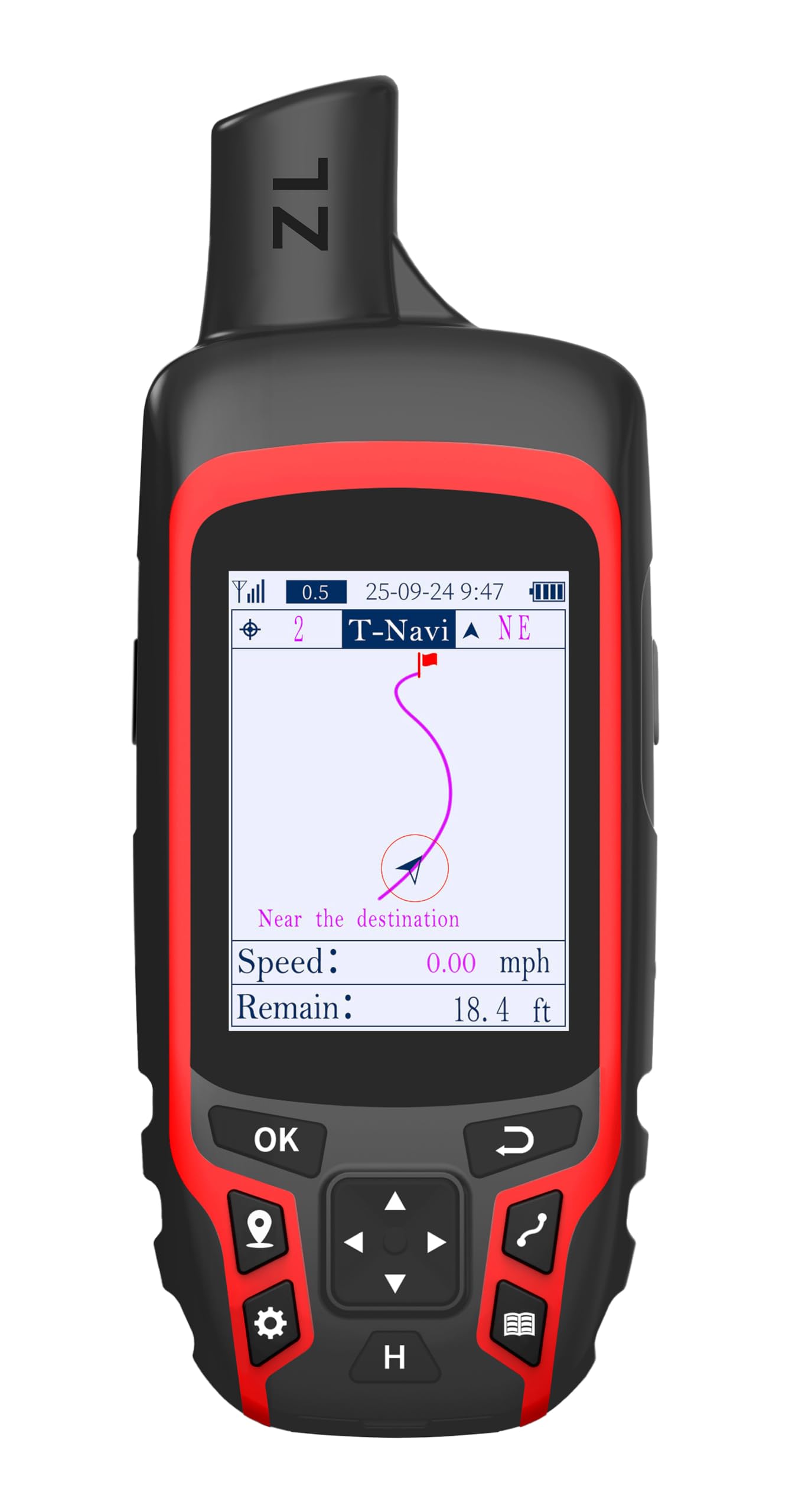
The NiesahYan A6 is a compact, lightweight GPS handheld that supports four satellite constellations (GPS, Galileo, BeiDou, QZSS) for solid positional accuracy. Its 2.4-inch sunlight-readable color display shows your coordinates, track log, sunrise/sunset times, and a digital compass heading. The rechargeable battery provides up to 20 hours of continuous use and charges via standard USB-C. Essential tools include a GPS compass for bearing, a barometric altimeter, and the ability to record tracks and navigate back to your starting point.
The sheer value proposition is strong — you get multi-constellation support and a bright color screen at a price significantly below Garmin’s entry-level models. It is rugged and somewhat waterproof, with a heavy-duty exterior case that feels durable in hand. The device saves waypoints along a track, and the track navigation feature works well for retracing your path on flatter terrain.
This unit does not include any built-in maps — it operates entirely on coordinates and compass headings. It cannot display roads, trails, or topographic context. Menu navigation requires study, and accuracy degrades noticeably on steep, winding trails. A few users report the device does not function as a navigator on paved roads or unfamiliar terrain. The A6 is best suited as an emergency compass/tracker for hikers who know their area well and want a cheap backup to their smartphone.
Why it’s great
- Multi-GNSS support in an ultra-budget package — impressive satellite speed
- Bright sunlight-readable 2.4-inch color display for its price tier
- USB-C charging with 20-hour battery life
Good to know
- No built-in maps — only coordinate and compass navigation
- Accuracy declines on steep winding trails
- Menu system is unintuitive — requires learning time
9. NiesahYan 3.2″ Topo GPS
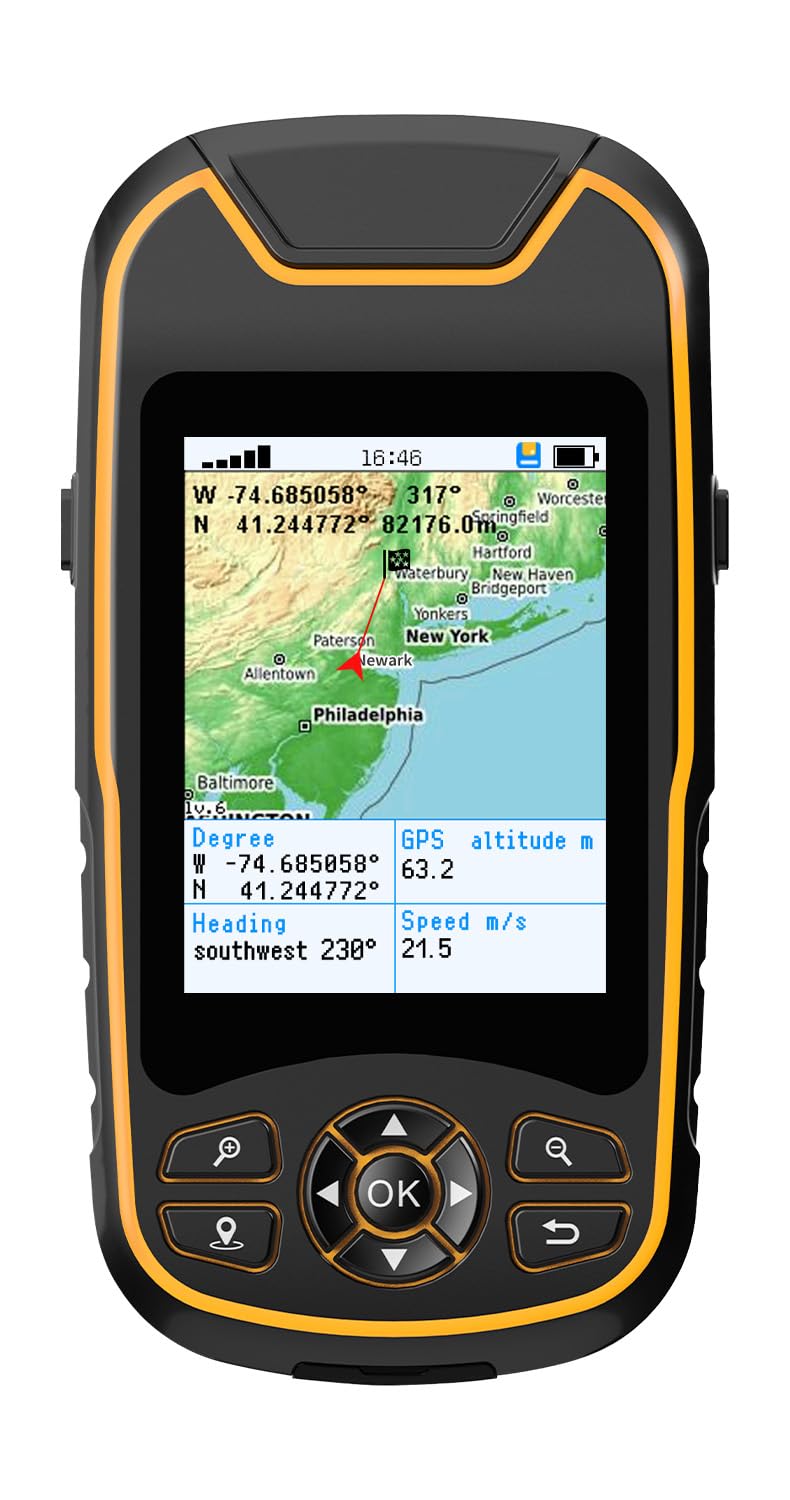
The NiesahYan 3.2 Topo GPS bridges the gap between bare-bones coordinate trackers and full-featured Garmin units. It comes preloaded with USA Topo maps and has 32 GB of internal memory for adding custom map files. The 3.2-inch sunlight-readable display is the largest in this budget tier, and the anti-slip design with physical buttons makes it operable in wet conditions. Multi-GNSS support (GPS, Galileo, BeiDou, QZSS) delivers location precision within 6 feet under open sky.
The IP66 water resistance rating means it is protected from powerful water jets but not full submersion — acceptable for heavy rain but not for crossing deep streams. The rechargeable battery provides up to 36 hours on a full charge via USB-C, a solid figure for multi-day outings. A 3-axis compass and barometric altimeter are built in, giving you heading information even when stationary and elevation data for tracking climbs.
Setup instructions are poor, with online tutorials that echo the same sparse guidance. Some units have been reported to fail after the first field test, entering an infinite boot loop that the reset button cannot fix. UTM coordinate accuracy has also been called into question by a few users. The 3.2 Topo GPS offers an impressive feature set on paper, but reliability concerns mean it should be tested thoroughly in a local park before you trust it in the backcountry.
Why it’s great
- Preloaded USA Topo maps in a budget-tier GPS — rare at this price point
- Large 3.2-inch sunlight-readable display with physical buttons
- 36-hour battery life with USB-C charging
Good to know
- Some units have boot-loop failures — reliability is inconsistent
- IP66 rating is splash-resistant, not fully waterproof like IPX7
- Instructions are inadequate — expect to learn by trial and error
FAQ
Can I use a budget hiking GPS without a data plan or subscription?
How accurate is a budget hiking GPS under heavy tree cover?
Final Thoughts: The Verdict
For most users, the best budget hiking gps winner is the Garmin GPSMAP 65 because it offers multi-band GNSS accuracy, preloaded TopoActive maps, and reliable physical-button operation without any recurring subscription cost. If you want two-way satellite messaging and SOS capability for solo backcountry trips, grab the ZOLEO Satellite Communicator. And for maximum battery endurance on multi-week treks where weight and power matter most, nothing beats the Garmin eTrex SE with its 168-hour standard battery life.