
Hunting for an edge in competitive shooters without dropping a stack on a gaming headset? The secret isn’t a bulky over-ear can—it’s a pair of wired in-ear monitors tuned for positional audio, running under sixty bucks.
I’m Min — the co-founder and writer behind Gadgets Feed. Every IEM on this list has been run through hours of comparative spec analysis, cross-referencing driver topology, impedance curves, and real-world user feedback to find the seven pairs that actually deliver gaming-grade imaging without the audiophile tax.
Whether you are chasing sub-bass rumble for explosions or crisp treble for directional cues, this guide dissects the driver setups, tuning quirks, and build quality that separate the winners from the also-rans in the budget iems for gaming category.
How To Choose The Best Budget IEMs For Gaming
Picking the right IEM for gaming boils down to three core decisions: driver topology, tuning signature, and physical fit. Unlike gaming headsets that often hype virtual surround sound, IEMs rely on raw channel separation and transient speed to let you hear exactly where the enemy is.
Driver Configuration: Balanced Armatures vs. Dynamic Drivers
A single dynamic driver (DD) delivers punchy bass but can smear fast transients. Hybrid setups—pairing one or more balanced armature (BA) drivers with a dynamic driver—split the workload: BAs handle crisp highs and vocal clarity, while the DD covers low-end thump. For competitive shooters, hybrids generally offer superior imaging and detail retrieval.
Impedance & Sensitivity: Will Your Motherboard Drive Them?
Low-impedance, high-sensitivity IEMs (under 32 ohms, above 105 dB) run loud off a standard 3.5mm jack. Models requiring more power often benefit from a cheap USB-C DAC, which also bypasses onboard audio noise. If your PC’s headphone port sounds muddy, budget an extra ten bucks for a dongle.
Fit, Isolation & Cable Quality
A proper seal is non-negotiable for bass response and soundstage depth. Stock silicone tips rarely fit everyone—memory foam replacements improve isolation and comfort dramatically. Detachable 0.78mm 2-pin cables let you swap a broken wire instead of trashing the whole set, making them far more durable than budget headsets.
Quick Comparison
On smaller screens, swipe sideways to see the full table.
| Model | Category | Best For | Key Spec | Amazon |
|---|---|---|---|---|
| TRUTHEAR x Crinacle Zero:BLUE2 | Dual Dynamic | Competitive FPS with DAC | Dual 10mm/7.8mm DD, 20Hz-41kHz | Amazon |
| KZ ZS12 PRO 2 | Hybrid | High-resolution imaging | 5BA + 1DD, electronic crossover | Amazon |
| KZ ZS10 PRO 2 | Hybrid | Custom tuning versatility | 1DD + 4BA, 4-level tuning switch | Amazon |
| CCA C12 | Hybrid | Studio monitoring / Stage | 5BA + 1DD per side | Amazon |
| KZ ZST PRO X | Hybrid | Entry-level FPS gaming | 1BA + 1DD, 20Hz-40kHz | Amazon |
| 7Hz x Crinacle Zero:2 | Single Dynamic | Balanced tonal accuracy | 10mm dual-cavity DD, 10Hz-20kHz | Amazon |
| KZ Castor Pro | Dual Dynamic | Bass-heavy gameplay | Dual 10mm DDs, 16 tuning options | Amazon |
In‑Depth Reviews
1. TRUTHEAR x Crinacle Zero:BLUE2

The Zero:BLUE2 packs a dual-cavity design with a 10mm N52-magnet driver for low-end and a 7.8mm N55-magnet driver handling mids and highs. That pairing yields a wide soundstage with precise instrument separation—critical for picking out enemy footsteps layered under gunfire. The included +5-ohm impedance adapter lets you tweak bass response on the fly, a feature absent from nearly every rival at this price.
Owners report the plastic shell feels surprisingly durable, but the ear loops run large for small ears, and the 3.5mm-only termination means you will need a separate adapter for balanced sources. The stock cable is a 294-core silver-plated copper affair that resists tangles, though several reviewers noted the right driver housing can resonate if tapped—a QC inconsistency worth checking on arrival.
For competitive gaming, especially Valorant and CS2, the Zero:BLUE2’s imaging clarity is a class above. Pair it with a cheap USB-C DAC to bypass motherboard noise, and you get a setup that rivals IEMs costing triple. Just budget for memory foam ear tips if the stock silicone does not seal perfectly.
Why it’s great
- Exceptional imaging for directional audio
- Dual-driver separation keeps lows clean
- Includes useful +5-ohm adapter
Good to know
- Requires DAC for full volume from PCs
- Ear loops too large for small ears
- Some QC variance on right driver
2. KZ ZS12 PRO 2
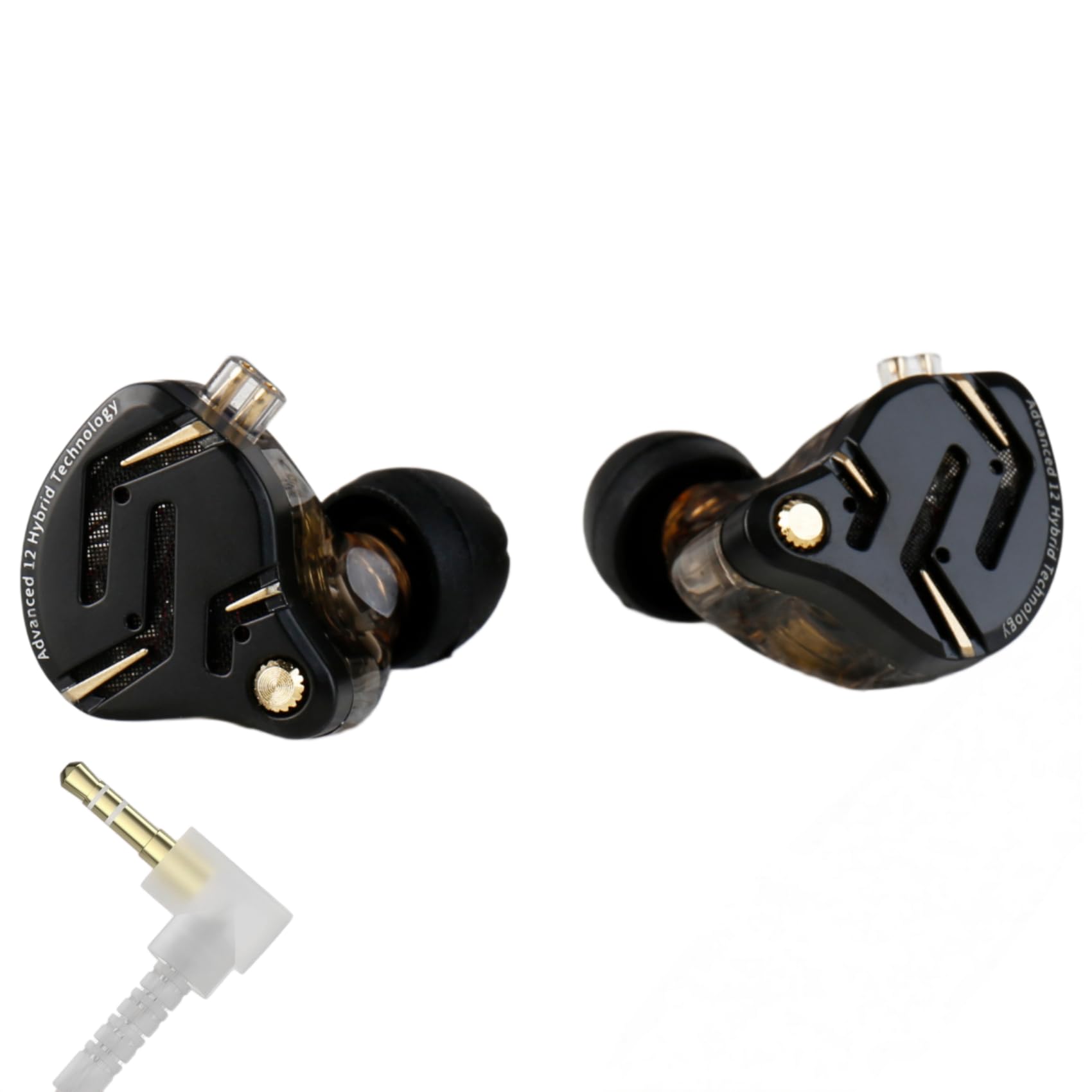
The ZS12 PRO 2 crams six drivers per side—four 31736 ultra-high-frequency BAs, one 30019 mid-high BA, and a 10mm dynamic driver—all managed by a built-in electronic crossover board. That crossover is the star here: it prevents the BA and DD from fighting each other, delivering clean treble extension without sibilance and a sub-bass that hits tight rather than flabby. Reviewers consistently compare its detail retrieval to IEMs costing three times as much.
The metal faceplate and resin shell feel premium, and the over-ear design stays locked during long sessions. On the downside, the stock cable tangles easily, and the tuning out of the box leans slightly V-shaped—bass and treble forward, with a slight mid scoop. Using the onboard tuning switch to adjust helps, but some listeners may still want an EQ profile for pure neutral monitoring.
For gamers who also listen to music, this hybrid is a Swiss Army knife. Footstep articulation is superb thanks to the BA drivers grabbing high-frequency transients, while the dynamic driver keeps explosions weighty. If you want one pair that does both gaming and critical listening without compromise, this is the strongest contender in the mid-range.
Why it’s great
- Six-driver hybrid with excellent separation
- Electronic crossover minimizes driver bleed
- Comfortable for multi-hour sessions
Good to know
- Cable tangles more than rivals
- V-shaped tuning may need EQ
- Bulky shells for smaller ears
3. KZ ZS10 PRO 2

The ZS10 PRO 2 upgrades the classic ZS10 formula with a 10mm super-linear dynamic driver and dual 31736 BA drivers, plus a four-level tuning switch that lets you dial in everything from warm neutral to boosted bass. That switch is genuinely useful for gamers who want one setting for footsteps in CS2 and another for cinematic single-player titles. The three-way crossover circuit ensures each driver stays in its lane, keeping vocals clear even when the sub-bass is cranked.
Build quality is solid—metal faceplate with a resin back—and the silver-plated cable is a step up from the basic cords found on entry-level KZs. However, the stock ear tips are widely criticized for poor comfort and a chemical smell; swapping to memory foam is almost mandatory. Some users also note that enabling all four tuning switches introduces minor distortion at high volumes.
If you like to tweak your sound signature on the fly without EQ software, this is the most versatile option here. The tuning switch gives you four distinct personalities, and the driver configuration ensures each one sounds coherent. Just plan to replace the tips immediately for the best experience.
Why it’s great
- Four tuning profiles without EQ
- Crisp high-frequency detail
- Good build with metal faceplate
Good to know
- Stock ear tips are uncomfortable
- Distortion possible at max switch settings
- Bulky housing may not fit all ears
4. CCA C12

The CCA C12 stuffs five balanced armatures and one dynamic driver per side into a zinc alloy shell, delivering a soundstage that touring musicians compare favorably to -plus customs. That is not hyperbole—reviewers who use these on stage and in the studio praise the C12 for its clarity, depth, and detailed layering. The bass is punchy without bleeding into the mids, and the treble stays smooth rather than aggressive.
Achieving that sound requires a perfect seal. The stock silicone ear tips are hit-or-miss, and many users report the metallic timbre disappears once you switch to memory foam. The cable lacks a sliding cinch, which can make routing over the ear less tidy, and the 3.5mm plug is straight rather than angled. Still, the detachable 0.78mm 2-pin design means you can upgrade the cable easily.
For gamers who also produce music or want a studio-grade reference, the C12 punches absurdly high. Its imaging accuracy for competitive shooters is excellent, and the all-metal build inspires confidence. The catch is that fit is more finicky than with other hybrids on this list—if you cannot get a good seal, you miss the magic entirely.
Why it’s great
- Studio-grade detail and separation
- Metal shell feels durable
- Detachable cable for easy upgrades
Good to know
- Sound quality depends on perfect seal
- Stock cable lacks cinch
- Straight plug can stress phone jacks
5. KZ ZST PRO X
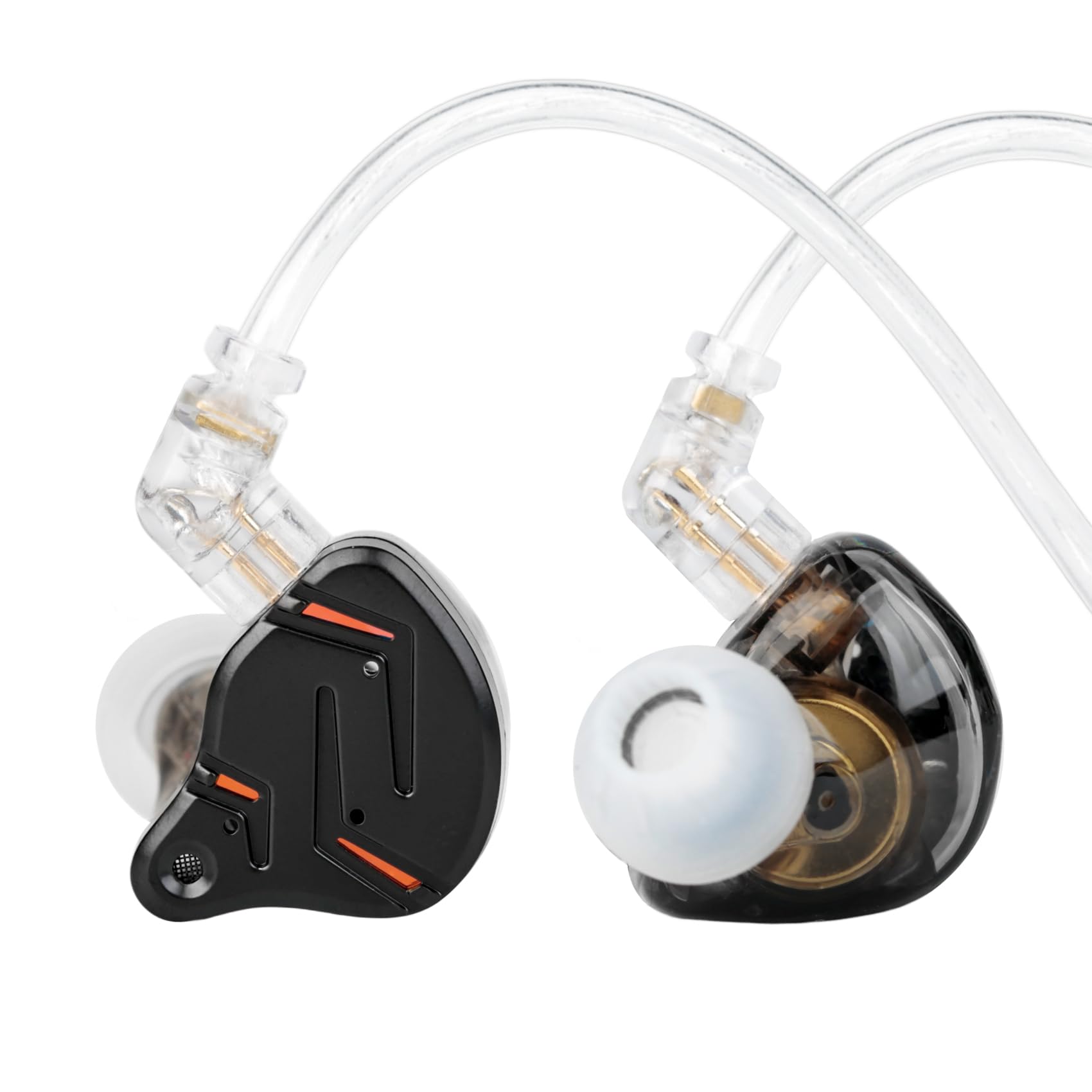
The ZST PRO X uses a single 30019 balanced armature paired with a super-linear dynamic driver to hit a frequency range of 20Hz to 40kHz. The BA handles mid-to-high frequencies—where vocal cues and footsteps live—while the DD focuses on bass. The result is an IEM that punches above its weight for FPS gaming, with reviewers specifically calling out improved audio in titles like Valorant and CS2.
Build is a mix of metal faceplate and polycarbonate shell, keeping weight low. The braided cable is durable, though some users found it slightly short for desktop setups. Noise isolation is decent with the stock tips, but swapping to foam eartips dramatically improves the seal and bass response. The cable is detachable via 2-pin, so longevity is better than budget headsets with fixed cables.
For under thirty dollars, this is the least expensive hybrid on the list that still delivers genuine competitive advantage. The imaging is not as surgical as the ZS12 PRO 2, but the price-to-performance ratio is outstanding. If you are on a tight budget but want hybrid driver benefits, this is your entry point.
Why it’s great
- Hybrid drivers at entry-level price
- Lightweight and comfortable for long sessions
- Durable braided cable
Good to know
- Short cable for desktop setups
- Stock tips reduce isolation
- Not as detailed as higher-tier hybrids
6. 7Hz x Crinacle Zero:2

The Zero:2 is the direct successor to the legendary Salnotes Zero, tuned by Crinacle with an extra 3dB of bass compared to the original. That addition fixes the biggest complaint about the first generation—the bass being too polite—while retaining the neutral midrange that made the Zero a benchmark. The 10mm dual-cavity dynamic driver uses a PU+metal composite diaphragm for fast transient response, crucial for hearing the start of a gunshot.
The included oxygen-free copper cable with silver plating is a nice upgrade, but the stock silicone ear tips are thin and prone to losing seal over time. Several reviewers noted the right eartip falling off after months of use, and replacement tips with a 4.5mm bore are not easy to find. The cable itself also developed crackly connections in some units after about nine months.
For pure tonal balance at a bargain price, the Zero:2 is still the reference. The imaging is good enough for competitive gaming, though it lacks the driver separation of hybrids. If you value accurate, natural sound over boosted bass and can budget for memory foam tips, this is the safest bet in the budget tier.
Why it’s great
- Benchmark neutral tuning with added bass
- Fast transient response from dual-cavity driver
- Silver-plated cable at this price is rare
Good to know
- Stock ear tips degrade over time
- Cable QC issues reported after months
- Lacks sub-bass below 60Hz
7. KZ Castor Pro
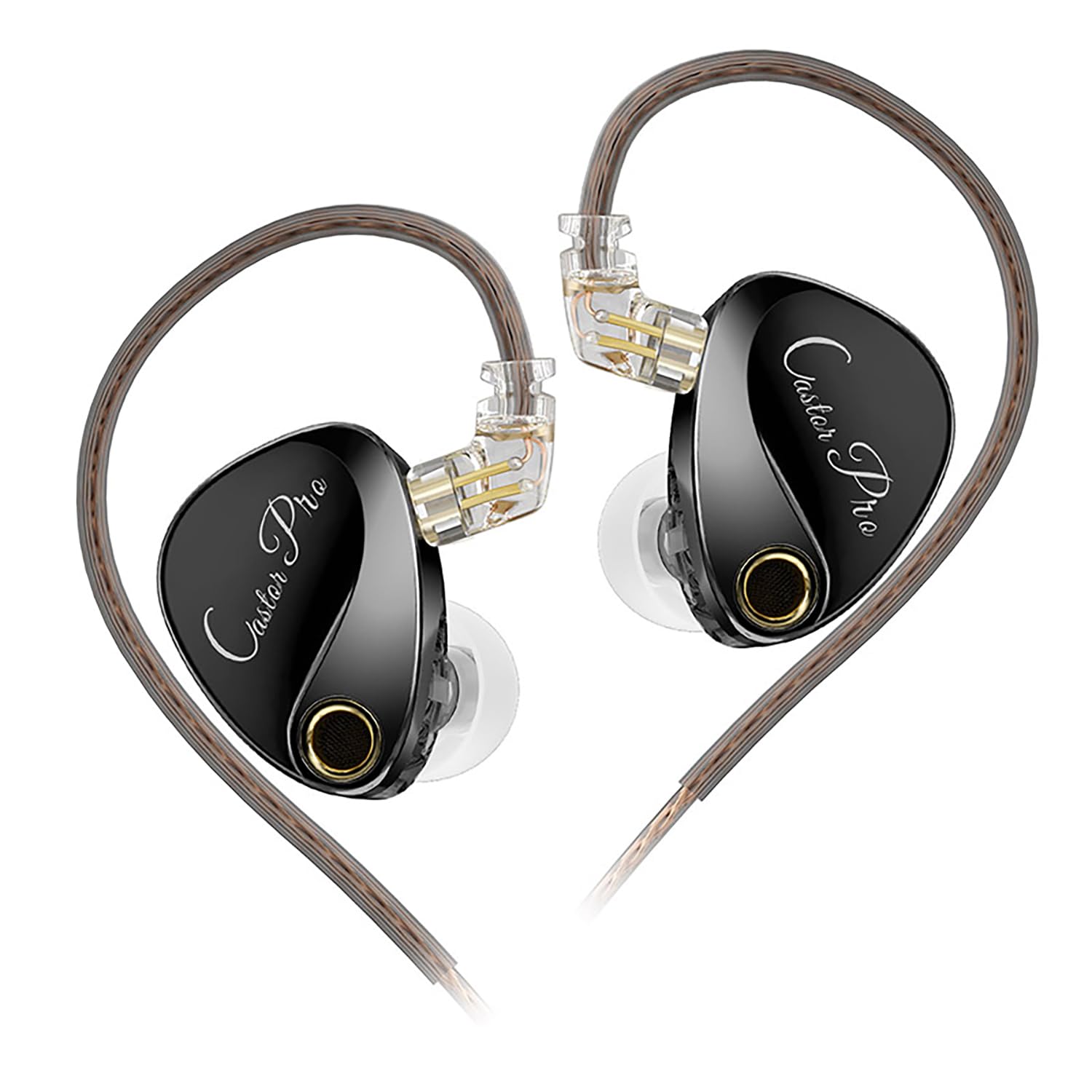
The Castor Pro uses two 10mm dynamic drivers—one dedicated to mid-high frequencies, the other to low frequencies—paired with four physical tuning switches that offer 16 distinct sound profiles. Bass lovers can crank the low-end switches for thunderous sub-bass without distorting, thanks to the independent bass driver. The soundstage is wide and the treble stays sibilance-free, a rarity in dual-DD budget IEMs.
The deal breaker for many is the stock ear tips: the package includes only S and L sizes, with no medium. That odd omission forces a tip purchase immediately. The shell also protrudes more than average, and some users found the comfort merely acceptable even with aftermarket tips. The detachable 2-pin cable is standard, so replacement is easy.
If your priority is bass impact for immersive single-player games or cinematic trailers, the Castor Pro delivers a visceral low-end that no single-DD budget IEM can match. The tuning switches let you tame the bass for competitive play, but this is first and foremost a fun, bass-forward set. Budget for foam tips and you will be rewarded.
Why it’s great
- 16 tuning options for custom sound
- Deep, controlled bass without distortion
- No sibilance in treble region
Good to know
- No medium ear tips included
- Shell protrudes, comfort is average
- Requires tip upgrade for best seal
FAQ
Do budget IEMs really outperform gaming headsets for footstep audio?
Do I need a DAC/amp for budget IEMs when gaming on PC?
Final Thoughts: The Verdict
For most users, the budget iems for gaming winner is the TRUTHEAR x Crinacle Zero:BLUE2 because its dual-driver imaging, included impedance adapter, and wide soundstage deliver the best competitive advantage right out of the box. If you want maximum driver count and surgical detail, grab the KZ ZS12 PRO 2. And for a bass-forward experience that makes single-player games thump, nothing beats the KZ Castor Pro with aftermarket tips.