
Our readers keep the lights on and my morning glass full of iced black tea. As an Amazon Associate, I earn from qualifying purchases.
Specs are compiled from manufacturer listings and verified buyer reviews and can change over time — please confirm the key details on the product page before buying.
You want that clean, laser-like slice through a tomato without paying boutique prices. The best budget picks in this space hit a 62 HRC hardness (a measure of steel toughness on the Rockwell scale) and hold an edge for weeks. This guide breaks down nine forged knives that deliver real Japanese-style performance for everyday kitchens, with the honest trade-offs of each.
I’m Min — the founder and writer behind Gadgets Feed. This guide is built by comparing the manufacturers’ published specifications and the patterns across verified customer reviews, so you get each pick’s real strengths and trade-offs instead of marketing spin.
You will learn which steel types, handle materials, and blade geometries actually matter, and how to match them to your cooking habits. This is the practical path to finding the best budget japanese chef knife for your kitchen without overpaying for a name.
Our Picks at a Glance


How To Choose The Best Budget Japanese Chef Knife
Focus on the steel, the grind, and the handle — those three decide whether a cheap knife feels like a bargain or a frustration. A high Rockwell hardness means the blade stays sharp longer, but it also means the steel is more brittle and can chip if you abuse it.
Steel Core and Hardness
To get a blade that stays sharp without rusting, look for steel names like AUS-8, 440C, or 10Cr15MoV. A hardness rating of 58-62 HRC (a scale measuring how hard the steel is) is the balance — sharp enough for precise cuts, yet tough enough for everyday chopping.
Blade Profile and Geometry
A gyuto profile (the Japanese version of a chef’s knife) with a thin blade and a gentle curve suits rocking, slicing, and mincing. A 12-15 degree edge angle per side gives that razor-sharp feel; thinner angles cut better but need more careful handling.
Handle Material and Balance
Pakkawood, rosewood, and G10 fiberglass all offer a secure grip, but they feel different in the hand. A full-tang construction (the metal runs the entire length of the handle) adds heft and balance, which reduces wrist fatigue during long prep sessions.
Quick Comparison
| Model | Best For | Hardness | Blade Length | Handle Material | Amazon |
|---|---|---|---|---|---|
| SHAN ZU Damascus 8″★ Best Overall | Overall Value & Performance | 62 HRC | 8 inches | G10 Fiberglass | Amazon |
| kanngou Black Forged 8.27″Pro Pick | Pro-Grade Feel on a Budget | HRC 59±2 | 8.27 inches | Pakkawood | Amazon |
| KEEMAKE Rosewood GyutoBest Value | Beginner-Friendly Sharpness | HRC 58 | 8 inches | Rosewood | Amazon |
| SAMCOOK Damascus 8″ | Balanced All-Rounder | HRC 60±2 | 8 inches | Blue Resin Wood | Amazon |
| kanngou AUS-8 Gyuto | Low-Maintenance Daily Use | HRC 59±2 | 8.27 inches | Pakkawood | Amazon |
| HOSHANHO Gyuto | Craftsmanship & Quality | Not Specified | 8 inches | Rosewood | Amazon |
| Atumuryou VG10 Damascus | Premium Edge Retention | 62 HRC | 8 inches | Stabilized Wood & Resin | Amazon |
| kanngou WA Series Black Forged | Traditional Look & Weight | HRC 59±2 | 8.27 inches | Ebony & Red Sandalwood | Amazon |
| SHAN ZU 3-Piece Set | Versatility on a Budget | 62 HRC | 8 inches | Pakkawood | Amazon |
In‑Depth Reviews
1. SHAN ZU Damascus Chef Knife 8 inch
Our pick — over 4.5★ from 650+ verified ratings; the strongest balance of quality and price.
The Damascus showpiece that out-cuts far pricier knives with a 62 HRC core.
The 62 HRC hardness is 7% harder than the kanngou forged blade below, so the edge stays sharp far longer between honings. Buyers report it arrives razor-sharp from the start, with one noting it “cuts like a knife.” The 15° V-shaped cutting edges on both sides keep that performance going through whole carrots and dense vegetables.
The 67-layer Damascus construction isn’t just for looks. That pattern comes from stacking and folding carbon steel sheets repeatedly, and it gives the blade genuine corrosion resistance and toughness alongside the beautiful finish. The frosted G10 fiberglass handle is stronger than wood and offers a secure grip, though the balance sits at the bolster and feels slightly back-heavy to some hands.
The honest trade-offs are a slight food-sticking tendency and a handle that some find less ergonomic than expected. The gold rivet can flake over time, and a few boxes arrive with shipping dings. That said, the edge retention and durability have been validated beyond the kitchen — A blacksmith’s stress tests confirmed it holds up, and owners mention it passed scrutiny that cheaper knives fail.
Why It Wins the Kitchen
- Sharpness is the top praise, with well over 30 owners singling out the out-of-box edge
- Quality construction that buyers compare to knives costing several times more
- 24-month warranty backs the durable 67-layer build
What to Handle With Care
- Food can stick to the blade during slicing
- Balance is slightly back-heavy, and the handle isn’t for every grip
- Gold rivet flakes and some boxes arrive dinged
Reach for this if: you want a single knife that performs like a much pricier blade and looks stunning on the counter.
Look elsewhere if: you need a feather-light blade or prefer a handle with a more contoured ergonomic shape.
2. kanngou Black Forged Kiritsuke 8.27 Inch
A professional chef’s sleeper hit that holds its own against far more expensive blades.
Working chefs give this knife its strongest endorsement. Pros who own several high-end knives say it’s “on par with more expensive knives in my collection” — at a fraction of the cost. The AUS-8 Japanese alloy steel core hits HRC 59±2, which gives a durable edge that owners say maintains itself well after the initial out-of-box sharpness fades.
The Kurouchi Tsuchime process — a traditional black-forged finish — does double duty. It creates a distinctive, rugged blackened look while the hammered texture reduces friction, so food releases more easily during cuts. The 8.27-inch blade length gives you solid reach for slicing meat or filleting fish, and the full-tang pakkawood handle provides a comfortable, non-slip grip that minimizes fatigue.
The one consistent note is that this is an all-purpose knife, not a specialist. It excels at slicing, mincing, and dicing fruits, vegetables, and meat, and can even handle sushi and sashimi work. You should avoid hard foods with it, and the included scabbard case makes it a genuinely gift-worthy package for someone who cooks often.
Pro’s Verdict: The sharpness and quality are the most-praised traits here, with the forged appearance and balance close behind. For a working chef’s daily beater that spares the expensive collection, this is the pick.
The Fine Print: It’s not a laser-thin specialty blade — treat it as a rugged everyday workhorse, not a delicate sashimi tool.
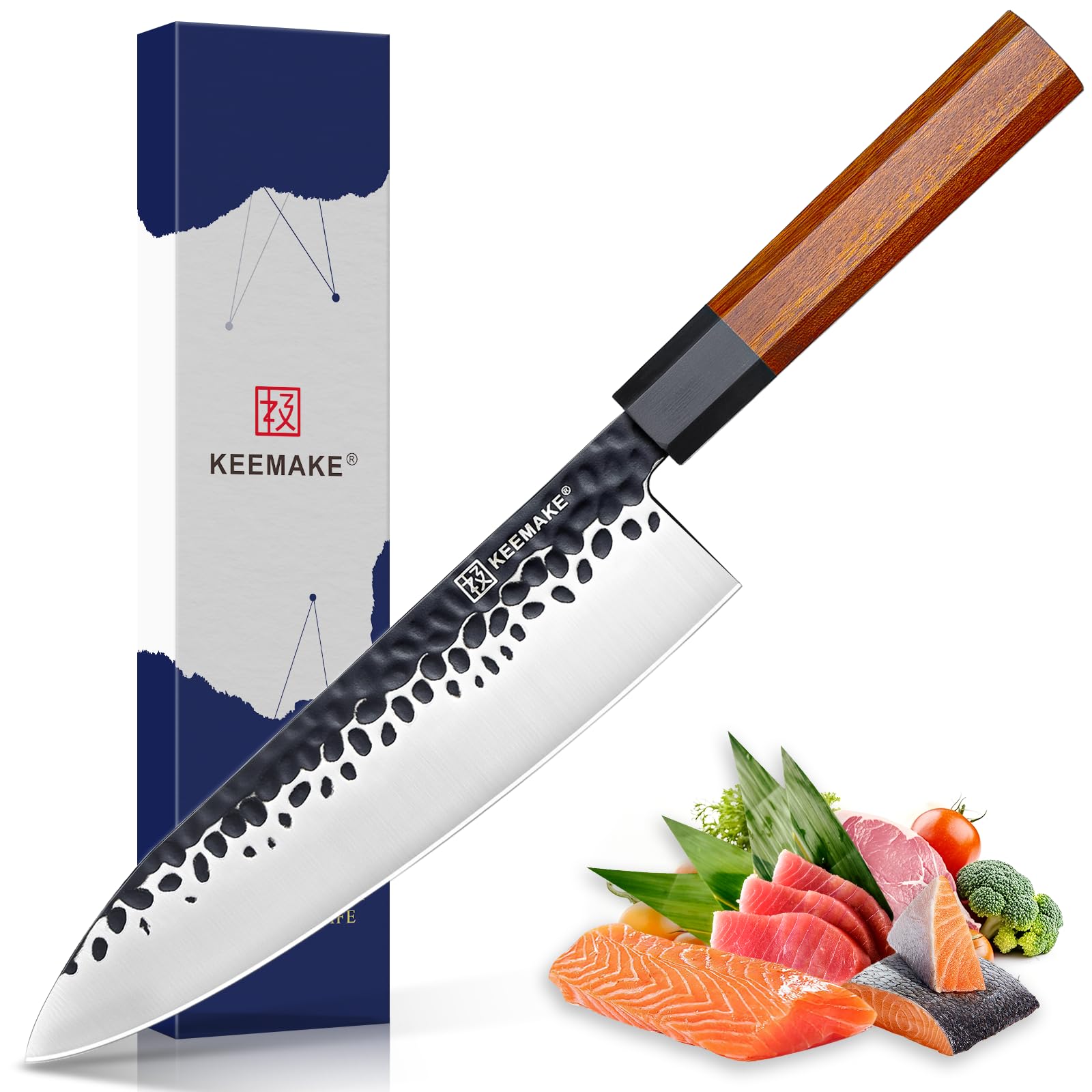
3. KEEMAKE 8 Inch Gyuto with Rosewood Handle
The confidence-building first “real” knife that shows you what sharp actually means.
This is the knife that makes beginners realize their old blades were the problem. The 440C high-carbon steel is forged to a 58 HRC — softer than the SHAN ZU above, but that’s exactly why it’s more forgiving for a learning cook who might abuse a blade. The 12-15 degree per-side hand-sanded edge glides through tomato skins “without smashing them,” as customers note, which is the classic test of a genuinely sharp knife.
At 12.32 ounces with an 8-inch blade, it has a solid, reassuring heft that suits heavy chopping without feeling bulky. The hand-hammered tsuchime texture on the 2.3mm-thick blade isn’t just decorative — it helps prevent food from sticking, a feature the SHAN ZU above notably lacks. The octagonal rosewood handle fits naturally in both right and left hands and resists moisture well.
The trade-off for that approachable hardness is edge maintenance. A sushi chef using it for professional work notes it needs whetstone sharpening every other week to a month depending on use. That’s a fair rhythm for the price, and the “super sharp” verdict across the board makes it an easy recommendation for a student, a new cook, or anyone upgrading from a dull drawer of mystery knives.
Sharpness School: The thing everyone raves about is the out-of-box edge — it’s the top praise by a wide margin. It’s the knife that teaches your fingers to respect the blade.
Maintenance Reality: Plan to sharpen it on a whetstone every few weeks with heavy use — a small ritual for a knife this affordable.
4. SAMCOOK Damascus Chef Knife 8 Inch

The eye-catching blade that drops through a potato with zero pressure.
The blue resin wood handle catches your eye, but the 67-layer Damascus high-carbon stainless steel blade is what keeps you coming back. At HRC 60±2 (a hardness scale), it’s slightly softer than the SHAN ZU’s 62 HRC, yet reviewers point out the edge “will fall right through a potato without any pressure” straight from the start. The 10-15° per-side edge angle (the angle of the sharpened edge) delivers a professional-feeling cut.
Weighing just 8 ounces with an 8-inch blade, this is one of the lighter options in this lineup. That makes it agile for precise slicing and dicing, and the handle-to-blade balance keeps it comfortable even through extended prep. The anti-rust and anti-corrosion properties of the high-carbon steel mean it won’t discolor or spot with normal care.
The honest caveat is that lightness cuts both ways. Some owners find it a little too light, and there’s a noted risk of blade fracture if you push it hard against bones or frozen food. Handle it with proper maintenance and respect for what it is — a superb home-cook tool that buyers flatly say is “tough to top for the price.”
Balance Point: The sharpness and quality are the dominant praise, and the appearance earns nearly as many mentions — it’s a knife you’ll want to leave out on the counter.
Weight Warning: It’s noticeably light, which delights some and leaves others wanting more heft — test the feel before you commit.
5. kanngou AUS-8 Gyuto 8.27 Inch

The rust-proof workhorse that shrugs off sink-and-dishwasher abuse.
If you want a knife you don’t have to baby, this is the one. The AUS-8 stainless steel core at HRC 59±2 resists corrosion so well that an owner using it daily for 8 months reports it “rust-free” with nothing but occasional honing to keep the edge alive. It’s the anti-high-maintenance choice in this lineup, better for daily use than delicate high-carbon blades that demand immediate drying.
At 7.58 ounces with a slender 0.1-inch-thick blade, it’s light and nimble — comfortable for smaller hands and easy to maneuver. The 8.27-inch blade with a 15° cutting angle drops through a tomato with just its own weight. The pakkawood handle offers a secure, slip-resistant grip that shoppers say is ergonomic even during longer prep sessions.
This is the “beater” knife that owners happily abuse — surviving sink washes and dishwasher cycles that would ruin a higher-end blade. The trade-off is that a thin tip can break if you drop it, and it needs a pull-through sharpener to stay at its best. For a careless home cook or a busy family kitchen, that’s a fair bargain for a knife that just works every day.
Maintenance-Free Life: The sharpness and quality are the most-mentioned strengths, and the balance and ergonomics round out a genuinely comfortable daily tool.
Carefree Caveat: The tip is thin and can snap on a hard drop — handle it like a knife, not a hammer.
6. HOSHANHO 8 Inch Gyuto with Rosewood Handle

Sixty days of hand-forging give this blade craftsmanship you can feel in every cut.
The quality here is the most-praised aspect by a wide margin, and it starts with the build. Each knife is the result of 60 days of meticulous hand-forging, with a core of Japanese 10Cr15MoV super steel wrapped in 8 layers of corrosion-resistant composite steel. The result is a sandwich structure that buyers describe as “better quality than expected for price,” with sharpness that “maintains for weeks.”
The traditional Japanese octagonal rosewood handle is where the craftsmanship really shows. It’s designed to naturally fit the shape of your hand, and the blade-to-handle ratio is near the golden ratio — an 8.11-inch blade paired with a 6.1-inch handle. That creates a balance that makes peeling, chopping, and cutting chicken feel easy, which is exactly what buyers report.
The honest trade-off is maintenance. This is a high-carbon blade that demands care — hand-washing only, immediate drying, and occasional oiling to prevent oxidation. One owner had to grind down a rough spot near the handle, and the recurring note is that this knife rewards careful owners and punishes neglect. It’s also lightweight at 221 grams, which some find ideal and others find insubstantial.
Build Quality Wins: The craftsmanship is the top praise, with sharpness a close second — this is a knife that feels more expensive than it is.
Care Regimen: Chipping and oxidation are the stated risks with rough use — if you can’t commit to hand-washing, look elsewhere.
7. Atumuryou VG10 Damascus Chef Knife 8 Inch
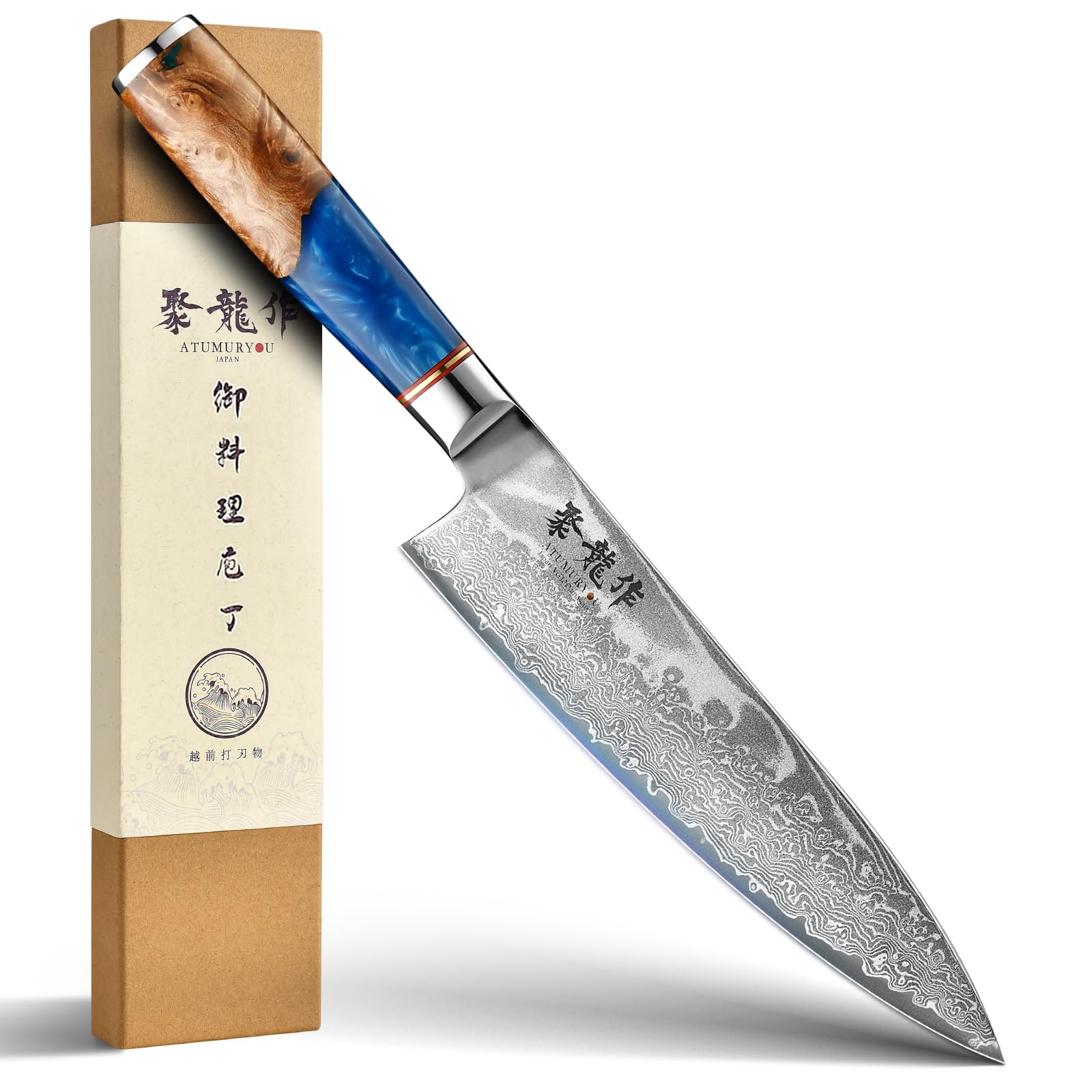
The VG-10 core that keeps a pro chef’s edge razor-sharp for six months straight.
VG-10 is a steel that serious knife enthusiasts know by name, and here it hits a 62 HRC — the same hardness as our Best Overall pick. The difference is edge retention: a working chef using this “almost everyday for work” reports it’s “still really sharp for 6 months.” That longevity makes this a genuine upgrade within the budget tier.
The 67-layer Damascus cladding is partly about the gorgeous hand-forged pattern, but it also adds real durability and rust-proofing. The stabilized wood and resin handle is ergonomic and slip-resistant, with small dimples near the hilt that give an extra-secure grip. Buyers describe it as so well-balanced it can balance on a single finger.
The “razor-sharp from the start” experience is consistent across reviews, with One owner noted it “compared favorably with my expensive German knives.” The trade-off is that the handle runs a little long for smaller hands — one buyer’s only complaint. This is the pick if you want the closest thing to a premium knife without the premium price tag, and the craftsmanship earns near-universal praise.
Premium Feel, Budget Price
- Sharpness is the top praise, with the edge holding for months of professional use
- Craftsmanship and appearance draw near-universal admiration
- Excellent balance — owners mention it balances on a single finger
Fit Notes
- Handle is a little long for smaller hands
- It’s an investment in care — hand-wash and dry to protect the VG-10 edge
Choose this if: you want VG-10 performance and months-long edge retention without crossing into true premium pricing.
Consider the fit if: you have smaller hands and prefer a handle that runs shorter.
8. kanngou WA Series Black Forged 8.27 Inch
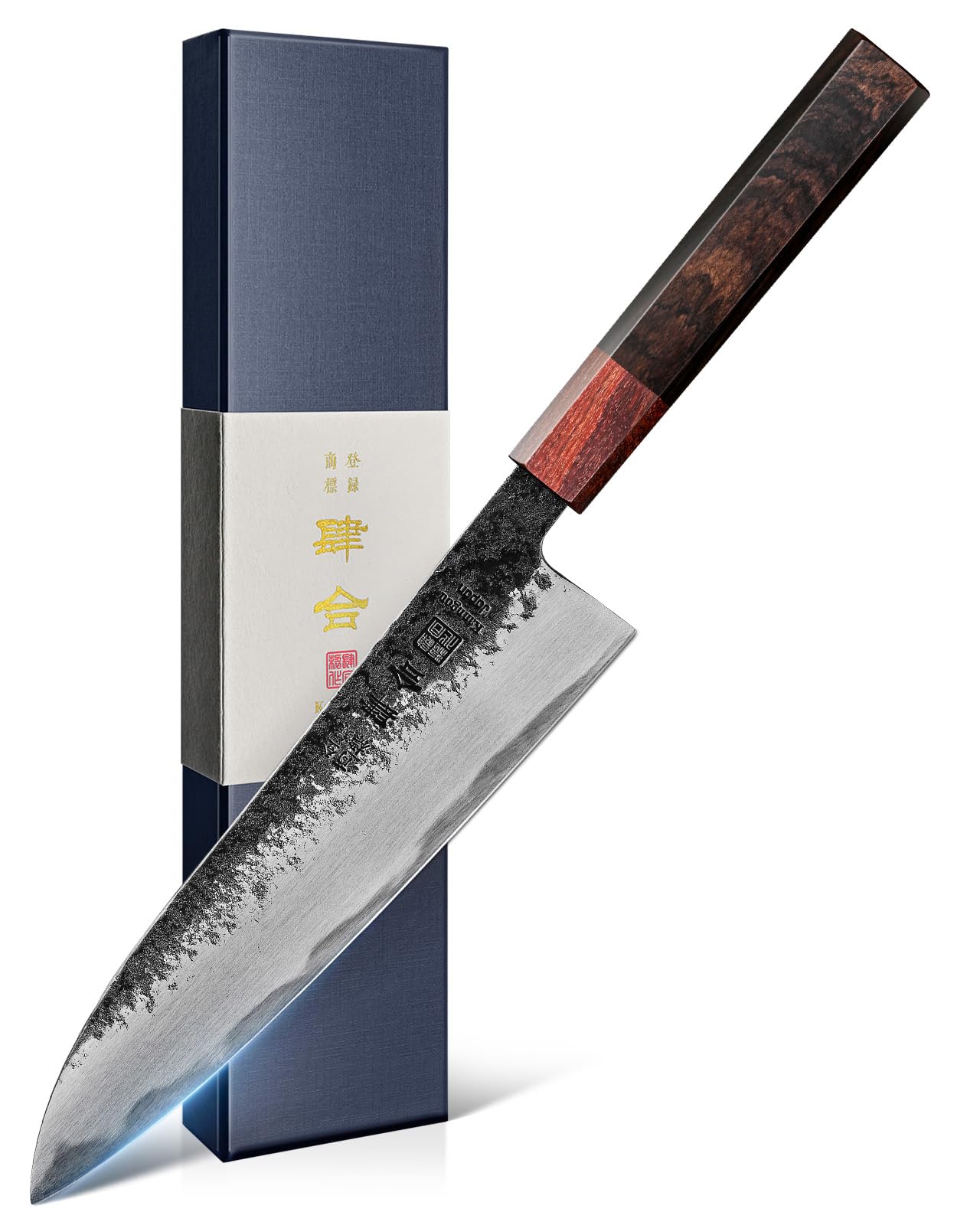
The “food saber” that feels heavier and more traditional than its price suggests.
Buyers literally call this one “a light saber for food” — and the enthusiasm is justified by the build. The Kurouchi Tsuchime black-forged finish gives it a rugged, traditional look while the hammered texture reduces friction for smoother cuts. The AUS-8 alloy steel at HRC 59±2 delivers the toughness and wear resistance that working chefs expect, and the hammered surface releases food cleanly.
The handle is where this knife stands apart. It’s crafted from a blend of premium ebony and red sandalwood — a combination that’s more luxurious than the pakkawood found on other budget knives. The single-piece forged construction and rounded spine (the back edge of the blade) make it genuinely comfortable, with one professional chef noting “they round the back of the blade and it’s really comfortable.”
The weight is the defining characteristic. At 5.92 ounces with an 8.27-inch blade, it’s heavier than most Japanese knives — which some chefs love and others find forward-balanced. One home cook notes the balance “is a little further forward in the knife than some of my others, but it’s not drastic.” This is a knife with presence, and its presentation in an elegant gift box makes it a strong contender for gifting.
Quality First: The quality is the most-praised trait here, with sharpness close behind — it’s a knife that feels like it costs more than it does.
Weighty Character: Heavier than most Japanese blades, with the balance sitting forward — try the feel if you prefer a lighter, more neutral knife.
9. SHAN ZU Japanese Knife Set 3 PCs
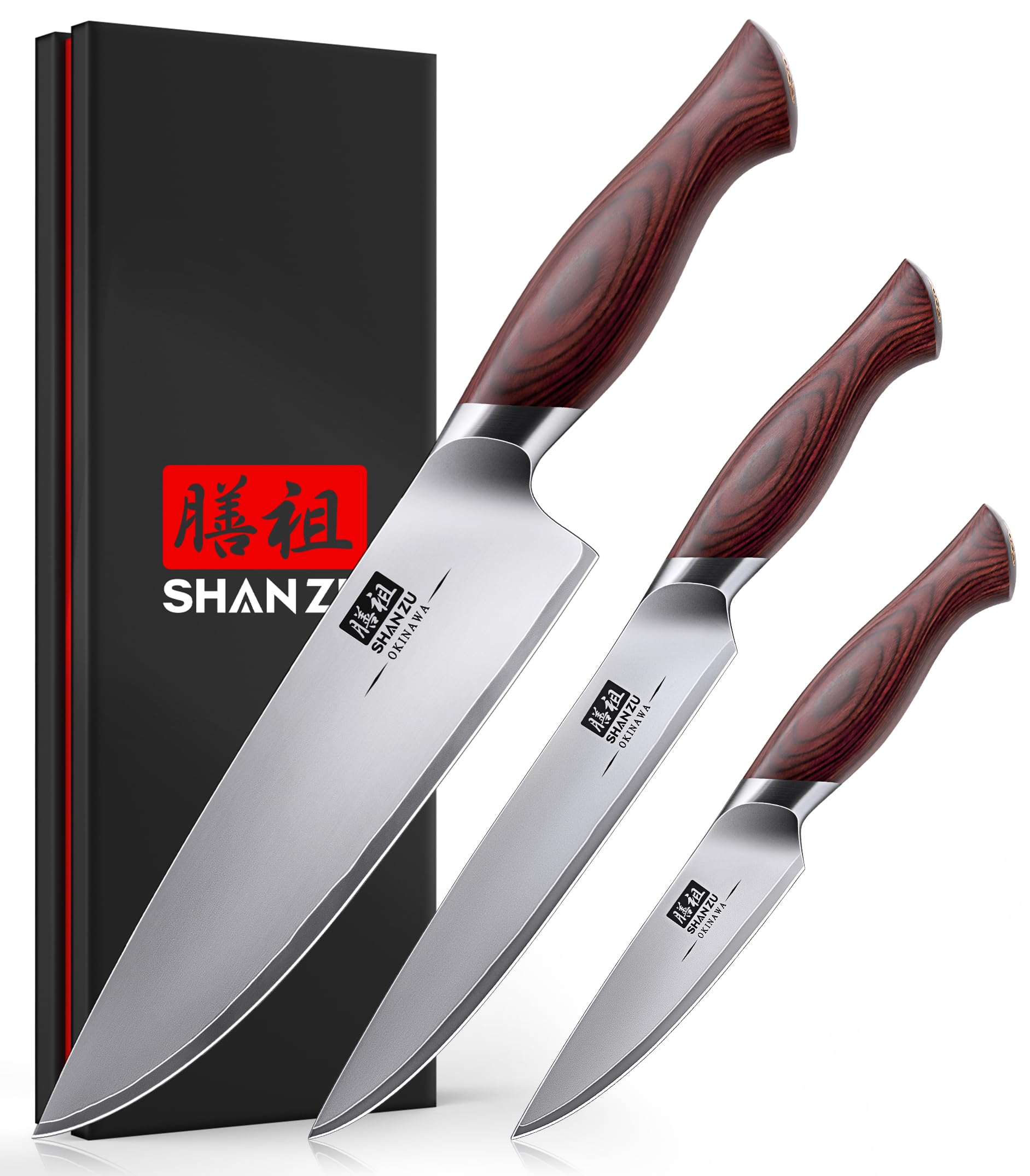
Three knives at a 62 HRC edge, ready to replace your entire dull drawer.
If you’re outfitting a first kitchen or moving into an apartment, this set delivers the most value per dollar in the lineup. All three knives — chef’s, paring, and utility — share the same Japanese 10Cr15Mov stainless steel forged to an impressive 62 HRC. That’s the same hardness as our Best Overall single knife, but now it covers every task from mincing garlic to trimming strawberries.
The 12° per-side grind is the sharpest in this comparison, and buyers confirm the edge is genuinely dangerous. One owner “had to buy a pair of protective gloves because I kept slicing my fingers because these knives are so sharp.” Even better, the edges hold — a buyer using them daily reports they “hold edge well with daily kitchen work” and stay “relatively sharp” after months.
The frosted matte finish resists corrosion and moisture, and the smooth pakkawood handles fit naturally in the hand with a secure grip even when wet. The honest trade-off is the classic one for Japanese steel at this hardness: it’s brittle and “does not stand up to abuse,” as owners put it. No bones, no twisting, no dishwasher — the care instructions matter here. And while the balance took one buyer time to adjust to, they now love them.
Set and Forget: The sharpness is the top praise, and the value is right behind it — One buyer calls it “almost as good as my Global knives at a fraction of the cost.”
Handle With Care: At 62 HRC, this steel chips if abused — treat it as a precision tool, not a beater.
Understanding the Specs
Rockwell Hardness (HRC)
This number tells you how hard the steel is. A higher HRC — like 62 — means the blade stays sharp longer but is more brittle and can chip if you hit bone. A lower HRC — like 58 — is softer, more forgiving, and easier to sharpen, at the cost of needing more frequent maintenance. For most home cooks, 58-62 HRC is the ideal range.
Damascus Layering
Damascus steel is made by stacking and folding multiple layers of carbon steel, creating that distinctive wavy pattern. Beyond looks, the layering genuinely improves corrosion resistance and toughness. A 67-layer blade is more durable than a 5-layer one, though the core steel — like VG-10 or 10Cr15MoV — matters more for actual cutting performance.
FAQ
What does HRC mean on a Japanese chef knife?
Is a higher HRC always better?
What is the difference between a gyuto and a kiritsuke knife?
Will a Damascus pattern wear off over time?
How do I care for a high-carbon Japanese knife?
Can I use my Japanese knife on a glass cutting board?
What is full tang construction?
How often do I need to sharpen a budget Japanese knife?
Is a 3-piece knife set worth it over a single chef’s knife?
Final Thoughts: The Verdict
Across the board, the budget japanese chef knife winner is the SHAN ZU Damascus 8-Inch because it pairs a 62 HRC core with genuine 67-layer Damascus construction and a 24-month warranty — the crowd favorite at 4.7 stars. If you want the rust-proof, low-maintenance daily driver that survives a busy family kitchen, grab the kanngou AUS-8 Gyuto. And for outfitting a first kitchen on the tightest budget, the SHAN ZU 3-Piece Set delivers three sharp blades at a 62 HRC edge for less than most single premium knives.
How We Picked
We do not accept paid placement. Every pick is matched to a real buyer and a real use-case; we do not hands-on test units.
Sources & Methodology
Specifications: manufacturer listings and product documentation. Review insights: verified customer reviews, as of August 2026. Pricing: not shown on this page (it changes often); check the current price via the retailer link.
As an Amazon Associate, Gadgets Feed earns from qualifying purchases. This does not affect which products we feature.