
You don’t need to spend thousands to feel the glassy lake slide under your hull at dawn. The real challenge is finding a craft that doesn’t track like a grocery cart or feel like a pool toy when the wind picks up. Most entry-level kayaks hide weak seams, unstable hulls, and seats that fold into torture devices after twenty minutes—problems that turn a peaceful float into a frustrating workout.
I’m Min — the co-founder and writer behind Gadgets Feed. I’ve spent countless hours dissecting material-density charts, drop-stitch floor rigidity, hull-design geometry, and customer durability logs to separate the genuine bargains from the landfill-bound plastic tubs cluttering the market.
This guide breaks down nine hulls, from UV-stabilized rotomolded units to high-pressure drop-stitch inflatables, so you can confidently pick the best budget kayak that matches your real water ambitions without burning cash on a first-season regret.
How To Choose The Best Budget Kayak
Spending less shouldn’t mean taking on water. The difference between a usable budget kayak and a frustrating one comes down to four core decisions: material type, hull shape, cockpit layout, and included kit quality. Skip any of these considerations and you risk buying something that feels flimsy, paddles badly, or breaks within a season.
Material: HDPE vs. Inflatable Drop-Stitch
Rotomolded high-density polyethylene (HDPE) hulls, like the ones used by Pelican and Emotion, offer unmatched impact resistance and UV stability. They’re heavy (36-45 lbs) and require roof straps or a pickup bed. Inflatable kayaks—specifically those with drop-stitch floors—trade weight for convenience: most pack into a duffel and weigh under 30 lbs. But their PVC or Tarpaulin surfaces demand careful handling around sharp rocks and oyster beds. If you’ll mostly paddle sandy-bottom lakes, inflatables deliver huge versatility; for river gravel and rocky launches, HDPE is the safer bet.
Hull Geometry: Tracking vs. Stability
Budget kayaks often use wide, flat hulls (26-32 inches) to maximize primary stability—the feeling that the boat won’t tip the second you shift weight. The tradeoff is tracking: wide boats catch more wind and require constant paddle correction to stay straight. A removable skeg or deeper V-chine helps. Models like the Intex Excursion Pro K2 and the Pelican Argo 100X use twin-arched or V-shaped chines to balance both. For first-time buyers, stability should win—you can compensate for poor tracking with technique, but you can’t add stability to a tippy hull.
Sit-On-Top vs. Sit-Inside Cockpit
Sit-on-top kayaks are self-bailing—scupper holes drain spray and splashes instantly, making them ideal for warm-weather paddling and easy re-entry. The downside: your lower body is exposed to wind, and the cockpit feels less secure. Sit-inside hulls, common on inflatables and some HDPE models, keep your core warmer and lower the center of gravity, which can improve stability. However, they can fill with water and require a pump or bailing if you capsize. For casual lake cruising and fishing in moderate climates, a sit-on-top is more forgiving. For colder mornings or unpredictable weather, a sit-inside retains body heat better.
Seat Quality and Included Accessories
A budget kayak is only as comfortable as its seat. Many entry-level hulls ship with foam pads that slide or hard plastic shells that dig into your lower back after 40 minutes. Look for adjustable backrest height and strap-tension control. The included paddle matters too: cheap two-piece aluminum shafts bend with strong strokes. Some kits (like the Intex Excursion Pro K2) include usable 86-inch paddles, fishing rod holders, and phone mounts. Others include minimal foam blocks and a single-sided paddle that fights your stroke. Factor the cost of a quality aftermarket seat cushion and paddle into your total spend.
Quick Comparison
On smaller screens, swipe sideways to see the full table.
| Model | Category | Best For | Key Spec | Amazon |
|---|---|---|---|---|
| Intex Challenger K1 (2-Pack) | Inflatable | Budget-friendly two-buy lake set | 30-gauge vinyl, 108″L x 26″W | Amazon |
| Intex Excursion Pro K2 | Inflatable | Family tandem with gear mounts | 3-ply laminate, 400 lb capacity | Amazon |
| Emotion Spitfire Sit-On-Top | HDPE Rigid | Compact daily lake cruiser | HDPE shell, 9 ft, 45 lbs | Amazon |
| Pelican Argo 100X | HDPE Rigid | Lightweight sit-inside beginner | Ram-X, 10 ft, 36 lbs, twin-arched hull | Amazon |
| Lifetime Lotus Sit-On-Top | HDPE Rigid | Ultra stable casual recreation | HDPE, 8 ft, 39 lbs, scupper holes | Amazon |
| OCEANBROAD Sit-in Inflatable | Inflatable | Drop-stitch stability on a budget | Drop-stitch floor, 308 lb capacity | Amazon |
| Retrospec Coaster | Inflatable | Dog-friendly compact inflatable | 900D fabric, 23 lbs, 9’10” | Amazon |
| Perception Zip 9.5 | HDPE Rigid | All-around play with big storage | HDPE, 9.5 ft, 41 lbs, rear bungee lashing | Amazon |
| Oru Kayak Lake | Foldable Rigid | Ultra portable small-car transport | 5mm polypropylene, 17 lbs, origami fold | Amazon |
In‑Depth Reviews
1. Oru Kayak Lake Foldable Kayak

At just 17 pounds and folding down to a 42″ x 10″ x 18″ box, the Oru Lake solves the biggest barrier to entry-level kayaking: transport. You don’t need a roof rack, truck bed, or even a passenger seat—this origami boat fits in the trunk of a Honda Civic alongside groceries. The 5mm double-layered polypropylene panels are remarkably puncture resistant, with a flex that absorbs minor impacts without cracking. Assembly takes about three minutes once you’ve practiced the fold pattern, and the clamshell seat offers decent lower-back support for a two-hour paddle.
However, the Lake’s lightweight design cuts compromises. Without a footrest, taller paddlers (above 5’11”) struggle to brace their legs for efficient torso rotation, leading to cramping on longer trips. Tracking is average at best; the flat-bottomed hull wanders in light wind and requires constant corrective strokes. This boat is strictly for calm, protected water like small lakes and slow-moving rivers. It handles chop poorly and takes on splash through the large cockpit gap, especially when the seat isn’t fully snapped in.
Owners report mixed durability on rocky launches—the plastic skins can scratch and scuff more easily than rotomolded HDPE. But for apartment dwellers, bicycle commuters, or anyone who lacks garage storage, the Oru Lake redefines what’s possible with a budget kayak. It’s a specialized tool for a specific use case, and within that niche, it delivers unmatched portability.
Why it’s great
- Folds compact enough for small-car trunks, no roof rack needed
- Lightest option on this list at only 17 lbs
- Puncture-resistant 5mm polypropylene shell
Good to know
- No footrest—can cause leg fatigue on trips over one hour
- Poor tracking in wind above 10 mph
- Not suited for rapids or rocky river beds
2. OCEANBROAD Inflatable Sit-in Kayak (1-Person)

The OCEANBROAD sits in a sweet spot few budget inflatables hit: a genuine drop-stitch floor that delivers board-like rigidity at a mid-range price. Where cheaper boats sag under paddler weight and create a bouncy, inefficient stroke, this hull’s high-density drop-stitch core stays flat and firm, allowing you to transfer energy directly into forward momentum. The 10.5-foot length and removable directional fin improve tracking noticeably over shorter, finless inflatables. Setup with the Halkey-Roberts valves takes about eight minutes with the included hand pump.
The padded EVA seat and adjustable footrest make a real difference on longer sessions. After three hours on a lake, the seat support remains comfortable without the foam bottoming out. Three separate air chambers add a safety layer—if one is punctured, the others keep you afloat. The drain hole clears incidental spray, though it’s not fully self-bailing like a sit-on-top. Some owners report a slight glue odor when storing the deflated kayak in a hot car trunk after use.
Tracking degrades noticeably against crosswinds above 12 mph without the fin installed, and the included hand pump’s pressure gauge is not consistently accurate. For calm lakes, slow rivers, and coastal flats, this kayak rivals boats costing significantly more. It’s the most well-rounded inflatable choice for a first-time buyer who wants real performance without breaking into premium price territory.
Why it’s great
- Rigid drop-stitch floor for efficient paddling and stability
- Comfortable EVA seat with adjustable backrest and footrest
- Three-chamber safety design with removable tracking fin
Good to know
- Hand pump gauge is unreliable under high pressure
- Glue odor may develop when stored deflated in hot spaces
- Not self-bailing—requires drain hole clearing after splash entry
3. Perception Zip 9.5 Sit-On-Top Kayak
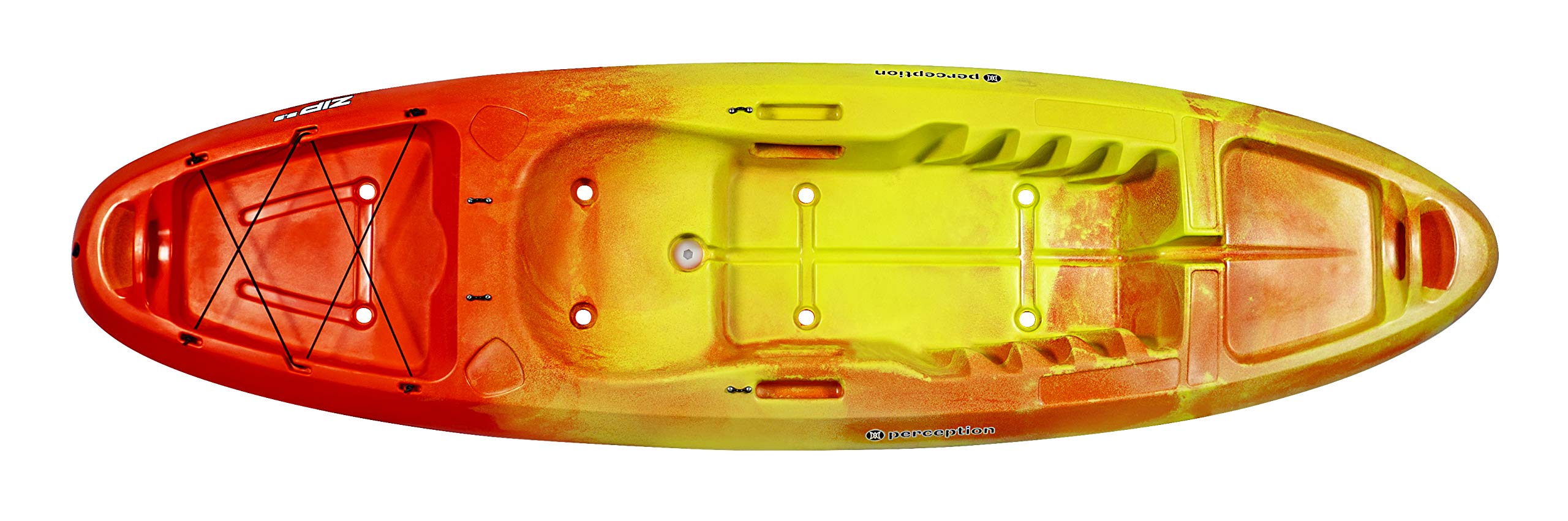
The Perception Zip 9.5 is the closest thing to an all-around budget kayak that actually performs like an enthusiast-grade boat. Its rotomolded HDPE hull is thick enough to shrug off dock scrapes and gravel launches, weighing in at a manageable 41 pounds. The 9.5-foot length and 32-inch beam deliver a stability-to-speed ratio that suits everything from casual lake fishing to short river floats. Self-draining scupper holes keep the deck dry, and the large rear bungee-lashing area swallows a cooler, dry bag, or small fishing crate with room to spare.
Unlike many budget sit-on-tops, the Zip 9.5 comes without a seat—buyers must purchase an aftermarket seat or use an old stadium cushion. This omission keeps the base price low but adds friction for anyone expecting a complete kit. The molded-in footwells work well for shorter paddlers, but tall users (over 6 feet) report their knees bumping the front deck in aggressive forward strokes. Tracking is acceptable for its length; a mild V-chine helps it hold a line better than flat-bottomed competitors.
Owners consistently highlight how stable the hull feels even with a 75-pound dog shifting weight at the bow. The built-in cup holder is a small but welcome detail. For anyone who wants a durable, American-made sit-on-top that won’t fall apart after two seasons, the Perception Zip is the most practical hard-shell choice on this list. Factor in – for a good aftermarket seat and you still land well within a comfortable spend
Why it’s great
- Rotomolded HDPE hull offers exceptional impact and UV resistance
- Self-bailing scupper holes keep cockpit dry
- Large rear storage with bungee lashing and center cup holder
Good to know
- Seat is not included—requires aftermarket purchase
- Footwells may feel cramped for paddlers over 6 feet tall
- Slower than longer touring kayaks on open water
4. Intex Excursion Pro K2 Inflatable Kayak
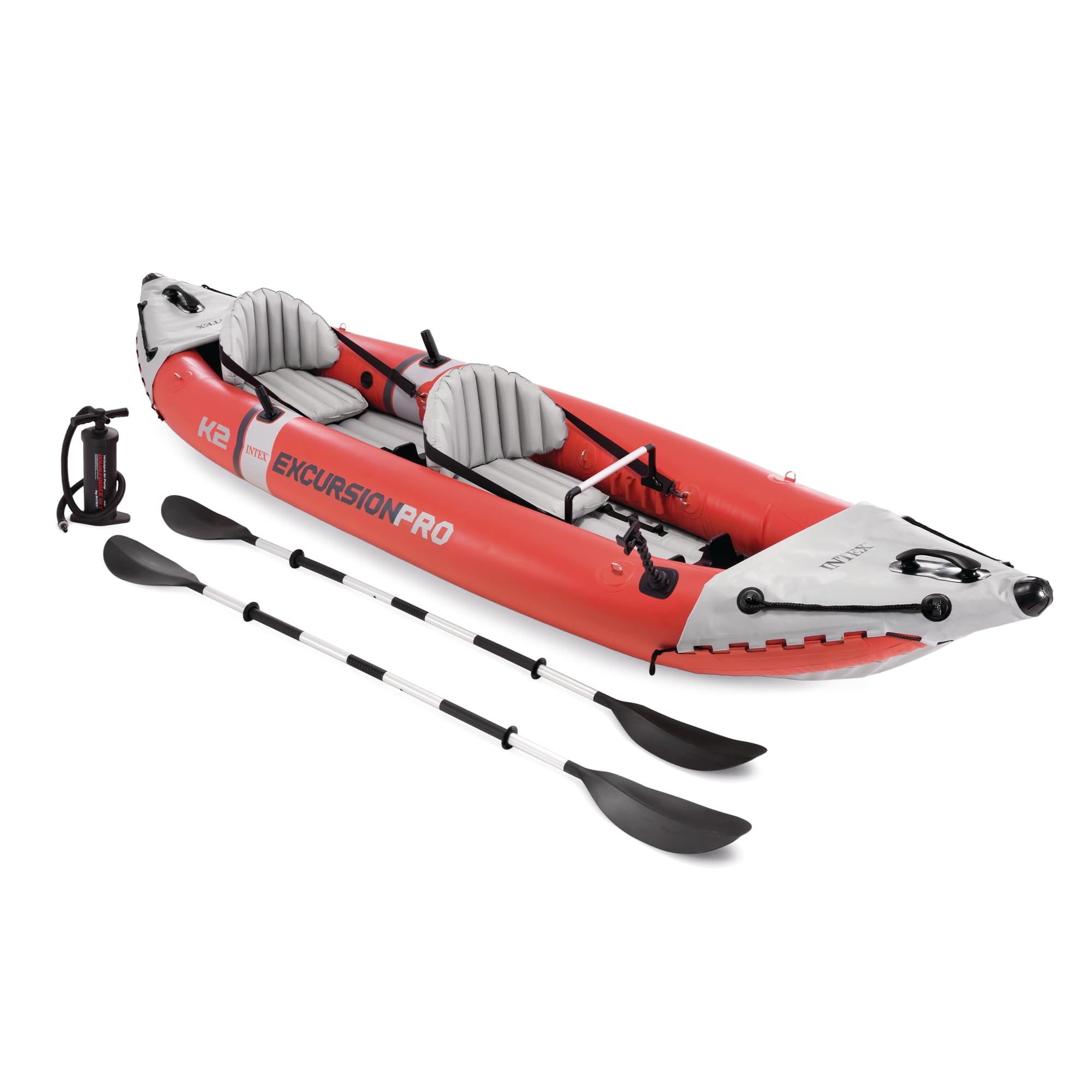
The Excursion Pro K2 is the budget inflatable that refuses to act cheap. Its 3-ply laminate PVC construction is noticeably thicker and stiffer than standard vinyl, resisting punctures from submerged branches and rocky shorelines that would shred a bargain-basement pool toy. The 12.7-foot length and 37-inch beam make it genuinely tandem-capable—two average-sized adults can paddle without clashing elbows. High-pressure inflation via the Boston valves produces a rigid hull that tracks better than any I-beam floor boat in this class.
The included accessory kit is generous: two 86-inch aluminum-shaft paddles, two detachable fishing rod holders, an adjustable GoPro/phone mount, and a high-output hand pump. The bucket seats are more supportive than most budget inflatable seats, with a raised profile that improves visibility and paddle clearance. Owners report that the boat handles Class I-II rapids without structural compromise, though the skegs tend to pop out in shallow water.
Tracking in crosswinds is mediocre with the smaller skeg installed; swapping to the longer skeg improves direction but reduces turning agility. After multiple seasons, some boats develop seam scuffs and fold marks, but no structural leaks. For a tandem inflatable that packs into a bag and still performs on moving water, the Excursion Pro K2 sets the bar for what a budget canoe-kayak hybrid should deliver.
Why it’s great
- Thick 3-ply laminate resists punctures from rocks and debris
- Complete accessory kit including rod holders and phone mount
- High-pressure inflation provides rigid, stable hull for tandem use
Good to know
- Heavy packed bag (44.7 lbs) is tiring to carry over distance
- Skegs can detach in shallow water or on hard landings
- Included paddles are functional but not durable long-term
5. Pelican Argo 100X Sit-In Kayak
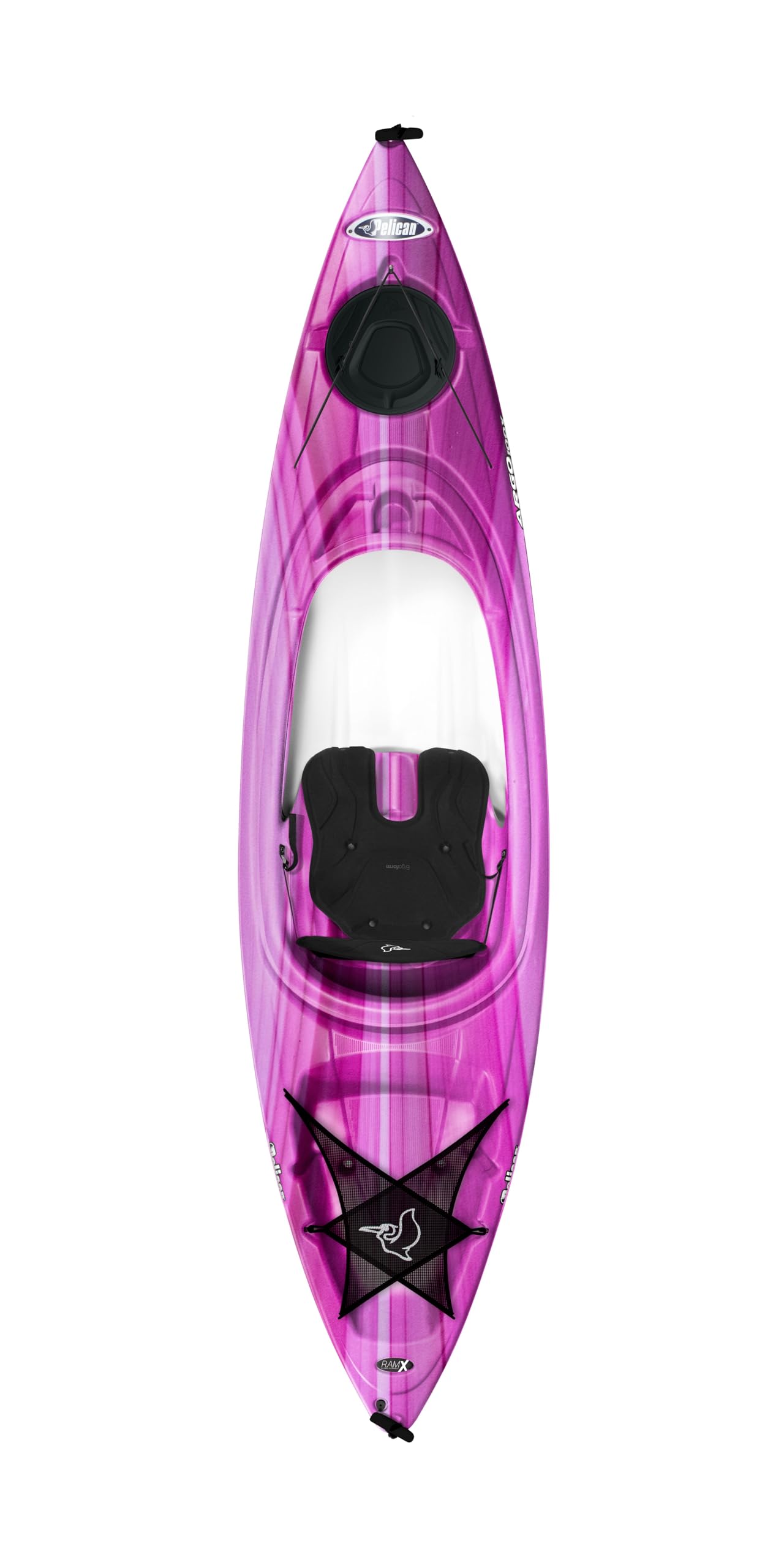
Pelican’s patented Ram-X material is the secret weapon here: a multi-layer polyethylene compound that retains the impact resistance of HDPE while shaving significant weight. At 36 pounds, the Argo 100X is the lightest rigid sit-inside kayak on this list, making it the go-to choice for anyone who loads their own boat onto roof racks or carries it down a steep shoreline. The twin-arched multi-chine hull increases water-contact surface area, delivering exceptional primary stability that keeps first-timers confident even in mild chop.
The Ergoform seating system includes an adjustable backrest and a generous foam seat cushion that reduces pressure points on hour-long paddles. Molded footrests accommodate paddlers from 5’2” to 6’2” without the need for adjustable rails. The cockpit is wide and open—easy entry and exit, though it does let in more spray than a narrower sit-inside. The rear hatch storage is adequate for a small dry bag and lunch cooler, but the hatch cover fitment is basic and can leak if not seated perfectly.
Tracking is above average for a 10-foot boat; the chine design resists yaw better than flat-bottomed competitors. Owners note that the UV-stabilized plastic holds its color and flexibility after multiple summers of direct sun exposure. The main complaint involves the hatch cover design—it’s functional but not watertight under vigorous paddling. For a lightweight, stable, sit-inside rigid kayak that won’t strain your shoulders during car-top sessions, the Pelican Argo 100X is the clear winner.
Why it’s great
- Lightest rigid hull on the list at 36 lbs for easy roof-top loading
- Ram-X material combines UV stability with high impact resistance
- Wide cockpit and Ergoform seat keep beginners comfortable
Good to know
- Rear hatch cover not fully watertight under heavy paddling
- Open cockpit admits spray in choppy conditions
- Storage capacity limited compared to sit-on-top designs
6. Retrospec Coaster Inflatable Kayak
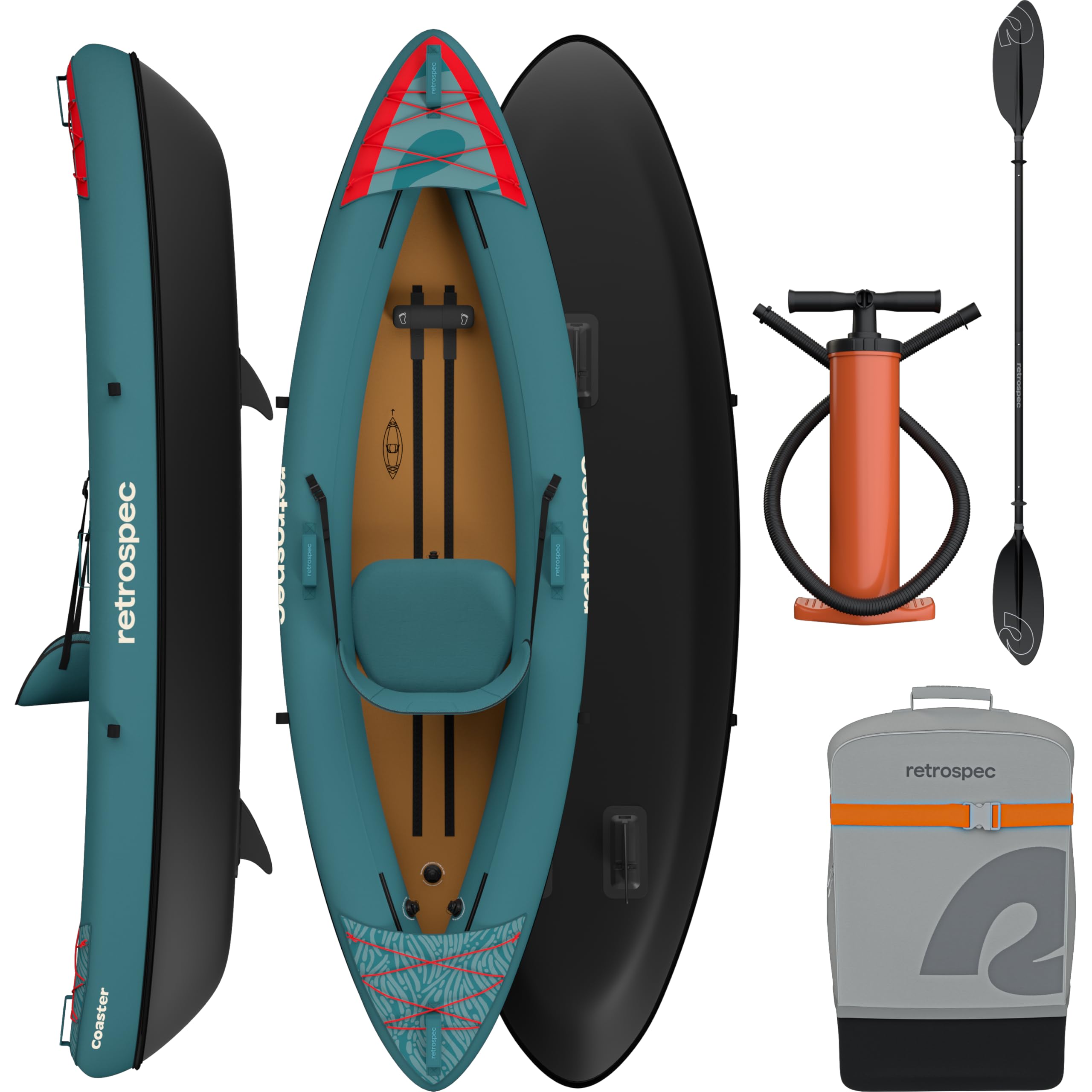
The Retrospec Coaster is built for the person who values quick setup and minimal bulk above all else. Unroll, attach two removable fins, inflate three air chambers, snap in the seat, and you’re on the water inside five minutes. The 900-denier puncture-resistant fabric on the sidewalls and the heavy-duty Tarpaulin hull bottom provide genuine abrasion resistance—this is not a pool-toy boat. At just 23 pounds in the included backpack, it’s one of the easiest inflatables to carry to a remote lake or store in a small apartment closet.
The cockpit is spacious enough for a single paddler plus a medium-sized dog, and the removable footrest helps maintain paddling posture. The single-person version inflates to 9’10” x 37”, generating impressive secondary stability—it feels planted even when leaning into a turn. However, the low-pressure inflation (about 1.5 PSI) means the hull never achieves the rock-solid rigidity of a drop-stitch floor boat. Your weight causes some hull flex, which saps forward efficiency slightly. Owners report the included paddle is short for broader-shouldered paddlers, causing water to drip onto the deck with every stroke.
Durability reports are mixed: some users report 40+ trips without leaks, while others note water accumulation inside the hull after a few uses. The seat tends to slide forward during extended sessions, requiring periodic adjustment. For calm lake paddling, flatwater cruising, and dog-friendly days, the Coaster delivers unmatched portability. Just budget for a longer paddle and a seat strap modification to dial in the ergonomics.
Why it’s great
- Ultra fast 5-minute setup with three-chamber inflation
- 900D sidewalls and Tarpaulin bottom resist punctures well
- Only 23 lbs with backpack—easiest long-distance carry on the list
Good to know
- Low 1.5 PSI inflation causes hull flex and drag
- Included paddle is too short for taller paddlers
- Seat slides forward; requires aftermarket strap adjustment
7. Emotion Spitfire Sit-On-Top Kayak
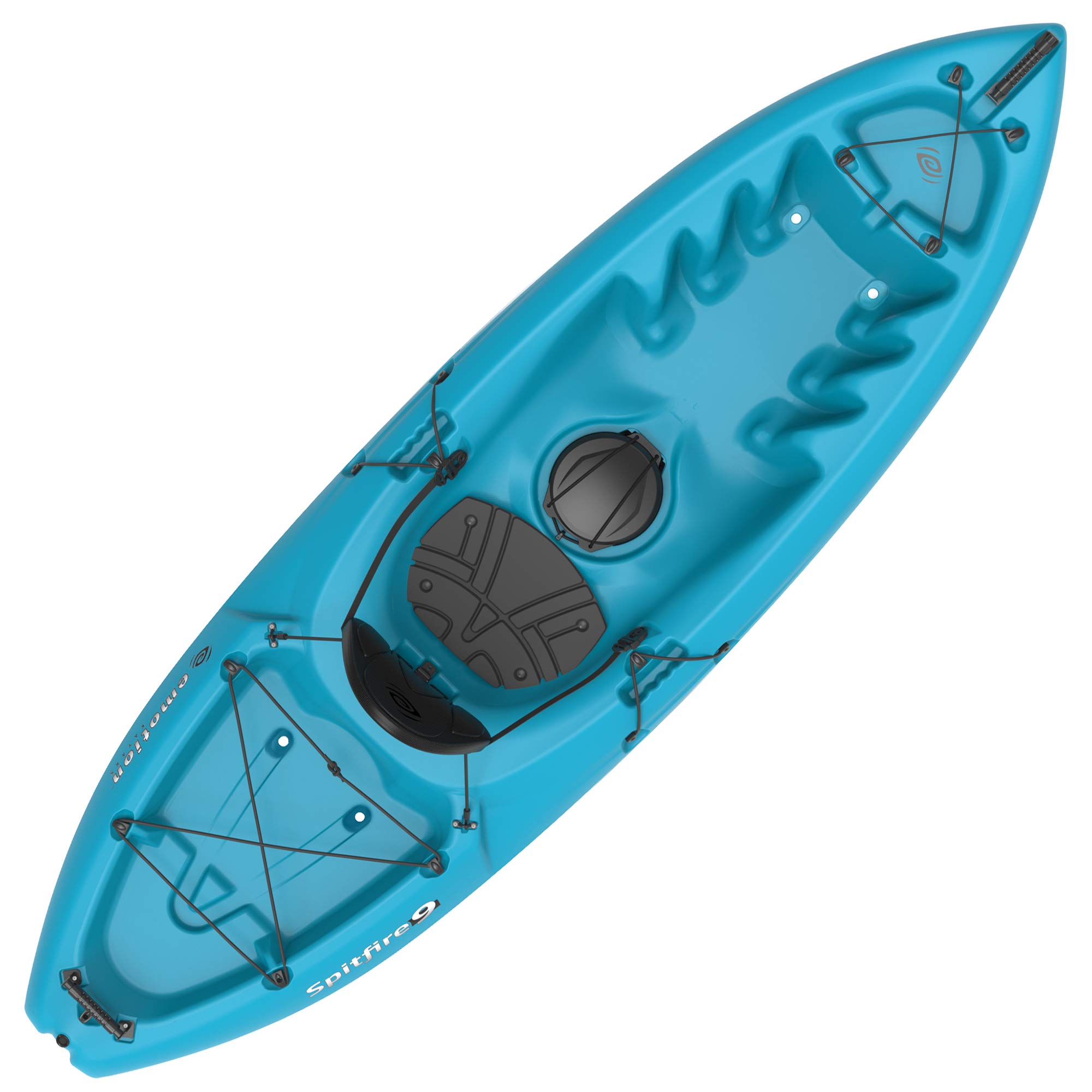
The Emotion Spitfire has been a staple of the budget kayak scene for years, and its staying power comes down to one thing: it fits inside a Honda Civic. At 9 feet long and 31 inches wide, this sit-on-top rotomolded HDPE hull slides diagonally into many sedan trunks with the seats folded. That alone makes it the default choice for apartment dwellers and first-time buyers who don’t own a roof rack or truck. The UV-protected polyethylene holds up to multiple seasons of sun exposure without significant fading or brittleness.
The Spitfire includes molded-in paddle keepers, side carry handles, and a rear tankwell with cargo net lacing. The padded CRS seat and molded footwells keep most paddlers comfortable for two-hour sessions, though larger users (over 250 lbs) report the seat foam compressing and the seat straps loosening over time. Tracking is acceptable for a 9-foot boat, but the short waterline means it requires constant course correction—you’ll work harder to hold a straight line compared to longer hulls. The self-bailing scupper holes drain quickly, keeping the deck dry after splash entry.
The main durability concern is the seat attachment system, which uses plastic clips that can snap if overtightened or exposed to cold-temperature brittleness. Some owners report the watertight front hatch leaks in submersions. For small car owners, casual lake paddlers, and anyone prioritizing storage convenience over speed, the Spitfire remains a proven workhorse. It’s not the most refined boat, but its practicality is hard to beat.
Why it’s great
- Fits inside many sedan trunks with seats folded—no rack needed
- UV-protected HDPE construction withstands years of direct sun
- Self-bailing scupper holes and rear tankwell with cargo net
Good to know
- Seat clips can snap in cold weather if overtightened
- Tracking requires constant correction on open water
- Front hatch is not fully watertight when submerged
8. Lifetime Lotus Sit-On-Top Kayak with Paddle

The Lifetime Lotus is the widest, most stable hull in this lineup, with an 8-foot length and 30-inch beam that creates a near-unsinkable platform. Its HDPE construction is UV-protected and surprisingly resistant to the hairline stress cracks that plague some thin-shell rotomolded kayaks. The included paddle (a two-piece aluminum shaft with plastic blades) is functional for flatwater cruising, though you’ll feel the flex during hard acceleration. Front and rear T-handles plus a center carry handle make solo portaging manageable even at 39 pounds.
Stability is the Lotus’s defining strength. The flat-bottomed hull and self-bailing scupper holes let you stand up to cast a fishing line or reorient a cooler without tipping. The adjustable quick-release seat back provides solid lumbar support, though the seat base is a thin foam pad that lacks cushioning for multi-hour expeditions. Multiple footrest positions accommodate different inseam lengths, but taller paddlers (over 6 feet) will find the 8-foot length cramps their leg extension on longer trips.
The biggest compromise is speed: the 8-foot waterline and wide beam produce significant drag, making the Lotus noticeably slower than any 10-foot kayak. You’ll paddle harder to cover the same distance. Owners also report that the included paddle’s blade size is undersized, reducing per-stroke efficiency. For small ponds, slow rivers, and fishing-focused days where stability trumps speed, the Lifetime Lotus delivers unbeatable confidence for nervous beginners and gear-heavy anglers.
Why it’s great
- Extremely stable platform suitable for standing and casting
- UV-protected HDPE hull with reinforced stress points
- Includes adjustable seat back and aluminum-shaft paddle
Good to know
- Short 8-foot length and wide beam create significant drag
- Thin seat foam offers limited cushioning for long sessions
- Included paddle blade is undersized for efficient power transfer
9. Intex Challenger K1 1-Person Inflatable Kayak (2-Pack)

The Intex Challenger K1 two-pack is the ultimate gateway drug for budget kayaking. Two complete one-person boats, each with an inflatable seat, backrest, aluminum-shaft paddle, high-output hand pump, carry bag, and repair kit—all for a price that rivals a single budget hull. The 30-gauge vinyl construction is thicker than discount-store pool floats but thinner than premium laminate models. For flat lakes, slow rivers, and calm bays, the material holds air reliably across a season. The Boston valves on the main hull chambers allow fast inflation with the included pump, and the secondary chamber for the seat and floor adds a layer of safety.
At 108 inches long and 26 inches wide, the cockpit is snug for larger paddlers—users over 6’3” or 220 lbs report tight legroom and limited stability. The inflatable I-beam floor provides decent rigidity but not the board-like stiffness of a drop-stitch design, so you’ll feel some hull flex during aggressive strokes. The removable skeg helps tracking, but crosswinds still push the lightweight boat around. Owners consistently praise the value, especially when splitting the two-pack with a friend or family member. Customer service ratings are high, with prompt replacement for missing or damaged parts.
The included paddle is functional for light use but bends easily against moderate currents—plan to upgrade to a stiffer shaft if you paddle regularly. The inflation time is about 10-15 minutes per kayak with the included hand pump. For the absolute lowest entry point to two-person kayaking, the Intex Challenger K1 2-Pack is unbeatable. Treat it as a seasonal recreational tool, not a long-term expedition craft, and it will deliver plenty of smiles per gallon.
Why it’s great
- Two complete kayaks at a price that beats most single-unit budget options
- 30-gauge vinyl with Boston valves for fast inflation and deflation
- Includes paddles, seats, pump, carry bags, and repair kit
Good to know
- Cockpit is snug for paddlers over 6’3” or 220 lbs
- I-beam floor lacks the rigidity of drop-stitch designs
- Included paddles are flexible and wear quickly with regular use
FAQ
Can I take a budget inflatable kayak on a Class II river?
How much does hull weight actually matter for a budget kayak?
Can I stand up in a budget sit-on-top kayak to fish or stretch?
What’s the most important accessory to upgrade on a budget kayak?
Final Thoughts: The Verdict
For most users, the best budget kayak winner is the OCEANBROAD Inflatable Sit-in Kayak because the drop-stitch floor delivers true rigid performance at an entry-level price, making it the most versatile choice for calm lakes, slow rivers, and flatwater cruising. If you want a lightweight hard-shell that you can roof-rack and forget, grab the Pelican Argo 100X (36 lbs, compact cockpit, solid tracking). And for dog-friendly ultra-portability with no car modifications needed, nothing beats the Retrospec Coaster—23 pounds, backpack-storable, and on the water in five minutes.