
Our readers keep the lights on and my morning glass full of iced black tea. As an Amazon Associate, I earn from qualifying purchases.
Specs are compiled from manufacturer listings and verified buyer reviews and can change over time — please confirm the key details on the product page before buying.
You want to photograph a coin, a flower petal, or the texture of a leaf, but your phone just won’t focus that close. A dedicated macro camera solves that — it lets you focus inches away and capture details your eyes barely see. That close-up world opens up for under one hundred dollars.
I’m Min — the founder and writer behind Gadgets Feed. This guide is built by comparing the manufacturers’ published specifications and the patterns across verified customer reviews, so you get each pick’s real strengths and trade-offs instead of marketing spin.
Whether you are documenting a collection, starting a product photography side-hustle, or just curious, this roundup of the best budget macro camera options breaks down the real-world specs and honest user experiences that separate a useful tool from a frustrating toy.
Quick Picks
- Krunia 5K Wi-Fi Digital Camera (80MP) — Best Overall
- Pedtail True 4K Digital Camera (64MP) — One-Touch Macro
- Monitech 8K Digital Camera (64MP) — Best Video Detail
- NBD 8K Digital Camera (64MP) — F1.8 Aperture
- G-Anica 5K Digital Camera (64MP) — Compact Travel
- Minolta 64MP Digital Camera — Optical Zoom
- WIKICO 4K Digital Camera (56MP) — Beginner Kit
- VJIANGER 2026 Upgrade Digital Camera (64MP) — Lowest Cost
How To Choose The Best Budget Macro Camera
A budget macro camera needs to do one thing well: focus on a subject that is very close to the lens. Everything else — resolution, zoom, battery — is secondary. Here are the three specs that decide whether you get usable close-ups or blurry disappointments.
Macro Lens or Macro Mode?
Some cameras have a dedicated “macro mode” that changes the focus range internally. Others come with a physical macro lens you screw onto the front. A physical macro lens is almost always better because it lets you get closer — a dedicated 52mm macro lens can focus from a few inches away and magnify the subject significantly. Cameras that only offer a macro mode (without a lens) still help, but the working distance stays longer and the magnification stays smaller.
Resolution vs. Real Detail
A 64MP or 80MP sensor sounds impressive, but the number matters less than how the camera processes the image. Many budget cameras use software to upscale a lower-resolution capture to a higher number. For macro work, look for a camera that records clean video at 4K or 5K — that is a better signal that the sensor itself is capturing detail, not just interpolating it. Buyers report that a camera like the 4K WIKICO delivers “sharp photos,” while a lower-resolution sensor may leave you with mushy close-ups.
Battery and Storage for Extended Shooting
Macro work often means taking many shots to get one perfect focus. A camera with two batteries (like most picks here include) is a massive advantage because you can swap and keep shooting. The typical 1500mAh battery gives about 50–90 minutes of record time, according to buyer reports. A 32GB microSD card holds many thousands of 4K photos, but buyers of the Krunia note that a 64GB card gives even more breathing room.
Quick Comparison
On smaller screens, swipe sideways to see the full table.
| Model | Best For | Max Resolution | Macro Lens | Flip Screen | Amazon |
|---|---|---|---|---|---|
| Krunia 5K Wi-Fi | Best Overall | 80MP / 5K | Yes, included | 180° | $89.99$99.99Limited time dealAmazon |
| Pedtail True 4K | One-Touch Macro | 64MP / 4K | Yes (5cm one-touch) | No | $99.99Amazon |
| Monitech 8K | Best Video Detail | 64MP / 8K | Yes, included | 180° | $169.99$179.99Amazon |
| NBD 8K | F1.8 Aperture | 64MP / 8K | Yes, 52mm | 180° | $129.99$169.99Amazon |
| G-Anica 5K | Compact Travel | 64MP / 5K | Yes, included | 180° | $189.99Amazon |
| Minolta 64MP | Optical Zoom | 64MP / 4K | Yes, macro mode | Articulating | $229.00Amazon |
| WIKICO 4K | Beginner Kit | 56MP / 4K | Yes, 52mm | 180° | Amazon |
| VJIANGER 2026 Upgrade | Lowest Cost | 64MP / — | Yes, 52mm | 180° | $89.99$119.99PrimeAmazon |
In‑Depth Reviews
1. Krunia 5K Wi-Fi Digital Camera (80MP)
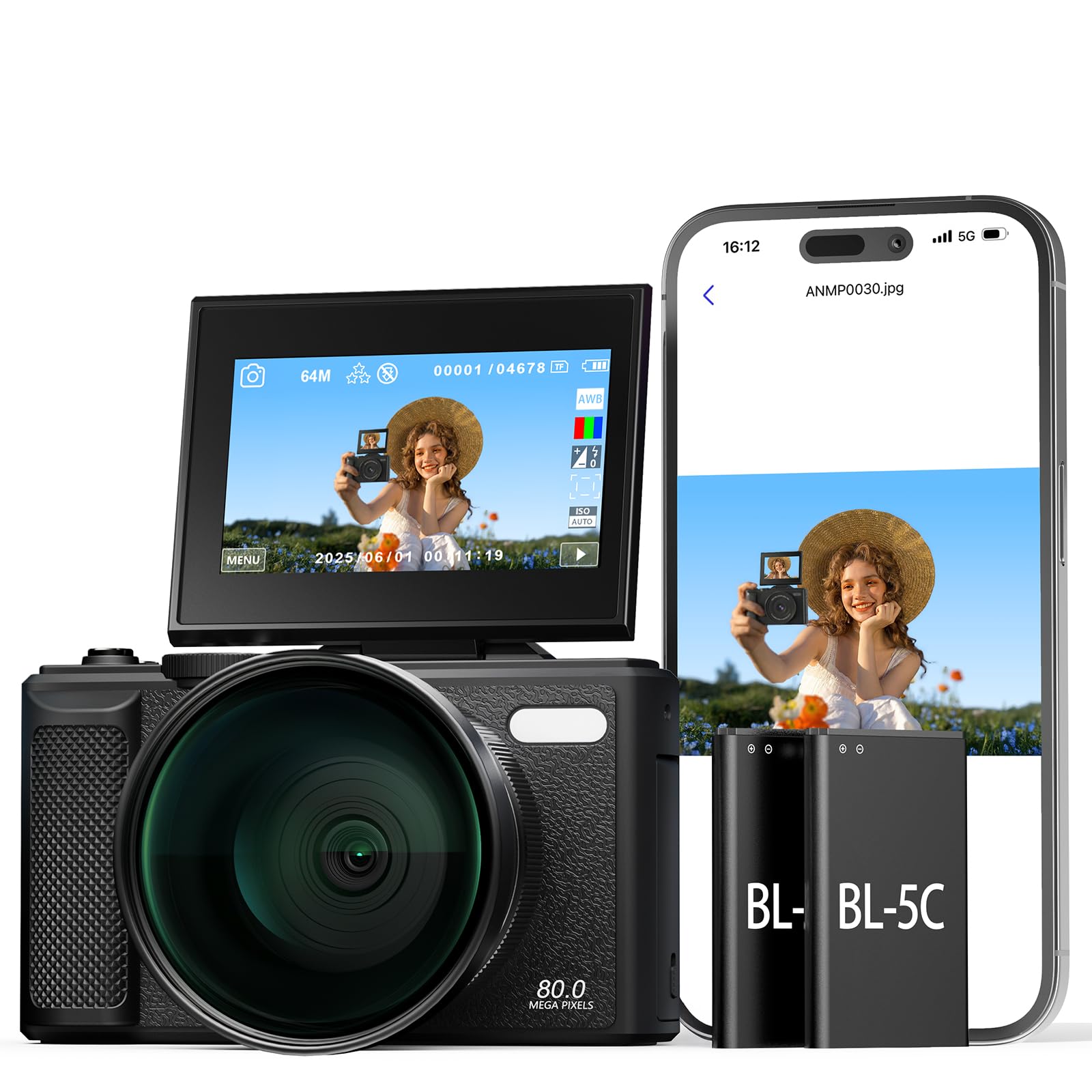
The complete kit shooter that balances resolution, battery, and a true macro lens.
This Krunia captures 80MP photos and 5K video, which is a 43% megapixel gap over the 56MP WIKICO model — meaning your close-up shots retain noticeably more detail when you crop in. The included wide-angle and macro lenses let you switch from a landscape to a coin texture without changing bodies. Owners mention the photos are “compact, crisp 4K video, sharp photos,” which confirms the sensor handles real-world detail well.
The 180° flip screen helps you frame selfies or tabletop macro shots without crouching. The 18X digital zoom is a 12% gap over the 16X zoom on many rivals, giving you a bit more reach when you cannot move closer. With two batteries and a 64GB memory card in the box, you are ready for a full day of shooting right away—no extra purchases needed to get started.
What Stands Out
- Highest resolution in this price band at 80MP
- Wi-Fi + app control for instant phone transfers
- 425 autofocus points for quick subject lock
The Trade-Off
- Contrast-detection autofocus can hunt in very dim light
- No viewfinder, so the screen is your only framing option
Reach for it if: you want the highest-resolution macro shots under with a full accessory kit included.
Look elsewhere if: you need an optical viewfinder or plan to shoot primarily in near-darkness.
2. Pedtail True 4K Digital Camera (64MP)

A 4-inch touchscreen with a dedicated one-touch macro button for fast close-ups.
The Pedtail stands apart with a “one-touch macro” feature that switches the lens to a 5cm close-focus distance at the press of a button — no menu diving. The 4-inch IPS HD touchscreen is larger than the 3-inch screens on most competitors, giving you a bigger canvas to check focus on fine details like the veins on a leaf. Customers note the “good photo definition” and that it is “light weight and easy to operate.”
The 3000mAh removable lithium battery is the highest capacity in this roundup, which translates to noticeably longer shooting sessions compared to the 1500mAh packs in the WIKICO or VJIANGER. The 18X digital zoom and built-in flash give you flexibility, though the flash distance is short — best for subjects within a few feet. The 32GB SD card in the box means you can start shooting immediately.
Why It Wins
- One-touch macro mode at 5cm distance
- Largest battery capacity at 3000mAh for long days
- Touchscreen makes menu navigation intuitive
One Caveat
- No flip screen, so self-framing from above is harder
- Not suitable for professional-grade image quality
Best for: beginners who want a dedicated macro button and a large touchscreen for composing fine details.
skip it if: you need a flip screen for vlogging or self-portrait macro work.
3. Monitech 8K Digital Camera (64MP)
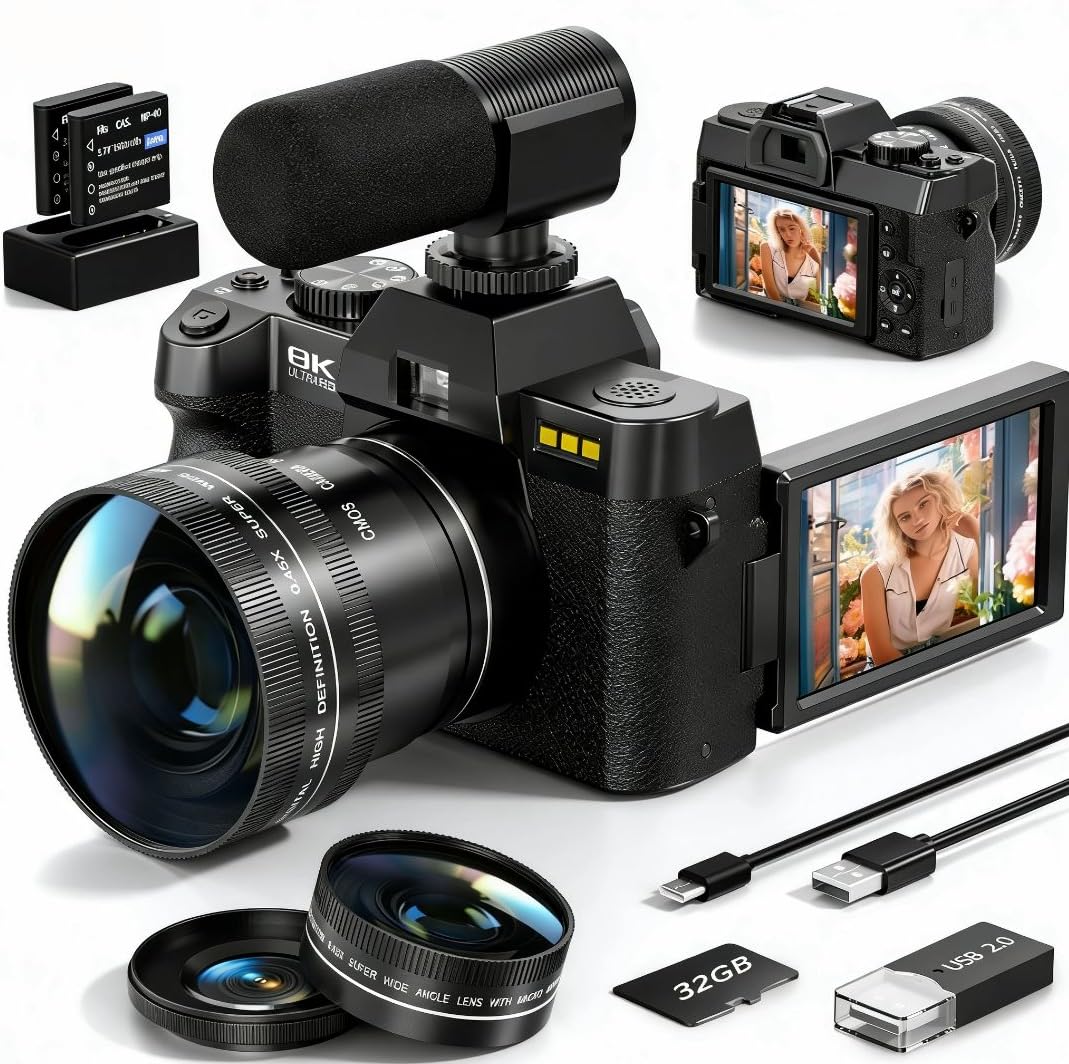
The camera that goes beyond stills — true 8K video with electronic stabilization for smooth handheld clips.
The Monitech records at 8K resolution, making it the highest video spec in this lineup. That means your macro video of a butterfly landing on a flower keeps fine wing texture intact rather than softening into a blur. Reviewers point out “smooth autofocus” and “clear, natural colors outdoors,” and note the flip screen “helps with vlogging.” The real EIS (electronic image stabilization — a system that uses software to reduce shakiness) is a rare feature at this price and makes handheld close-up video much more usable.
The kit includes a microphone, wide-angle and macro lenses, and two batteries — everything a beginner needs for serious macro video work. The hybrid autofocus system combines contrast detection with phase-detection points for faster locking than the pure contrast-detection systems on cheaper rivals. The 16X digital zoom is adequate, though the real strength here is the video resolution and stabilization combo, not the zoom reach.
Key Strengths
- True 8K video with real EIS stabilization
- Hybrid autofocus for faster subject lock
- Flip screen and included microphone for vlogging
The Limitation
- 8K video uses file space quickly with a 32GB card
- Digital zoom only — no optical zoom for distant subjects
Ideal for: macro video shooters who need smooth, shake-free clips at 8K without spending hundreds.
Consider another pick if: you only shoot still photos and do not need 8K video resolution.
4. NBD 8K Digital Camera (64MP)
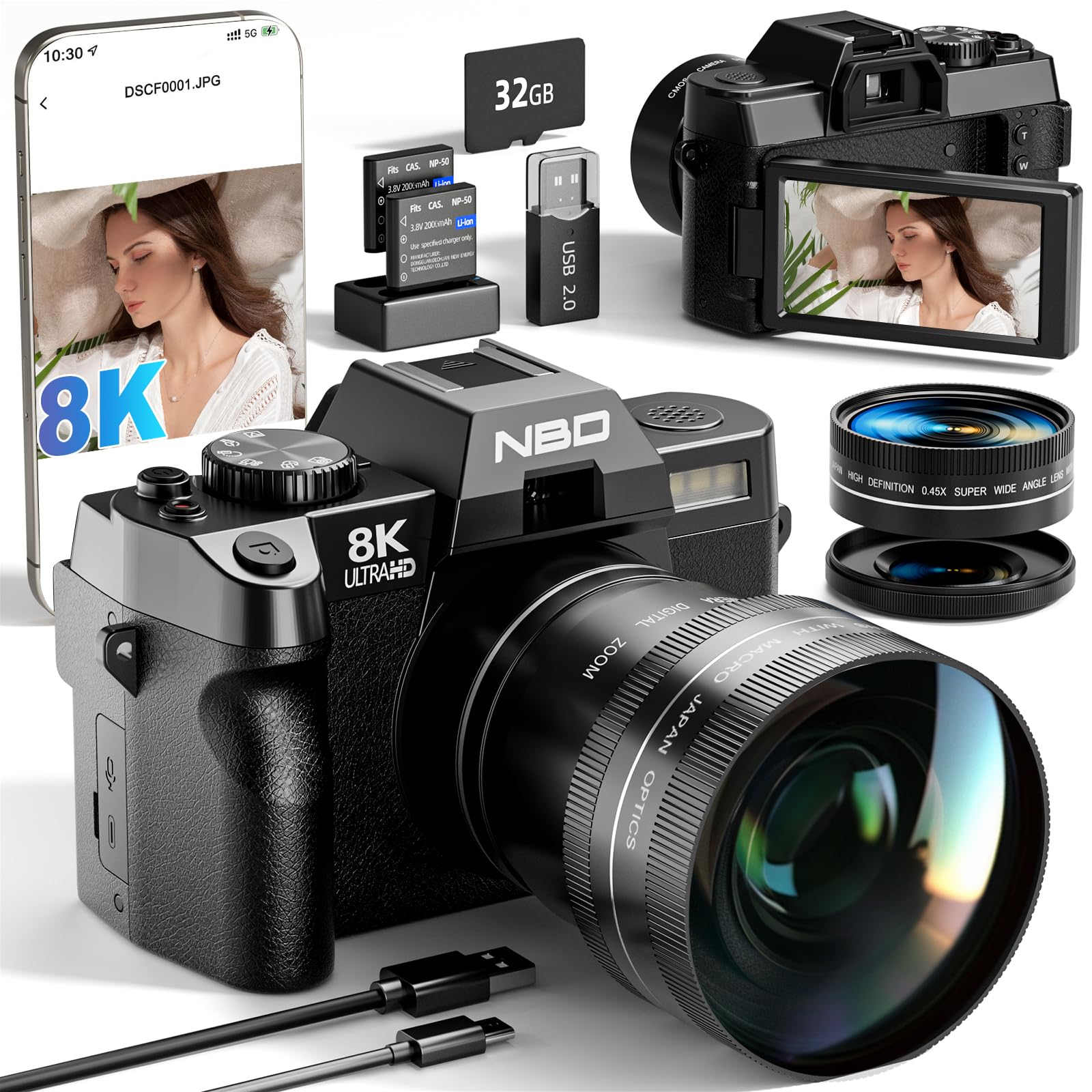
A 52mm F1.8 lens that lets in more light for better macro shots in dim conditions.
The NBD uses a 52mm lens with an F1.8 aperture — wider than the F2.4 or F2.8 apertures on many budget competitors. A wider aperture (a lower F-number means the lens opening is bigger) allows more light to reach the sensor, which helps keep details sharp when photographing close-up subjects indoors or on cloudy days. Buyers who tested the macro lens report it “produces magazine-quality close-ups” and note the 16X zoom captures “brick texture” with clarity.
At 8K video and 64MP photos, it matches the Monitech on resolution, but the F1.8 lens gives it an edge in low-light close-ups. The 180° flip screen and WiFi app control make it convenient for both tabletop macro work and travel vlogging. Reviewers caution that the autofocus “is responsive even in low-light” but note it is still a beginner-level camera — fast action macro (like a moving insect) will challenge the focus system.
Edge Over Rivals
- F1.8 aperture — widest in this roundup for dim-light macro
- 8K video with 64MP photos for resolution flexibility
- WiFi app control for remote framing and transfer
Where It Struggles
- Slow autofocus reported in some user reviews
- Plastic body not drop-resistant, per buyers
Reach for this if: you shoot macro in mixed lighting and want the brightest lens for the money.
Look elsewhere if: you need a rugged, drop-resistant body for outdoor use.
5. G-Anica 5K Digital Camera (64MP)
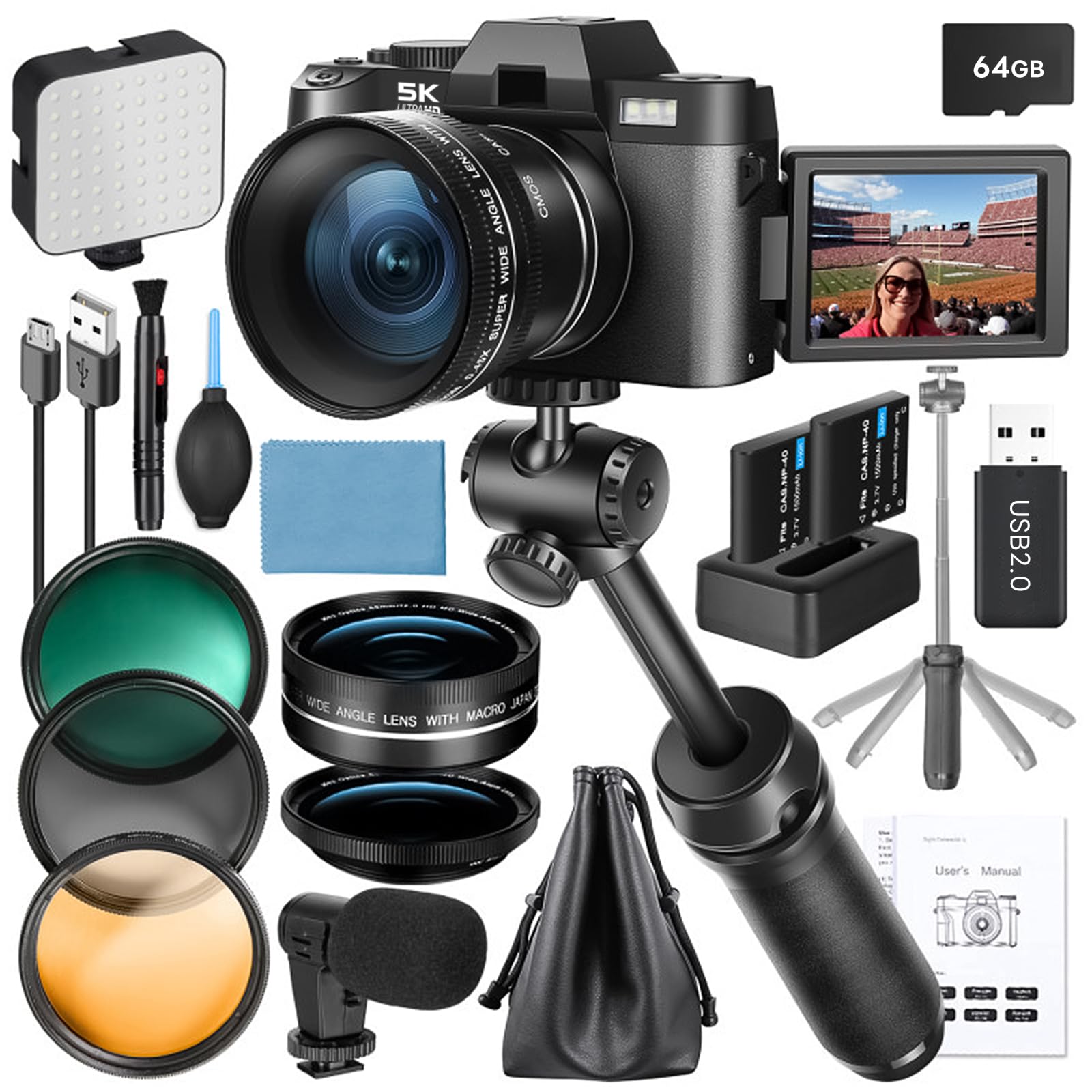
A dual-lens kit that fits in a jacket pocket without sacrificing macro capability.
The G-Anica includes both a wide-angle lens and a macro lens, letting you switch quickly between street photography and extreme close-ups. At 5K video and 64MP photos, it sits in a comfortable middle ground — higher resolution than the 4K-only models but lower than the 8K options, which keeps file sizes manageable. Shoppers say it “fits in a jacket pocket” and delivers “sharp, detailed photos and clean 4K video,” making it a true grab-and-go companion.
The 180° flip screen and built-in WiFi for phone connection are standard features that make sharing macro shots easy. The rotary dial for mode switching (including portrait photo, timelapse, and filter effects) means you rarely need to dig through menus. The 16X digital zoom and anti-shake help steady handheld close-ups, though at extreme zoom levels you will want a tripod or a steady surface for the best macro results.
Why It Travels Well
- Compact dual-lens kit fits in a pocket
- Anti-shake helps steady handheld macro shots
- Rotary dial for quick mode changes
One Shortcoming
- Digital zoom degrades quality past about 10X
- No viewfinder, so bright sunlight can wash out the LCD
Best for: travelers and daily-carry shooters who want a macro lens in an ultra-portable body.
Pass if: you prioritize maximum zoom reach or need an optical viewfinder.
6. Minolta 64MP Digital Camera

The only pick here with 10x optical zoom — real glass that pulls in detail without digital degradation.
The Minolta is a step up in build pedigree and lens quality. The 10x optical zoom (an actual glass lens that moves, not just software cropping) means you can capture a distant flower or insect and zoom in without the pixelation that plagues digital zoom. Buyers report the macro mode delivers “excellent macro, professional quality at low price” and note the “hot shoe” and “swivel display” add flexibility for creative angles. The 64MP CMOS sensor captures photos suitable for enlargements, per the specs.
The package includes a 32GB SD card, case, USB cable, rechargeable battery, and charger — a complete kit. The articulating LCD screen (a screen that pulls out and rotates) helps frame low-angle macro shots of plants or small objects on the ground. Built-in Wi-Fi lets you control the camera remotely via smartphone, which is useful for capturing skittish insects without getting too close. One durability concern from a reviewer: “after 3 months, zoom photos become blurry in autofocus” for one unit, so verify the return policy if buying.
The Optical Advantage
- 10x optical zoom keeps distant macro subjects sharp
- Articulating LCD for creative low-angle framing
- Hot shoe for external flash or microphone
Watch Out For
- F2.8–F3.1 aperture is narrower than the NBD’s F1.8
- Some units reported autofocus blur after a few months
Reach for this if: optical zoom quality and brand reputation matter more than ultimate low-light performance.
Consider another pick if: you need the widest aperture for indoor macro or cannot risk potential long-term autofocus issues.
7. WIKICO 4K Digital Camera (56MP)

The classic starter kit with a 52mm macro lens and two batteries to keep shooting all day.
The WIKICO records 4K video and 56MP photos — slightly lower resolution than the 80MP Krunia but enough for sharp social-media macro shots. The included 52mm wide-angle and macro lenses are the same physical size as more expensive kits, so you get genuine close-focus capability. Owners mention “decent battery life (~1hr at 1080p)” and note the “USB-C transfer” makes moving files to a computer convenient. One happy parent said their “daughter thinks she is a star now” with this camera.
A key practical feature: the pause function lets you stop and restart video recording without creating a new file, which is handy for macro tutorials or step-by-step close-up demos. The camera weighs 0.57 pounds and measures 4.5 x 1.7 x 3 inches, making it easy to hold steady for extended macro sessions. The built-in flash helps illuminate close subjects in dim light, though the 16X digital zoom is best used at lower magnifications for clarity.
Solid Foundation
- Pause function for long macro video sessions
- USB-C data transfer for fast file moving
- Two 1500mAh batteries for extended shooting
The Catch
- Splits files >3GB at 4K, per buyers — a minor editing nuisance
- 56MP is 43% less than the Krunia’s 80MP
Best for: families and absolute beginners who want a simple, well-reviewed starter with a real macro lens.
Look elsewhere if: you need maximum resolution or plan to shoot long 4K clips without file splits.
8. VJIANGER 2026 Upgrade Digital Camera (64MP)
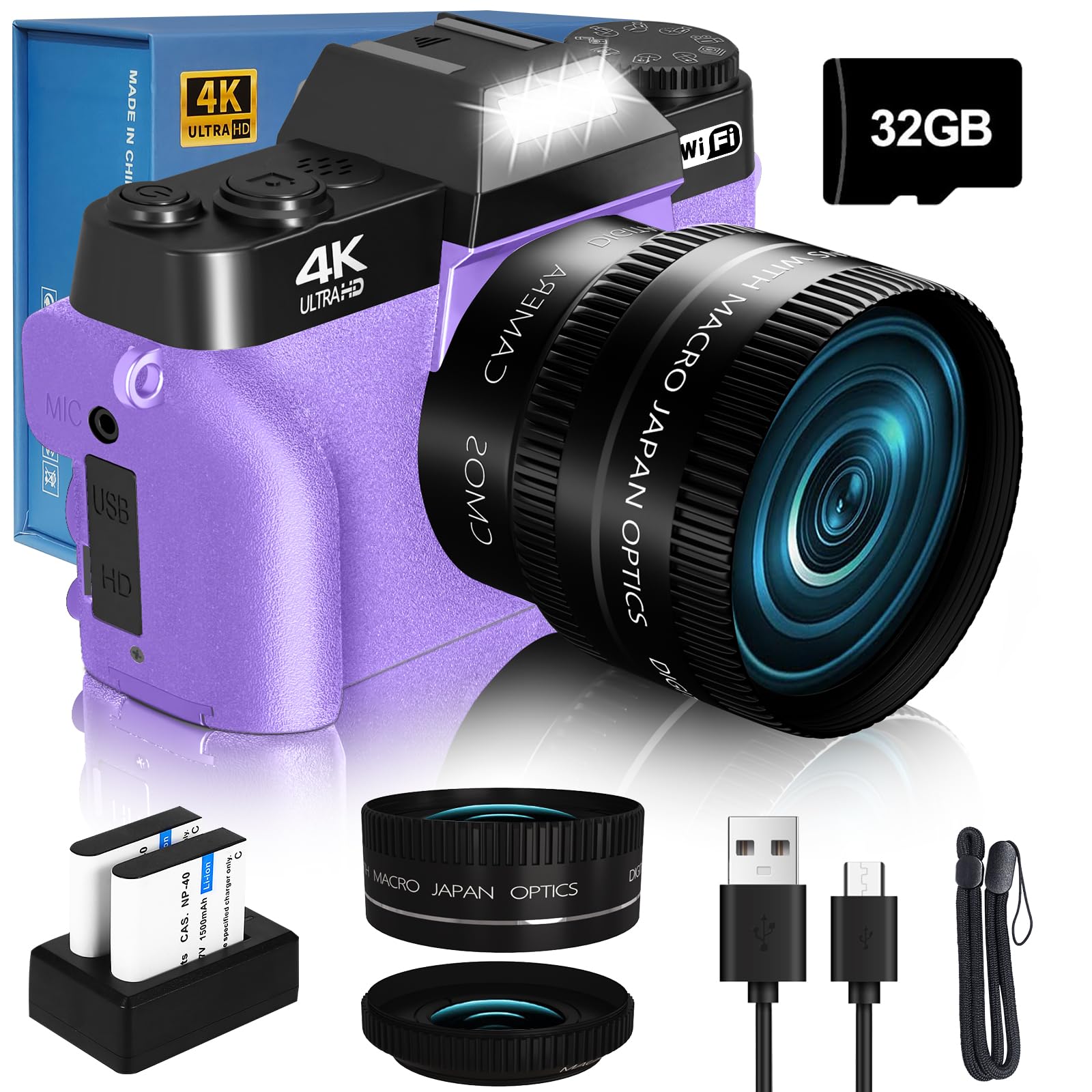
The most affordable entry point that still includes a dedicated 52mm macro lens in the box.
The VJIANGER is the leanest option here, offering 64MP stills (the spec does not list video resolution) with a detachable 52mm wide-angle and macro lens. At a fraction of the cost of premium options, it trades performance for price. Customers note it is a “good beginner camera: easy setup/use, good quality photo/video, excellent battery life” and note the kit “includes camera, charger, 2 batteries, USB, lens.” The compact size of 0.57 pounds makes it easy to hold steady for macro photography.
The 16X digital zoom is functional but best kept to lower settings for macro work — at full zoom, the digital crop reduces sharpness noticeably. The WiFi app connection lets you transfer images to a phone, though buyers caution the app can be “finicky” and the autofocus is “slow.” The included 32GB microSD card holds plenty of 64MP photos, and the two batteries mean you can swap without pause. The flash doubles as a bright video light, which helps illuminate close-up subjects creatively.
Why It Stays Affordable
- Lowest price tag with a real macro lens included
- Excellent battery life — reviewers point out it lasts days
- Compact and lightweight at 0.57 lb
Where It Cuts Corners
- No autofocus — manual focus only
- Slow capture speed, no burst shooting
Reach for this if: budget is the deciding factor and you are willing to use manual focus for macro work.
pass on it if: you need reliable autofocus or plan to shoot fast-moving subjects like insects.
Understanding the Specs
Macro Lens vs. Macro Mode
A macro lens is a physical attachment you screw onto the camera — it lets you focus from inches away and magnify the subject significantly. “Macro mode” is a software setting that changes the camera’s focus range but does not add any physical glass. For real close-up detail, a physical macro lens (like the 52mm lens included with most picks here) is always better because it reduces the minimum focusing distance and increases magnification.
Digital Zoom vs. Optical Zoom
Digital zoom simply crops and enlarges the center of the image, which reduces sharpness and makes macro details look soft or pixelated. Optical zoom uses actual moving glass inside the lens to magnify the subject without losing detail. Only the Minolta in this list offers optical zoom (10x). All other picks use digital zoom only, so get as physically close as you can rather than relying on the zoom button for macro shots.
FAQ
What is the minimum focusing distance I need for macro photography?
Can I use these cameras for product photography?
Do I need a special memory card for macro video?
Is a flip screen necessary for macro work?
What battery life should I expect from a budget macro camera?
Will a macro camera work for insect photography?
How does the 52mm macro lens compare to a phone clip-on lens?
Do these cameras require an external flash for macro?
What is the difference between 4K and 8K for macro video?
Are these cameras durable enough for outdoor field use?
Final Thoughts: The Verdict
For most buyers, the best budget macro camera winner is the Krunia 5K Wi-Fi Digital Camera because it delivers 80MP photos, a real macro lens, Wi-Fi sharing, and two batteries — all at a price that undercuts many competitors while outresolving them. If you want one-touch macro convenience with the biggest battery, grab the Pedtail True 4K. And for smooth 8K macro video with stabilization, the standout is the Monitech 8K in this budget bracket.
How We Picked
We do not accept paid placement, and we did not hands-on test every unit. Instead, we match each pick to a real buyer and use-case by comparing the manufacturers’ published specifications against the patterns in verified customer reviews — so you get each pick’s real strengths and trade-offs instead of marketing copy.
Sources & Methodology
Specifications: manufacturer listings and product documentation. Review insights: verified customer reviews, as of July 2026. Pricing: not shown on this page (it changes often); check the current price via the retailer link.
As an Amazon Associate, Gadgets Feed earns from qualifying purchases. This does not affect which products we feature.
Product prices and availability are accurate as of the date/time indicated and are subject to change. Any price and availability information displayed on Amazon at the time of purchase will apply to the purchase of this product. As an Amazon Associate I earn from qualifying purchases.
CERTAIN CONTENT THAT APPEARS ON THIS SITE COMES FROM AMAZON. THIS CONTENT IS PROVIDED "AS IS" AND IS SUBJECT TO CHANGE OR REMOVAL AT ANY TIME.
Amazon and the Amazon logo are trademarks of Amazon.com, Inc. or its affiliates.