
Our readers keep the lights on and my morning glass full of iced black tea. As an Amazon Associate, I earn from qualifying purchases.
Specs are compiled from manufacturer listings and verified buyer reviews and can change over time — please confirm the key details on the product page before buying.
If your microphone makes you sound thin or distant, a quiet, powerful preamp is the single biggest fix — it transforms a weak signal into a warm, broadcast-ready voice without filling a rack. The tricky part is finding one that gives you clean gain (the boost that makes you sound full and present) without adding hiss, hum, or features you will never use.
I’m Min — the founder and writer behind Gadgets Feed. This guide is built by comparing the manufacturers’ published specifications and the patterns across verified customer reviews, so you get each pick’s real strengths and trade-offs instead of marketing spin.
Whether you are a podcaster, musician, or streamer working with a tight budget, this roundup of the best budget microphone preamp options helps you find clean, reliable gain without the guesswork or wasted cash.
Our Picks at a Glance


How To Choose The Best Budget Microphone Preamp
Most budget buyers make one mistake: they buy a preamp with huge gain numbers but ignore noise floor (the low-level hiss you hear when nothing is being said). A quiet preamp with +28dB is far more useful than a noisy one claiming +60dB. Start by matching your mic type — dynamic mics need a clean boost, while condenser mics need +48V phantom power more than high gain.
Inline vs. Interface: Which Form Factor Fits?
Inline preamps (the small barrels that plug directly into your mic cable) are the most portable and often the cheapest option — they travel well and need no desk space. Full audio interfaces give you controls, headphone monitoring, and often include a preamp plus an analog-to-digital converter in one box. For a pure gain boost, inline wins on simplicity; for a full recording setup, the interface is the better value.
The Phantom Power Trap
If you own a condenser microphone, you require +48V phantom power from your preamp — a feature many budget inline models skip to keep size and cost down. Always check that your microphone and preamp speak the same electrical language. A dynamic or ribbon mic does not need phantom power and is usually safe with a passive inline booster.
Build Quality and Connectivity
An all-metal chassis (or heavy-duty plastic on the most affordable models) protects a preamp from drops in your bag. Gold-plated XLR connectors resist corrosion and maintain a solid signal over years of plugging and unplugging. USB-powered interfaces offer convenience for laptops, while battery-powered inline units work anywhere — including with a smartphone or DSLR camera.
Quick Comparison
| Model | Best For | Gain | Phantom Power | Type | Amazon |
|---|---|---|---|---|---|
| Focusrite Scarlett Solo 3rd Gen★ Best Overall | First studio interface | 56dB | +48V | USB Interface | Amazon |
| Universal Audio Volt 1Premium Pick | Vintage tone seekers | — | +48V | USB Interface | Amazon |
| PreSonus Revelator io44Best Value | Streaming with DSP | 50dB | +48V | USB Interface | Amazon |
| Shure MVX2U Gen 2 | Mobile recording & podcast | +60dB | +48V | XLR-to-USB-C | Amazon |
| MAONO AME2 | Full podcast station | 60dB | +48V | USB Mixer | Amazon |
| TRITON AUDIO FetHead | Cleaning up weak condensers | — | Pass-through | Inline Preamp | Amazon |
| sE Electronics DM1 Dynamite | Dynamic & ribbon mic boost | +28dB | No | Inline Preamp | Amazon |
| IK Multimedia iRig Pre 2 | Phone/camera recording | Adjustable | +48V | Mobile Preamp | Amazon |
| Mackie Onyx Artist 1-2 | Budget desktop recording | — | +48V | USB Interface | Amazon |
In‑Depth Reviews
1. Focusrite Scarlett Solo 3rd Gen
Our pick — over 4.5★ from 29,000+ verified ratings; the strongest balance of quality and price.
The crowd-favorite interface that made thousands of first recordings sound pro.
The Scarlett Solo delivers a 56dB gain range — enough headroom to drive a dynamic mic like the Shure SM58 without pushing the knob to its limit and inviting noise. That clean boost is what makes vocals sound full and intimate instead of thin and distant. The switchable Air Mode adds a high-frequency lift that brings out sparkle in acoustic guitars and spoken word, a feature owners point to as the thing that separates it from cheaper interfaces like the Mackie Onyx Artist 1-2.
It records at up to 24-bit/192kHz (a standard that preserves detail far beyond what streaming services need, so your mix stays flexible during editing). The aluminum body feels dense and road-ready — buyers report it “survived multiple moves and a winter in non-climate-controlled storage; still works perfectly,” proof of build quality that surpasses its price bracket. Setup is USB-C plug-and-play, and the bundled software (Pro Tools Intro, Ableton Live Lite, Cubase LE) gives a beginner a full studio suite from the start. The single XLR input caps you at one mic, but for a solo podcaster or singer-songwriter that is exactly right.
First Interface: you need a proven, versatile interface that makes one mic sound its best with zero fuss, from day one through years of use.
Limited Channels: the single input is the real ceiling — if you plan to record two people or a guitar amp plus a mic at the same time, you will outgrow it fast.
2. Universal Audio Volt 1
The interface that brings a classic console’s character to a desktop package.
What wins people over here is the Vintage mode, an analog circuit based on UA’s legendary 610 preamp — the same one used on countless classic recordings. Flicking it on adds a subtle harmonic richness and warmth to vocals or guitar that normally requires an outboard preamp costing several times the Volt 1’s price. The sound is cleaner and more “expensive” than the Focusrite Scarlett Solo at the same tier, which is why audio quality tops the praise list among owners.
It records at 24-bit/192kHz with crisp converters, and the zero-latency monitoring (hearing yourself without delay while recording) means you can layer takes naturally. The Volt 1 is heavier than it looks at 544 grams, with a metal top and solid controls — owners note the knobs have “the perfect amount of resistance.” It includes LUNA, Ableton Live Lite, and Melodyne, making the software bundle genuinely useful. One catch: to use it with an iPhone you need an external power supply and an Apple Lightning to USB Camera Adapter, so mobile recording is less spontaneous than with bus-powered rivals like the Shure MVX2U Gen 2.
Warm Recordings: the musician or podcaster who wants that extra “record” character in their sound without adding a separate preamp or plugin.
Missing Features: you want the simplest mobile recording setup — a battery-powered inline preamp will be easier to pair with a phone.
3. PreSonus Revelator io44
One small box that replaces a preamp, a mixer, and a rack of effects.
The Revelator io44 packs a professional XMAX-L microphone preamp with 50dB of adjustable gain plus switchable +48V phantom power for condenser mics. What makes it a standout is the onboard DSP (digital signal processing — effects that run directly on the device, not on your computer). You get reverb, compression, EQ, and voice effects built right in, so a streamer or podcaster can polish their sound with zero CPU load. The integrated mixer lets you blend audio from up to three applications at once, a feature owners call genuinely useful for live streaming — unlike the single-channel Focusrite Scarlett Solo.
It is bus-powered (one USB-C cable from your laptop powers the whole unit) and weighs 12.48 ounces, so it slides into a backpack pocket. Some owners experienced initial noise issues that were resolved by a firmware update or unit replacement, and the preamps are not pro-studio-grade — but for streaming, podcasting, and home recording, the onboard processing and loop-back routing (sending your computer’s audio back out through the interface) make it a value case that is tough to top. The 3.5mm input is flexible enough for a gaming headset, too.
Streaming Setup: streamers and podcasters who want to sound polished without learning complex software chains first.
Desk Space: a small number of units came with software bugs; check for the latest firmware before you troubleshoot anything else.
4. Shure MVX2U Gen 2
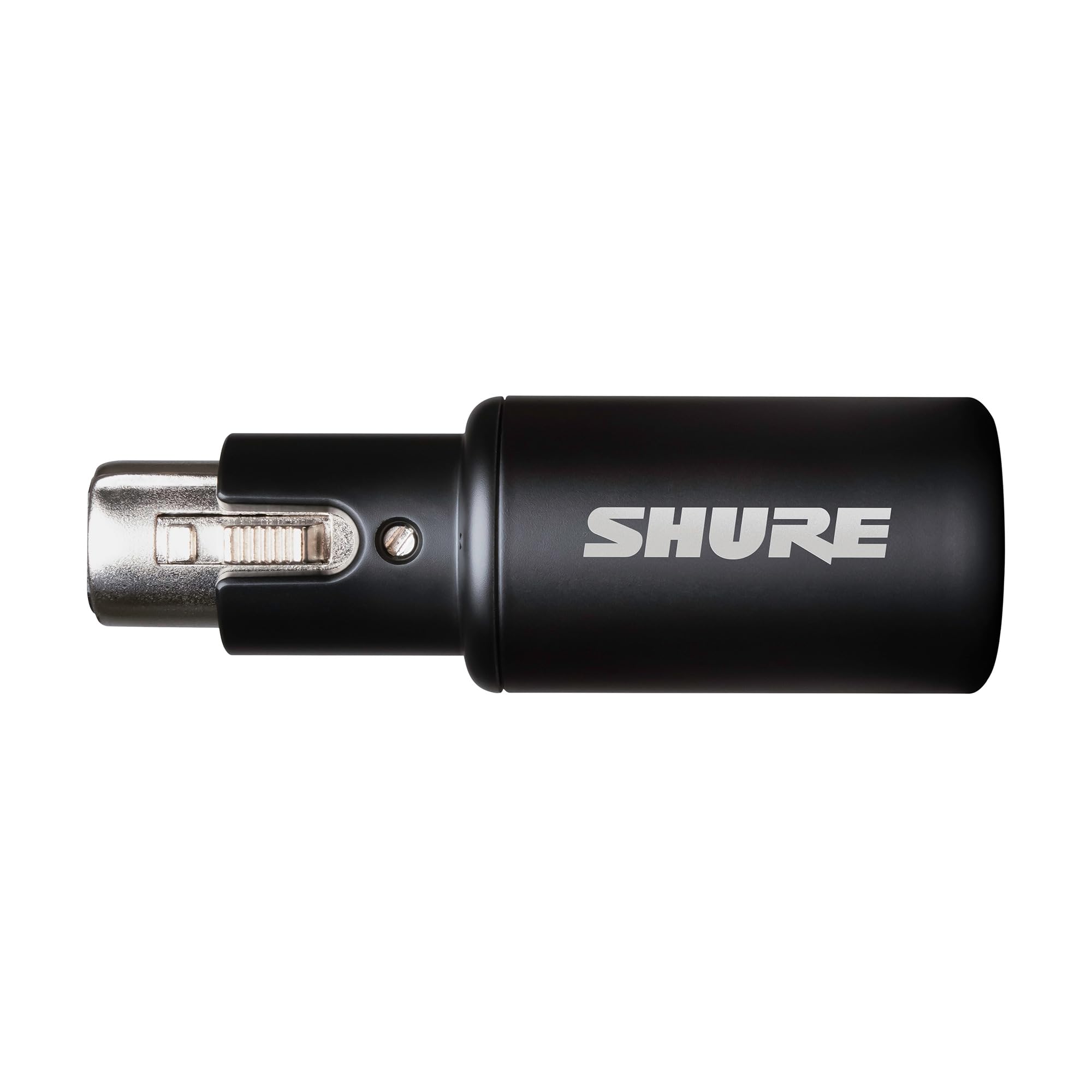
The palm-sized XLR-to-USB adapter that brings studio-grade processing to any mic.
The MVX2U Gen 2 delivers up to +60dB of clean gain — enough to make a notoriously quiet mic like the SM7B sound full without needing a separate Cloudlifter. It also provides +48V phantom power for condenser mics, all from a device that weighs 100 grams and fits in a coat pocket. What truly separates it is Shure’s onboard Digital Audio Processing (DSP): Auto Level Mode adjusts gain automatically in real time, a Real-Time Denoiser cuts background hum, and the Digital Popper Stopper reduces plosives from hard consonant sounds.
You can choose between Dark, Natural, or Bright tone settings to shape your voice, and the MOTIV Mix/Audio/Video apps let you control compression, EQ, and limiter from your phone or desktop — no computer needed during recording. The USB-C connection is plug-and-play, and owners love using it with an iPhone and a Shure SM81: “pair it with the free app and you’ve got a slick way to connect any mic to a USB C device.” The gain control is digital rather than a physical knob, which some find less intuitive for quick tweaks compared to the analog knobs on the Focusrite Scarlett Solo.
Mobile Recording: the mobile creator who needs professional audio from a laptop, iPad, or iPhone without carrying a full interface.
Mic Dependent: you prefer hands-on analog gain knobs — this unit relies entirely on software control for adjustments.
5. MAONO AME2

A full podcast control center that includes sound pads, reverb, and auto-tune.
The AME2 is a 10-channel digital mixer with a built-in preamp that offers ultra-low noise gain up to 60dB and +48V phantom power for XLR condenser microphones. Sound quality is the top praise from owners — it delivers clean, clipping-free audio even with demanding dynamic mics like the Shure SM7B or Rode Podmic. Where it differs from a traditional interface like the Focusrite Scarlett Solo is the sheer breadth of controls: 11 customizable sound pads (three that record up to 60 seconds each with one-key looping, eight that hold 20 seconds), six reverb modes, 12-step auto-tune, and separate treble/mid/bass EQ.
It connects to a computer via USB-C, has dedicated LIVE-OUTPUT for streaming to a smartphone, and includes Bluetooth input for playing backing tracks wirelessly. The 6.35mm instrument jack handles guitar or bass without a DI box. Owners praise the versatility for karaoke and live-streaming, though some report the unit died after about a year of use — reliability is the mixed note here, with enough positive reports to call it great for the price but not a forever investment. The headphone monitor sound can differ slightly from the final stream audio.
Cost Savings: you want an all-in-one podcast workstation with sound effects, reverb, and multi-device streaming out of one box.
Durability: a group of owners experienced unit failure after months of use; treat this as a feature-rich entry point, not a lifelong tool.
6. sE Electronics DM1 Dynamite
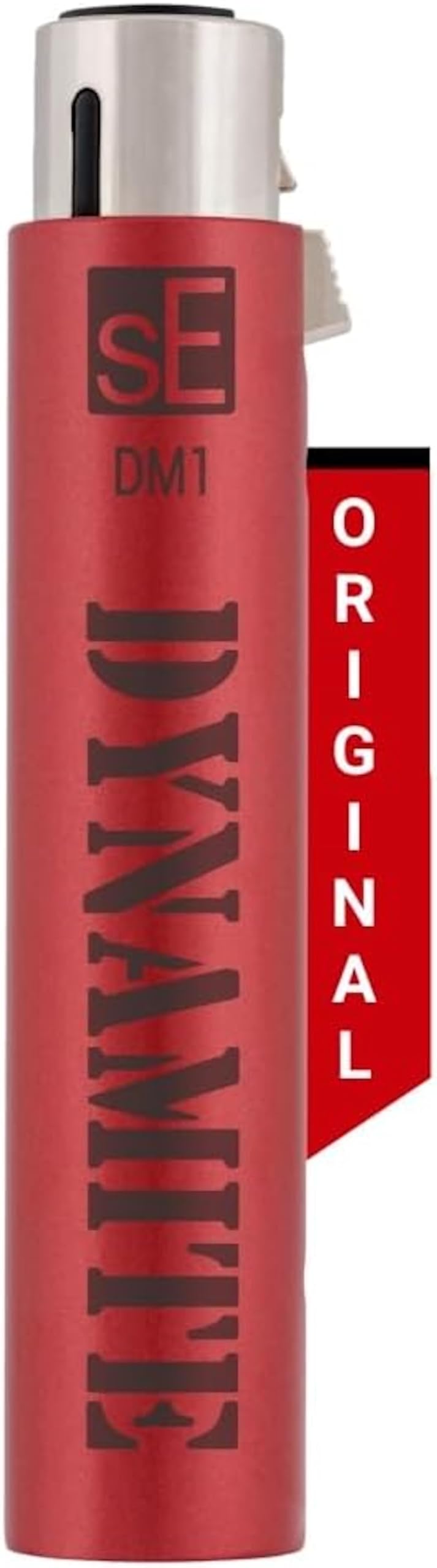
The tiny barrel preamp that makes quiet dynamic mics roar without hiss.
The DM1 Dynamite delivers +28dB of clean, transparent gain for dynamic and passive ribbon microphones — exactly what you need when your interface’s preamp is maxed out and your vocal still sounds distant. It uses a Class-A FET (Field-Effect Transistor — a high-quality circuit design that amplifies the signal without adding distortion or noise) with a transformerless design, meaning ultra-low impedance and minimal self-noise. Owners who pair it with a Rode Podmic or an EV RE20 report it drives those mics “wonderfully,” fixing that crackling or humming that appears when pushing a cheap interface gain knob to its limit — a common issue with the Mackie Onyx Artist 1-2’s preamp at high gain.
Gold-plated XLR connectors keep the signal path clean and the all-metal housing feels rugged enough for both studio and stage use. It is delightfully compact at just 0.43 inches wide and only 80 grams — it adds no noticeable bulk to your mic cable. One detail to plan for: because the DM1 does not pass phantom power, you cannot use it with a condenser mic that requires +48V. It is strictly for dynamic or ribbon mics, which is exactly its purpose, but buyers who plug it into a phantom-powered channel by accident risk damaging the circuit.
Quiet Mics: the podcaster or singer who owns a dynamic mic and wants to stop struggling with noisy interface preamps.
Fixed Gain: you use a condenser mic that requires +48V phantom power — the DM1 will not work with it.
7. TRITON AUDIO FetHead Phantom

The little phantom-powered lifter that silences noise and cleans up your signal.
The FetHead is a FET-style inline microphone preamplifier that works exclusively with phantom-powered condenser mics — it draws its power from the +48V sent by your interface and uses it to boost the mic’s signal before it travels down the cable. The result is a cleaner signal-to-noise ratio (the loudness of your voice relative to background hiss), effectively pushing the noise floor down. Owners mention it eliminated background noise from condenser mics entirely and “improved tone” with mics like the AT2035 when paired with a Steinberg UR22 mk2 — unlike the sE Electronics DM1, which is designed only for dynamic mics.
It weighs only 68 grams and measures 5.05 x 1.25 x 1.2 inches, so it sits at the connection point of your XLR cable with minimal strain on the connector. Performance is the top praise from owners, and the sound quality improvement is consistent across both studio and live use. A few customers note the collet (the locking ring that secures the XLR connection) can come loose during attachment, suggesting the build feels slightly fragile despite its metal housing. It is also phantom-power-only — if your interface lacks +48V, the FetHead remains silent.
Dynamic Mics: condenser mic owners who want a quieter, cleaner signal without buying a more expensive interface.
Hiss Risk: your interface must supply +48V phantom power, or this unit will not operate at all.
8. IK Multimedia iRig Pre 2

The battery-powered preamp that turns your phone into a field recording rig.
The iRig Pre 2 is a portable preamp with an XLR input and true +48V phantom power that runs on two AA batteries — so you can use any professional condenser microphone with an iPhone, iPad, Android device, or even a DSLR camera. Its Class-A microphone preamp with adjustable gain delivers the clean gain a dynamic or ribbon mic needs, and the headphone jack lets you monitor your audio in real time with zero latency (no echo or delay, so you hear exactly what is being recorded).
Owners praise its versatility: one reports it “works great” using a shotgun mic with a Canon 6D Mark II for video, while others use it to connect a microphone to an Android phone for webcasting. The included Velcro strip makes it easy to mount on a camera rig or mic stand. Because it uses disposable AA batteries rather than a rechargeable pack, the operating cost adds up over time. It also does not include a USB audio output — this is a pure analog preamp, so you still need a way to get the signal into your computer or device, unlike the Shure MVX2U Gen 2 which has a built-in USB-C output.
Field Recording: the video shooter or mobile journalist who needs pro XLR microphone sound on a phone or camera without carrying a bulky interface.
Latency Issues: you want a direct USB connection to your computer — this unit is analog-only and requires an additional adapter or converter for PC recording.
9. Mackie Onyx Artist 1-2
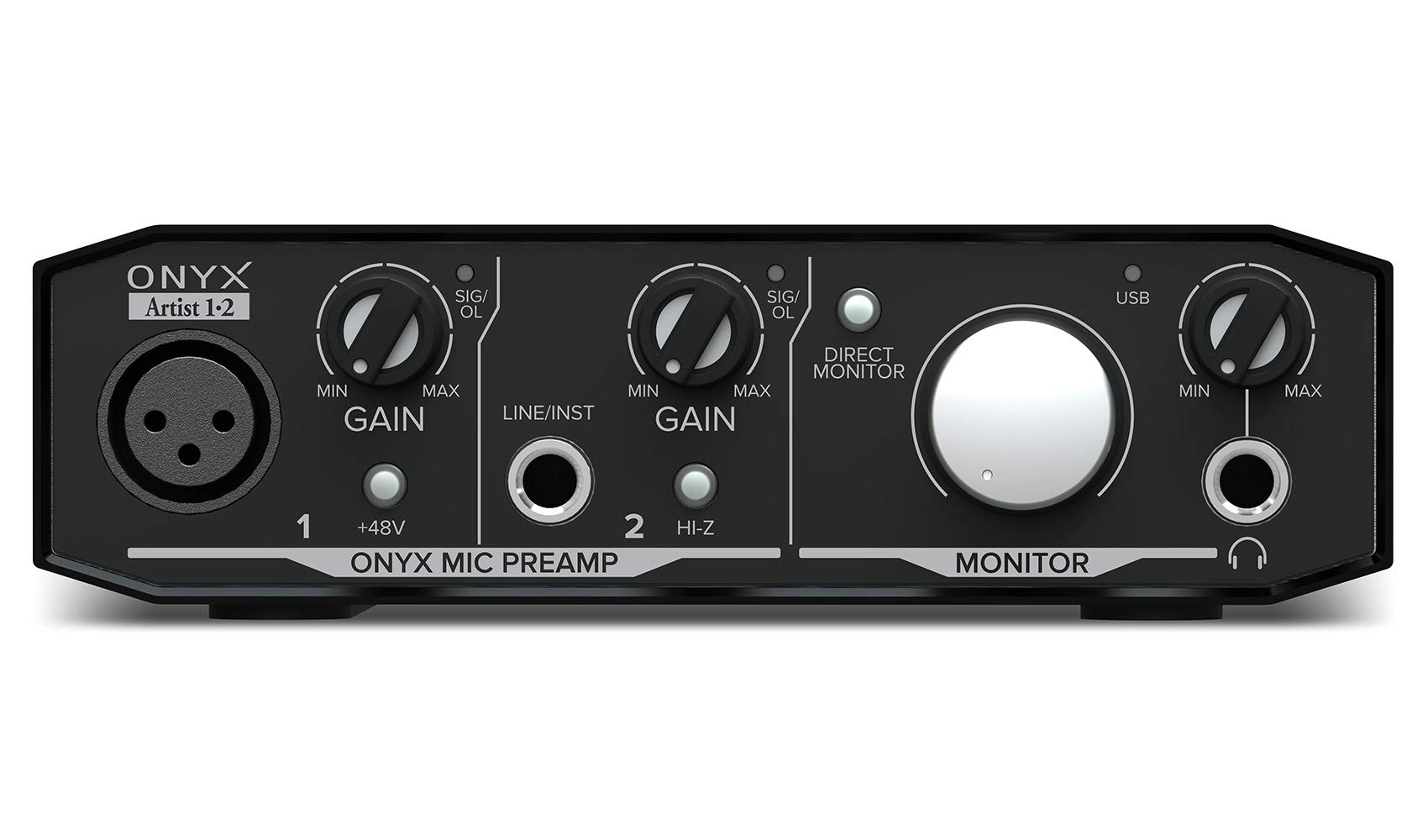
The tank-like interface that punches well above its weight for clean recordings.
The Onyx Artist 1-2 records at 24-bit/192kHz through a boutique-quality Onyx microphone preamp — the same design Mackie uses in its pro mixing consoles — delivering low noise and high dynamic range. It comes with +48V phantom power for condenser microphones and a ¼” TRS input with a Hi-Z switch for connecting a guitar or bass directly. Zero-latency direct monitoring means you hear your performance instantly through the dedicated monitor outputs or the powerful headphone jack, with no digital delay.
The “Built-Like-A-Tank” design is not marketing fluff: buyers describe it as “solid piece of gear” that rivals the build quality of more expensive interfaces like the Focusrite Scarlett Solo. Setup is straightforward on Windows 11 with ASIO drivers, and compatibility across software (including Linux) is the top aspect praised by owners. At 6.4 x 4.4 x 1.9 inches it is slightly longer than the Scarlett Solo but still highly portable. The recurring note is that the stock gain knobs are difficult to read in low light — some owners swap them, but from the start, visual feedback is limited.
Reliable Choice: you want a rugged, no-nonsense interface with a legendary preamp pedigree at the lowest entry price.
Limited Bundle: the gain knobs lack clear markings, making precise adjustments harder in dim lighting without aftermarket cap replacements.
Understanding the Specs
Gain (dB)
Gain is the amount of amplification a preamp applies to your microphone’s signal — measured in decibels (dB). A quiet dynamic mic like the Shure SM7B needs around +60dB to reach a healthy level, while a sensitive condenser may only require +30dB. More gain is not always better — the noise floor (the faint hiss the preamp itself generates) also rises with gain. Look for a preamp that delivers its rated gain quietly, not one that just advertises a high number.
Phantom Power (+48V)
Phantom power sends 48 volts of DC electricity through the XLR cable to power active condenser microphones. If you use a condenser mic, your preamp or interface must supply +48V. Dynamic and ribbon mics generally do not need phantom power and are safe with it off. Inline preamps like the sE Electronics DM1 do not generate phantom power and work only with dynamic or ribbon mics — while the TRITON FetHead Phantom passes it through from your interface but draws its own power from it.
FAQ
Do I need a separate preamp if my audio interface already has one?
Will an inline preamp work with my condenser microphone?
How much gain do I really need for a dynamic microphone?
Can I use a budget microphone preamp with my smartphone or tablet?
Does a higher price always mean better sound quality in a preamp?
What does a Class-A preamp mean for my recording?
Is a USB microphone better than buying a separate preamp and XLR mic?
How does the Focusrite Scarlett Solo compare to the PreSonus Revelator io44?
What is the difference between an inline preamp and an audio interface?
Can I use a preamp with a shotgun microphone for video recording?
Final Thoughts: The Verdict
For most people, the budget microphone preamp winner is the Focusrite Scarlett Solo 3rd Gen because it delivers proven clean gain, rock-solid build, and a software bundle that starts you recording the same day — all at a price that undercuts its peers. If you want a streaming-ready interface with onboard effects that save you post-production work, grab the PreSonus Revelator io44. And for the smallest footprint with pro-grade processing for mobile recording, the Shure MVX2U Gen 2 is the one to reach for.
How We Picked
We do not accept paid placement. Every pick is matched to a real buyer and a real use-case; we do not hands-on test units.
Sources & Methodology
Specifications: manufacturer listings and product documentation. Review insights: verified customer reviews, as of July 2026. Pricing: not shown on this page (it changes often); check the current price via the retailer link.
As an Amazon Associate, Gadgets Feed earns from qualifying purchases. This does not affect which products we feature.