
Pedal kayaks have stormed the market by solving the single biggest frustration of paddle fishing: you cannot cast, reel, and hold your position all at once. By shifting propulsion to your legs, a pedal drive frees your hands for fishing, photography, or simply steering through currents without missing a beat. The engineering challenge has always been cost — dedicated pedal systems traditionally demanded premium budgets, locking out anglers who wanted the performance without the financial sting.
I’m Min — the co-founder and writer behind Gadgets Feed. I’ve spent weeks dissecting hull designs, fin versus propeller drive mechanisms, and weight-to-stability ratios across the current market to identify which models deliver genuine pedal performance without pushing into luxury pricing territory.
This guide separates the real contenders from the hollow hulls and names the one model that belongs on your shortlist: the best budget pedal kayak for anglers who demand hands-free control without overspending.
How To Choose The Best Budget Pedal Kayak
Stepping into the pedal kayak market on a budget means you need to separate essential durability from expensive frills. The wrong choice leaves you with a drive that snaps on the second outing or a hull that drifts sideways in any breeze. Focus on these three factors and you will land a boat that performs for years.
Drive Type: Fin vs. Propeller
Fin drives mimic the natural kick of a fish tail, sliding through weeds and shallow muck with minimal snagging. They are typically lighter, less complex, and easier to repair — a strong advantage at the budget end of the market. Propeller drives deliver higher top-end speed and better reverse control but introduce more moving parts that can clog in vegetation. For a budget pedal kayak, a well-engineered fin system usually offers the best reliability-per-dollar ratio.
Hull Weight and Portability
A pedal kayak’s hull is inherently heavier than a paddle-only model because it must support the drive well and withstand the torque of pedaling. Look for a boat under 70 pounds if you plan to car-top alone. Modular two-piece designs, around 30-35 pounds per section, solve the weight problem entirely and fit inside a compact SUV without a roof rack. Single-piece hulls under 65 pounds strike a workable balance but demand a solid lifting plan.
Stability and Standing Platform
Pedal kayaks shine when you can stand to cast farther or sight-fish in skinny water. A tunnel hull or wide W-hull with at least 34 inches of beam provides the secondary stability needed to stand confidently. Budget models often skimp on deck flatness — look for an anti-slip deck carpet or traction pads and a width that lets you shift your weight without the gunwale dipping.
Quick Comparison
On smaller screens, swipe sideways to see the full table.
| Model | Category | Best For | Key Spec | Amazon |
|---|---|---|---|---|
| Reel Yaks Raptor | Mid-Range | Modular portability + fin drive | 62 lb modular, 31 lb sections | Amazon |
| Albott Modular Kayak | Mid-Range | Two-person fin drive system | 11 lb fin drive, 420 lb capacity | Amazon |
| BKC 10.5 Pro | Premium | Lightweight propeller drive | 65 lb hull, 440 lb capacity | Amazon |
| BKC 12.5 Pro | Premium | Long-range propeller touring | 12.5 ft, 550 lb capacity | Amazon |
| Pelican Catch HDII | Premium | HyDryve II fin drive angler | 67 lb, 10.5 ft hull | Amazon |
| Old Town Sportsman PDL 106 | Premium | PDL propeller forward/reverse | 107 lb, 450 lb capacity | Amazon |
| Wilderness Systems Recon 120 HD | Premium | 360° swivel seat + Helix PD | 12 ft, Helix PD drive | Amazon |
| BKC 14.0 Tandem | Premium | Twin pedal drive for two | 14 ft, 750 lb capacity | Amazon |
| Perception Rambler Tandem | Entry-Level | Stable two-person paddle kayak | 78 lb, 34″ beam | Amazon |
| Pelican Catch Mode 110 | Entry-Level | Lightweight stand-up fishing | 63 lb, 10.5 ft hull | Amazon |
| Perception Hi Life | Entry-Level | Hybrid SUP and kayak combo | 55 lb, 11 ft hull | Amazon |
| Nautica Marine Seascooter | Accessory | Handheld underwater propulsion | 3 mph, 90 min runtime | Amazon |
In‑Depth Reviews
1. Reel Yaks Raptor Modular Fishing Kayak
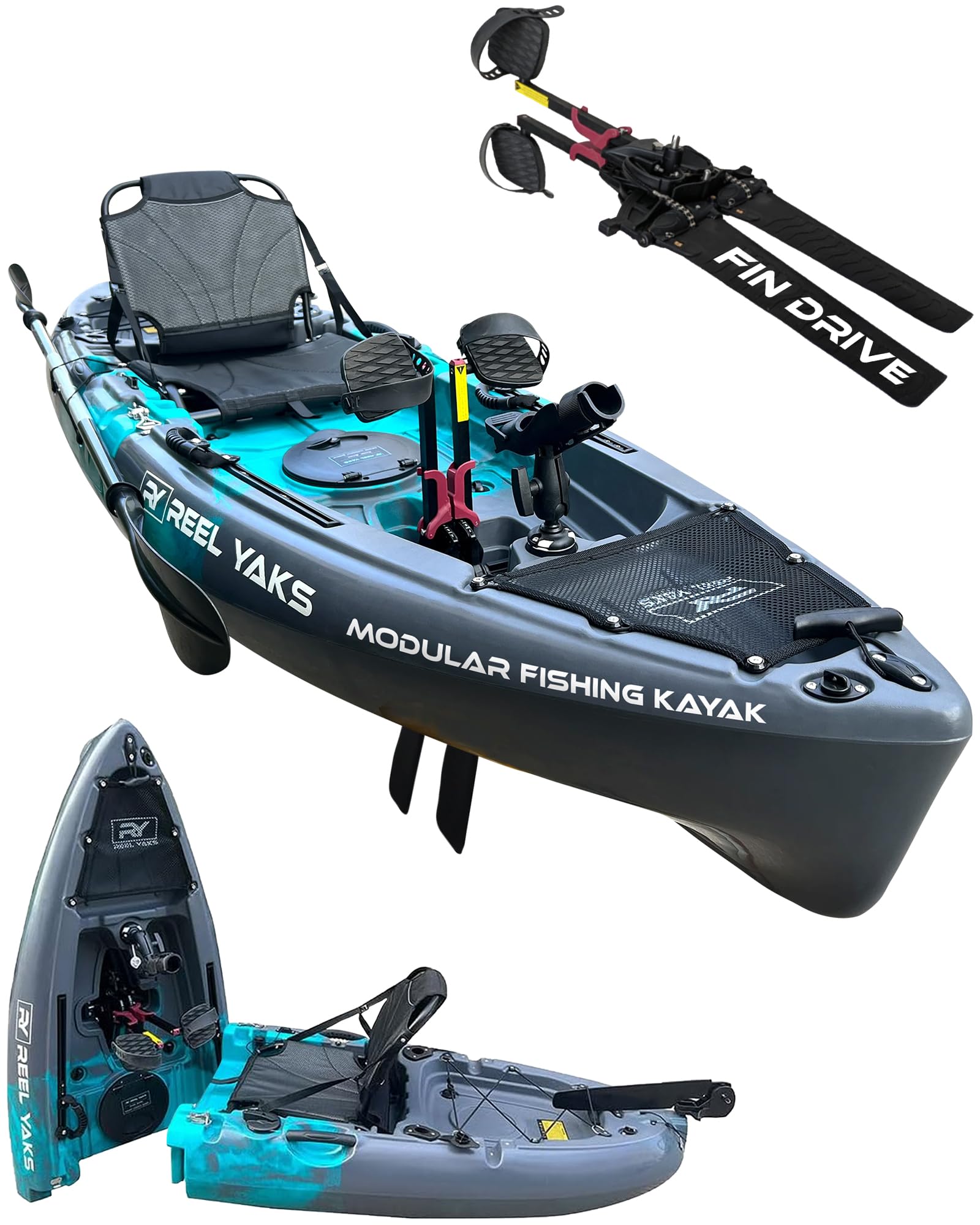
The Reel Yaks Raptor solves the biggest pain point of budget pedal kayaks: transport. Each of its two hull sections weighs roughly 31 pounds, so you can lift them individually into a sedan trunk or apartment closet without a roof rack. The 11-pound fin drive slides into a pre-installed well and provides weed-resistant propulsion that glides through lily pads and grass beds where a propeller would choke immediately.
On the water, the W-hull delivers secondary stability that lets you stand and cast without white-knuckling the gunwales. The fin drive is knee-friendly — the pedal stroke is shorter and lower-impact than bicycle-style cranks, which matters during a six-hour day sight-fishing for bass. The rudder responds to hand controls with enough authority to hold a drift line in a moderate crosswind, and the tracking is surprisingly tight for a 9.5-foot platform.
What holds it back from perfection is the seat height. The stadium seat sits lower than premium competitors, and some users find the leg angle less comfortable for tall paddlers. Assembly instructions are sparse, and the rudder release cable can bind if not routed correctly during setup. Still, for the angler who values storage and car-topping ease above all else, this is the most practical fin-drive entry on the market right now.
Why it’s great
- Modular sections under 32 lb each fit any vehicle
- Weed-resistant fin drive performs in shallow, grassy water
- W-hull offers excellent standing stability for its length
Good to know
- Seat sits low, which may feel cramped for taller anglers
- Rudder hardware requires careful initial setup to avoid cable binding
2. Albott Modular Fishing Kayak with Drive System
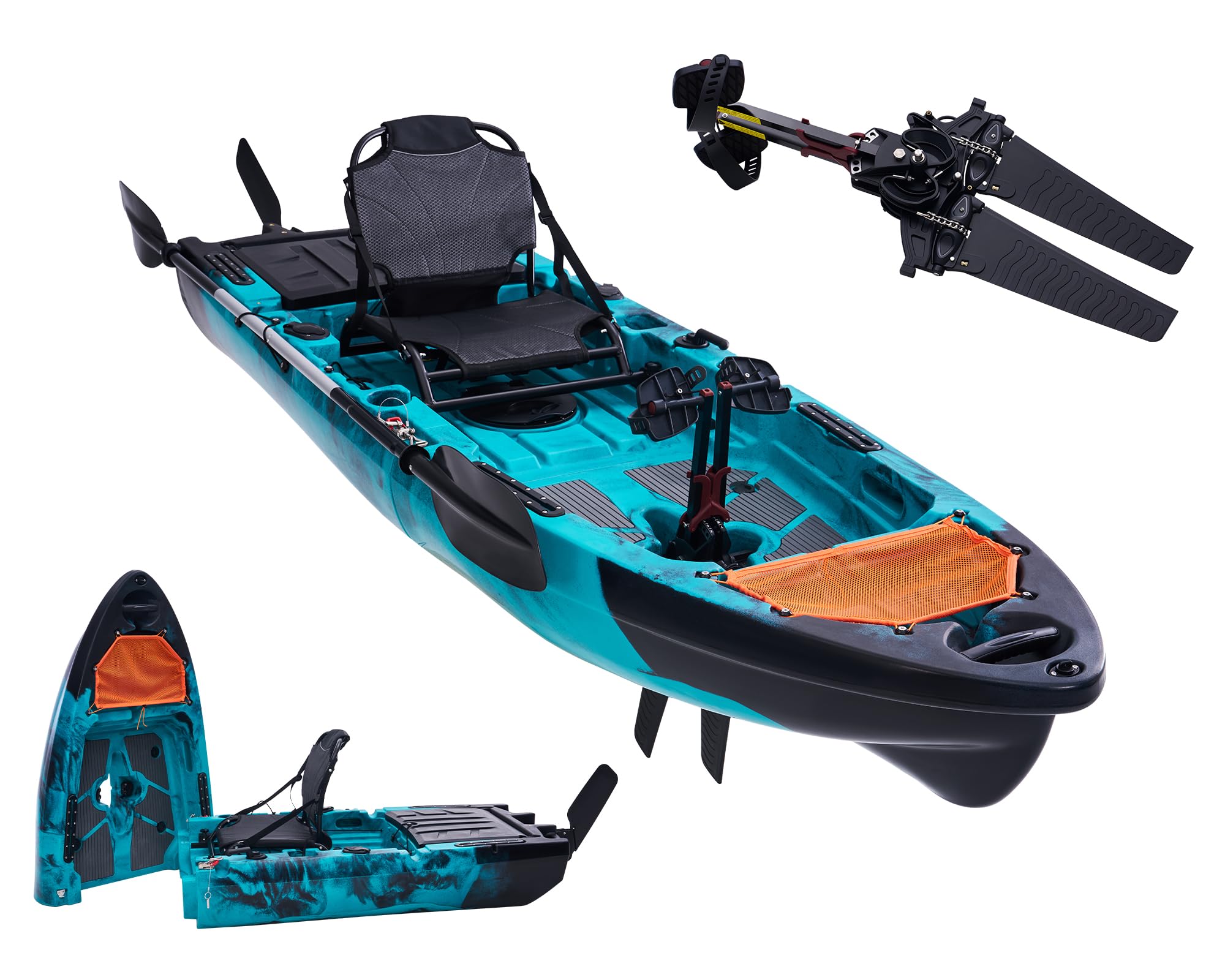
The Albott Modular takes the modular concept and stretches it to accommodate two paddlers without demanding a full tandem-length single hull. The 11-pound fin drive system is interchangeable with spare fins and the weed-resistant design means you can pedal through submerged vegetation without stopping to clear the drive. Assembly involves four steps — clip the two halves together, lock the drive in, attach the rudder, and you are on the water in under five minutes.
The HDPE construction feels denser and more rigid than the rotomolded polyethylene used on many budget singles. That rigidity translates to better tracking when both occupants pedal at different cadences. The rudder control is cable-operated with a push-pull handle that raises and lowers the stern rudder, and the 304 stainless steel lock screw resists corrosion better than the zinc-plated hardware found on cheaper modular boats. At 102 pounds for the full assembly, this is not a one-person car-top load, but the individual sections are manageable.
The weak link appears in the fin drive’s durability. Several reports describe fin shafts snapping within the first few hours of use, suggesting that the plastic composite used for the drive pins may have inconsistent quality control. The clasp screws that hold the hull halves together also tend to loosen during transport — you will want to carry a hex key for re-tightening on the bank. For casual tandem outings on calm lakes, it delivers solid value, but heavy-use anglers should inspect the drive regularly.
Why it’s great
- Quick four-step assembly with no tools required for the drive
- HDPE hull tracks well even with two different pedaling cadences
- Weed-resistant fin drive handles shallow, grassy water effectively
Good to know
- Fin drive shafts have reported breakage under load on early units
- Clasp screws loosen during transport and need periodic re-tightening
3. BKC 10.5 Pro Pedal Fishing Kayak
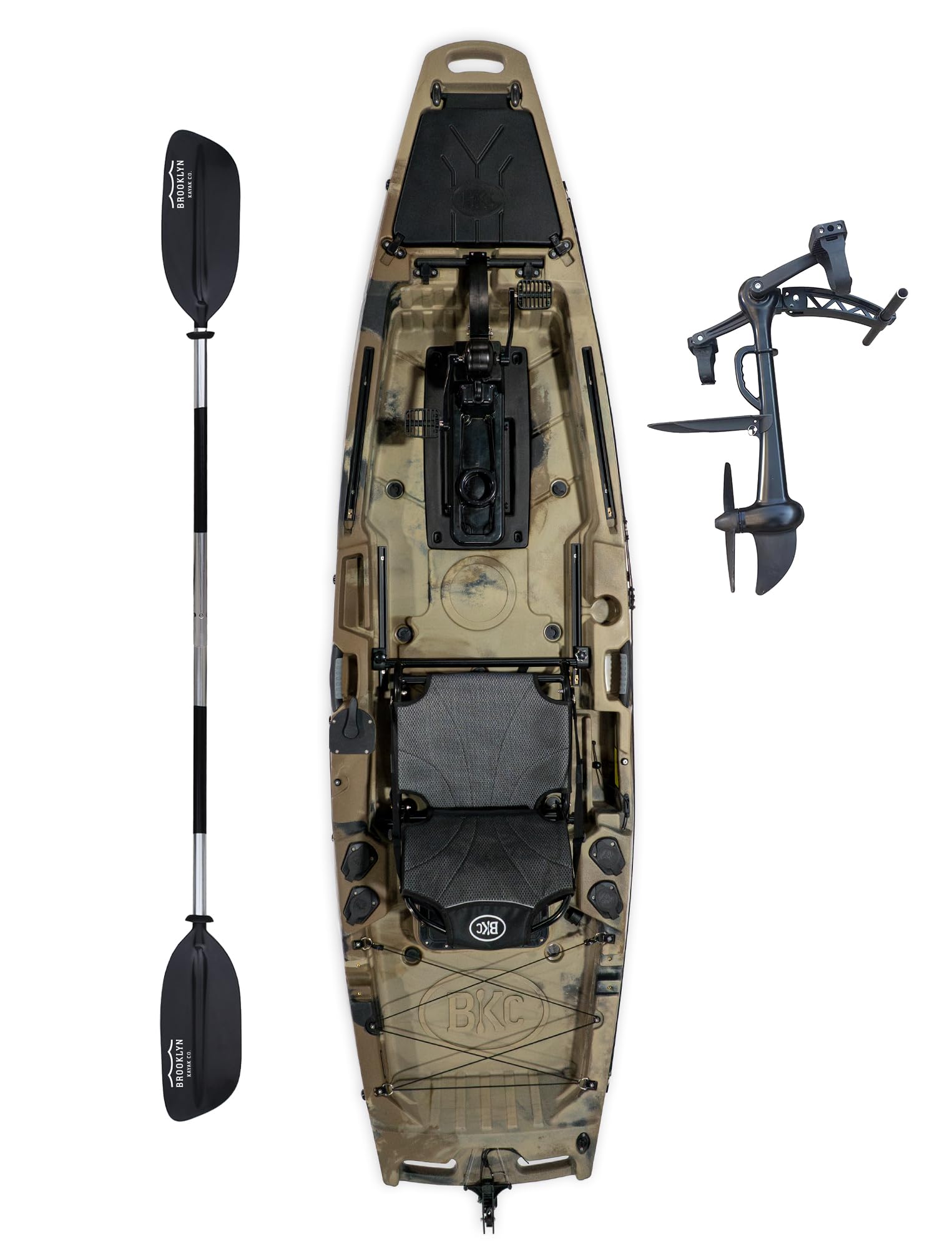
The Brooklyn 10.5 Pro ditches the fin in favor of a propeller drive that pushes the boat at a noticeably faster cruise speed than any fin system in this price bracket. The 65-pound hull sits at the sweet spot for solo car-topping — heavy enough to feel solid on the water but light enough that one person can wrestle it onto a roof rack with a little technique. The hand-operated rudder gives you tight turning radius in wind, and the 440-pound capacity leaves headroom for a cooler, tackle crate, and a second rod.
The adjustable aluminum-frame seat elevates you higher than the molded buckets found on entry-level pedal boats, which improves visibility for sight-casting and reduces pressure on your lower back during long sessions. The propeller drive uses bicycle-style pedals with adjustable foot straps, so you can match the stroke length to your leg reach. The dry storage hatches have gasketed seals that stay watertight even when you surf through boat wakes.
Propeller drives demand clean water. In weedy lakes or grass-choked shallows, the prop will foul within minutes and require you to lift the drive and pick debris out of the blades. For open-water anglers who prioritize speed over weed-shedding, this is the most efficient budget propeller option available.
Why it’s great
- Propeller drive delivers faster cruise speed than fin alternatives
- 65 lb hull is manageable for solo car-topping
- Aluminum frame seat provides excellent lumbar support and elevation
Good to know
- Propeller fouls easily in weeds and grassy shallows
- Short hull surfs and weathervanes in strong following winds
4. BKC 12.5 Pro Pedal Propeller Drive Kayak
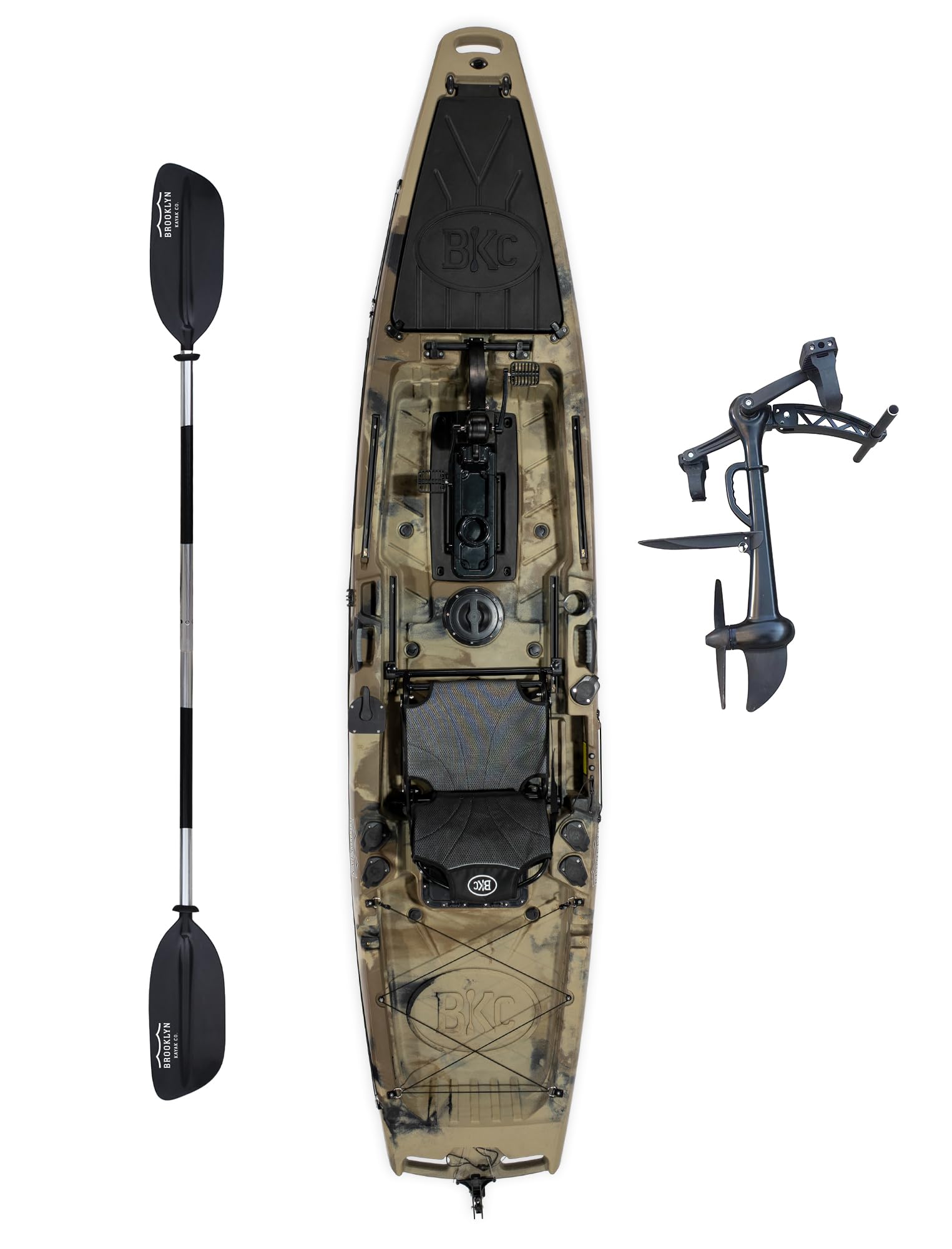
The 12.5 Pro extends the BKC propeller platform by two full feet, and that extra length transforms the ride. The longer waterline increases hull speed, so you can sustain 3-4 mph with moderate effort and push past 5 mph when you sprint-pedal and paddle together. The 550-pound capacity means you can load a weekender’s worth of camping gear, a 30-pound dog, and a full tackle system without the stern squatting.
The hand-controlled rudder is more responsive than the 10.5 model, and the hull’s tracking stays straight in a beam wind that would spin a shorter boat. Three flush-mounted rod holders keep your rods out of the way while you pedal, and the dual watertight hatches include dry bag inserts that protect electronics and spare clothing. The adjustable aluminum seat uses the same frame as the 10.5 but offers a wider range of fore-aft adjustment to accommodate different leg lengths.
Quality control remains the concern. Several units shipped with missing or broken pedal drives, and the manufacturer’s customer service response has been inconsistent — some buyers received quick replacements, others endured months of runaround. The pedal drive itself can arrive stiff and needs break-in time before it spins freely. If you get a fully functional unit, it competes with boats costing twice as much, but the lottery factor is real.
Why it’s great
- Long waterline delivers higher sustained speed and better tracking
- 550 lb capacity handles heavy gear loads and large dogs
- Adjustable seat offers wide range of leg-length accommodation
Good to know
- Pedal drives have shipped missing or broken in some units
- Customer service response times vary widely
5. Pelican Catch HDII Premium Angler

The Catch HDII builds on Pelican’s reputation for stable, wide hulls by pairing the HyDryve II fin drive with the Ergocast G2 seat — one of the most comfortable factory chairs in the sub- bracket. The 67-pound hull is light enough for solo roof loading, and the tunnel hull design provides the secondary stability needed to stand up and fish without wobbling. The HyDryve II is quiet; you can pedal through a pod of resident bass without spooking them with gear noise.
Four accessory rails run along the gunwales, giving you mounting points for a fish finder, GoPro, rod holders, or a cup holder without drilling. The three flush-mount rod holders sit within easy reach of the seat, and the rear tank well has bungee tie-downs for a milk crate or small cooler. The rudder deploys with a hand control that doubles as a skeg when you want straight-line tracking without active steering.
The fin drive’s plastic joint wears faster than metal alternatives. After a season of regular use, the drive develops slop that translates to an inch of free play before the fins engage. The rudder cables also loosen over time and require periodic re-tensioning, and the bottom plastic is thin enough that dragging the hull over gravel leaves gouges. For the angler who treats their gear carefully and stores indoors, this is a capable daily driver that punches well above its weight on comfort.
Why it’s great
- Ergocast G2 seat provides best-in-class lumbar support for all-day sessions
- Four accessory rails enable tool-free customization
- Quiet HyDryve II fin drive does not spook fish
Good to know
- Plastic drive joint wears and develops play over time
- Rudder cables need periodic re-tensioning to maintain response
6. Old Town Sportsman PDL 106
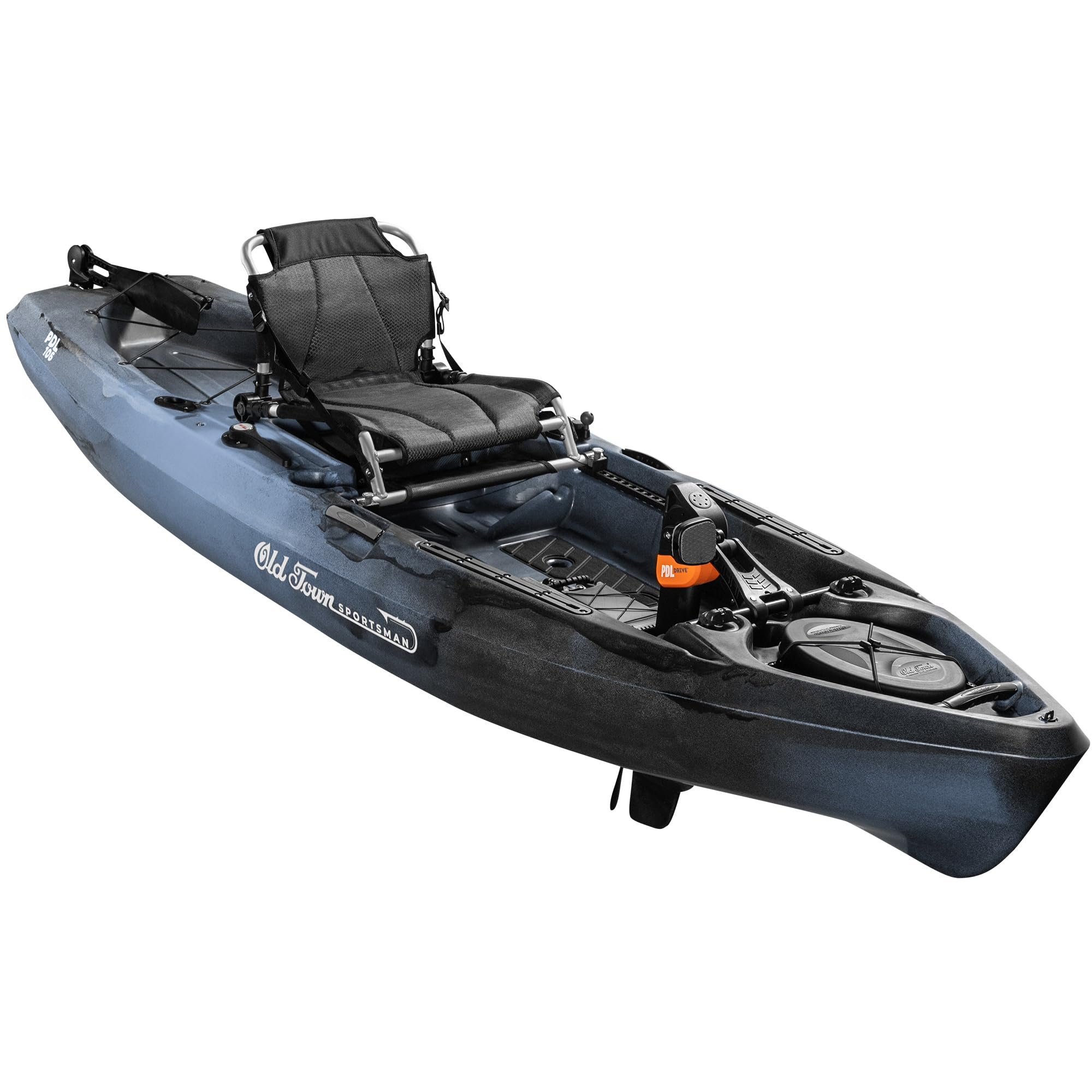
Old Town’s PDL drive is the gold standard for propeller systems, and the Sportsman 106 brings that engineering into a 10.5-foot package that fits on a roof rack. The drive offers instant forward and reverse — you can back out of a snag without reaching for a paddle. The patented easy-docking system lets you lift the drive out of the well with one hand when you hit shallow water, and the pontoon-style hull provides primary and secondary stability that borders on absurd; you can stand and bounce on the deck without the gunwale dipping.
The premium mesh seat breathes better than padded foam on hot days, and the adjustable lumbar support keeps your spine aligned through hour eight. The universal transducer mounting system accepts most fish finder transducers without drilling, and the custom tackle box slides into a dedicated well in front of the seat. The 450-pound maximum capacity includes 343 pounds of usable payload, which sounds tight until you realize most anglers plus gear stay well under 300 pounds.
At 107 pounds, the Sportsman 106 is heavy. Loading it onto a roof rack alone is a genuine risk to your back, and unloading at the ramp after a long day is exhausting. The removable pedal console weighs 18 pounds separately, but the hull itself remains a two-person job. The price also vaults past what most budget buyers expect to spend. If you can handle the weight and the sticker shock, the PDL drive’s reliability and instant reverse make it the most capable pedal system under .
Why it’s great
- PDL drive provides instant forward and reverse with no delay
- Pontoon-style hull is exceptionally stable for standing and casting
- Easy-docking system lets you lift the drive out in seconds
Good to know
- 107 lb hull requires two people for safe roof loading
- Usable payload of 343 lb may limit heavy gear expeditions
7. Wilderness Systems Recon 120 HD
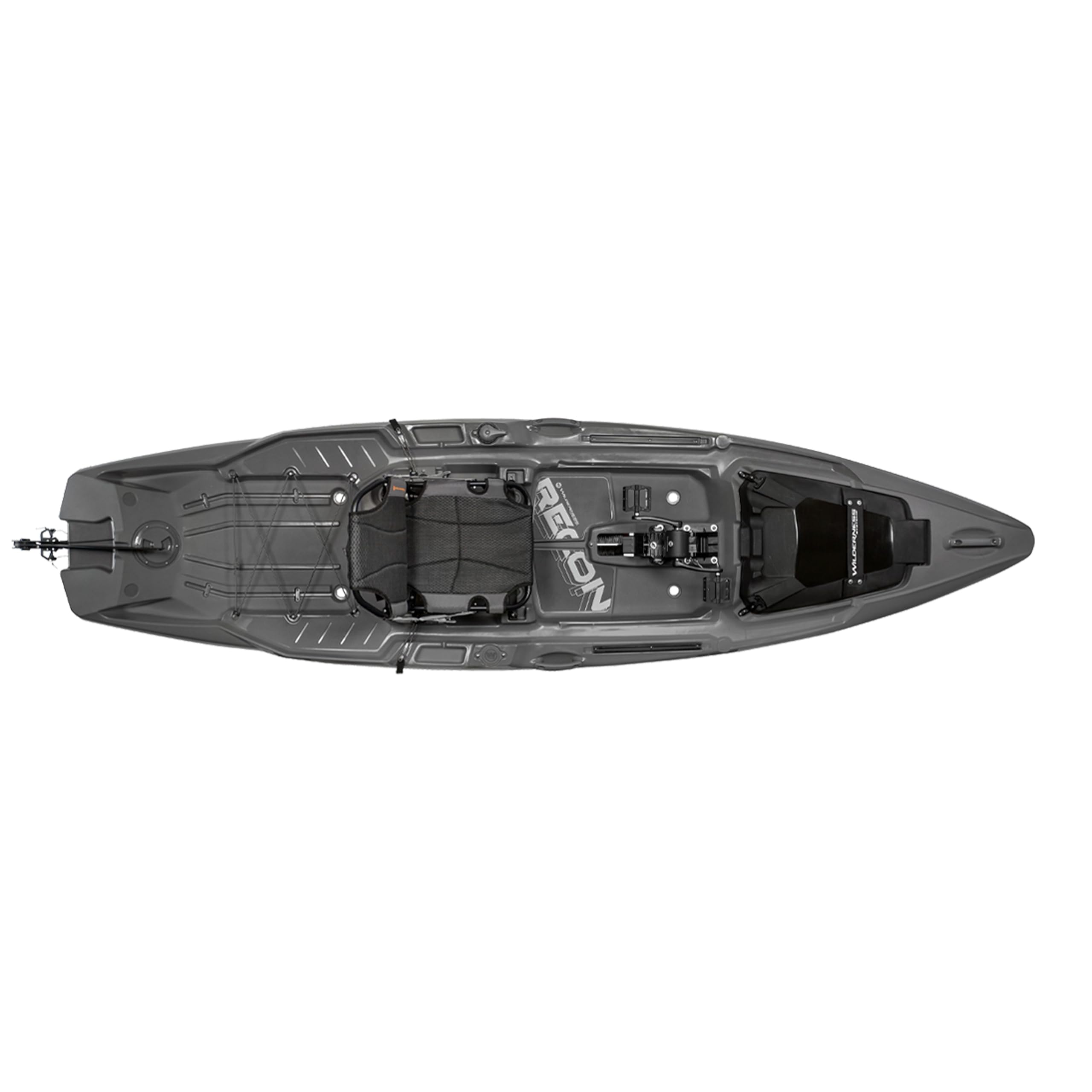
The Recon 120 HD’s AirPro ACES seat rotates 360 degrees, letting you fish any direction without shifting your body. That sounds like a luxury feature, but it solves a real problem: when a striper boils behind you, you can spin, cast, and fight without unhooking the pedal drive or twisting your spine. The Helix PD drive is smooth and offers instant forward and reverse through a gear ratio optimized for all-day pedaling without leg fatigue.
The StowPro storage system uses an extra-large gasketed hatch with a configurable bin that organizes pliers, hooks, and tools so they do not rattle around inside the hull. The dual rod troughs carry up to three 7.5-foot rods on each side, secured with cross-lashing bungee — you could pack six rods without one dragging in the water. The S.M.A.R.T. hull design balances stability and maneuverability well enough that you can navigate tight creek bends while maintaining enough secondary stability to stand.
The quality control issues are hard to ignore. Boats have arrived with dings, scratches, and even holes from poor packaging, and the rudder line is thin enough to fray within a handful of outings. The manufacturer’s warranty covers the hull for life but only offers one year on parts and accessories, which feels thin for a boat at this price point. When it works, it is the most feature-rich pedal kayak in the lineup. Getting a flawless unit is not guaranteed.
Why it’s great
- 360° swivel seat enables casting in any direction without repositioning
- Helix PD drive offers smooth forward and reverse with low leg fatigue
- Dual rod troughs carry up to six rods securely
Good to know
- Shipping packaging inadequate — many units arrive with cosmetic damage
- Rudder line frays quickly and may need replacement early
8. BKC 14.0 Tandem Pedal Kayak
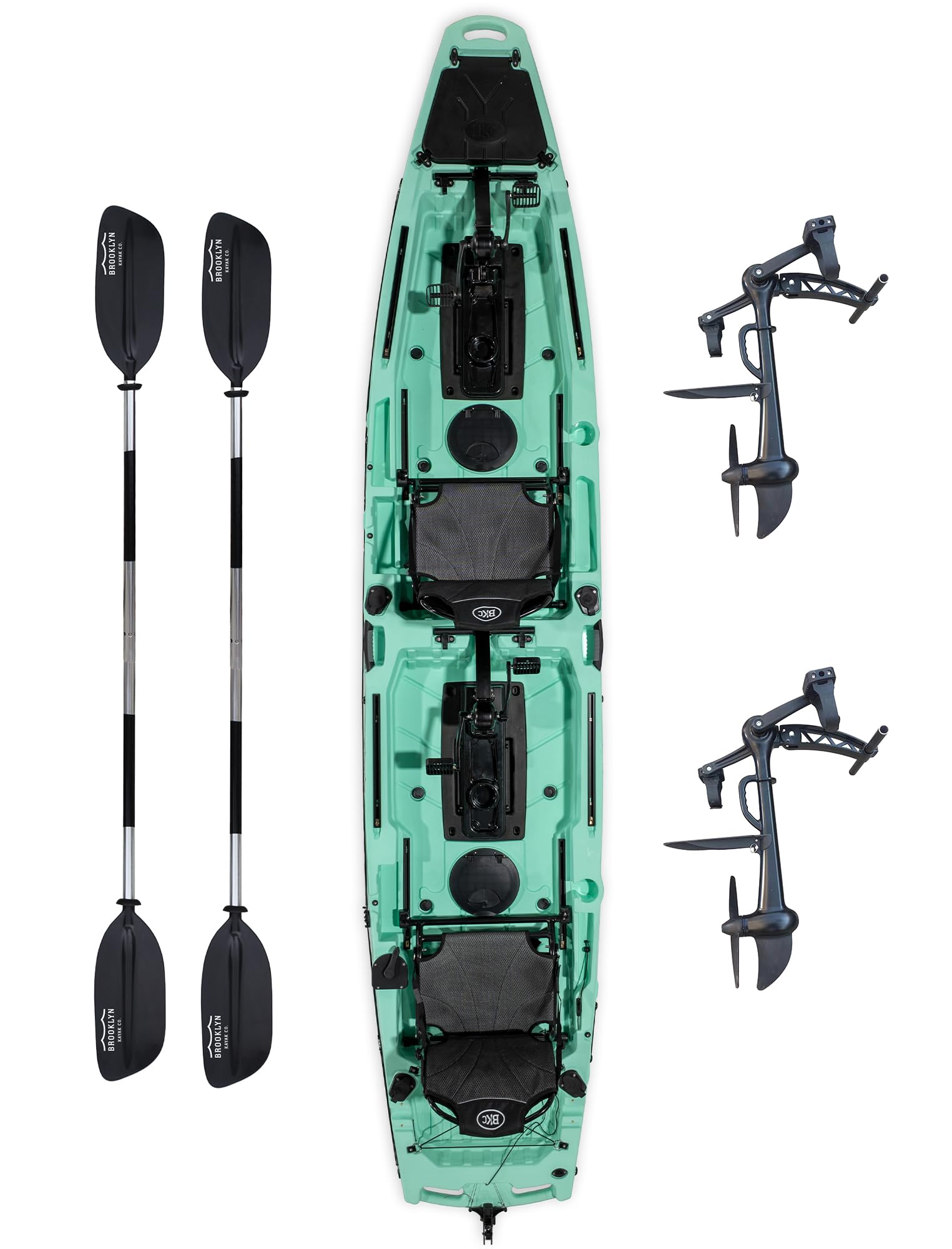
The BKC 14.0 Tandem is the only twin-propeller pedal kayak in this roundup, and that dual-drive setup changes the tandem experience. When both occupants pedal, the 35-inch-wide hull accelerates like a small skiff, and you can maintain conversation-level speed for miles. When you fish solo, the second drive well sits empty and the boat handles like a slightly oversized single — the tracking remains straight and the 750-pound capacity means you can pile camping gear in the unused seat area.
The 14-foot length and 35-inch beam produce a ride that eats chop that would send shorter boats into a porpoising rhythm. Three flush-mounted rod holders sit within reach from the rear seat, and the large watertight bow hatch can hold a sleeping bag and tent for overnight trips. Four built-in carry handles make the 100-pound hull manageable with two people, and the hand-operated rudder gives you enough leverage to twist the boat around in tight turns.
The propeller blades are plastic and vulnerable to impact. One user reported a blade breaking on the first outing, and the replacement part took weeks to arrive. The rudder is undersized for the hull’s length, so sharp turns require you to pedal one side harder than the other — a technique that takes practice. If you fish with a partner who wants hands-free control, this is the only budget tandem that delivers, but you need to be comfortable with DIY repairs and part delays.
Why it’s great
- Twin propeller drives provide fast, efficient tandem propulsion
- 750 lb capacity handles two people plus overnight gear
- 14 ft hull cuts through chop that would bounce shorter boats
Good to know
- Plastic propeller blades can break on impact and are slow to replace
- Rudder is undersized for the hull length, limiting turning radius
9. Perception Rambler Tandem Kayak
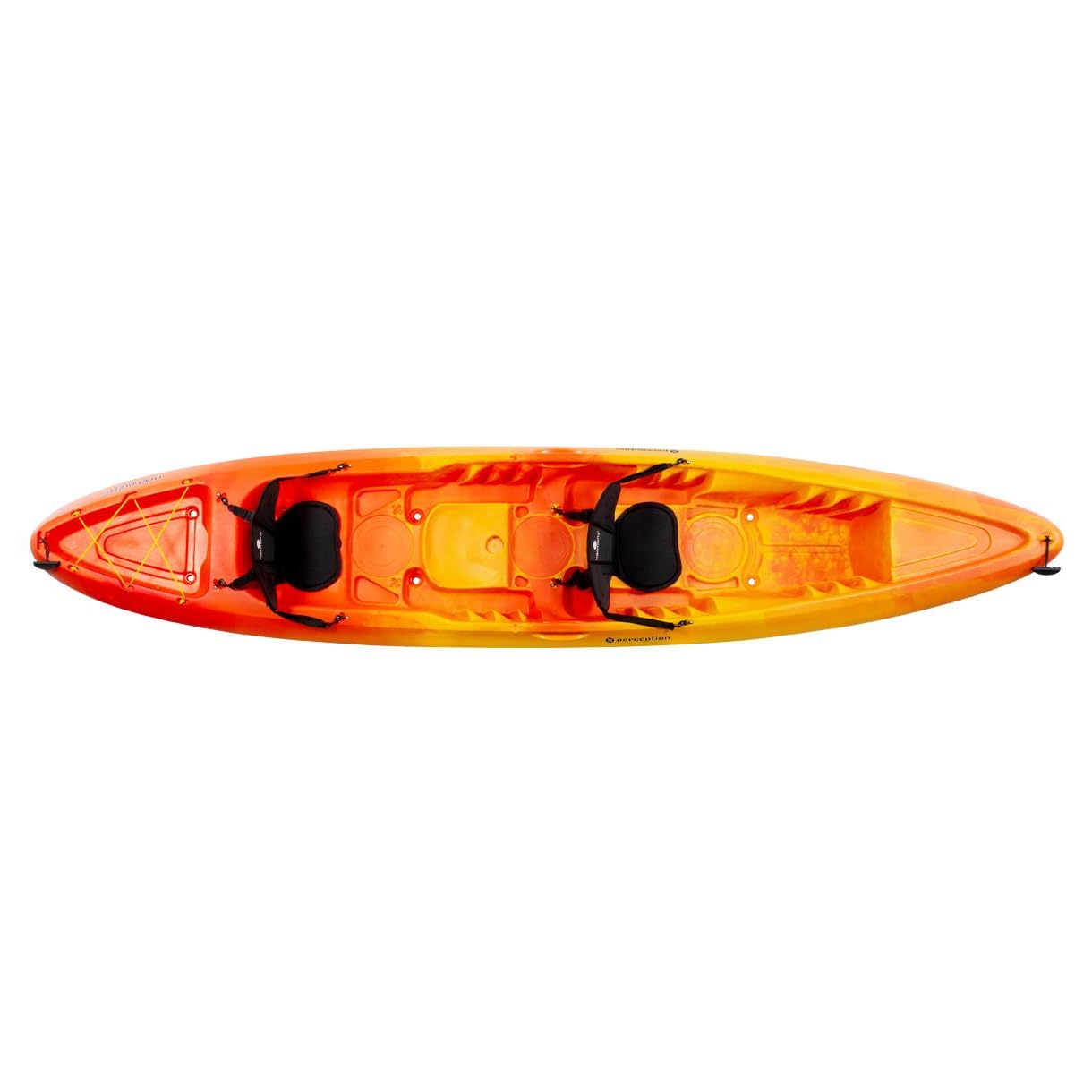
The Rambler is a paddle kayak, not a pedal kayak, and it belongs in this guide because it demonstrates the baseline stability and capacity you need before upgrading to a pedal system. The 34-inch beam and 78-pound hull are stable enough for two adults and a dog, and the 550-pound maximum capacity means you can load it to the brim without swamping. The molded-in center seat is perfect for a child or a medium-sized dog, and the removable padded seats with adjustable backrests keep both paddlers comfortable for hours.
On the water, the Rambler tracks surprisingly well for a wide recreational hull. The large rear open storage handles a cooler and dry bag, and the multiple footrest options accommodate paddlers from 5 feet to 6 feet 4 inches. The rotomolded polyethylene construction is tough enough to survive rocky launches and beach landings without cracking.
At 78 pounds, solo loading onto an SUV roof rack is a genuine struggle without a kayak cart. The Rambler is also 13.5 feet long, which means it will not fit in a standard pickup truck bed with the tailgate closed. It lacks any pedal drive integration — you would need to retrofit a third-party drive system, which is an expensive and imperfect solution. If you want the Rambler’s stability with pedal propulsion, consider it a stepping stone to a purpose-built pedal model.
Why it’s great
- 34-inch beam provides exceptional stability for two adults plus gear
- 550 lb capacity handles heavy loads without performance loss
- Rotomolded polyethylene hull is extremely durable for rough landings
Good to know
- Heavy 78 lb hull is difficult for one person to load onto a roof rack
- No pedal drive integration — strictly a paddle kayak
10. Pelican Catch Mode 110

The Catch Mode 110 is Pelican’s lightest dedicated fishing hull at 63 pounds, and that weight makes it the easiest kayak in this roundup for a single person to lift, carry, and roof-load. The tunnel hull is exceptionally stable — you can stand up, cast, and reel without the deck swaying. The ERGOBOOST seating system raises you higher than typical molded seats, improving your sightline for spotting fish in stained water.
Two 4-inch rigging tracks let you mount a fish finder, rod holder, or camera without drilling. Three flush-mount rod holders keep rods out of the way while you handle a net, and the front and rear tank wells provide storage for a tackle crate and a small cooler. The anti-slip deck carpet is a genuine safety feature when your feet are wet — no slipping on bare plastic. The included skeg improves tracking in wind, though it pops off if you hit a submerged log hard enough.
As with the Rambler, this is a paddle kayak, not a pedal kayak. You can retrofit a pedal drive system, but Pelican does not offer a factory pedal option for the Mode 110. The handles are mounted with screws that pull through if you lift the fully loaded boat, so you need to grab the hull edges when carrying it. For the angler who wants pedal propulsion eventually but needs a lightweight paddle hull today, this is the most capable budget fishing platform in its weight class.
Why it’s great
- 63 lb hull is the lightest in this roundup for easy solo transport
- Tunnel hull provides exceptional standing stability for fishing
- ERGOBOOST seat offers a higher vantage point for sight-fishing
Good to know
- No factory pedal drive option — paddle only
- Mounted handles may pull through if lifting a fully loaded boat
11. Perception Hi Life Hybrid SUP/Kayak
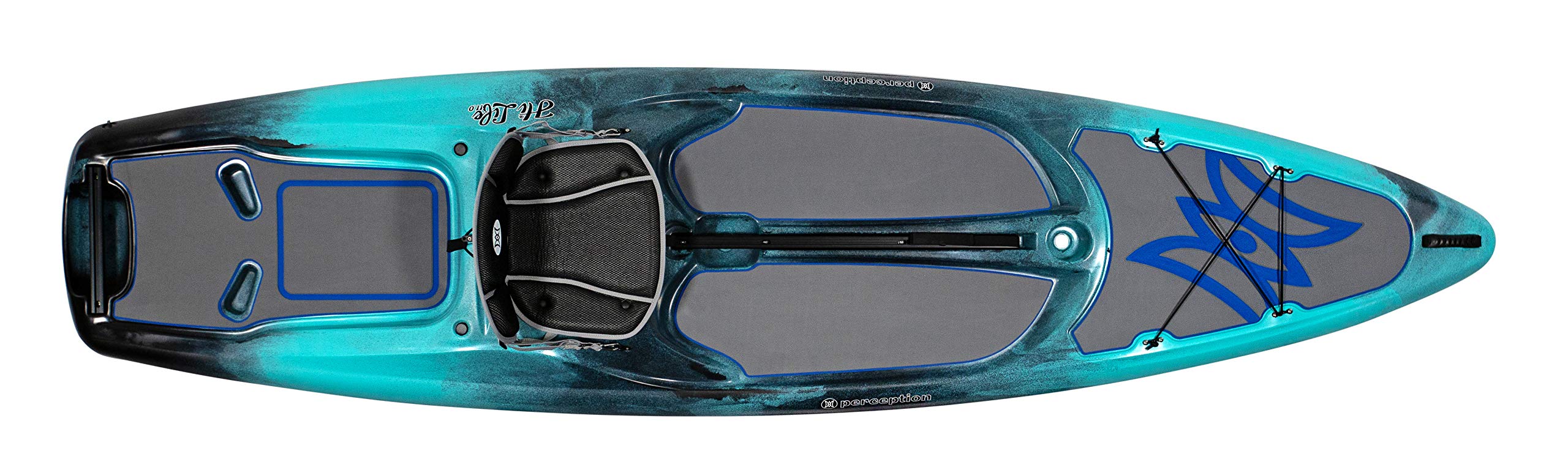
The Hi Life blends a stand-up paddle board deck with a kayak seat, giving you the option to sit, stand, or kneel without changing boats. At 55 pounds, it is the lightest full-sized hull in this lineup, and the 11-foot length keeps it nimble enough for tight creeks and small lakes. The elevated seat with a fold-down backrest is heavily padded, and the built-in cooler underneath the seat keeps drinks cold for a full day on the water.
The 34-inch beam provides remarkable primary stability — you can stand and take a photo without the board wobbling. The low sides and front/rear swim decks make reboarding easier than any traditional kayak, which is a real advantage if you fall out or want to swim mid-trip. The fin takes a standard longboard screw, so you can upgrade to a 10-inch fin for better tracking in open water. Owners consistently report that the Hi Life handles boat wakes and chop better than expected for a hybrid design.
The trade-off is speed. The flat hull does not glide as efficiently as a V-shaped kayak hull, so you work harder to maintain cruising speed. At the 280-pound maximum capacity, performance drops noticeably with two adults — you sit lower in the water and the hull feels sluggish. There is no pedal drive option, and the limited tie-down points make accessory mounting harder than on dedicated fishing hulls. For casual paddlers who want one boat that does everything reasonably well, the Hi Life is a versatile compromise.
Why it’s great
- 55 lb hull is the lightest full-sized kayak for easy transport
- Hybrid SUP deck allows sitting, standing, or kneeling
- Low sides and swim decks make reboarding simple
Good to know
- Flat hull is slower and less efficient than V-shaped kayaks
- 280 lb capacity drops performance noticeably with two adults
12. Nautica Marine Underwater Seascooter
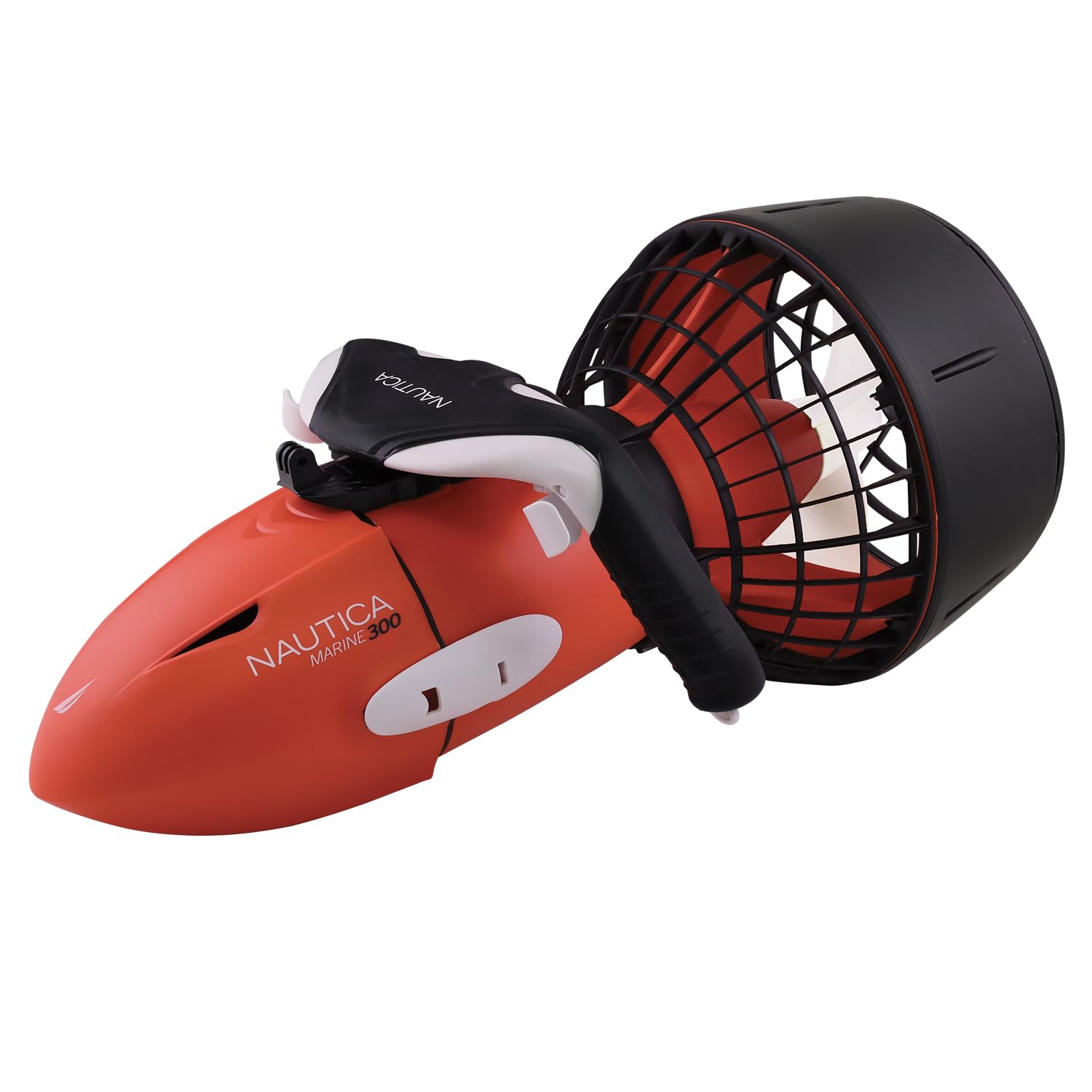
The Nautica Marine 300 is not a kayak — it is a handheld underwater scooter that turns any kayak or paddleboard into a motorized vessel by providing 3 mph of pull-through propulsion. At 18 pounds, you can clip it to your kayak’s side with a carabiner, then drop it in the water and let it tow you at a steady pace when your legs get tired. The depth rating of 100 feet means it works for snorkeling and light diving, and the 90-minute runtime covers most day trips.
The dual-trigger safety system cuts power instantly when you release both triggers, which is reassuring when you are using it as an assist rather than a primary drive. The integrated action camera mount lets you capture underwater footage hands-free, and the rechargeable marine battery charges to full in 5-7 hours. Users report that it performs well in saltwater at depths under 30 feet, with enough speed for wildlife viewing without spooking fish.
This is not a replacement for a pedal drive. The scooter adds weight to your kayak, requires you to hold it or mount it securely, and its 3 mph top speed is slower than a moderate pedal cadence. Build quality concerns include water leaking into the battery compartment on some units and a complicated charging procedure that requires removing the battery. For the kayaker who wants occasional motorized assistance without installing a trolling motor, this is a unique but imperfect solution.
Why it’s great
- Provides 3 mph motorized assist for tired legs on long crossings
- 18 lb weight makes it portable and easy to stow on a kayak deck
- Depth-rated to 100 ft for snorkeling and dive use
Good to know
- Not a direct replacement for a built-in pedal drive system
- Charging procedure is complex and some units have water leak issues
FAQ
Can I retrofit a pedal drive onto a paddle kayak?
How fast can a budget pedal kayak go?
How do I transport a pedal kayak without a roof rack?
Do I need a rudder on a pedal kayak?
Can I use a pedal kayak in saltwater?
Final Thoughts: The Verdict
For most anglers shopping on a budget, the best budget pedal kayak winner is the Reel Yaks Raptor because its modular design eliminates the transport hurdle that disqualifies so many affordable pedal boats — you can store it in a closet and car-top it alone. If you want the speed and instant reverse of a propeller drive, the BKC 10.5 Pro delivers the lightest propeller-equipped hull at a price that still feels like a deal. And for tandem trips with a partner who refuses to paddle, the BKC 14.0 Tandem is the only sensible choice that keeps both sets of hands free for rods, cameras, or sandwiches.