
Finding a processor that delivers strong performance without draining your entire build budget is the defining challenge of a smart desktop assembly. The market is flooded with chips that promise the world but buckle under real multitasking loads, or worse, force you to pair them with expensive motherboards and RAM just to function. The real prize is a chip that strikes a perfect balance between core count, clock speed, and platform cost, ensuring your money goes into frame rates, not into a brand name.
I’m Min — the co-founder and writer behind Gadgets Feed. I’ve spent countless hours analyzing spec sheets, benchmark data, and real-world thermal performance across dozens of current and last-generation socket platforms to identify the processors that offer genuine value.
Whether you’re building a dedicated gaming rig or a versatile workstation, this guide to the budget processor landscape will help you navigate the trade-offs between core architecture, cache size, and platform longevity.
How To Choose The Best Budget Processor
Selecting the right chip for a constrained budget requires looking beyond the sticker price to the total cost of ownership—including cooler, motherboard, and memory. A cheap CPU that forces you onto a dead-end platform with expensive RAM is no bargain at all.
Platform Longevity and Socket Type
A budget build should ideally leave a credible upgrade path. An AM4 socket processor like the Ryzen 5 5600X allows you to use affordable DDR4 RAM and drop in a higher-tier chip years later. Conversely, a modern AM5 chip costs more upfront for the motherboard and DDR5 RAM but opens the door to future Zen 6 upgrades without replacing your board. Weighing this trade-off is the single most important financial decision you’ll make.
Cache Memory and Gaming Performance
The size of the L3 cache is a critical spec that beginners often ignore. A processor like the Ryzen 7 7800X3D uses 3D V-Cache to stack 96MB of L3 cache directly onto the chip, dramatically reducing latency in CPU-intensive games. For a pure gaming budget build, this technology provides a more tangible frame-rate uplift than chasing a few extra gigahertz.
Thermal Design Power (TDP) and Cooler Costs
A chip that runs hot, such as the Intel i5-14600KF with its 125W base power, will require a costly aftermarket cooler or a large AIO liquid cooler to avoid thermal throttling. A more power-efficient chip like the AMD Ryzen 5 7600X can run adequately on a modest air cooler, saving you – that can be reinvested into a better graphics card or faster storage.
Quick Comparison
On smaller screens, swipe sideways to see the full table.
| Model | Category | Best For | Key Spec | Amazon |
|---|---|---|---|---|
| AMD Ryzen 7 7800X3D | Premium Gaming | Elite Gaming Performance | 8 Cores, 96MB L3 Cache | Amazon |
| AMD Ryzen 7 9800X3D | Flagship Gaming | Max FPS and Efficiency | 8 Cores, 104MB Total Cache | Amazon |
| Intel Core i5-14600KF | High-Performance Hybrid | Multitasking & Gaming | 14 Cores (6P+8E), 20 Threads | Amazon |
| Intel Core i9-12900K | Prosumer Hybrid | Content Creation & Gaming | 16 Cores (8P+8E), up to 5.2 GHz | Amazon |
| AMD Ryzen 5 9600X | Mid-Range Gaming | Efficient 1080p/1440p Gaming | 6 Cores, Zen 5, 5.4 GHz Boost | Amazon |
| AMD Ryzen 5 7600X | AM5 Gaming | Future-Proof Entry Build | 6 Cores, DDR5/PCIe 5.0 Support | Amazon |
| AMD Ryzen 5 5600X | Value Gaming | High FPS on a Tight Budget | 6 Cores, 35MB Cache, 65W TDP | Amazon |
| Intel Core i7-6700 | Legacy Workstation | Office Builds & NAS | 4 Cores, 8 Threads, 75W TDP | Amazon |
| Intel Pentium Gold G6405 | Entry-Level | Ultra-Budget Basic PCs | 2 Cores, 4 Threads, 4.1 GHz | Amazon |
In‑Depth Reviews
1. AMD Ryzen 7 7800X3D 8-Core, 16-Thread Desktop Processor

The AMD Ryzen 7 7800X3D redefines what is possible from a mid-range priced processor by stacking an additional 64MB of L3 cache on top of the standard 32MB, creating a massive 96MB pool that games absolutely love. This 3D V-Cache technology allows the 8-core, 16-thread chip to deliver frame rates that rival and often beat much more expensive Intel flagship offerings, all while sipping power at a 75W gaming draw.
Built on the 5nm process and designed for the Socket AM5 platform, this processor runs remarkably cool under standard gaming loads, often sitting in the 65-70°C range with a modest air cooler. The 4.2 GHz base clock and 5.0 GHz max boost ensure snappy desktop performance, and the included Radeon Graphics controller means you can even troubleshoot without a dedicated GPU installed.
For the price, this is the single most effective gaming upgrade a budget-conscious builder can make. The dramatic reduction in frame-time variance in titles like “Cyberpunk 2077” and “Baldur’s Gate 3” translates to a smoother, more responsive experience that a simple clock-speed bump cannot replicate on a standard cache processor.
Why it’s great
- 96MB of 3D V-Cache delivers best-in-class gaming frame rates.
- Runs cool and efficient at 75W gaming TDP, saving on cooler costs.
- AM5 platform supports DDR5 and future CPU upgrades.
Good to know
- Not the best for heavily threaded productivity tasks like video rendering.
- Requires a dedicated graphics card; no integrated GPU for display out.
2. AMD RYZEN 7 9800X3D 8-Core, 16-Thread Desktop Processor
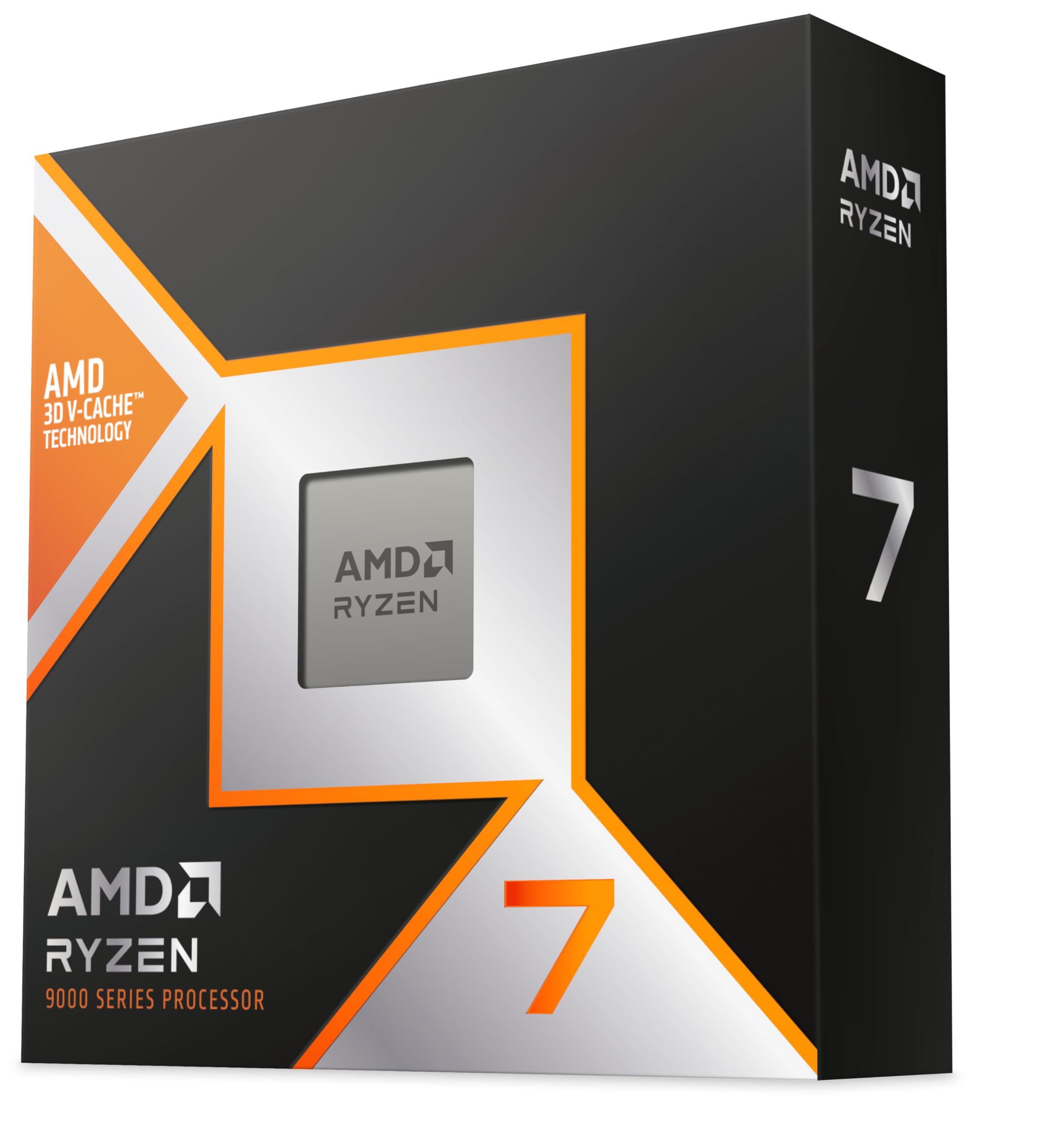
The Ryzen 7 9800X3D represents the absolute pinnacle of consumer gaming performance, combining the Zen 5 architecture’s 16% IPC uplift with a next-generation 3D V-Cache design that pushes total L3 cache to 96MB. This 8-core, 16-thread monster clocks up to 5.2 GHz out of the box, and the improved thermal characteristics of the new cache stacking mean it maintains those boost clocks for longer without throttling.
Drop-in ready for the proven Socket AM5 infrastructure, this processor requires a dedicated cooler but delivers such exceptional power efficiency that even a mid-range 240mm AIO can keep it comfortably under 70°C during sustained gaming sessions. The consistent frame times and elimination of CPU bottlenecks in games like “Starfield” and “Alan Wake 2” make this the ultimate choice for pairing with top-tier GPUs like the RTX 4090.
While the price is steep for a pure “budget” list, the longevity it offers is unmatched. A build centered on the 9800X3D will remain competitive for years, and the platform’s DDR5 and PCIe 5.0 support ensures no upgrade path is blocked. For the builder who wants to buy once and forget for half a decade, this is the benchmark.
Why it’s great
- World’s fastest gaming processor with Zen 5 IPC and 3D V-Cache.
- Excellent power efficiency and improved thermal management.
- Full support for AM5, DDR5, and PCIe 5.0 for extreme longevity.
Good to know
- Premium price point requires significant budget allocation.
- Cooler not included; budget for a quality aftermarket solution.
3. Intel Core i5-14600KF Gaming Desktop Processor

The Intel Core i5-14600KF is a hybrid architecture powerhouse that uses 6 high-performance P-cores and 8 efficient E-cores to deliver 20 threads of raw processing capability. With a max turbo frequency of 5.3 GHz and a massive 24MB of L2 cache plus 24MB of L3 cache, this chip tears through both gaming and productivity workloads with equal ferocity.
A standout feature of this 14th-gen processor is its dual-memory support, allowing you to pair it with budget-friendly DDR4-3200 RAM or step up to high-speed DDR5 for a future performance uplift. The unlocked multiplier gives overclockers plenty of headroom, and the LGA1700 socket is compatible with both 600-series and 700-series motherboards, providing flexibility in component selection.
Note that this is a “KF” variant, meaning it lacks integrated graphics and requires a discrete GPU. The 125W base power rating means you’ll want a robust 240mm or larger AIO cooler to keep it from throttling under sustained all-core loads. For the price, the core-count and thread-count offering is nearly unmatched in the mid-range segment.
Why it’s great
- 14 cores and 20 threads offer incredible multitasking performance.
- DDR4 and DDR5 support saves money on the motherboard and RAM.
- Unlocked multiplier for easy manual overclocking.
Good to know
- Runs hot under load; a quality aftermarket cooler is non-negotiable.
- No integrated graphics, requiring a dedicated GPU for display.
4. Intel Core i9-12900K Gaming Desktop Processor

The Intel Core i9-12900K is a previous-generation flagship that has dropped into a more accessible price bracket, making its 16 cores (8P+8E) and 30MB of L3 cache an incredible value for users who need heavy rendering or encoding performance alongside gaming. Its Intel 7 architecture and unlocked design allow it to boost up to 5.2 GHz, making it a versatile choice for content creators who also game.
A major advantage of this “K” variant is the integrated Intel UHD 770 graphics. This allows you to use the system for basic productivity, video playback, and even troubleshooting without installing a discrete GPU. It also supports both PCIe 5.0 and DDR5, ensuring your motherboard and memory are standard-compliant for years to come.
The trade-off is power consumption; the 12900K has a 125W base power that can spike much higher under load, demanding a high-end air cooler or a 280mm+ AIO. For a budget build that prioritizes raw multi-threaded work, however, this chip offers a core count that typical mid-range CPUs simply cannot match at its current price level.
Why it’s great
- 16 cores provide exceptional performance for video editing and 3D rendering.
- Integrated UHD 770 graphics eliminate the need for a GPU in office builds.
- Supports both DDR5 and PCIe 5.0 for modern connectivity.
Good to know
- High power draw requires a robust and potentially expensive cooling solution.
- Requires an LGA1700 motherboard, a dedicated socket investment.
5. AMD Ryzen 5 9600X 6-Core, 12-Thread Unlocked Desktop Processor

The AMD Ryzen 5 9600X is the entry point to the cutting-edge Zen 5 architecture, bringing a 16% IPC uplift over the previous generation alongside a blistering 5.4 GHz max boost clock. This 6-core, 12-thread chip is designed to deliver smooth 100+ FPS performance in the world’s most popular competitive titles, all while sipping power at a very manageable 65W TDP.
Running on the AM5 platform, the 9600X supports DDR5-5600 memory and PCIe 5.0 on select motherboards, giving you a modern foundation for future GPU and storage upgrades. Users report remarkably cool temperatures, often not exceeding 65°C under gaming load with a modest air cooler, which drastically lowers the total build cost compared to a higher-TDP Intel chip.
Note that a cooler is not included in the box, so you must budget for an aftermarket solution. For the price, this processor offers the most efficient and high-clock-speed path into the AM5 ecosystem, making it an excellent choice for a 1080p or 1440p gaming rig that can be upgraded later with a drop-in 8-core or 3D V-Cache chip.
Why it’s great
- Latest Zen 5 architecture offers a significant IPC improvement.
- Very cool and efficient 65W TDP keeps cooler costs low.
- AM5 platform provides a solid upgrade path to future processors.
Good to know
- Cooler not included in the box, adding to upfront cost.
- 6 cores may show limits in heavily threaded productivity tasks.
6. AMD Ryzen 5 7600X 6-Core, 12-Thread Unlocked Desktop Processor

The AMD Ryzen 5 7600X is a proven workhorse that brings the benefits of the Zen 4 architecture and the AM5 platform to a very accessible price point. With 6 cores, 12 threads, and a 5.3 GHz max boost frequency, this chip provides snappy responsiveness and excellent gaming performance, especially when paired with a mid-range GPU like the RTX 4070 Super.
Built on a 5nm process, the 7600X combines 6MB of L2 cache with 32MB of L3 cache for a total of 38MB, ensuring excellent hit rates for gaming data. The processor supports DDR5 memory and PCIe 5.0, making it a genuinely future-proof foundation. Users consistently report that while it runs warm (80-85°C under heavy air cooling), it does not throttle and maintains its boost clocks effectively.
One important consideration is that a cooler is not included, and the chip’s density benefits from a quality aftermarket cooler or a 240mm AIO. For a budget-conscious builder who wants the latest platform features without paying for cores they won’t use, the 7600X offers the best balance of cost and capability in the AM5 ecosystem.
Why it’s great
- Strong single-core performance for high FPS in competitive games.
- Full support for DDR5 and PCIe 5.0 for modern system building.
- AM5 socket allows for future CPU upgrades without a new motherboard.
Good to know
- Runs warm; a quality aftermarket cooler is strongly recommended.
- No integrated graphics, necessitating a dedicated GPU.
7. AMD Ryzen 5 5600X 6-core, 12-thread Desktop Processor

The AMD Ryzen 5 5600X is the gold standard for high-value budget gaming builds, offering 6 Zen 3 cores and 12 threads with a 4.6 GHz max boost clock that punches well above its weight class. Its 35MB of total cache and 65W TDP make it incredibly efficient, and it comes bundled with the quiet AMD Wraith Stealth cooler, meaning you don’t need to buy a separate cooler.
Built for the mature and affordable Socket AM4 platform, the 5600X supports DDR4-3200 memory and PCIe 4.0 on X570 and B550 motherboards. This chip delivers elite 100+ FPS performance in popular titles like “Cyberpunk 2077” and “Apex Legends,” and its rock-solid stability and low heat output make it a favorite for silent PC builds.
The primary trade-off is that AM4 is a dead-end platform, meaning any future CPU upgrade will require a new motherboard and potentially new RAM. However, for a pure budget build that prioritizes maximum gaming performance per dollar spent today, the 5600X remains an unbeatable value proposition that frees up budget for a better graphics card.
Why it’s great
- Excellent gaming performance with great single-core speed.
- Very low 65W TDP runs cool and quiet with the included stock cooler.
- AM4 platform and DDR4 memory keep the total build cost extremely low.
Good to know
- No integrated graphics, so a dedicated GPU is required.
- AM4 platform has no upgrade path to a newer generation CPU.
8. Intel Boxed Core I7-6700
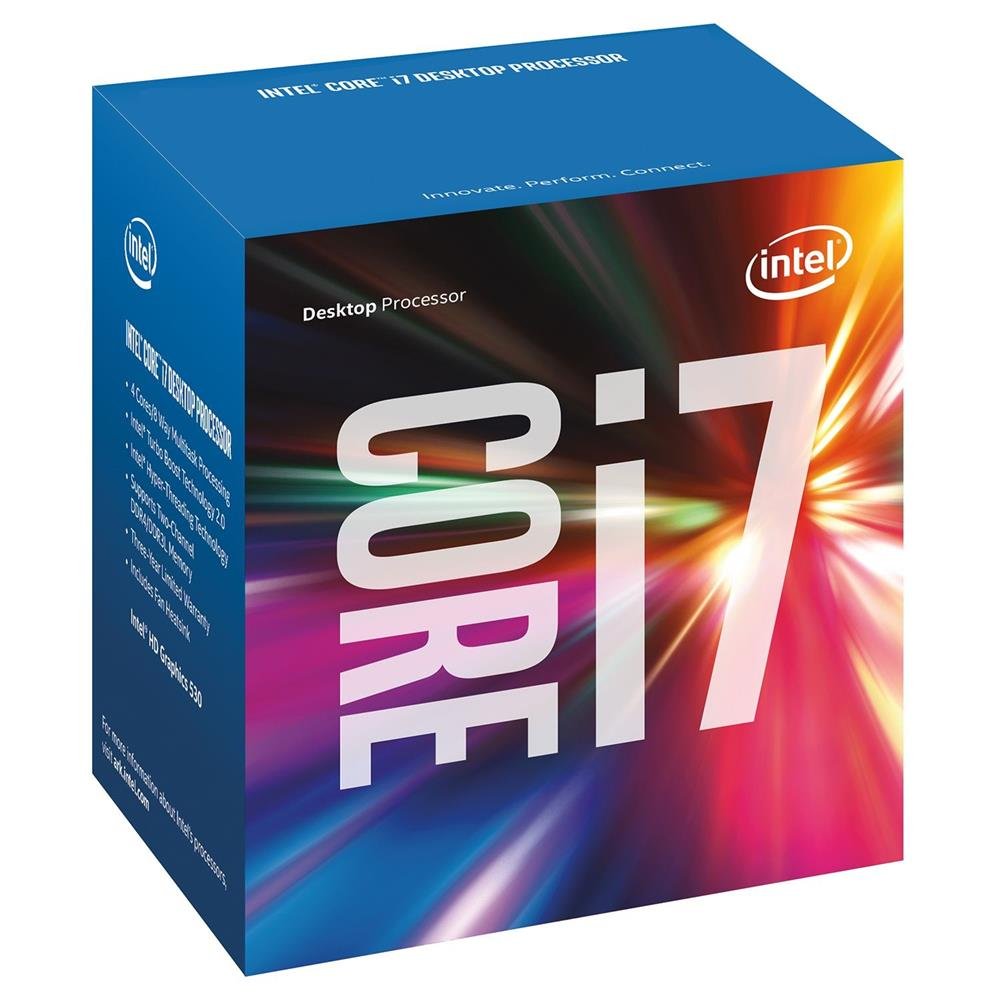
The Intel Core i7-6700 is a 6th-generation Skylake processor that offers 4 cores and 8 threads with a 4.0 GHz turbo frequency, making it a very capable option for office workstations, NAS builds, and budget home theater PCs. Its 8MB of L3 cache and support for both DDR4 and DDR3L memory provide flexibility when resurrecting older motherboards.
One of the defining strengths of this chip is its thermal efficiency; users report idle temperatures as low as 28-30°C and load temperatures around 40°C with a standard cooler, making it ideal for totally silent or near-passive cooling setups in audio production systems. It also features Intel HD 530 integrated graphics, meaning a discrete GPU is not required for basic display output.
However, it is critical to note that this is a vintage processor on a dead socket (LGA 1151). It cannot match modern chips in gaming performance and lacks support for PCIe 4.0 or DDR5. Its value lies strictly in ultra-budget or specialized builds where low power draw and established compatibility are more important than raw performance.
Why it’s great
- Runs extremely cool and quiet, ideal for silence-focused builds.
- Integrated graphics allow for use without a dedicated GPU.
- Very low power consumption for 24/7 operation.
Good to know
- Vintage platform with no upgrade path and limited modern features.
- 4 cores are insufficient for modern AAA gaming at high settings.
9. Intel Pentium Gold G6405

The Intel Pentium Gold G6405 is a dual-core, four-thread processor clocked at 4.1 GHz, serving as the most affordable entry point into the modern Intel ecosystem. With 4MB of L3 cache and support for LGA 1200 motherboards, this chip is designed for basic computing tasks such as web browsing, office productivity, and powering a network-attached storage (NAS) device.
Users praise it for being surprisingly capable for its price, providing a noticeable speed boost over older budget chips for basic desktop use. It includes Intel UHD Graphics 610, so you can build a fully functional system without purchasing a separate graphics card, keeping the total build cost to an absolute minimum.
This is not a processor for gaming or any heavy multitasking. The two cores will struggle with modern operating system overhead and multiple browser tabs. Its value proposition is strictly for dedicated single-purpose servers, budget office PCs, or as a temporary placeholder chip. For any use case requiring even light gaming, a Ryzen 5 5600X is a far better investment.
Why it’s great
- Extremely low price point for a basic desktop or NAS build.
- Integrated UHD Graphics 610 eliminates the need for a separate GPU.
- 4.1 GHz clock speed provides responsive basic computing.
Good to know
- Dual-core design severely limits multitasking and gaming.
- LGA 1200 platform is outdated and has no viable upgrade path.
FAQ
Can I use a budget processor for competitive gaming at 144Hz?
What is the difference between a boxed processor and a tray processor?
Should I buy a used CPU to save money on my budget build?
Why doesn’t my budget processor come with a cooler in the box?
How important is the socket type when choosing a budget processor?
Final Thoughts: The Verdict
For most users, the budget processor winner is the AMD Ryzen 7 7800X3D because its 3D V-Cache technology delivers gaming performance that surpasses CPUs costing significantly more, while maintaining excellent power efficiency and a modern platform. If you want an even more affordable entry into the AM5 ecosystem with strong gaming chops, grab the AMD Ryzen 5 9600X. And for the absolute best value in a mature platform that leaves room in your budget for a better graphics card, nothing beats the AMD Ryzen 5 5600X.