
Our readers keep the lights on and my morning glass full of iced black tea. As an Amazon Associate, I earn from qualifying purchases.
Specs are compiled from manufacturer listings and verified buyer reviews and can change over time — please confirm the key details on the product page before buying.
The biggest mistake runners make on a budget is grabbing the cheapest insole they find, only to end up with something that feels like cardboard after two runs. The truth is, a good budget running insole should take the sting out of each stride without forcing you to spend on custom orthotics. This guide cuts through the noise, focusing on the models that deliver real arch support, actual shock absorption, and lasting durability under — so your feet get the help they need without your wallet taking a hit.
I’m Min — the founder and writer behind Gadgets Feed. This guide is built by comparing the manufacturers’ published specifications and the patterns across verified customer reviews, so you get each pick’s real strengths and trade-offs instead of marketing spin.
Whether you’re dealing with heel pain on long runs or just want a daily cushion that doesn’t flatten out in a month, these picks stand out from the pack. This is the honest, spec-by-spec breakdown of the budget running insoles actually worth sliding into your shoes.
Quick Picks
- Move Game Day Performance Insoles — Top Performer
- Welnove Running Insoles – Performance Arch Support — Best Overall
- CRUVHEAL Sport Shock Absorbing Insoles — Best for Impact Sports
- STSVZORR Plantar Fasciitis Relief Metatarsal Pain Arch Support Inserts — Best Value
- CRUVHEAL Running Insoles Men Women – Athletic Shock Absorbing Gel Insoles — Comfort Pick
- Bukihome Running Insoles for Men Women – Arch Support Orthotics — Budget Champion
- Dr. Scholl’s Run Active Comfort Insoles — Clean Entry Pick
How To Choose The Best Budget Running Insoles
Cheap insoles feel like a good idea at checkout, but a bad pair can make your knees and arches hurt more than running in worn-out shoes. Here is what actually matters when you are shopping on a budget.
Arch Support Materials: EVA, TPU, and Gel
The material under your arch determines how long the insole keeps its shape. EVA foam is the lightest and cheapest, but it compresses over time. TPU (thermoplastic polyurethane) is firmer and snaps back to shape after each run — it is the better bet if your arches need structured support. Gel pads in the heel add targeted shock absorption without adding the weight of a full foam base.
Heel Cup Depth and Shoe Fit
A deep heel cup (around 0.4 inches) cradles your heel to stop your foot from sliding side to side on each stride. But a thicker insole takes up volume inside your shoe. If you already have snug trainers, you may need to size up or stick with a low-profile model to avoid pressure on your toes.
Break-In Period, Not Instant Magic
Supportive insoles need time. Most manufacturers recommend starting with 2-4 hours a day for the first week, then building up. If an insole feels completely comfortable on day one, it likely lacks enough structure to correct your stride or support your arch through a long run.
Quick Comparison
On smaller screens, swipe sideways to see the full table.
| Model | Best For | Weight | Arch Support Material | Heel Cup Depth | Amazon |
|---|---|---|---|---|---|
| Move Game Day | Athletic performance & injury prevention | 6 oz | Composite (proprietary) | Deep (molded forefoot) | $49.99Amazon |
| Welnove Running Insoles | Heavy mileage & daily training | 7.83 oz | EVA with responsive cushioning | Standard | $25.99Amazon |
| CRUVHEAL Sport Shock Absorbing | Basketball & high-impact sports | 5.93 oz | Gel + foam | Deep | $29.99Amazon |
| STSVZORR Plantar Fasciitis Insoles | Immediate arch & metatarsal pain relief | 4.16 oz | EVA foam | Deep | $16.14$18.99PrimeAmazon |
| CRUVHEAL Athletic Gel Insoles | Long walks & general running comfort | 7.37 oz | Gel + TPE arch support | U-shaped (gel heel pad) | $19.99Amazon |
| Bukihome Running Insoles | High-intensity activities needing firm support | 7.05 oz | TPU arch + polyurethane foam | 0.4-inch deep | $19.99Amazon |
| Dr. Scholl’s Run Active Comfort | Runner’s knee & shin splint prevention | 5.93 oz | Foam | Standard | $12.32$15.27Amazon |
In‑Depth Reviews
1. Move Game Day Performance Insoles

The performance insole co-founded by an NBA All-Pro that reviewers say helped relieve shin splints with a composite heel and molded arch.
If you run, jump, or cut hard and your feet pay the price, this is the one. It uses a composite heel and a “Reactive Stability” plate — a rigid support running through the midsole that keeps your foot from rolling inward on each stride. Buyers report it completely eliminated shin splints they had dealt with for over five years, letting them run a mile pain-free on both the treadmill and pavement.
The trade-off is the support profile. One reviewer (45 with older ankle injuries) noted the heel cushion and plantar support ranked below some competitors, suggesting this insole favors younger, healthier joints — it is a performance tool, not a recovery aid. At 6 ounces versus the Welnove option at 7.83 oz, you get that locked-in feel without dragging extra weight. The forefoot is molded to conform to your shoe shape, so no trimming is usually needed.
The arch support targets plantar fasciitis and flat feet specifically, which makes this a standout if you have diagnosed foot issues but still want to play through them. Reviewers also praised how the insoles made old sneakers feel brand new again, adding cushion without lifting the heel out of the shoe.
What Shines
- Composite heel plate absorbs hard landings without feeling dead
- Molded forefoot fits securely without trimming
- Eliminates shin splint pain, per multiple long-term reviewers
Where It Falls Short
- Firm cushion may feel stiff for older runners or injury recovery
- Heel cushioning not as plush as some gel-based competitors
Reach for these if: you are under 40, have healthy knees, and need a performance insole that absorbs hard impacts during jumping or sprinting sports like basketball or track.
Look elsewhere if: you need a soft, plush cushion for daily walking or have a history of ankle sprains that need more heel padding.
2. Welnove Running Insoles – Performance Arch Support
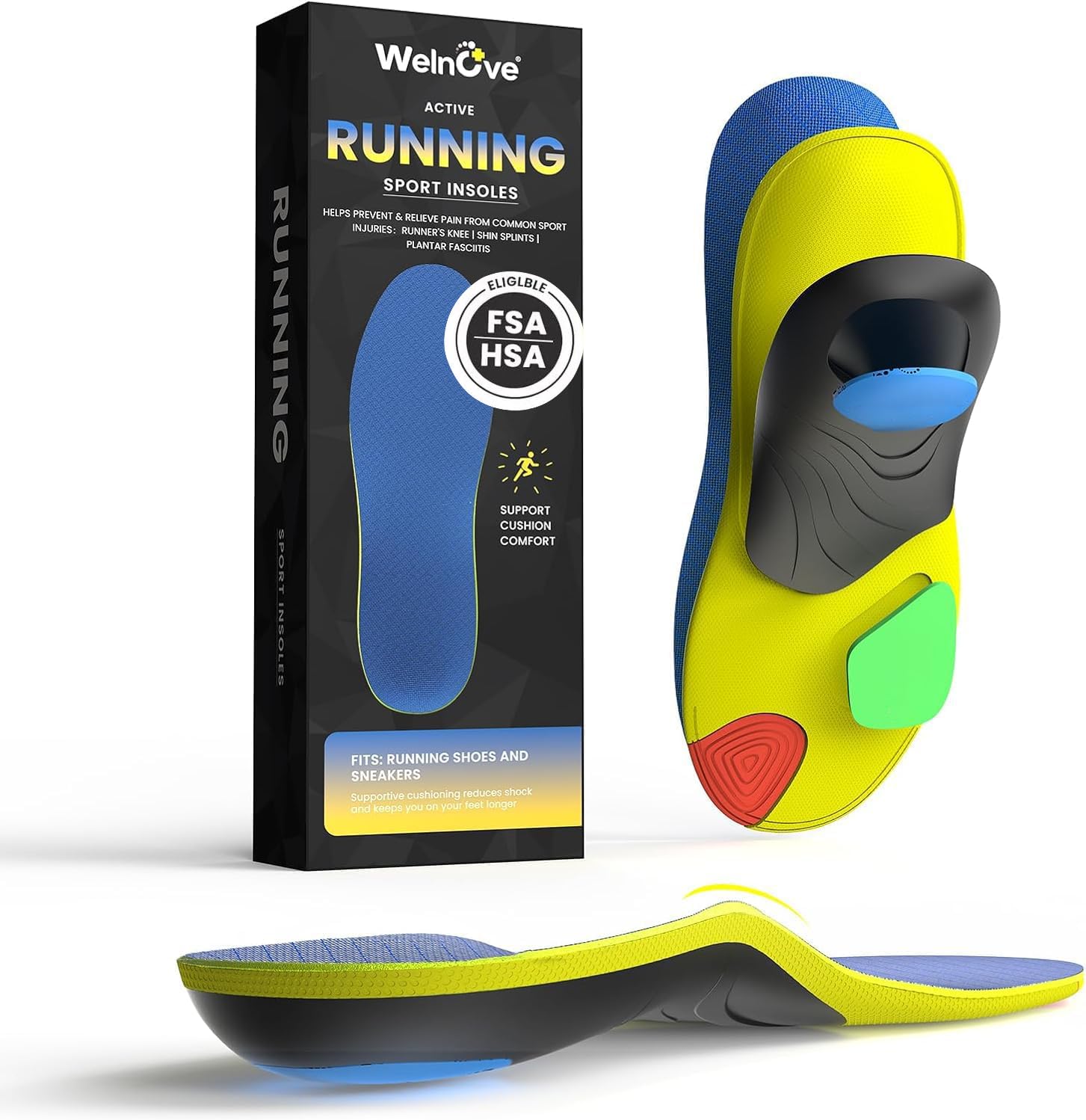
The thick-cushion training insole that makes cheap sneakers feel premium and keeps your heel inside the shoe.
At 7.83 ounces, this is the heaviest insole on the list, versus the 4.16-ounce STSVZORR option that sits further down. That weight comes from a thick responsive cushioning layer that distributes pressure across your heel, arch, and forefoot evenly. Owners mention buying six pairs for all their running shoes, calling it excellent for daily runs and recovery. One reviewer noted it is “thick but not so thick that your heel stays inside the shoes,” meaning the volume is well matched to standard trainers.
The breathable mesh fabric and moisture-wicking top layer help manage sweat on long runs, reducing the chance of blisters. The ergonomic arch support is designed to stabilize your stride and improve alignment, which customers note helped with both knee and back pain. The main catch is that some users found the arch height basic rather than aggressive — it provides good general support but may not be enough for severe overpronation.
Compared to the Move Game Day above, the Welnove is a better choice if you want a plusher feel underfoot rather than a rigid performance plate. It is also the easiest insole to slide into a wide range of sneakers without a break-in period that feels harsh.
Thick but balanced: The cushion absorbs shock well, and the moisture-wicking mesh (a fabric that pulls sweat away from your skin) keeps feet dry during long runs — but the arch profile is moderate, not corrective, so serious flat-footed runners may need a firmer TPU-based insole like the Bukihome.
Grab this for: daily training, long-distance runs, and anyone who wants a thick, comfortable insole without the price of custom orthotics.
skip it if: you have narrow shoes that can’t accommodate the extra volume, or if you need aggressive arch correction for severe flat feet.
3. CRUVHEAL Sport Shock Absorbing Insoles

The bouncy gel insole that eliminated a 14-hour standing shift’s worth of foot and ankle pain.
Strategically placed gel pads in the heel absorb the hard impact of jumping and sprinting without turning the insole into a marshmallow. At 5.93 ounces, it is notably lighter than the Welnove (7.83 oz), which matters when you are changing direction in basketball or tennis. One reviewer who stands on cold cement for 14-hour shifts reported the insoles eliminated severe foot and ankle pain. Another lacrosse parent said they provided immediate cushion for their son and noticeably helped with foot and leg pain during games.
The deep heel cup stabilizes your foot during lateral movements, and the non-slip gel heel pad keeps the insole from sliding inside your sneakers. Buyers mention these feel “springy” and provide good support right from the start with no break-in period. The main drawback is that they are slightly bulkier in narrow shoes like Hokas, but they fit fine in Skechers. Unlike the STSVZORR insoles which weigh only 4.16 oz, these are heavier but offer more structured impact absorption for high-intensity sports.
The 3-7 day adaptation period the manufacturer recommends is a safety net, but most reviewers found no adjustment needed. The one-year satisfaction guarantee even covers trimmed insoles, which is rare in this price range.
Top Strengths
- Springy, responsive feel that helps acceleration, per reviewers
- Non-slip gel pad keeps the insole locked in place during hard cuts
- Deep heel cup adds lateral stability for court sports
Notable Limits
- Bulky in narrow shoes like Hokas — check fit before buying
- Slightly heavier than basic foam insoles
Pick this for: basketball, volleyball, tennis, or any sport with fast lateral movement and hard landings.
Pass on it if: your shoes run narrow or you want a low-profile insole that does not change the shoe’s volume.
4. STSVZORR Plantar Fasciitis Relief Metatarsal Pain Arch Support Inserts

The featherlight 4.16-ounce insole that a 30-year plantar fasciitis sufferer called “immediate comfort.”
Weighing 4.16 ounces, these are the lightest insoles on the list, versus the Welnove option above at 7.83 oz. That matters if you want arch support without adding noticeable weight inside your shoe. The arch height is a pronounced 35 mm, which gives strong support for flat feet and plantar fasciitis. One long-time sufferer reported “immediate comfort” and 5+ hours of standing and walking completely pain-free, calling this a lifesaver that saved their expensive Hoka sneakers.
The phalange support cushion has a built-in massage function — reviewers point out it feels bumpy at first, but that pressure point targets metatarsal pain effectively. One podiatrist-recommended buyer called it a “night and day” difference for ball-of-foot pain, comparing it favorably to custom inserts that cost far more. The EVA foam substrate absorbs vibration and reduces foot pressure during runs. The main issue some buyers flagged is fit: these insoles work well in standard sneakers but can be too thick for slip-on shoes like Skechers, and a few users reported their feet sliding off the insole over time.
The manufacturer recommends starting with no more than 4 hours of use per day and gradually increasing over a week. This break-in is normal for supportive insoles and helps your arches adjust without cramping.
Featherlight but firm: The 4.16 oz weight and 35 mm arch make this a rare combo of light weight and strong correction — perfect for runners who want support without the bulk of heavier foam insoles. Just watch the fit in narrow or slip-on shoes.
Get this for: plantar fasciitis relief that works immediately, especially if you need a light insole that fits multiple pairs of sneakers.
Avoid if: you have tight-fitting casual shoes, or if you prefer a soft, plush step over a corrective structured feel.
5. CRUVHEAL Running Insoles Men Women – Athletic Shock Absorbing Gel Insoles
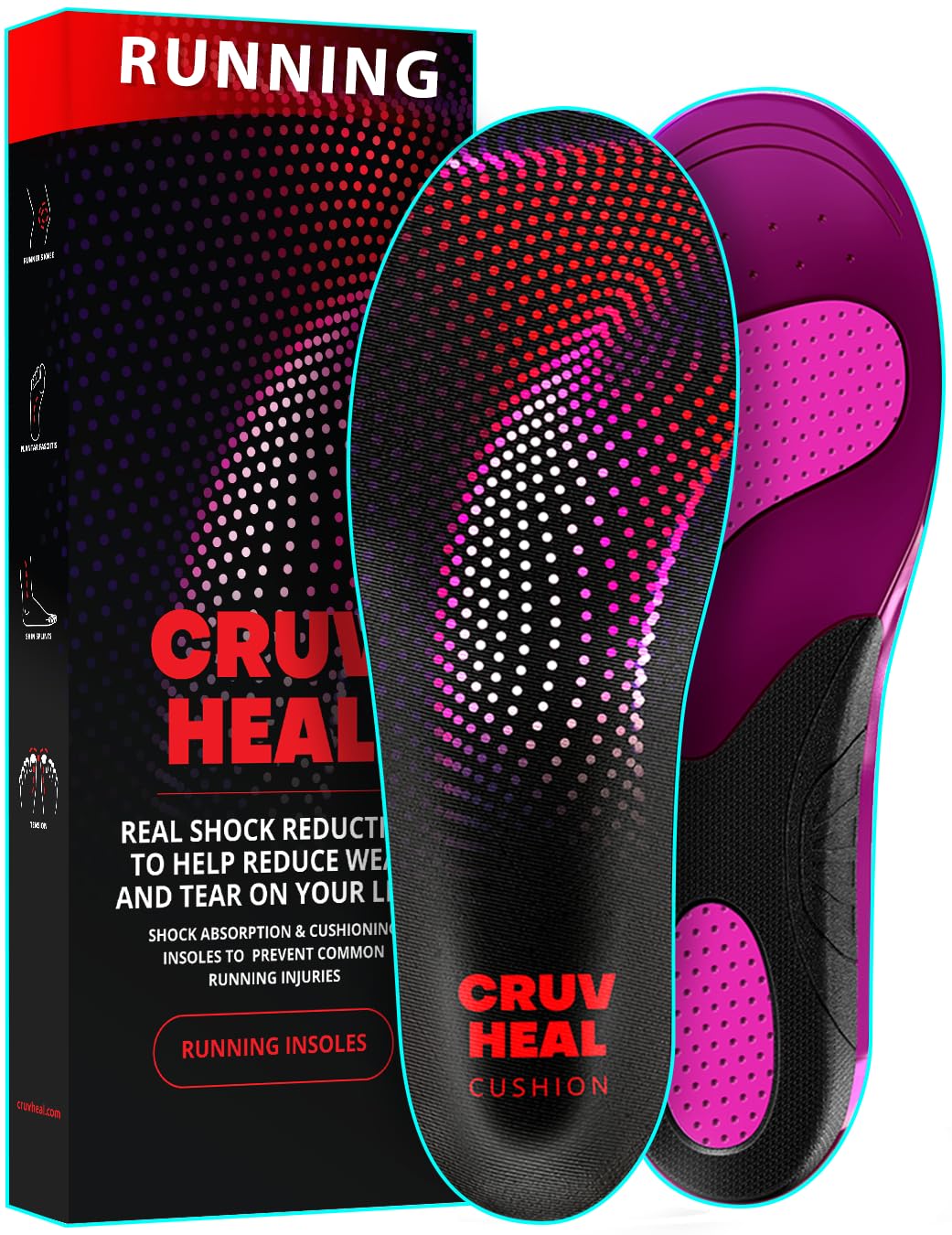
The gel insole that a reviewer with old bony feet and a bunion called the most comfortable they’ve found.
This insole uses a U-shaped heel design with a TPE (thermoplastic elastomer) arch support and a gel cushion that absorbs shock on each landing. One loyal CRUVHEAL customer, a long-time user of their work insoles, said these running insoles were comfortable, durable, and fit perfectly without trimming. Another reviewer with “old bony feet, a pesky bunion, and hammer toes” said it was the most comfortable insert they have found. One walker reported the insole eliminated foot pain on longer walks after just one week of use.
The package dimensions are 10.12 x 4.21 x 1.14 inches, versus the STSVZORR package at 13.5 x 5.67 x 2.09 inches. The gel heel pad is non-slip, so the insole stays put during runs. However, the arch height is high — two buyers reported it caused hip pain when running because the arch was too aggressive for their foot shape. This is the risk with any supportive insole: if your feet are neutral rather than flat, the high arch can push your foot into an unnatural position.
The manufacturer recommends a 3-7 day adaptation period starting with 2-5 hours per day. The one-year satisfaction guarantee means you can return it if the fit does not work for your foot shape.
Best Bits
- Gel layers absorb shock without feeling stiff
- Non-slip heel pad keeps the insole in place all day
- Works well for sensitive feet with bunions or hammer toes
Watch For
- High arch profile can cause hip pain for neutral-footed runners
- May feel too supportive if you do not have flat arches
Choose these if: you have flat feet or high arches and want a gel-based shock absorber that is comfortable from day one with a short break-in.
Skip them if: you have neutral arches or a history of hip pain, as the high profile may aggravate your gait.
6. Bukihome Running Insoles for Men Women – Arch Support Orthotics
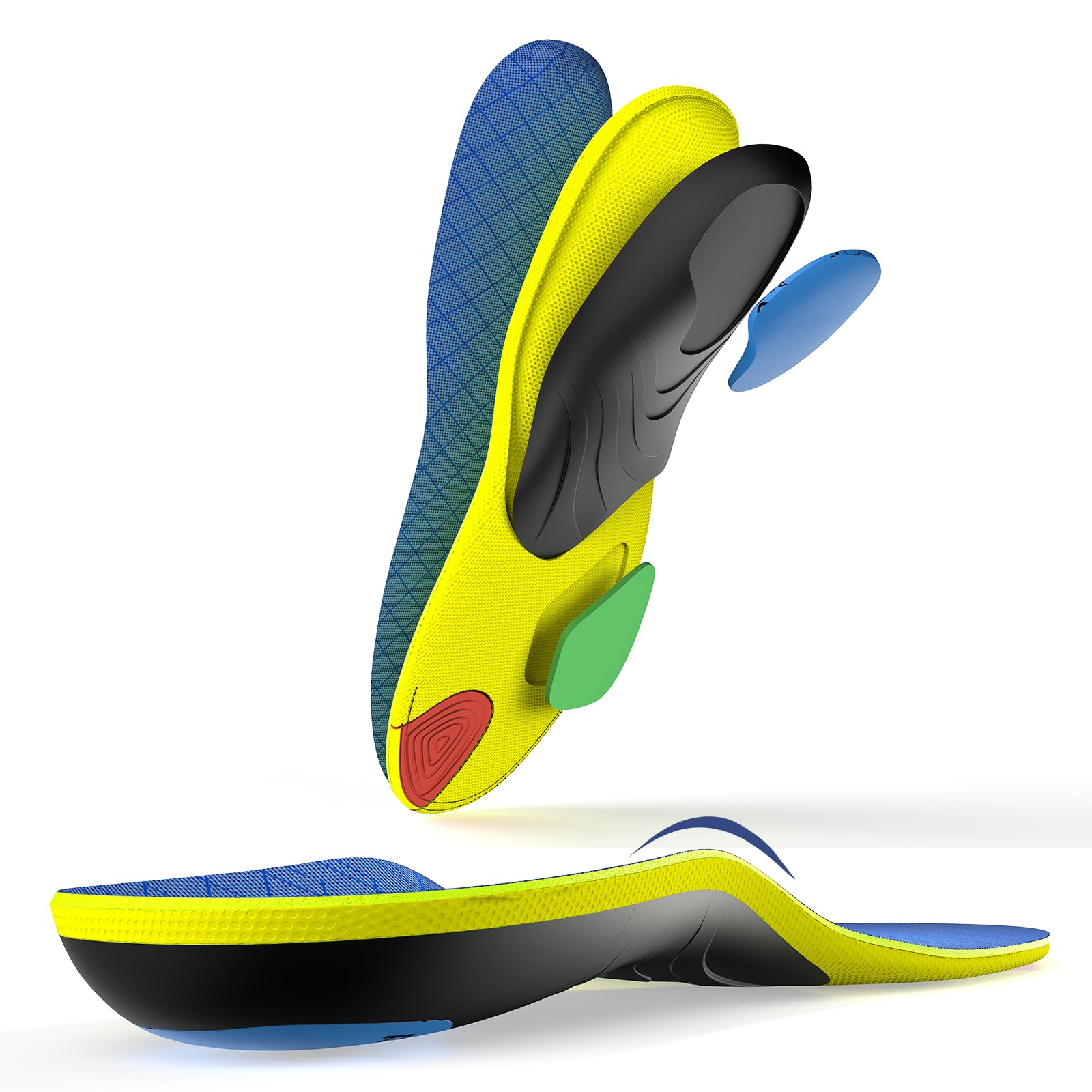
The firm TPU insole that promises custom-level support but delivered mixed results for some users.
The big story here is the TPU arch support — a rigid plastic-like material that does not compress like foam. The manufacturer claims the polyurethane foam recovers at least 98% of its original shape, resisting compression deformation over time. The deep heel cup is 0.4 inches, matching the depth of more expensive competitors, and it contours to your heel to minimize friction and blisters during runs. One buyer mentioned these insoles worked as promised and served as a good replacement for custom insoles they had purchased years prior.
But the reviews show a split. While some buyers love the firmness in their work boots, one owner reported “no improvement after 2 months of occasional use” and said the insoles are hard, lack arch support, and even cause heel pain by day’s end. Another reported the insoles squeak and feel slippery. The inconsistency suggests that while the materials are high-quality on paper, the execution may not work for every foot shape. The manufacturer does offer a 180-day after-sales guarantee with free replacement for quality defects.
These insoles also take up significant volume in the shoe. The manufacturer itself warns they will not work well in tight shoes. If you have roomy sneakers or work boots, the firm support and deep cup may give you the locked-in stability you want — but if your shoes are snug, this is not the pick.
Firm and divisive: The TPU arch and deep 0.4-inch heel cup promise custom-level correction, but the reviews are split between buyers who love the firm support and those who found it uncomfortable and squeaky. Best suited for roomy shoes and confident buyers who know they need hard arch correction.
Try these if: you already use custom orthotics and want a budget alternative with the same rigid feel — and you have roomy shoes to accommodate the extra volume.
Steer clear if: your shoes are tight, or you prefer a softer, more forgiving cushion underfoot.
7. Dr. Scholl’s Run Active Comfort Insoles
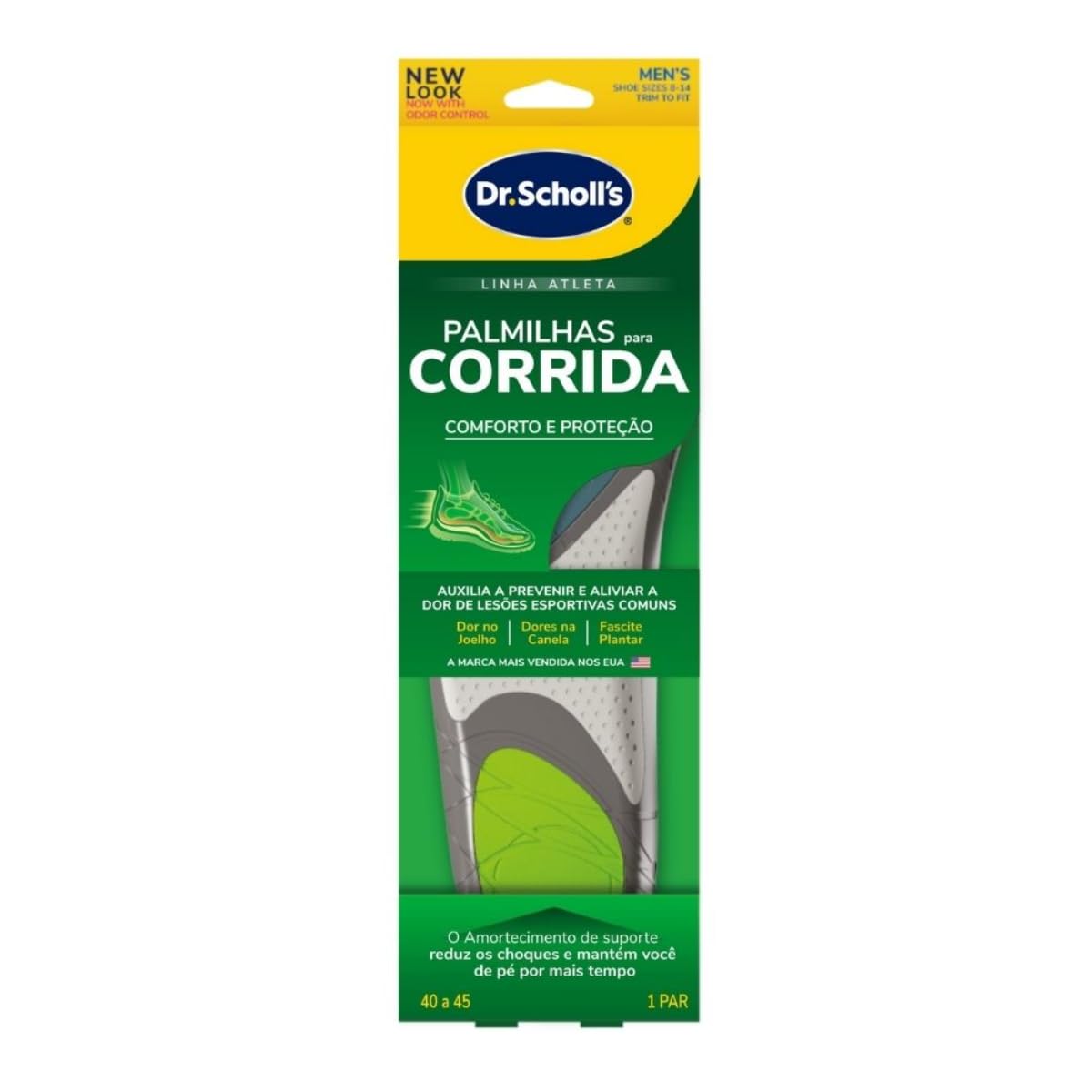
The trim-to-fit foam insole from a trusted brand designed specifically for runner’s knee and shin splints.
Dr. Scholl’s is the name most people recognize, and this model is engineered specifically for running injuries: the foam formulation is designed to alleviate and prevent discomfort from runner’s knee, shin splints, and plantar fasciitis. The insoles provide extra cushioning and shock absorption, targeting the common overuse issues that surface when you increase your mileage. At 5.93 ounces, they sit mid-pack for weight — lighter than the Welnove (7.83 oz) but heavier than the STSVZORR (4.16 oz).
The trim-to-fit design means you cut them down with scissors to match your shoe size, which gives flexibility if you have odd-sized feet or want to swap between pairs of shoes. They are also the shallowest in terms of profile, so they fit easily in tight sneakers without making your toes feel cramped. No customer reviews were available for this specific model at the time of extraction, so real-world feedback is limited to the manufacturer’s claims. That makes this a safer bet for someone who values a recognizable brand over a more niche player with verified user reports.
The main trade-off is that the foam cushion, while comfortable, is less durable than TPU or gel-based options. If you run high mileage, you may need to replace these more frequently than the Bukihome or CRUVHEAL alternatives. For the price, however, they are a low-risk way to add basic cushioning to any pair of running shoes.
Simple and accessible: No break-in needed, fit-finding is easy with the trim-to-size design, and the brand trust factor is high. But the foam will compress faster than layered gel or TPU insoles, so expect to replace them more often if you run daily.
Reach for these if: you want a straightforward, no-fuss insole from a brand you already know, and you run a few times a week rather than daily.
Look elsewhere if: you need structured arch support for flat feet, or you want a more durable material that lasts through heavy mileage.
Understanding the Specs
Weight (Ounces)
This is the listed weight in ounces. A lighter insole (around 4 oz) feels invisible in your shoe and is best for speed work or racing. A heavier insole (7-8 oz) usually has more cushioning material, which absorbs more shock but adds mass to each stride — good for daily training but not for race day.
Arch Support Material (EVA vs TPU vs Gel)
EVA foam is the lightest and cheapest but compresses over time. TPU (thermoplastic polyurethane) is a rigid plastic that keeps its shape, offering strong correction for flat feet. Gel pads sit in the heel or forefoot and absorb impact without adding the weight of a full foam base — they are best for high-impact sports like basketball or trail running.
Heel Cup Depth (Inches)
A deep heel cup (around 0.4 inches) wraps around your heel to keep your foot from sliding sideways on each stride. This reduces friction, blisters, and heel pain. A shallower cup gives more room inside a tight shoe but provides less lateral stability — important for runners who overpronate.
Break-In Period
Most supportive insoles require 3-7 days of gradual wear, starting at 2-4 hours per day. This lets your arches and calf muscles adjust to the new support level. If an insole feels comfortable on day one, it likely lacks enough structure to correct your gait. Skipping the break-in can cause arch cramps or heel pain.
FAQ
Will budget running insoles work for plantar fasciitis?
How long do budget running insoles last?
Do I need to break in running insoles?
Can I use running insoles in casual shoes or boots?
What size should I buy for my running shoes?
Are these budget insoles machine washable?
Will these insoles fit in my existing running shoes?
What is the difference between a neutral and a supportive insole?
Can I use budget insoles for marathon training?
Do these insoles help with shin splints?
Final Thoughts: The Verdict
For most runners, the budget running insoles winner is the Welnove Running Insoles because it balances thick shock absorption, moisture management, and a moderate arch that works for both daily training and recovery runs while staying affordable. If you want performance-level impact protection for jumping sports like basketball or tennis, grab the CRUVHEAL Sport Shock Absorbing Insoles with their gel pads and deep heel cup. And for the lightest weight with the most aggressive arch correction for plantar fasciitis, the STSVZORR Inserts punch well above their price tag at just 4.16 ounces.
How We Picked
We do not accept paid placement, and we did not hands-on test every unit. Instead, we match each pick to a real buyer and use-case by comparing the manufacturers’ published specifications against the patterns in verified customer reviews — so you get each pick’s real strengths and trade-offs instead of marketing copy.
Sources & Methodology
Specifications: manufacturer listings and product documentation. Review insights: verified customer reviews, as of July 2026. Pricing: not shown on this page (it changes often); check the current price via the retailer link.
As an Amazon Associate, Gadgets Feed earns from qualifying purchases. This does not affect which products we feature.
Product prices and availability are accurate as of the date/time indicated and are subject to change. Any price and availability information displayed on Amazon at the time of purchase will apply to the purchase of this product. As an Amazon Associate I earn from qualifying purchases.
CERTAIN CONTENT THAT APPEARS ON THIS SITE COMES FROM AMAZON. THIS CONTENT IS PROVIDED "AS IS" AND IS SUBJECT TO CHANGE OR REMOVAL AT ANY TIME.
Amazon and the Amazon logo are trademarks of Amazon.com, Inc. or its affiliates.