
Dumping a dead lead-acid battery after a single weekend off-grid is the kind of frustration that sends RV owners searching for a better solution. Lithium iron phosphate (LiFePO4) chemistry delivers usable capacity down to zero percent without damaging the cells, slashes weight by roughly sixty percent, and lasts ten times longer than the flooded or AGM batteries your rig came with. The problem is sorting through dozens of brands claiming matching specs while actual performance, BMS reliability, and real-world capacity vary wildly at different price points.
I’m Min — the co-founder and writer behind Gadgets Feed. I’ve spent hundreds of hours cross-referencing datasheets, analyzing BMS protection thresholds, and comparing real customer discharge tests across a range of budget-friendly lithium batteries meant for RV, marine, and solar use.
After digging through capacity verification reports and cold-weather cutoff specs, I’ve compiled a clear breakdown of the best budget rv lithium battery options that balance upfront cost against long-term cycle life and real-world ampere-hour delivery.
How To Choose The Best Budget RV Lithium Battery
Shaving dollars off the initial purchase price is tempting, but an RV battery that fails after two seasons ends up costing more per usable cycle than a slightly pricier unit that delivers 4,000 cycles. Focus on the BMS capabilities, the physical dimensions relative to your battery tray, and the cold-temperature charging cutoff threshold before the sticker price.
The Battery Management System (BMS) Is Your Real Safety Net
Every lithium battery ships with a BMS that monitors cell voltage, current, and temperature — but not all BMS units are equal. Look for a rated continuous discharge current that exceeds your inverter’s peak draw. A 100A BMS handles roughly 1,280W at 12.8V, which covers most RV fridges, lights, and water pumps. If you run a 2,000W inverter, step up to batteries with a 200A BMS or parallel two units to split the load.
Physical Footprint and Group Size Compatibility
Most RV battery trays are sized for Group 24, Group 27, or Group 31 lead-acid batteries. A true drop-in replacement fits that footprint without modifying the tray or wiring. The Group 31 format — roughly 13 inches long by 6.8 inches wide — is the most common standard for 100Ah lithium batteries in this price range. Double-check the terminal type and orientation so your existing cables reach without strain.
Cold Weather Charging Cutoff
LiFePO4 cells suffer irreversible damage if charged below freezing. Budget-tier batteries should include a low-temperature charging cutoff at 32°F or lower. Premium models often use a sensor-actuated cutoff that resumes charging automatically once the cell temperature rises above freezing. If your RV sees winter use below 20°F, prioritize a battery with an explicit low-temperature charging protection spec.
Quick Comparison
On smaller screens, swipe sideways to see the full table.
| Model | Category | Best For | Key Spec | Amazon |
|---|---|---|---|---|
| Power Queen LiFePO4 12V 100Ah | Mid-Range | Best overall value | 4000 cycles at 100% DOD, 24.25 lbs | Amazon |
| Redodo 12V 100Ah LiFePO4 | Mid-Range | Budget runner-up | 4000-15000 cycles, 22.04 lbs | Amazon |
| ECO-WORTHY 12V 150Ah | Mid-Range | High capacity with Bluetooth | 150Ah capacity, Bluetooth 5.1, 120A BMS | Amazon |
| Renogy 12V 100Ah Mini Size | Mid-Range | Tight spaces | 50% smaller than Group 31, IP65 rated | Amazon |
| OKMO 12V 100Ah (2 Pack) | Mid-Range | Two-pack value | 100A BMS, low-temp cutoff, 23.15 lbs each | Amazon |
| Litime 12V 100Ah TM | Premium | Trolling motor / marine | ABYC E-13, TVS spike protection, 22.16 lbs | Amazon |
| Dumfume 24V 100Ah | Premium | 24V RV/solar systems | 2.56kWh, 100A BMS, 48.06 lbs | Amazon |
| MEYULMOL 12V 300Ah | Premium | Maximum single-battery capacity | 300Ah, 200A BMS, 3840Wh | Amazon |
| Battle Born 100Ah 12V | Premium | Premium long-term investment | 10-year warranty, 3000-5000 cycles, 31 lbs | Amazon |
In‑Depth Reviews
1. Power Queen LiFePO4 Battery 12V 100Ah
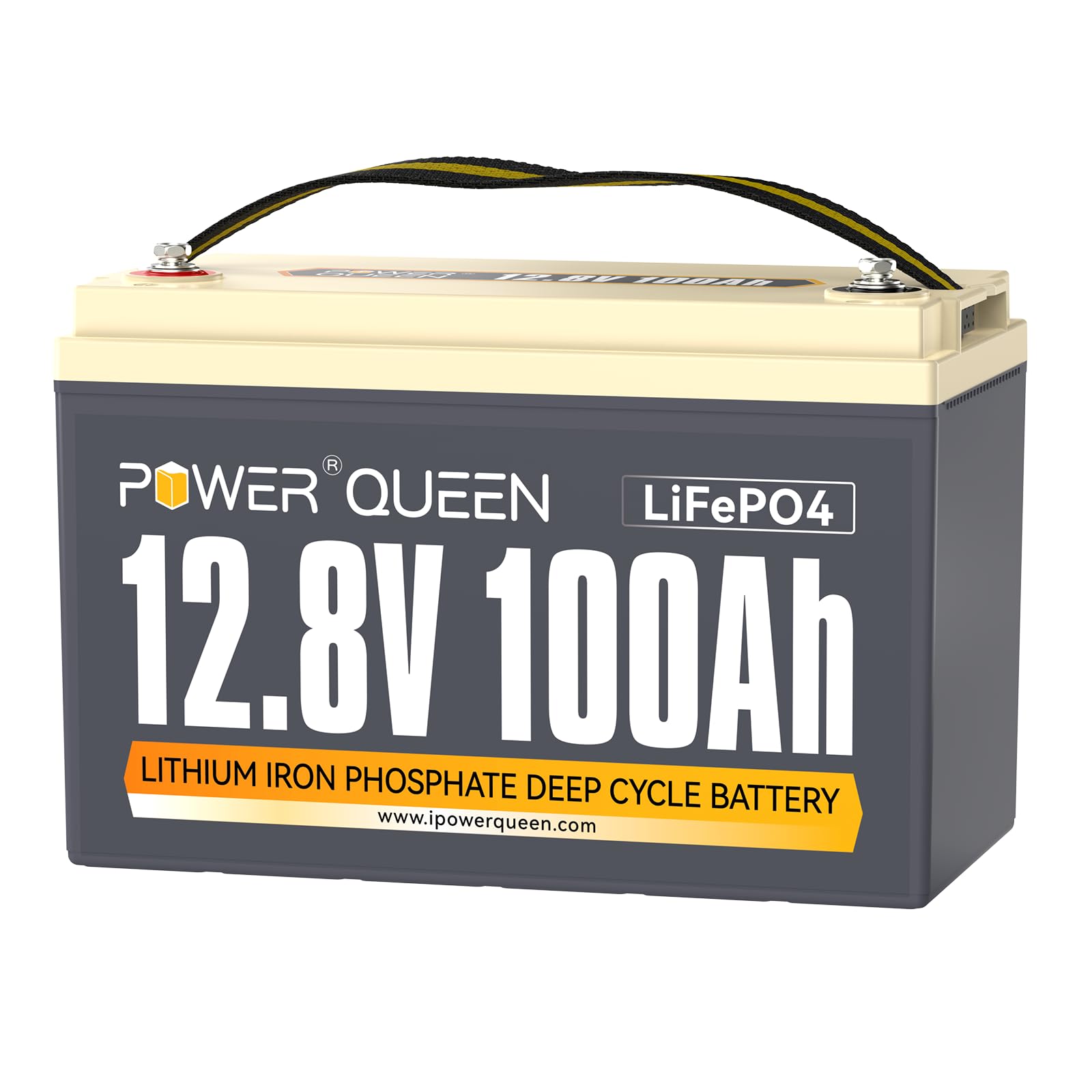
Power Queen hits the sweet spot between cost and capability with a Group 31 footprint that slides directly into standard RV trays. The 24.25-pound weight is roughly one-third of an equivalent lead-acid battery, and the 1280Wh capacity is fully usable thanks to the LiFePO4 chemistry — no derating to 50% like you’d need with AGM. Owners report that the battery comfortably runs a travel trailer fridge and lights through a weekend without dipping below 50% state of charge.
The smart BMS covers overcharge, over-discharge, over-current, and short-circuit scenarios, and Power Queen backs the unit with a five-year warranty. A minor compatibility note from real-world users: the M8 terminal bolts require at least 6-gauge cable, so older RV wiring using 8-gauge may need an adapter or replacement. The expandable 4P4S configuration lets you scale from a single 12V bank up to 48V at 400Ah as your power needs grow.
Customer reviews consistently praise the customer service response time and the straightforward return process. The main trade-off is the lack of Bluetooth monitoring — you won’t see per-cell voltage or real-time current draw without adding an external shunt. For the price and cycle rating, this is the most balanced entry into RV lithium ownership.
Why it’s great
- True 100Ah usable capacity at under 25 pounds
- Five-year warranty with responsive customer support
- Expandable to 4P4S for larger systems
Good to know
- Requires minimum 6-gauge cable; may need adapter for older RV wiring
- No Bluetooth or app-based monitoring
2. Redodo 12V 100Ah LiFePO4 Battery
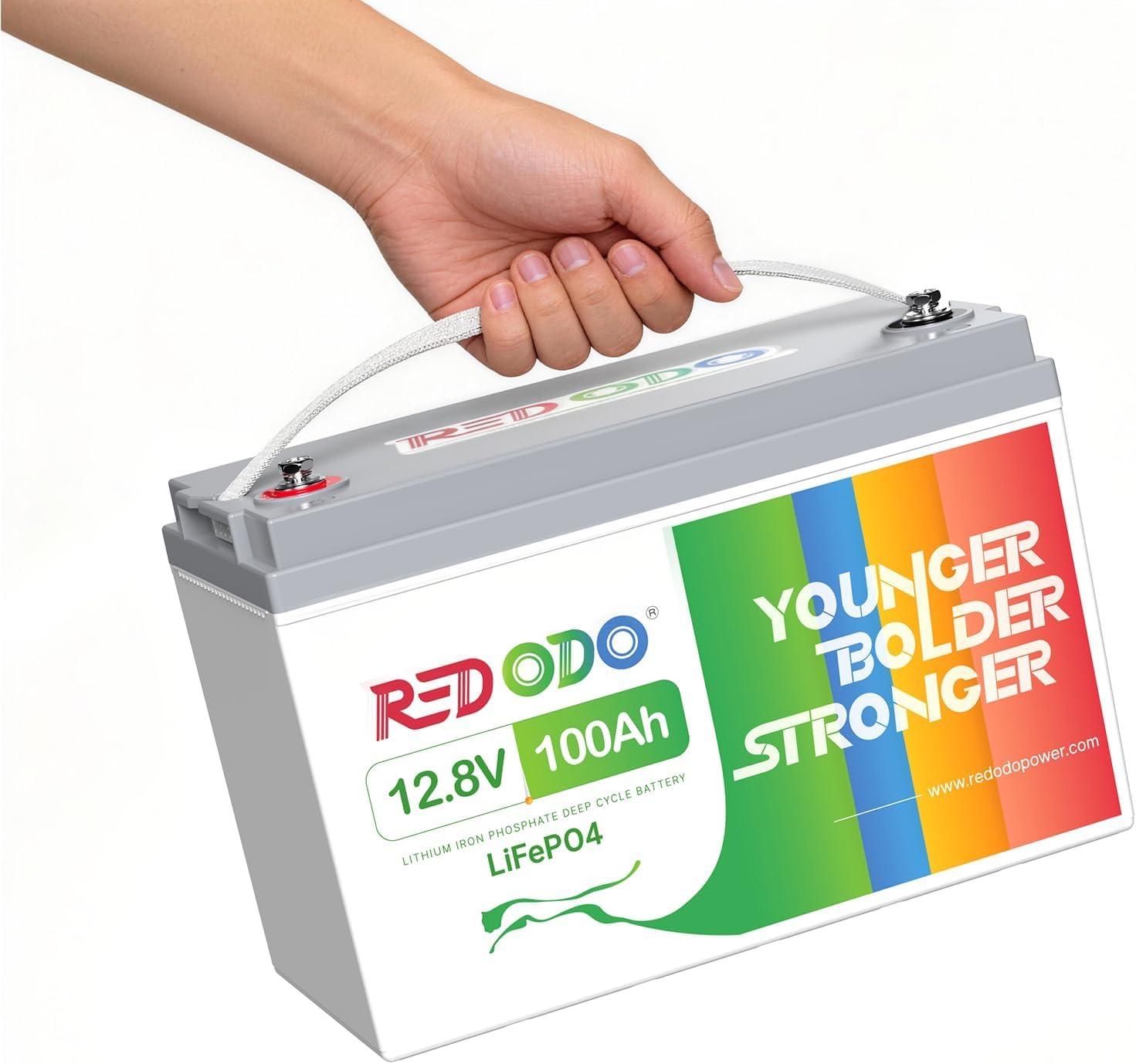
Redodo’s 100Ah battery weighs the least of any unit in this comparison at 22.04 pounds, making it the easiest single-handed install. The BCI Group 31 dimensions fit standard battery boxes, and the built-in 100A BMS handles peak loads from typical RV appliances without complaint. The cycle life rating stretches from 4,000 cycles at 100% depth of discharge up to 15,000 cycles at 60% DOD, which translates to over a decade of regular weekend use.
Real-world reviews show this battery replacing lead-acid banks in motorhomes, pool cleaning equipment, and even electric mowers. One user reported that four 100Ah Redodo units in a Ryobi riding mower increased runtime from 20 minutes to mowing the entire lawn while maintaining 90% state of charge. The self-discharge rate sits at just three percent, so the battery holds its charge through months of storage without needing a top-off.
The main catch: Redodo recommends against using this battery as a starter battery or in golf carts. The BMS is not designed for the high surge current of an engine starter motor. It’s also a non-smart battery — no Bluetooth or app interface. For a pure deep-cycle house battery in an RV or camper van, the combination of weight savings, cycle count, and pricing makes this a compelling pick.
Why it’s great
- Lightest 100Ah LiFePO4 option under 23 pounds
- Rated up to 15,000 cycles at 60% DOD
- Very low 3% monthly self-discharge rate
Good to know
- Not suitable for engine starting applications
- No Bluetooth or smart monitoring features
3. ECO-WORTHY 12V 150Ah Metal Shell LiFePO4
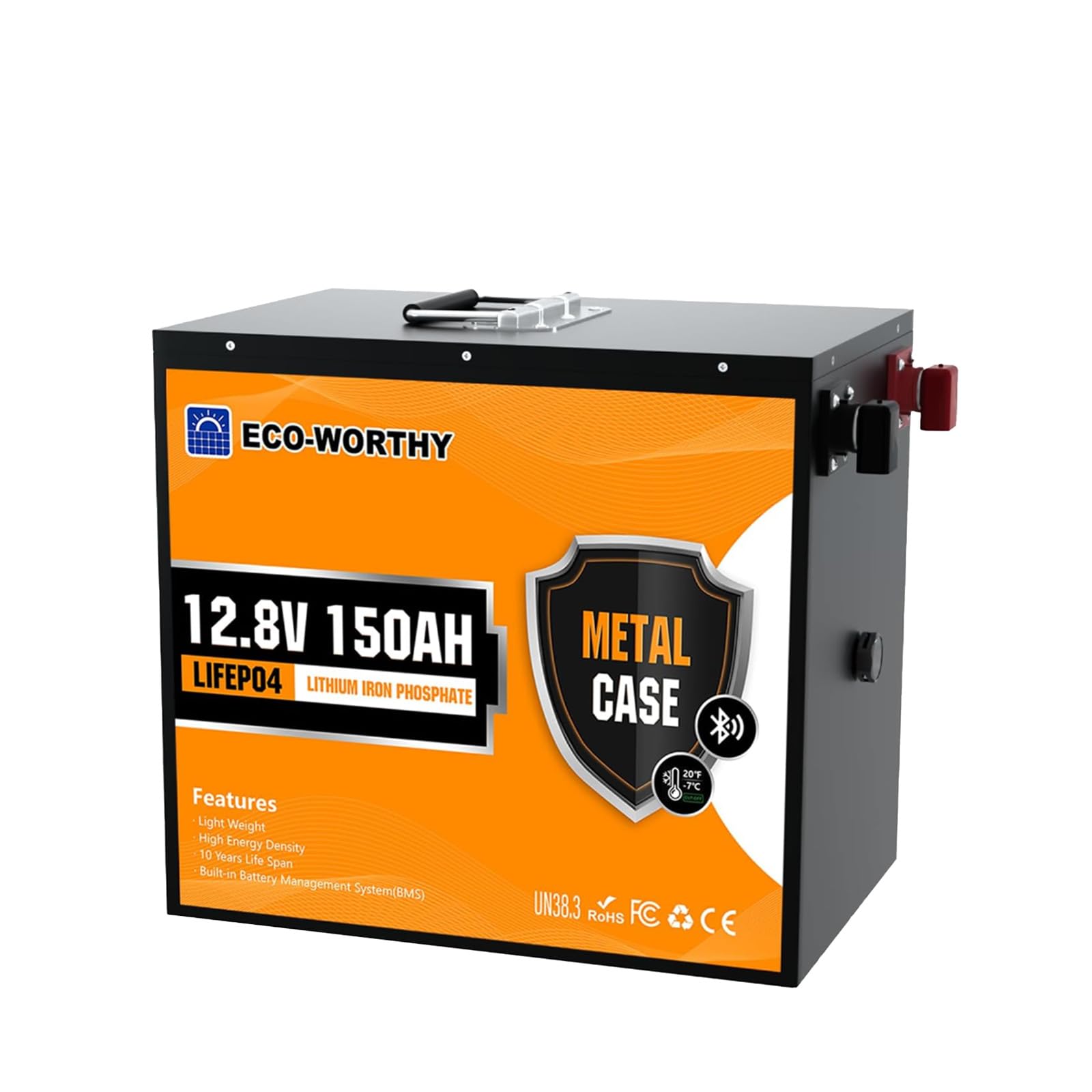
ECO-WORTHY steps above the standard 100Ah crowd with a 150Ah capacity that delivers 1920Wh of usable energy — enough to run an RV fridge overnight plus lights and a water pump without stress. The metal case design provides better heat dissipation and drop protection compared to the plastic housings found on most budget models. Its Bluetooth 5.1 monitoring lets you check voltage, current, and remaining capacity directly from your phone, a rare feature in this price tier.
The 120A BMS handles up to 1,536W continuous output, with low-temperature charging cutoff at 20°F and discharge cutoff at -4°F. The charging cutoff auto-resumes once the battery warms to 32°F. Its larger physical size — 12.28 x 7.87 x 11.22 inches — means it may not fit every standard Group 31 battery box. Several users reported that no standard battery box accommodates the metal shell perfectly and recommended securing it with a strap or custom tray.
The three-year warranty is shorter than some competitors’ five-year coverage, but ECO-WORTHY offers 24-hour customer support and a 30-day return window even for technically non-returnable items. The built-in troubleshooting function in the app helps identify faulty batteries in a multi-bank setup without disconnecting everything. This is the best option if you want more than 100Ah and app-based monitoring without jumping to premium pricing.
Why it’s great
- 150Ah capacity for extended off-grid runtime
- Bluetooth 5.1 for real-time battery monitoring on your phone
- Metal case improves heat dissipation and durability
Good to know
- Metal case may not fit standard plastic battery boxes
- Only 3-year warranty, less than some mid-range competitors
4. Renogy 12V 100Ah LiFePO4 Core Mini
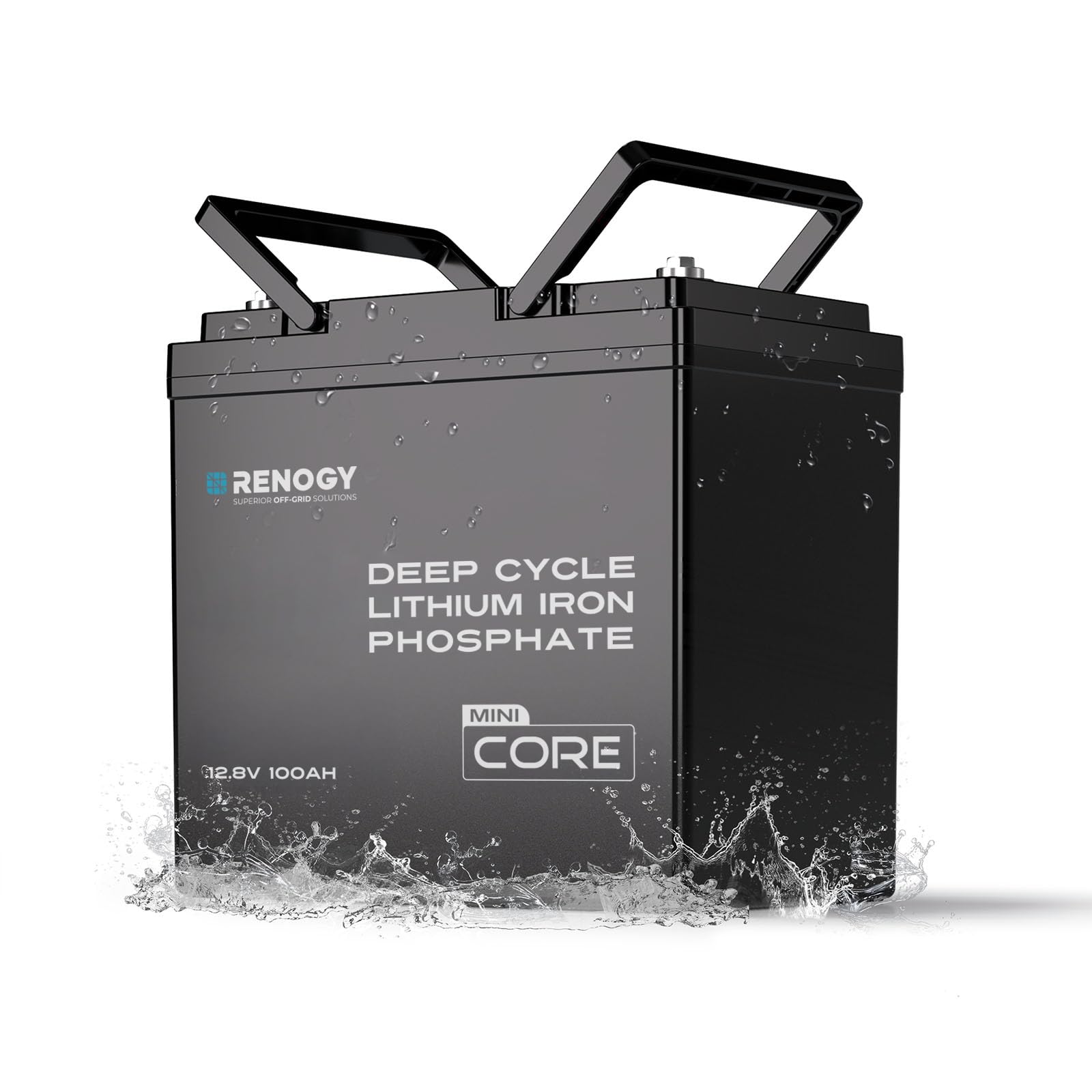
Renogy’s Core Mini series shrinks the standard 100Ah footprint by 50 percent compared to a Group 31 battery, measuring just 9.02 x 5.43 x 8.39 inches — a Group 22NF size that fits inside teardrop trailers and kayak hatches where full-size batteries simply won’t go. The IP65-rated casing resists splashes, dust, and moisture, making it suitable for exposed compartments in boats or camper vans. The 100A BMS includes low-temperature charging cutoff, high-temperature protection, and overvoltage safeguards.
Users can mount the battery in any orientation except upside down, offering flexibility in tight spaces. The metallic cell spacers keep the prismatic cells locked in place during rough roads or choppy water, preventing internal damage. An optional Renogy 300A Battery Shunt (sold separately) enables remote monitoring via the DC Home app or Renogy ONE display.
The trade-off for the mini size is a slightly lower energy density per pound compared to full-size 100Ah units. At 22.7 pounds it’s not dramatically lighter, but the compact volume is the real advantage. It also uses lithium-ion cells rather than prismatic LiFePO4 cells found in most RV-specific batteries. For very tight installations in small campers, boats, or van conversions, the Core Mini is the best fit in this lineup.
Why it’s great
- 50% smaller than Group 31 for ultra-tight spaces
- IP65 splash and dust resistance
- Metallic spacers prevent cell movement during travel
Good to know
- Monitoring shunt sold separately
- Smaller physical size may not fit standard battery trays without adapters
5. OKMO 12V 100Ah LiFePO4 Battery (2 Pack)
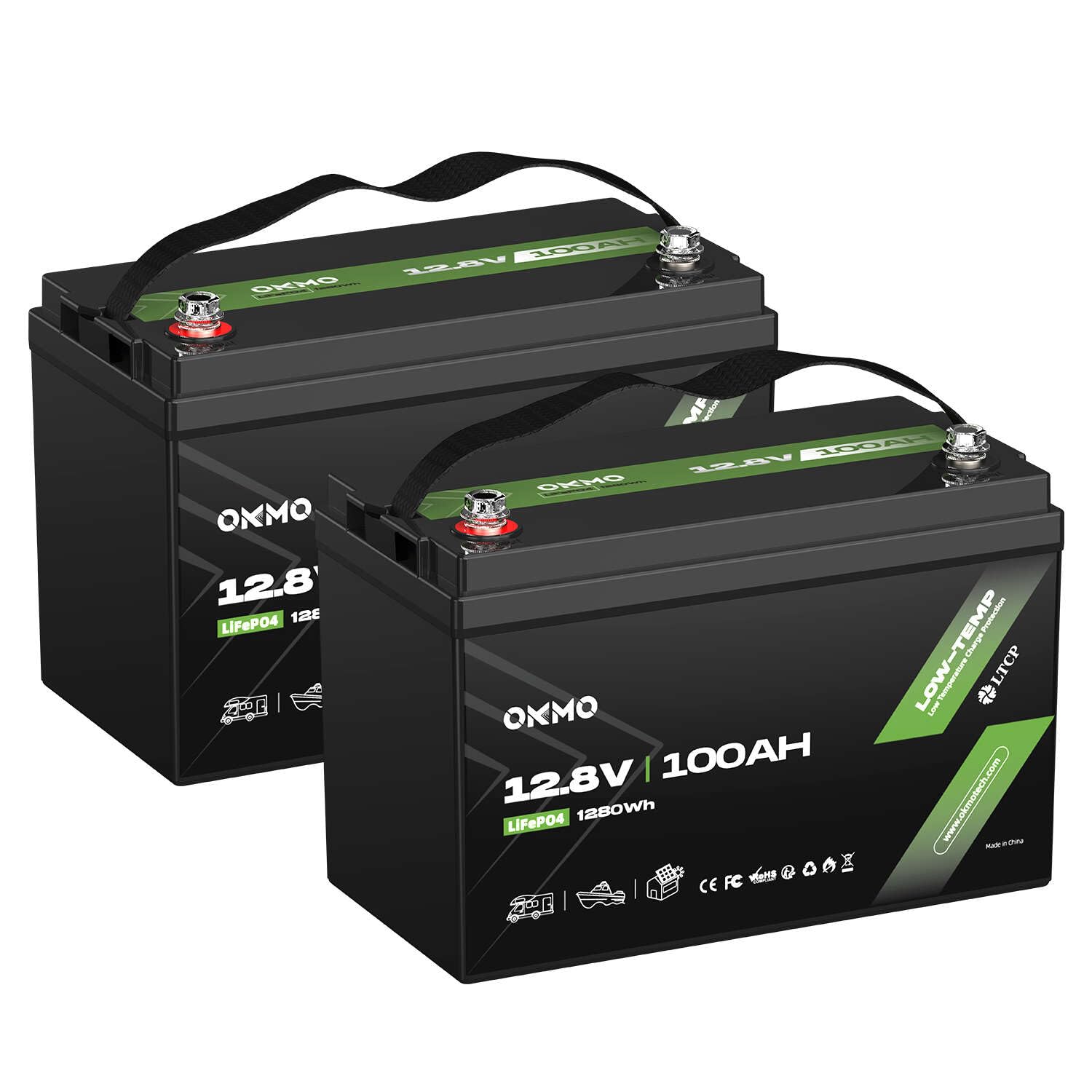
OKMO offers two 100Ah LiFePO4 batteries bundled together, making this the most efficient way to build a 200Ah house bank without buying separate units. Each battery weighs 23.15 pounds and uses four A-grade LiFePO4 cells under a 100A BMS that provides triple protection against dust, water, and salt spray — specifically optimized for trolling motor environments. The low-temperature cutoff prevents charging below freezing and discharge below -4°F.
The BMS covers overcharge, over-discharge, overcurrent, short circuit, and overload scenarios. Users can connect the pair in series for 24V or parallel for 200Ah at 12V. Expansion up to 4S4P allows a maximum capacity of 400Ah at 48V. Owners in real-world reviews report that a single 100Ah unit runs a diesel heater for a full week on a single charge, and the lightweight construction makes installation much easier than equivalent lead-acid weight.
The main risk reported by buyers is inconsistent quality control — one review noted a dead battery on arrival that was replaced after verification, while another reported a defective Bluetooth module with no response from customer service. OKMO offers a five-year warranty, but some users found that warranty claims required direct contact rather than Amazon support. The two-pack price per battery is the best value in this roundup if both units arrive functioning correctly.
Why it’s great
- Two batteries in one package for easy 200Ah expansion
- Triple protection against dust, water, and salt spray
- 5-year warranty coverage
Good to know
- Mixed reports on quality control at delivery
- Customer service responsiveness varies
6. Litime 12V 100Ah Trolling Motor LiFePO4

Litime’s trolling motor-specific battery meets the ABYC E-13 standard, a marine industry certification that many budget batteries skip. The built-in TVS (Transient Voltage Suppression) diode shields 12V to 36V trolling motors from voltage spikes that can damage electronics — a genuine concern when running a brushed motor at full throttle across choppy water. At 22.16 pounds in a standard Group 31 case, shaving 64 percent of the weight off a lead-acid battery noticeably improves boat handling and hole shot performance.
The smart BMS includes low-temperature charging cutoff at 32°F and discharge cutoff at -4°F, with triple-layer protection against dust, water, and salt spray. Real-world owners report using this battery with a 36V Minn Kota Ultrex for five hours while discharging only 10 percent of capacity, and another user pushed a 16-foot jonboat for four hours against an 8 mph headwind with minimal drain. The battery can expand to 4P4S for a maximum 48V 400Ah configuration.
Some buyers noted that the battery ships in sleep mode and requires a wake-up procedure — using a charger with force mode or momentarily applying a load. The user manual doesn’t always clarify this step. Despite that minor onboarding friction, the combination of ABYC compliance, TVS protection, and real-world performance makes this the best choice for marine-focused RV owners or anyone running sensitive electronics from their 12V bank.
Why it’s great
- ABYC E-13 certified for marine use
- TVS diode protects against trolling motor voltage spikes
- Very light weight improves boat performance
Good to know
- Ships in sleep mode, needs manual wake-up
- Manual lacks clear wake-up instructions
7. Dumfume 24V 100Ah LiFePO4 Battery
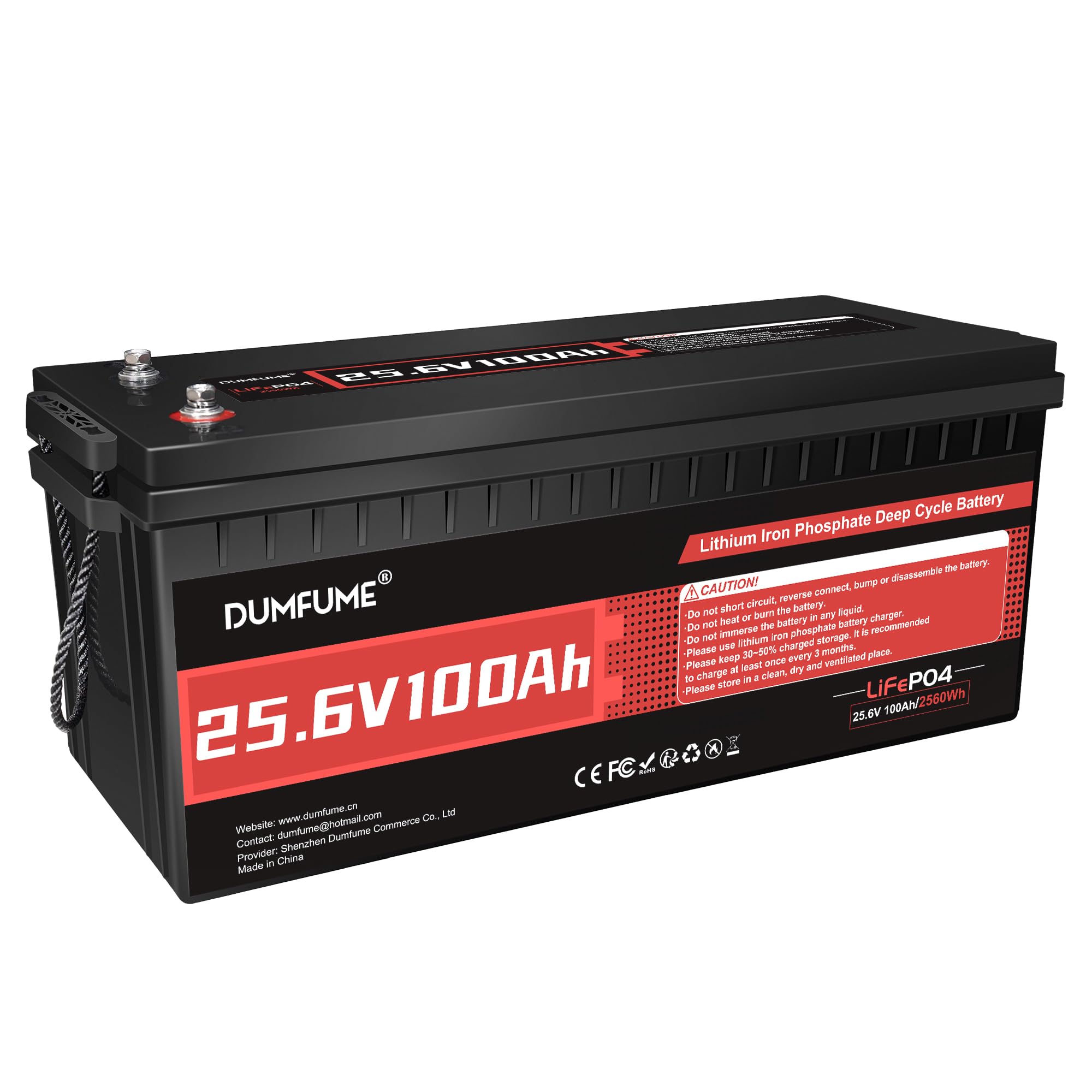
Dumfume consolidates two 12V batteries worth of energy into a single 24V 100Ah package delivering 2.56kWh — enough to run a medium-sized RV fridge, lights, and a laptop charging station for multiple days without recharging. The 24V architecture reduces current draw by half compared to a 12V system, which means thinner wiring and less voltage drop over longer cable runs. The 100A BMS provides continuous power up to 2,560W and protects against overcharge, over-discharge, and short circuits.
At 48.06 pounds, the battery is roughly the weight of a single lead-acid battery but delivers double the usable energy. It supports series and parallel connections up to 2S4P, making it suitable for scaling a 24V solar array. Real-world testers report that the Grade A cells in this battery actually exceed the rated capacity by roughly 7Ah in some units. The five-year warranty covers manufacturer defects.
The battery lacks Bluetooth monitoring — it’s a non-smart design that relies on the BMS for protection without app-based visibility. Some buyers received units with low voltage (12.2V to 12.4V) that required a jump-start from a donor battery before accepting a charge. For RV owners who already have a 24V inverter or solar charge controller, this single battery replaces two 12V units and simplifies the wiring layout considerably.
Why it’s great
- Single 24V battery replaces two 12V units
- Higher voltage reduces current and allows thinner wiring
- Cells often exceed rated capacity
Good to know
- No Bluetooth or smart monitoring
- Some units arrive with low voltage requiring a jump-start
8. MEYULMOL 12V 300Ah LiFePO4 Battery
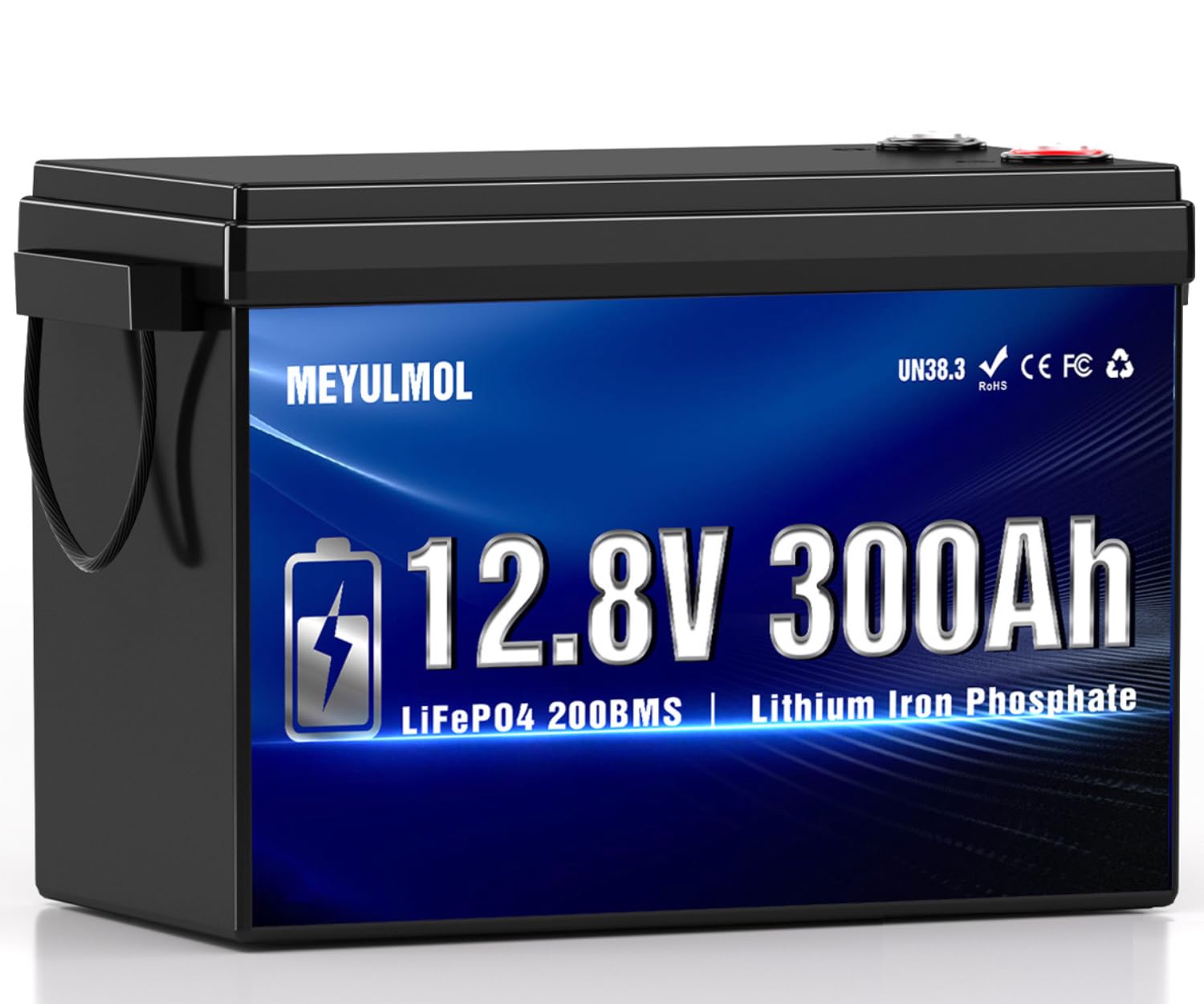
MEYULMOL packs 300Ah of capacity into a single 12V case, yielding 3,840Wh of usable energy — enough to run a full-size RV fridge, furnace fan, lights, and a TV for multiple days without any solar input. The 200A BMS supports continuous output up to 2,560W, which comfortably handles a 2,000W inverter for microwave or coffee maker use. The Grade A automotive-class cells are rated for over 4,000 cycles at 100% depth of discharge, with a projected lifespan exceeding 10 years.
The 4S4P expansion support allows stacking up to 48V and 1,200Ah for large solar farms or industrial backup applications. The low-temperature charging cutoff kicks in at 32°F, preventing cold-weather damage, while the discharge cutoff operates down to -4°F. Real-world reports highlight that the battery holds a fridge overnight using only three percent of capacity, leaving plenty of headroom for daytime solar recharge.
The main drawbacks are the lack of Bluetooth monitoring and the relatively sparse documentation. Some buyers noted that the brass terminal bolts are soft and prone to snapping if overtightened, requiring a careful hand with a torque wrench. The packaging also received criticism — one unit arrived with scratches on the case. For RV owners who want maximum single-battery capacity without wiring multiple units in parallel, the MEYULMOL 300Ah is the most straightforward solution.
Why it’s great
- Massive 300Ah capacity in a single 12V battery
- 200A BMS supports high-draw inverters
- Expandable to 48V 1200Ah for future growth
Good to know
- No Bluetooth or smartphone monitoring
- Soft terminal bolts can strip if overtightened
9. Battle Born 100Ah 12V LiFePO4 Battery
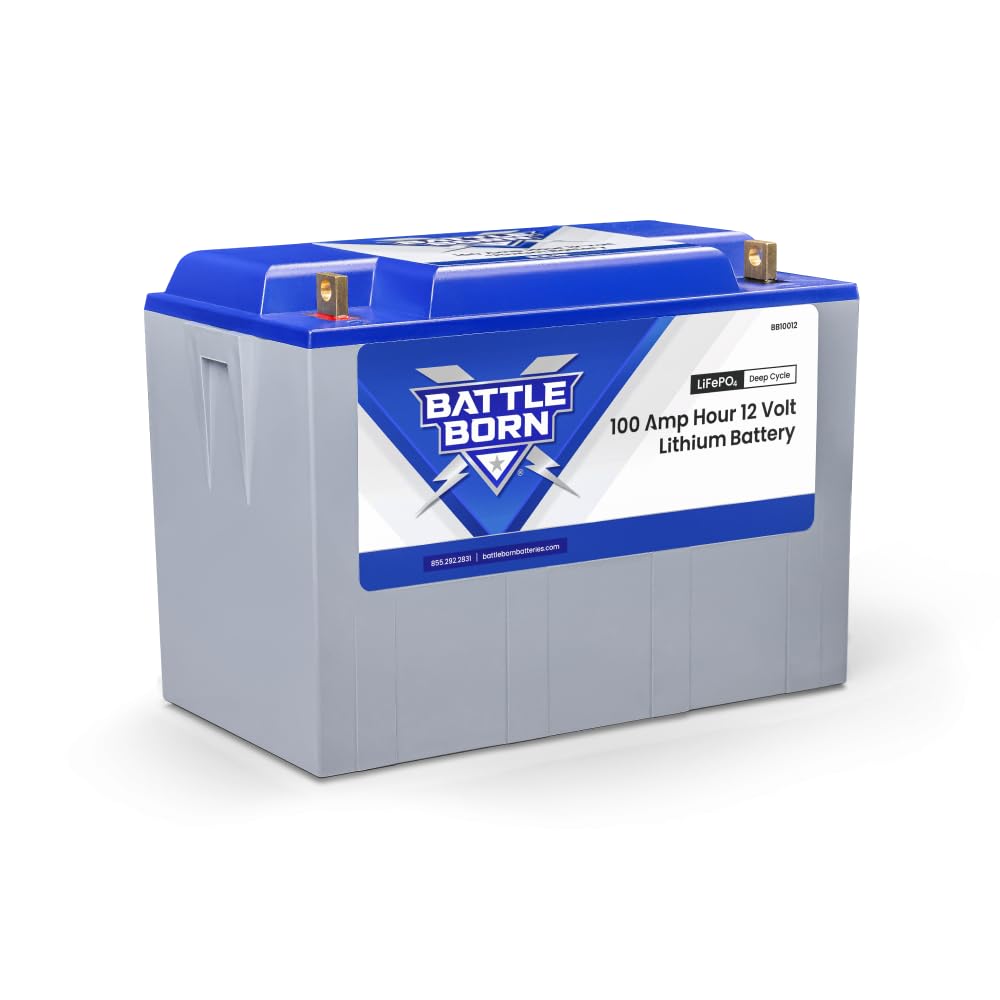
Battle Born sits at the top of the price spectrum with a 10-year warranty and a reputation for bulletproof reliability among full-time RVers and off-grid homeowners. The 100Ah 12V battery weighs 31 pounds — heavier than budget-tier options but still 60 percent lighter than the lead-acid equivalent. The internal BMS provides low-temperature charging protection, high and low voltage cutoffs, and short-circuit protection. The battery can be wired in series or parallel and mounted in any orientation.
Real-world testing shows the Battle Born running a 450W heater for 1.5 hours, raising an RV interior temperature by 12°F, and powering a full 3,000-mile road trip with solar charging covering the daily loads. The 3,000 to 5,000 cycle rating translates to 10 to 15 years of typical use. One owner reported a BMS issue after one year that was resolved with a free replacement under warranty — customer service is consistently praised across reviews.
The premium price reflects both the domestic support infrastructure and the robust build quality. The drop-in design fits Group 27 and Group 31 trays, with sturdy side-post connectors that feel more durable than the budget terminals on cheaper batteries. The battery requires a lithium-compatible charge controller, which may mean upgrading an existing solar setup. For RV owners who plan to keep their rig for a decade and want zero hassle, Battle Born is the safest long-term bet despite the higher upfront cost.
Why it’s great
- 10-year warranty with excellent US-based customer support
- Proven reliability over thousands of real-world cycles
- Drop-in fit for Group 27 and Group 31 trays
Good to know
- Premium price, significantly more than budget alternatives
- Requires lithium-compatible charge controller for optimal charging
FAQ
Can I replace my RV lead-acid battery with a lithium battery without changing my charger?
How many 100Ah lithium batteries do I need for my RV?
Final Thoughts: The Verdict
For most users, the budget rv lithium battery winner is the Power Queen 12V 100Ah because it delivers proven 4,000-cycle reliability, a perfect Group 31 drop-in fit, and responsive customer support at a price that undercuts many competitors while matching their specs. If you want the lightest possible 100Ah battery for weight-sensitive setups like small boats or teardrop trailers, grab the Redodo 12V 100Ah at just 22 pounds. And for maximum single-battery capacity without paralleling multiple units, nothing beats the MEYULMOL 12V 300Ah with its 200A BMS and 3,840Wh of usable energy.