
A serger that skips stitches, chews delicate knits, or refuses to tension properly turns fabric savings into a frustrating pile of wasted material. For home sewists moving beyond a basic sewing machine, the overlocker is the upgrade that finally delivers clean, professional seam finishes—but only if the frame, feed, and threading system actually work together without constant re-adjustment. The difference between a smooth 4-thread seam and a bird’s nest of tangled thread often comes down to the differential feed ratio and the rigidity of the machine’s chassis.
I’m Min — the co-founder and writer behind Gadgets Feed. I’ve spent countless hours cross-referencing technical specifications, customer reports on tension drift and motor reliability, and the actual stitch quality at various thread counts across entry-level overlockers to separate the dependable value buys from the frustrating lemons.
Whether you are finishing seams on stretch jersey or rolling hems on lightweight chiffon, this guide evaluates the best budget serger options by focusing on metal frame durability, differential feed control, and threading ease to help you pick the right machine for your sewing room.
How To Choose The Best Budget Serger
A budget overlocker needs to balance a sturdy enough frame to resist vibration at high speed with a threading path you can actually learn in an afternoon. Prioritize these three areas when comparing machines.
Metal Frame vs Plastic Construction
An entry-level serger that relies heavily on plastic in the chassis will develop vibration over time, causing the upper knife to chatter and tension discs to shift mid-seam. Look for models that specify a heavy-duty metal frame or cast-iron internal structure—this dampens the motor’s vibration and keeps the stitch formation consistent across long sessions and thicker fabric stacks.
Differential Feed Ratio Range
The differential feed controls how the front and rear feed dogs move relative to each other. A ratio adjustable between 0.7 and 2.0 allows you to prevent puckering on lightweight silks (higher ratio) and stretching on ribbed knits (lower ratio). Machines that offer a 0.7 to 2.0 range give you real control over difficult fabrics; narrower ranges or fixed differential feeds severely limit which materials you can sew cleanly.
Threading Path and Lower Looper Access
The lower looper on most budget sergers is the most frustrating part to thread. Color-coded thread guides and numbered looper paths drastically reduce setup time. A lay-in threading system, where you can hook the thread into a slot instead of using tweezers to pass it through an eye, is the single biggest convenience feature on entry-level overlockers—especially if you plan to switch thread colors frequently.
Quick Comparison
On smaller screens, swipe sideways to see the full table.
| Model | Category | Best For | Key Spec | Amazon |
|---|---|---|---|---|
| MILLEPUNTI MLD42 | Mid-Range | Speed & stitch variety | 1,300 SPM / 12 built-in stitches | Amazon |
| Janome MOD-8933 | Premium | Lay-in threading ease | Lay-in threading system | Amazon |
| SINGER S0100 | Premium | Brand reliability & speed | 1,300 SPM / metal frame | Amazon |
| SINGER S14-78 | Premium | Beginner-friendly threading | 1,200 SPM / color-coded guides | Amazon |
| Lumina Moda | Mid-Range | Free arm & portability | 1,250 SPM / metal frame | Amazon |
| VEVOR (Differential Feed) | Mid-Range | Differential feed range | 0.7–2.0 diff. feed / 1,250 SPM | Amazon |
| VEVOR (Standard) | Mid-Range | Heavy-duty build | 1,250 SPM / 112W motor | Amazon |
| FEIYUE FY505 | Budget | Lowest entry price | 1,100 SPM / metal frame | Amazon |
| PooLin EOC02 | Budget | Computerized features | 200 stitches / LCD display | Amazon |
In‑Depth Reviews
1. MILLEPUNTI MLD42 Serger

The MILLEPUNTI MLD42 is the best-balanced option for anyone who wants premium stitch speed without paying premium pricing. At 1,300 stitches per minute, it is the fastest machine on this list, and the 12 built-in stitches—ranging from decorative overlocks to elastic stitches—give it real versatility for garment sewing and activewear alike. The metal frame keeps vibration low even at top speed.
The adjustable differential feed handles stretchy knits and lightweight wovens with minimal puckering, and the free arm simplifies cuffs and sleeves. The detachable trim trap keeps your workspace clean during longer sessions, and the included accessory kit with a dust cover, tweezers, and four cones of thread means you have everything to start right away.
Some users report that the lower looper threading is finicky without the color-coded guide, and the manual’s diagrams could be clearer for the 2-thread converter mode. For an experienced beginner or intermediate sewist, however, the MLD42 delivers the broadest stitch palette and the highest speed in this price tier.
Why it’s great
- Fastest 1,300 SPM motor with reliable stitch quality
- 12 built-in stitches for decorative and functional seams
- Detachable trim trap and free arm for garment work
Good to know
- Lower looper threading requires patience despite color coding
- Manual lacks clarity for 2-thread conversion setup
2. Janome MOD-8933 Serger

The Janome MOD-8933 is the most painless serger to thread in this roundup thanks to its lay-in threading system, which lets you drop the thread into the tension slot rather than wrestling with tweezers through tiny eyes. That single feature makes it the top pick for sewists who change thread colors between projects or who get frustrated with traditional looper threading paths.
It offers 3 and 4 thread capability with a quick-change rolled hem mode and adjustable presser foot pressure, so you can go from finishing a seam on denim to rolling a hem on silk without swapping mechanical parts. The differential feed prevents stretching on knits and puckering on lightweight wovens, and the accessible lower looper with pretension slider simplifies one of the most common tension headaches.
Owners note that the machine is noisier at high speed than some competitors, and the lack of a free arm limits its usefulness for sleeve and cuff work. The relatively simple 3/4-thread-only stitch selection means fewer decorative options than the MLD42, but for pure functional serging with the easiest threading possible, the MOD-8933 is hard to beat.
Why it’s great
- Lay-in threading dramatically simplifies rethreading
- Quick-change rolled hem without additional attachments
- Adjustable presser foot pressure for varied fabric weights
Good to know
- No free arm for sewing cuffs and sleeves
- Noisier operation at full speed compared to similar models
3. SINGER S0100 Metal Frame Serger

The SINGER S0100 brings a metal frame and 1,300 stitches per minute to the table at a price that undercuts many comparable models. The color-coded threading system with diagrams printed on the machine body reduces the learning curve significantly, and the differential feed handles everything from slippery rayon to stretchy spandex without wavy seams. It arrives pre-threaded for immediate testing out of the box.
The 2/3/4 thread capability gives you flexibility for everything from narrow rolled hems to strong 4-thread safety seams, and the front compartment stores all included accessories—tweezers, extra needles, cone adapters, and screwdriver—so they stay organized between sessions. The adjustable stitch length and cutting width let you fine-tune the seam finish for each project.
Some users report that the lower looper threading is still tight even with color coding, and a few early units had foot pedal reliability issues. The lack of a physical manual in the box (available as a PDF) frustrates those who prefer paper references. For a name-brand serger with a metal frame at this speed, however, the S0100 delivers consistent stitch quality for intermediate sewists.
Why it’s great
- Metal frame dampens vibration at 1,300 SPM
- Color-coded threading guides printed on the machine body
- Pre-threaded setup for quick out-of-box testing
Good to know
- No printed manual included; must download PDF
- Some reports of foot pedal reliability issues over time
4. SINGER S14-78 Serger

The SINGER S14-78 is designed for sewists who are intimidated by complex threading paths. The color-coded arrow system on the machine body guides each thread through the correct tension disc and looper, and the numbered lower looper path takes the guesswork out of the hardest part of serger setup. The differential feed prevents stretching on knits without requiring manual fine-tuning.
It supports 2/3/4 thread stitches with simple adjustments for rolled and narrow hems, and the free arm slides out for easy access to cuffs and sleeves. The suction cup feet grip the table surface to prevent the machine from walking during high-speed sewing. The included accessory kit—tweezers, extra needles, Allen key, and 2-thread converter—covers the basics.
The S14-78 lacks a dust cover and the manual is online-only by default, which inconveniences some buyers. At 13.9 pounds, it is lighter than many metal-frame models, which helps portability but reduces vibration dampening slightly. For a straightforward, easy-to-learn overlocker that handles knits well, the S14-78 is a reliable starting point for beginners.
Why it’s great
- Color-coded arrow threading system for quick learning
- Suction cup feet prevent walking during use
- Free arm for sleeves, cuffs, and tubular projects
Good to know
- No included dust cover for storage
- Heavier fabric stacks may cause minor vibration at top speed
5. Lumina Moda Serger

The Lumina Moda packs a metal frame, adjustable differential feed, and a free arm into a compact 16.5-pound chassis with a carrying handle. The 2/3/4 thread capability covers standard seam finishes and rolled hems, and the disengageable upper knife lets you sew without trimming—useful for decorative threads or delicate fabrics. The built-in trim trap keeps clippings contained.
The LED light illuminates the needle area clearly, and the adjustable presser foot handles up to six layers of denim without stalling. Color-coded threading guides reduce setup time, and the 1,250 SPM motor keeps projects moving at a solid pace. The free arm is particularly useful for hemming pant legs and finishing sleeve openings.
A significant number of users report motor failure after a few months of moderate use, and the manual lacks specific instructions for the rolled hem setting—requiring some trial and error to dial in. The Lumina Moda offers strong features for the price if you get a reliable unit, but the inconsistent quality control makes it a riskier choice than established brands.
Why it’s great
- Compact design with carrying handle and free arm
- Disengageable upper knife for decorative sewing
- Handles up to 6 layers of denim without stalling
Good to know
- Multiple reports of motor failure within first few months
- Manual lacks detailed rolled hem setup instructions
6. VEVOR Serger with Differential Feed
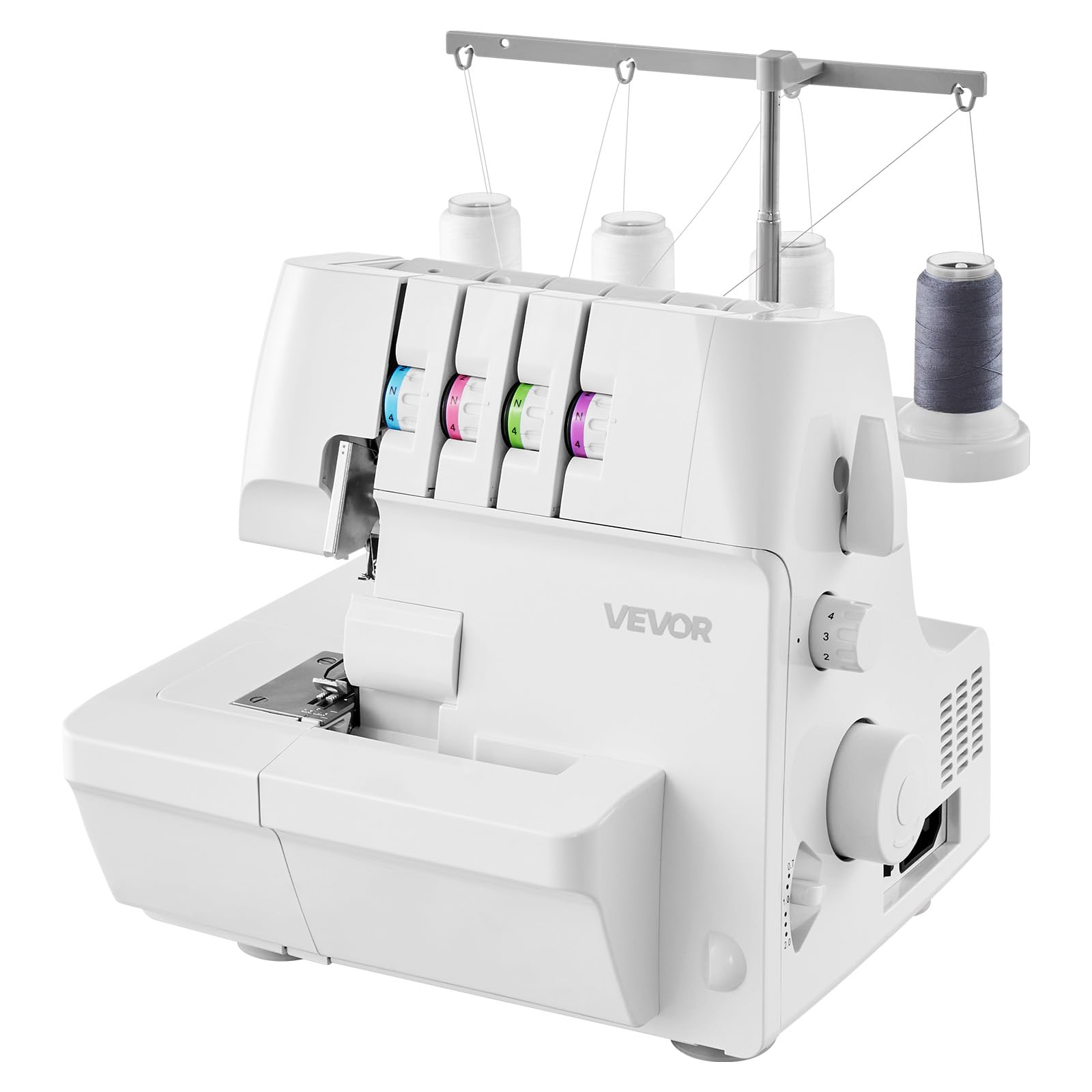
This VEVOR model offers the widest differential feed range in this group—adjustable from 0.7 to 2.0—giving you fine control over how the feed dogs handle stretchy, slippery, or delicate fabrics. The 2/3/4 thread flexibility combines with a free arm for sleeve work, and the included LED light and trim trap keep your workspace functional during long sewing sessions.
The iron-and-plastic body is sturdy enough to resist vibration at 1,250 SPM, and the color-coded threading path reduces the initial setup frustration. The adjustable presser foot height accommodates everything from sheer organza to thick denim stacks. The waste bin and tool storage keep accessories organized inside the machine body.
Like other VEVOR machines, this unit arrives bone dry and requires manual oiling of the metal moving parts before first use—failure to do so can cause overheating. The supplied thread spools are poor quality and tend to fray, so replacing them with standard serger cones is recommended. The manual’s diagrams are small and low-resolution, though a better diagram is printed inside the front compartment.
Why it’s great
- 0.7–2.0 differential feed handles all fabric types well
- Free arm and built-in trim trap for garment sewing
- Adjustable presser foot handles varied material thickness
Good to know
- Arrives bone dry; needs manual oiling before first use
- Included thread spools are poor quality and cause breakage
7. VEVOR Serger Overlock Machine
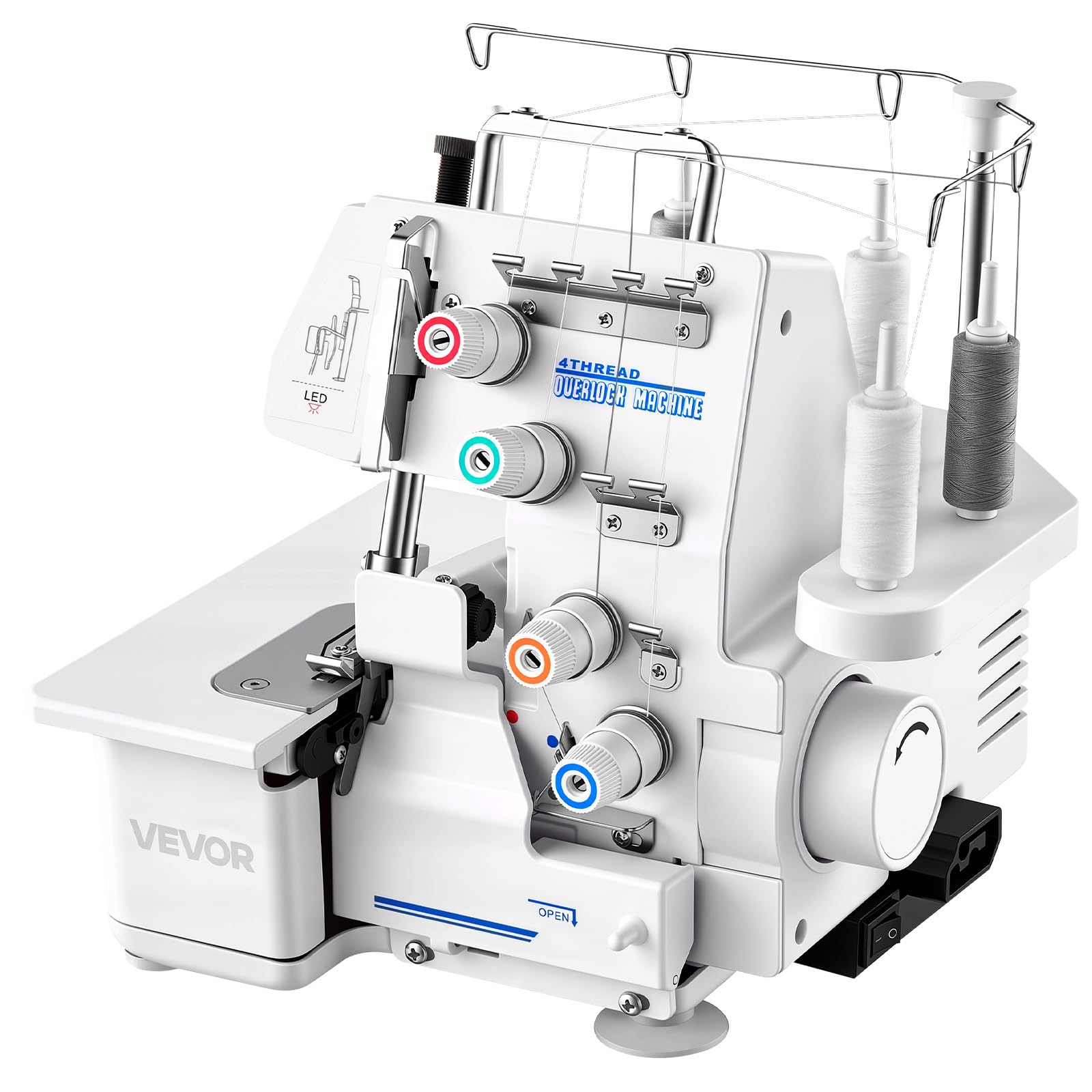
The standard VEVOR overlocker focuses on raw power with a 112W motor pushing 1,250 SPM through thick fabric stacks. The iron-and-plastic frame provides the stability needed for consistent stitch formation on heavy denim and canvas, and the 3/4-thread versatility covers basic overlocking and rolled hem functions. The LED light illuminates the cutting knife area for precise trimming.
Color-coded threading and an adjustable presser foot help beginners get started, and the included accessory kit is comprehensive: tweezers, spare knives, screwdrivers, hex wrenches, spool holders, needles, and test fabric. The strong suction feet keep the 17.8-pound machine planted on the table during high-speed operation.
Initial oiling is mandatory before use, and the tension dials lack numbered markings, making it harder to return to a known setting after adjustments. Some units develop overheating issues that cause the machine to stop stitching after short periods. The upper knife setup requires loosening a shipping screw before the blade rotates freely—a step easily missed if you skip the manual.
Why it’s great
- 112W motor delivers strong power for thick fabrics
- Comprehensive accessory kit included in the box
- Suction feet prevent vibration-induced movement
Good to know
- Tension dials have no numbered markings for repeatability
- Some units overheat and stop stitching after short use
8. FEIYUE FY505 Serger

The FEIYUE FY505 is the most affordable entry into metal-frame serging, with a sturdy steel chassis that resists vibration far better than all-plastic alternatives at this price point. The 2/3/4 thread capability covers basic seam finishing and rolled hems, and the adjustable differential feed handles moderate fabric variation. The carbon steel cutting blade delivers clean edge trimming without snagging.
The color-coded thread guides and numbered loopers simplify the threading process, and the 1,100 SPM speed is adequate for small-to-medium projects. The included embroiderer plate adds some versatility for decorative work. At 13.57 pounds, it is light enough to move between workstations without strain.
The lower looper threading is genuinely difficult even with the color guides—several users describe it as the most frustrating part of the machine. The manual’s print is small and the diagrams lack the depth needed for complete beginners. A small but notable number of units arrive with a defective foot pedal that causes runaway speed, so test the pedal immediately upon unboxing.
Why it’s great
- Metal frame at the absolute lowest price point
- Carbon steel cutting blade stays sharp through heavy use
- Color-coded guides and numbered loopers for threading
Good to know
- Lower looper threading is very difficult even with guides
- Some units ship with defective foot pedals causing runaway speed
9. PooLin EOC02 Sewing Machine
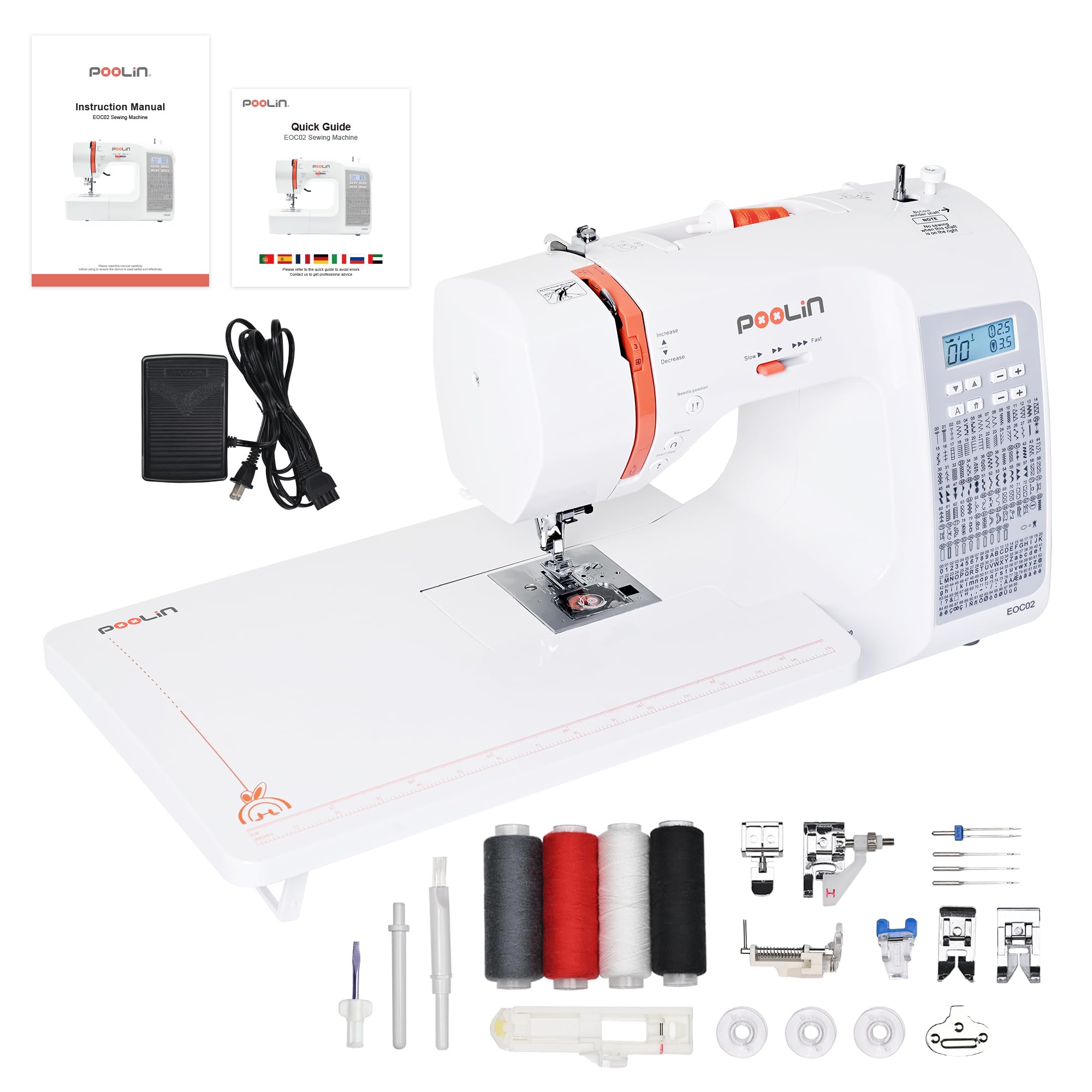
The PooLin EOC02 is not a serger—it is a computerized sewing machine with 200 built-in stitches, an LCD screen, and seven presser feet. It earns a place in this guide because many budget-conscious sewists consider it as an alternative to buying a serger, especially when they want a single machine that can handle both straight stitching and decorative patterns.
With an automatic needle threader, speed control slider, and start/stop button, it is beginner-friendly and quiet during operation. The extra-wide table provides generous workspace for quilting, and the free arm pops out for cuff and sleeve work. The LCD screen displays stitch selection and settings clearly, reducing the need to reference the manual constantly.
The PooLin cannot overlock, roll a hem, or trim fabric—it is a straight-stitch and zigzag machine only. Users who need true serging will find the lack of a cutting knife and differential feed limiting. If your priority is a versatile home sewing machine rather than dedicated overlocking, the EOC02 is a strong value; if you need professional seam finishing, stick with a serger.
Why it’s great
- 200 built-in stitches with LCD display for easy selection
- Automatic needle threader and speed control for beginners
- Quiet, smooth operation with low vibration
Good to know
- Not a serger—no overlock, rolled hem, or cutting knife
- Requires stabilizer for stretch fabrics; no differential feed
FAQ
Can a budget serger handle rolled hems on lightweight fabric?
Why does my serger skip stitches on thick fabric?
Is a serger with 2/3/4 thread capability always better than a 3/4-only model?
Final Thoughts: The Verdict
For most users, the budget serger winner is the MILLEPUNTI MLD42 because it combines the highest stitch speed with 12 built-in stitches, a metal frame, and adjustable differential feed at a price that undercuts many lesser machines. If you want the easiest threading experience, grab the Janome MOD-8933 with its lay-in threading system. And for the absolute lowest entry point into a metal-frame serger, nothing beats the FEIYUE FY505.