
Nothing ruins a video faster than audio that sounds like it was recorded in a wind tunnel or a crowded cafeteria. A budget shotgun microphone is the fix — it physically rejects sound from the sides and rear, forcing the mic to hear only what you point it at. That means your subject’s voice stays crisp and isolated, even if you’re filming near a busy road or a humming refrigerator.
I’m Min — the co-founder and writer behind Gadgets Feed. I’ve spent dozens of hours cross-referencing frequency responses, self-noise floors, and connector compatibility to identify which budget-friendly shotgun mics actually deliver on their directional promise versus those that just add a fuzzy dead cat to your camera.
The right entry-level mic solves a specific problem: it captures clean dialogue without picking up footsteps, room echo, or traffic rumble. In this guide, I break down today’s best options for every setup, so you can find a genuinely useful budget shotgun microphone that makes your audio match your footage.
How To Choose The Best Budget Shotgun Microphone
A cheap shotgun mic doesn’t have to sound cheap, but you have to know which trade-offs to accept and which ones will ruin your footage. Before you buy, check three specific things: the polar pattern type, the self-noise number, and whether your camera or phone supplies plug-in power.
Polar Pattern: Super-Cardioid vs. Hyper-Cardioid
Most budget shotgun mics use a super-cardioid or hyper-cardioid pickup pattern. Super-cardioid rejects more sound from the sides, making it the safer choice for on-camera vlogging where you can’t control the environment. Hyper-cardioid pulls in slightly more sound from the rear, which can be useful for boom-pole work but riskier in noisy rooms. Stick with super-cardioid for general filmmaking.
Self-Noise and Sensitivity: The Hidden Numbers
Self-noise (measured in dBA) tells you how much hiss the mic itself adds to silence. Anything above 20 dBA is audible in quiet indoor scenes. Budget mics often sit between 18 and 22 dBA — that’s acceptable for dialogue. Sensitivity (expressed in dBV/Pa) matters less on paper but correlates with how much gain your camera needs. Lower sensitivity numbers mean quieter output, which can push your preamp into audible noise territory.
Power: Passive vs. Internal Battery
Passive shotgun mics draw all their power from the camera’s plug-in power (usually 3V to 5V). This is the simplest setup — no charging, no battery drain — but some cameras don’t supply enough voltage, making the mic sound quiet or thin. Active mics with internal batteries or USB power offer consistent output and often include gain knobs, low-cut filters, or digital connectivity. For smartphones without a 3.5mm jack, a mic with USB-C output is essential.
Quick Comparison
On smaller screens, swipe sideways to see the full table.
| Model | Category | Best For | Key Spec | Amazon |
|---|---|---|---|---|
| RØDE VideoMic GO II Helix | Premium | Hybrid camera/phone setups | 3.5mm TRS + USB-C | Amazon |
| COMICA VM20 | Premium | Long-form interviews | 60-hour battery, OLED | Amazon |
| SENNHEISER MKE 200 | Mid-Range | Durable outdoor filming | 40 Hz – 20 kHz response | Amazon |
| Rode VideoMicro | Mid-Range | Ultra-compact travel video | 42g, no battery needed | Amazon |
| Movo X1-Mini | Mid-Range | Multi-platform (USB + analog) | 24-bit digital, Rycote mount | Amazon |
| Deity V-Mic D4 Mini | Value | Secondary input for lav mic | 20mph wind rating, 74 dBA | Amazon |
| COMICA VM10 PRO | Value | USB-C digital convenience | 37g, aluminum body | Amazon |
In‑Depth Reviews
1. RØDE VideoMic GO II Helix

The VideoMic GO II Helix is the most versatile entry in this roundup because it speaks both analog and digital natively. You get a standard 3.5mm TRS jack for your DSLR or mirrorless camera and a USB-C output that plugs straight into an iPhone, Android phone, tablet, or computer — no clunky adapters required.
RØDE’s HELIX isolation mount does heavy lifting here. It decouples the mic capsule from handling bumps and low-frequency rumble far better than the simple rubber bands on cheaper competitors. The mic also works with RØDE Central software, where you can enable a high-pass filter or a high-frequency boost to tailor the tone without needing an in-line EQ.
There are no switches or gain dials on the body, which keeps operation dead simple but limits on-the-fly adjustment. If you need real-time level control, you’ll want a higher-tier option. For anyone hopping between a camera and a phone, this is the most future-proof passive shotgun under the premium tier.
Why it’s great
- Dual 3.5mm + USB-C output covers cameras and smartphones out of the box.
- HELIX mount provides excellent vibration damping for its weight class.
- Advanced software EQ unlocks high-pass and presence boost.
Good to know
- No physical gain control or low-cut switch on the body.
- Plastic enclosure feels less robust than all-metal alternatives.
2. COMICA VM20 Shotgun Microphone

The VM20 is the rare active shotgun that keeps running long after your camera batteries die. Its 300mAh internal cell delivers up to 60 hours of runtime from a three-hour charge, and the USB-C port supports pass-through charging so you never hit a dead-battery wall mid-interview.
An OLED screen on the rear panel shows remaining battery life in real time — a genuinely useful feature when you’re shooting outdoors and can’t rely on vague low-battery LEDs. The ten-level stepless gain knob lets you dial in sensitivity from -43 dB to -23 dB, and the 75/150 Hz low-cut filters kill HVAC hum or wind rumble without an external processor.
At 84 grams with an all-aluminum body, it feels sturdier than plastic alternatives, and the included Rycote-style shock mount pairs with both foam and furry dead-cat windscreens. The only ergonomic complaint is that the gain wheel is easy to bump accidentally, so you’ll want to tape it once you find your sweet spot.
Why it’s great
- 60-hour battery life with USB-C pass-through charging eliminates field downtime.
- OLED battery readout and stepless gain dial offer pro-level control.
- Full aluminum chassis and dual low-cut filters improve build and audio quality.
Good to know
- Gain knob is exposed and prone to accidental movement during handling.
- Furry windscreen sheds lint; store it separately from the mic.
3. SENNHEISER Professional MKE 200
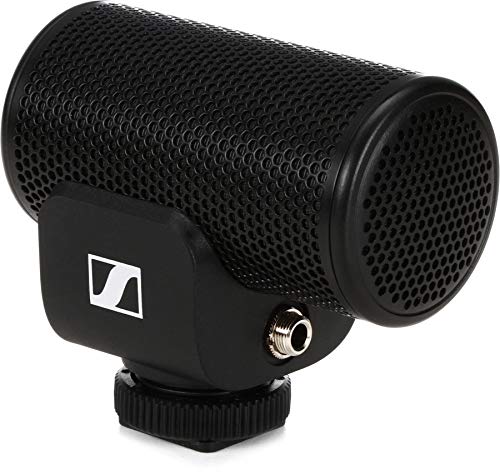
Sennheiser brings its broadcast heritage to a shoebox-sized body with the MKE 200. The internal suspension mount and integrated wind protection mean you can pull this mic out of the case and slap it on a cold shoe without adding a separate shock mount or fur windscreen — a real time-saver for run-and-gun documentarians.
The frequency response extends down to 40 Hz, which gives voices a fuller, less nasal character than many mics that roll off below 100 Hz. In outdoor tests, the MKE 200 survived heavy rain and continued recording crystal-clear audio, a durability level that justifies its mid-range sticker price for anyone who shoots in unpredictable weather.
The catch is connectivity: the MKE 200 ships with 3.5mm TRS and TRRS coiled cables, but no USB or Lightning adapter. Plugging into a modern iPhone without a headphone jack requires a separate adapter like the Movo IMA-1. Also, the audio is slightly thin out of the box and benefits from a touch of EQ in post to add warmth.
Why it’s great
- Internal shock mount and wind layer enable quick deployment without extra accessories.
- 40 Hz low-end response gives dialogue richer body than typical budget mics.
- Proven weather resistance survives rain and humid conditions.
Good to know
- No USB or Lightning cable included for direct smartphone connection.
- Stock audio profile sounds thin; post-production EQ is recommended.
4. Rode VideoMicro Compact On-Camera Microphone

The VideoMicro is the lightest shotgun in this list at just 42 grams, which makes it a natural fit for action cameras, gimbals, and small mirrorless bodies where every extra gram affects stabilization. It draws all power from the camera’s plug-in supply — no batteries, no charging, no onboard switches.
Rear noise rejection is a standout trait. Multiple users report that the super-cardioid pattern effectively kills crowd chatter and ambient music when filming in live environments, making the VideoMicro a strong choice for event coverage and outdoor interviews. The included Rycote Lyre mount and deluxe windscreen handle most common vibration and wind issues right out of the box.
For vlogging where you speak directly into the camera, the VideoMicro’s sensitivity is slightly lower than active alternatives, meaning you may need to speak a bit louder or position the camera closer to your mouth. It also lacks a TRRS cable in the box, so if you plan to use it with a smartphone, you’ll need Rode’s SC7 adapter.
Why it’s great
- Ultra-light 42g design is ideal for gimbal and action-camera mounting.
- Exceptional rear noise cancellation for an entry-level price.
- Fully passive — no charging, no buttons, always ready.
Good to know
- Lower sensitivity requires closer mic placement or louder dialogue.
- Smartphone use requires a separate TRRS cable or adapter.
5. Movo X1-Mini Video Shotgun Mic

The X1-Mini punches above its price bracket by offering both analog 3.5mm output and a dedicated USB-C digital output that delivers 24-bit audio resolution. That makes it one of the few budget-friendly mics that can double as a desktop USB microphone for gaming, Zoom calls, or podcasting without needing an audio interface.
Movo pairs the mic with a genuine Rycote shockmount, which is the same brand Rode uses on its higher-end models. The effect is noticeable: handling noise and cable rustle are well-suppressed, even when you’re walking with the camera on a monopod. The kit also includes foam and furry windscreens, plus a hard carrying case that keeps everything organized.
The super-cardioid pattern is sensitive enough that correct placement is critical — point it slightly off-axis and you’ll pick up more room than intended. There’s no hardware mute button, and the included carrying case is too small to store the mic with the shockmount attached, so you’ll have to disassemble after each shoot.
Why it’s great
- Analog and USB-C digital outputs work with cameras, phones, and PCs.
- 24-bit audio resolution provides clean headroom for post-production.
- Genuine Rycote shockmount delivers professional-grade vibration damping.
Good to know
- No hardware mute button for quick silencing.
- Carrying case forces disassembly of the shockmount for storage.
6. Deity V-Mic D4 Mini

The D4 Mini carves out a unique niche with its secondary 3.5mm aux input, which lets you plug in a lavalier microphone and record both sources onto the same camera track. For interview scenarios where you want a safety lav under the shotgun, this saves you from buying a dual-channel recorder.
Wind handling is rated at 20 mph, and the included faux-fur windshield extends usable outdoor performance beyond what most passive mics can manage. The weight is light enough to mount on a boom pole or a small gimbal head, and the included TRS camera cable and TRRS phone cable mean you’re covered for both camera and mobile setups out of the box.
The aux input has a limitation: it mixes the lav audio onto the same channel as the shotgun, so you lose the ability to separately EQ or mute either source in post. Some users also note that the shock mount feels flexible and less secure than the Rycote-style designs on pricier alternatives.
Why it’s great
- Built-in 3.5mm aux input enables simultaneous lav and shotgun recording.
- 20 mph wind rating and included fur windshield improve outdoor usability.
- TRS and TRRS cables included for immediate camera and phone use.
Good to know
- Aux input records on the same track as the shotgun — no separate channel.
- Shock mount feels slightly flimsy compared to Rycote-based competitors.
7. COMICA VM10 PRO Universal Video Microphone
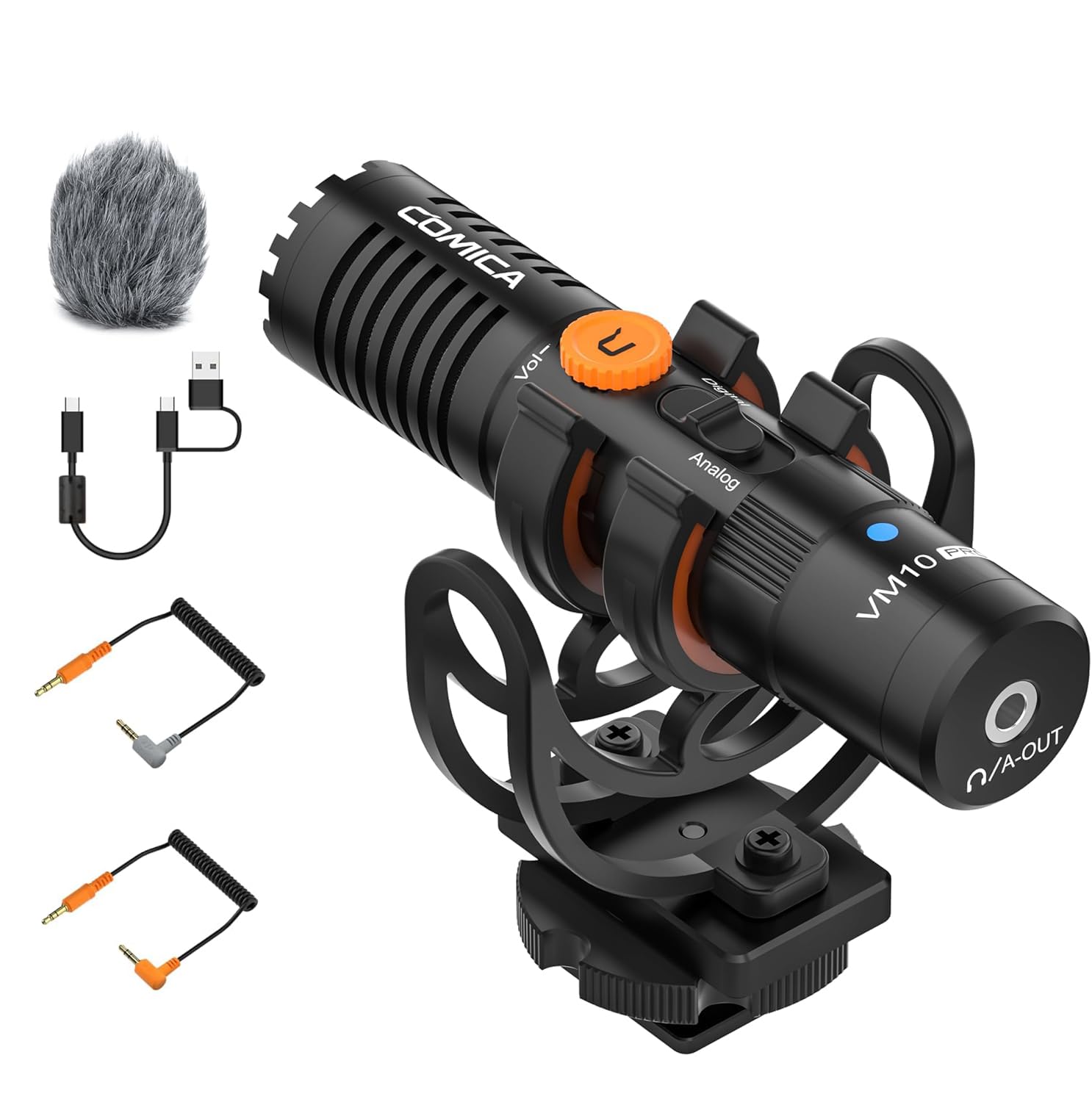
The VM10 PRO is the lightest and cheapest mic in the lineup at 37 grams, but it doesn’t cut corners on connector flexibility. A physical switch toggles between digital USB-C output and analog 3.5mm output, letting you move from a desktop PC to a DSLR to an Android phone without swapping hardware.
The super-cardioid pickup does an admirable job of rejecting bar noise and side conversation for karaoke clips and outdoor vlogs. The all-aluminum enclosure also feels more premium than the plastic bodies of similarly priced models.
The analog output on PC is noticeably quieter than the digital mode, often requiring a microphone boost in the operating system that introduces hiss. There’s no included Lightning cable for iPhones, so Apple users will need a separate adapter. For Android or Windows users who want a single mic that works on both camera and computer, this is the most practical entry point.
Why it’s great
- Switchable analog/digital output works with 3.5mm devices and USB-C gear.
- Weighs only 37 grams — barely noticeable on a small mirrorless body.
- Aluminum construction provides better RF shielding than plastic rivals.
Good to know
- Analog output on PC is quiet and may require gain boost.
- No Lightning cable included for direct iPhone connection.
FAQ
Do I need a dead cat windscreen for outdoor shotgun recording?
Can I use a budget shotgun mic for indoor podcasting?
What does the low-cut filter do on shotgun mics like the COMICA VM20?
Final Thoughts: The Verdict
For most users, the budget shotgun microphone winner is the RØDE VideoMic GO II Helix because its dual 3.5mm and USB-C output lets you move between a DSLR and a phone without adapters, all while leveraging RØDE’s top-tier isolation mount. If you want massive battery life and on-mic gain control, grab the COMICA VM20. And for the lightest possible footprint on an action camera or gimbal, nothing beats the Rode VideoMicro.