
Our readers keep the lights on and my morning glass full of iced black tea. As an Amazon Associate, I earn from qualifying purchases.
Specs are compiled from manufacturer listings and verified buyer reviews and can change over time — please confirm the key details on the product page before buying.
Picking a budget sleeping bag for backpacking is a balancing act between three things: how much it weighs, how small it packs, and how warm it keeps you when the temperature drops at night. You can get a bag that handles all three while staying affordable. This guide breaks down nine real options, focusing on the numbers that actually matter on the trail, so you can pick the right one for your next trip without overpaying.
I’m Min — the founder and writer behind Gadgets Feed. This guide is built by comparing the manufacturers’ published specifications and the patterns across verified customer reviews, so you get each pick’s real strengths and trade-offs instead of marketing spin.
Whether you’re a weekend warrior or a thru-hiker counting every ounce, understanding fill power, temperature ratings, and packed size is the key to finding the best budget sleeping bag for backpacking that fits your adventure and your wallet.
Our Picks at a Glance

How To Choose The Best Budget Sleeping Bag For Backpacking
Before you click buy, you need to know what you’re sacrificing at this price point. A budget bag usually means a heavier weight, a bulkier packed size, or a warmer-weather temperature rating than premium options. The key is deciding which trade-off matters least to you.
Temperature ratings are the starting point
Ignore the marketing and look for two specific numbers: the comfort rating (the lowest temp a cold sleeper will find comfortable) and the lower limit (the lowest temp you can survive without hypothermia). A 40-degree bag keeps a warm sleeper happy at 40°F, but a cold sleeper might be miserable at 50°F. Buy for the coldest night you actually expect.
Weight and packed size decide if it’s backpackable
A car-camping bag can weigh 5+ pounds and stuff down to the size of a beach ball. A real backpacking bag should weigh under 4 pounds and compress into a package you can shove into the bottom of your pack. Look at the packed dimensions, not just the weight, because a heavy compression sack can turn a light bag into a bulky one.
Quick Comparison
| Model | Best For | Bag Weight | Fill Type | Temp Rating | Amazon |
|---|---|---|---|---|---|
| Teton LEEF★ Best Overall | Cold-weather value | 3.5 lb | Microfiber Synthetic | 20°F / 0°F / 30°F opt | Amazon |
| iClimb 3M ThinsulateBest Machine Washable | Washable synthetic warmth | 2.4 lb | 3M Thinsulate | 41°F comfort / 32°F limit | Amazon |
| ZOOOBELIVES AlpliveT400Ultralight Value | Ultralight summer use | 1.7 lb | 650 Fill Down | 50°F comfort / 32°F limit | Amazon |
| Kelty Cosmic Synthetic 40 | Dependable 3-season synthetic | 2 lb 6 oz | Cirroloft Synthetic | 40°F | Amazon |
| Naturehike CW295 | Featherlight 3-season down | 1.3 lb | 650 Fill RDS Down | 51.8°F comfort / 42.8°F limit | Amazon |
| 1TG Tactical Mummy | Compact mid-season comfort | 3.88 lb | 7D Hollow Fiber | 25°F – 36°F | Amazon |
| ZOOOBELIVES AlpliveD1500 | Roomy 4-season down warmth | 3.9 lb | 550+ Fill Down | 32°F comfort / 10°F limit | Amazon |
| TETON Sports ALTOS | Roomy comfort for 3-season | 3.5 lb | Synthetic | 20°F / 0°F options | Amazon |
| Kelty Cosmic 20 Down | Premium warmth with down loft | 3 lb | 550 Fill DriDown | 20°F | Amazon |
In‑Depth Reviews
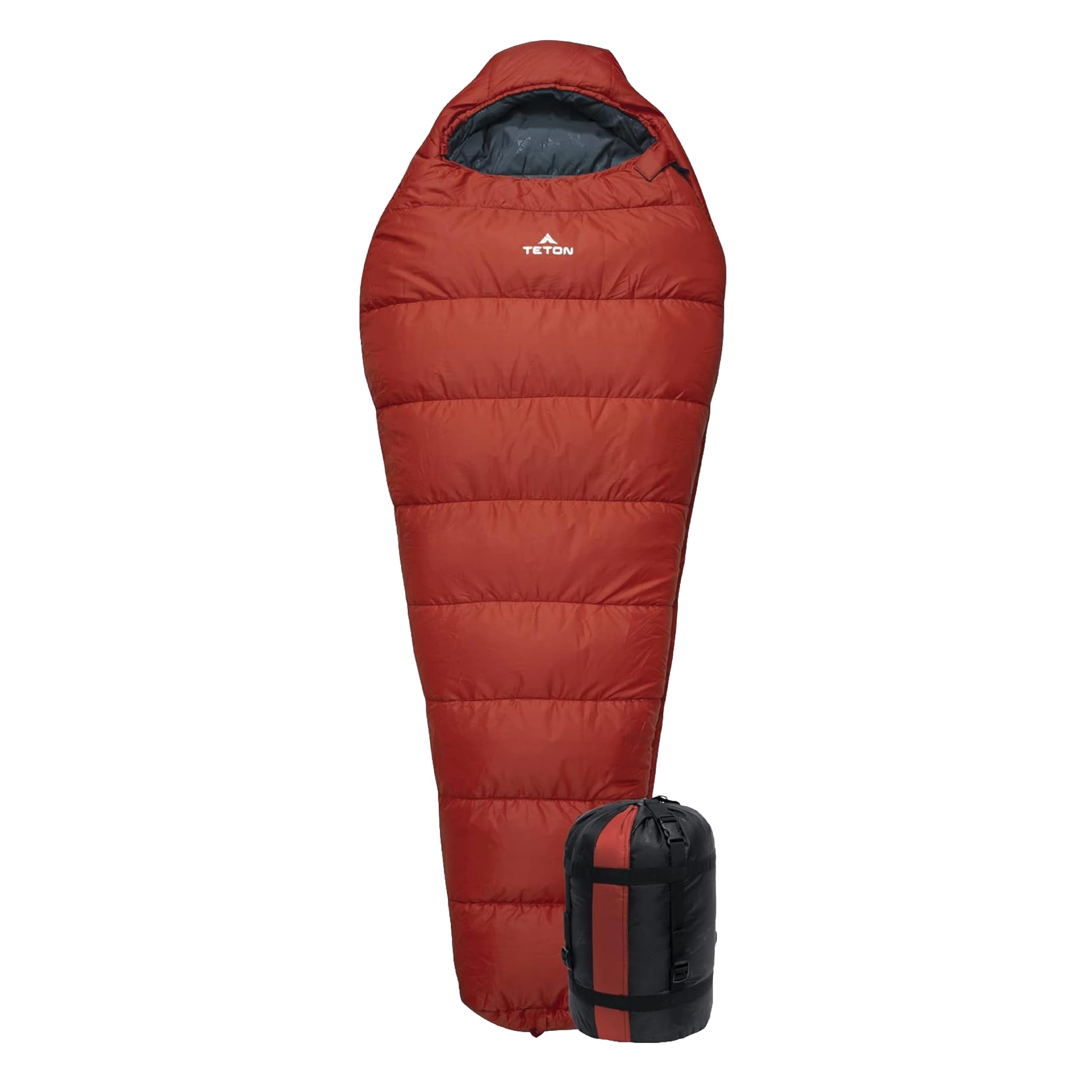
1. Teton LEEF Lightweight Mummy Sleeping Bag
Our pick — over 4.5★ from 550+ verified ratings; the strongest balance of quality and price.
A 20°F mummy that balances real cold-weather warmth with a price that makes sense for weekend backpackers.
Warmth is the most-cited strength, with buyers mentioning it more than any other feature. The 20°F version handles sub-freezing nights; buyers report sleeping comfortably down to 10°F and staying snug in 30-40°F conditions with minimal clothing. If you want options, you can grab the 0°F or 30°F variants instead, all built around the same polyester ripstop shell.
At 3.5 pounds, it’s not the lightest bag here, but it’s a fair trade for the warmth you get. The mummy cut is roomier than most, with a spacious footbox (a boxed area for your toes), and it fits tall sleepers — one 6’5″ owner with size 14 feet had no complaints. The included compression sack with ratchet straps shrinks it to about a quarter of the size of classic bags, which is a huge win for pack space, even if stuffing it back in takes some effort.
The recurring gripe is the repacking process — almost every long-term owner notes it’s hard to get it back into the sack without a fight. And the fit is mixed: some find it perfectly roomy, while a 5’6″ sleeper found it cramped. A few also mention the zipper quality as a weak point, so treat it with care.
What Makes It the Top Pick
- Real cold-weather warmth, verified down to 10°F by owners
- Roomier mummy fit with a spacious footbox for tall sleepers
- Compression sack with straps shrinks it dramatically
The Trade-offs to Know
- Hard to repack into the compression sack
- Not machine washable — hand wash only
- Fit can feel confining for smaller sleepers
Reach for this if: you want a single bag that handles real cold snaps without stretching your budget.
Look elsewhere if: you’re a minimalist counting every ounce — the 3.5 lb weight and tricky repacking will frustrate you.
2. iClimb 3M Thinsulate Mummy Sleeping Bag
A featherless synthetic bag that’s washable, windproof, and light enough for real backpacking trips.
This bag’s claim to fame is its 3M Thinsulate insulation — a synthetic fiber that traps body heat while letting moisture escape, and absorbs less than 1% of its weight in water. That means it keeps you warm even in damp conditions where down would clump and fail. Buyers consistently praise its warmth, noting it delivers serious heat on cold nights.
It’s also genuinely easy to maintain. Unlike the Teton, this one is machine washable (cold water, delicate cycle, front-loading washer), which is a lifesaver after a muddy trip. The 20D nylon shell is water-resistant and windproof, and the double-layer construction eliminates cold spots. Owners tested it at 4,000 meters in -3°C and stayed warm, fitting a 1.7m sleeper comfortably.
Watch the fit: a 6’3″ 240 lb owner found it tight but sleepable, so taller or broader sleepers should size up. The zipper is also a mixed bag — smooth for most, but a few found it finicky. The slippery fabric can slide on an air mattress unless it’s level.
Grab this one for: campers who want synthetic warmth that survives washing and damp weather while staying affordable.
skip it if: you’re over 6’2″ or want a bag that fits a wide-shouldered frame comfortably.
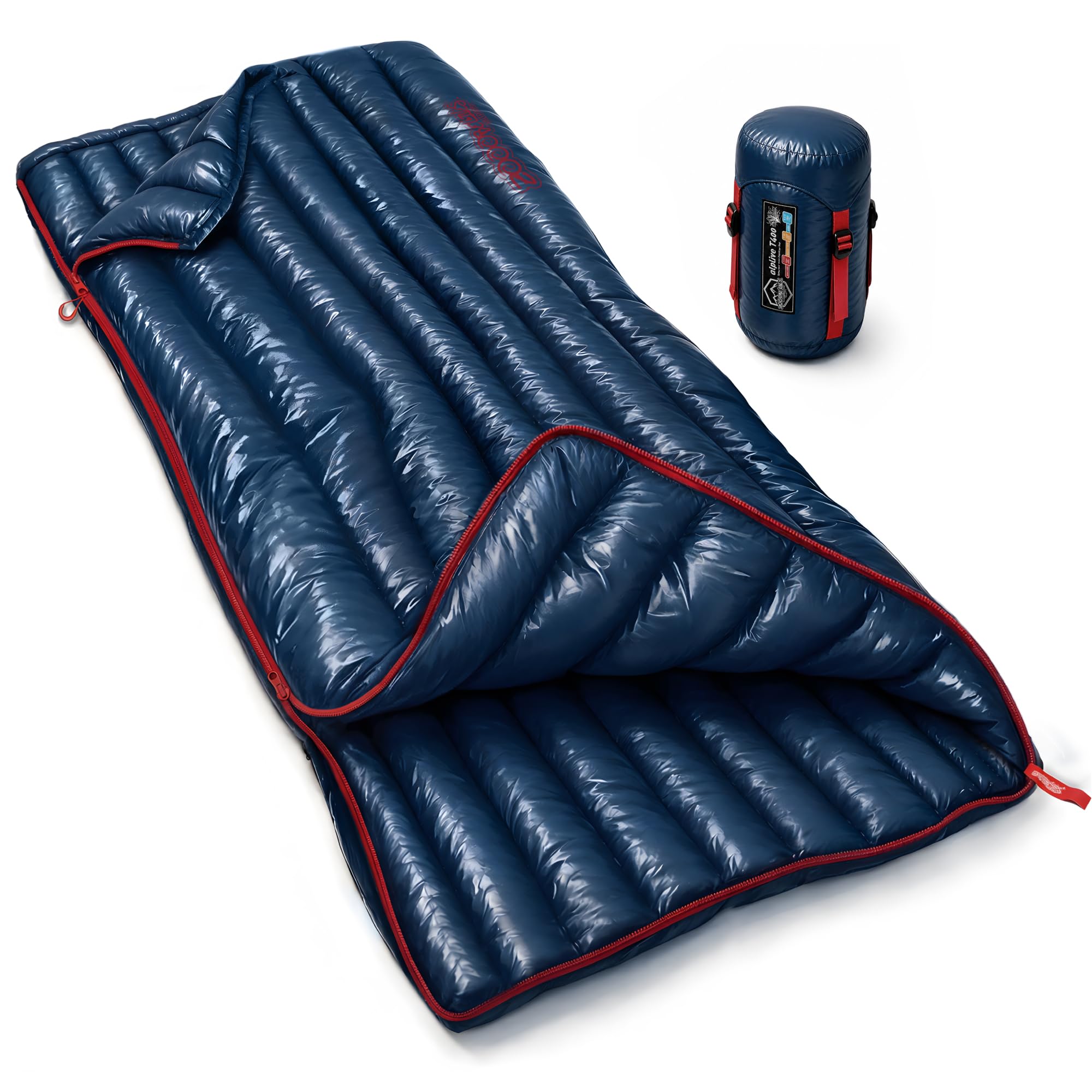
3. ZOOOBELIVES AlpliveT400 Ultralight Down Bag
A 1.7-pound down bag that compresses smaller than a Nalgene bottle and slides into any pack corner.
This is the bag for the weight-obsessed. At 1.7 lb, it’s more than twice as light as the Teton LEEF above — a 2.1x gap that you’ll feel on every uphill mile. The 650 fill power down (a measure of how much loft each ounce of down provides) delivers impressive warmth for its size, with a 50°F comfort rating and a 32°F lower limit. Weight is the most-praised feature by a wide margin.
It’s not just light — it’s versatile. The full-length YKK zipper and separate footbox zipper let you unzip it flat into a rectangular quilt or blanket. Two of these bags zip together for couples. The 79-inch length with a 63-inch shoulder circumference fits users up to 6’2″ with room to shift positions. Owners mention it compresses smaller than a Nalgene bottle, making it a dream for ultralight summer setups.
The honest catch is the warmth. The 50°F comfort rating means this is a warm-weather or summer bag, period. Owners tested it at 50°F in just shorts and a t-shirt on an insulated pad, but at 39°F on the Colorado Trail they needed a blanket and insulated pad to stay warm. Some also note the tube stitching (not baffled) holds the down, and you must shake it to loft the down fully before use.
Best for: summer backpackers and thru-hikers who count every ounce and want a bag that also works as a quilt. Not for: anyone camping below 50°F without a serious layering system and insulated pad.
4. Kelty Cosmic Synthetic 40° Sleeping Bag
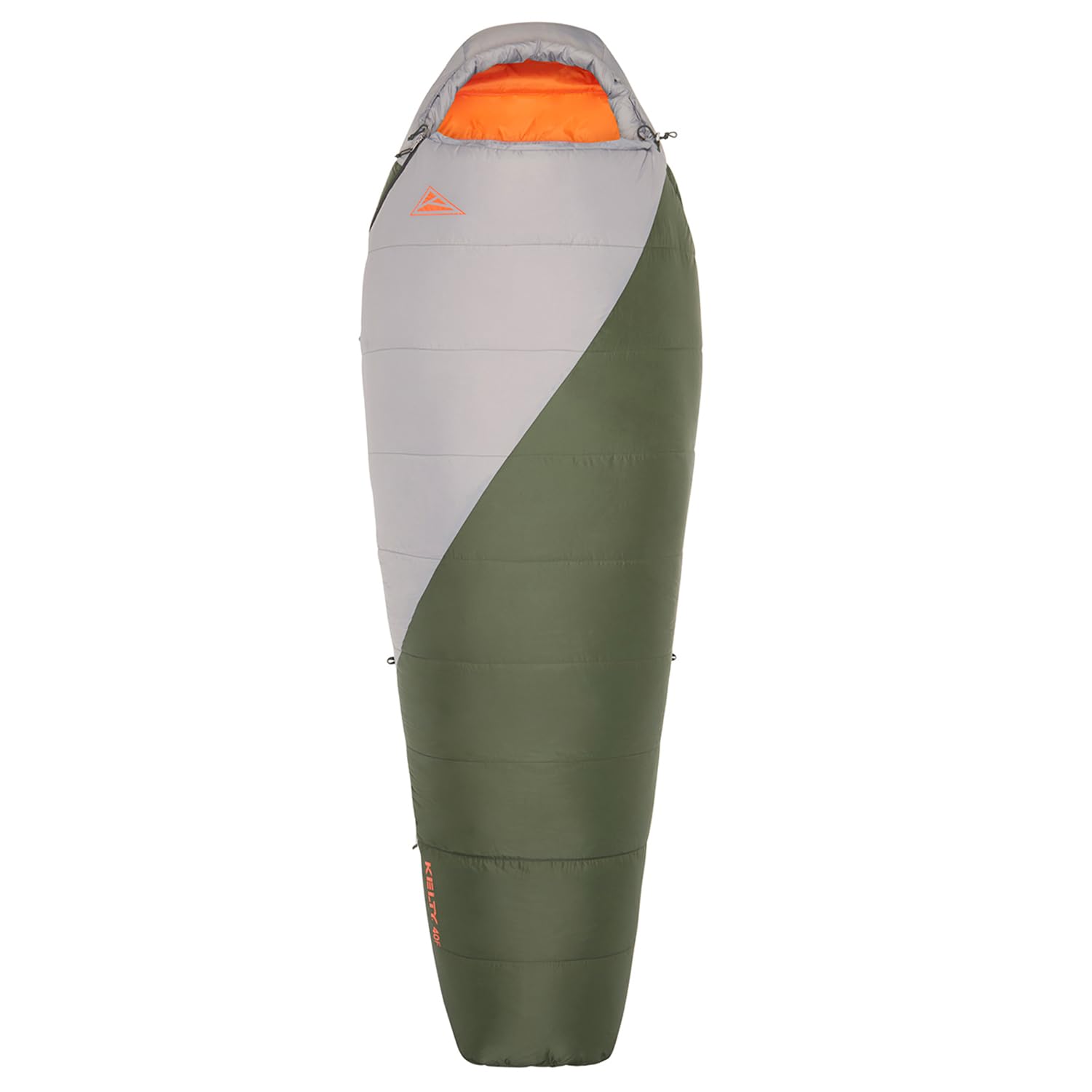
A 40° synthetic bag that punches above its price with premium taffeta and a tailored, non-restrictive fit.
The Cirroloft synthetic fill (a type of polyester insulation) is the star here — it provides reliable warmth in cold and damp conditions, maintaining loft for even coverage with no cold spots. Buyer quality feedback is strong, with comfortable sleep in tents and spring trips. One owner used it for a backpacking trip in Pennsylvania during a 36°F evening and stayed warm, which is impressive for a 40°F-rated bag.
It’s lightweight at 2 lb 6 oz, with a 50D taffeta liner (a soft, woven polyester fabric) that feels nice against the skin. The natural fit includes a spacious footbox for wiggling your toes, and there’s a handy stash pocket on the exterior for overnight essentials. The integrated compression stuff sack keeps everything tidy.
The fit note: this is not the roomiest cut for larger frames — a 5’11” 220 lb owner with broad shoulders found it snug, though the quality and smooth zippers earned high marks. Who it’s for: kids and average-sized adults who want a dependable, soft, budget-friendly 3-season synthetic.
5. Naturehike Ultralight RDS Down Sleeping Bag

A 1.3-pound down bag that weighs about the same as a bottle of water and packs into the palm of your hand.
This is the lightest bag in this lineup, and the weight is a huge part of its appeal. The 295g of 650 fill power duck down is individually channeled — each channel is separate so the down doesn’t, keeping warmth even across your body. Owners highlight its warmth, staying comfortable near freezing and toasty in the low 40s°F as a comforter.
The packed size is the real showstopper. It stows to just Φ4.7″ x 10.2″ (about 12 x 26 cm), small enough that you can reach into your pack and grab it with one hand. The 20D400T nylon is wear-resistant and water-repellent, and the YKK two-way zipper prevents snagging while letting two bags zip together for couples.
The honest trade-off? It’s a 51.8°F comfort / 42.8°F limit bag — this is 3-season warmth for mild conditions, not a winter bag. One owner noted an occasional loose stitch (fixable), but the overall quality exceeds the price point. The RDS certification (Responsible Down Standard) means the down is ethically sourced, which is a nice bonus a
6. 1TG Tactical Mummy Sleeping Bag (25-36°F)
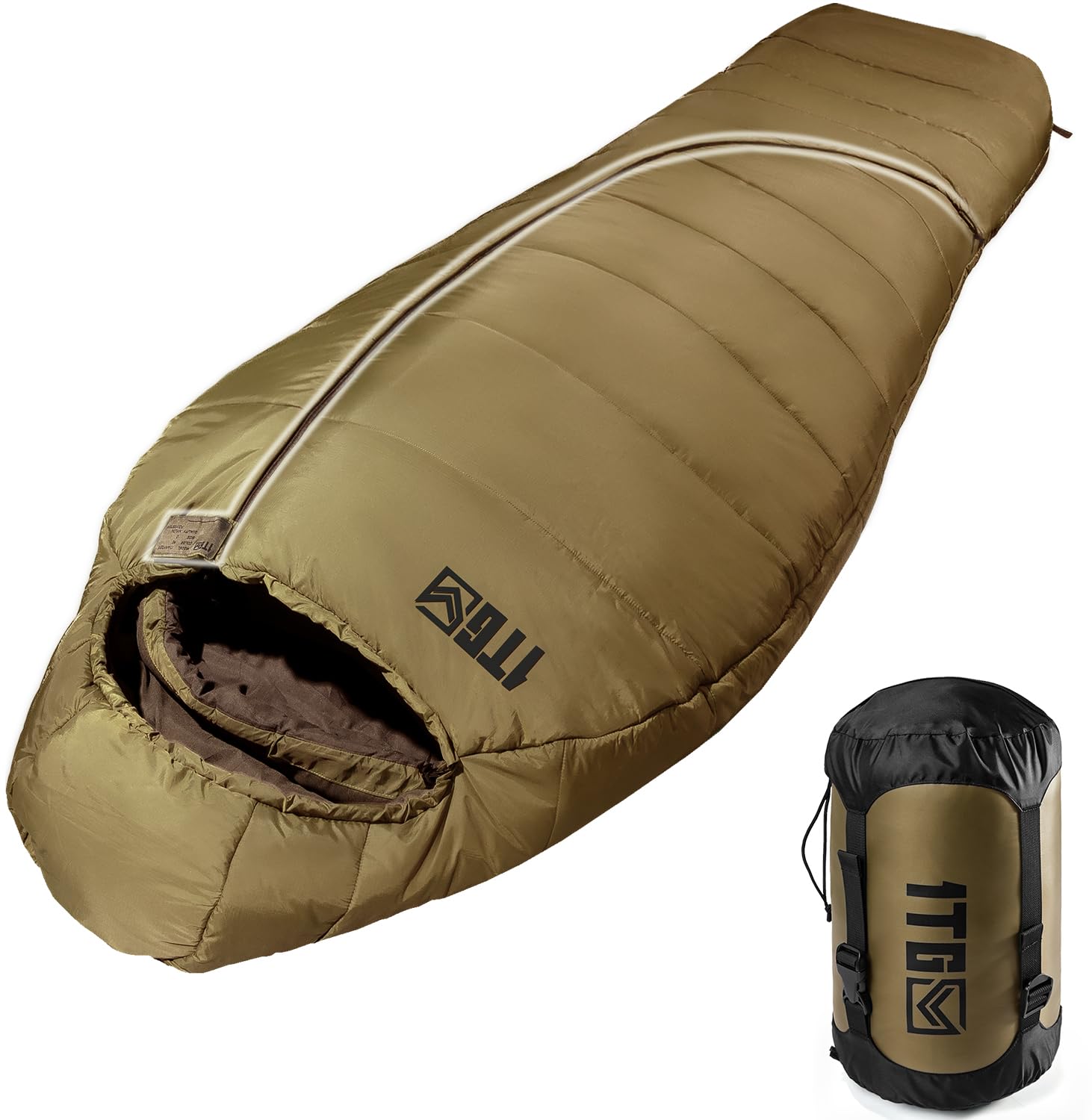
You can slip in and out of this mid-season mummy bag without fumbling in the dark, thanks to its diagonal zipper design that opens wide for easy late-night entry and exit.
The defining feature here is the innovative diagonal zipper layout — unlike standard side zippers that snag in the dark, this one allows smoother operation and easy arm movement. Owners praise this design for making late-night exits easier. The 250g/㎡ 7D hollow-fiber insulation (a type of synthetic fill with hollow fibers for warmth) keeps you warm between 25°F and 36°F, perfect for crisp autumn nights and cool spring treks.
The 40D nylon outer shell is water-resistant against dew and light rain, while the 190T polyester lining (a lightweight woven polyester) feels skin-friendly and cozy. It’s machine washable, and the included heavy-duty compression sack packs it down to a compact 13 inches. The integrated tech pocket keeps your phone or power bank warm and accessible — a nice touch for cold mornings.
Quality is the standout — owners praise the build and value, with one finding it so comfortable they didn’t want to get up. The fit is the catch: it’s rated for up to 6 feet, but some find it too tight for broader shoulders; the foot box is spacious so you won’t feel cramped there. Best for shorter campers — as one owner put it, “definitely for short guys.”
7. ZOOOBELIVES AlpliveD1500 10° Down Bag

A 10°F down bag with a roomy fit that delivers serious cold-weather warmth for a fraction of premium prices.
Warmth is the standout feature buyers rave about. Filled with 35oz of 550+ fill power down, this bag has a 32°F comfort rating and a 10°F lower limit — customers note staying warm near freezing in Iceland, Vermont, and even surviving 30°F camping trips. The adjustable hood, draft collar, and insulated draft tube work together to seal out cold air.
It’s built for comfort, not just warmth. The full-sized 83″ x 31″ x 20″ mummy shape is roomy and less restrictive, fitting up to 6’4″ and 280 lbs. The anatomic 3D foot box (a shaped toe area that follows your feet’s natural position) reduces cold spots, and the smooth YKK anti-snag zipper makes entry easy. The internal pocket keeps your phone, headlamp, or keys close.
The honest downsides: this is a bulky bag. It packs down to 10″ x 7″ x 15″, but owners note it’s not great for thru-hiking — it’s best for car camping, scout trips, or short backpacking missions. A few also mention a noticeable chemical smell on arrival, and it’s heavier at 3.9 pounds. The left/right zipper options let two bags zip together for couples.
Who it’s for: campers who want real down warmth for cold nights without the premium price tag. Not for: ultralight backpackers — the 3.9 lb weight and bulky pack size are dealbreakers for long trails.
8. TETON Sports ALTOS 20° Mummy Sleeping Bag

A roomy mummy that adds more shoulder and leg room, making it feel less like a cocoon and more like a bed.
Comfort is the headline here — owners praise the spacious cut, built-out footbox, and soft fabric. It’s noticeably roomier than standard mummies, with more shoulder and leg room for side-sleepers who roll over. One owner found it comfortable at 32°F, and the zero-degree version packs to about two-thirds the size of typical 20°F bags. The warmth-to-weight ratio gets strong marks.
It’s water-resistant and breathable, with a beefy, high-quality zipper. The compression sack with heavy-duty straps means you never have to roll it — just stuff it in and tighten. Reviewers point out it packs to 11×8.5×8.5 inches, easily fitting in a 55L internal frame backpack. The bright orange color is a nice visibility bonus.
The warmth feedback is genuinely mixed, though. Some find it plenty warm, while others say it’s not warm enough for very cold conditions — one owner needed hot water bottles and toe warmers below 32°F. It gets really hot above 30°F, so it’s best for spring and fall. The 3.5 lb weight is also on the heavier side for serious backpackers.
Best for: side-sleepers and taller folks who find standard mummies too restrictive, camping in spring or fall above 32°F. Think twice if: you’re heading into deep winter or counting every ounce on a thru-hike.
9. Kelty Cosmic 20 Down Mummy Sleeping Bag

A 20°F down bag with trapezoidal baffles that holds heat better, wrapped in recycled, PFAS-free fabrics.
This earns the premium spot because it keeps you warmer than any other bag here. The 550 fill Kelty treated DriDown insulation (down treated to resist moisture) is light, compressible, and warm, and the trapezoidal baffle construction (a zigzag internal wall that holds the down in place) boosts thermal efficiency over standard designs. One owner’s daughter used it on a backpacking trip to Virginia in April and stayed warm in 16°F weather — remarkable for a 20°F-rated bag, so you can trust it well below its rating.
It’s thoughtfully designed for real use. The dual sliding, locking zippers with an anti-snag draft tube let you unzip from the bottom to stick a foot out and regulate heat. The zippered internal stash pocket holds your phone or headlamp. The recycled shell and liner fabrics, plus the PFAS-free DWR (a water-repellent coating without harmful chemicals), make it a more environmentally friendly choice.
Owners love the softness and zipper quality, with some calling it the best bag they’ve ever bought. The fit is praised, including a “women’s fit” option that some found noticeably better than standard mummies. The only real gripes: it’s heavier than expected at 3 lbs (some thought it’d be lighter), and it’s not machine washable — hand wash or dry clean only, and never put it in the washer.
The premium pick for: backpackers who want dependable 20°F down warmth, ethical materials, and do-it-all versatility for 3-season use.
Understanding the Specs
Temperature Ratings: Comfort vs. Limit
The comfort rating is the lowest temperature a cold sleeper will find comfortable — buy for this number. The lower limit is the lowest temperature you’ll survive without hypothermia, but you won’t be happy there. A 40°F comfort bag means a warm sleeper is fine at 40°F, but a cold sleeper might shiver at 50°F. Always buy for the coldest night you expect, and remember that ratings assume you’re wearing base layers and using an insulated pad.
Fill Power and Fill Type
Fill power measures how much loft (fluffiness) each ounce of down provides — higher numbers like 650 or 550 mean better warmth-to-weight ratio. Down packs smaller and is lighter than synthetic, but loses insulation when wet. Synthetic fills like 3M Thinsulate or Cirroloft keep warming even when damp and are often cheaper and machine-washable, but they’re heavier and bulkier. Your choice depends on whether you prioritize weight or weather resilience.
FAQ
How much should a backpacking sleeping bag weigh?
What temperature rating do I need for 3-season camping?
Is down or synthetic better for a budget backpacking bag?
How small should a sleeping bag pack down to?
Will a 50°F comfort bag work for summer camping?
Can two sleeping bags zip together?
How do I wash a down sleeping bag?
What’s the difference between a mummy and a rectangular sleeping bag?
Final Thoughts: The Verdict
For most backpackers, the budget sleeping bag for backpacking winner is the Teton LEEF because it offers the best balance of real cold-weather warmth, a roomy fit, and a compelling price. If you want the absolute lightest option for summer trips, grab the Naturehike at just 1.3 lb. And for dependable 3-season synthetic warmth that survives damp conditions and machine washing, the iClimb 3M Thinsulate is the one to reach for.
How We Picked
We do not accept paid placement. Every pick is matched to a real buyer and a real use-case; we do not hands-on test units.
Sources & Methodology
Specifications: manufacturer listings and product documentation. Review insights: verified customer reviews, as of August 2026. Pricing: not shown on this page (it changes often); check the current price via the retailer link.
As an Amazon Associate, Gadgets Feed earns from qualifying purchases. This does not affect which products we feature.