
Yet most entry-level boots sacrifice heel hold, insulation, or outsole grip to hit a low sticker, forcing riders to crank laces until their arches ache just to stay locked in. The right pair needs only three things: a liner that won’t pack out in two weekends, a closure system you can adjust with frozen fingers, and a flex rating that actually matches your weight and riding style.
I’m Min — the co-founder and writer behind Gadgets Feed. I’ve spent the last several weeks cross-referencing liner materials, closure types, shell construction, and customer durability reports across nine models to separate legitimate value from disposable snowboard boots that look good in a product photo.
This guide breaks down the best options that keep your feet warm, your heels locked, and your wallet intact so you can focus on linking turns instead of regretting a purchase. This is the definitive resource for finding the best budget snowboard boots that actually perform on the mountain.
How To Choose The Best Budget Snowboard Boots
Finding the right boot at a lower price point is less about hunting for a bargain and more about knowing which features are worth paying for and which ones you can skip. A soft flex boot (rated 1-4 out of 10) is ideal for beginners, park riders, and anyone who prioritizes comfort and forgiveness over high-speed carving response. The real trick is ensuring a budget boot still delivers a snug heel pocket and a liner that won’t compress into a loose slipper after a dozen sessions.
Understand Flex Rating and Your Weight
Flex rating is the single most important spec for a budget snowboard boot because it determines how much support you get at a given price. A boot rated 3/10, like the DC Phase, works well for lighter riders (under 150 lbs) who want buttery flexibility for presses and jibs. Heavier riders or those who charge harder need at least a 4/10 or 5/10 medium flex to prevent the boot from folding over during heel-side turns. Check the manufacturer’s flex scale — a “soft” label from one brand can feel different from another, so read reviews from riders near your weight.
Prioritize Heel Hold Features
Nothing ruins a day on the mountain faster than your heel lifting inside the boot during every toe-side turn. Budget models often cut corners on internal heel retention, but some include features like Internal J Bars (found in the K2 Market and Alpine Swiss) that wrap around the Achilles to lock the heel down. Boots without these rely solely on liner lacing or the shell shape, which is hit-or-miss for narrow heels. If you have narrow feet or a low instep, look specifically for models that mention heel hold or J-bar construction in the liner.
Choose Your Closure System Wisely
Traditional laces are the most reliable option on a budget because they are simple to repair, allow independent tensioning across zones, and cost next to nothing to replace if a lace snaps. Single-zone BOA systems, like the K2 Market’s H4 Coiler, offer quick micro-adjustment but apply equal tension across the entire foot, which can cause pressure points if your foot shape isn’t uniform. Dual-zone BOA, seen on the ThirtyTwo Lashed, separates upper and lower zones for a more precise fit but comes at a premium that often exceeds budget thresholds. Dial systems from lesser-known brands can feel convenient out of the box but may lack replacement parts down the line.
Quick Comparison
On smaller screens, swipe sideways to see the full table.
| Model | Category | Best For | Key Spec | Amazon |
|---|---|---|---|---|
| K2 Raider | Premium Budget | Best Overall Entry-Level BOA | H4 Coiler BOA, Intuition Comfort Foam Liner | Amazon |
| K2 Market | Mid-Range BOA | Best Value BOA Boot | H4 BOA Focus Fit, Internal J Bars | Amazon |
| Burton Moto BOA | Premium Lace | Best All-Around Premium Budget | Single-Zone BOA, Imprint 1+ Liner | Amazon |
| ThirtyTwo Lashed Double Boa | Premium Dual-BOA | Best Dual-Zone Fit | Dual-Zone BOA, Grippy Outsole | Amazon |
| Burton Mint BOA | Women’s Premium | Best Women’s Specific Fit | Single-Zone BOA, Women’s True Fit | Amazon |
| Alpine Swiss Men’s | Mid-Range Lace | Best Traditional Lace Value | Moldable EVA Liner, 3D J-Bars | Amazon |
| 5th Element ST Lace and Dial | Budget Dial | Best Dial System Under Budget | ATOP Dial + Lace-Up, Synthetic Insulated Liner | Amazon |
| System APX | Budget Lace | Best Heat-Moldable Budget Boot | Thermofit Heat Moldable Liner, EVA Sole | Amazon |
| DC Phase | Budget Lace | Most Affordable Entry Point | Flex Rating 3/10, UniLite Outsole | Amazon |
In‑Depth Reviews
1. K2 Raider Men’s Snowboard Boots
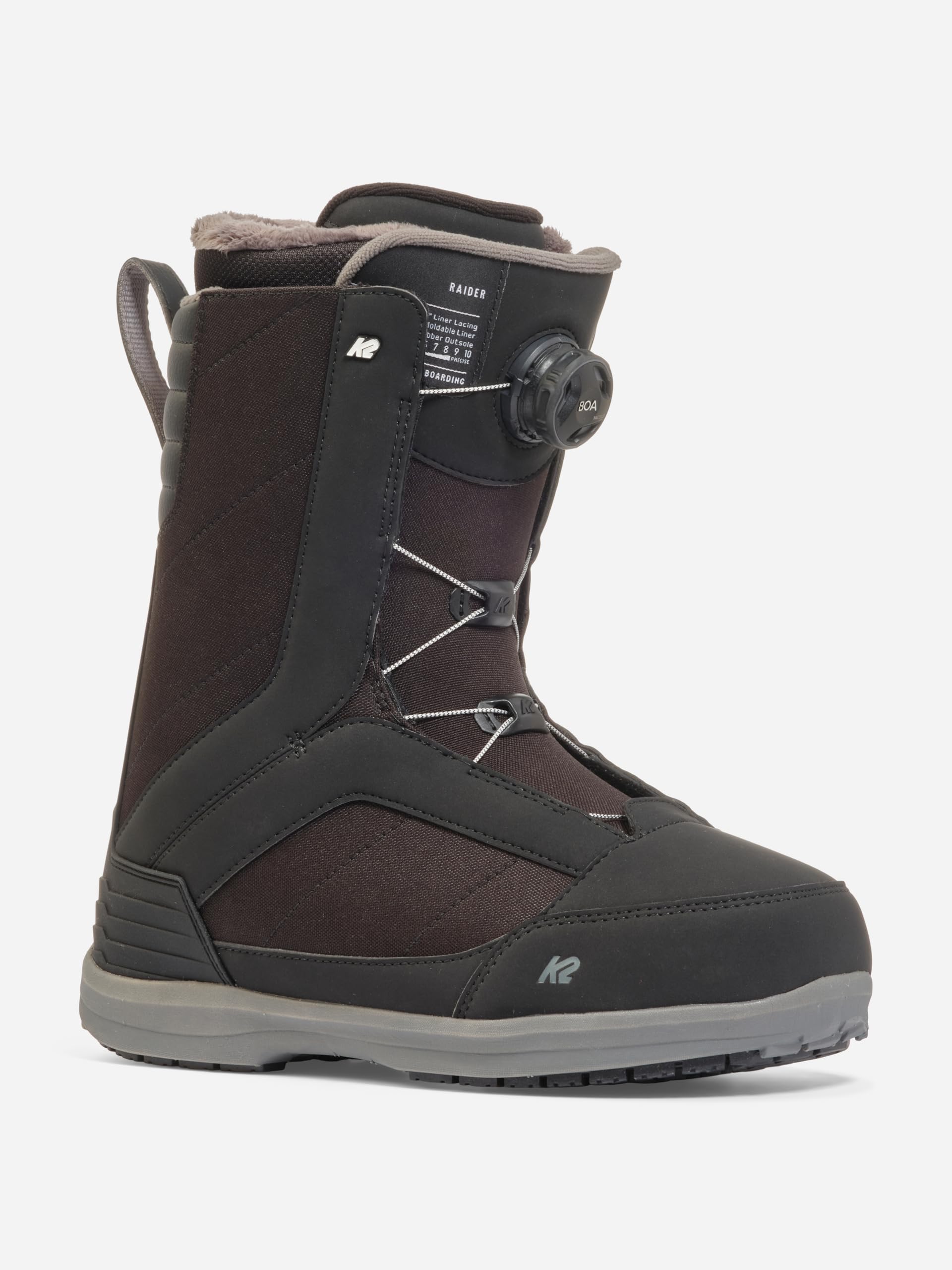
The K2 Raider sits at the top of this list because it delivers the most premium feature set — an H4 Coiler BOA system and an Intuition Comfort Foam 3D liner — at a price that undercuts most competitors by a significant margin. The BOA dial uses a coiler mechanism that reduces friction during tightening, so you get a consistent, snug fit across the entire forefoot and ankle without the uneven pressure points that plague cheaper single-spool systems. At roughly 16 ounces per boot, it’s noticeably lighter than the Burton Moto BOA, which matters when you’re hiking side-country kickers or lapping the park all day.
The TX3 BOA rope lacing inside the liner gives you an extra layer of heel lockdown, which is rare at this price tier and directly addresses the heel-lift problem that plagues budget boots. Multiple reviewers noted that the Raider fits true to size and packs out minimally thanks to the Intuition foam, which retains its shape longer than standard EVA liners. The Flex Zone upper cuff provides a soft 3/10 flex that suits beginners and park riders who want forgiveness without sacrificing edge-to-edge response.
On the durability front, the polyurethane shell and seamless outsole bond have held up well across full-season use, with no reports of BOA cable snapping or delamination. The only common complaint is that the Raider runs slightly narrow in the forefoot, so riders with wide feet should consider sizing up half a size. For anyone looking for the best combination of modern closure technology, lightweight construction, and proven liner performance without crossing into premium pricing, the K2 Raider is the clear winner.
Why it’s great
- H4 Coiler BOA delivers smooth, even tightening with less friction than standard BOA systems
- Intuition Comfort Foam 3D liner resists pack-out and molds to your foot shape quickly
- Lightweight build at 16 oz reduces leg fatigue during long days on the mountain
Good to know
- Narrow forefoot fit may require sizing up for wide-footed riders
- Soft 3/10 flex is not suitable for aggressive carving or high-speed charging
2. Burton Moto BOA Mens Snowboard Boots
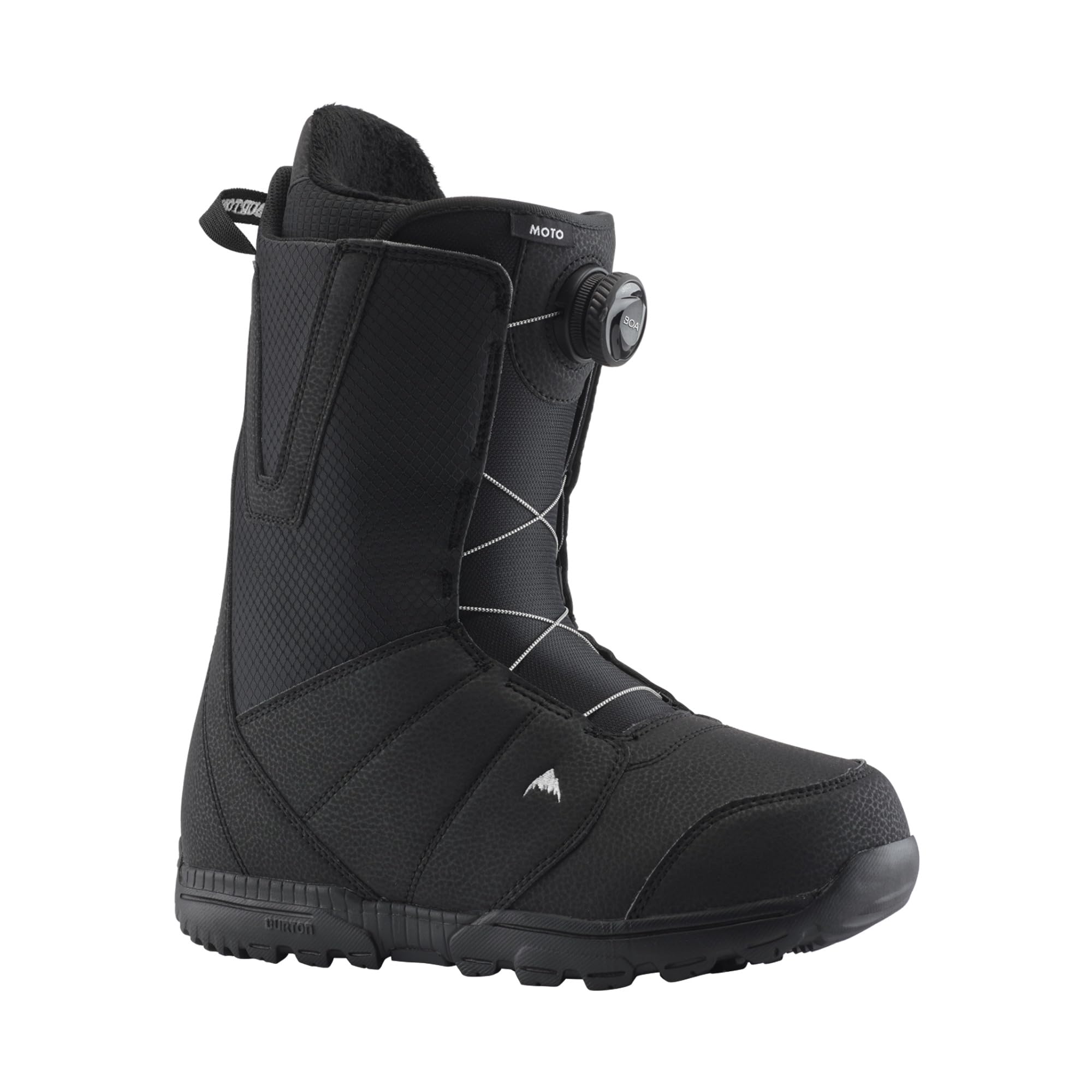
The Burton Moto BOA has been a staple recommendation for entry-level riders for years because it gets the fundamentals right: a single-zone BOA Fit System that tightens the lower shell evenly, an Imprint 1+ heat-moldable liner that adapts to your foot shape after a few runs, and a 1:1 soft flex PowerUp tongue that prevents the dreaded shin bang. The DynoLITE outsole is noticeably lighter than traditional rubber compounds, and the sleeping bag reflective foil underfoot adds a tangible warmth benefit that matters on frigid chairlift rides. Riders with flat feet or wide forefeet consistently report that the Moto fits better out of the box than most competitors in this range.
The Shrinkage footbed reduction is a smart inclusion that reduces toe drag during heel-side turns, a common issue for larger boot sizes. Some users report that the boot runs about a half size small, with several reviewers recommending sizing up 1 to 1.5 sizes from your Nike or Adidas sneaker size. The snow-proof internal gusset does a solid job sealing the lower zone against moisture, which adds to the boot’s longevity in slushy spring conditions.
Where the Moto BOA falls short is pack-out resistance: the Imprint 1+ liner, while comfortable immediately, compresses faster than the Intuition foam in the K2 Raider, leading to a looser fit after 30-40 days of riding. The single-zone BOA also applies uniform tension across the entire foot, which can create pressure on the instep if you have a high arch. For the price, the Moto BOA delivers a polished, accessible experience that’s hard to beat for resort riders who want to click in and go without fiddling with traditional laces.
Why it’s great
- Imprint 1+ heat-moldable liner conforms to your foot for a custom fit after a few runs
- DynoLITE outsole reduces weight and improves board feel compared to standard rubber
- Snow-proof internal gusset keeps feet dry in slush and wet snow conditions
Good to know
- Liner packs out faster than Intuition foam, requiring a snugger fit sooner
- Single-zone BOA can create pressure on high insteps due to uniform tension
3. ThirtyTwo Lashed Double Boa Snowboard Boots
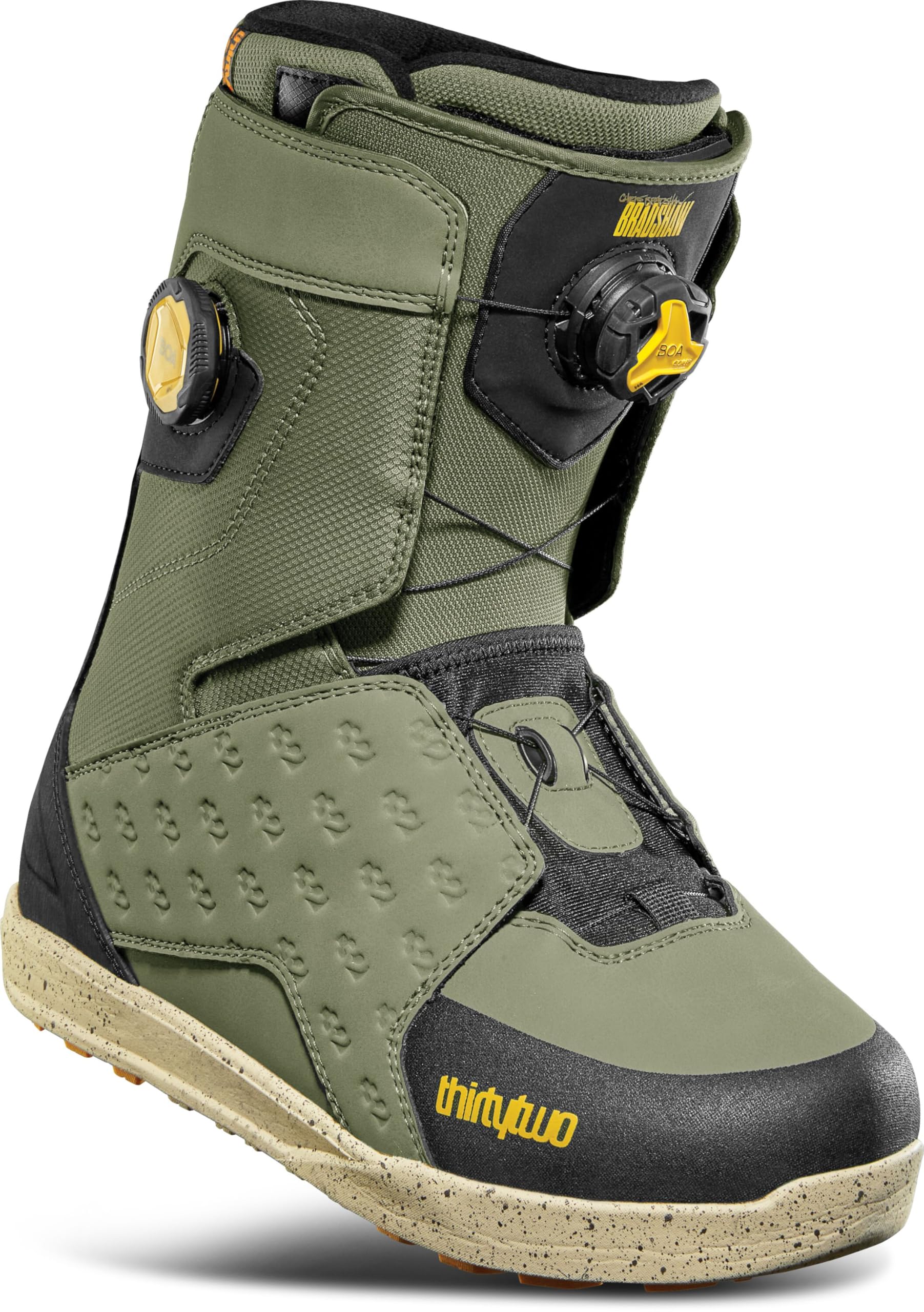
The ThirtyTwo Lashed Double Boa is the only boot in this roundup with a true dual-zone BOA system, which separates upper cuff tension from lower forefoot tension for a level of fit customization that single-zone models simply cannot match. This is a game-changer for riders who need a tight heel pocket but prefer a looser upper cuff for tweaking grabs or pressing through moguls. The dual-dial setup spins independently, so you can crank the lower zone to eliminate heel lift while keeping the upper zone relaxed enough for all-day comfort. Riders with high arches or sensitive insteps will appreciate not having to choose between heel hold and midfoot pain.
The outsole uses a grippy rubber compound that outperforms the EVA soles found on many budget boots, providing reliable traction when hiking icy boot packs or walking across frozen parking lots. Stitching durability has proven strong across multiple seasons, with no reports of BOA cable snapping or dial failure from regular use. The liner features extra calf and shin padding for warmth, which several riders noted as a standout feature compared to the thinner liners in the DC Phase or System APX.
Sizing requires attention — multiple reviews indicate that the Lashed fits small, with most riders needing to go up 1 to 1.5 sizes from their street shoe size. The left boot has also been reported as snugger than the right for some users, which suggests slight manufacturing inconsistency in the shell mold. At a price point that sits at the upper edge of the budget spectrum, the dual-zone precision and outsole grip make the ThirtyTwo Lashed the best choice for riders who prioritize a dialed-in, race-ready fit without crossing into full-premium territory.
Why it’s great
- Dual-zone BOA allows independent tension on upper cuff and lower forefoot for a custom fit
- Grippy rubber outsole provides reliable traction on icy boot packs and frozen surfaces
- Extra calf and shin padding improves warmth and comfort for cold-weather riders
Good to know
- Runs small; most riders need to size up 1 to 1.5 sizes from street shoe size
- Some manufacturing inconsistency reported between left and right boot fit
4. K2 Market Men’s Snowboard Boots
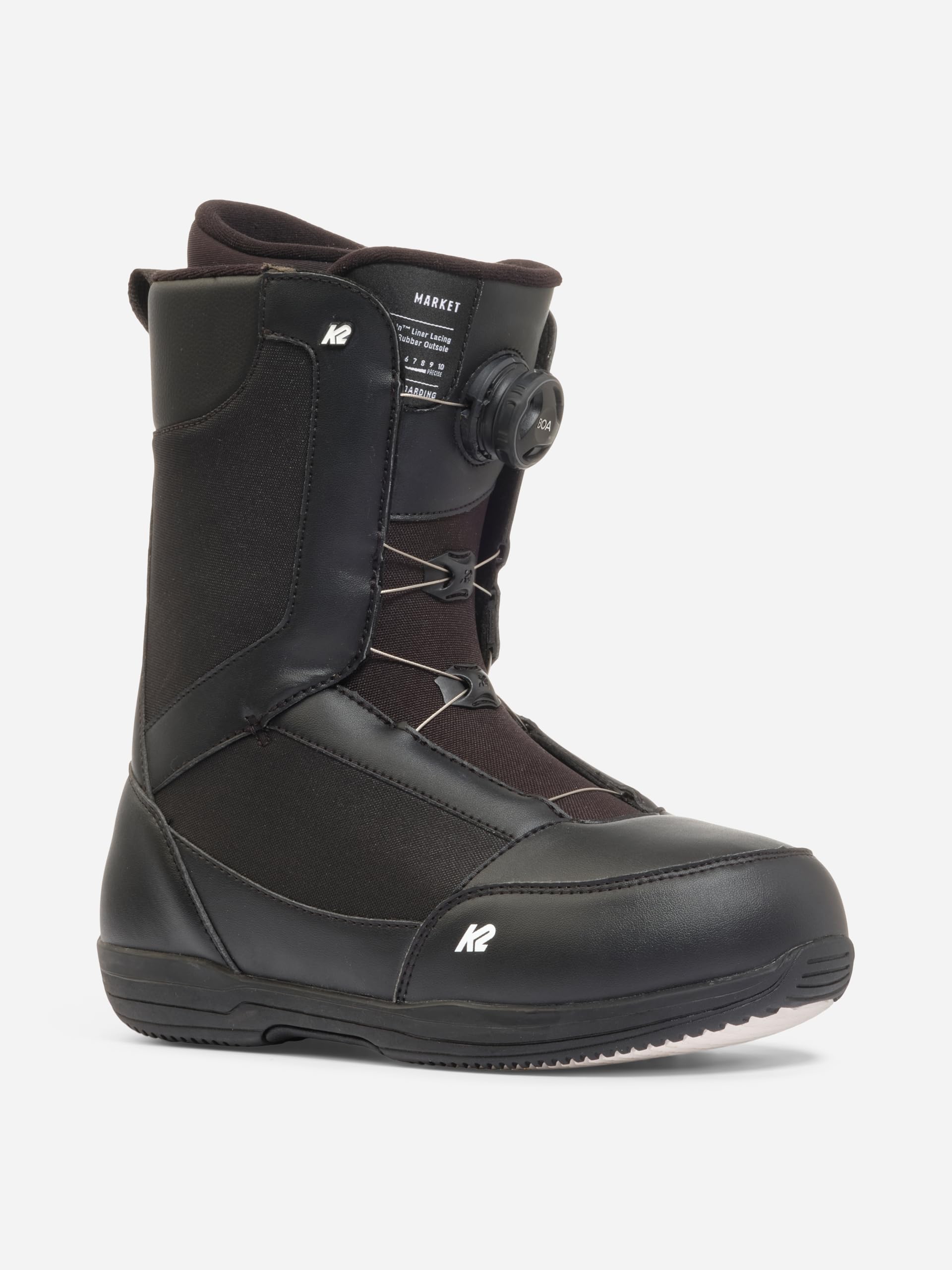
The K2 Market is the cheapest BOA-equipped boot in this guide that still delivers meaningful heel retention through Internal J Bars, a feature usually reserved for boots costing significantly more. The H4 BOA Focus Fit system tightens the lower shell quickly, and the Flex Zone upper cuff provides a soft flex that suits beginner and intermediate riders who spend most of their time on groomed runs. The Comfort Foam EVA liner is basic compared to the Intuition foam in the K2 Raider, but it gets the job done for resort riders who only get 10-15 days per season. Multiple users reported that the Market fit true to size with no break-in period required, which is unusual for a boot at this price point.
Durability has been strong over three seasons of use according to several reviews, with no delamination of the EVA outsole or failure of the BOA dial. The Fast-In liner lacing is a small touch that makes a big difference — you can tighten the inner liner independently of the outer shell, which helps lock the heel in place before you close the main BOA system. This two-layer approach reduces the overall pressure on your instep and toes compared to single-layer designs where the liner and shell are tightened together.
The biggest limitation is the outsole material: EVA provides decent cushioning but lacks the grip and durability of rubber, meaning you’ll need to be careful on icy stairs or metal grates in the lodge parking lot. The liner also uses standard EVA foam rather than heat-moldable material, so it won’t adapt to unique foot shapes as effectively as the Imprint 1+ or Intuition liners. For riders who want a hassle-free BOA experience with real heel hold technology at a price that undercuts most competitors, the K2 Market delivers exactly what it promises.
Why it’s great
- Internal J Bars provide excellent heel retention rarely seen at this price
- Fast-In liner lacing lets you adjust inner fit before closing the outer BOA system
- True-to-size fit with zero break-in period reported by multiple users
Good to know
- EVA outsole lacks grip on icy or wet surfaces compared to rubber soles
- Standard EVA liner is not heat-moldable and won’t adapt to unusual foot shapes
5. Alpine Swiss Men’s Snowboard Boots

The Alpine Swiss boot is a standout in the traditional lace category because it combines a body-heat moldable EVA liner with internal 3D J-bars at a price that undercuts most competitors by a significant margin. The liner uses your own body heat to soften and conform to your foot shape over the first few sessions, which effectively eliminates pressure points without requiring a trip to a shop with a heat oven. The medium flex rating (roughly 4-5/10) is higher than the DC Phase or K2 Market, making this boot suitable for intermediate riders who want a bit more support for carving without crossing into stiff, punishing territory.
The exterior uses synthetic leather and durable nylon with reinforced stitching, and the rubber anti-grinding outsole features ice spikes that provide noticeably better traction on slick surfaces than the EVA soles found on cheaper models. The quick-pull liner lacing system can be adjusted while wearing gloves, a convenience that traditional lace boots often overlook. Reviewers consistently praised the boot’s warmth, with the faux fur collar and EVA insulation keeping feet comfortable even on single-digit days.
There are two main trade-offs: the 5.25-pound per-boot weight is heavier than the K2 Raider or Burton Moto, which will be noticeable during extended hiking or boot-packing. The traditional lacing system also requires more effort to achieve equal tension across the lower and upper zones compared to a dual-zone BOA setup. For riders who prefer the reliability and repairability of laces, the Alpine Swiss offers a compelling package of heat-moldable comfort, durable materials, and real traction features that outperform many boots in its price bracket.
Why it’s great
- Body-heat moldable EVA liner conforms to your foot shape without a heat oven
- Rubber outsole with ice spikes provides superior traction on slick surfaces
- Medium flex rating suits intermediate riders who want support without stiffness
Good to know
- Heavier than most competitors at 5.25 lbs per boot, noticeable during hiking
- Traditional laces require more effort to dial in even tension across the boot
6. Burton Women’s Mint BOA Snowboard Boots
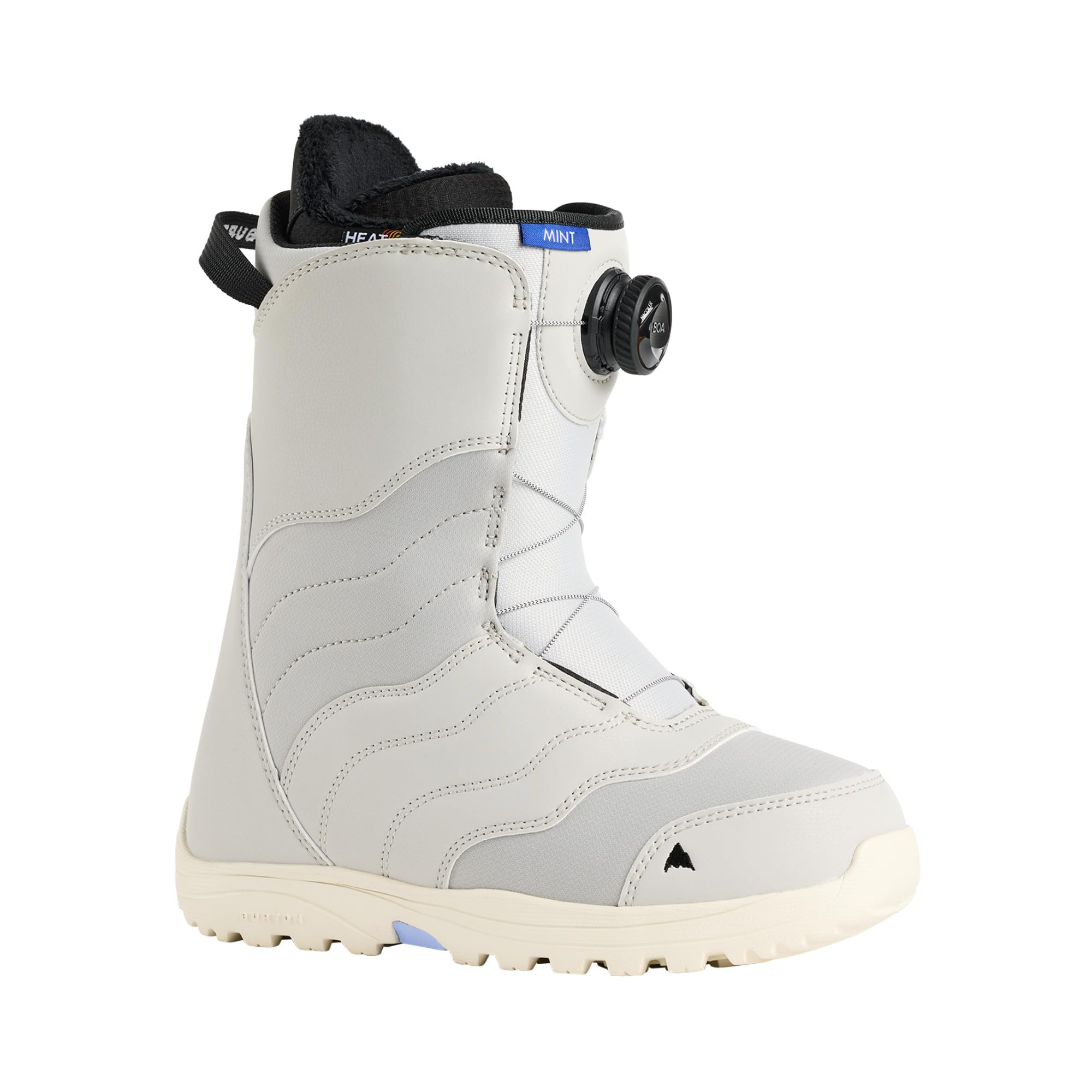
The Burton Mint BOA is the only women’s-specific boot in this guide, and it earns its place by addressing fit nuances that unisex or men’s boots simply ignore. The Women’s True Fit design narrows the heel pocket and lowers the instep volume compared to the men’s Moto BOA, which directly reduces heel lift for riders with narrower feet and lower arches. The Imprint 1+ heat-moldable liner is the same one found in the more expensive Burton models, providing a level of customization that most budget women’s boots skip entirely. The single-zone BOA system is easy to operate with gloves on, and the Total Comfort Construction means zero break-in time right out of the box.
The DynoLITE outsole delivers the same lightweight cushioning and board feel as the men’s Moto BOA, and the sleeping bag reflective foil underfoot adds warmth that multiple riders praised during cold mornings on the chairlift. The PowerUp tongue creates a snug fit between the tongue and shin, reducing shin bang during aggressive heel-side turns. Reviewers with problem feet — bunions, wide forefeet, or high arches — reported that the Mint provided exceptional comfort after heat-molding, with one rider calling it “phenomenal” for its ability to eliminate pressure points.
The primary issue with the Burton Mint is sizing: it runs small, with multiple reviews recommending sizing up 0.5 to 1 full size from your normal shoe size. The single-zone BOA also applies uniform tension across the foot, which can pinch the right pinky toe for riders with asymmetrical feet. For women who want a boot that’s engineered for their foot geometry rather than shrunk down from a men’s last, the Burton Mint BOA delivers premium liner technology and a dialed-in fit at a price that’s genuinely accessible.
Why it’s great
- Women’s True Fit design narrows heel pocket and reduces instep volume for better hold
- Imprint 1+ heat-moldable liner delivers custom fit usually found on premium boots
- Total Comfort Construction eliminates break-in period for instant comfort
Good to know
- Runs small; most riders need to size up 0.5 to 1 full size from street shoe
- Single-zone BOA can pinch asymmetrical feet due to uniform tension
7. 5th Element ST Lace and Dial Snowboard Boots

The 5th Element ST combines an ATOP dial system with traditional lace-up closure, offering a hybrid approach that gives riders the micro-adjustability of a dial on the lower zone with the independent tension control of laces on the upper cuff. This dual-closure design is rare at this price point, and it allows you to crank the lower dial for heel hold while keeping the laces loose around the shin for comfort. The synthetic insulated liner is warm and thick, with multiple reviewers reporting no cold toes even on sub-zero days, and the EVA sole provides decent cushioning for all-mountain riding.
Durability has been solid after two seasons according to several reviews, with no rips in the faux leather upper or failures of the ATOP dial mechanism. The boot runs large — users with half sizes should size down rather than up, as the recommended size chart tends to err on the generous side. One reviewer noted that the lace loops feel slightly fragile under high tension, which is worth monitoring if you tend to crank your boots extremely tight.
Where this boot loses ground is in fit consistency: left and right boots have been reported as feeling slightly different in tightness straight out of the box, and the ATOP dial requires a left-turn release that riders accustomed to BOA systems may find unintuitive at first. For riders who want a dial closure for convenience but aren’t ready to commit to a full BOA system, the 5th Element ST offers a compelling middle ground with genuine warmth and solid build quality.
Why it’s great
- Hybrid ATOP dial and lace closure gives independent tension control across zones
- Thick synthetic insulated liner keeps feet warm in sub-zero temperatures
- Good overall durability with no major failures reported after two full seasons
Good to know
- Runs large; half-size riders should size down rather than up for proper fit
- Lace loops may feel fragile under extreme tension, requiring careful tightening
8. System APX Men’s Snowboard Boots

The System APX punches well above its price bracket by including a Thermofit heat-moldable liner — a feature normally reserved for boots costing double — that eliminates pressure points and provides a custom fit using a standard heat gun or a shop’s boot oven. The traditional lace closure uses smoothed metal hooks that reduce lace abrasion, extending lace life significantly compared to plastic hooks that develop sharp edges over time. The low-profile design keeps the boot close to the board for better edge feel, and the rubber outsole provides more traction than the EVA soles found on many budget competitors.
Reviewers consistently report that the APX fits true to size for most foot shapes, with particular praise for the boot’s warmth and support during full-day riding sessions. The boot is soft (roughly 3-4/10 flex), making it ideal for beginners and lighter riders who want forgiveness while learning. Multiple users noted that the boot has held up well through multiple seasons with no structural failures, and the 3-year manufacturer warranty provides peace of mind that’s rare at this price tier.
The main drawback is that the boot is noticeably soft, which means heavier or more aggressive riders will overpower the flex and lose response during carved turns. Some users also reported irritation at the back of the calves by the end of the day when the boot was tightened fully, suggesting the upper cuff could benefit from more padding. For entry-level riders who want a heat-moldable fit and durable traditional lacing without spending a premium, the System APX is the standout budget choice.
Why it’s great
- Thermofit heat-moldable liner provides custom fit usually found on premium models
- Smoothed metal lace hooks reduce abrasion and extend lace lifespan significantly
- Rubber outsole offers better traction and durability than standard EVA soles
Good to know
- Soft flex rating is easily overpowered by heavier or more aggressive riders
- Upper cuff can irritate calves when fully tightened for extended periods
9. DC Mens Phase Snowoard Boots
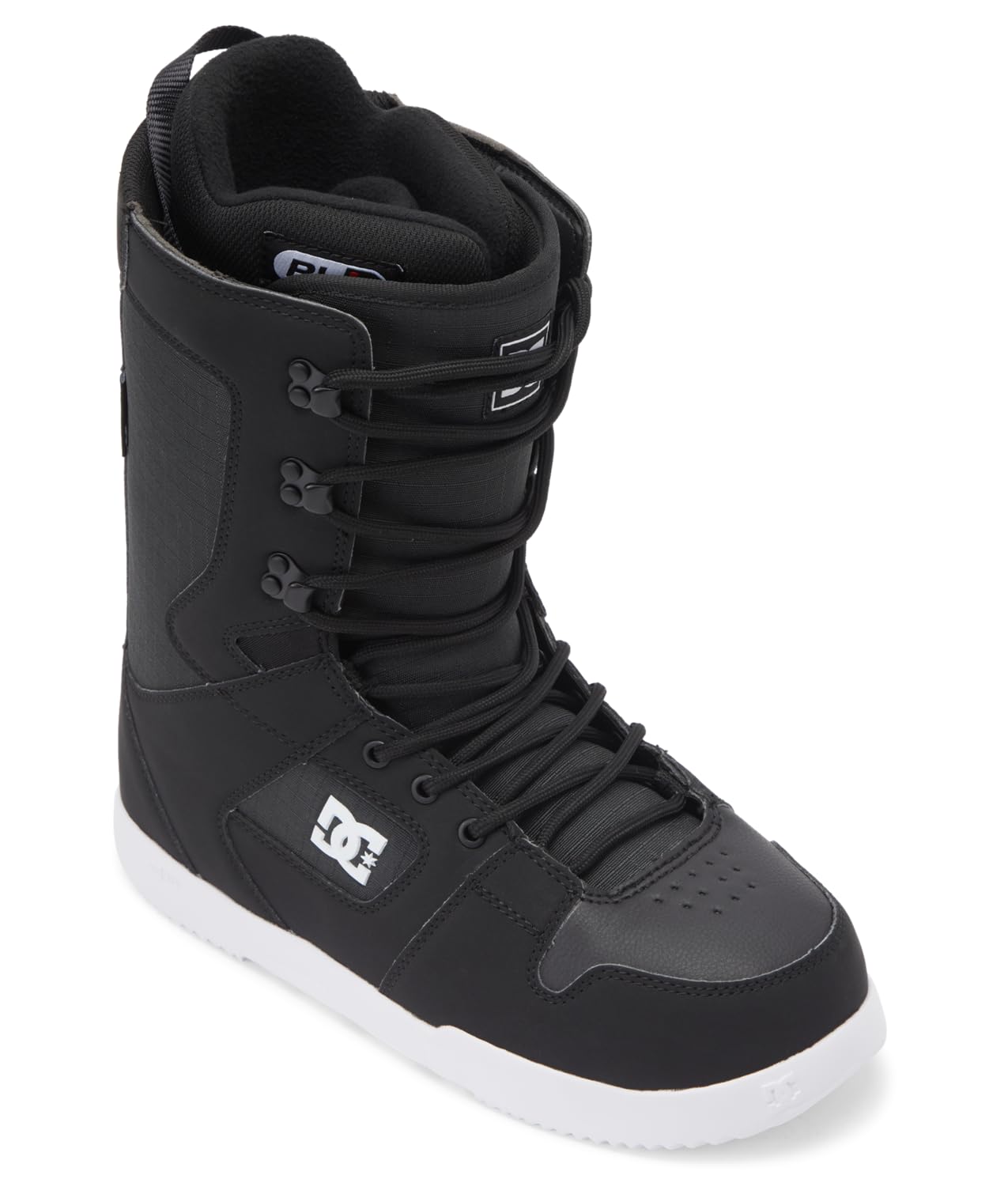
The DC Phase is the most affordable boot in this guide, and it delivers a straightforward, no-nonsense design that prioritizes comfort and simplicity over flashy features. The traditional lace-up closure is paired with a Response Liner I and an IMPACT ALG insole, providing decent shock absorption for park landings and groomer cruising. The Foundation UniLite outsole keeps weight low, and the polyurethane insole offers better arch support than the flat EVA footbeds found on some entry-level competitors. At a flex rating of 3/10, this boot is designed specifically for beginners, park riders, and anyone who values buttery flexibility.
Multiple reviewers praised the Phase for being “super comfy” right out of the box, with one rider mentioning it was their second pair, indicating repeat satisfaction. The boot runs true to size for most users, and the synthetic outer material holds up well against abrasion from strap bindings. The black/white colorway is clean and understated, fitting in at any resort without looking like a rental.
The Phase’s limitations are clear when compared to more expensive options: there is no heat-moldable liner, no BOA system, no J-bars for heel hold, and the flex is so soft that any rider over 160 lbs will likely fold the boot during aggressive turns. The EVA sole also lacks the grip of rubber, making boot packs and slippery surfaces a genuine hazard. For a rider on a tight budget who only goes a few times a season and prioritizes comfort above all else, the DC Phase is a functional starting point that won’t break the bank.
Why it’s great
- Lowest entry price makes snowboarding accessible without sacrificing basic comfort
- IMPACT ALG insole provides decent shock absorption for park riding and landings
- Traditional lace closure is simple, reliable, and easy to repair on the mountain
Good to know
- Soft 3/10 flex is easily overpowered by riders over 160 lbs
- No heat-moldable liner or heel retention features for improved fit
FAQ
Should I size up or down for budget snowboard boots?
Can budget snowboard boots be heat molded at home?
How long do budget snowboard boots usually last?
Are BOA boots worth it on a tight budget?
What flex rating should a beginner look for in a budget boot?
Final Thoughts: The Verdict
For most riders looking to balance quality and cost, the budget snowboard boots winner is the K2 Raider because it delivers a premium BOA system and Intuition liner at a price that beats every other boot with comparable features. If you want traditional laces with a heat-moldable fit that punches well above its cost, grab the System APX. And for riders who need a dual-zone BOA fit for precise heel hold and upper cuff comfort, nothing beats the ThirtyTwo Lashed Double Boa.