
Our readers keep the lights on and my morning glass full of iced black tea. As an Amazon Associate, I earn from qualifying purchases.
Specs are compiled from manufacturer listings and verified buyer reviews and can change over time — please confirm the key details on the product page before buying.
When you strap into a pair of budget snowshoes, the real question isn’t just how much they cost — it’s whether they’ll actually keep you on top of the snow instead of plunging you into it. A good pair turns a heavy, exhausting slog into a natural, easy stride. This guide cuts through the noise to find the models that deliver real flotation (the ability to stay on the surface of deep snow) and solid traction without the premium price tag.
I’m Min — the founder and writer behind Gadgets Feed. This guide is built by comparing the manufacturers’ published specifications and the patterns across verified customer reviews, so you get each pick’s real strengths and trade-offs instead of marketing spin.
The nine models below were pulled from the thousands on the market, ranked and compared on their actual owner experiences and critical specs. Read on for the definitive guide to the best budget snowshoes for this winter.
Our Picks at a Glance


How To Choose The Best Budget Snowshoes
Buying on a budget doesn’t mean guessing. A few key specs separate the snowshoes that work from the ones that collect dust. Here is what to check before you click buy.
Size and Weight Capacity Are Everything
The length of the snowshoe (measured in inches) directly determines how much flotation it gives you. Longer shoes support more weight — your body weight plus any pack you carry. Every shoe lists a maximum weight recommendation (for example, 250 pounds or 300 pounds). If you exceed that limit, you sink. Beginners often buy too short, then wonder why they are post-holing (sinking into the snow up to their knee) on every step.
Frame and Deck Material
Nearly every budget snowshoe uses an aluminum frame (light and durable) with a polyethylene deck (the flat surface that keeps you afloat). Higher-density polyethylene (HDPE) makes the deck stiffer, which gives you more power when pushing through deep snow. Some budget models use alloy steel frames — heavier but often stronger at the same price point. There is no magic material; just check that the frame is metal, not all-plastic.
Bindings Are Your Daily Interface
A frustrating binding ruins a walk in minutes. Look for a ratcheting system (like the straps on a snowboard binding) that pulls tight and stays tight. Avoid models that rely purely on nylon straps that slip or loosen as you walk. If you plan to snowshoe in heavy winter gloves, the binding must be easy to operate with one hand.
Traction and Crampons
The metal teeth (crampons) under the shoe are your only grip on packed snow or icy patches. Most budget shoes have a toe crampon and a heel crampon. That is enough for flat trails. If you tackle steep hills, look for models with additional traction rails along the sides of the frame.
Quick Comparison
| Model | Best For | Max Weight | Frame Material | Item Weight | Amazon |
|---|---|---|---|---|---|
| G2 Snowshoes★ Best Overall | Best Overall Value | 250 lb | Alloy Steel | — | Amazon |
| Franklin Sports Arctic TrailsHeavy Lifter | Highest Load Capacity | 300 lb | Aluminum | 5.4 lb | Amazon |
| Tubbs Frontier BlackTrail Favorite | Best Brand Reputation | — | Aluminum | — | Amazon |
| Retrospec Drifter | Top-Rated All-Rounder | 160 lb | Aluminum | 5.8 lb | Amazon |
| Retrospec Drifter + Poles | Best Beginner Bundle | 200 lb | Aluminum | 4.2 lb | Amazon |
| Tubbs Flex TRK | Best Traction Tech | — | Alloy Steel | — | Amazon |
| Odoland Snowshoes | Best Complete Kit | 100 kg | Aluminum | 3.9 kg | Amazon |
| Yukon Charlie’s Sherpa | Best Beginner Design | 200 lb | Alloy Steel | — | Amazon |
| Tubbs Xplore | Lightest Premium Pick | 150 lb | Aluminum | 16 oz | Amazon |
In‑Depth Reviews
1. G2 21/25/30 Inches Light Weight Snowshoes
Our pick — 4.5★ from 200+ verified ratings; the strongest balance of quality and price.
The crowd-pleaser that combines quality construction with a genuinely easy-on binding system.
What makes this G2 model the top pick is the build quality that the owners praise most — the shoe uses a high-density polyethylene (HDPE) deck over an alloy steel frame to give you stable flotation in deep snow. The fast ratchet binding is designed so you can cinch it tight with one finger, even when your hands are frozen. The 250-pound maximum weight recommendation covers most recreational users without pushing into heavy-duty territory.
A padded EVA foam (a soft, foam-like material) layer sits inside the binding to keep your feet warm and comfortable on cold hikes. The shoe also includes a flex pivot bar and a heel lift, which takes the strain off your calves when you hit an incline. Owners note that the shoe is well-made and functions perfectly in the snow, with one buyer reporting a “2 lbs each, manageable weight” that makes carrying them to the trailhead painless. The main trade-off you need to know: some owners found the durability mixed, so this is best suited for casual winter hiking rather than rugged backcountry week-long trips.
Great Flotation, No Fuss: The HDPE deck and 25-inch length provide enough surface area to keep a 200-pound hiker from sinking, while the heel lift adds real climbing help on steep sections.
A Fair Warning: The same deck material that keeps weight down may show wear faster than a pure aluminum plate — treat them as excellent entry-level gear, not expedition gear.
Reach for this if: you want a fully-featured snowshoe with a comfortable binding, solid flotation, and a heel lift — all without spending more than you need to.
Look elsewhere if: you plan to snowshoe multiple times a week in abrasive icy conditions and need maximum long-term durability.
2. Franklin Sports Arctic Trails Snowshoes for Men + Women
The largest budget shoe on this list carries a 300-pound limit and a 36-inch frame that floats like a boat.
This Franklin Sports shoe is built for bigger users or anyone carrying a heavy pack. The 36-inch length by 10-inch width gives you the most surface area here, so you stay on top of unpacked powder rather than breaking through. The lightweight aluminum frame weighs only 5.4 pounds — noticeably lighter than many smaller shoes — and the included carrying case is a detail owners call extremely useful when hauling them to the car.
The traction is where this shoe shines in the real world: owners describe the grip as exceptional on ice and powder, with easy-to-use bindings that work well with winter boots. The aluminum frame provides excellent flotation in deep snow. That said, the verdict from owner experience is that the initial stiffness of the straps is a real pain point — putting them on the first few times takes effort because the straps are stiff from the start.
The Big Win
- Massive 300-pound weight capacity handles big builds and heavy packs.
- Includes a carrying case that owners say other brands charge extra for.
- Aluminum frame keeps the weight at just 5.4 pounds despite the large 36-inch size.
The Breaking-In Period
- Straps are very stiff when new, making the first few sessions harder to get into.
- The 36-inch shoe is long — expect some heel drag if you walk with a narrow gait or on a tight trail.
Best for: heavier hikers (up to 300 pounds) who need deep-snow flotation and want an aluminum frame that won’t rust.
Not for: anyone who wants a shoe that slips on easily the first time — the straps need patience to break in.
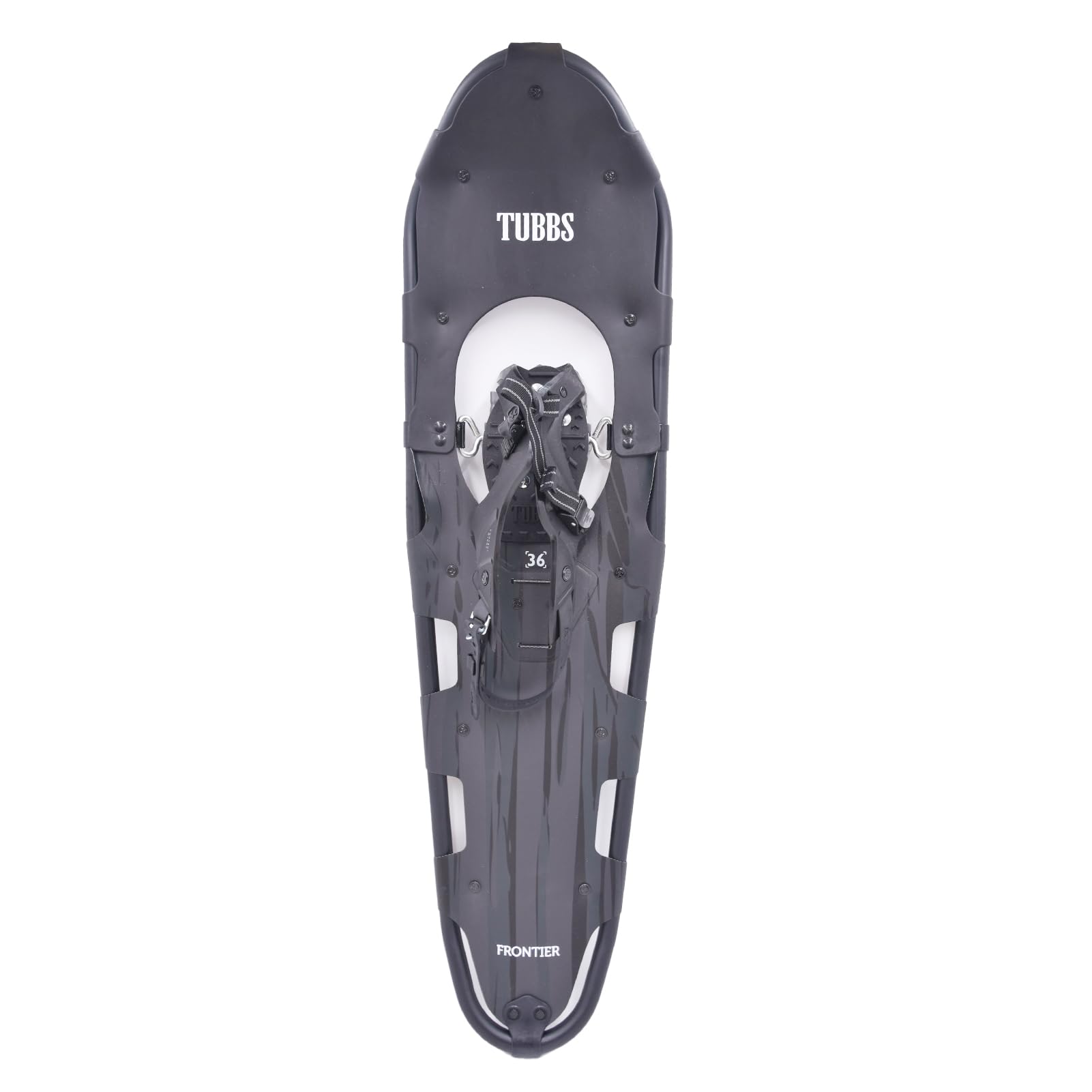
3. Tubbs Frontier Black
A trusted brand name at a budget price — this Tubbs model brings well-known engineering to an entry-level build.
Tubbs has been making snowshoes for decades, and the Frontier Black benefits from that lineage. The Fit-Step frame and Soft-Tec decking (a smooth, durable plastic surface) provide lightweight flotation that keeps you moving naturally. The rotating toe cord bites into the snow for solid traction, while the Recreational Toe and Heel Crampons give you grip on packed trails and small inclines.
Owners consistently praise the quality and lightweight feel. One owner sums it up: the Frontier shoes “make winter so much more enjoyable.” But the fit is a mixed topic — while some say the shoes fit great and are very comfortable, others report that the bindings slip off after a few steps. The 180 EZ Binding uses a simple strap system, so getting a secure fit may take a few adjustments. This is a shoe that rewards a careful setup.
The Brand Value: The same Tubbs technology — a 16-degree heel lift and torsion deck — found on pricier models is present here, giving you proven snowshoe geometry at a budget entry point.
The Binding Issue: The 180 EZ Binding is simple, but a subset of owners say it does not hold their heel firmly, so try them on with your winter boots before committing to a long hike.
Reach for this if: you want the reassurance of a major snowshoe brand (Tubbs) at a price that undercuts their premium line by a wide margin.
Think twice if: you have narrow or unusual boot shapes — the binding fit is not universal and may require extra fiddling.
4. Retrospec Drifter Snowshoes for Women & Men

The most-reviewed budget snowshoe on the market — 700+ owners confirm this is the one to beat for everyday value.
This Retrospec Drifter has earned its enormous fan base by delivering consistent quality at a price that undercuts premium brands by half. The lightweight aluminum frame keeps your steps feeling natural, and the double-ratchet binding system gets you strapped in fast — no fumbling with cold fingers on a windy morning. The built-in heel lifters reduce leg strain on steep climbs, making this a shoe that works just as well on rolling terrain as it does on flat trails.
What wins people over is the quality — 36 owners praise it as the top aspect — and the ease of use, with 30 more specifically calling out how simple the binding is. The mesh carrying bag is a welcome bonus for storage. The recurring gripe, however, is durability: while many find the shoe sturdy, a significant number of buyers report that the binding or frame breaks faster than expected. This matters if you plan to snowshoe several times a week.
Why 700+ Owners Love It
- Double-ratchet binding is genuinely easy to operate with gloves on.
- Heel lifters are integrated and function well on moderate climbs.
- Full-floating pivot system moves naturally with your stride.
The Durability Caveat
- Owners mention mixed long-term durability — some straps and components wear out faster than expected.
- Maximum weight recommendation of 160 pounds is lower than many competitors, so heavier users should size up or look elsewhere.
Best for: light to average-weight adults (up to 160 pounds) who want a proven, easy-to-use snowshoe for regular recreational hiking and don’t need heavy-duty construction.
Not for: high-mileage users who need a shoe that will survive three seasons of hard use without parts needing replacement.
5. Retrospec Drifter Snowshoes & Trekking Poles Bundle
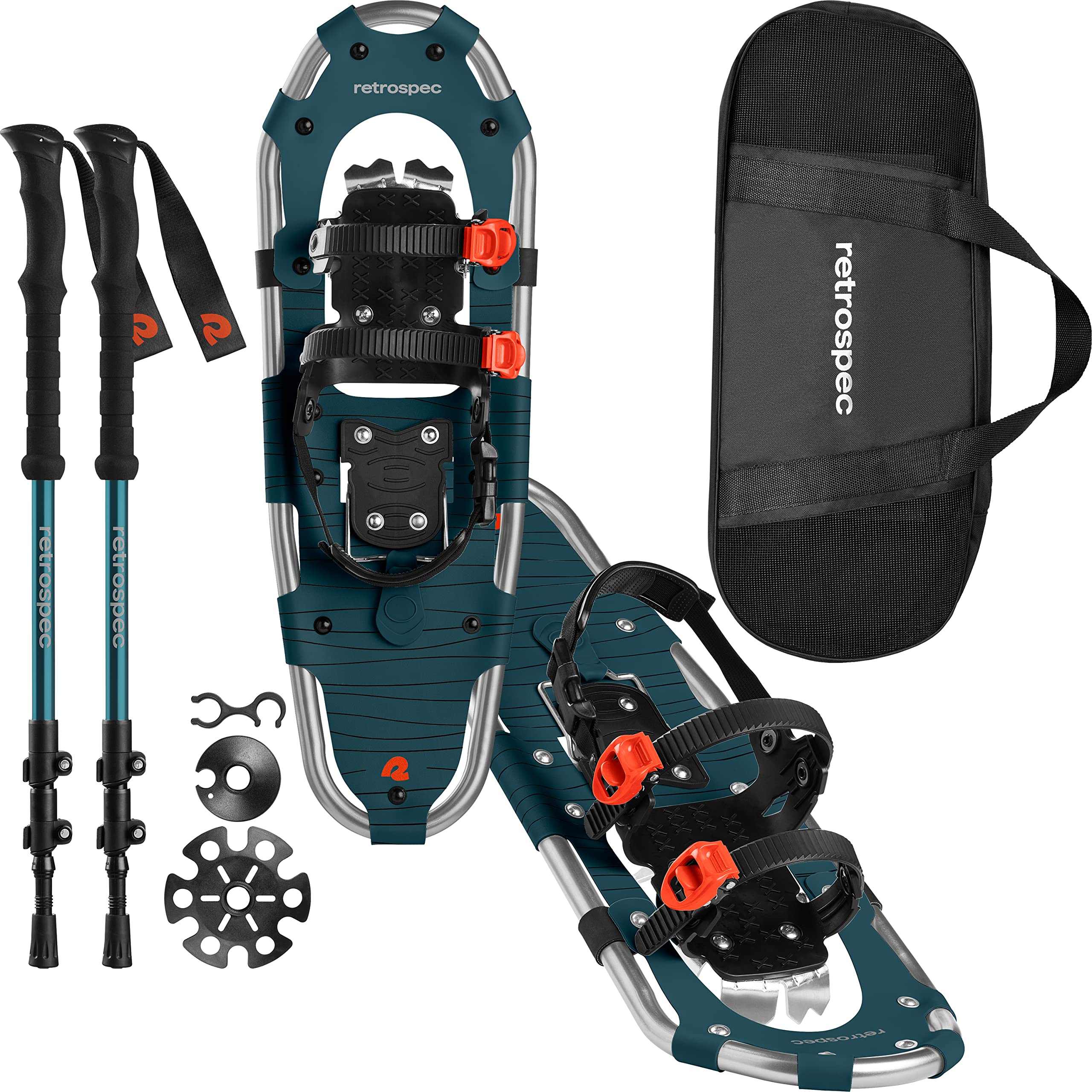
Everything a first-time snowshoer needs in one box — shoes, poles, and a carry bag that simplifies the whole experience.
This bundle from Retrospec takes the core Drifter snowshoe and pairs it with adjustable trekking poles (extending from 25.5 to 54 inches) and a carry bag. For anyone buying their first set of winter gear, this eliminates the guesswork of matching accessories. The snowshoe itself uses the same aircraft-grade alloy frame and rugged polyethylene deck as the standalone model, with a full-floating pivot system that reduces leg strain.
Owners confirm it is a great set for beginners. The adjustable poles, good weight distribution, and effective crampons all work together to get you on the snow with no extra shopping. The poles use terrain-specific attachments for grip on packed snow. The one practical note from owners: the strap adjustment can loosen during walking if not cinched quite tight enough, so double-check before heading uphill.
Everything in One Box: The aluminum frame and rugged deck provide good flotation for users up to 200 pounds, and the telescoping poles match your height with a twist-lock adjustment.
Watch the Straps: A few owners mention that the bindings need a firm pull to stay tight — give them an extra tug after the first hundred yards.
Reach for this if: you are starting from zero winter gear and want a single purchase that gives you both shoes and poles ready to hit the trail.
Look elsewhere if: you already own trekking poles — the standalone Drifter offers the same snowshoe at a lower entry price.
6. Tubbs Flex TRK
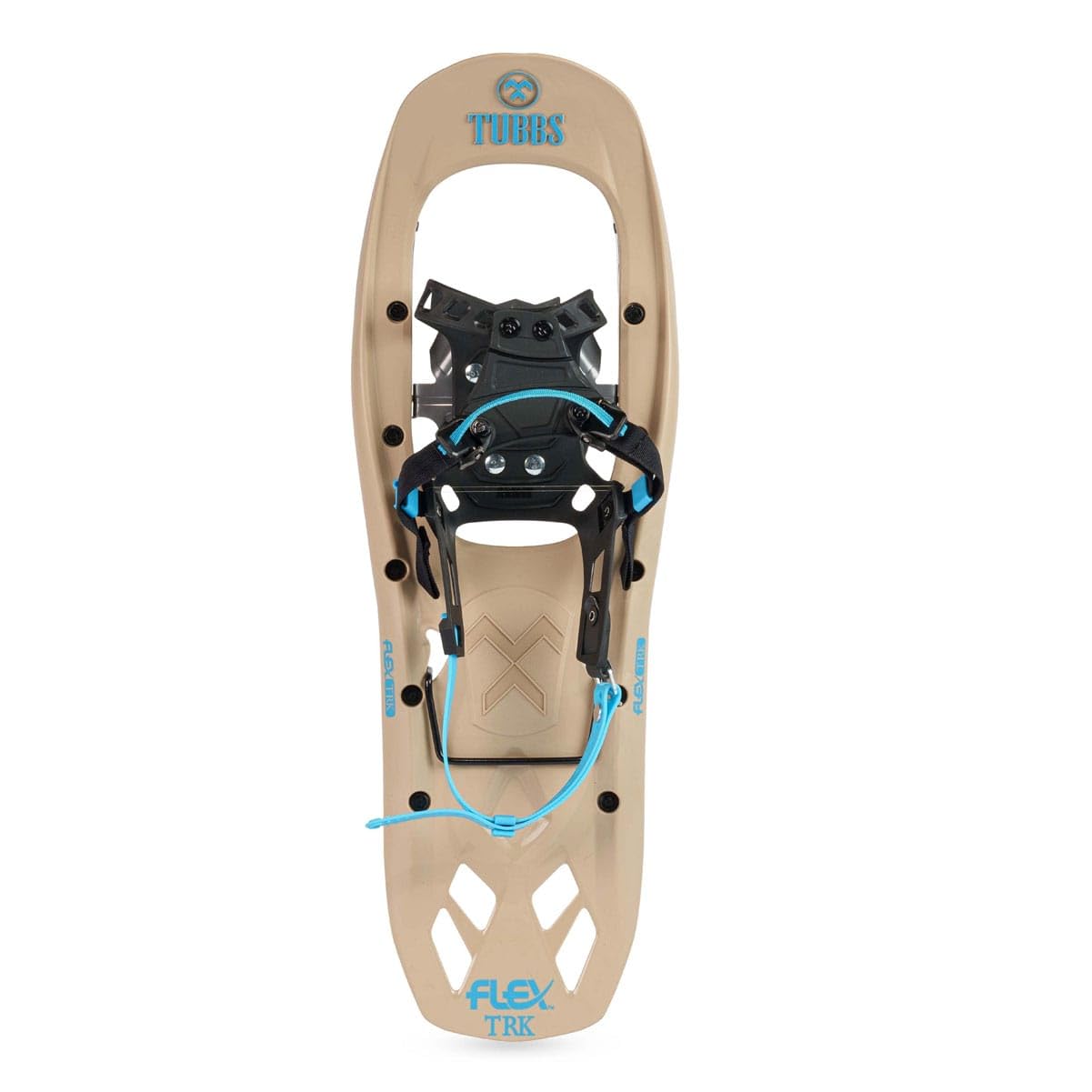
The shoe that moves with you: a torsion deck and Flex Tail let the snowshoe bend and roll like a natural extension of your foot.
The Tubbs Flex TRK is where budget pricing meets premium engineering. The Torsion Deck (a flexible section in the middle of the shoe) allows the shoe to twist under foot, preserving your natural gait on uneven terrain — something cheaper rigid shoes cannot do. The Quick-Fit Binding uses easy-pull straps and a roller buckle heel strap that cinches securely with one hand. The 16-degree ActiveLift heel lift reduces calf fatigue on climbs and can be flipped up or down without bending over.
Owners who use it on trails and light bushwhacking report that it performs excellently in snow under two feet, with very good grip from the Tubbs Toe Crampon and Traction Rails. The binding is described as lightweight and easy to adjust, tightening to your boots with one hand. The only note to be aware of is that these are sized as a women’s model, though many male customers note they fit fine in the correct size.
The Tech Advantage
- Torsion Deck improves traction and comfort on uneven ground — a feature you normally find on + shoes.
- ActiveLift 16-degree heel lift is a genuine climbing aid that reduces Achilles strain.
- Quick-Fit binding tightens with one hand, even in thick gloves.
Who This Fits
- Listed as a women’s model — men with wide feet or larger boots should check the fit description closely.
- Best for snow under 2 feet; deeper powder calls for a longer shoe.
Best for: hikers who value natural gait movement and superior traction over raw flotation — the torsion deck is a real performance upgrade for the money.
Not for: deep-powder excursions where you need a 30-inch-plus shoe to keep you on top.
7. Odoland Snowshoes with Trekking Poles, Gaiters & Bag
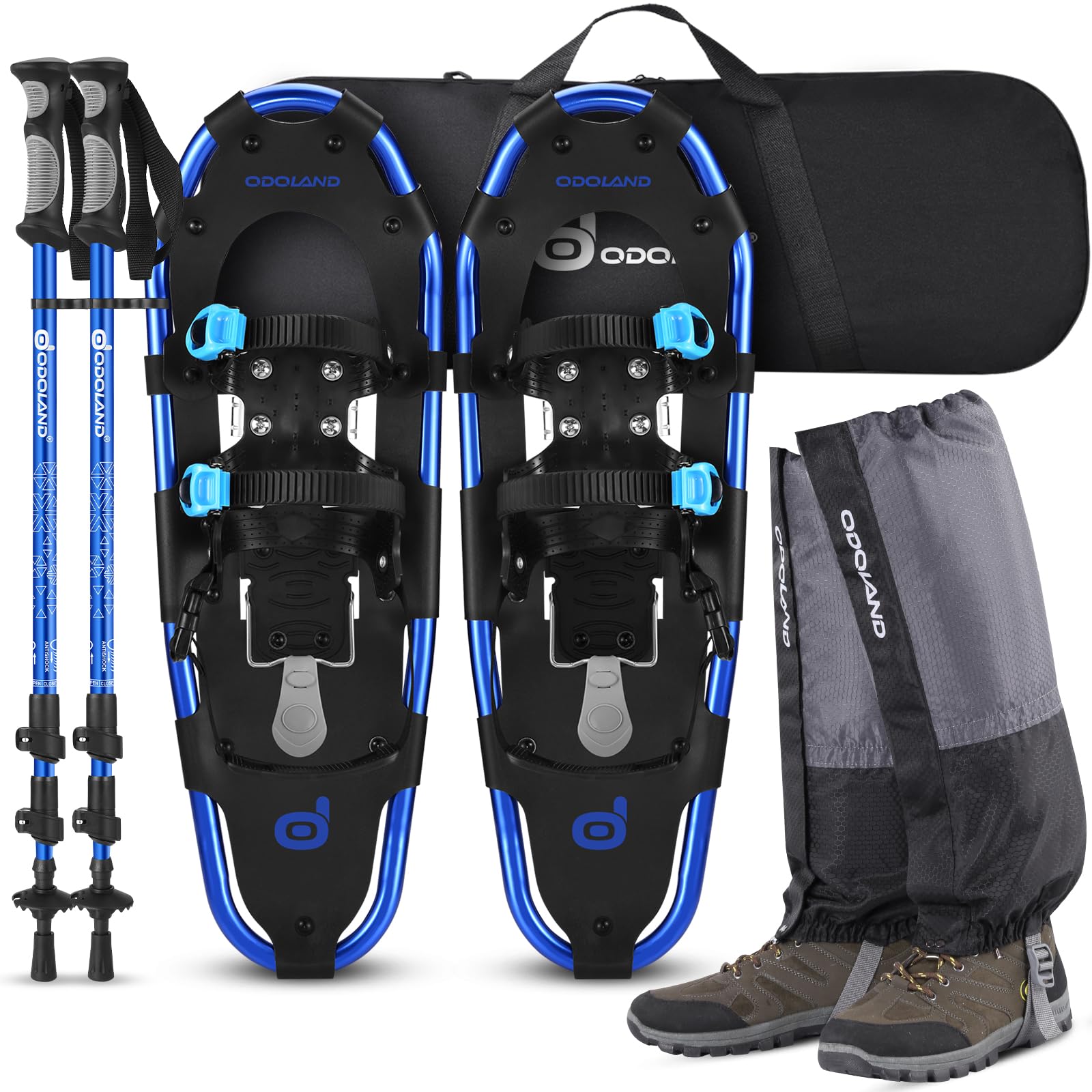
A full winter kit — snowshoes, trekking poles, waterproof gaiters, and a carry bag — that costs less than many stand-alone snowshoes.
This Odoland set is designed to give you everything you need for a day on the snow, all in one purchase. The aluminum frame is lightweight and strong, with a large flat surface area for maximum flotation. Each shoe has two sets of heavy-duty sawtooth crampons for strong traction on icy hard surfaces. The trekking poles adjust from 25.5 to 54 inches with a simple twist lock, and the included waterproof leg gaiters (made of pongee fabric) keep snow out of your boot tops.
Owners appreciate the value — the full set with gaiters and a bag is considered well worth the money. The shoes are described as lightweight and adjustable, with the poles working well after a quick assembly. A few practical notes: the latches on the bindings are stiff when new but loosen over time, and the gaiters are narrow and have a cord that some owners found cheaply made.
The Complete Kit Advantage: The 30-inch shoe (recommended for 160-250 pounds) combined with the gaiters and poles means you spend zero additional money on accessories.
The Gaiter Drawback: A few owners note the gaiters are narrow and the cord ripped — consider this a solid kit for the snowshoes and poles, with the gaiters as a bonus rather than the main event.
Reach for this if: you want a one-and-done purchase that covers snowshoes, poles, gaiters, and a bag without hunting for each piece separately.
Think twice if: you already own gaiters and poles — the same money buys a higher-quality stand-alone snowshoe.
8. Yukon Charlie’s Sherpa Snowshoe Kit
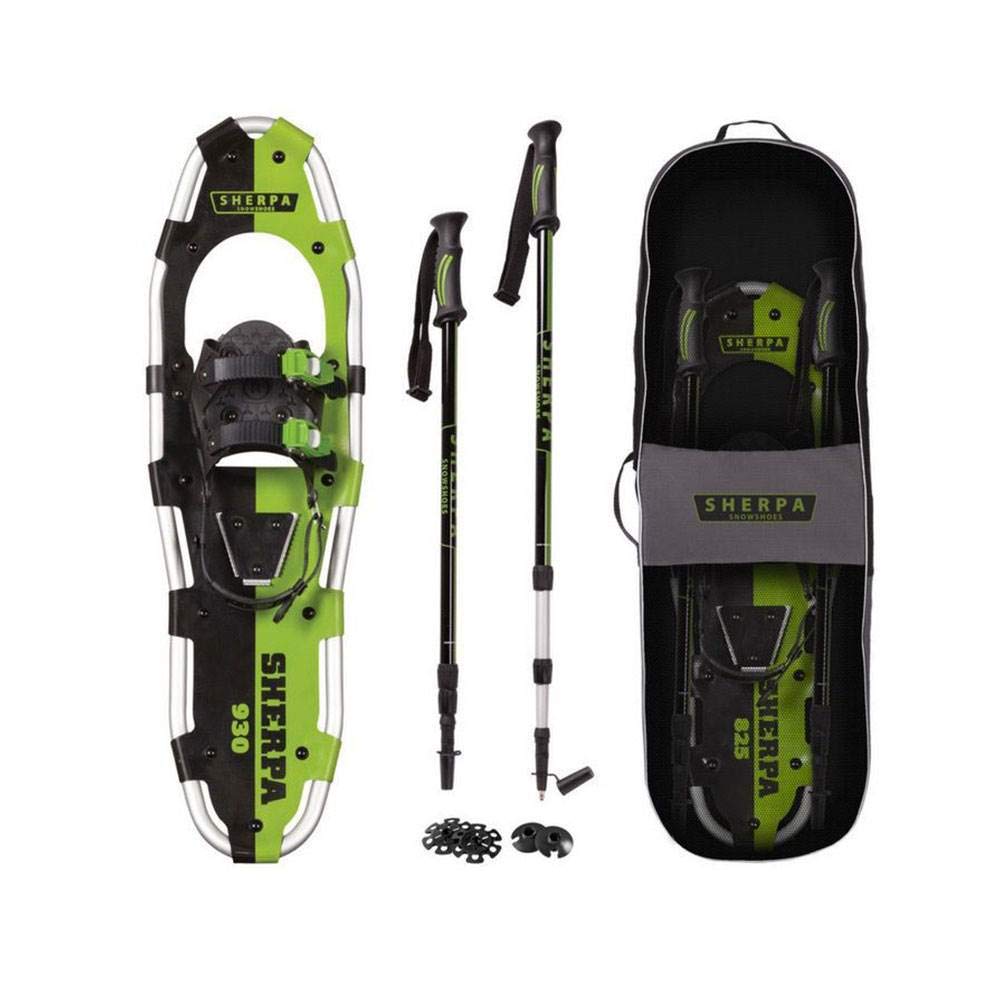
Designed from the ground up for first-timers — the Quick Click II binding and Rapid-Lite Flex strap get you in and out in seconds.
Yukon Charlie’s built the Sherpa with the beginner in mind. The 8×25-inch frame (weighing 4.2 pounds) is designed for users from 151 to 200 pounds, with a unisex build that works for both men and women. The HDPE (high-density polyethylene) deck stiffens the snowshoe for maximum power transfer when pushing through deep snow. The Quick Click II Ratcheting binding and Rapid-Lite Flex heel strap are genuinely easy to operate — owners consistently call this the easiest snowshoe to put on and take off, especially compared to cheaper competitors.
This is a kit that includes poles and a travel bag, rounding out a complete beginner setup. Owners describe it as a great value trail shoe, with one 215-pound user reporting excellent performance on two 5-mile hikes in 18 inches of snow. The poles are described as strong and nice. The honest trade-off: the price point is higher than some similar kits, but owners who bought cheaper snowshoes previously say the binding ease alone justifies the extra cost.
Why Beginners Love It
- The Quick Click II ratcheting binding is genuinely simple — step in, pull, and go.
- Weighs only 4.2 pounds, making it one of the lighter full-size kits available.
- Includes poles and a storage bag so you have a complete setup from day one.
The Price Consideration
- Higher price point than entry-level competitors, though owners confirm the quality and ease of use justify it.
- Maximum weight recommendation of 200 pounds means heavier users must size up carefully.
Best for: someone buying their first snowshoes and willing to spend a little more for a binding that actually works without frustration.
Not for: experienced snowshoers who already own comfortable bindings and just want a budget frame — you are paying for the kit convenience.
9. Tubbs Snowshoes Xplore
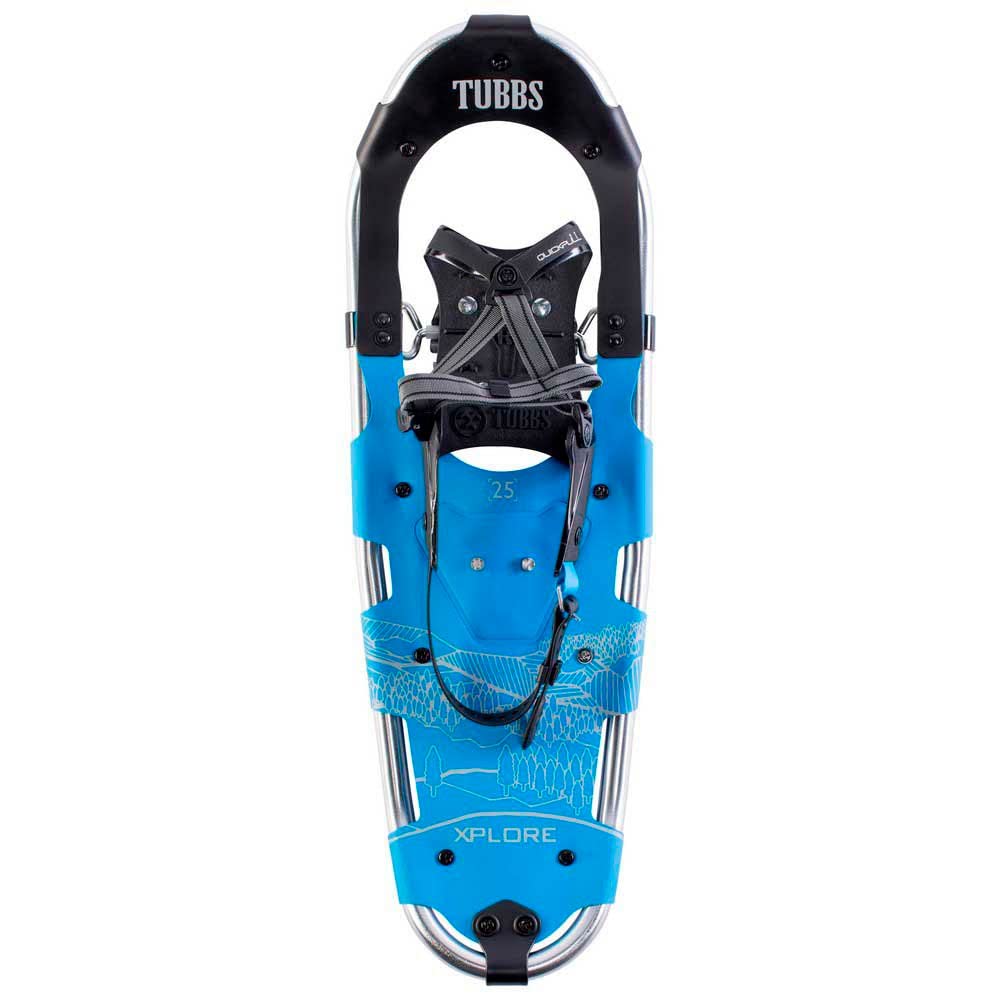
The featherweight that weighs just 16 ounces per shoe — you barely know you are carrying them until you are on the snow.
At 16 ounces each, the Tubbs Xplore is the lightest snowshoe in this guide by a wide margin. That matters when you are hiking to the trailhead with shoes strapped to your pack, or when you want a shoe that lets you move fast on packed snow. The Fit-Step frame uses a geometry that reduces musculoskeletal impact on your hip, knee, and ankle joints — so you walk naturally rather than with the heavy clomp of cheaper designs. The Quick Pull binding cinches easily and open up with one buckle push.
The Recreational crampon provides secure grip on packed snow conditions for uphill, downhill, and sidehill travel. The Soft Tec decking gives you durable, lightweight flotation. Owners who replaced cheaper snowshoes with the Xplore report that after five winters of hard use in extreme snow country (over 200 inches of annual snowfall), the Tubbs quality holds up. The one caution: the maximum weight recommendation is 150 pounds, so this is strictly for lighter adults or youth.
The Weight Advantage: At 16 ounces per shoe, the Xplore weighs 16 ounces, while the Franklin Sports shoe weighs 5.4 pounds — a difference you feel immediately on any walk over a mile.
The Load Limit: The 150-pound maximum weight recommendation means this is not for heavy packs or larger hikers; it is a performance choice for lighter users who prioritize speed and comfort.
Reach for this if: you are a lighter adult (under 150 pounds) or a youth who wants to move fast on packed snow without the weight of a full-size shoe slowing you down.
Look elsewhere if: you carry a heavy backpack, weigh over 150 pounds, or plan to break trail in deep powder — the Xplore’s flotation is limited by its light build.
Understanding the Specs
Maximum Weight Recommendation
This is the most critical number on any snowshoe. It tells you the total load the shoe can support — your body weight plus any pack, gear, or clothing. Exceed it and you post-hole (sink into the snow) on every step. Light budget shoes (like the Retrospec Drifter) top out at 160 pounds, while heavy-duty models (like the Franklin Sports Arctic Trails) can carry 300 pounds. Match this number to your real-world weight, not just your body weight.
Frame Material and Deck
Almost all budget snowshoes use an aluminum frame (light, rust-resistant) or an alloy steel frame (stronger, slightly heavier). The deck is the flat platform that keeps you on top of the snow. High-density polyethylene (HDPE) is the standard — it is stiff enough to push through powder but flexible enough to absorb bumps. Some higher-end decks use Soft-Tec material (a smooth textured plastic) for quieter, more comfortable movement. Avoid all-plastic frames; they flex too much under load.
Binding System
The binding is what straps your boot to the snowshoe. Ratchet-type bindings (like on a snowboard) pull tight with a click and release with a lever — these are the easiest to use with gloves on. Buckle-only bindings are simpler but require manual tightening and can loosen as you walk. Padded EVA foam inside the binding adds comfort and warmth, which makes a real difference on a cold day.
Traction and Crampons
Crampons are the metal teeth under the snowshoe that dig into ice and packed snow for grip. A basic setup has a toe crampon and a heel crampon — enough for flat terrain. More aggressive models add traction rails along the sides or rotating toe cords that bite deeper. If you plan to walk on icy trails or gentle hills, a standard toe/heel crampon is sufficient. For steep climbs, look for models with side traction rails.
Heel Lift (ActiveLift)
A heel lift is a small flip-up support under the heel that reduces the angle of your ankle when climbing uphill. It saves your calf muscles and Achilles tendon from overworking on steep sections. Not all budget snowshoes include one, but if you plan to hike hills, it is a feature you will appreciate within the first few minutes of climbing.
FAQ
What size snowshoe do I need for my weight?
Will these budget snowshoes work in deep powder?
Can I use my hiking boots with snowshoes?
How do I put snowshoes on and take them off?
Do I need trekking poles with snowshoes?
How long do budget snowshoes last?
Can I walk backward in snowshoes?
What is the difference between a 25-inch and a 30-inch snowshoe?
Are these snowshoes suitable for children or youths?
How do I maintain and store my snowshoes?
Final Thoughts: The Verdict
For most people, the budget snowshoes winner is the G2 Snowshoes because it combines quality construction, a user-friendly ratchet binding, and a heel lift at a price that undercuts the competition — earning the highest owner satisfaction in its price tier. If you need a higher weight capacity (up to 300 pounds), grab the Franklin Sports Arctic Trails. And for a complete beginner setup with poles and gaiters, the Odoland Snowshoes bundle is the one to reach for.
How We Picked
We do not accept paid placement. Every pick is matched to a real buyer and a real use-case; we do not hands-on test units.
Sources & Methodology
Specifications: manufacturer listings and product documentation. Review insights: verified customer reviews, as of July 2026. Pricing: not shown on this page (it changes often); check the current price via the retailer link.
As an Amazon Associate, Gadgets Feed earns from qualifying purchases. This does not affect which products we feature.