
Our readers keep the lights on and my morning glass full of iced black tea. As an Amazon Associate, I earn from qualifying purchases.
Specs are compiled from manufacturer listings and verified buyer reviews and can change over time — please confirm the key details on the product page before buying.
Getting true tower-speaker sound on a budget means hunting for the few models that deliver clear highs, real bass, and solid build without the audiophile price tag. A few floorstanders deliver room-filling audio at a fraction of flagship cost.
I’m Min — the founder and writer behind Gadgets Feed. This guide is built by comparing the manufacturers’ published specifications and the patterns across verified customer reviews, so you get each pick’s real strengths and trade-offs instead of marketing spin.
You want the honest breakdown of the best budget tower speakers that actually sound good, look sharp, and won’t force you to upgrade again next year.
Our Picks at a Glance


How To Choose The Best Budget Tower Speakers
Tower speakers, also called floorstanding speakers, are the full-height pillars that anchor a stereo or home theater setup. They house multiple drivers — the round cones that produce sound — in one tall cabinet, which means deeper bass and higher volume than small bookshelf boxes. On a budget, the trick is finding which specs actually predict good sound and which are just marketing numbers.
Match Sensitivity to Your Receiver
Sensitivity tells you how efficiently a speaker turns power into volume, measured in decibels (dB). A speaker rated at 94dB sensitivity will play noticeably louder than an 87dB model on the same receiver. If you have a modest amp, a high-sensitivity speaker is your friend because it gets loud without needing huge wattage. Lower-sensitivity speakers often demand a beefier receiver to reach the same listening levels.
Understand Power Handling and Impedance
Power handling is stated in watts and comes in two flavors: RMS (the continuous power a speaker can handle) and peak (the brief bursts it can survive). Most budget towers fall in the 85W to 150W RMS range and 240W to 500W peak. Impedance, measured in ohms, is the electrical load the speaker puts on your amp; 8-ohm speakers are the most universally compatible with AV receivers.
Consider the Bass Design
Budget towers get their low-end kick three ways: woofers (dedicated bass cones), passive radiators (cones that move air without power), and ports (tuned openings in the cabinet). A ported design, often called bass-reflex, tends to be the most efficient at producing bass for the price. If you watch movies or play games, look for a model that digs deep enough to make explosions feel real without needing a subwoofer right away.
Quick Comparison
| Model | Best For | Peak Power | Sensitivity | Driver Size | Amazon |
|---|---|---|---|---|---|
| Klipsch R-610F (Pair)★ Best Overall | crisp home theater | 340W | 94dB | 6.5 inches | Amazon |
| Rockville RockTower 68DBest Value | Deep value and looks | 400W | — | 6.5 inches | Amazon |
| Polk Monitor XT60Top Performer | Hi-res music and movies | — | — | 6.5 inches | Amazon |
| Yamaha NS-F210BL | Slim living room setups | — | — | 3.5 inches | Amazon |
| Dayton Audio T65 (Pair) | Tall, powerful party towers | 150W | — | 6.5 inches | Amazon |
| Rockville RockTower 68C (Pair) | Best budget towers with sub | 500W | 87dB | 6.5 inches | Amazon |
| Polk Audio T50 | Proven crowd favorite | 150W | — | 6.25 inches | Amazon |
| Klipsch R-620F | Live concert dynamics | — | — | 6.5 inches | Amazon |
| Jamo Studio S809 (Pair) | Scandinavian style, Atmos | 240W | — | 5 inches | Amazon |
In-Depth Reviews
1. Klipsch Reference R-610F Floorstanding Speaker, Black, Pair
Our pick — over 4.5★ from 600+ verified ratings; the strongest balance of quality and price.
Klipsch’s horn clarity meets budget pricing in this crowd-pleasing pair.
The defining spec here is the 94dB sensitivity, which means these towers play loud and clear even from a modest receiver. You do not need a massive amp to fill your room, and that efficiency is the reason owners consistently rave about the crisp, detailed sound. The 1-inch aluminum LTS tweeter with a 90 x 90 Square Tractrix Horn is the engine behind those sparkling highs that make dialogue and movie effects pop.
Bass reaches down to 45Hz, which is deep enough for real impact in music and movies, and the pair handles 85W continuous with 340W peak power. Buyers report these work beautifully with a vintage 40-watt stereo, and the build quality gets steady praise — the copper-looking driver and horns draw compliments. The magnetic grille and injection-molded feet round out a package that feels more premium than its price suggests.
The recurring gripe is the leg screws, which owners describe as cheap and recommend replacing. The 8-ohm impedance makes them painless to pair with most AV receivers, and the 45Hz-21kHz frequency response covers the full musical range. Owners mention a very pleasing leap in sound quality and power over what they replaced, calling them a very good value.
The Horn Advantage
- 94dB sensitivity plays loud from low-power amps
- 340W peak handling for dynamic movie moments
- Horn tweeter delivers crisp, clear highs
The Hardware Caveat
- Leg screws feel cheap and may need replacing
- Deep sub-bass below 45Hz needs a subwoofer
Grab these for: a drama-free upgrade to a stereo or home theater where you want famous Klipsch treble without the flagship price.
Expect to: budget a few minutes to swap the leg screws and consider a sub if you crave the very lowest bass.
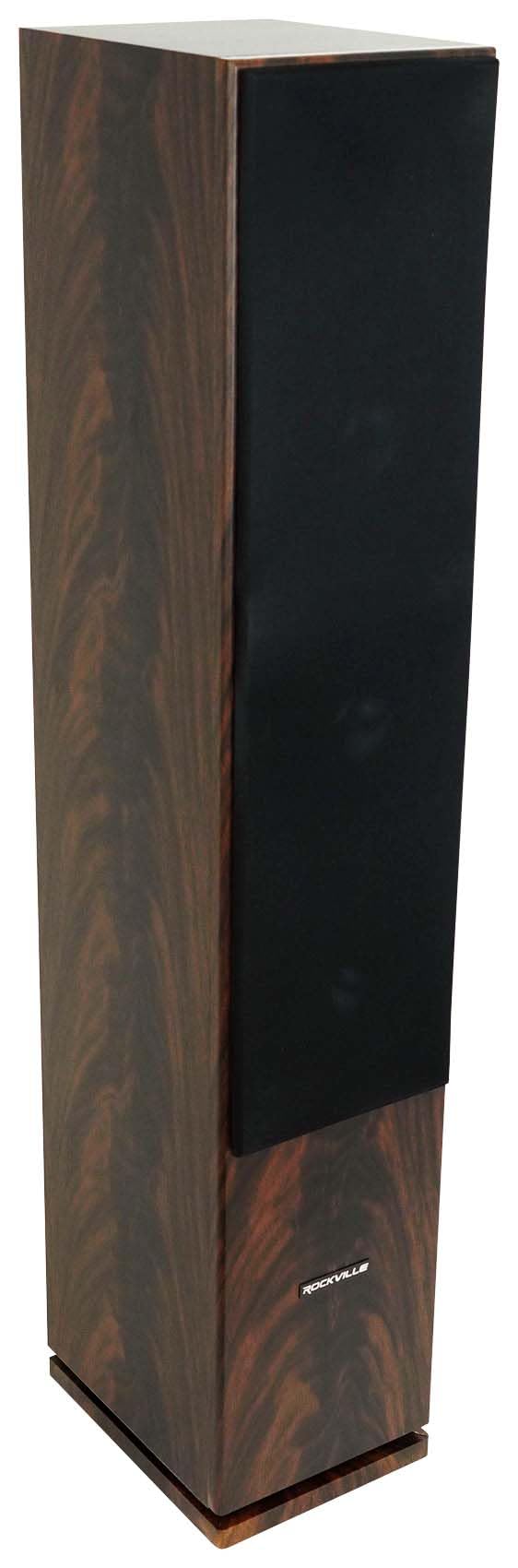
2. Rockville RockTower 68D Dark Wood Home Audio Tower Speakers Passive 8 Ohm
A 400W tower with dark wood veneer at a rock-bottom price.
This Rockville delivers 400W peak power and 125W RMS through dual 6.5-inch woofers, a 6.5-inch midrange, and a 1-inch silk dome tweeter. That three-way layout — a dedicated driver for bass, mids, and highs — is rare at this price and gives you balanced, detailed sound across the board. The dark wood cabinet is built to reduce unwanted vibrations while complementing modern decor.
At the budget end of the scale, owners note the tweeters and mids are excellent, but the bass is not punchy on its own. The fix is simple: an EQ tweak or a decent amp open up much better low-end. One owner tested them on a 1970s receiver and found the bass surprisingly strong once the EQ was adjusted. The 8-ohm impedance keeps them compatible with most stereo receivers and amplifiers, and the binding post terminals make solid connections easy.
Buyers consistently call these a vast improvement over older bookshelf speakers, noting the excellent frequency range even at low volumes. The wood veneer matches a cabinet nicely, and the extra speaker wire in the box is a thoughtful touch. These are tall but not heavy, so placement is easy for a budget-friendly home theater or listening room.
Balanced performer: the three-way driver layout gives you detail that pricier brands charge extra for, but plan to shape the bass with EQ.
Who it fits: anyone building a first tower setup who wants maximum driver count per dollar.
Reach for this if: you want a 400W three-way tower at a price that leaves room in the budget for a receiver.
Look elsewhere if: you need thunderous bass straight from the start with zero tuning.
3. Polk Audio Monitor XT60 Home Theater Tower Speaker (Single, Midnight Black)
Hi-Res certified, this tower excels in small rooms despite its modest price.
What wins people over is the bass — this single tower pairs a 6.5-inch Dynamically Balanced Woofer with dual 6.5-inch Passive Radiators, the radiators acting like extra bass drivers without needing power. Owners describe the results as mind-blowing, with the passive radiators significantly boosting low-end performance. It’s a clever sealed design that keeps things simple while still digging deep.
This is a single speaker, so you’ll buy two for stereo or one to start a home theater. It’s Hi-Res Audio, Dolby Atmos, Auro 3D, and DTS:X compatible, which means room-filling sound for the latest blockbusters and high-resolution music streams. The rubber feet are designed for both carpet and hardwood, giving you flexible placement without wobble. Polk’s timbre-matched lineup lets you add a center channel and surrounds for a unified system.
The honest limitation is that these are effectively large bookshelf speakers, so they are underpowered for very large rooms at high volumes — that’s physics at this size. In a small to mid room they shine, and owners replacing ancient higher-wattage towers report a fraction of the size with better sound. The soft tweeter takes a moment to get used to, but the sealed design and clean stereo sound win steady praise.
Smart bass design: passive radiators deliver surprising low-end punch from a sealed, simple cabinet.
Room fit: ideal for small to medium spaces where a soundbar feels weak but a full 5.1 rig is overkill.
Choose this for: a Hi-Res music and movie tower that produces genuinely impressive bass without a subwoofer.
Know this: if you have a cavernous room and love reference-level volume, this one will want a sub by its side.
4. YAMAHA NS-F210BL 2-Way Bass-Reflex Floorstanding Speaker – Each (Black)

A slim column that fits beside a flat panel TV and delivers HD-era sound.
The standout feature here is the slim profile — a sleek 4.25-inch wide column that fits tight spaces between furniture, making it the perfect companion for a flat panel TV. The woofers use light aluminum cones for extra fast response, which translates to nimble, detailed sound that keeps up with fast action scenes. The heavy-duty round steel bass anchor stand keeps everything stable.
This is a 2-way bass-reflex design rated to reproduce the full, dynamic sound of HD sources, and owners praise the superb bass and excellent highs. The catch, which owners state plainly, is that these were designed as home theater front mains, not standalone full-range stereo speakers. In a 5.1 or 7.1 setup with a subwoofer, they are perfect; running them alone gives you smooth mids but boxy bass unless you move them 9 inches or more from the wall.
The subwoofer feature draws mixed reactions — some call it essential, others have mixed opinions. In practice, a sub is the key to open up their full potential. Each package contains one speaker, so plan for a pair. The all-black design is low-key and almost unnoticeable, and owners describe the sound as fantastic with excellent highs and booming bass without distortion when properly paired.
Space saver: the narrow column fits where other towers simply won’t go.
System speaker: at its best as part of a surround setup with a sub, not as a solo stereo pair.
Pick this if: you need full tower sound in a tight living room spot and already run a subwoofer.
Think twice if: you want a pair of speakers to run alone for pure stereo music — these want a sub.
5. Dayton Audio Classic T65 Floor-Standing Tower Speaker Pair (Black)

At 39 inches tall, this pair places tweeters at ear level and handles 150W for parties.
The headline spec is the height — these towers stand over 39 inches tall, which precisely places the tweeter at ear level for optimal listening. That height also gives the cabinet ample internal volume for room-filling bass. The dual 6-1/2-inch custom poly bass drivers paired with the large bass-reflex cabinet generate punchy low-end that owners say matches subwoofer output.
The 1-inch silk dome tweeter is the star for treble, reproducing accurate highs without being harsh or abrasive — a common complaint with cheaper metal tweeters. True hi-fi crossovers accurately distribute the audio signal between the woofers and tweeter, producing a rich, detailed sound. With 150W power handling, these are built for everything from easy listening to full-on parties.
Owners describe the sound as clear and bright, noting the bass is initially strong enough that they adjusted it down. There’s a 30-plus hour break-in period where the speakers settle into their full sound. The upgraded gold-plated binding posts support banana plugs for clean, easy connections, and buyers praise the excellent double-boxed, foam-packed packaging. One buyer replaced high-end vintage JBLs and found these solid, functional, and good value.
Ear-level design: the tall cabinet means you hear the full frequency range without craning toward the tweeter.
Party ready: 150W handling and punchy bass make these the life of a listening session.
Reach for these if: you want a pair of tall, powerful towers that sound great for music and can handle a loud party.
Good to know: they need a break-in period of 30+ hours before the sound fully opens up.
6. Rockville RockTower 68C Classic Home Audio Tower Speakers Passive, 2-Pack
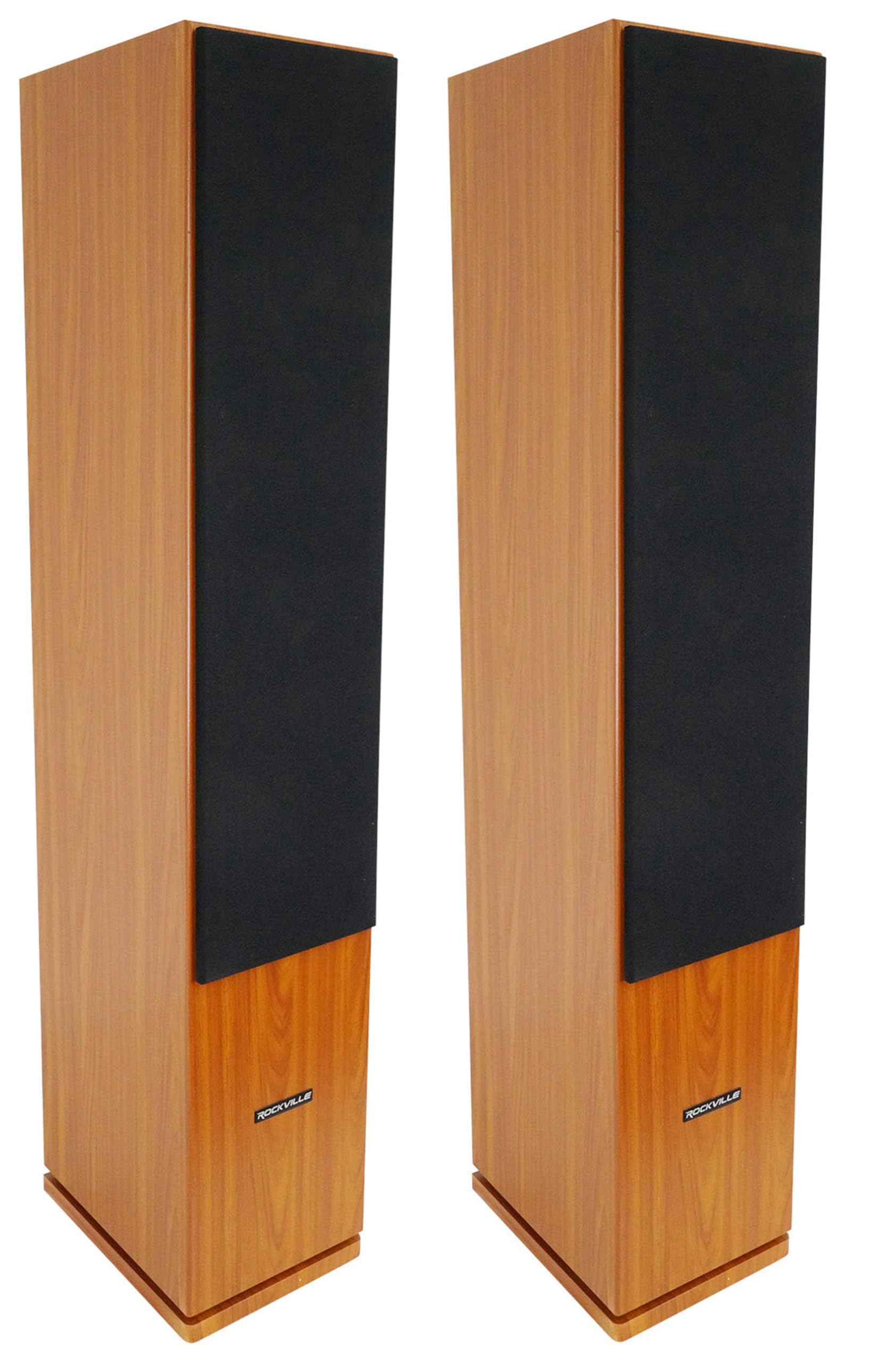
Owners call this budget pair the best towers when paired with a good subwoofer.
This 2-pack delivers a proper 3-way design: a 1-inch silk dome tweeter, a 6.5-inch midrange, and dual 6.5-inch woofers, all rated at 125W RMS and 500W peak per speaker. Owners say they sound like big dollar speakers, with crisp, clean sound and warm tones that remain clear even at high volumes. The MDF cabinet with a vented design boosts low-end response.
The honest owner consensus: these are the best budget tower speakers if you use a good subwoofer. The bass is solid, but a decent 10-inch or larger sub open up their full potential — one owner recommends a Klipsch R-120SW as ideal. Compared to the Polk T50s, owners find the Rockville 68C wins on midrange and overall fullness when paired with a sub.
The classic wood grain vinyl finish complements both traditional and modern decor, and the removable grilles give you a clean look with or without covers. Gold-plated 5-way binding posts support banana plugs, spade connectors, or bare wire for flexible hookups.
Sub-dependent star: add a good subwoofer and these outperform speakers costing more.
Honest trade-off: the build uses thinner MDF and smaller magnets than name-brand flagships, and photos show the speakers as rectangular, not angled.
Go with this if: you already own or plan to buy a subwoofer and want a 3-way tower pair for the lowest cost.
skip it if: you want a single-box solution with thunderous bass and no extra sub.
7. Polk Audio T50 Home Theater Floor Standing Tower Speaker 150W, Black

Tens of thousands of owners trust this heavily-reviewed tower for warm, room-filling sound.
The T50 packs a 1-inch tweeter, one 6.5-inch Dynamic Balance driver, and dual 6.5-inch bass radiators into a tower that delivers deep, easy bass into the listening area. With 150W of power handling, these are built to improve movies, music, and gaming alike. This is the most-proven pick on the list — the scale of owner feedback here dwarfs every other model, and the consensus is overwhelming praise for the highs and mids.
Owners describe these as a darn good speaker for the money, noting they held their own against the much pricier Polk RTI A7 in main stereo slots. The bass is balanced via the passive radiators, which provide solid low-end but benefit from an active subwoofer for the very deepest movie effects. The closed frame design, banana plug compatibility, and removable grills make setup and integration easy.
The recurring note from owners: these are best for small to medium rooms, not large open spaces. For rock and blues they shine, and owners love them for a record room listening setup. Some note the bass lacks the punch of a dedicated sub and the balance between drivers has no adjustment, so pairing with a subwoofer is the recommended path to full-range sound.
Crowd favorite: the massive owner base and steady 4.6-star sentiment make this the safest budget bet.
Best with a sub: the passive radiators give you real bass, but a subwoofer open up the full movie experience.
Choose this if: you want the most widely-tested, trusted budget tower for a small or medium room.
Keep in mind: for a large open basement or hall, these will want a subwoofer and a bigger sibling.
8. Klipsch R-620F Floorstanding Speaker with Tractrix Horn Technology, Ebony

The taller Klipsch that turns your living room into a live concert venue.
The defining spec here is the 90×90 Square Tractrix Horn paired with a 1-inch Aluminum LTS tweeter — the technology that gives Klipsch its signature live, dynamic sound. Stand at 40 inches tall and you get a bigger, fuller, more enveloping sound than the smaller R-610F, which is why owners say it delivers live concert-level entertainment in the living room. The dual 6.5-inch Spun-Copper IMG Woofers handle the low end with authority.
Owners upgrading from the smaller R-51M describe the sound as fuller and bigger, with movies sounding larger and music coming through solid and clear. The rear-firing Tractrix ports are a clever bass-reflex design that reinforces low-end response. The included angled feet help aim the sound toward ear level for better imaging.
The honest caveats: you need a receiver that lets you manually adjust crossover frequency to get the best integration with a subwoofer. Some customers note the screws snap easily during assembly and recommend replacing them with wood screws. Despite those minor build gripes, the overwhelming owner verdict is that these sound better than custom speakers costing four times as much.
Concert energy: the horn tweeter delivers that immediate, live feel at high volume without fatigue.
Setup note: pair with a receiver that offers manual crossover adjustment for the best sub integration.
Reach for it if: you want Klipsch’s signature live sound in a taller, more powerful package than the entry model.
Expect to: handle the assembly screws gently and possibly swap them for wood screws.
9. Jamo Studio Series S809 Floorstanding Speaker Pair (Walnut)

A Scandinavian-styled pair that looks as good as it sounds in a walnut finish.
The stand-out here is the design — the walnut finish and clean Scandinavian lines draw immediate compliments, with the trapezoid shape and steel feet giving an ultra high-end look. Under the hood, you get a 25mm soft dome tweeter and triple 102mm Aluminized Polyfiber Woofers rated at 240W, a configuration that delivers surprising bass for music even without a subwoofer. The Dolby Atmos readiness is a future-proofing bonus for home theater builds.
Owners describe the sound as neutral and fun, with a V-shaped signature that brings warmth and engaging bass. One owner reports these outperformed a much pricier Emotiva T0 in a direct comparison, noting a flat 60Hz-14kHz response with no distortion at low power. The WaveGuide acoustic technology helps with clear, crisp highs, though some note the treble runs hot in the 10-12K range and benefits from an EQ tweak.
The honest trade-offs: the trapezoid shape can look crooked to some eyes, and the veneer reads as a bit plastic, with one owner comparing it to IKEA furniture. The build quality and steel feet, however, are described as top-notch. These need a subwoofer to go below 60Hz, and at low volumes dialogue-heavy content wants a bit more volume to stay engaging.
Design-forward: the walnut and steel look belongs in a design magazine, not just a stereo rack.
Music-friendly: the V-shaped sound signature makes these genuinely fun for jazz, R&B, and party playlists.
Pick these if: you want a pair of towers that double as a style statement and sound great for music.
Consider this: the veneer and trapezoid shape won’t fool anyone into thinking these are hand-built high-end pieces.
Understanding the Specs
Sensitivity (dB)
Sensitivity measures how efficiently a speaker converts power into volume, expressed in decibels. A 94dB speaker plays noticeably louder than an 87dB model on the same amp setting. For budget buyers with modest receivers, a higher sensitivity rating means you get satisfying volume without needing a powerful, expensive amplifier.
Impedance (Ohms)
Impedance is the electrical load a speaker places on your amplifier, measured in ohms. An 8-ohm speaker is the most universal standard, compatible with virtually all AV receivers and stereo amps. Lower impedance speakers (4 ohms) can draw more current and may strain cheaper receivers, so 8-ohm is the safe choice for most budget setups.
Power Handling (Watts)
Power handling tells you how much amplification a speaker can accept, listed as RMS (continuous) and peak (brief bursts). A speaker rated 125W RMS can play at that level indefinitely, while its 500W peak rating covers short dynamic spikes in movies. Match this to your receiver’s output to avoid clipping or damage at high volume.
Bass Design: Woofers, Radiators, Ports
Budget towers produce bass through woofers (powered cones), passive radiators (unpowered cones that move with cabinet pressure), and ports (tuned openings). Passive radiators and ports both boost low-end output without extra amp power, but each colors the sound slightly differently. The 3-way design — separate drivers for bass, midrange, and treble — is generally the most detailed.
FAQ
Do budget tower speakers need a subwoofer?
Can I use tower speakers with a low-powered vintage receiver?
What does 8-ohm impedance mean for my AV receiver?
What is the difference between RMS and peak power handling?
Are budget tower speakers good for music or just home theater?
Do I need to buy a pair of tower speakers or can I start with one?
What size room are budget tower speakers best for?
How do passive radiators improve bass compared to regular woofers?
Can I use tower speakers with a 5.1 surround sound system?
Why do some budget tower speakers need a break-in period?
Final Thoughts: The Verdict
The strongest pick for most buyers is the Klipsch R-610F pair because the 94dB sensitivity delivers that famous horn clarity even from a modest receiver, backed by the largest positive owner consensus on this list. If you want maximum driver count per dollar and don’t mind shaping the bass, the Rockville RockTower 68D delivers a 400W three-way design at a rock-bottom entry price. And if you already run a subwoofer and want the best budget tower pairing, the Rockville RockTower 68C 2-pack is the one owners consistently crown the best budget tower speakers.
How We Picked
We do not accept paid placement. Every pick is matched to a real buyer and a real use-case; we do not hands-on test units.
Sources & Methodology
Specifications: manufacturer listings and product documentation. Review insights: verified customer reviews, as of August 2026. Pricing: not shown on this page (it changes often); check the current price via the retailer link.
As an Amazon Associate, Gadgets Feed earns from qualifying purchases. This does not affect which products we feature.