
Our readers keep the lights on and my morning glass full of iced black tea. As an Amazon Associate, I earn from qualifying purchases.
Specs are compiled from manufacturer listings and verified buyer reviews and can change over time — please confirm the key details on the product page before buying.
You want that clean, professional YouTube look — stable footage, sharp detail, good sound — but you don’t have a thousand dollars to spend on a camera body alone. The good news is you don’t need to. The real leap from smartphone quality happens when you get a dedicated camera with a large sensor and built-in stabilization, and the entry point for that has never been lower. This guide breaks down the best budget video cameras for YouTube that actually deliver the goods without wrecking your bank account.
I’m Min — the founder and writer behind Gadgets Feed. This guide is built by comparing the manufacturers’ published specifications and the patterns across verified customer reviews, so you get each pick’s real strengths and trade-offs instead of marketing spin.
You need a budget video camera for youtube that shoots sharp vlogs, tutorials, or product reviews while staying affordable. The choice depends on three types: pocket-sized gimbal cameras, compact powerhouses, and entry-level mirrorless kits — each trades off stabilization, audio quality, and lens flexibility differently.
Our Picks at a Glance


How To Choose The Best Budget Video Camera For YouTube
Stepping up from a smartphone means understanding what actually makes your YouTube video look professional. The biggest factor is the sensor size, which controls how much detail and light the camera captures. After that, stabilization keeps your footage from looking like a roller coaster, and audio keeps viewers from clicking away.
Sensor Size and Image Quality
The sensor is the light-capturing surface inside the camera. A larger sensor gathers more light, so you get cleaner video in dim rooms, natural background blur (the “cinematic look”), and richer colors. For a budget YouTube camera, a 1-inch CMOS sensor (a type of image sensor common in compact cameras) is the balance. It is much larger than the tiny sensors in most smartphones, giving you that cinematic look without needing a full-frame camera that costs thousands.
Stabilization: Mechanical vs. Digital
Shaky video is the fastest way to look amateurish. Mechanical stabilization uses physical motors to counteract your movement, typically through a 3-axis gimbal. This is the gold standard — it handles walking, running, and panning without the “jello” wobble or cropped-in frame that digital stabilization creates. Digital stabilization can be okay for static shots, but it reduces image quality and field of view.
Audio Quality and Microphone Options
Viewers will forgive average video, but they will click off bad audio instantly. A built-in mic is a starting point, but look for a camera with at least a 3.5mm external microphone jack. Some vlogging-specific models come with a windscreen or have a directional 3-capsule mic built in, which makes a huge difference when you are filming outdoors or in rooms with echo.
Quick Comparison
| Model | Best For | Sensor | Stabilization | Max Video | Amazon |
|---|---|---|---|---|---|
| DJI Osmo Pocket 3★ Best Overall | Best Overall Vlogger | 1-inch CMOS | 3-axis mechanical | 4K/120fps | Amazon |
| Xtra Muse Pocket CameraBest Value Gimbal | Budget Gimbal Alternative | 1-inch CMOS | 3-axis mechanical | 4K/120fps | Amazon |
| Canon PowerShot V10Compact Powerhouse | Ultra-Portable Vlog Camera | 1-inch CMOS | IS modes | 4K/30fps | Amazon |
| OBSBOT Tail Air | AI PTZ Streaming | — | Digital | 4K | Amazon |
| Canon EOS R100 Bundle | Entry-Level Mirrorless | APS-C 24.1MP | Dual Pixel CMOS AF | 4K/24fps | Amazon |
| Sony ZV-1F | Beginner Vlogging with Wide Lens | 1-inch 20.1MP | Digital | 4K | Amazon |
| Insta360 Luna Ultra | Pro-Grade Pocket Gimbal | 1-inch + Telephoto | 3-axis mechanical | 8K/30fps | Amazon |
| Canon EOS R50 Bundle | Complete Mirrorless Kit | APS-C 24.2MP | Dual Pixel CMOS AF II | 4K/30fps | Amazon |
| Sony ZV-E10 Kit | Best Interchangeable Lens Starter | APS-C 24.2MP | OSS Lens, Digital | 4K/30fps | Amazon |
In‑Depth Reviews
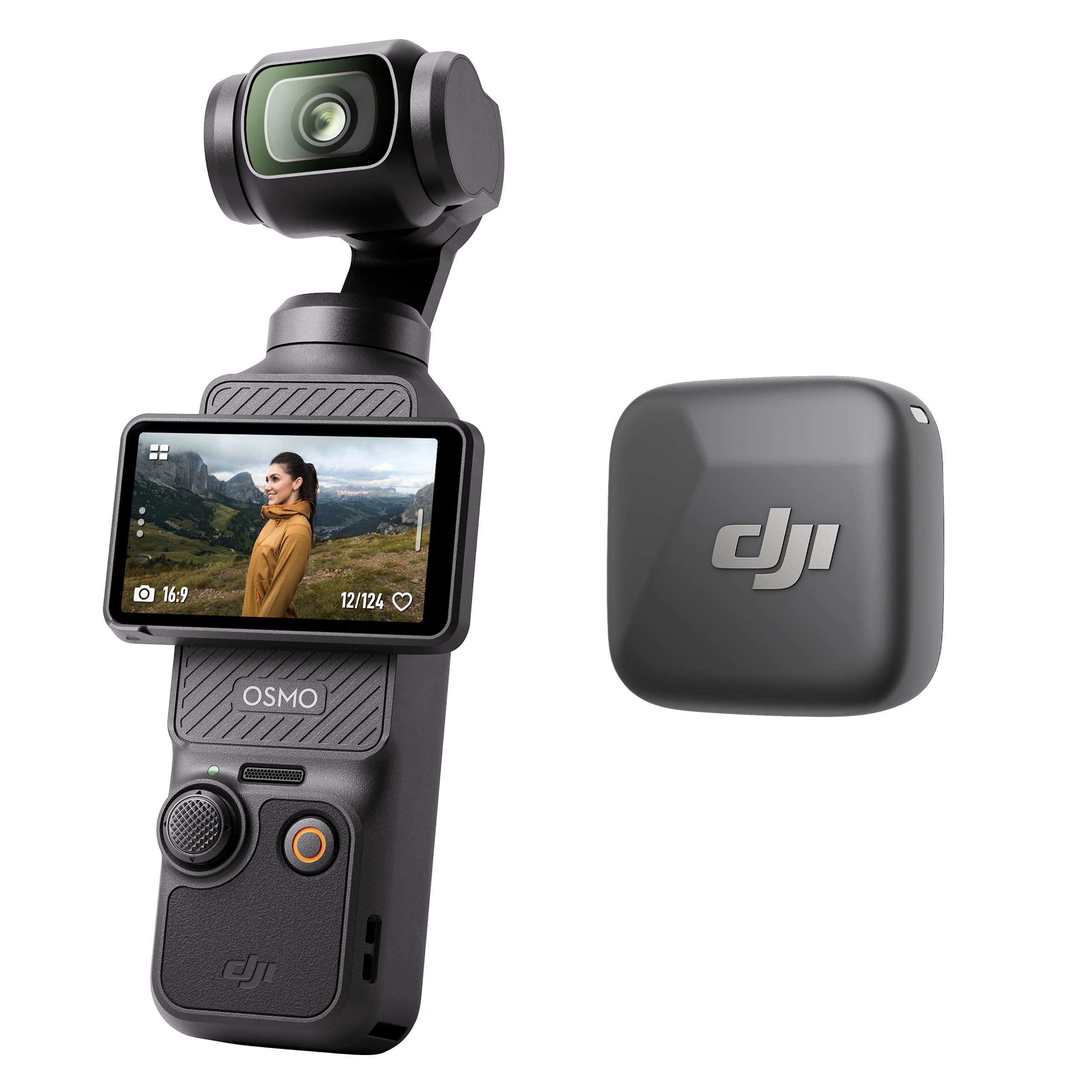
1. DJI Osmo Pocket 3 Vlog Combo
Our pick — 4.5★ from 6,500+ verified ratings; the strongest balance of quality and price.
The pocket-sized camera that makes every vlog look like you hired a crew.
This is the camera that dominates the conversation for a reason. Its 1-inch CMOS sensor captures 4K footage at 120fps, giving you buttery-slow motion options that budget cameras rarely offer. The 3-axis mechanical stabilization is the key feature — it handles running, dancing, and handheld walking without any jitter, so your b-roll looks like it was shot on a gimbal rig. The 2-inch rotating touchscreen lets you switch between horizontal and vertical video instantly, making it perfect for cross-posting to YouTube and TikTok without re-filming.
The built-in stereo audio has impressed owners, and the included DJI Mic Mini Transmitter takes it to the next level, connecting directly via OsmoAudio technology. ActiveTrack 6.0 keeps you centered in the frame even when you are moving, and the D-Log M color profile lets you grade footage with up to one billion colors in post. The battery life and quick charge are the stuff of owner legend, though the crowd favorite verdict is clear: this is the camera that makes the jump from smartphone to professional feel easy.
What Owners Rave About
- Insane video quality from a 1-inch sensor — sharp, vibrant, and handles low light with ease
- 3-axis gimbal makes walking vlogs look like they were shot on a dolly track
- Rotating screen for instant horizontal/vertical switching
- Included DJI Mic Mini provides crisp audio right from the start
- Compact enough to slide into a jacket pocket
Honest Trade-Off to Know
- Battery charger is sold separately — you need to buy a DJI 30W USB-C charger
- While the value is celebrated, a few owners feel the investment is steep for a single-purpose camera
Reach for this if: you want the highest-quality vlogs from a camera that fits in your pocket — the 3-axis mechanical stabilization and 4K/120fps (120 frames per second for smooth slow-motion) combo is class-leading at this level.
Think twice if: you need a removable lens or plan to shoot only static, tripod-based videos, where a cheaper option would work just as well.
2. Xtra Muse Vlogging Camera
A near-identical twin to the big names at a fraction of the cost.
If you want the same 1-inch CMOS sensor and 3-axis gimbal stabilization as the top pick but need to keep your budget tighter, the Xtra Muse delivers in a big way. It shoots 4K at 120fps, has a responsive 2-inch touchscreen for switching between horizontal and vertical, and includes 10-bit X-Log color for professional grading. The 161-minute battery life is a standout — significantly better than many other pocket cameras in this tier.
The build quality and video sharpness in bright and low light get high marks. The standard bundle includes a carrying bag, a handle with a 1/4-inch thread, and a wrist strap, so you are ready to shoot from the start. The trade-off some notice is microphone connectivity — adapters may be needed for external mics — but for solo vloggers using the built-in audio, this is a killer deal.
Why Creators Love It
- Near-identical performance to the DJI Pocket 3 at versus the DJI Osmo Pocket 3 at
- Impressive 161-minute battery for all-day vlogging
- 10-bit X-Log color for professional post-production grading
- Face and object tracking keep the subject locked in frame
One Thing to Plan for
- Microphone connectivity has mixed feedback — some owners needed firmware updates or adapters for external mics
Best suited for: vloggers who want gimbal-stabilized 4K at 120fps but need to stretch their dollar further than DJI’s pricing allows.
Consider a different pick if: reliable plug-and-play external microphone support is a non-negotiable for your setup.
3. Canon PowerShot V10
A tiny box that clips in a fanny pack and shoots beautiful video.
The PowerShot V10 is designed for one thing: grab-and-go vlogging. It uses a 15.2-megapixel 1-inch back-illuminated CMOS sensor for great low light, shoots 4K at up to 30fps, and has a retractable front-facing flip-up screen for easy self-recording. The built-in fold-out stand lets you prop it on a table for hands-free shooting without needing a tripod — a simple but brilliant design move. The three image stabilization modes (IS Off, IS On, IS Enhanced) help keep things smooth.
The audio setup is clever: it has a pair of stereo microphones and a third mic in the middle to cancel out background noise. It also has an external mic auxiliary port, so you can upgrade audio easily. The big caveat is that there is no optical zoom — you are stuck with the fixed 19mm wide-angle lens — so composition relies on you physically moving. The battery is also reported to last around one to two hours, which is short compared to other picks here.
What Makes It Unique
- Built-in stand for hands-free tabletop vlogging — no tripod needed
- 3-microphone array with background noise cancellation
- Ultra-compact, fits in a fanny pack or small purse
- External mic port for audio upgrades
- 14 movie color filters for quick mood setting
What to Watch Out For
- No optical zoom — you have to physically move for different framing
- Battery life runs short (1–2.5 hours of actual use, per owners)
- Exposed lens gets fingerprints easily without a cover
Ideal for: the absolute beginner who wants a dead-simple, pocketable camera that shoots high-quality video with minimal fuss.
Not for you if: you need optical zoom or plan to film for more than a couple of hours without access to USB-C charging.
4. OBSBOT Tail Air NDI Streaming Camera

A PTZ camera that tracks you around the room — perfect for live-streamers and teachers.
This is a very different tool from the pocket vlog cameras above. The OBSBOT Tail Air is a pan-tilt-zoom (PTZ) streaming camera with AI tracking for humans, animals, and objects. It is smaller than a cola can but can rotate 320° horizontally and 180° vertically, keeping you in frame automatically while you present, teach, or livestream. It streams via Micro HDMI, USB-C, Ethernet, or wireless, supporting RTMP, RTSP, and VISCA protocols for platforms like YouTube and Twitch.
The AI tracking is the headline — gesture control lets you trigger tracking with a hand wave, and the companion Obsbot Start app gives you full control over ISO, shutter, and white balance. The 23mm f/1.8 lens is sharp. The biggest owner feedback: image quality is amazing, but reliability and connectivity can be hit-or-miss. Also, the NDI license key is an additional purchase, and the battery is non-replaceable — once it degrades after about a year, the camera becomes a paperweight.
Strengths
- crisp broadcast-quality 4K video with a fast f/1.8 aperture
- AI tracking with gesture control — works for humans, animals, and objects
- Four connection options: HDMI, USB-C, Ethernet, and Wi-Fi
- Full app control for professional camera settings
Considerations
- NDI license requires a separate purchase for network streaming
- Battery is non-user-replaceable and can fail after approximately 13 months
- Connectivity reliability has mixed owner feedback
Grab this for: live-streaming, church services, classrooms, or any scenario where you need a camera that follows you automatically.
Look elsewhere if: you need a camera for years of regular use without dealing with a sealed battery.
5. Canon EOS R100 Bundle
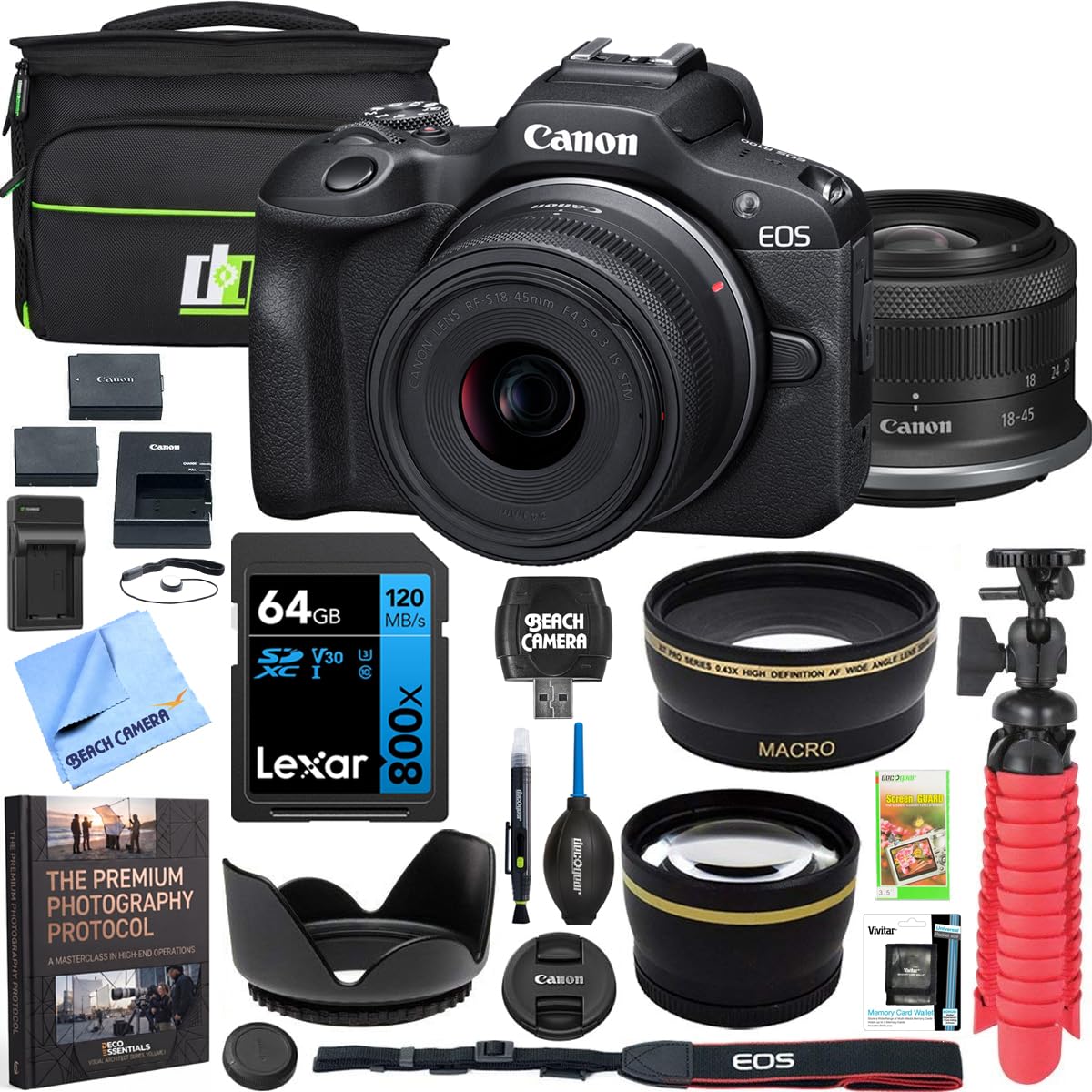
A full interchangeable-lens system that beats any smartphone for clarity and depth.
The Canon EOS R100 is an entry-level mirrorless camera with a 24.1MP APS-C CMOS sensor and the DIGIC 8 processor. It shoots 4K video at up to 24fps and Full HD at up to 60fps, with Dual Pixel CMOS AF with face and eye detection. The included RF-S 18-45mm lens is a versatile everyday lens good for travel, portraits, and landscapes. This bundle adds a Deco Gear deluxe case, a second compatible LP-E17 battery, a 64GB memory card, a tripod grip, and cleaning accessories — a full starter kit.
Owners praise the image quality and call it a fantastic step up from a smartphone. The battery life is strong — one reviewer noted it lasting 4 hours of continuous shooting or multiple days with breaks. The bundle is an authorized Canon USA kit with CPS-backed service coverage (Canon Professional Services for support). The weak link is that some bundle accessories (like the tripod) are off-brand and feel cheap, but the core camera and lens are pure Canon.
What Works Great
- Large 24.1MP APS-C sensor delivers sharp photos and video with natural background blur
- Dual Pixel CMOS AF with face/eye detection keeps subjects in focus
- Interchangeable RF mount — you can grow your lens selection over time
- Comes with two batteries, bag, memory card, and tripod — everything to start
- Canon USA authorized with warranty
Trade-Offs
- 4K video is capped at 24fps, which can look slightly stuttery on fast motion
- Bundle accessories like the tripod are basic off-brand quality
- No in-body stabilization — relies on lens stabilization
Reach for this if: you want to learn interchangeable-lens photography and video with a capable, expandable system from Canon.
Think twice if: you need smooth 4K at 30fps or higher for action-packed vlogs — the DJI or Xtra Muse will serve you better.
6. Sony ZV-1F Compact Digital Camera

Sony’s point-and-shoot vlog camera that gets your whole face in the frame.
The ZV-1F is built from the ground up for vloggers who want a simple, dedicated camera. Its 20mm ultra-wide F2 lens means you can hold it at arm’s length and still fit yourself plus a generous background. The large 1-inch 20.1MP sensor delivers vibrant 4K video and defocused backgrounds easily with the background defocus button. The Eye-AF and autofocus tracking technology keep your face locked in sharp focus, even when you move around.
The audio solution is one of its smartest features: a directional 3-capsule microphone (three small microphones that pick up sound from one direction) with a supplied windscreen accessory that cleans up outdoor audio remarkably well. The side-articulating touchscreen flips out for easy selfie composition. The trade-off is the battery life — buyers report around 45 minutes of actual shooting, so plan on buying spare batteries. It also lacks optical zoom, relying on digital zoom which degrades quality. For a beginner vlogger, however, the combination of ease of use, wide lens, and good audio is tough to top.
Why Beginners Love It
- Ultra-wide 20mm lens captures wide backgrounds at arm’s length
- Excellent Eye-AF autofocus keeps faces sharp
- Directional 3-capsule mic with windscreen delivers clean outdoor audio
- Background defocus button for instant portrait look
- Compact, lightweight, and intuitive to use
Honest Limitations
- Battery life runs short — owners mention around 45 minutes of recording
- No optical zoom — digital only, which hurts quality when zooming in
- Digital stabilization only, so walking footage can be shaky
Great for: absolute vlogging beginners who want a point-and-shoot that handles selfies, audio, and autofocus easily.
Not for you if: you need a camera for long days of shooting without changing batteries, or you need zoom flexibility.
7. Insta360 Luna Ultra
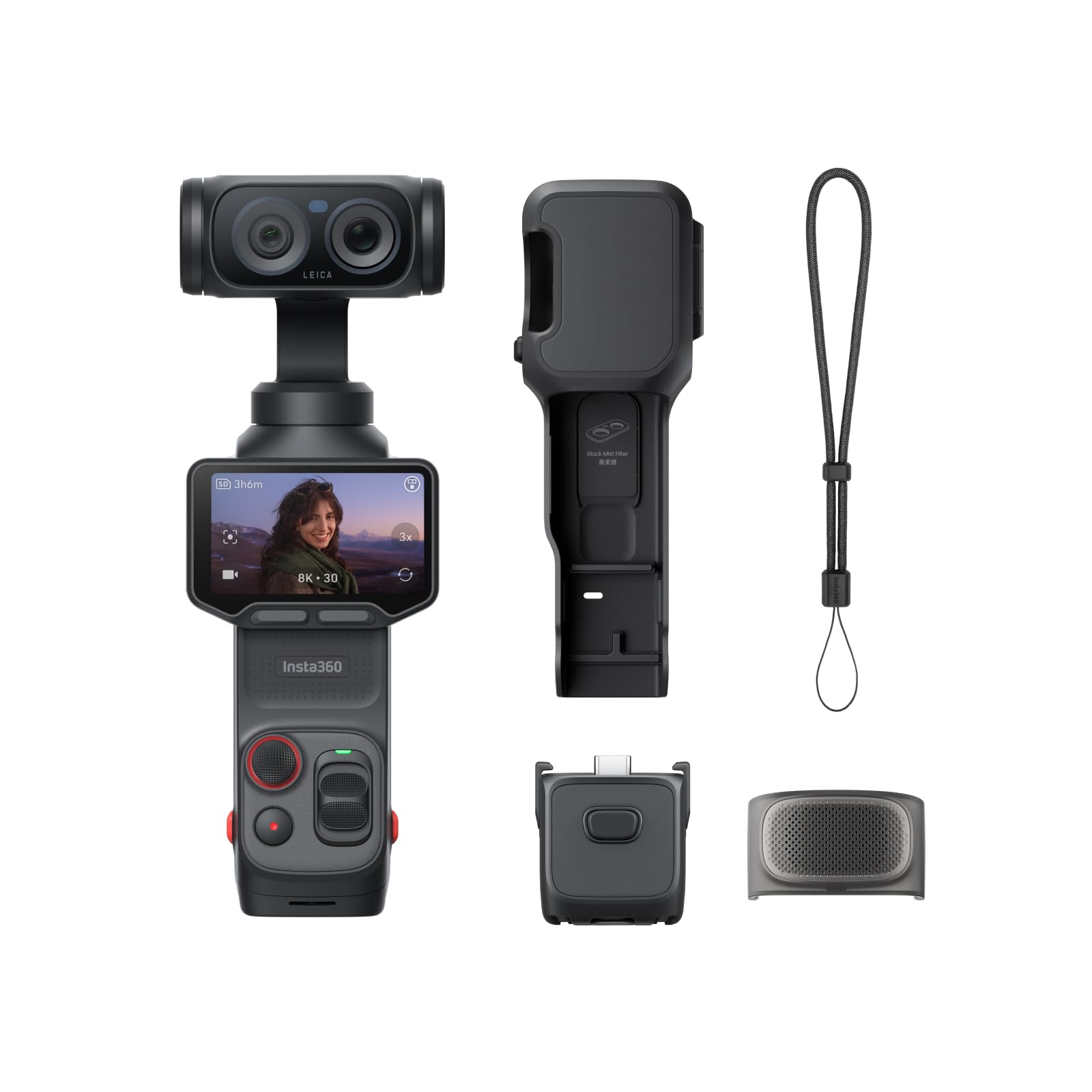
An 8K gimbal camera with a detachable screen that replaces three pieces of gear.
The Insta360 Luna Ultra is the most advanced pocket camera on this list. It features dual Leica lenses — a 1-inch main sensor and a telephoto with a 1/1.3-inch sensor — enabling 6x lossless zoom and a 12x zoom range with true optical bokeh. It shoots cinematic 8K at 30fps with Dolby Vision HDR and captures 14 stops of dynamic range, preserving highlight and shadow detail. The detachable 2-inch OLED touchscreen can be used wirelessly up to 20 meters away, perfect for solo shooting and group compositions.
The 3-axis mechanical stabilization and AI subject tracking are on par with the best in class, while the 10-bit I-Log color profile integrates with professional workflows like DaVinci Resolve. The battery life is a standout: up to 4 hours on a single charge, with fast charging to 80% in just 23 minutes. Owners rave about the build quality and video quality, but some have reported screen freezing and error messages, particularly around the screen contact pins. This is a device that pushes boundaries, and a small number of units seem to have reliability issues.
what separates it
- 8K HDR video with Dolby Vision — the highest resolution on this list
- Dual Leica lenses with 6x lossless zoom and natural bokeh
- Detachable 2-inch OLED screen for wireless remote control up to 20m away
- 4-hour battery life with fast charging to 80% in 23 minutes
- 14 stops of dynamic range and 10-bit I-Log for professional grading
Risks to Weigh
- Some customers note screen freezing and contact-pin issues with the detachable screen
- No webcam mode or USB headphone audio monitoring from the start
- Not weatherproof or rugged — treat it with care
Best for: serious content creators who want 8K resolution, telephoto reach, and the flexibility of a detachable screen in one pocket-sized package.
Consider the risk if: you need 100% reliability for daily client work — the occasional glitch reports suggest it may not be a low-maintenance tool yet.
8. Canon EOS R50 Bundle
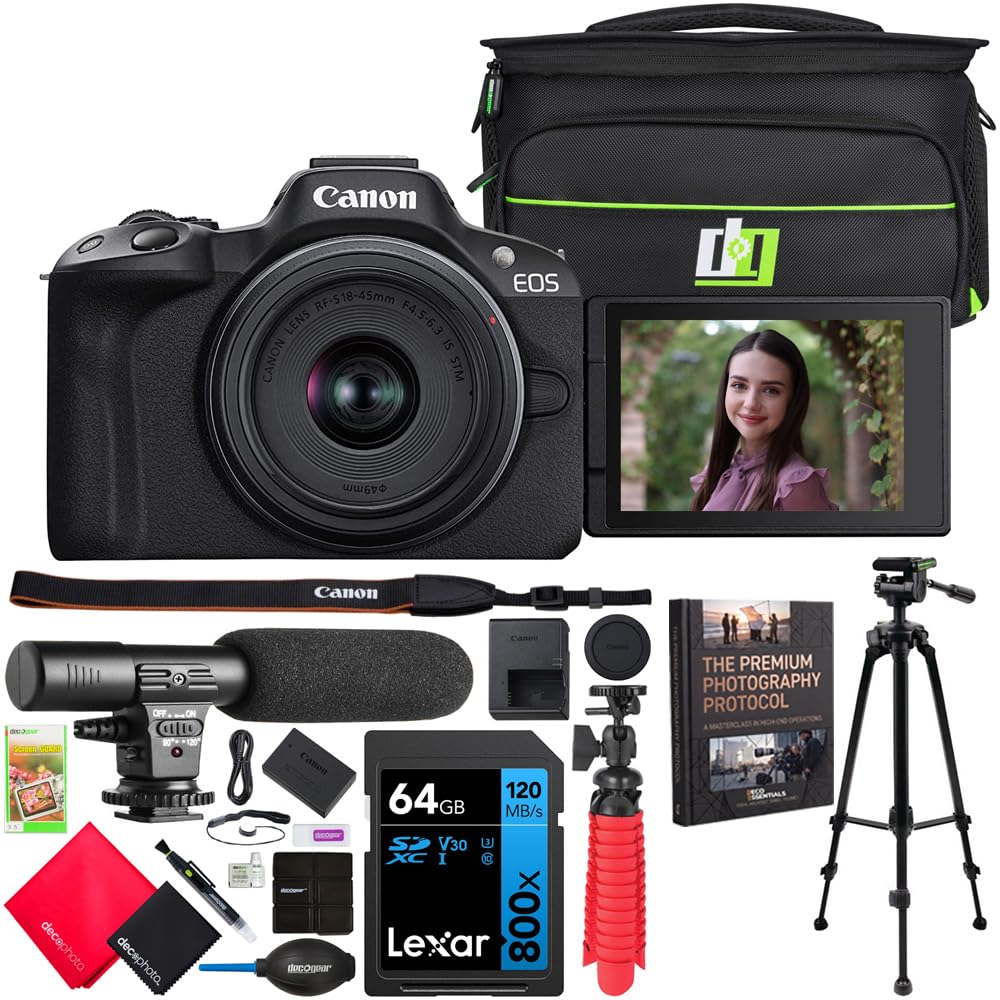
Canon’s most versatile entry-level mirrorless — uncropped 4K from a 6K oversample.
The Canon EOS R50 packs a 24.2-megapixel APS-C sensor and records uncropped 4K movie at up to 30fps oversampled from 6K. This means your video has extra detail and sharpness that standard 4K can’t match. The Dual Pixel CMOS AF II with 759 autofocus points and face/eye detection is incredibly fast, making it a superb vlogging camera for moving subjects. It shoots up to 15fps with the electronic shutter and supports longer-than-30-minute video recording — a rarity for entry-level cameras.
This bundle includes a Deco Gear travel case, a mini condenser shotgun mic, a tripod, a tabletop grip, a 64GB memory card, and cleaning tools. Owners consistently praise the image quality and ease of use, noting that the camera body itself is lightweight and comfortable for small hands. The included 18-45mm lens is a solid walk-around kit, though the accessory tripod is described as dangerously unstable for full-size use. The core camera, however, is a winner: fast, sharp, and Canon-reliable.
What Makes It Strong
- Uncropped 4K/30fps oversampled from 6K — very sharp video
- 759-point Dual Pixel CMOS AF II for lightning-fast autofocus
- 12fps mechanical / 15fps electronic continuous shooting
- Longer-than-30-minute video recording capability
- UVC/UAC compatibility for plug-and-play webcam streaming
Honest Downsides
- Bundled tripod is cheap and unstable — upgrade it
- Price is higher than pocket cameras, and you may want to buy better lenses later
- No in-body stabilization; relies on lens IS for smooth handheld shots
Grab this for: a full-featured interchangeable-lens camera system that grows with your skills — the autofocus and video sharpness are pro-grade.
Consider a simpler pick if: your budget is tight and you just need a single, pocket-ready vlog camera without the lens system.
9. Sony ZV-E10 with 16-50mm Lens
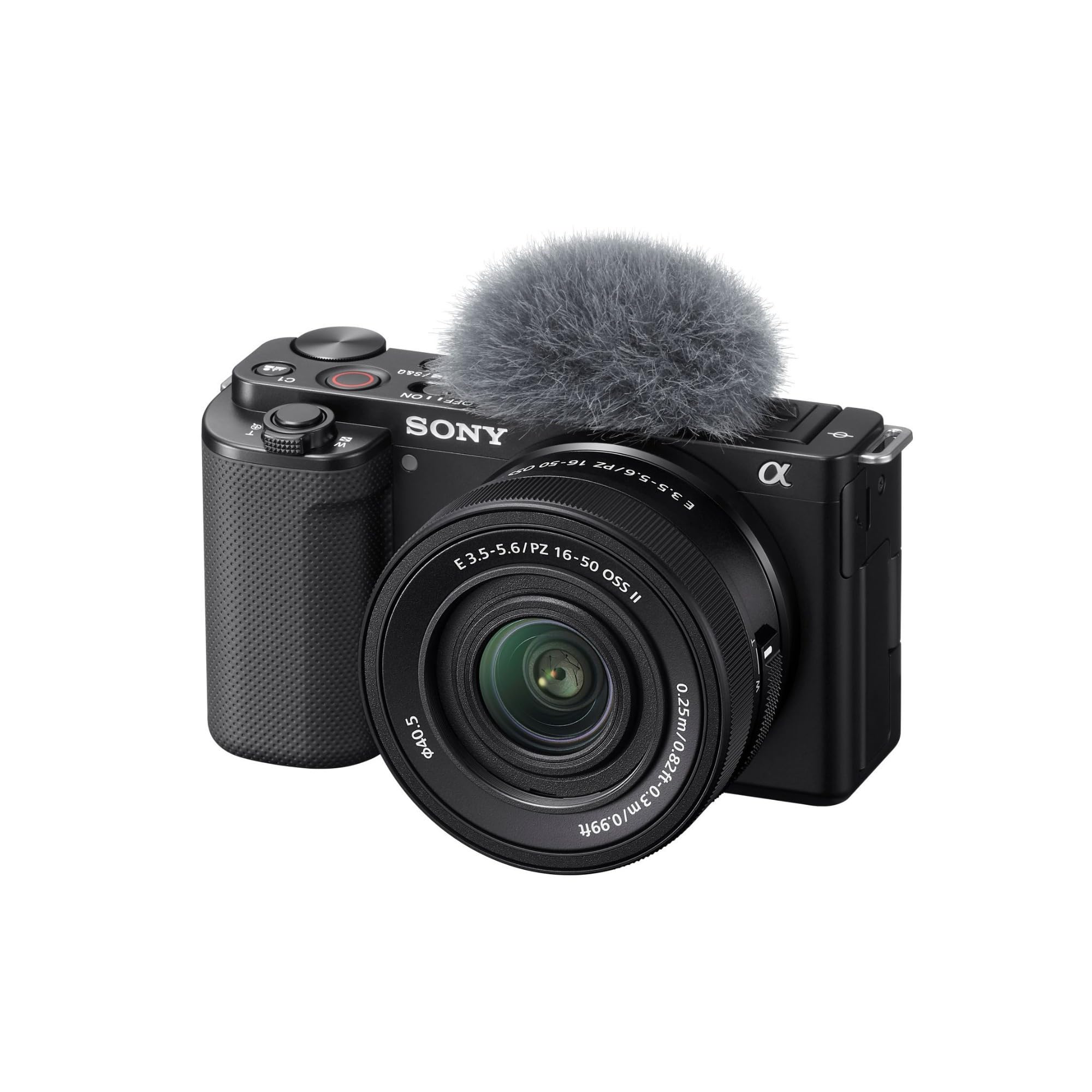
The vlogger’s mirrorless — 4K oversampled from 6K with a lens you can swap later.
The Sony ZV-E10 is a purpose-built vlogging mirrorless camera (a camera with interchangeable lenses and no mirror inside). It has a 24.2MP APS-C Exmor CMOS sensor (a large sensor type) and the BIONZ X processor, recording 4K movie oversampled from 6K with full pixel readout and no pixel binning — so you get sharper, more detailed video than standard 4K. The 425-point hybrid autofocus with Eye Detection (tracks your eye) is excellent, and the Product Showcase Setting smoothly transitions focus from your face to an object you hold up — perfect for unboxing and review videos. The Background Defocus button toggles between deep and shallow depth of field instantly.
The side flip-out touchscreen makes self-framing easy, and the camera supports easy live streaming via a single USB cable with no extra hardware. It uses the Sony E-mount system, so you can upgrade lenses over time (the kit 16-50mm OSS II lens is decent but benefits from an upgrade for pro work). Owners love its versatility for video-first creators. The trade-off: because it is a mirrorless body, you will eventually want a faster lens and an external stabilizer for truly smooth footage.
Key Strengths
- 4K oversampled from 6K with full pixel readout — incredibly sharp video
- Product Showcase Setting for instant face-to-object focus transitions
- Background Defocus button for one-touch portrait mode
- Interchangeable E-mount lenses for system growth
- USB live streaming with no extra hardware
What to Plan For
- Kit lens is entry-level — you may want an OSS or stabilized lens for walking shots
- No built-in stabilization on the body; relies on lens stabilization or a gimbal
- Price gets higher once you add a quality lens, case, and mic
Best for: video creators who want a proper interchangeable-lens camera with Sony’s excellent autofocus and clean 4K right now, with the ability to upgrade later.
Think twice if: your budget is fixed and you cannot invest in additional lenses or a gimbal to get the best out of it.
Understanding the Specs
Sensor Size: 1-inch vs APS-C
The sensor is the surface that captures light inside the camera. A 1-inch CMOS sensor is a massive upgrade from a smartphone sensor — it lets in much more light, giving you cleaner videos in dim rooms and that natural background blur (the “cinematic look”) without needing expensive lenses. An APS-C sensor is even larger, found in mirrorless cameras like the Canon EOS R100 and Sony ZV-E10. It provides even better low-light performance and more background blur, but the camera body itself is larger and you usually need to buy extra lenses to open up its full potential. For a pure vlog camera, the 1-inch sensor is the balance — big enough for quality, small enough for a pocket.
Stabilization: Mechanical vs Digital
Stabilization is what keeps your video from looking shaky when you walk or move the camera. Mechanical stabilization uses tiny motors inside the camera (like a 3-axis gimbal) to physically counter your movement. It is the best option because it does not crop in on your video or create a wobbly “jello” effect. Digital stabilization, on the other hand, uses software to smooth the frame — it works for static shots but degrades image quality when you move a lot. For walking vlogs, dancing, or chasing pets, you want a camera with 3-axis mechanical stabilization (the DJI Osmo Pocket 3, Xtra Muse, and Insta360 Luna Ultra all have it).
Frame Rate and Resolution
Frame rate (measured in fps — frames per second) controls how smooth motion looks. 24fps is the standard film look, 30fps is smooth video, and 60fps or 120fps lets you create slow-motion video that looks smooth and professional. 4K resolution (3840×2160 pixels) is the standard for modern YouTube, giving you sharp, detailed video. Some budget cameras cap 4K at 24fps (like the Canon EOS R100), while others like the DJI and Xtra Muse offer 4K at a butter-smooth 120fps. For general YouTube, 4K at 30fps is the minimum you want; for action or slow-mo, 4K at 60fps or 120fps is ideal.
Autofocus and Tracking
Autofocus (AF) is the camera’s ability to keep you or your subject sharp while you move. The most important type for vlogging is face and eye detection, which automatically locks onto a person’s face and tracks it across the frame. Advanced systems like Dual Pixel CMOS AF (Canon) or Eye-AF (Sony) are incredibly fast and reliable — they won’t hunt or lose focus in the middle of a take. For solo vloggers, the best cameras also include subject tracking (ActiveTrack or Master Follow) that keeps you centered in the frame even when the camera is on a tripod, so you can move freely without adjusting the camera manually.
FAQ
Can I use a budget camera without an external microphone?
What is the difference between 4K/24fps and 4K/120fps for YouTube?
Does the DJI Osmo Pocket 3 work with a tripod?
Which camera is better for beginners: Canon PowerShot V10 or Sony ZV-1F?
Can I use the Xtra Muse camera with external DJI accessories?
What memory card do I need for these cameras?
How long does the Insta360 Luna Ultra battery last?
Which camera is best for live streaming on YouTube?
Can the Sony ZV-E10 use lenses from older Sony cameras?
Is the Insta360 Luna Ultra weatherproof?
Final Thoughts: The Verdict
For the majority of shoppers, the budget video camera for youtube winner is the DJI Osmo Pocket 3 because it combines a 1-inch sensor, 4K/120fps video, and 3-axis mechanical stabilization in a pocket-sized body — it is the most complete all-in-one vlog package at this price. If you want the same core specs for less, grab the Xtra Muse for a near-identical experience. And for those who want the flexibility of interchangeable lenses, the Sony ZV-E10 is the one to reach for.
How We Picked
We do not accept paid placement. Every pick is matched to a real buyer and a real use-case; we do not hands-on test units.
Sources & Methodology
Specifications: manufacturer listings and product documentation. Review insights: verified customer reviews, as of July 2026. Pricing: not shown on this page (it changes often); check the current price via the retailer link.
As an Amazon Associate, Gadgets Feed earns from qualifying purchases. This does not affect which products we feature.