
The moment you step into a slick riverbed with the wrong pair, you learn fast: ankle-deep water turns treacherous when your soles lack grip. Budget wading boots sit at the intersection of affordability and safety, where a single slip can ruin a day on the water. Separating the boots that merely float the price tag from those that deliver real traction, drainage, and durability under pressure is what this guide is built for.
I’m Min — the co-founder and writer behind Gadgets Feed. I’ve spent hundreds of hours cross-referencing sole materials, drainage channel designs, and customer durability reports across the current budget wading boot market to build a ranking that prioritizes real-world performance over marketing claims.
After combing through reviews and technical specs, I’ve narrowed the field to the seven models that genuinely deliver on their promises. Whether you’re navigating mossy rocks in a freestone river or hiking a rocky streambed, this guide to the best budget wading boots will keep you upright and moving.
How To Choose The Best Budget Wading Boots
Buying wading boots on a budget means you have to be picky. The biggest mistake buyers make is assuming all budget boots are built the same—they are not. Construction quality, sole adhesion, and drainage design vary dramatically between models. Focus on the three areas that matter most for your fishing environment.
Sole Material: Felt vs. Rubber vs. Cleated
Felt soles grip algae-covered rocks like no other material, making them ideal for slick riverbeds. Rubber soles with deep lugs last longer on gravel banks and don’t absorb water—good for hiking in. Cleated options (screw-in studs or molded) offer a middle ground, biting into soft mud or moss. Your local terrain should dictate your choice.
Drainage and Dry Time
Budget boots that trap water add pounds to your steps and invite blisters. Look for side or midsole drainage ports that let water exit on each step. Neoprene liners resist water absorption better than mesh and help your boots dry faster after a day on the water. Fast-drying materials also reduce the risk of spreading invasive species between waterways.
Ankle Support and Fit
Low ankle support is the hidden weakness of many budget-friendly boots. If the collar is too soft, you risk rolling an ankle on uneven rocks. Neoprene or padded collars add structural support without sacrificing mobility. Always size up to accommodate neoprene stockingfoot waders—a half to full size larger than your street shoe is the standard rule.
Quick Comparison
On smaller screens, swipe sideways to see the full table.
| Model | Category | Best For | Key Spec | Amazon |
|---|---|---|---|---|
| Korkers Greenback | Premium | Interchangeable Sole Flexibility | OmniTrax swap system / Hydrophobic upper | Amazon |
| Simms Freestone Boot | Premium | Durable Brand Reputation | Vibram sole option / Padded ankle collar | Amazon |
| Paramount Outdoors Stonefly | Mid-Range | Lightweight All-Terrain | Felt + cleated sole / Quick-dry mesh | Amazon |
| Foxelli Wading Boots | Mid-Range | Zero Break-In Comfort | Rubber sole / Removable insole | Amazon |
| Kylebooker Wading Boots | Entry-Level | Budget All-Rounder | 12mm felt/rubber sole / Drain ports | Amazon |
| Pro Fishing Felt Boots | Entry-Level | Warm-Water Flats | High-density felt / Neoprene lining | Amazon |
| Duck and Fish Sticky Rubber | Budget | Rocky Riverbed Trekking | Sticky rubber outsole / PVC toe cap | Amazon |
In‑Depth Reviews
1. Korkers Greenback Wading Boots

The Korkers Greenback sits at a premium price point among budget wading boots, but the OmniTrax interchangeable sole system justifies the investment. You get both felt and Kling-On rubber soles in the box, letting you swap between slick rock and muddy bank conditions in seconds. The hydrophobic upper resists water absorption, and the internal drainage channels push water out through midsole ports with every step, keeping each boot around 16 ounces lighter than waterlogged competitors.
Quick Cinch laces provide a secure, zero-fuss closure that won’t loosen during a full day of wading. The construction uses abrasion-resistant materials placed at high-wear zones—common failure points on budget boots—extending the lifespan noticeably. Combined, these features deliver a lightweight, fast-drying boot that feels more premium than its price suggests.
The only compromise is a slight heel lift reported by some anglers, which can be mitigated with a thicker wading sock or aftermarket insole. The OmniTrax soles take a firm push to lock in place, so practice swapping them at home before your first trip. Still, this is the only boot on this list that gives you two traction personalities in one package.
Why it’s great
- Interchangeable felt and rubber soles cover multiple terrains
- Hydrophobic materials dry quickly and reduce invasive species spread
- Internal drainage channels shed water and weight efficiently
Good to know
- Sole attachment can be stiff initially
- Some users report minor heel lift with thin socks
2. Simms Freestone Boot

Simms built the Freestone to handle multi-season abuse without breaking the bank. The boot uses a high-traction Vibram outsole (also available with felt) that holds firm on steep, loose banks and wet rock. Anglers reporting over 90 days of annual use confirm the sole lasts two full seasons—rare longevity for this price tier. The padded ankle collar and reinforced heel counter provide excellent lateral stability on uneven riverbeds.
The lace system allows a tighter, more customizable fit than wire-laced competitors, and the boot opens wide enough to accommodate bulky neoprene stockingfoot waders. Several reviewers note the Freestone fits true to street shoe size when worn with wading socks, a helpful sizing anchor. The quick-drying construction means you can fish consecutive days without starting the second morning with wet boots.
The trade-off is a stiffer break-in period compared to lighter budget options. Some users with wide feet report the forefoot feels snug with thick waders. The boot is also slightly heavier than the Korkers Greenback, but the build quality justifies the weight for those who prioritize durability above all else.
Why it’s great
- Vibram sole delivers exceptional grip and multi-season durability
- Padded ankle collar and reinforced heel support on rough terrain
- Tight lacing system for a customizable, secure fit
Good to know
- Stiffer break-in period than lighter budget boots
- Fit can feel snug for wide feet with thick waders
3. Paramount Outdoors Stonefly Cleated and Felt Sole

The Paramount Outdoors Stonefly punches above its mid-range price by bundling a dual-sole design—felt base with integrated metal studs—that grips slick rock and soft mud equally well. The boot runs slightly large, which works in your favor when sizing up for neoprene wader feet. Testers noted the boot drains and dries quickly through side mesh panels, and the lightweight construction (under 3 pounds per pair) reduces fatigue during long hikes to remote fishing spots.
Reviewers with 7+ months of regular use report the boot still looks new, with no visible sole separation or mesh fraying. The studs provide noticeable bite on moss-covered stones where standard felt alone would slip. The price-to-performance ratio here is strong: you get the traction versatility of a cleated felt boot without paying premium-label markup.
Ankle support is lighter than the Simms or Korkers options, so anglers prone to rolling ankles on jagged terrain should consider a higher collar. The screws that secure the studs can loosen over time—a few drops of thread-locker before first use solves this. The boot is also not the best choice for deep silt or clay bottoms where studs clog easily.
Why it’s great
- Felt with pre-installed metal studs for dual-surface grip
- Very lightweight design reduces hiking fatigue
- Impressive durability over months of regular use
Good to know
- Ankle support is lighter than premium competitors
- Studs may loosen; thread-locker recommended
4. Foxelli Wading Boots

Foxelli’s wading boot is engineered for immediate comfort—reviewers consistently report zero break-in and no hotspots or blisters even after three straight days of fishing. The rubber outsole features deep, hiking-boot-style lugs that bite into gravel, mud, and exposed rock better than most budget felt options. The boot includes a removable insole, allowing you to swap in custom orthotics or a thicker footbed for extra cushioning on long wades.
The construction uses a breathable, quick-draining mesh upper that sheds water rapidly, and the reinforced toe and heel protect against sharp oyster beds and jagged rocks. After five years of heavy use in saltwater, one reviewer noted the boots still look nearly new with proper rinsing. The sizing runs slightly large—intentionally designed to accommodate neoprene waders—so order your normal street shoe size for a snug fit with sockingfoot waders.
The rubber sole slips on wet moss where felt excels, so this boot works best on rocky or gravel-bottom rivers. Water resistance above the sole is minimal—the mesh upper lets water in freely, though drainage is fast. If you primarily fish in slick, algae-heavy conditions, a felt-based boot may serve you better.
Why it’s great
- Zero break-in period; comfortable straight out of the box
- Aggressive rubber lugs excel on gravel and rocky terrain
- Removable insole allows custom orthotic fit
Good to know
- Rubber sole lacks grip on slick moss compared to felt
- Mesh upper allows water entry above the sole line
5. Kylebooker Men’s Fishing Wading Boots
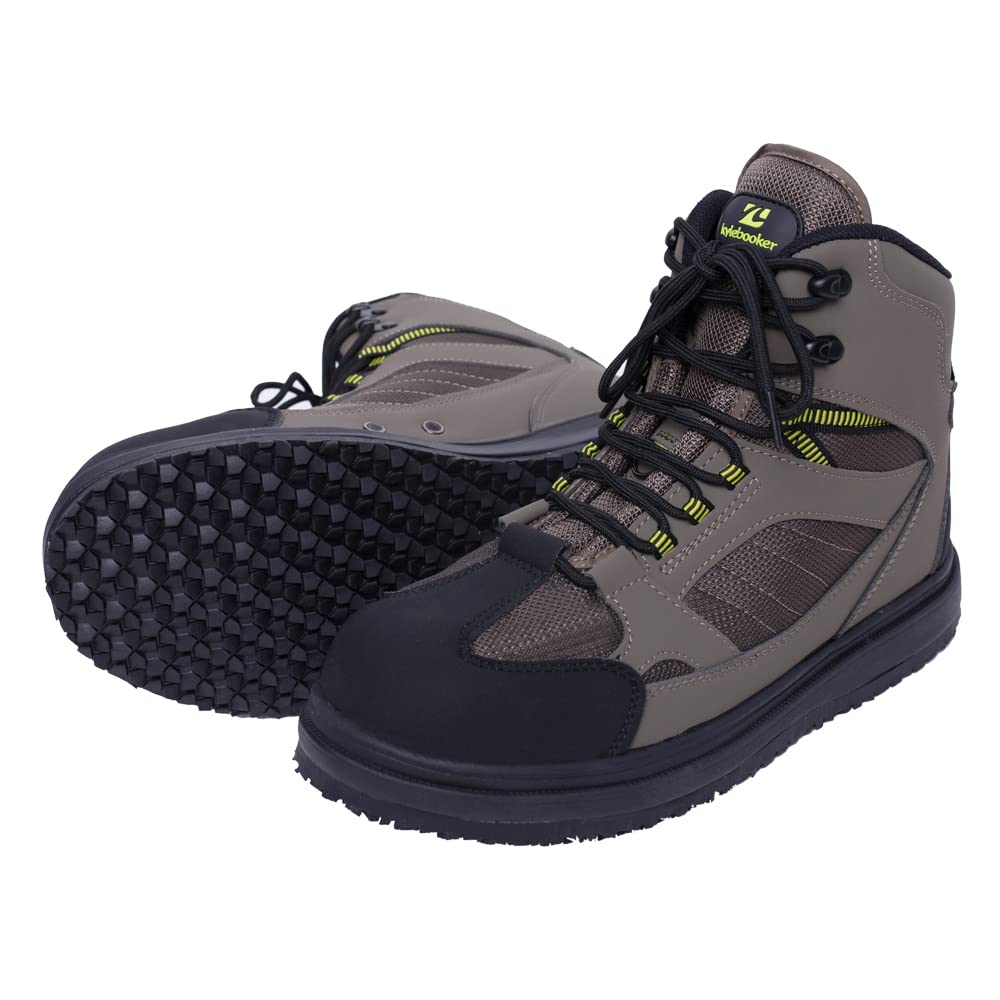
The Kylebooker entry-level boot uses a 12mm combination felt-and-rubber sole that provides solid traction on algae-slicked rocks while adding abrasion resistance for gravel approaches. The boot incorporates side and midsole drainage ports that rapidly expel water, keeping weight manageable during extended wading. Testers consistently call it lightweight, breathable, and quick-drying—three attributes that matter when you’re swapping between water crossings and bank hikes.
Reinforced toe and heel caps add protection against submerged rocks, and the padded ankle collar offers noticeable support without restricting movement. The boot comes with a recommended sizing guide to size up one full size for stockingfoot waders. Buyers report the boot drains well through two eyelets and that the build quality is respectable given the entry-level cost.
The soles are not as aggressive as pure rubber options on mud, and the included felt will absorb water and wear faster if you frequently walk on dry gravel banks. The boot also lacks a speed-lace system, so adjusting tension mid-day requires re-tying traditional laces. For the price, however, it delivers a well-rounded package that won’t let you down on moderate rivers.
Why it’s great
- 12mm felt/rubber combination sole balances grip and durability
- Drain ports shed water quickly during wading
- Lightweight and breathable for all-day comfort
Good to know
- Traditional laces lack quick-adjust convenience
- Felt sole absorbs water when hiking dry banks
6. Pro Fishing Wading Boots with Felt Bottom
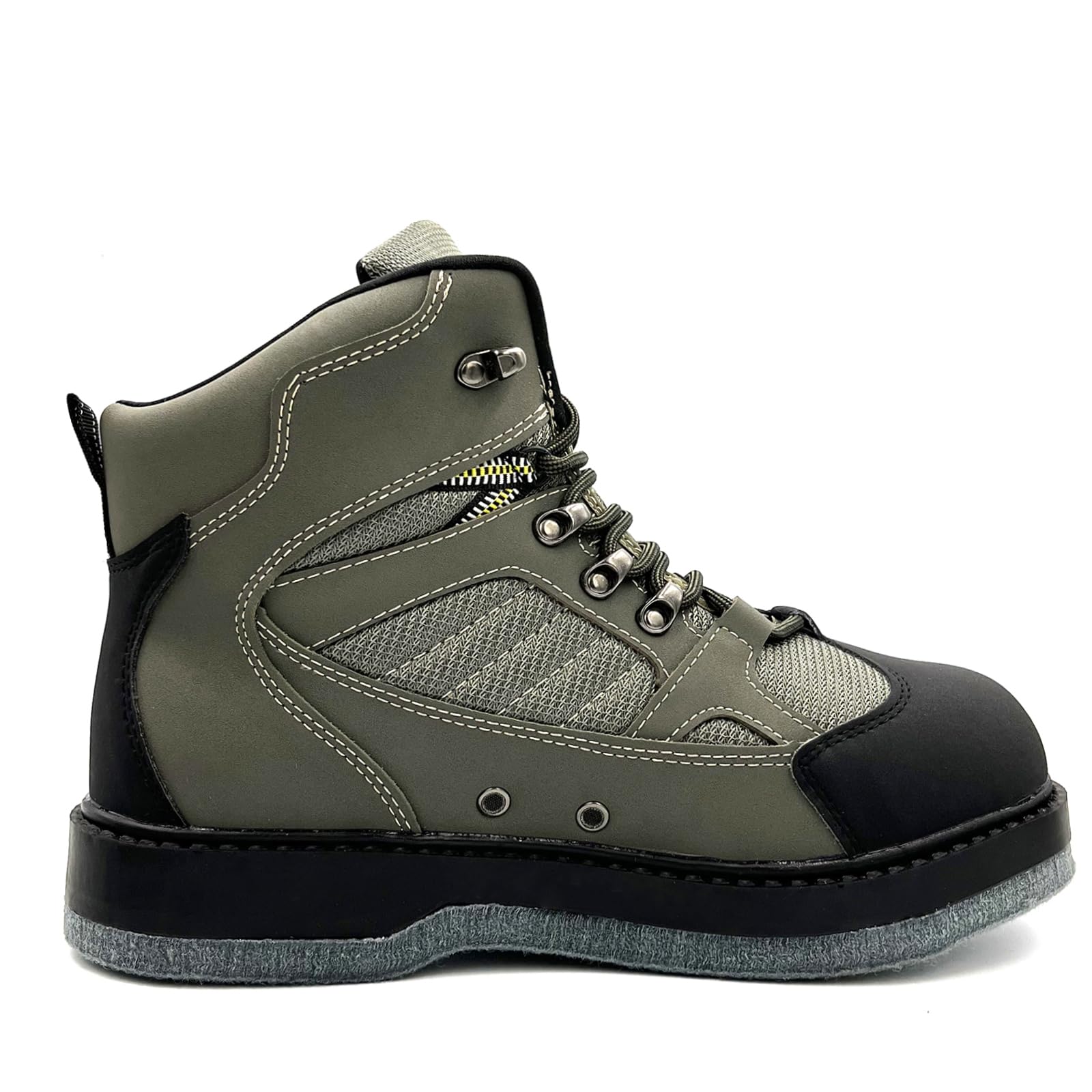
Pro Fishing’s felt-bottom boot is built for anglers who spend most of their time on slick, low-gradient rivers and flats. The high-density felt provides excellent adhesion on algae-coated surfaces, and the neoprene lining replaces traditional mesh, which makes the boot easier to break in and adds a layer of insulation for cooler water. The tongue uses less sponge material than previous versions, accelerating dry time significantly.
Rust-free eyelet plating and a metal mesh over the drainage hole prevent debris from entering while still allowing water to exit. A D-ring attachment point is included for wading pants. Reviewers fishing Hawaiian flats report the boots perform well in warm saltwater, and the lightweight build makes them comfortable for dawn-to-dusk sessions. Sizing advice is critical: order two sizes smaller if wearing without waders, or true size with neoprene stocking feet.
Toe support is the primary weak point—the reinforced cap is less substantial than rubber competitors, so kicking rocks during heavy current can cause discomfort. The felt will also wear faster than rubber if you frequently walk on dry, abrasive banks. This boot is a targeted tool for wet-wading and felt-friendly environments, not a generalist.
Why it’s great
- High-density felt grips slick algae-covered rocks excellently
- Neoprene lining provides comfort and insulation
- Rust-free eyelets and debris-blocking drainage mesh
Good to know
- Toe support is less robust than rubber-reinforced boots
- Felt wears faster on dry, abrasive walking surfaces
7. Duck and Fish Men’s Sticky Rubber Sole Wading Shoe

Duck and Fish delivers a sticky rubber outsole with self-cleaning tread properties that shed mud and small gravel effectively. The boot features a reinforced PVC toe cap and back counter, protecting against submerged rocks and kicking roots. The neoprene triple-padded collar offers generous ankle support—a rare find at this budget price point—and the extra-wide last and midsole create a stable platform for carrying loads during longer portages.
The EVA midsole provides all-day cushioning, and the pull-top loop makes donning the boot easy even with cold, wet hands. Reviewers report excellent performance on the Zion Narrows hike, with strong ankle support and no blisters after six hours of continuous wading. The boot drains water effectively and fits true to size for normal socks, sizing up for waders.
Durability concerns are the main hesitation: several reports of sole delamination after limited use surfaced, though the manufacturer replaced failed pairs quickly. The sticky rubber outsole is less effective on slick moss than felt, so choose this boot for rocky riverbeds and gravel approaches rather than algae-heavy low-gradient streams. At this price, the ankle support and stable platform outweigh the occasional quality variance.
Why it’s great
- Sticky rubber outsole with self-cleaning tread for rocky terrain
- Triple-padded neoprene collar provides excellent ankle support
- Wide, stable platform reduces fatigue during long wades
Good to know
- Reported sole delamination in some units; good customer service
- Sticky rubber lacks grip on slick moss compared to felt
FAQ
Should I size up or down for wading boots with neoprene waders?
How do I make my budget wading boots last longer?
Are felt soles better than rubber for wading boots?
Final Thoughts: The Verdict
For most anglers, the best budget wading boots winner is the Korkers Greenback because the interchangeable sole system covers every terrain condition without buying multiple boots. If you want the durability of a premium brand that holds up to multi-season abuse, grab the Simms Freestone Boot. And for a lightweight, zero break-in experience that handles rocky rivers straight out of the box, nothing beats the Foxelli Wading Boots.