
Our readers keep the lights on and my morning glass full of iced black tea. As an Amazon Associate, I earn from qualifying purchases.
Specs are compiled from manufacturer listings and verified buyer reviews and can change over time — please confirm the key details on the product page before buying.
You want clear footsteps and voice chat without charging a battery or paying flagship money. A wired gaming headset plugs straight into a 3.5mm jack (the standard headphone plug found on most controllers and phones) and plays instantly — no pairing menu, no lag between the gunshot on screen and the sound in your ear. The catch is that cheap plastic models snap in a month, so the difference between a headset that lasts three years and one that doesn’t usually depends on two things: the driver size (the speaker cone inside each cup) and whether the frame is metal or plastic.
I’m Min — the founder and writer behind Gadgets Feed. This guide is built by comparing the manufacturers’ published specifications and the patterns across verified customer reviews, so you get each pick’s real strengths and trade-offs instead of marketing spin.
Below you’ll find nine wired headsets that real owners keep coming back to, ranked by how they actually hold up. Each one earns its spot for a different reason — big drivers, a detachable boom mic, or a frame that survives being yanked off a desk. If you want the short version: match the driver size to your budget, then pick the mic style you’ll actually use, because that is what separates a great budget wired gaming headset from a frustrating one.
Our Picks at a Glance


How To Choose The Best Budget Wired Gaming Headset
You do not need to spend a lot to get a wired headset that sounds good and survives daily use. The trick is knowing which specs actually matter and which are marketing filler. Here is what to check before you buy.
Driver size: the number that shapes your soundstage
The driver is the speaker cone inside each ear cup, measured in millimeters (mm). A larger driver moves more air, which usually means fuller bass and a wider sense of where sounds are coming from — the exact thing that helps you hear a door open behind you in a shooter. The 50mm and 53mm drivers on this list sit at the big end for the money; smaller 40mm drivers are lighter but lean more on tuning than raw size. Driver size alone does not guarantee good audio, but it is the first spec worth scanning.
Mic style: match it to how you actually chat
There are three common mic setups in this price range. A detachable boom mic pulls off entirely when you only want to listen — handy if you watch movies or use the headset for music. A flip-to-mute mic mutes when you swing the boom up, which is fast and impossible to fumble mid-match. A retractable mic slides back into the ear cup when you are done. All three work; the right one is simply the one you will not forget to use.
Connection: 3.5mm, USB, or both
A 3.5mm jack (the standard headphone plug) works on nearly every console, controller, and phone, so it is the safest bet for a multiplatform setup. A USB connection open up software extras like virtual surround sound on PC, but it typically locks you to a computer. Some headsets here ship with both, giving you surround on PC and a plain stereo plug for everything else. If you game on a console or handheld, favor 3.5mm or a convertible USB-C and USB-A cable.
Comfort: what to check for marathon sessions
Weight and padding decide whether you can wear a headset for a four-hour session. Memory foam ear cushions and a suspension headband (a flexible strap that spreads pressure across the top of your head) both cut down on hot spots. Leatherette cups seal out room noise better; mesh or fabric cups breathe more but isolate less. If you wear glasses, look for softer, flatter pads so the arms of your frames are not pressed into your temples.
Quick Comparison
| Model | Best For | Driver Size | Connection | Mic Type | Amazon |
|---|---|---|---|---|---|
| HyperX Cloud III★ Best Overall | Best overall balance | 53mm | USB-C, USB-A, 3.5mm | Detachable, noise-cancelling | Amazon |
| SENZER SG500Top Performer | Biggest driver for the money | 50mm | 3.5mm | Bendable noise-cancelling | Amazon |
| Turtle Beach Recon 50Best Value | Entry-level multiplatform | 40mm | 3.5mm | Removable, adjustable | Amazon |
| JBL Quantum 100 | Comfort-first listening | 40mm | 3.5mm | Detachable boom, echo cancelling | Amazon |
| Logitech G335 | Lightweight all-day wear | 40mm | 3.5mm | Flip-to-mute | Amazon |
| Razer BlackShark V2 X | PC surround on a budget | 50mm | 3.5mm | Cardioid boom | Amazon |
| Logitech G432 | Big drivers with USB and 3.5mm | 50mm | USB DAC, 3.5mm | 6mm boom, flip-to-mute | Amazon |
| HyperX Cloud II | Long-term durability | 53mm | USB, 3.5mm | Detachable, noise-cancelling | Amazon |
| Razer Kraken V4 X | USB-C and USB-A flexibility | 40mm | USB-C, USB-A | Retractable cardioid | Amazon |
In‑Depth Reviews
1. HyperX Cloud III – Wired Gaming Headset
Our pick — over 4.5★ from 650+ verified ratings; the strongest balance of quality and price.
The comfortable all-rounder that makes almost no compromises at its price
The HyperX Cloud III earns its spot with the biggest speaker on this list: 53mm angled drivers, tilted slightly toward your ear instead of firing flat at it. That size and tilt push out a wide, balanced soundstage, so footsteps and gunfire land at a specific spot on the map instead of blurring together — you hear which direction the enemy is coming from. It ties the Cloud II for the largest driver here.
Comfort and the mic are the two things owners bring up again and again. The ear cups are memory foam, and the aluminum frame means it holds its shape instead of slowly warping. The mic is detachable and noise-cancelling, with a built-in mesh filter to soften plosives and an LED mute indicator so you can see at a glance whether you’re live. On top of the 3.5mm plug you also get USB-C and USB-A, so you can run it straight into a PC, a console controller, or a laptop without hunting for an adapter.
Two things to know before you buy. The memory foam cushions can start to press on your ears after several hours of play, and if you lose the detachable mic there’s no official HyperX replacement part — so treat that little boom carefully. It holds 4.6 stars across 690+ ratings, with sound quality the most-praised thing in buyer reviews. Compared with the Turtle Beach Recon 50’s 40mm drivers, that 53mm figure is a noticeably bigger speaker for fuller audio.
What buyers rave about
- 53mm angled drivers — full, directional, footstep-friendly sound
- Memory foam cups and an aluminum frame built for travel
- Detachable noise-cancelling mic with a mesh filter and LED mute light
- Three connection options: USB-C, USB-A, and 3.5mm
Where it asks for care
- Ear pressure can build after several hours of wear
- No official replacement for the detachable mic if it goes missing
Buy it if: you want one wired headset that handles PC and console and stays comfortable through long sessions.
Look elsewhere if: you tend to misplace small parts — the detachable boom has no official spare.
2. SENZER SG500 Gaming Headset with Noise Cancelling Microphone
Fifty millimeters of driver and a folding frame for less than most gaming mice
The number that defines this one is 50 — as in 50mm dynamic drivers, a size usually reserved for headsets that cost several times more. That larger cone is the reason owners say footsteps in shooters land with a clear left-or-right placement, and it is a full 25% bigger than the 40mm speakers in the Turtle Beach Recon 50. It also folds: the ear cups collapse inside the arm so it slides into a bag, which is a rare trick at this level.
A metal frame with telescopic arms and soft memory foam pads means the headset survives being tossed in a bag. The bendable mic boom locks wherever you position it, so the pickup stays pointed at your mouth instead of your keyboard, and it filters ambient noise to cut static out of voice chat. Because it’s wired with a 3.5mm jack, there’s nothing to charge — plug it into a PlayStation, an Xbox controller, a Switch, a laptop, or a phone and go.
The honest trade-off is that the microphone and noise-cancelling parts of this headset draw mixed reactions rather than the near-universal praise the sound and comfort get — some setups need a little fiddling before the mic sounds right. What wins people over is the raw quality for the spend; the sound and build punch far above what the price suggests.
Where the money goes: the 50mm drivers and the folding metal frame are the headline — real hardware rather than badge markup.
The setup note: on a desktop PC you’ll want a 3.5mm splitter and, ideally, some EQ software to hear its full range.
Reach for this if: you want the biggest drivers possible on a tight spend and don’t mind a few minutes of software setup on PC.
skip it if: you need a mic that works perfectly the second you plug in, with no tweaking.
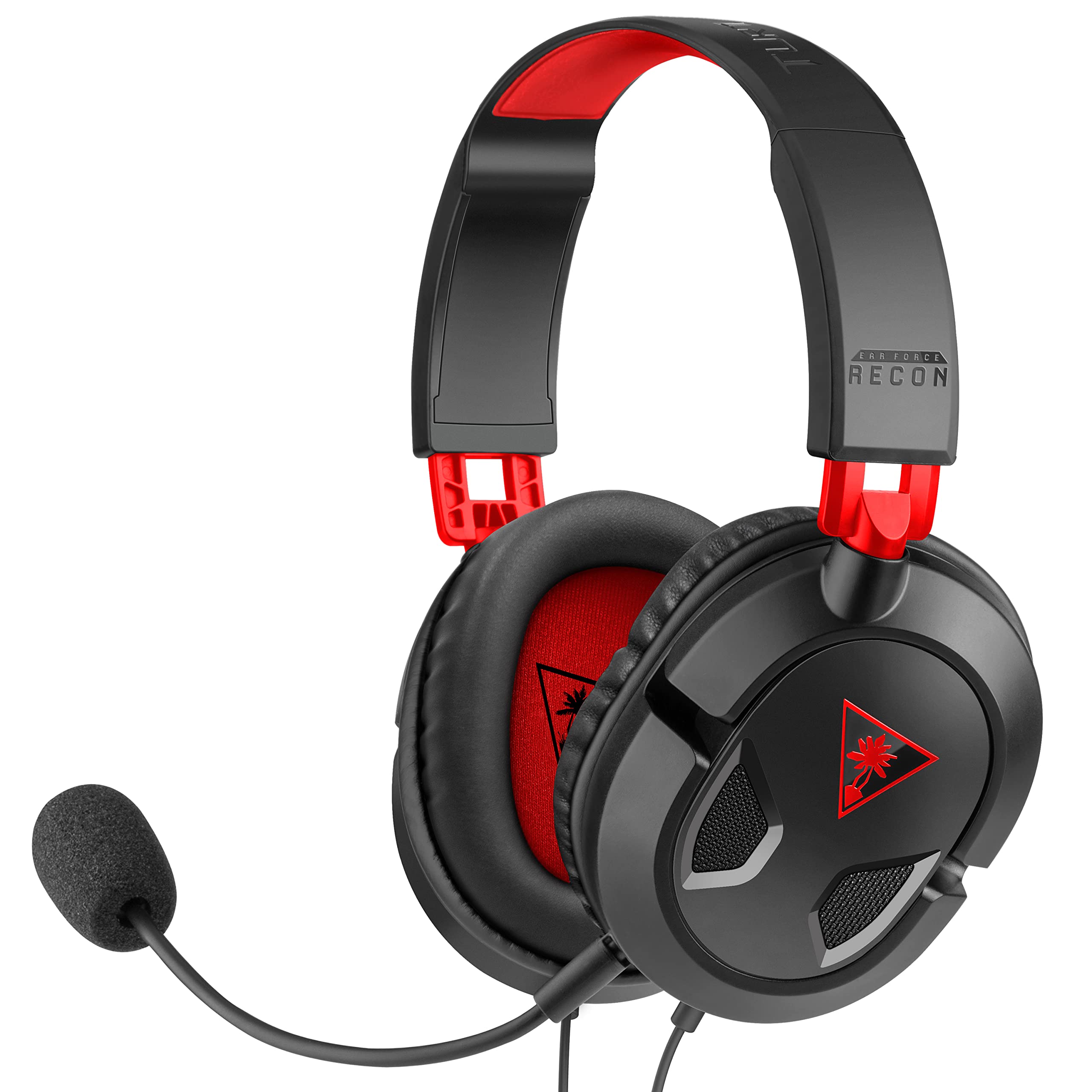
3. Turtle Beach Recon 50 Wired Multiplatform Gaming Headset
The one that works with everything and shrugs off years of casual play
For a first headset, the goal is simple: work with whatever you already own and don’t fall apart. Turtle Beach nails that brief with 40mm speakers, a 3.5mm plug, and a PC splitter cable in the box, so the same headset hops between a PlayStation, an Xbox, a PC, and even a phone. The mic is removable and adjustable, so you can pull it off when you’d rather just listen.
What comes through most in owner feedback is durability. The frame is lightweight with leatherette ear cushions and an adjustable headband, and the pattern is people passing these down to younger gamers or reusing them long after fancier headsets have given up. In-line volume and mic-mute controls sit right on the cable, so you’re not hunting for a dial. There’s a reason this lineup has been a beginner’s default for years — it keeps working.
Two things to know going in. First, the 40mm driver is smaller than the 50mm and 53mm units elsewhere here, so the sound is lighter on bass detail than the bigger options. Second, the fit runs snug — owners with larger heads report the ear cups feel tight even when fully extended, and the cord is short enough that you may want an extension depending on where your console sits. Its long track record is the strongest of any pick here — the endurance you want in a set you’ll hand down.
Why it endures: a lightweight frame, in-line controls, and a removable mic that together outlast a lot of pricier headsets.
The fit caveat: it runs small — if you have a large head, try to test the clamp before committing.
Pair it with: a first console or a mixed house of platforms, where one headset has to fit them all.
Size-check first if: you have a larger head or want deep, heavy bass — the 40mm driver and snug fit are the limits here.
4. JBL Quantum 100 Wired Over-Ear Gaming Headphones

A brand-name sound signature wrapped in soft memory foam for marathon sessions
Comfort is the job this headset was hired for. The ear cups are memory foam wrapped in soft PU leather, and that padding is the feature owners talk about most — the kind of cushioning that lets you forget you’re wearing a headset three hours in. JBL’s own Quantum Sound Signature handles the tuning, so it delivers a recognizable, accuracy-focused sound rather than a flat default. The earcup shape is oblong, which suits people whose ears are taller than they are wide.
Its detachable boom mic uses echo-cancelling tech to keep your voice forward and cut the echo off your teammates’ audio. The 3.5mm connection covers PC, Mac, Xbox, PlayStation, Switch, and even VR, so it moves between rooms without a fuss. There is no deep bass here and no advanced extras — it’s a focused, no-frills headset that does the basics cleanly.
Here’s the part to weigh: durability is the weak point in the feedback on this model, with the plastic hinges around the rotating ear cups being the part that tends to go first over time. It’s a genuinely comfortable, great-sounding set for gaming — just handle the cups gently rather than tossing it in a bag. If you treat your gear carefully, the comfort payoff is worth it.
What lands well
- Soft PU-leather memory foam cups built for long wear
- Detachable echo-cancelling boom mic
- Wide platform support: PC, Mac, Xbox, PlayStation, Switch, VR
Where to be gentle
- The plastic ear-cup hinges are the first thing to show wear
- No deep bass and no advanced features — basics only
Put this on if: comfort over long sessions is your top priority and you’ll treat the cups with care.
Think twice if: you want punchy bass or plan to toss the headset loose into a backpack.
5. Logitech G335 Wired Gaming Headset

Barely-there weight that you stop noticing about five minutes in
At 8.5 oz (240 g), this is one of the lightest headsets on the list, and it uses a suspension headband — a flexible strap that spreads the load across your head instead of pinching one spot. Add soft memory foam ear pads over sports mesh and you’ve got a set you can wear for a full evening without the top-of-head ache that heavier cans cause. The ear pads are part of a colorful design, and the elastic headband is even reversible and washable, so it stays fresh over time.
Controls are refreshingly simple: a volume roller sits right on the ear cup, and the mic flips up to mute while moving out of the way, so you never have to grope for a button mid-match. It runs 40mm neodymium drivers — a magnetic element that helps produce a louder, crisper signal — and the 3.5mm plug covers PC, PlayStation, Xbox, Switch, and select mobiles. It’s even Discord Certified for voice clarity.
Two honest notes. The mic can be picky: some units need a re-plug before they’re picked up, and once you raise its gain it also pulls in more background room noise, so a quiet space helps. And the 40mm driver gives it a lighter low end than the 50mm and 53mm units higher up this list. Neither is a dealbreaker for a headset aimed at comfort and clean chat.
The weight story: 240 g plus a suspension strap means all-day wear without pressure points — the comfort-first choice here.
The mic caveat: expect to fine-tune the input, since higher gain also lets more room noise in.
Great for: long sessions where weightless comfort and a fast flip-to-mute mic matter more than heavy bass.
Not the pick if: you need a deep, booming low end or a mic that’s dialed in perfectly out of the gate.
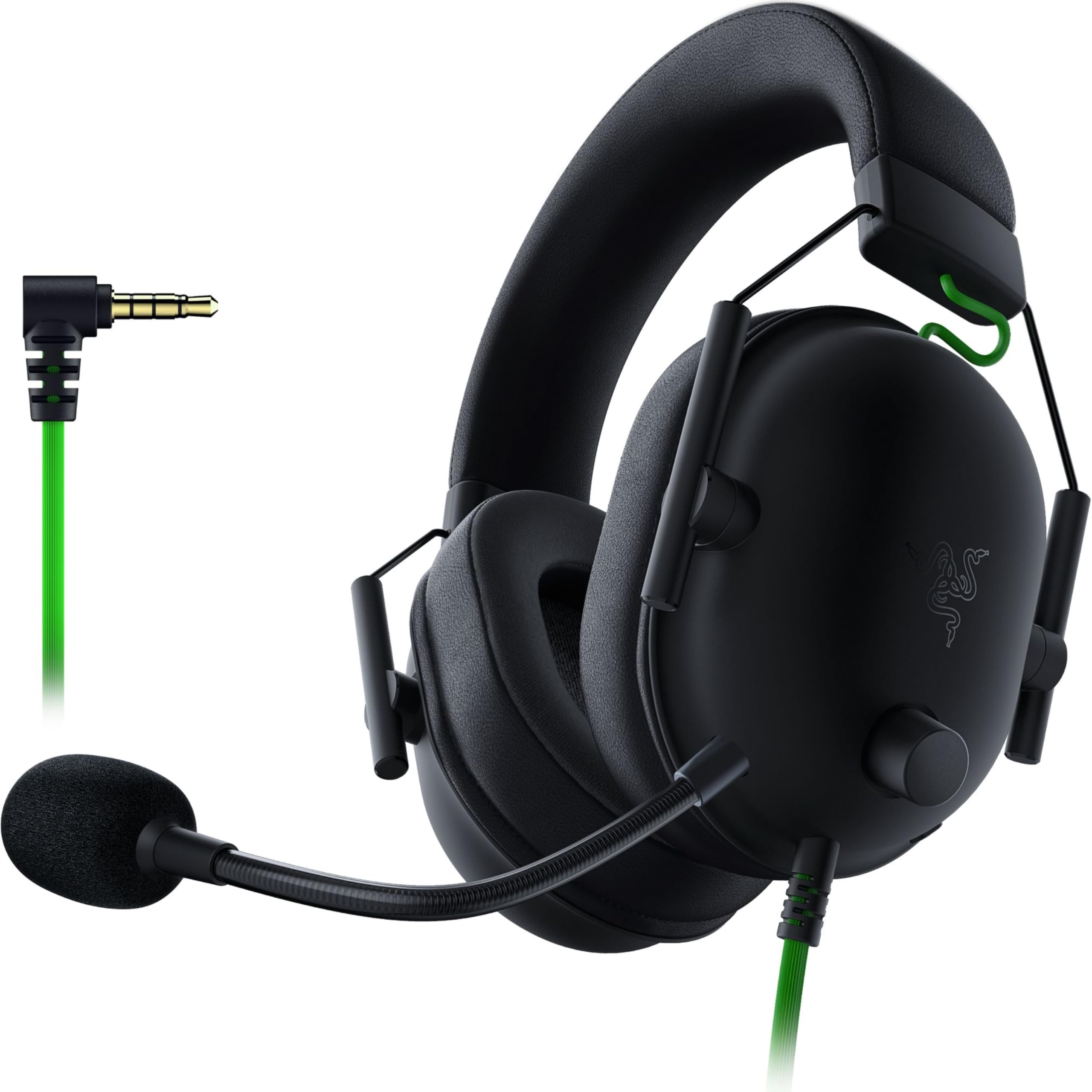
6. Razer BlackShark V2 X Gaming Headset
Titanium-coated drivers and PC surround tuning for players who live on a desktop
The Razer BlackShark V2 X is the pick for the desktop player who wants directional audio without paying flagship prices. Razer uses 50mm TriForce titanium-coated drivers — a three-part design that tunes the highs, mids, and lows separately instead of blending them into one muddy output, so the sound comes through bright and detailed with clear highs and strong lows. The 7.1 surround sound (virtual audio that places sounds around you) is software-enabled and only works on Windows 10 64-bit, so it’s a PC-first feature.
The frame weighs just 240g and uses breathable foam ear cushions with advanced passive noise cancellation, meaning the closed cups seal out room noise without any electronics. The mic is Razer’s HyperClear Cardioid, shaped to pick up more of your voice and less of what’s behind and beside you. It runs on a 3.5mm jack across PC, Mac, PS4, Xbox One, and Switch, giving you a lot of platform reach for the outlay.
The one thing to plan around is comfort over the long haul — feedback is split between people who find it comfortable for hours and those who feel a snug clamp after a while. If your head is on the larger side, the fit can feel tight. It’s a legitimately strong sound-and-value package, so it’s worth trying the clamp before you commit to a whole evening in it.
What stands out: titanium-coated 50mm TriForce drivers deliver clear, bass-forward audio with real directional detail for the price.
Where it varies: comfort is hit-or-miss on fit — the clamp is firmer than the suspension-band picks on this list.
Ideal for: PC players who want software 7.1 surround and detailed 50mm drivers on a moderate spend.
Test the fit if: you have a larger head — the rumble is great, but the clamp runs tight.
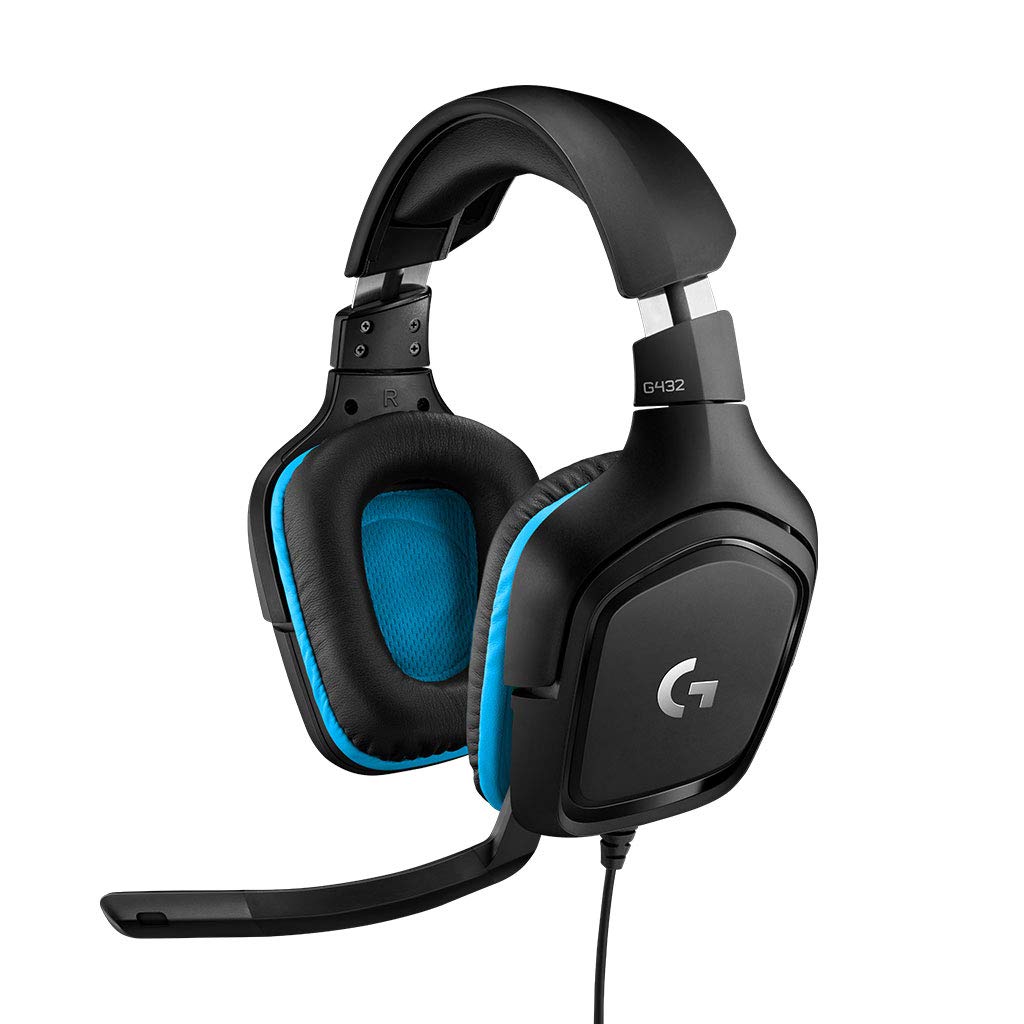
7. Logitech G432 Wired Gaming Headset
Big drivers plus DTS positional sound — and a connection for almost any platform
Big 50mm drivers are the foundation here, but the real draw is the positional audio. DTS Headphone:X 2.0 creates three-dimensional sound that goes beyond standard 7.1 channels, so you can hear what’s behind you and around you — the difference between reacting to an enemy and guessing. Just know that the surround feature requires Logitech’s G HUB software, so it’s a PC-and-Mac perk rather than something a console gets.
Plug-and-play flexibility is the point here: a USB DAC (a small adapter that processes sound digitally) or a 3.5mm cable on PC and Mac, a 3.5mm hookup on mobile, and PlayStation 5, PlayStation 4, and docked Nintendo Switch over USB. A 6mm boom mic is genuinely big, and it mutes the moment you flip it up — no button to hunt for mid-match. The leatherette ear cups rotate up to 90 degrees, so you can lay them flat on your desk between rounds.
Two things a careful buyer should know. First, the headband plastic is the fragile point — the frame and cups hold up, but the top band is where wear shows first, so it’s not the headset to cram into a full backpack. Second, it ships with a shorter rubber cord than its predecessor, so check the reach to your console or tower. For a headset that costs a touch more, you’re paying for the DTS surround and the dual USB-and-3.5mm flexibility.
Standout feature: DTS Headphone:X 2.0 goes past 7.1 channels for a real sense of enemies above, behind, and beside you.
The durable-weak spot: the headband plastic wears first — keep it flat on a desk rather than crushed in a bag.
Choose it for: PC or Mac gaming where DTS surround and both USB and 3.5mm connections are worth a little more.
Look on if: you need a long cable run or you’re rough on gear — the short cord and headband plastic are the soft spots.
8. HyperX Cloud II Gaming Headset

The legend that outlives your last three upgrades — and that’s the whole point
There’s a reason this headset rings a bell for anyone who’s gamed on PC. It pairs large 53mm drivers with a solid aluminum frame and memory-foam ear cushions on a padded leatherette headband, and the combination is why it keeps ending up on long-term-ownership stories. The aluminum frame is the star: it holds its shape through daily handling in a way the plastic-framed budget picks simply don’t. Beyond the 3.5mm plug you also get a USB control box for hardware-driven 7.1 virtual surround, so it works on PC and Mac in surround mode and drops to stereo on PS4, Xbox One, Switch, and mobile.
The detachable mic is TeamSpeak and Discord certified and uses passive noise cancellation from the closed ear-cup design to keep your voice clean.
Where the long-term complaints live is the fit and the finish. The cups run snug, which suits some heads and pinches others, so it’s worth testing. The leatherette ear pads also tend to flake over a year or two of heavy use — some owners peel the coating off to extend their life. Neither changes the fact that well-loved units of this headset rack up years of service. If long-term durability is your priority, this is the one built for it.
Why it lasts
- Solid aluminum frame that survives years of daily handling
- Large 53mm drivers for rich, detailed sound
- Hardware 7.1 virtual surround via the USB control box on PC and Mac
- Detachable mic certified for TeamSpeak and Discord
Plan around this
- The fit runs snug — try it if you have a large head
- Leatherette ear pads can flake after years of heavy use
Built for: players who’d rather buy once and keep a headset for years than replace a cheap one repeatedly.
Try before you settle if: your head runs large or you dislike snug cups — the sound and build are worth the fit check.
9. Razer Kraken V4 X Wired USB-C & Type A Gaming Headset

One cable that flips between USB-C and USB-A — the set that follows you everywhere
The Razer Kraken V4 X sells on one thing: a single headset that switches between USB-C and USB-A, so you move from a desktop to a console to a phone without hunting for a different cable. The retractable Hyperclear Cardioid mic (a mic that picks up mainly what’s in front of it) slides into the ear cup when you’re not chatting. Razer’s patented 40mm TriForce three-part drivers tune highs, mids, and lows separately for cleaner separation, and 7.1 surround sound wraps the whole thing in a wide, rich soundstage.
The cushioned cups blend fabric and leatherette, which pair well — the fabric breathes while the leatherette seals for isolation, so long sessions are comfortable and the room stays mostly outside. The design earns its share of attention too, with owners praising the look and finish. It’s a clever blend of portability and capability at a mid-range spend.
Two caveats worth knowing. The software is the weak link — some owners find Razer’s app bloated and skip it entirely in favor of a plain Windows setup, and buyers report the top end can sound thin. Durability is also the split point in feedback, so treat the cable join with care, especially around kids. Get past that and you’ve got the most travel-friendly wired headset here.
What makes it travel-ready: the convertible USB-C and USB-A cable plus the retractable mic mean one headset, no dongles.
The careful note: the software draws more complaints than the hardware, and the cable is the part to protect.
Snag it if: you move between a phone, console, and desktop and want the retractable mic and dual USB-C/USB-A cable to cover all of them.
Keep looking if: you want premium software or plan to hand it to a young kid — the app and cable are the soft spots.
Understanding the Specs
Fewer numbers than you’d think actually decide which wired headset is right for you. Here are the ones that do, translated into plain English.
Driver size (in millimeters)
Drivers are the speaker cones inside each ear cup, and their diameter is measured in millimeters (mm). Bigger cones move more air, which usually means fuller bass and a clearer sense of direction — so a 50mm or 53mm driver tends to place footsteps and gunfire more precisely than a 40mm one. Size is a starting point, not a guarantee, since tuning matters too. But when one headset has 50mm drivers and another has 40mm, the bigger one is working with more physical speaker to fill your ears.
3.5mm jack vs USB
The 3.5mm jack is the standard headphone plug found on game controllers, phones, and most laptops, so it works with almost anything. A USB connection taps into a computer’s digital audio for extras like virtual surround sound, but it usually ties you to a PC or Mac. Some headsets ship with both — a 3.5mm cable for consoles plus a USB adapter or control box — which is the most flexible setup. If you game across several devices, favor the 3.5mm plug or a convertible USB-C and USB-A cable.
Surround sound (virtual 7.1)
Virtual 7.1 surround sound is software that simulates a ring of speakers around your head, so you can tell roughly where a sound came from. It is called virtual because there are still only two ear cups — the software does the spatial projection. The catch is availability: surround modes on some lists’ picks only work on certain versions of Windows and require the brand’s own software, so check the platform before you buy. Stereo over a 3.5mm cable works everywhere; surround is the bonus where the software supports it.
Mic types and noise handling
In this price range you’ll meet detachable booms (pull off fully), flip-to-mute mics (swing up to mute), and retractable mics (slide away into the ear cup). Each handles the “I forgot to mute” problem differently. Cardioid mics are shaped to pick up your voice from the front and reject sound from the sides and rear, which cuts keyboard clatter. A noise-cancelling mic filters ambient sound to keep your voice clean. What a headset can’t do well is a substitute for a quiet room — louder gain tends to pull in more background noise.
FAQ
Will a 3.5mm wired headset work with my PS5 or Xbox controller?
Does a bigger driver actually make a wired headset sound better?
Do I need a headset with surround sound for competitive gaming?
Should I pick a detachable or a flip-to-mute microphone?
How long should a budget wired gaming headset last?
Is a wired headset better than a wireless one for gaming?
Do these headsets work with a phone or the Nintendo Switch?
Will these headsets isolate me from room noise?
What’s the difference between the HyperX Cloud II and Cloud III?
Do I need software to get the most out of a budget wired headset?
Final Thoughts: The Verdict
For most players, the budget wired gaming headset that gets the balance right is the HyperX Cloud III — it leads the list on its 53mm angled drivers, its memory foam and aluminum build, and the fact that you get USB-C, USB-A, and 3.5mm in one box. If you want the biggest driver your money can buy and don’t mind a bit of PC setup, the SENZER SG500 throws 50mm cones at the job for a budget spend. And if long-term durability is what you’re really shopping for, the HyperX Cloud II is the one people keep for years on its aluminum frame.
How We Picked
We do not accept paid placement. Every pick is matched to a real buyer and a real use-case; we do not hands-on test units.
Sources & Methodology
Specifications: manufacturer listings and product documentation. Review insights: verified customer reviews, as of September 2026. Pricing: not shown on this page (it changes often); check the current price via the retailer link.
As an Amazon Associate, Gadgets Feed earns from qualifying purchases. This does not affect which products we feature.