
Our readers keep the lights on and my morning glass full of iced black tea. As an Amazon Associate, I earn from qualifying purchases.
Specs are compiled from manufacturer listings and verified buyer reviews and can change over time — please confirm the key details on the product page before buying.
Jumping from a USB mic to a real XLR setup is the single biggest upgrade you can make to your audio, but the fear of spending hundreds on a studio-grade voice you don’t have stops most people cold.
I’m Min — the founder and writer behind Gadgets Feed. This guide is built by comparing the manufacturers’ published specifications and the patterns across verified customer reviews, so you get each pick’s real strengths and trade-offs instead of marketing spin.
The challenge is that a cheap XLR mic needs a separate audio interface, so you’re really buying into a system. This guide to the budget xlr microphone market breaks down which mics deliver genuine studio-quality sound without the inflated price tag.
Our Picks at a Glance


How To Choose The Best Budget XLR Microphone
Choosing a budget XLR mic is less about finding the cheapest option and more about matching the mic’s character to your voice and your recording environment. Since these mics all need an audio interface, your total cost is the mic plus a preamp, so you want to make sure the mic itself is worth that investment.
Dynamic vs. Condenser: The Room Matters
Almost every budget XLR mic recommended here is a dynamic microphone, which is a capsule type that naturally rejects background noise and room echo. Unlike condenser mics that pick up every rustle and room tone, a dynamic mic lets you record in a normal room without acoustic treatment, making them the forgiving choice for home podcasters and streamers.
Pickup Pattern: The Cardioid Standard
A cardioid pickup pattern captures sound from the front and sides while rejecting it from the rear, which is why it is the industry standard for solo voice work. This means you can have a mechanical keyboard or a loud PC fan behind the mic without it ruining your take, as long as you speak close to the grille.
Frequency Response: Shaping Your Voice
You get a clearer, more present voice with a mic that boosts the upper mids, so a flat or thin voice sounds more articulate and forward. A tighter frequency response range like 50Hz-15kHz focuses on the vocal presence band rather than deep sub-bass, which is why some buyers report a cheap XLR mic adding “volume and substance” to their voice.
Quick Comparison
| Model | Best For | Pickup Pattern | Frequency Response | Connection | Amazon |
|---|---|---|---|---|---|
| Shure SM58★ Best Overall | Legendary durability | Cardioid | 50Hz – 15kHz | XLR | Amazon |
| RØDE PodMicBroadcast Pick | Broadcast tone | Cardioid | 20Hz – 20kHz | XLR | Amazon |
| Sennheiser XS 1Live Performer | Live & gig vocals | Cardioid | — | XLR | Amazon |
| Zoom ZDM-1 | High SPL handling | Supercardioid | — | XLR | Amazon |
| MXL BCD-1 | Deep voice VO | Cardioid | — | XLR | Amazon |
| Shure PGA58 | Clear live vocals | Cardioid | 16kHz max | XLR | Amazon |
| MAONO PD100 | Value podcasting | Cardioid | 60Hz – 14kHz | XLR | Amazon |
| Mackie EM-89D | Karaoke & instruments | Cardioid | — | XLR | Amazon |
| FIFINE AM8 | Gaming & streaming | Cardioid | 50Hz – 16kHz | USB, XLR | Amazon |
In‑Depth Reviews
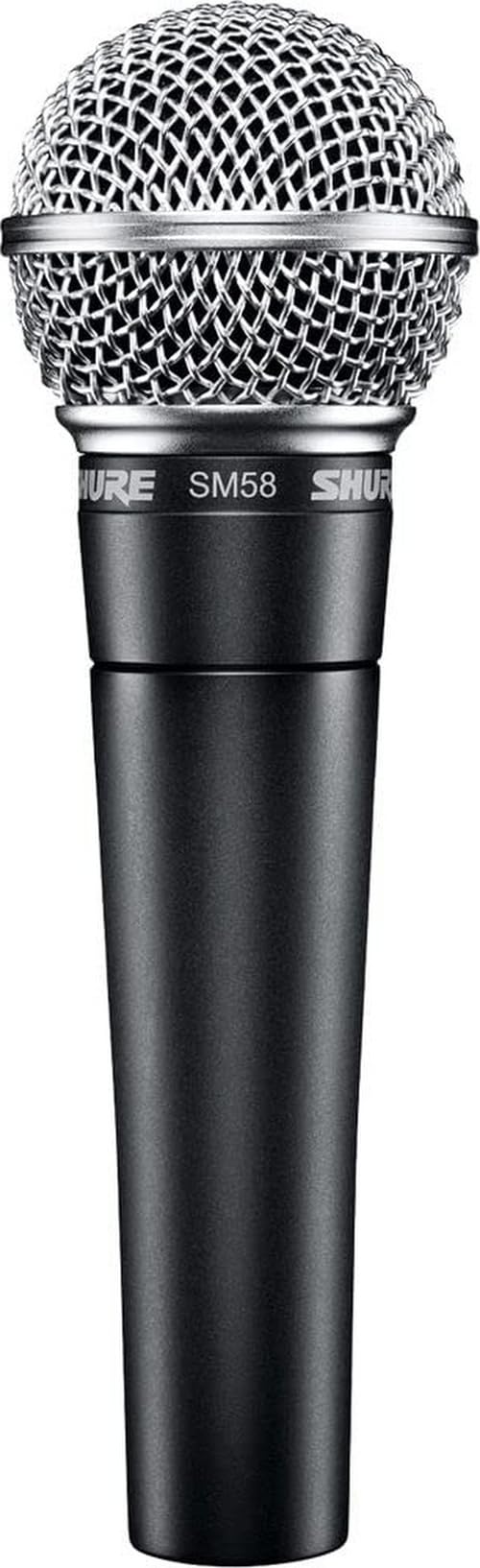
1. Shure SM58 Pro XLR Dynamic Vocal Microphone
Our pick — over 4.5★ from 14,500+ verified ratings; the strongest balance of quality and price.
The industry-standard workhorse that turns a flat voice into a broadcast-ready performance.
Its 50Hz-15kHz response adds a subtle midrange lift that helps vocals cut through background noise. This lift is what helps your vocals cut through background noise and sit forward in a mix without you having to shout — a 50Hz to 15kHz range that focuses on the vocal presence band. Owners mention it’s an “Excellent upgrade from USB mic for audiobooks/podcasts; adds volume/substance to flat voice,” which is exactly the transformation most people are chasing.
The precision cardioid pickup pattern focuses tightly on your voice while rejecting off-axis noise and feedback, so a room with a humming fridge or a clicking keyboard won’t ruin your take. It also has a refined spherical grille with a built-in filter that reduces plosives and breath noise, meaning you can work close to the mic without those explosive “P” and “B” sounds. You do need an audio interface for this, as it is XLR-only, but the rugged metal construction and reinforced stand adapter mean it survives drops that would destroy a cheaper condenser.
You get a hefty, solid piece of gear at 10.31 x 4.92 x 3.31 inches that feels like it will outlast your entire streaming career. Buyers repeatedly say it is “built like a tank” and survives drops that would destroy lesser mics, making it the safest long-term investment in this guide. It’s the crowd favorite among podcasters, singers, and field recordists who need one mic that works everywhere.
What The Hype Is About
- Adds warmth and substance to flat voices
- Rejects background noise and feedback cleanly
- Indestructible metal build rated for touring
The Realities To Know
- Requires a separate XLR audio interface
- Heavier than typical budget mics
- 3rd-party units may arrive with loose parts — buy from Shure directly
The Verdict: The safest, most proven upgrade path for anyone moving from USB to XLR, especially audiobook narrators and podcasters.
Think Twice If: You want plug-and-play USB convenience; this needs an interface and a cable before it makes a sound.
2. RØDE PodMic Cardioid Dynamic Broadcast Microphone
A broadcast-grade metal slab that delivers rich, balanced voice tone for serious podcasters.
The PodMic is built specifically for spoken word, with a cardioid dynamic capsule that rejects room noise and background sound so your voice stays front and center. Its 20Hz to 20kHz frequency response is wider than the Shure SM58’s 50Hz-15kHz range, giving it a deeper, fuller low end that makes voices sound richer and more authoritative on air. It is a heavy, weighty mic — so much so that customers note it feels “heavy on arm,” which confirms the metal build but means you need a sturdy boom arm.
Unlike the SM58 which needs a separate pop filter, the PodMic has an integrated swing-mount with an internal pop filter and internal shock mount, so you don’t need extra accessories for clean vocal recording. It rejects plosives and vibrations right from the start, which is why so many podcasters pair it directly with the RØDEcaster. The strong downside is that the output is low, so it needs a clean preamp with high gain to avoid hiss on sibilant sounds.
It is strictly XLR output and requires an audio interface like the RØDEcaster or AI-1 — it does not plug into a computer via USB. Buyers consistently report it is a “perfect balance of quality and price,” delivering professional sound that requires far less editing than a USB condenser mic. For a dedicated podcasting setup where you want that deep, radio-ready voice, this is the benchmark.
The Broadcast Standard: The rich, balanced tone and integrated pop filter make this the go-to for podcasters who want professional sound without a rack of equipment.
The Gain Caveat: Its low output demands a quality preamp, so budget for a clean audio interface if you want to avoid hiss on “S” sounds.
3. Sennheiser XS 1 Handheld Dynamic Microphone
A featherweight 15.68-ounce handheld that brings Sennheiser’s premium house sound to gigs.
The XS 1 is Sennheiser’s budget entry into its legendary microphone lineup, and it punches far above its price class. It is light enough at 15.68 ounces to hold for an entire set, yet the metal enclosure and cardioid pattern give it the durability and focus you need for live vocals. The standout feature is the silent mute switch, which lets you cut your mic discreetly between songs without a loud click on the PA.
What wins people over is the sound, which reviewers point out performs like an expensive wireless Sennheiser model at a fraction of the cost. The cardioid polar pattern focuses on your voice while rejecting ambient noise, making it great for close MC work at weddings or picking up a singer in a noisy room. One recurring note is that it lacks the proximity effect boost of a Shure SM58, so it won’t add extra “vibe” to a voice — it delivers a cleaner, more neutral tone instead.
It comes with a mic clip and carrying pouch, and connects via a standard XLR-3 connector to any mixer or amplifier. Buyers have noted it may “replace my Shure SM58’s” for smaller gigs, which is high praise for a budget workhorse. If you sing, host events, or do live streams where you want Sennheiser’s refined tone without the price tag, this is the one.
The Live Stage Strengths
- Silent mute switch for discrete control on stage
- Lightweight 15.68 oz design for long gigs
- Sennheiser house sound at a budget price
The Trade-offs
- Handling noise can be an issue for some users
- Lacks proximity effect boost for extra vocal warmth
Grab This For: Live singers, event hosts, and gigging musicians who need a light, reliable handheld with a trusted brand name.
Look Elsewhere If: You want a deep, radio-style broadcast tone; this leans neutral and clean rather than warm and bassy.
4. Zoom ZDM-1 Dynamic Microphone

A big-diaphragm supercardioid that captures smooth, broadcast-quality sound with excellent isolation.
The ZDM-1 is a large-diaphragm dynamic mic, which is a design that captures a smoother, more detailed sound than a typical handheld dynamic. It uses a supercardioid polar pattern, which is even more focused than a standard cardioid, providing excellent isolation from off-axis noise. This makes it a strong choice for solo podcasters and streamers who record in imperfect rooms.
Its high SPL handling capability ensures you can record loud vocal performances without distortion, and the internal shock mount isolates the capsule from bumps and handling noise. Buyers praise its pure tone but warn the plastic mount can break after several uses. The foam windscreen does a decent job, but it is weak on plosives, so you’ll want to angle the mic at 45 degrees.
At 454 grams, it is a substantial metal-bodied mic that feels premium, and it works cleanly with recorders like the Tascam X8, though it needs high gain. The one clear caveat is the handling noise — buyers strongly recommend a suspension mount to avoid picking up vibrations from your desk. For a budget price, it rivals the Rode PodMic and Shure MV7x in tone, making it a smart pick for voice-over artists and solo podcasters.
The Hidden Gem: The supercardioid pattern gives superior isolation for solo voice work, beating most budget dynamics on detail.
The Fix Needed: The plastic mount is fragile and handling noise is real — budget for a third-party shock mount from day one.
5. MXL BCD-1 Dynamic Broadcast / Podcast Microphone

A high-output broadcast mic that flatters deep, rich voices without needing a cloud lifter.
The BCD-1 is a large-diaphragm cardioid dynamic designed for broadcast and podcast work, and its defining trait is its high output and low noise. This means it delivers a strong signal that doesn’t need an in-line preamp booster like the Shure SM7B often does — buyers specifically note “no cloudlifter needed” when comparing it to that pricier studio standard. For deep, rich voices, this is a standout performer that captures warmth and body exceptionally well.
It has an internal shock mount and pop-filter built in, reducing plosives and mechanical noise without extra accessories, plus excellent side rejection for isolation. The tuned grill eliminates internal reflections, which keeps your voice clean and focused. In a five-mic shootout, buyers rated it “best for singing/emotion/deep voices,” though some found the high end brittle versus the SM7B.
At 16 ounces with a sturdy stirrup mount, it feels rugged and professional, and it ships with a carrying case and windscreen. A 30-year radio veteran says it rivals the RE-20 and SM7B in tone for voice-over work. If you have a deeper voice that gets lost on other mics, this is the one that will finally make it sound broadcast-ready.
Why It Wins For Voice Work
- High output means no extra gain booster needed
- Internal shock mount and pop filter included
- Excellent for deep, rich vocal tones
The Fit Warning
- Less flattering for nasal or shrill voices
- Some find the build quality less premium than Rode or Shure
Optimal For: Voice-over artists and podcasters with deeper voices who want a strong signal without buying extra gear.
Not Ideal For: Voices that are nasal or sibilant — this mic will exaggerate those qualities rather than smooth them.
6. Shure PGA58 Dynamic Microphone
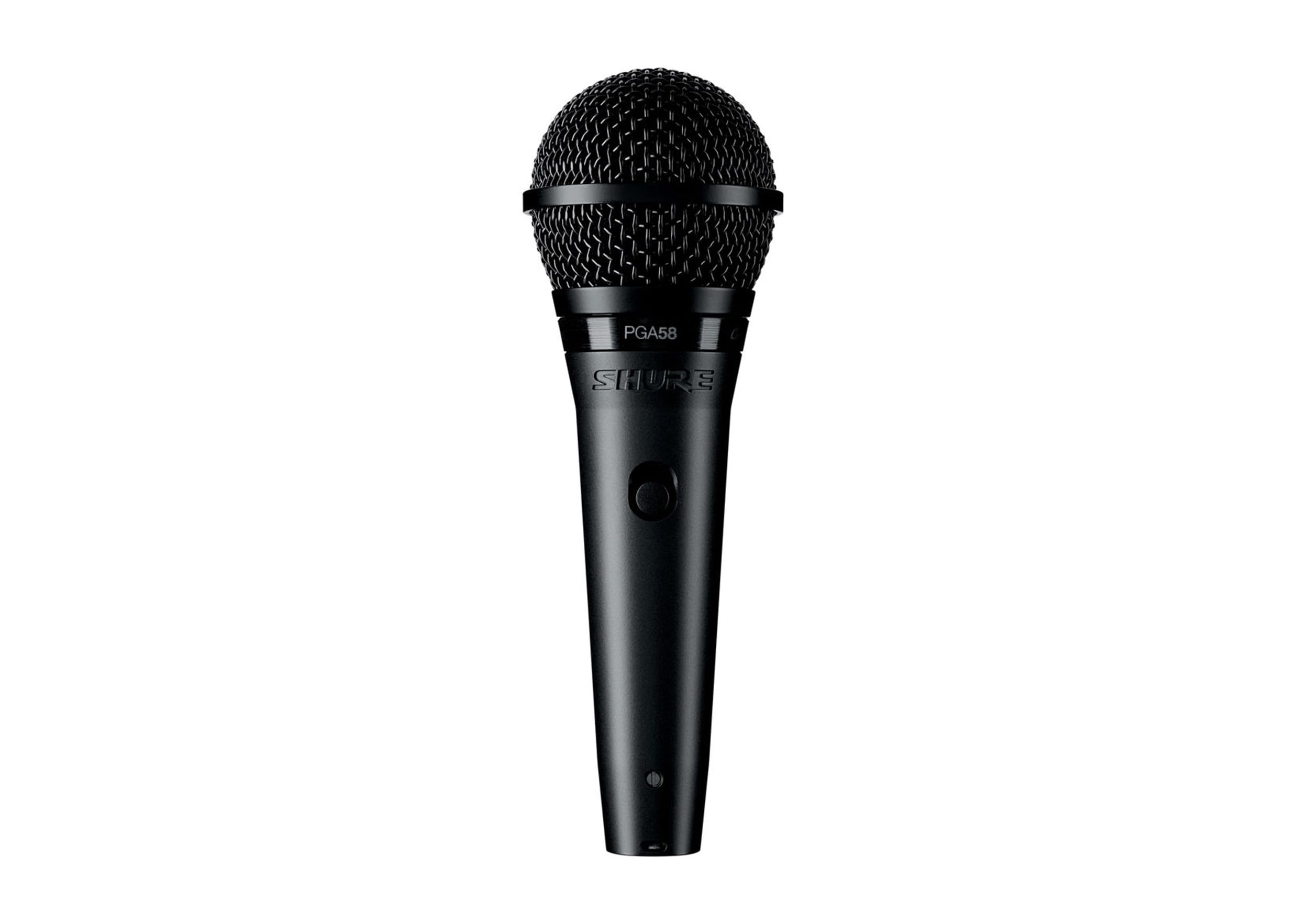
Shure’s entry-level dynamic mic with a tailored cartridge for natural vocal clarity.
You get natural vocal clarity without extra processing from the PGA58, Shure’s more affordable take on the classic vocal dynamic, with a tailored cartridge design tuned for the vocal frequency range. It delivers crisp vocals with no need for high-pass filtering, so it suits backyard parties, karaoke, and live speaking gigs. The cardioid polar pattern (picks up sound mainly from the front) rejects unwanted noise so you focus on the voice in front of the mic.
It has a discrete on/off switch for easy control during a set, and this specific version ships with a 15-foot XLR-to-¼-inch cable, a stand adapter, and a zipper pouch. The 16kHz frequency response is a bit narrower than some rivals, but it is tuned to hit the vocal presence band where clarity matters most. Buyers call it “sturdy for the price” with great projection for backyard parties.
Unlike the SM58 which is a metal tank, the PGA58 feels a little lighter and more budget-conscious, though it still uses a durable metal enclosure. The one minor complaint is that it can sound “a little weak” without enough gain, which is a common trait of budget dynamics that need a decent preamp. For a first XLR mic that comes with everything you need to plug in and go, this is a very friendly entry point.
The Entry Point Pros
- Comes with 15-ft cable, stand adapter, and pouch
- On/off switch for discreet control
- Clear projection for live vocals
The Budget Limits
- Can sound weak without sufficient preamp gain
- Narrower frequency response than higher-end Shures
Best Suited For: First-time XLR buyers who want a complete kit with cable and stand adapter included, especially for live events.
Consider Others If: You need a wide full-range response for music recording; this is tuned for speech and vocals first.
7. MAONO PD100 XLR Podcast Microphone

An all-metal podcast mic that ships with everything you need to start recording immediately.
The PD100 is a complete XLR starter kit that includes the microphone, a 6.56-foot XLR cable, a desktop stand, a rod extender, and a heavy round metal base. This is a huge value because most budget XLR mics, like the Sennheiser XS 1, only include the mic and clip, forcing you to buy cables separately. The built-in dynamic core and an inner double-layer pop filter provide better attenuation of plosives, so your “P” and “B” sounds stay clean.
Its 60Hz-14kHz frequency response is a bit narrower than the competition, but it is balanced to deliver clean, mellow audio for spoken word. The cardioid pattern and “talk to the mic top” pickup capture every detail of your voice, making it work great for podcasts, streaming, and content creation. Shoppers say a “brighter tone than Shure SM7B but accurate lows,” saying it “punches above its weight” for spoken word.
The 600-ohm impedance is standard for dynamics, so it works with any audio interface or mixer, and it has built-in 5/8″ and 3/8″ threads to fit most mic stands. The main caveat is that it is analog-only with no USB option, and some buyers report it reduces but doesn’t completely eliminate background noise in non-studio settings. For a budget-friendly all-in-one that gets you recording on day one, this is the one.
Why It’s A Great Deal
- Includes XLR cable, stand, and base in the box
- All-metal body with double-layer pop filter
- Brighter, accurate tone for spoken word
The Honest Limits
- No USB connection, strictly analog XLR
- May need a pop filter for aggressive plosives
Perfect First Kit: For a podcaster on a tight budget who wants a complete, ready-to-record setup without buying parts separately.
Think Twice If: Your room is very echoey — this mic reduces background noise but won’t eliminate heavy room tone.
8. Mackie EM-Series Dynamic Vocal Microphone (EM-89D)
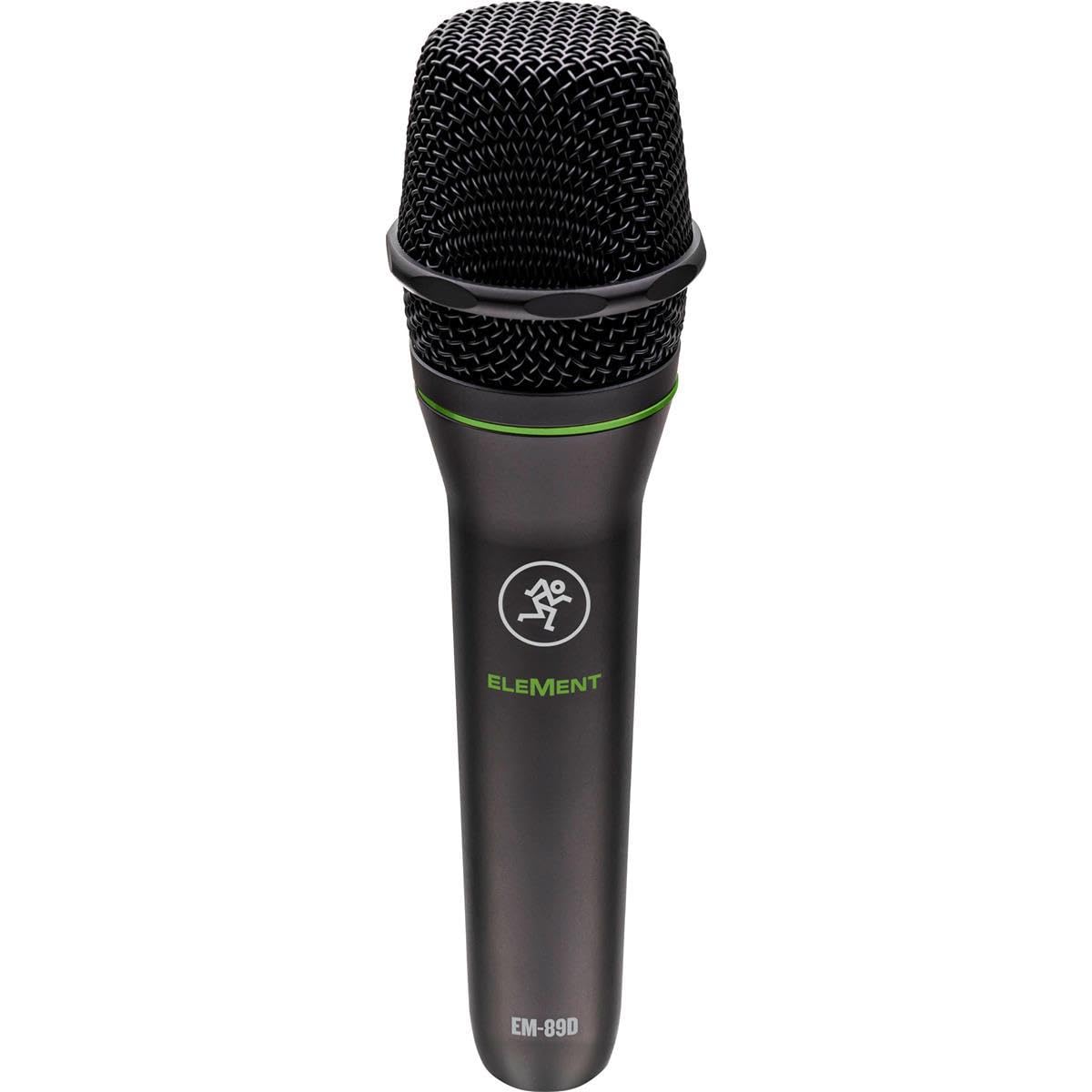
A rugged karaoke and instrument mic with high gain and a complete accessory kit.
The EM-89D is Mackie’s affordable take on the classic handheld dynamic, and it outperforms pricier rivals with excellent build quality. It comes with a mic clip, XLR cable, and a zipper pouch, so you have everything you need to plug into a mixer immediately. Owners mention it delivers high gain and clear vocals, making it “possibly better than SM58” for some applications like karaoke.
Its cardioid polar pattern works well for vocals and instruments, and the rugged construction is designed to survive the abuse of live use. A football announcer praised its “very clear vocals at all gain adjustments” and better-than-expected wind handling. Its 89dB output is decent for a budget dynamic, though not the quietest here.
The main aesthetic downside is that it looks a bit cheap, but buyers confirm it “feels good and sounds great.” It connects via XLR to any audio mixer, and one buyer successfully used it with a wireless XLR transmitter. If you want a no-fuss dynamic that comes fully loaded for karaoke nights or instrument miking, this is a solid, affordable choice.
The Accessory Value: You get a clip, XLR cable, and pouch in the box, so this is among the most ready-to-use budget picks.
The Only Con: The design looks cheaper than it performs — don’t judge this one by its photo.
9. FIFINE AmpliGame AM8 USB/XLR Dynamic Microphone
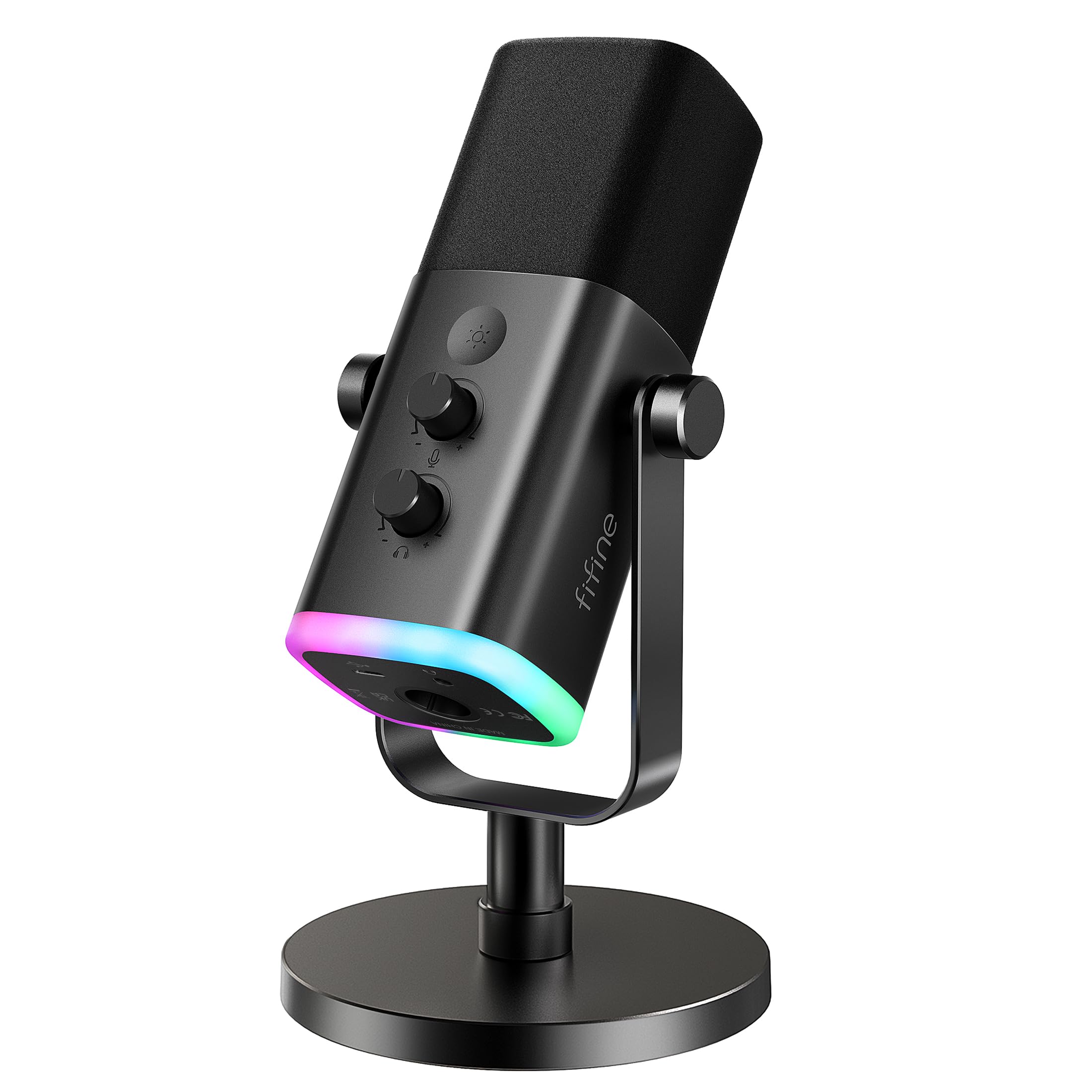
A dual-connection gaming mic that works on USB today and XLR when you’re ready to upgrade.
The AM8 is the smartest entry point for gamers because it gives you both USB and XLR connections in one mic, though you’ll need a separate XLR cable and audio interface for the XLR path. When you’re ready to grow your setup, you can move it off your desk onto a boom arm and into your interface without buying a whole new mic. On USB, you get conveniences the XLR path doesn’t have, like a tap-to-mute button, an LED mute reminder, and a headphone jack for zero-latency monitoring.
You get clean gaming streams or voiceovers with its cardioid dynamic capsule (picks up sound mainly from the front), delivering a balanced 50Hz-16kHz frequency range that won’t exaggerate your voice and rejecting off-axis noise. The RGB ring on the base offers 3 modes with more than 10 light colors, and it remembers your settings between power cycles. Customers note it offers “crisp audio” and “premium feel,” noting it’s an “ideal for gaming/streaming” desktop mic.
The mic fits most stands with built-in 3/8″ and 5/8″ metal threads, and the noise-canceling windscreen reduces hum from nearby electronics. It comes with a 6.5ft USB-C to USB-A cable, stand, and windscreen, but the XLR cable and boom arm are not included. On the XLR path specifically, the RGB and function keys go inactive, so you trade the flashy features for better audio fidelity through your interface.
The Best Of Both Worlds
- Works as USB today, XLR-ready for future upgrades
- Tap-to-mute with LED reminder for privacy
- RGB lighting with memory function
The Compromises
- RGB and mute controls stop working on XLR
- Rubber base attracts dust and debris
Ideal For: Beginner streamers and gamers who want to start on USB today and have an XLR upgrade path without buying a new mic.
skip it if: You need the RGB aesthetic on your XLR rig — those features only work over USB.
Understanding the Specs
Cardioid vs. Supercardioid Pickup
A cardioid pattern picks up sound from the front and sides while rejecting it from behind, making it the forgiving standard for home recording. Supercardioid patterns, like the Zoom ZDM-1 uses, are even more focused from the front but introduce a small rear lobe of pickup, so they isolate better but need careful positioning. For most solo podcasters in untreated rooms, standard cardioid is the safest, most forgiving choice.
Frequency Response and Vocal Tone
Frequency response tells you the range of pitches the mic captures, with a range like 50Hz-15kHz focusing on the vocal presence band rather than deep sub-bass. A wider range like the RØDE PodMic’s 20Hz-20kHz captures more low-end warmth, making voices sound fuller and more authoritative. A mic with a presence boost in the upper mids will make a flat or thin voice sound more articulate and forward.
FAQ
Do I need an audio interface to use a budget XLR microphone?
Can I plug an XLR microphone directly into my computer?
What is the difference between a dynamic and condenser microphone?
Why does my XLR microphone sound quiet without a preamp?
What is a cardioid pickup pattern and why does it matter?
Is a cheaper XLR microphone better than a USB microphone for the same price?
How close should I speak to a budget dynamic XLR mic?
What is SPL handling and does it matter for vocal recording?
Final Thoughts: The Verdict
The strong favorite here is the Shure SM58 — it’s the crowd favorite with over 14,000 owners backing it, delivering legendary durability and that vocal warmth that turns a flat voice into a broadcast-ready performance. If you want a deeper, radio-style tone for podcasting, the RØDE PodMic is the benchmark for rich, balanced voice capture. And for gamers who want flexibility today and an upgrade path tomorrow, the FIFINE AM8 is the smart dual-connection pick that grows with you.
How We Picked
We do not accept paid placement. Every pick is matched to a real buyer and a real use-case; we do not hands-on test units.
Sources & Methodology
Specifications: manufacturer listings and product documentation. Review insights: verified customer reviews, as of August 2026. Pricing: not shown on this page (it changes often); check the current price via the retailer link.
As an Amazon Associate, Gadgets Feed earns from qualifying purchases. This does not affect which products we feature.