
Watching aphids colonize your tomato stems or spider mites web over your favorite monstera is a specific kind of helplessness. A good spray doesn’t just kill on contact—it works as a fungicide, miticide, and insecticide in one concentrated or ready-to-use formula, saving your harvest and your houseplants from the same bottle.
I’m Min — the co-founder and writer behind Gadgets Feed. I’ve spent weeks cross-referencing active ingredient concentrations, application methods, and real-world efficacy reports so you don’t have to guess which bottle actually works.
Whether you’re battling powdery mildew on squash or thrips on fiddle-leaf figs, this guide breaks down the top seven contenders to help you find the best bug spray for plants for your exact growing conditions and pest pressure level.
How To Choose The Best Bug Spray For Plants
Not all plant sprays are created equal. A rose fungicide won’t cut it for caterpillars on cabbage, and a miticide with harsh synthetics can nuke your soil microbiome. Focus on three decision points.
Active Ingredient: Neem Oil vs. Botanical Blends vs. Synthetics
Clarified hydrophobic neem oil is the gold standard for organic growers—it smothers soft-bodied insects and fungal spores simultaneously. Botanical blends like Grower’s Ally use synergistic oils (rosemary, peppermint, clove) that kill on contact without residue. Synthetic formulas like BioAdvanced use cyfluthrin or other pyrethroids for faster knockdown on heavy infestations but can harm beneficial insects if misapplied.
Concentration and Application Method
Ready-to-use (RTU) sprays are convenient for small indoor collections but cost more per ounce. Concentrates (like Bonide Captain Jack’s) require mixing with water in a tank sprayer but give you 6+ gallons of finished spray per pint—dramatically cheaper for large gardens. Single-dose sachets like The Green Alcove’s prevent neem oil oxidation, ensuring every batch is fresh.
Plant Type and Timing
Edible crops need sprays labeled for use up to day of harvest. Neem oil is safe for fruits and vegetables, but some sulfur-based fungicides leave residue that must be washed off. For delicate indoor plants like orchids or African violets, opt for a mild RTU spray and always test a leaf first.
Quick Comparison
On smaller screens, swipe sideways to see the full table.
| Model | Category | Best For | Key Spec | Amazon |
|---|---|---|---|---|
| Bonide Captain Jack’s Orchard Spray | Concentrate | Fruit trees & large gardens | 32 oz concentrate makes 6.4 gal | Amazon |
| Grower’s Ally Crop Defender 3 | Botanical RTU | Indoor & greenhouse organic care | Triple-action miticide/insecticide/fungicide | Amazon |
| Garden Safe Fungicide3 | Neem Oil RTU | High-volume outdoor spraying | 1 gallon ready-to-use neem oil | Amazon |
| Monterey Neem Oil RTU | Neem Oil RTU | Edible crops & daily harvest safety | 32 oz RTU with bonus measure spoon | Amazon |
| BioAdvanced Tomato & Vegetable | Fast-Action RTU | Quick knockdown on heavy infestations | 24 oz RTU, harvest-ready formula | Amazon |
| Natria Neem Oil Spray | Neem Oil RTU | Indoor houseplants & gardens | 24 oz RTU, 0.9% clarified neem | Amazon |
| The Green Alcove Neem Kit | Single-Dose Kit | Small collections & fresh batches | 5 sachets each makes 16 oz spray | Amazon |
In‑Depth Reviews
1. Bonide Captain Jack’s Citrus, Fruit & Nut Orchard Spray

This 32-ounce concentrate is the most cost-effective powerhouse in the lineup—one pint mixes into 6.4 gallons of finished spray. That’s enough to cover a dozen fruit trees or a massive vegetable patch through an entire season. The formulation tackles beetles, caterpillars, mealybugs, spider mites, thrips, scale, and leafhoppers while simultaneously preventing powdery mildew, rust, blight, and brown rot.
Reviewers consistently note that leaf spots on apple trees disappear and foliage turns noticeably greener within days. The concentrate is easy to measure—just 2.5 fluid ounces per gallon of water—and works with hose-end or tank sprayers. Despite the sulfur content leaving a faint powdery residue on leaves, the product is non-persistent and washes off easily, making it safe for use up to the day before harvest.
For orchard owners or serious vegetable gardeners, the Bonide delivers the lowest per-ounce cost of any product here without sacrificing spectrum of control. Japanese beetles, tent caterpillars, and cabbage moths all drop after application, and the disease prevention means fewer leaves lost to fungal attack.
Why it’s great
- Ultra-economical—one bottle makes over six gallons of spray
- Effective against both insects and common fungal diseases
- Safe on fruit trees, vegetables, ornamentals, and lawns
Good to know
- Requires a separate sprayer—no RTU trigger included
- Sulfur can leave a light powdery film on leaves
2. Grower’s Ally Crop Defender 3
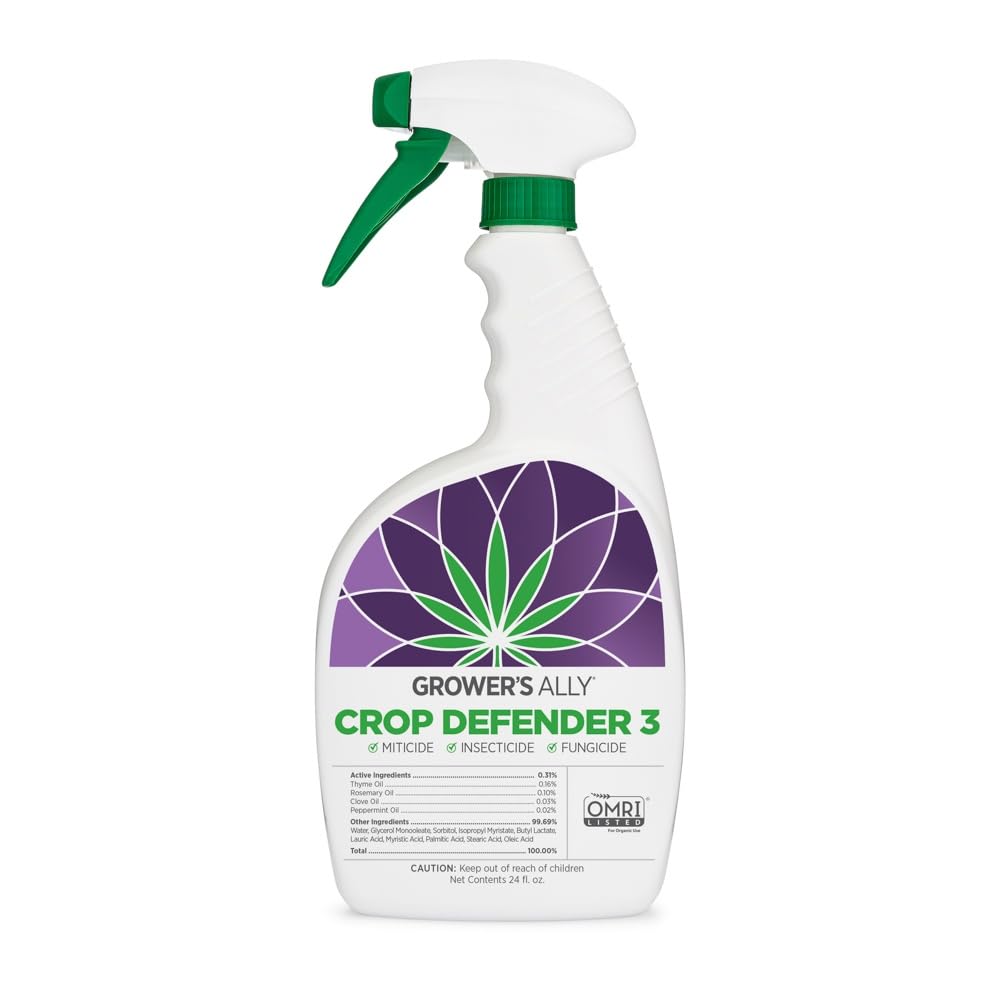
For indoor growers, greenhouse operators, and organic purists, the Crop Defender 3 is a game-changer. This 24-ounce ready-to-use spray uses a proprietary blend of botanical oils—rosemary, peppermint, clove, and others—that kill spider mites, russet mites, thrips, aphids, and powdery mildew on contact without burning even the most sensitive seedlings. Multiple customers report that it eliminated spider mite infestations that resisted every other organic solution, including DIY recipes.
The formula is FIFRA 25(b) exempt and OMRI Listed, meaning it contains zero synthetic pesticides, residual solvents, or heavy metals. It tests clean for lab-grade cultivation environments. The built-in surfactant helps the spray spread evenly across waxy leaf surfaces, and the pleasant botanical scent is a welcome change from neem’s characteristic odor. Users love that it can be applied through all growth stages, including flowering cycles, without harming the plants.
Bee-safe and pet-friendly when dry, this spray is the top choice for anyone who wants maximum efficacy with minimum chemical footprint. The only tradeoff is the price per ounce—it’s the most expensive RTU option here—but for small to medium collections, the convenience and plant safety justify the premium.
Why it’s great
- Does not burn leaves—safe on seedlings and delicate plants
- Pleasant botanical scent; bee-safe and OMRI Listed
- Effective against mites, aphids, thrips, and powdery mildew
Good to know
- Higher cost per ounce than neem-based RTU sprays
- May require reapplication after heavy rain
3. Garden Safe Fungicide3
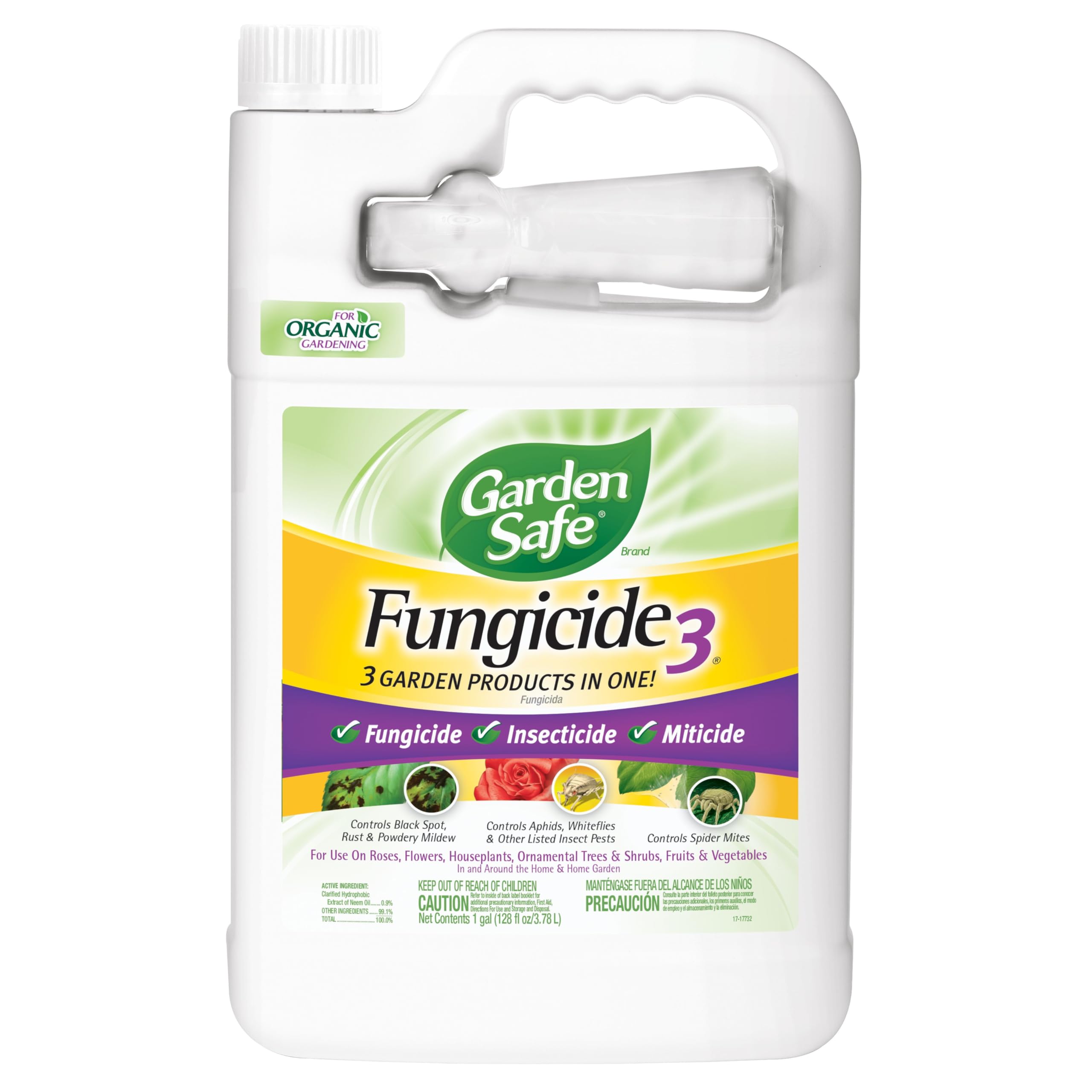
When you need to spray a large garden without mixing, the 1-gallon Garden Safe Fungicide3 is the most economical ready-to-use neem oil spray available. The active ingredient is clarified hydrophobic extract of neem oil at a standard concentration, giving you fungicide, insecticide, and miticide all in one trigger-ready bottle. It controls black spot, rust, powdery mildew, aphids, whiteflies, and spider mites across roses, flowers, houseplants, ornamentals, fruits, and vegetables.
Real-world users report life-changing results against mildew on hibiscus, roses, tomatoes, and blueberries. Weekly applications throughout the growing season eliminated fungal recurrence and dramatically improved foliage color and yields. The integrated sprayer is convenient but has a short reach—users note the coiled hose limits how far you can extend. A few customers reported leaf burn when using the full recommended rate in direct midday sun, so spraying in the evening or at half-strength is wise for sensitive plants.
For the volume-to-price ratio, nothing beats this gallon jug. It’s ideal for large outdoor flower beds or vegetable rows where you’ll burn through spray quickly. Just pair it with a separate spray wand if your plants are spaced far apart.
Why it’s great
- Best value per ounce in ready-to-use format
- Triple-action formula covers pests and diseases
- EPA-listed for organic gardening use
Good to know
- Integrated sprayer has short, coiled hose
- Can burn plants if applied during peak sun hours
4. Monterey Neem Oil RTU
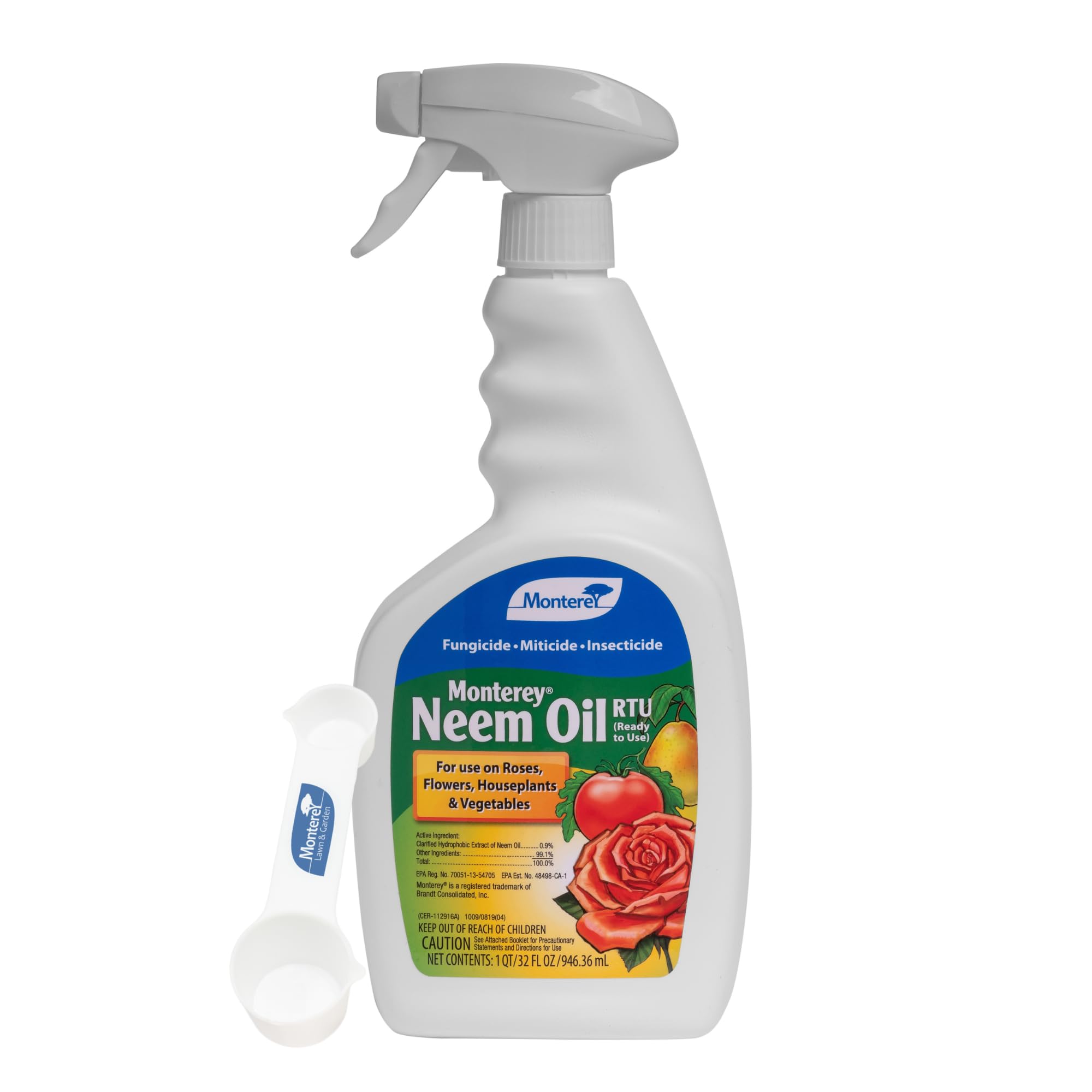
Monterey’s ready-to-use neem oil spray is formulated specifically for edible gardens, with label approval for use up to and including the day of harvest. The 32-ounce trigger bottle requires no mixing—just shake and spray on all plant surfaces. It controls black spot, powdery mildew, downy mildew, anthracnose, scab, aphids, spider mites, and rust across fruits, vegetables, herbs, roses, ornamentals, and houseplants.
First-time container gardeners report that the spray effectively eradicated caterpillars on brandywine tomatoes and cured powdery mildew on bloody butcher varieties in a single season. The strong neem odor dissipates within a day or two, and the product leaves no harmful residue on crops. Each bottle comes bundled with a garden measure spoon, adding a small but appreciated convenience. A handful of users did report leaking during shipping, so inspect the bottle on arrival.
For anyone growing food crops and wanting a simple, trusted neem solution, Monterey’s RTU delivers reliable protection without the guesswork of mixing concentrates. The harvest-day safety window gives you flexibility to spray even when fruit is ripening.
Why it’s great
- Safe to use up to day of harvest on all edibles
- No mixing required—shake and spray
- Controls broad spectrum of fungal and insect issues
Good to know
- Strong neem odor that lingers for a day
- Shipping can sometimes cause leakage
5. BioAdvanced Tomato & Vegetable Pest Control

When a heavy infestation hits your raised beds, you need something that works immediately. BioAdvanced’s 24-ounce RTU spray uses a synthetic active ingredient that delivers noticeable knockdown of aphids, cutworms, and other listed pests within hours. The formula is specifically designed for tomatoes, peppers, carrots, and other vegetables, with a harvest-ready label allowing same-day harvest after spraying.
Users fighting lantern flies on grapevines report that the spray keeps the invaders off for weeks at a time with a single application. The trigger bottle makes quick work of multiple raised beds, and the fast-acting nature means you see dead pests on the soil within a day. However, because it’s a synthetic pyrethroid, it can harm beneficial insects like bees if sprayed during bloom. A handful of customers found it less effective on certain soft-bodied pests compared to neem-based alternatives.
This is the right choice for the gardener who needs a chemical hammer for an acute outbreak—especially on tomatoes and peppers that are already fruiting. Just spray carefully, avoid open flowers, and don’t use it as a weekly preventative.
Why it’s great
- Extremely fast-acting—pests die within hours
- Harvest-safe on the same day of application
- Easy trigger sprayer covers large areas quickly
Good to know
- Synthetic formula can harm bees and beneficials
- Not as effective on spider mites as dedicated miticides
6. Natria Neem Oil Spray
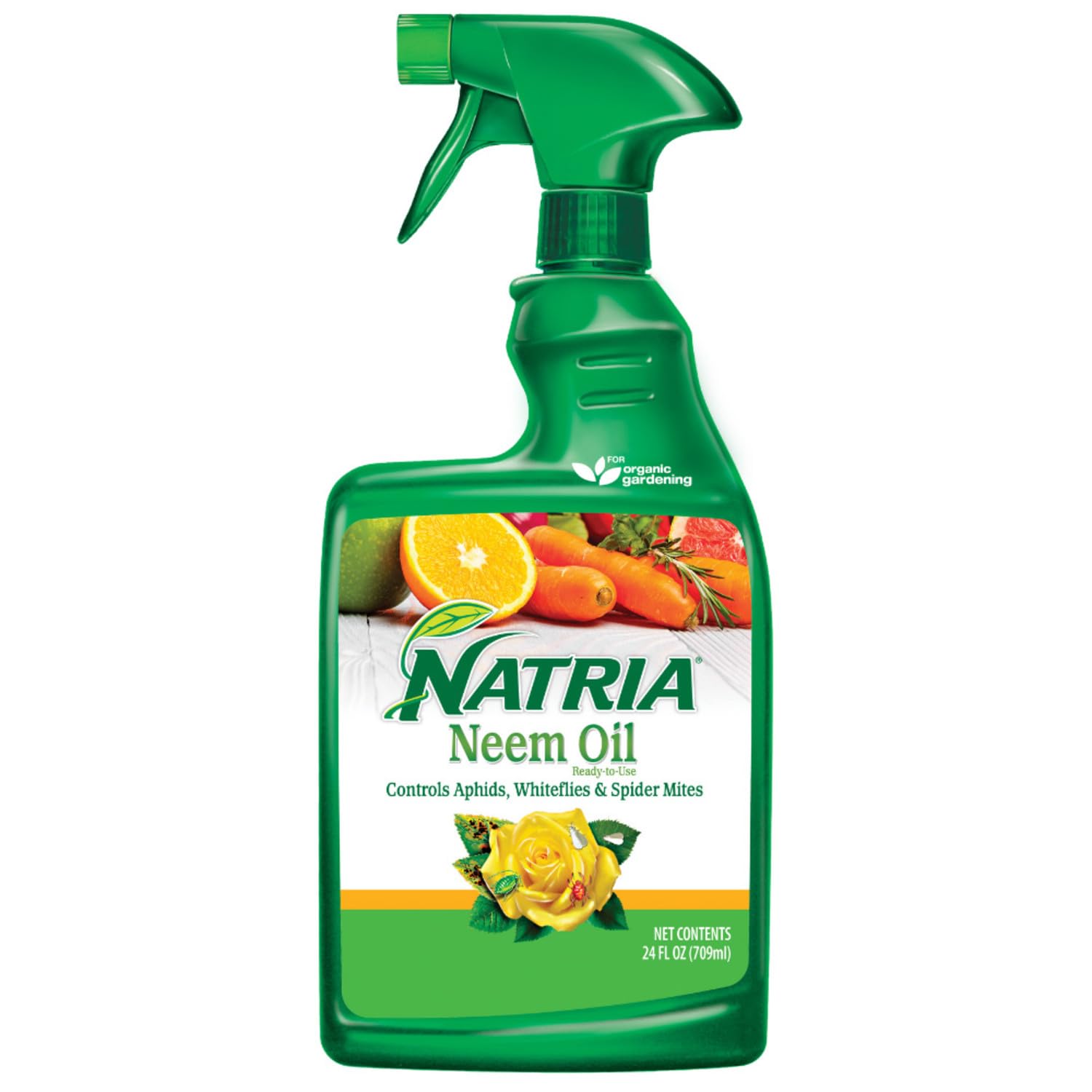
For the indoor plant parent or small garden enthusiast on a tight budget, Natria’s 24-ounce RTU spray is a reliable, no-fuss entry point into organic pest control. The 0.9% clarified hydrophobic extract of neem oil formula works as both an insecticide and fungicide, controlling aphids, whiteflies, spider mites, Japanese beetles, fruit flies, scales, and powdery mildew. The ready-to-use trigger sprayer requires zero mixing or measuring.
Users report immediate results against fruit flies on houseplants and visible reduction in pest pressure on tomatoes and vegetables. The neem scent is noticeable but fades within a day or two, making it tolerable for indoor applications. The bottle size is perfect for a collection of 10–20 houseplants or a small outdoor container garden. A few users noted that results were subtle—pest populations decreased gradually rather than vanishing overnight—which is typical of neem’s gentler mode of action.
Natria is the low-risk starter spray for anyone new to plant pest control. It won’t burn your plants, it’s safe for use up to harvest day, and at this price point, you can afford to be generous with coverage. Just be patient—neem works by disrupting feeding and molting, not by instant chemical kill.
Why it’s great
- Very affordable entry into organic pest control
- Works as both insecticide and fungicide
- Safe for indoor use and edible plants
Good to know
- Results are gradual, not instant
- May need multiple applications for heavy infestations
7. The Green Alcove Neem Oil Spray Kit

Neem oil has a notoriously short shelf life once opened—after a few months it oxidizes and loses efficacy. The Green Alcove solves this perfectly with a kit that includes one durable amber PET spray bottle and five single-use neem oil sachets. Each sachet mixes with 16 fluid ounces of warm water to make a fresh 16-ounce spray, giving you up to 80 ounces total from one purchase—with zero waste or spoilage.
Users report that a single application eliminated powdery mildew on mini African violets, and caterpillars stopped eating sweet pepper plants after a mix with peppermint oil. The sachets are easy to tear and dissolve quickly with a shake. The spray bottle has a rotating nozzle with mist, stream, and off settings, making it versatile for different plant sizes. A few first-time users accidentally killed succulents by over-application, so start with a light mist and test a leaf first.
If you only have a handful of houseplants or need the assurance that every batch of spray is fresh and potent, this kit is the smartest buy. No more pouring half a bottle of oxidized neem down the drain. The aesthetic amber bottle also looks great on a plant shelf.
Why it’s great
- Eliminates neem oil waste and oxidation
- Pre-measured sachets make mixing foolproof
- Includes a quality spray bottle with three nozzle settings
Good to know
- Over-application can damage sensitive succulents
- Neem odor is present but manageable
FAQ
Can I use bug spray for plants on my indoor herbs and vegetables?
How often should I reapply bug spray for plants during an active infestation?
Will neem oil bug spray harm my beneficial insects like ladybugs or bees?
Final Thoughts: The Verdict
For most users, the best bug spray for plants winner is the Bonide Captain Jack’s Orchard Spray because its concentrate format delivers unmatched value and broad-spectrum control for both insects and diseases. If you want a ready-to-use spray that won’t burn delicate seedlings, grab the Grower’s Ally Crop Defender 3. And for indoor plant parents with small collections who hate wasting half-empty bottles, nothing beats the The Green Alcove Neem Kit.