
A building wrap that fails—ripping during installation, trapping moisture against your siding, or tearing under the first gust of wind—turns a simple weather barrier into a costly redo. The right wrap manages vapor, handles UV exposure, and stands up to staples without fraying, making the difference between a durable envelope and a call-back.
I’m Min — the co-founder and writer behind Gadgets Feed. I’ve spent hundreds of hours cross-referencing manufacturer spec sheets and analyzing real-world installation feedback across permeable house wraps, radiant barriers, vapor barriers, and drainage mats to understand exactly where each type excels.
The specific choice you make matters, especially when you are searching for the best building wrap for your project.
How To Choose The Best Building Wrap
Selecting the right building wrap goes beyond grabbing the thickest roll. You need to match the wrap’s properties—permeability, thickness, material type—to the specific climate zone and assembly layer where it will live. A crawl space vapor barrier and a wall drainage mat serve completely different functions. Understanding the three-way tradeoff between moisture management, tear resistance, and installation ease will steer you to the correct product every time.
Permeability: The Perm Rating That Matters
Vapor permeability, measured in perms, tells you how much water vapor passes through the wrap per unit of time. A true house wrap should be a water-resistive barrier (WRB) with a perm rating above 5 to allow wall cavities to dry outward. Products with a perm rating below 0.1, like 16-mil polyethylene vapor barriers, are designed to stop vapor entirely and are only appropriate for below-grade or crawl space applications—never on a wall assembly that needs to dry.
Thickness, Tear Resistance, and Handling
Thickness is measured in mils (1 mil = 0.001 inch). A 6-mil to 10-mil poly construction film is standard for drop cloths and temporary weather protection but tears easily when stapled over rough lumber. For permanent wall wraps, look for reinforced materials—fabric mesh layers or woven scrim that prevent tear propagation at fastener points. Commercial-grade wraps may exceed 60 mils, like self-adhering rubberized asphalt membranes that seal around nails for extreme moisture protection below grade.
Radiant Barriers vs. Vapor Barriers vs. Drainage Mats
A radiant barrier (like perforated aluminum foil) blocks 95-97% of radiant heat transfer but is not a vapor barrier—it is breathable and designed for attic rafters or under metal roofs. A vapor barrier (panda film or heavy poly sheeting) stops moisture vapor and is installed on the warm side of an assembly in cold climates. A drainage mat (10-mm polymer matrix) creates a capillary break behind cladding to accelerate drying. Wrong application of any of these three leads to trapped moisture, mold, or insulation failure.
Quick Comparison
On smaller screens, swipe sideways to see the full table.
| Model | Category | Best For | Key Spec | Amazon |
|---|---|---|---|---|
| US Energy Products Radiant Barrier 1000 sqft | Radiant Barrier | Attic & roof radiant heat reduction | 99.7% reflective / 1000 sqft | Amazon |
| Crawl Space Vapor Barrier 16 mil | Vapor Barrier | Crawl space encapsulation | 16 mil thick / 650 sqft | Amazon |
| MFM SubSeal60 Waterproof House Wrap | Waterproof Memb. | Below-grade / foundation waterproofing | 60 mil rubberized asphalt | Amazon |
| SmartFOIL 4ft x 125ft Radiant Barrier | Radiant Barrier | Metal buildings & house wrap | 95% reflection / 500 sqft | Amazon |
| 10 Mil Black Plastic Sheeting 5×100 FT | Vapor Barrier | Garden, crawl space, weed control | 10 mil polyethylene | Amazon |
| ABP Mortairvent 203 10mm | Drainage Mat | Stucco & cladding drainage cavity | 10 mm / 95% open polymer | Amazon |
In‑Depth Reviews
1. US Energy Products Radiant Barrier 1000 sqft

This commercial-grade radiant barrier wraps 1,000 square feet of coverage at a 4-foot width, delivering a 99.7% reflective value that exceeds typical foil barriers. The aluminum material is reinforced with a fabric mesh between layers, which prevents tearing during aggressive stapling—a frustration common with single-ply foil that rips at the fastener point.
The roll is heavy and requires two to three people to manage 13-foot cut sections in an attic, but the tear resistance and ease of cutting with utility scissors offset the installation weight. Real-world users report attic temperature drops from 140°F to near outside ambient after installing this barrier above joists paired with solar fans. The ASTM E-84 Class A fire rating ensures compliance with most building codes for attic and roof applications.
If you need a single solution for reducing radiant heat gain in a residential attic, metal shop, or pole barn, the coverage-to-performance ratio here is difficult to beat. The material thickness is remarkably thin while still being strong, which means it lays flat against rafters without wrinkling enough to create air gaps that reduce efficiency.
Why it’s great
- 99.7% reflectance dramatically reduces attic temperatures
- Fabric mesh reinforcement prevents tear propagation at staple points
- Class A fire rating satisfies code requirements
Good to know
- Roll weight requires multiple people to handle long lengths
- Not a vapor barrier—breathable by design, so not for crawl space encapsulation
2. SmartFOIL 4ft x 125ft Radiant Barrier

The SmartFOIL radiant barrier is perforated and breathable by design, meaning it doubles as a house wrap under siding while still blocking 95% of radiant heat. This dual use makes it a mid-range candidate for metal barns, poultry houses, or DIY home workshops where you want both weather protection and energy efficiency from a single material layer.
The proprietary clear coating on the Engineered Foil surface provides corrosion resistance per ASTM D3310, which is a practical advantage in humid attic environments or metal buildings prone to condensation. At 500 square feet per roll, it covers a standard 1,000-square-foot roof deck with two rolls. Users consistently report a drop from 140°F to roughly 100°F in attic temperatures when installed under rafters with proper ventilation.
The material is strong enough to handle stapling without immediate tearing, though it can puncture if forced over sharp objects. It cuts easily with scissors and does not require special tools. For anyone looking to retrofit an existing home or barn without breaking the budget, this roll delivers a noticeable delta in heat transfer for the investment.
Why it’s great
- Breathable design allows wall cavity drying when used as house wrap
- Corrosion-resistant coating adds longevity in humid environments
- Simple staple installation with no specialized equipment
Good to know
- Can puncture from sharp edges—requires surface prep on rough decks
- Lower coverage per roll (500 sqft) may need multiple rolls for larger projects
3. Crawl Space Vapor Barrier 16 mil 10′ x 65′
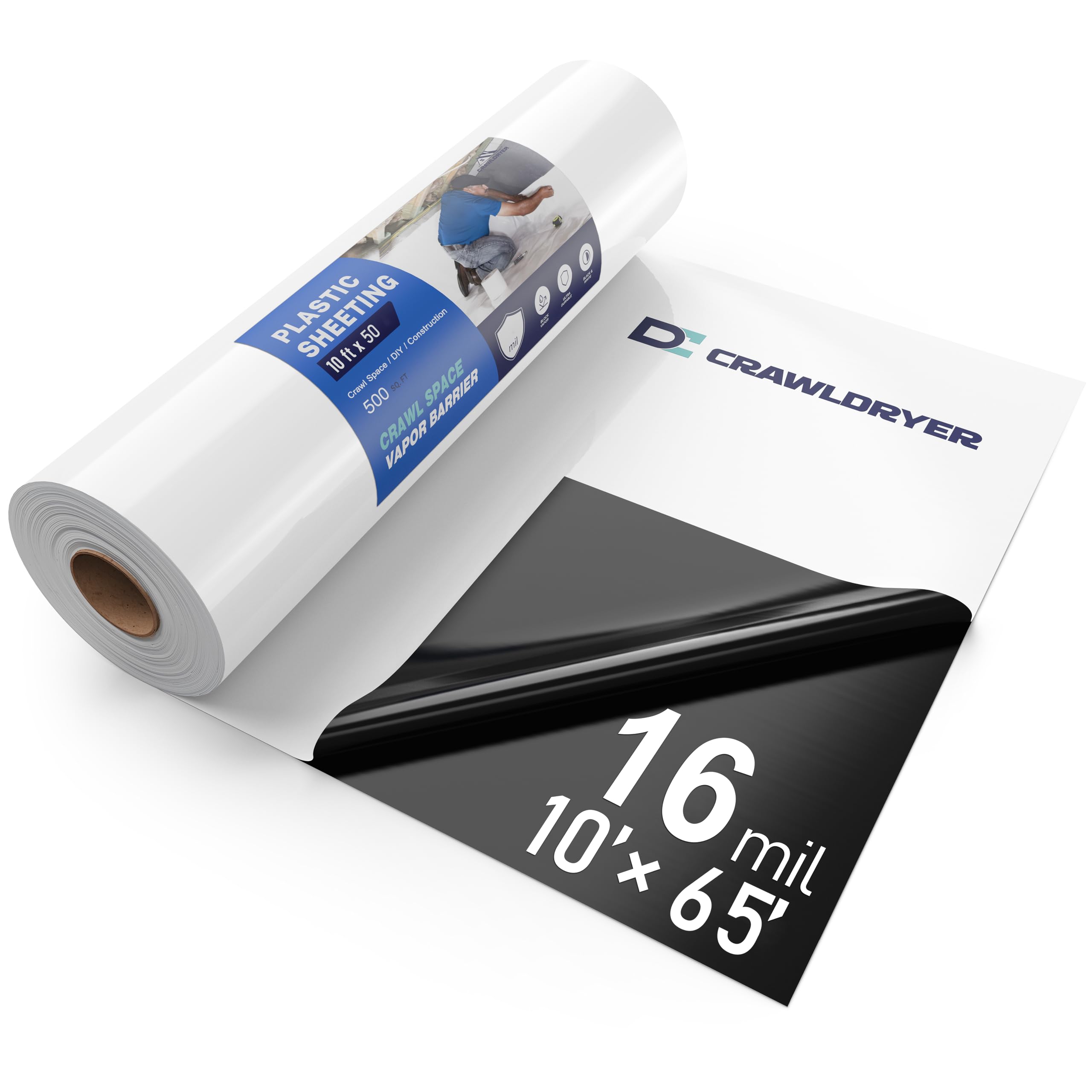
At 16 mils thick, this black-and-white panda film is engineered for the harsh physical demands of crawl space encapsulation, where rocks, gravel, and rough concrete would shred a thinner 6-mil poly barrier in hours. The low-density polyethylene construction resists tearing even when heavy boards are dragged across it, and the white side reflects over 90% of light to keep the crawl space brighter and less inviting to pests.
The 10-foot width and 65-foot length provide 650 square feet of coverage, which typically fits a standard residential crawl space with a single roll. Users note that the material accepts staples and screws without splitting, which means it can be mechanically fastened to walls and piers for a tight seal. The dual-side design lets you choose the black side facing soil to block light for moisture control, or the white side facing up for visibility during maintenance.
This barrier is specifically a vapor blocker, not a radiant barrier or drainage mat—its perm rating is near zero. It is the correct choice for encapsulating below-grade spaces to stop ground moisture and radon gas migration, but it should never be used on exterior wall assemblies that need to dry outward.
Why it’s great
- 16 mil thickness withstands puncture from sharp debris in crawl spaces
- Reflective white side illuminates the underside for easier inspection
- Staples and screws hold without causing tear propagation
Good to know
- Not breathable—only suitable for vapor barrier applications
- Roll is very heavy (approx. 40+ lbs) due to the thick material
4. MFM SubSeal60 Waterproof House Wrap

The SubSeal60 is a 60-mil rubberized asphalt membrane that self-seals around fastener penetrations, making it one of the most durable waterproofing wraps available for below-grade foundation walls and sill plates. Unlike polyethylene or foil wraps, this material contracts and expands with the building surface due to high elongation properties, which prevents cracking as the structure settles over seasonal temperature swings.
The roll covers only 180 square feet and weighs 72 pounds, so this is not a weekend convenience product—installation requires two to four people for lengths over 4 feet. The exposed adhesive is extremely sticky and must be installed level on the first attempt to avoid air pockets. Direct sunlight causes the edges to curl, so the membrane needs flashing or covering immediately after placement.
This product meets ASTM D 1970 and ICC-ES AC 38 standards, which means it has been tested for self-sealing capability and long-term waterproofing performance. It is best reserved for critical moisture points: foundation-to-slab joints, window and door rough openings, or full foundation wraps where a puncture from backfill would otherwise create a leak path.
Why it’s great
- Self-seals around nails and staples to prevent water intrusion
- 60 mil thickness provides extreme puncture resistance
- Rubberized asphalt won’t crack or dry out over time
Good to know
- Extremely heavy roll (72 lbs) — requires multiple people to handle
- Must protect from sun exposure immediately after installation
5. 10 Mil Black Plastic Sheeting 5×100 FT
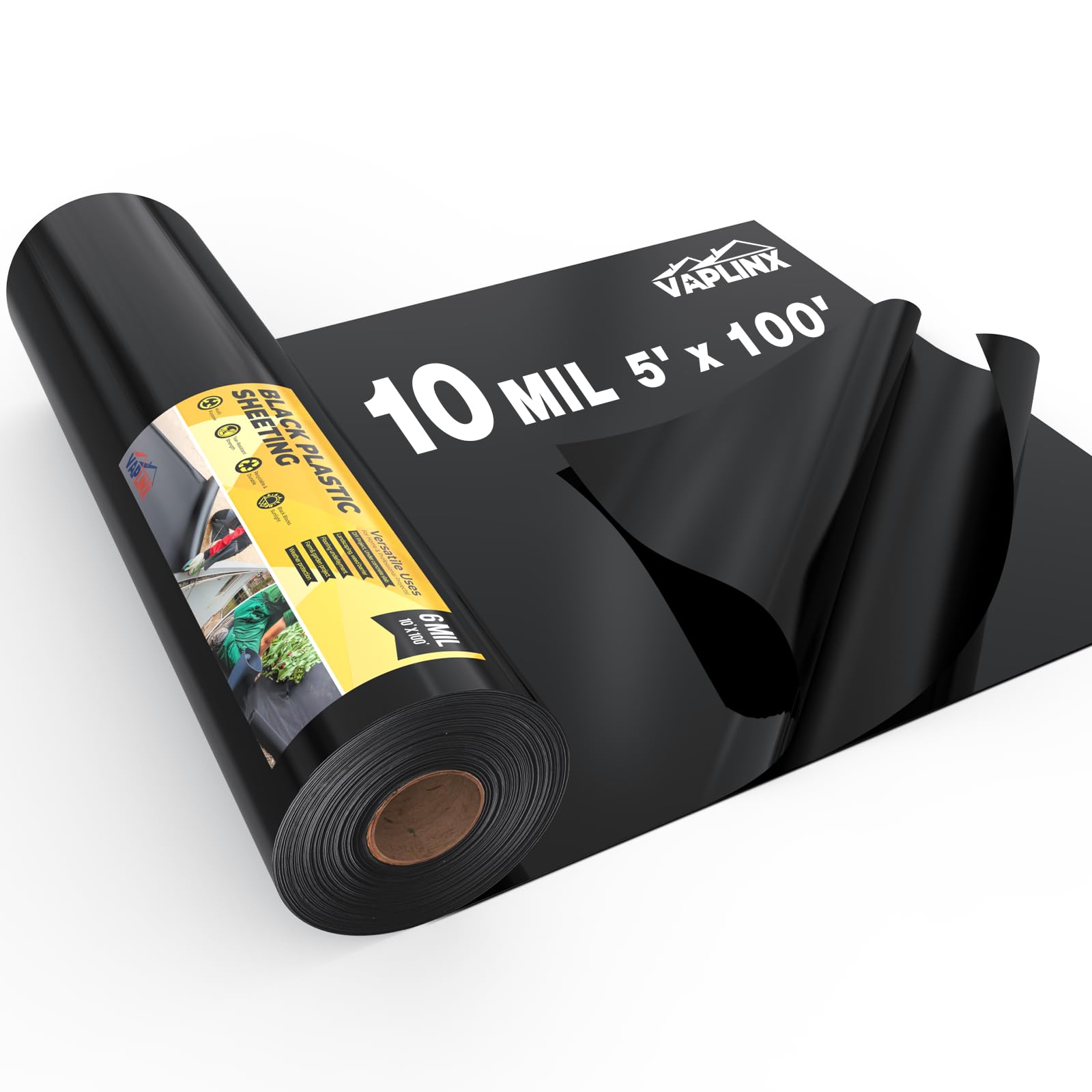
This 10-mil polyethylene sheeting from VAPLINX is a general-purpose vapor barrier that works for crawl space soil covering, garden weed suppression, concrete curing, and temporary weather protection. At 5 feet by 100 feet, the coverage is broad enough for most residential projects, and the 10-mil thickness provides a meaningful upgrade over standard 4-mil or 6-mil drop cloths that tear under the slightest tension.
The material is UV-resistant, which allows it to survive outdoor exposure for several months before degrading—useful for covering woodpiles, construction materials, or equipment during a build. However, the polyethylene is not reinforced, so sharp rocks or rough concrete can puncture it during installation. Users recommend preparing the surface by removing stones and using tape on any punctures or seams for continuous moisture protection.
It works perfectly as a temporary weather barrier over sheathing or as a crawl space vapor barrier for well-prepared soil. For permanent wall assemblies or long-term below-grade applications, a thicker reinforced barrier is a better investment. This sheeting fills the niche of an affordable, multipurpose construction poly that disappears quickly when you need one roll to handle multiple tasks.
Why it’s great
- 10 mil thickness is a significant step up from standard 4-mil poly
- UV-resistant formula allows months of outdoor use without failure
- Large roll covers wide-ar coverage for gardens, crawl spaces, and construction
Good to know
- Not reinforced—punctures easily from sharp rocks or debris
- Seams and punctures require weatherproof tape to stay sealed
6. ABP Mortairvent 203 10mm Drainage Mat

The Mortairvent 203 is a 10-millimeter drainage mat specifically designed to create a capillary break between exterior cladding—stucco, cedar shakes, brick veneer—and the weather-resistive barrier behind it. The polymer matrix is 95% open, meaning water that penetrates the cladding has a continuous vertical channel to drain down to a weep screed rather than being trapped against the sheathing.
This product directly replaces traditional furring strip methods for creating a drainage cavity, and it is faster to install since you simply roll it out and staple it over the house wrap before the wire lathe goes up. Users report easy cutting and quick application under stucco, with the 2.5-inch bottom flap serving as a bug block when paired with a drip edge and base flashing.
The 130-square-foot roll (10 mm thickness) is adequate for smaller residential facades; larger projects will need multiple rolls. This is a specialty product—it has no reflective property, nor is it a vapor barrier—its sole job is to accelerate drying of the cladding assembly to prevent rot and efflorescence. If you are installing synthetic stucco or natural wood siding, this drainage mat is considered a best practice for moisture management.
Why it’s great
- 95% open design ensures continuous drainage behind cladding
- Replaces labor-intensive furring strips for faster installation
- Contributes to LEED points for moisture management
Good to know
- Specialized for drainage only—no thermal or vapor barrier properties
- Modest coverage (130 sqft) may require several rolls for a full facade
FAQ
Can I use a radiant barrier as a house wrap?
What mil thickness do I need for a crawl space vapor barrier?
Is a drainage mat necessary under stucco or stone veneer?
Final Thoughts: The Verdict
For most users, the best building wrap winner is the US Energy Products Radiant Barrier 1000 sqft because it delivers the highest radiant reflectance (99.7%) with a reinforced fabric mesh that eliminates tearing—a rare combination of energy performance and installation durability. If you need extreme moisture protection below grade, grab the MFM SubSeal60 Waterproof House Wrap. And for stucco or wood cladding applications, nothing beats the ABP Mortairvent 203 Drainage Mat for preventing trapped moisture behind the facade.