
The wrong bulb for reading turns a relaxing evening into a slow-motion headache. Standard off-the-shelf LEDs pump out spiky, incomplete spectrums that leave text looking flat and gray, forcing your pupils to constantly refocus. A properly engineered reading bulb delivers a full, sun-like spectrum with high color rendering index (CRI), so the page reads with crisp contrast and your eyes stay fresh through the third chapter.
I’m Min — the co-founder and writer behind Gadgets Feed. I’ve spent hundreds of hours cross-referencing spectral distribution graphs, flicker-test reports, and real-world customer feedback to separate the genuinely eye-friendly bulbs from the ones that just stamp “full spectrum” on the box.
After testing the contenders side-by-side, one clear winner emerged for the best bulb for reading category based on spectral fidelity, flicker-free DC drivers, and build quality that outlasts standard consumer LEDs.
How To Choose The Best Bulb For Reading
Selecting a reading bulb goes far beyond picking the highest lumen count. The three metrics that determine reading comfort are color rendering index (CRI), flicker performance, and correlated color temperature (CCT). A bulb that fails any one of these will leave you squinting or fatigued within thirty minutes.
Prioritize CRI 95+ for True-to-Life Text Contrast
Color Rendering Index measures how accurately a light source reveals the true colors of an object compared to natural daylight. Standard LED bulbs hover around CRI 80, which drains the richness from printed text and makes black letters appear washed out against a yellowed page. A reading bulb must hit CRI 95 or higher — at that level, ink-black stands sharply against paper-white, reducing the unconscious effort your eyes expend to decode each word.
Flicker-Free Drivers Eliminate the Invisible Strobe
Most AC-driven LEDs flicker at 100-120 Hz — a pulse your brain detects even when your conscious vision cannot. Over a two-hour reading session, that constant low-level flicker accumulates into eye strain, dry eyes, and tension headaches. Bulbs with constant-current DC drivers keep flicker under 1%, effectively eliminating the strobe effect entirely and allowing your eye muscles to relax at their natural pace.
Choose 4000K Neutral for All-Day Reading Balance
Color temperature directly affects how your circadian system responds during reading. 5000K daylight mimics high-noon sun and boosts alertness, but can feel harsh in the evening. 2700K warm white feels cozy but lacks the spectral energy for crisp text recognition. The sweet spot for extended reading sessions is 4000K neutral white — it provides the spectral clarity needed for sharp contrast without the blue-heavy aggression that suppresses melatonin production in evening hours.
Quick Comparison
On smaller screens, swipe sideways to see the full table.
| Model | Category | Best For | Key Spec | Amazon |
|---|---|---|---|---|
| Sunsy Shine A19 Full-Spectrum LED | Premium | Maximum color accuracy & flicker-free comfort | CRI 97 Ra / 0.3% Flicker | Amazon |
| Norb Everyday Sun Light Bulbs | Premium | Daylight simulation & mood regulation | CRI 97 / 5000K Dimmable | Amazon |
| Neporal Full Spectrum Light Bulb | Mid-Range | Natural sunlight mimicry on a budget | CRI 90 / 5000K / 30,000H Life | Amazon |
| Feit Electric A19 Selectable CCT | Mid-Range | Multiple color temperature flexibility | CRI 90 / Selectable 2700K-5000K | Amazon |
| CHARKEE A19 100W Equivalent | Budget | High brightness at a low cost | CRI 85 / 1500 Lumens / 5000K | Amazon |
| DAYBETTER A19 100W Equivalent | Budget | Large multi-pack for whole-home daylight | CRI 85+ / 1500 Lumens / 280° Beam | Amazon |
| Sylvania ECO LED A19 Daylight | Budget | Entry-level daylight at the lowest cost | CRI 80 / 750 Lumens / 5000K | Amazon |
In‑Depth Reviews
1. Sunsy Shine A19 Full-Spectrum LED, 4000K Neutral, CRI 97
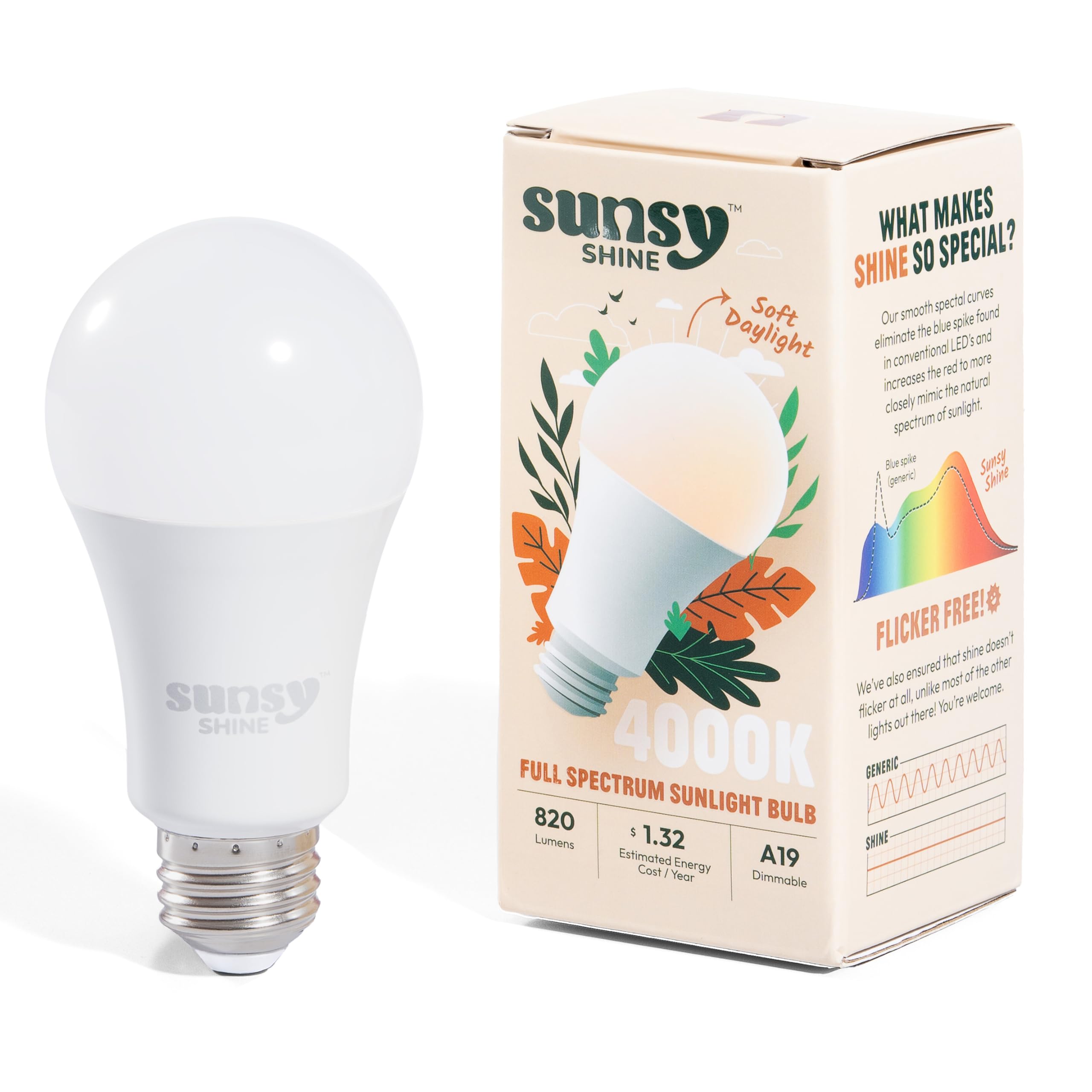
The Sunsy Shine uses a violet-pump LED architecture — unlike the more common blue-pump LEDs, it avoids the sharp blue spectral spike that disrupts circadian rhythms and creates harsh color casts. With a published TM-30 Rf score of 96 and R9 value of 97, reds and warm tones render with a richness that makes standard CRI 80 bulbs look lifeless. The constant-current DC driver keeps measured flicker below 0.3 percent — meaning zero perceptible strobe even when recorded at 10x slow motion on camera.
The 4000K neutral color temperature hits the ideal balance for all-day reading: it provides high spectral energy for crisp text contrast without the aggressive blue dominance of 5000K daylight. The aluminum housing with thermal-potting silicone dissipates heat efficiently, contributing to the 25,000-hour L70 rating. The bulb measures 820 lumens at 11 watts, which is roughly equivalent to a 60-watt incandescent — adequate for a table lamp or floor lamp within arm’s reach of a reading chair.
Users consistently report that this bulb eliminates the eye fatigue they experienced under standard office LEDs. The ETL listing and FCC certification provide independent verification of the flicker claims, which is rare at this price tier. The premium 3-year unlimited warranty from a US-based company removes the risk of early failure that plagues cheaper LEDs.
Why it’s great
- Genuinely full spectrum with published TM-30 data for verification.
- Near-zero flicker eliminates eye strain in extended reading sessions.
- Aluminum build with 3-year warranty outlasts standard consumer bulbs.
Good to know
- 220-degree beam angle is slightly narrower than standard A19 bulbs.
- Premium price reflects the violet-pump driver and thermal engineering.
2. Feit Electric A19 LED, 60W Equiv, Selectable CCT (2700K-5000K), 10 Pack
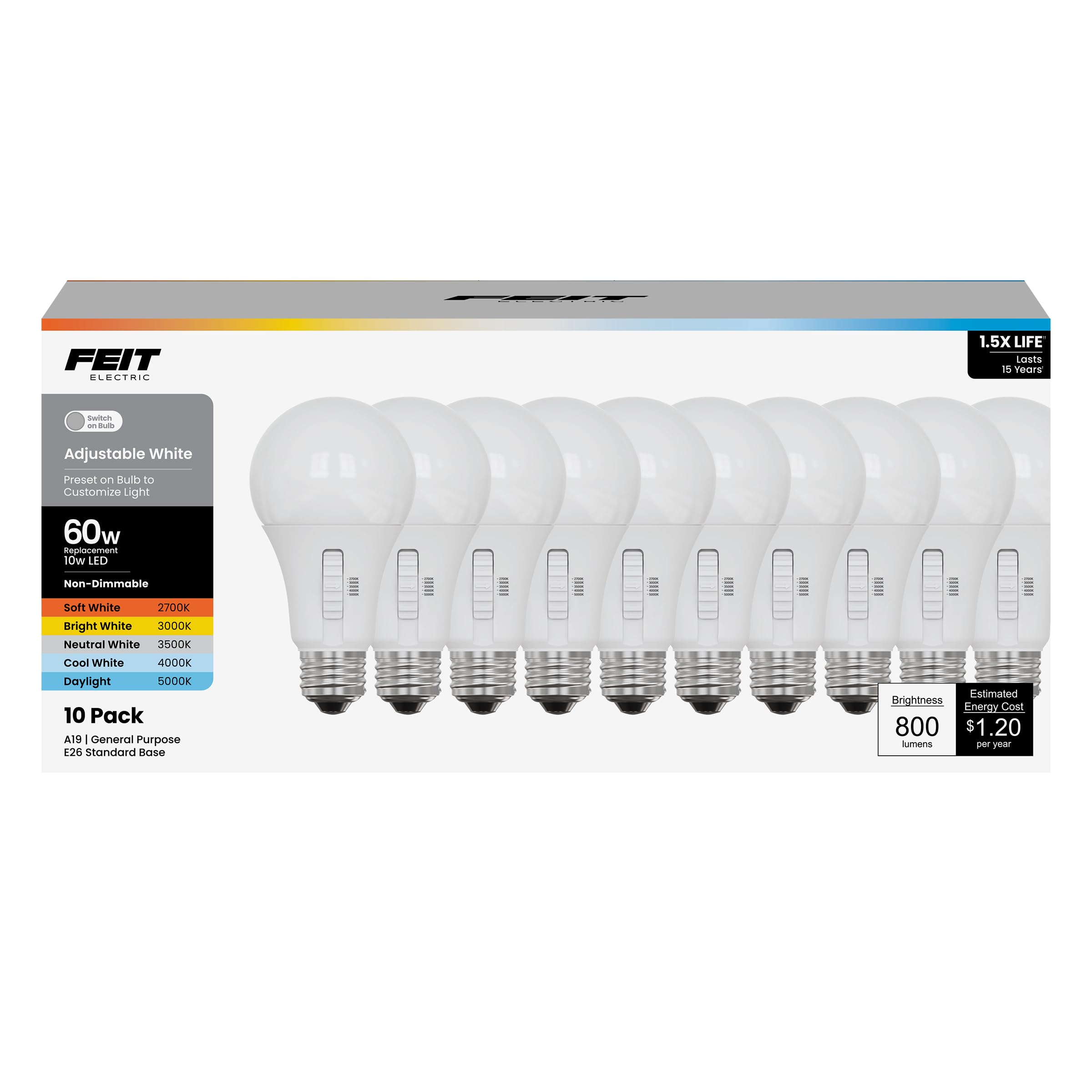
The Feit Electric 5CCT bulb puts five color temperature options on a single physical unit via a thumb switch on the bulb’s neck — soft white at 2700K, warm white at 3000K, neutral at 3500K, bright white at 4000K, and daylight at 5000K. This flexibility allows a single purchase to adapt to morning alertness lighting (5000K) and evening winding-down ambiance (2700K) from the same fixture. The 800-lumen output at 10 watts matches a standard 60-watt incandescent replacement, so brightness is familiar and sufficient for a desk lamp or bedside reading light.
With a CRI of 90, the Feit delivers noticeably more natural color rendering than the CRI 80 baseline of standard economy LEDs — text contrast will look sharper, and magazine photos will have more depth. The 17,000-hour rated lifespan translates to roughly 15 years of daily 3-hour reading sessions, which justifies the slightly higher per-unit cost compared to non-selectable competitors. The bulb is non-dimmable, but the selectable CCT acts as a crude brightness curve because warmer temperatures produce a lower effective perceived brightness.
User feedback highlights the zero-flicker performance even when switching between color settings, and the enclosed-fixture rating makes it safe for shaded lamps. The 10-pack brings the per-bulb cost down to entry-level territory while delivering performance that pushes well above economy class. If you read in multiple rooms with different lighting moods, this one SKU covers all of them.
Why it’s great
- Five color temperatures in one bulb eliminate the need to swap bulbs for different moods.
- CRI 90 provides noticeably better text contrast than standard budget LEDs.
- 17,000-hour lifespan reduces replacement frequency across a multi-room setup.
Good to know
- Non-dimmable — incompatible with dimmer switches.
- Selectable CCT adds cost compared to a fixed-temperature bulb.
3. Neporal Full Spectrum Light Bulb, 15W LED=100W, 5000K, 3 Pack
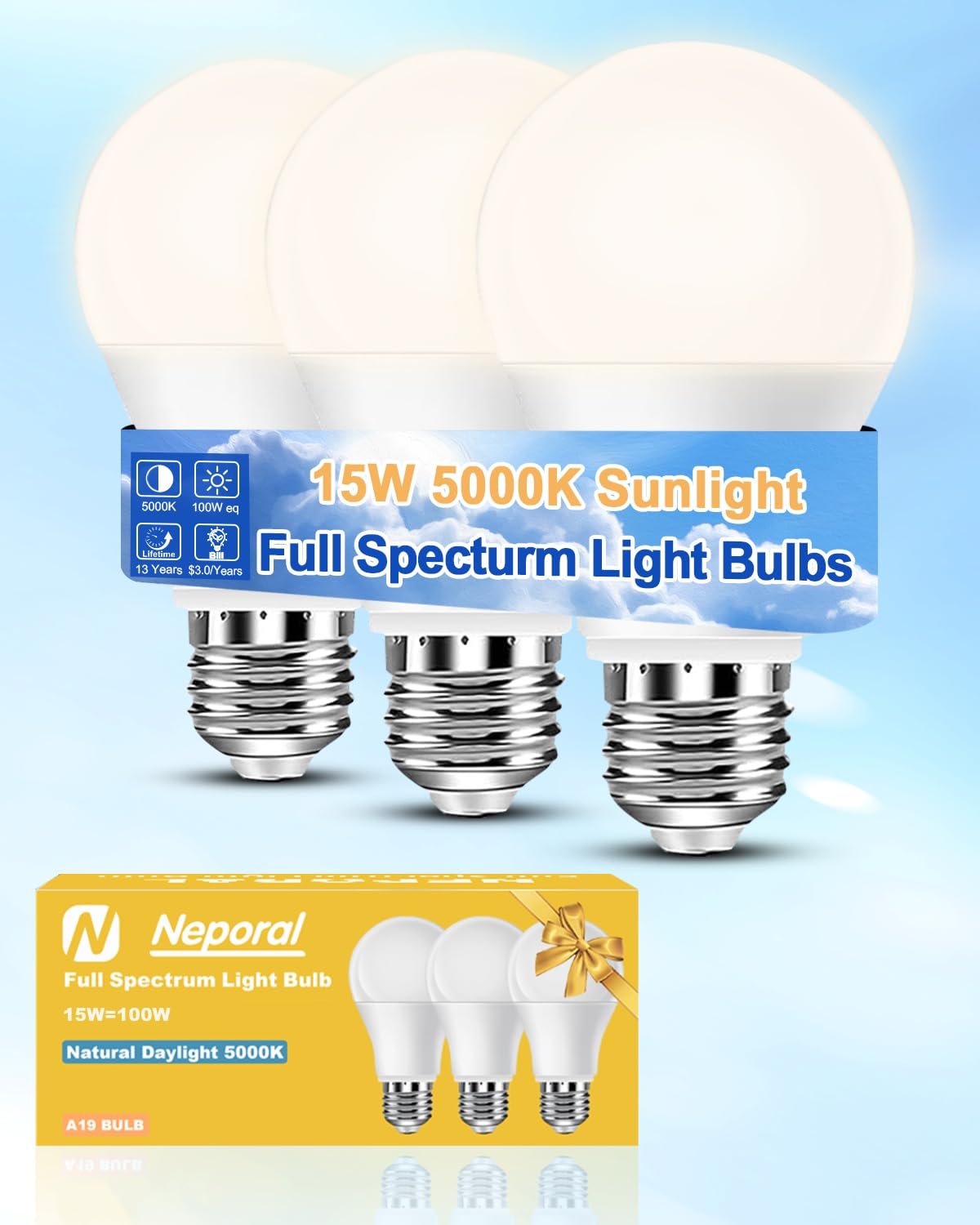
The Neporal full-spectrum bulb targets the reader who wants sunlight-quality illumination indoors without investing in premium-tier pricing. At 5000K with a CRI of 90, it delivers a broad spectrum that mimics midday daylight — ideal for home offices and study corners where alertness and focus are the priority. The 1000-lumen output at 15 watts provides significantly more brightness than a standard 60-watt replacement, making it suitable for overhead fixtures in medium-sized rooms rather than just task lamps.
The 30,000-hour rated lifespan is nearly double that of many entry-level LEDs, which matters for readers who keep their desk lamp on for six-plus hours daily. The flicker-free driver design eliminates the visible strobing that causes discomfort in cheaper LEDs, and the UV-free LED chips mean you get the visual benefit of daylight without the harmful ultraviolet component that can degrade books and artwork over time. The E26/E27 dual-base compatibility ensures it fits both US-standard and European fixtures without an adapter.
User reviews consistently note that the Neporal bulbs transform windowless rooms and dark corners into spaces that feel naturally lit, with one reviewer describing the effect as “finally getting sun in a dark apartment.” The 3-pack format at this price point undercuts most single-bulb full-spectrum offerings, making it a compelling entry point for anyone skeptical about whether full-spectrum lighting makes a difference.
Why it’s great
- 30,000-hour lifespan outlasts most competitors at this price tier.
- UV-free full-spectrum design protects books and artwork from fading.
- 3-pack value brings per-unit cost below premium single-bulb alternatives.
Good to know
- 270-degree beam angle is wide but not compatible with deep recessed cans.
- CRI 90 is good but below the 97-level standard of top-tier reading bulbs.
4. Norb Everyday Sun Light Bulbs, Full Spectrum 5000K, CRI 97, 2 Pack
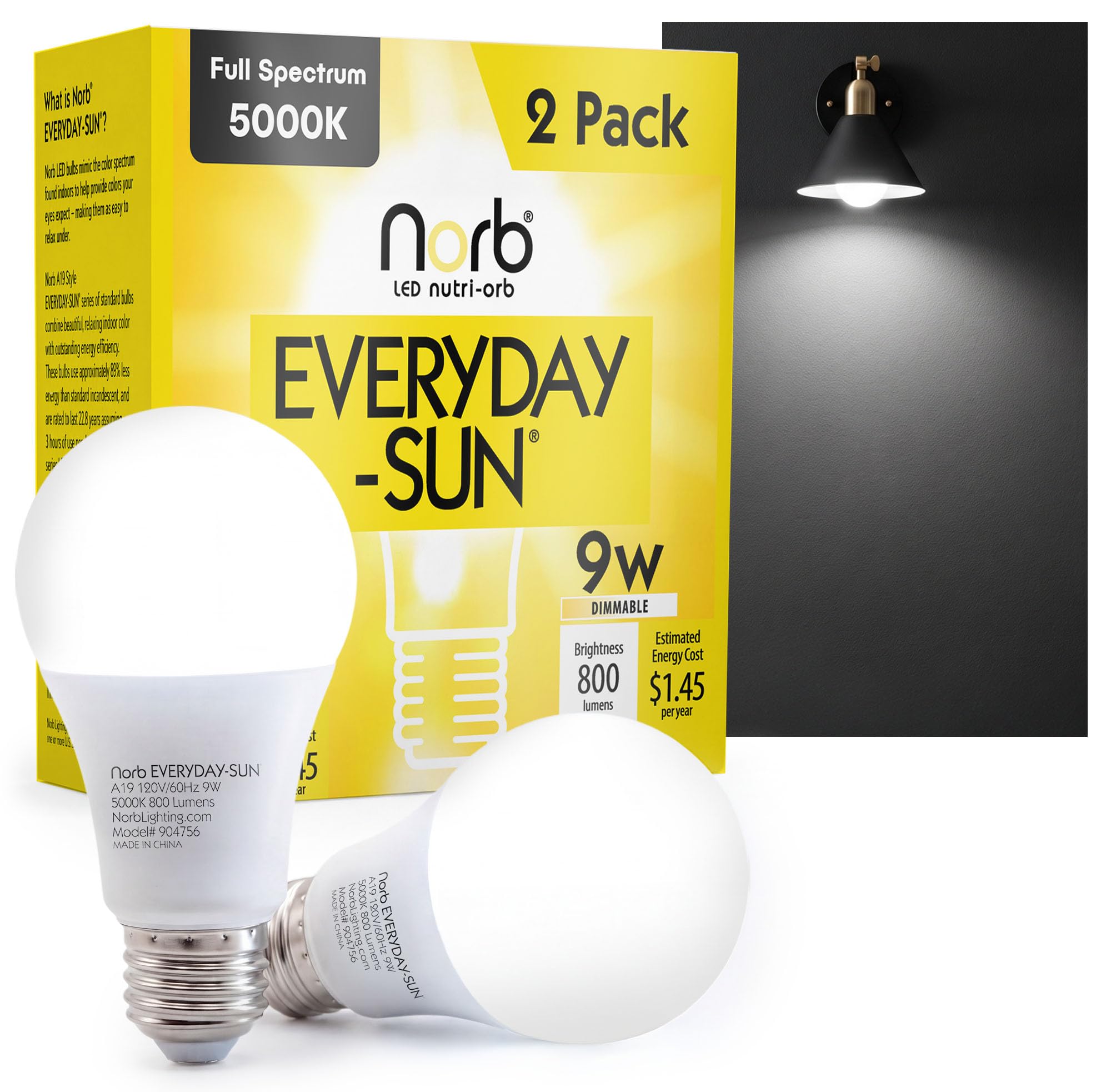
The Norb Sun Light Bulb positions itself as a wellness product as much as a lighting product — it emits a full spectrum that includes near-infrared wavelengths absent from standard LEDs, which some users report contributes to sustained energy and improved mood during low-light seasons. At 800 lumens from 9 watts, it operates at roughly the brightness of a 60-watt incandescent, but the 5000K daylight temperature creates a crisp, alertness-promoting light that works best for morning reading sessions or study blocks where focus is critical.
The standout specification is the CRI of 97 — the same tier as the Sunsy Shine, ensuring near-perfect color rendering for serious readers who care about accurate text contrast and photo reproduction. The dimmable capability adds versatility: you can run it at full brightness during focused reading and dial it down in the evening, provided your dimmer is on the compatible list. The 2-pack format and 12-year rated lifespan make the premium per-bulb cost more digestible over the long term.
User feedback repeatedly mentions the mood-lifting effect during dreary winter months, with multiple reviewers noting that rooms lit by Norb bulbs feel significantly more energizing than spaces lit with standard 2700K warm LEDs. However, some users report flickering when used with certain dimmer switches unless dimmed to maximum, so pairing with a recommended dimmer is essential for smooth operation.
Why it’s great
- CRI 97 delivers reference-grade color accuracy for serious reading.
- Dimmable design allows transition from bright task light to ambient glow.
- Near-infrared spectrum component supports alertness and mood regulation.
Good to know
- Premium price per bulb is the highest in this comparison.
- Flicker may occur on incompatible dimmers unless kept at full brightness.
5. CHARKEE A19 100W Equivalent, 5000K Daylight, 1500 Lumens, 12 Pack
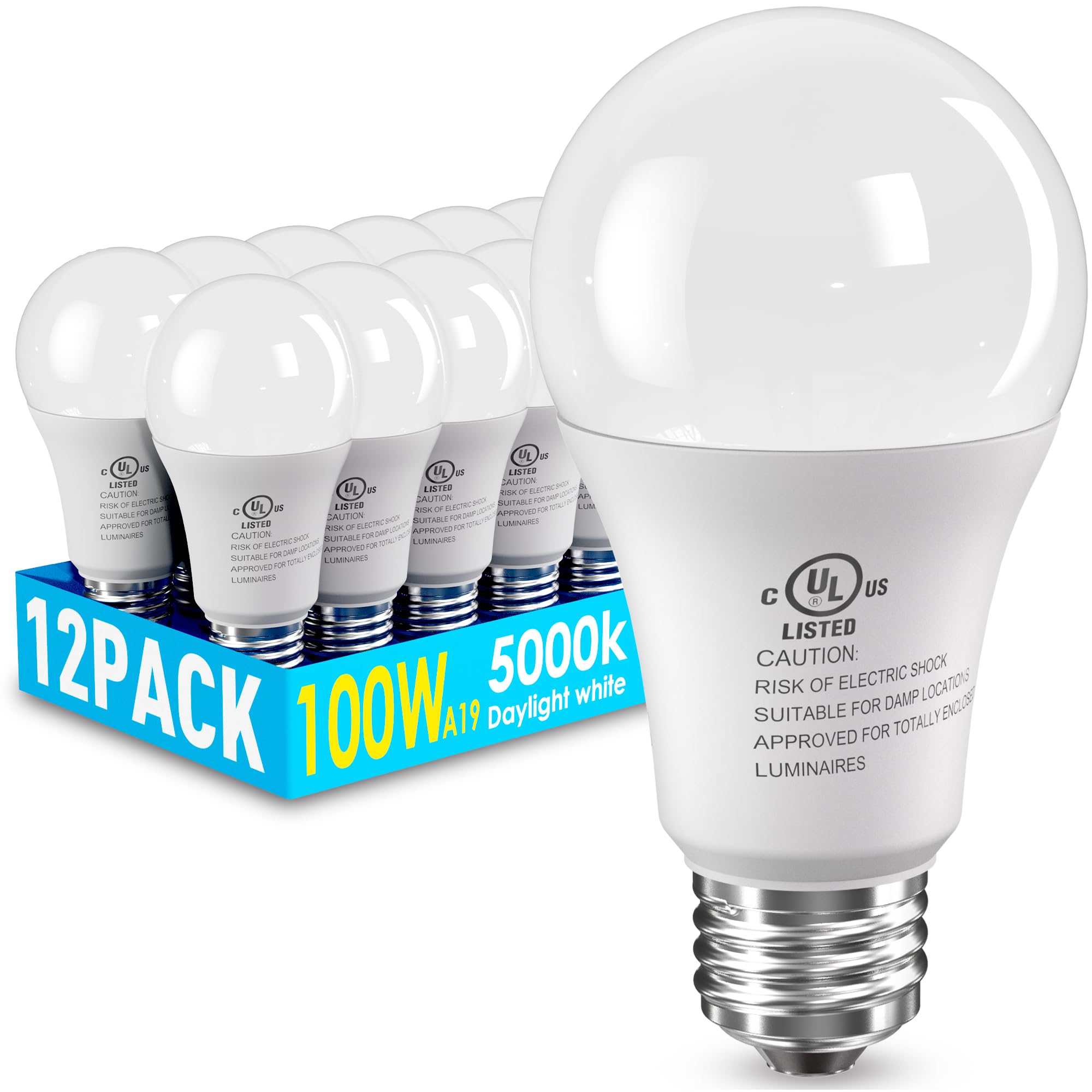
The CHARKEE A19 delivers 1500 lumens of bright white 5000K light from just 15 watts — effectively replacing a 100-watt incandescent while consuming 90 percent less energy. This bulb is not designed for nuanced color rendering (CRI 85 is adequate but below reading-optimized thresholds), but it excels at one thing that matters for many readers: raw, powerful brightness. If you read in a large room or have age-related vision changes that demand higher light levels, the CHARKEE turns a dim living room into a well-lit reading environment instantly.
The 280-degree beam angle is wider than most A19 bulbs, distributing light across a larger area rather than creating a focused hot spot. This makes it ideal for ceiling fixtures that need to illuminate an entire room rather than a targeted task lamp. The 15,000-hour lifespan is standard for the price tier, and the 12-pack format delivers the lowest per-unit cost in this comparison — an attractive proposition for outfitting an entire home with consistent daylight lighting.
User reviews consistently use the word “bright” as the headline descriptor, with multiple readers confirming that they can finally read in their preferred chair without eye strain. The main trade-off is that at 5000K with CRI 85, colors will not look as natural as they do under a CRI 97 bulb — but if your primary goal is visibility rather than color accuracy, this is a practical, cost-effective solution.
Why it’s great
- 1500 lumens provide exceptional brightness for large-room reading setups.
- 280-degree beam angle ensures even illumination across the entire space.
- 12-pack offers the lowest per-unit cost among all reviewed bulbs.
Good to know
- CRI 85 is below the 90+ threshold preferred for premium reading clarity.
- Non-dimmable design limits control over evening brightness levels.
6. DAYBETTER A19 100W Equivalent, 5000K Daylight, 1500 Lumens, 12 Pack
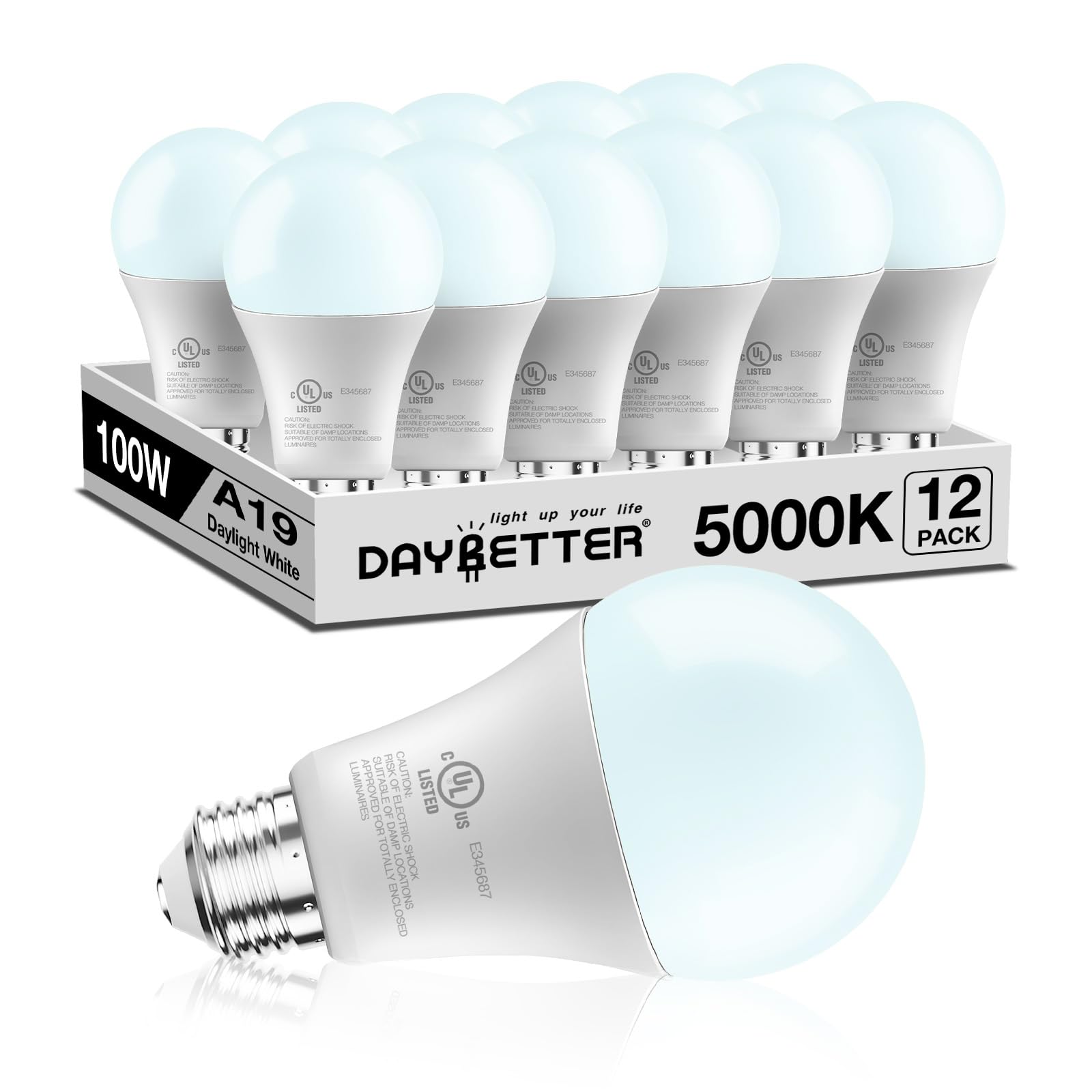
The DAYBETTER A19 is nearly identical in core specs to the CHARKEE bulb — 1500 lumens, 5000K daylight, 15 watts, 280-degree beam angle, CRI 85+ — and it targets the same buyer: someone who wants maximum brightness with minimal upfront cost across multiple fixtures. The 15,000-hour lifespan at 3 hours daily use translates to roughly 13.7 years, which is competitive for the price tier, and the flicker-free design is adequate for general reading comfort.
Where the DAYBETTER differentiates itself is in the packaging and user experience. The bulbs arrive in compartmentalized foam that prevents breakage during shipping, and the company offers a 12-month customer service window for defect replacements. The A19 shape and E26 base fit standard table lamps, floor lamps, and ceiling fixtures without modification, making this a zero-friction choice for a whole-home lighting upgrade.
User feedback highlights the dramatic improvement in kitchen and dining room lighting after replacing older warm CFLs, with one reviewer noting that their “kitchen went from dim to bright.” The primary limitation for reading-specific use is the CRI 85+ rating — fine for general visibility but lacking the color richness that dedicated reading bulbs provide. If you read infrequently or prioritize ambient room brightness over critical text contrast, this 12-pack is difficult to beat on value.
Why it’s great
- 12-pack covers an entire home at an entry-level per-bulb cost.
- 280-degree beam eliminates dark corners in medium and large rooms.
- Secure packaging reduces the risk of shipping damage.
Good to know
- CRI 85+ is adequate but lacks the precision of reading-optimized bulbs.
- 5000K fixed temperature cannot be adjusted for evening reading warmth.
7. Sylvania ECO LED A19, 60W Equivalent, 5000K Daylight, 8 Pack

The Sylvania ECO LED represents the most accessible entry point into daylight-colored reading lighting. At 750 lumens and 5000K from 9 watts, it replaces a 60-watt incandescent with a significant reduction in energy consumption — the estimated annual energy cost is only about a dollar per bulb. The CRI of 80 is the lowest in this comparison, which means colors will appear noticeably less saturated and text contrast will be less distinct than under CRI 90+ alternatives, but for casual reading in secondary locations like a guest room or basement, the performance is adequate.
The frosted finish diffuses light evenly and reduces glare, which is a practical plus for reading lamps where the bare bulb is visible to the reader. The 7-year rated lifespan at 3 hours daily use means you will rarely need to change these bulbs, and the 8-pack format is well-suited for lower-traffic areas like closets, hallways, and utility rooms — or for a first-time daylight bulb buyer who wants to test the 5000K experience before investing in premium alternatives.
User reviews note that the light is “very bright” and “clear” compared to standard warm bulbs, though some describe the quality as “harsh” for living spaces. The primary recommendation from experienced users is to reserve this bulb for areas where you want alertness — reading desks and home offices — rather than relaxation spaces. If your budget is tight and your priority is simply switching from warm to daylight color, the Sylvania ECO delivers the shift at the lowest possible cost.
Why it’s great
- Lowest per-unit cost makes daylight lighting accessible for any budget.
- Frosted diffuser reduces direct glare from exposed bulbs in lamps.
- Energy consumption at 9 watts means minimal ongoing electricity cost.
Good to know
- CRI 80 provides the least accurate color rendering in this comparison.
- Light quality is described as “harsh” by users expecting warm ambiance.
FAQ
Can I use a standard household LED bulb for reading?
Should I choose 4000K or 5000K for reading?
Does CRI really matter for black-and-white text?
What beam angle is best for a reading lamp?
Can a reading bulb help with seasonal mood changes?
Final Thoughts: The Verdict
For most users, the best bulb for reading is the Sunsy Shine A19 Full-Spectrum LED because its CRI 97 R9 rating and sub-1-percent flicker deliver the most comfortable reading experience available in a standard A19 form factor — backed by published spectral data and a 3-year warranty that cheaper bulbs cannot match. If you want selectable color temperature flexibility for different times of day, grab the Feit Electric 5CCT. And for a full-spectrum entry point that brightens a windowless room without the premium price, nothing beats the Neporal 3-pack.