
The single most frustrating thing about porch lighting is remembering to flip the switch. You come home late to a dark entrance, or you leave the light blazing all day, wasting energy and bulb life. The modern solution is a built-in photocell sensor that handles the logic for you. This narrow category of bulb replaces the mental chore with reliable automation.
I’m Min — the co-founder and writer behind Gadgets Feed. I analyze the sub-specs that actually determine real-world performance in outdoor lighting: sensor sensitivity, lumen output at given wattages, color rendering index, and the cold-weather startup behavior that separates a one-season bulb from a long-term fixture.
This guide focuses exclusively on bulbs for porch lights that combine a dusk-to-dawn photocell with an efficient LED array in a standard E26 A19 form factor.
How To Choose The Best Bulbs For Porch Lights
Selecting a porch light bulb is deceptively simple. The primary decision is the sensor type (photocell vs. timer vs. no sensor), but the real differentiators lie in brightness, color, and construction quality. Here are the three specs to evaluate before buying.
Sensor Sensitivity and Placement
Not all photocells are created equal. Some sensors detect only direct sunlight, while others can be tricked by nearby artificial light sources, causing the bulb to flicker or stay off when it should be on. Look for sensors explicitly designed to ignore porch light reflections and street lamps. Also note that the sensor on a standard A19 bulb must not be covered by a fixture shade — it needs a clear view of ambient daylight.
Brightness, Color Temperature, and CRI
Lumen output (800 lm to 1200 lm) determines whether your porch is dimly lit or visibly secure. Color temperature is a personal and practical choice: 2700K (soft white) is warm and inviting, while 5000K (daylight) offers clearer visibility and is often cited as less attractive to flying insects. A Color Rendering Index (CRI) of 80 or higher ensures that the light renders outdoor surfaces and faces accurately.
Real-World Lifespan and Warranty
Manufacturers advertise 10,000 to 25,000 hours, but a porch light running 12 hours a night will reach 4,380 hours per year. The actual lifespan in outdoor conditions — with temperature swings, humidity, and voltage fluctuations — may be significantly shorter than the lab rating. A 3-year warranty from a reputable brand provides a meaningful safety net that budget packs often lack.
Quick Comparison
On smaller screens, swipe sideways to see the full table.
| Model | Category | Best For | Key Spec | Amazon |
|---|---|---|---|---|
| Linkind A19 4-Pack | Mid-Range | Brightness & Lifespan | 1200 lm / 25,000 hrs | Amazon |
| TORCHSTAR A19 4-Pack | Mid-Range | Sensor Reliability | Sunlight-only sensor | Amazon |
| Eastiya A19 13W 4-Pack | Premium | Max Brightness | 1200 lm / 100W equiv | Amazon |
| GE LED+ A19 2-Pack | Premium | Warm Light & Warranty | 2700K / 3-yr warranty | Amazon |
| DAYBETTER A19 4-Pack | Mid-Range | Budget Value | 800 lm / UL listed | Amazon |
| Amazon Basics A19 6-Pack | Budget | Bulk Replacement | 6-pack / 10,000 hrs | Amazon |
| L LOHAS A19 2-Pack | Budget | Entry-Level Auto | 1100 lm / 2-pack | Amazon |
In‑Depth Reviews
1. Linkind A19 Sensor LED Bulb 4-Pack
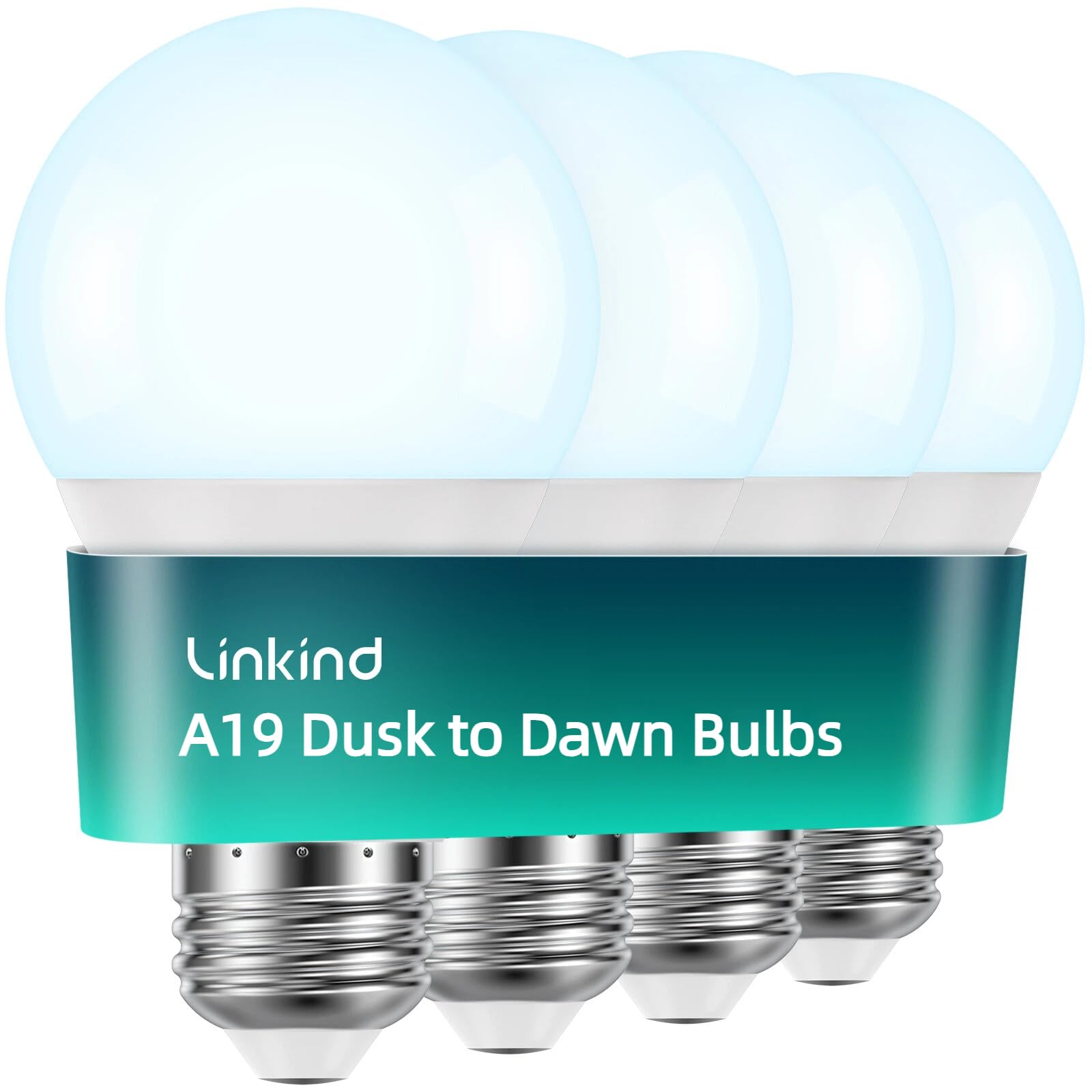
The Linkind 4-pack stands at the intersection of brightness, run cost, and longevity. Each 9.5W bulb pumps out 1200 lumens — that’s the equivalent of a 75W incandescent — in a clean 5000K daylight tint. The 200-degree beam angle throws light across a wide porch area without harsh hotspots.
The photocell is specifically noted to exclude artificial light sources, so bulbs placed close together or near a neighbor’s light won’t flicker. Estimated annual energy cost of just over a dollar per bulb makes this pack a no-brainer for anyone running lights 12 hours nightly. Users consistently report bug-repelling behavior thanks to the 5000K spectrum.
With a 25,000-hour rated lifespan (over 22 years at 3 hours daily), this is a set-and-forget solution for the long haul. The non-dimmable nature is standard for sensor bulbs and is clearly stated to avoid confusion. The E26 medium base fits all standard US porch fixtures without adapters.
Why it’s great
- Exceptional 1200-lumen output for a low 9.5W draw
- 25,000-hour lifespan outlasts most competitors by years
- 5000K daylight spectrum naturally repels bugs
Good to know
- Non-dimmable — cannot be used with a dimmer switch
- Push button control method means no app or timer functionality
2. TORCHSTAR A19 Dusk to Dawn 4-Pack

TORCHSTAR has engineered its photocell to detect only sunlight, rejecting porch light reflections and street lamp glow that cause other bulbs to cycle erratically. This makes the 4-pack ideal for covered porches where the sensor may be partially shaded. Each 9W bulb delivers 800 lumens at 5000K — sufficient for standard doorways and garage entries.
The build is UL and DOE listed, with an FCC compliance mark that signals clean electromagnetic emissions. The 220-degree beam angle covers a wider lateral spread than the typical 200-degree design. Users report the warm 3000K version reduces bug swarming compared to daylight bulbs, but the standard variant here is 5000K daylight.
A 3-year guarantee backs the product, which is a meaningful differentiator in a category where budget packs often carry zero warranty. The only catch: the red photocell must remain uncovered, so this bulb is unsuitable for fully enclosed fixtures. It works best in open-bottom sconces or exposed sockets.
Why it’s great
- Smart sensor filters out artificial light interference
- UL, DOE, and FCC certified for safety and compliance
- 3-year warranty provides long-term peace of mind
Good to know
- 800 lumens is bright but less intense than the 1200-lumen options
- Sensor must remain uncovered — not for enclosed fixtures
3. Eastiya A19 13W Sensor LED 4-Pack

The Eastiya 13W bulb is the highest-wattage sensor bulb in this roundup, pushing 1200 lumens at a 100W-equivalent brightness rating. For large porches, driveways, or detached garages where light spread matters, this is the unit that eliminates dark corners. The 360-degree beam angle ensures the light fills the entire fixture cavity.
Color rendering jumps to a CRI of 85+, which is a concrete improvement over the standard 80 CRI found on most competitors. This matters when you need to see actual colors — such as identifying a package on the step or a person at the door — rather than washed-out silhouettes. The 5000K daylight temp further enhances detail perception.
The 20,000-hour lifespan is solid, though real-world reports indicate one bulb died around 5,000 hours in continuous 12-hour use. At under for a 4-pack, the cost per bulb is low enough that even partial failures still beat incandescent economics. Note the 5-foot spacing rule: bulbs placed closer may interfere with each other’s sensors.
Why it’s great
- Highest brightness in the lineup at 1200 lumens (100W equivalent)
- Superior CRI 85+ for accurate color rendering
- 360-degree beam angle covers the widest area
Good to know
- Requires 5 feet of spacing between bulbs to avoid sensor conflict
- Real-world lifespan may fall short of the 20,000-hour claim in continuous use
4. GE LED+ A19 Dusk to Dawn 2-Pack

GE is the household name in this category, and the LED+ series delivers exactly what the brand promises: reliability. The 2700K soft white color temperature is the warmest option among these picks, producing a cozy glow that won’t turn your porch into a surgical bay. The 8.5W draw (60W equivalent) produces ample light for standard residential entries.
The built-in sensor works with a 360-degree beam angle and accepts 100-240V input, making it unusually flexible for international fixtures or variable line voltage scenarios. GE claims a 22.8-year lifespan based on 3 hours of daily use, backed by a 3-year warranty. This warranty is the strongest formal guarantee in the group.
Caveat: real-world tests show one bulb failing at 21 months under 11-hour daily use, which is below the claimed longevity but still acceptable for the warranty period. The soft white tint does not repel bugs as effectively as daylight bulbs, so consider your local insect population. The 2-pack format is best for homeowners needing just two fixtures.
Why it’s great
- 2700K soft white creates a warm, inviting porch ambiance
- Industry-leading 3-year warranty from a trusted brand
- Wide 100-240V voltage range for versatile installation
Good to know
- Soft white spectrum may attract more bugs than daylight bulbs
- 2-pack only — higher per-unit cost than multi-pack alternatives
5. DAYBETTER A19 Dusk to Dawn 4-Pack
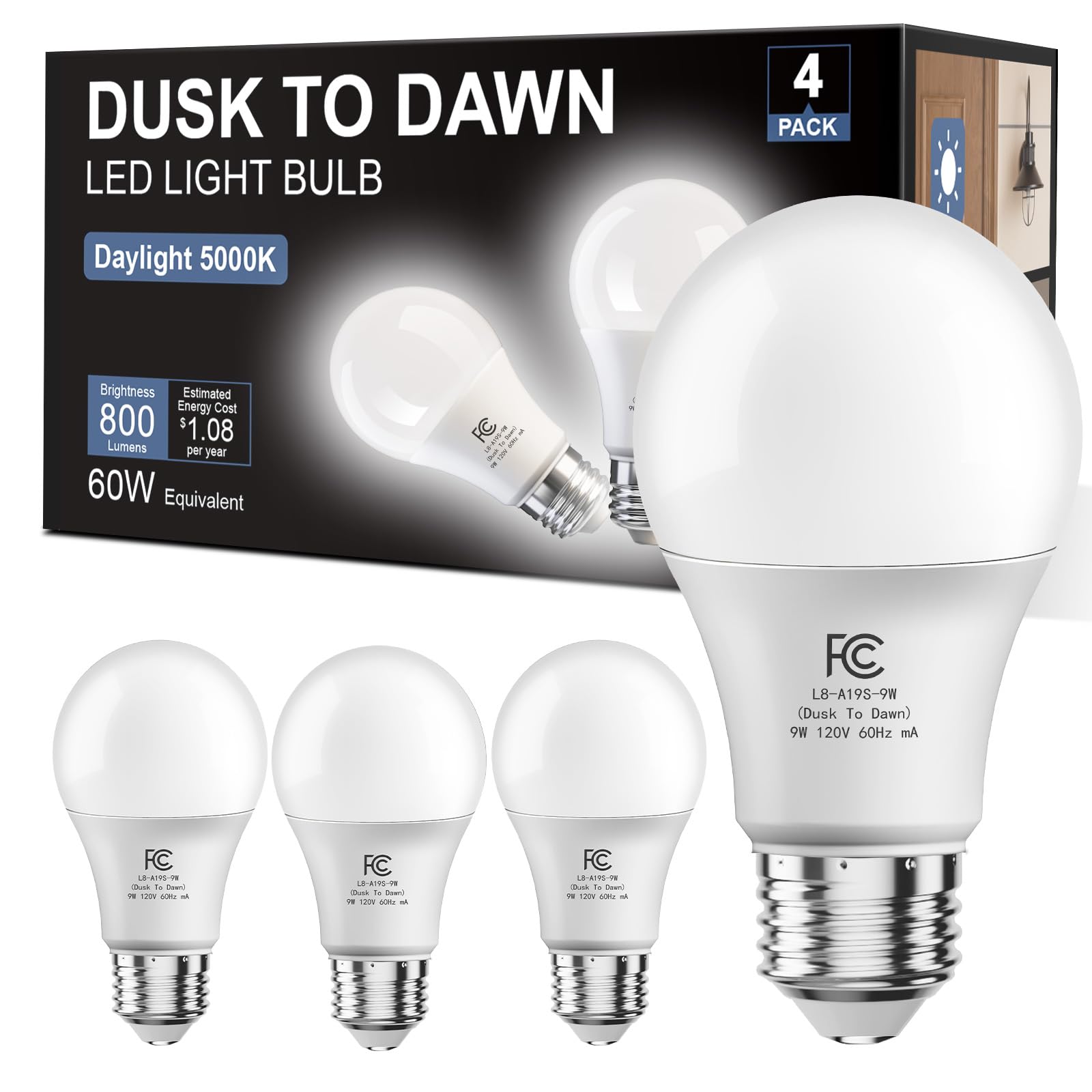
DAYBETTER positions its 4-pack as the practical choice for homeowners wanting sensor automation without premium pricing. Each 9W bulb emits 800 lumens at 5000K, which is appropriate for standard porch lights where blinding brightness is unnecessary. The 220-degree beam angle distributes light evenly without harsh shadows.
The photocell design claims to detect only sunlight, ignoring other light sources — a feature usually reserved for pricier models. The UL, ROHS, and FCC certifications provide safety assurance at a price point where certifications are sometimes omitted. A 1-year after-sales warranty covers replacements or refunds for any defect.
One negative review notes insufficient light output in a backyard application, suggesting the 800-lumen output may feel dim in larger open areas. For covered front porches and garages, the brightness is adequate. The non-dimmable nature is standard, and the E26 base fits all common sockets. It’s a reliable entry into the category.
Why it’s great
- Full safety certification (UL, ROHS, FCC) at a budget price
- 220-degree beam angle for even light spread
- 1-year after-sales warranty for defect protection
Good to know
- 800 lumens may not be bright enough for large backyards or driveways
- 1-year warranty is shorter than the 3-year options from premium brands
6. Amazon Basics A19 Dusk to Dawn 6-Pack
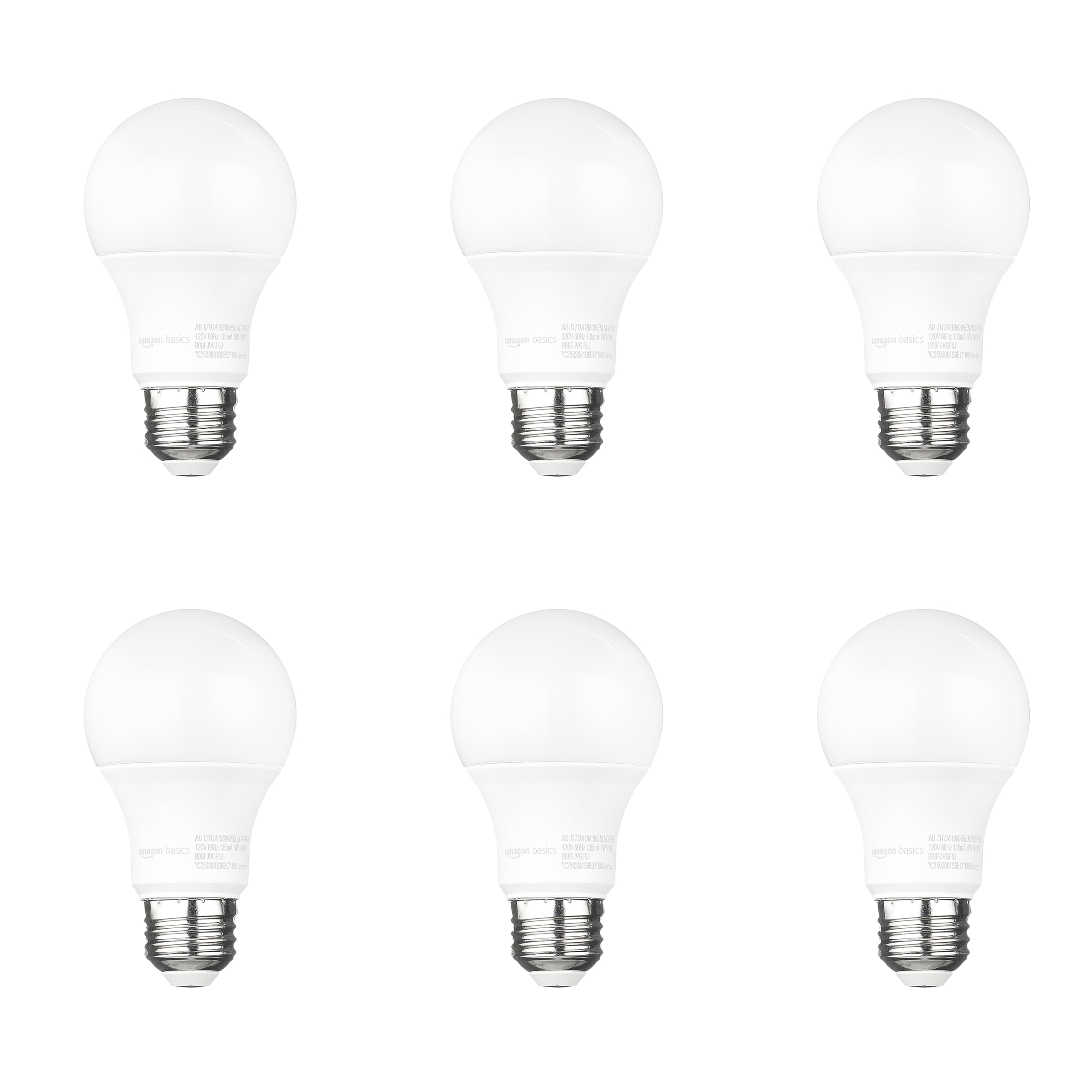
The Amazon Basics 6-pack is the volume buy for users with multiple exterior fixtures. Each 9W bulb delivers a standard 800 lumens at 5000K daylight white, identical in core specs to the DAYBETTER and TORCHSTAR entries. The key differentiator is the 6-pack quantity — enough to cover a full house perimeter plus spares.
The sensor performs reliably in open fixtures, turning on at dusk and off at dawn without needing a timer. Amazon claims in energy savings over the bulb’s life versus incandescent equivalents, which math out based on 3 hours daily use over 9 years. The 10,000-hour lifespan is the shortest in this lineup, but it still exceeds 9 years at typical porch usage patterns.
One user noted initial flickering resolved by cleaning socket oxidation — a common issue with any sensor bulb, not a defect specific to this model. The lack of a published warranty beyond Amazon’s standard return window is a concern for long-term buyers. For the per-unit cost, however, this is the cheapest way to automate a whole property.
Why it’s great
- Lowest per-unit cost in the roundup with a 6-pack format
- Reliable dusk-to-dawn sensor with no app or hub required
- Estimated lifetime energy savings of over per bulb vs incandescent
Good to know
- 10,000-hour lifespan is half that of the premium alternatives
- No formal multi-year warranty — standard Amazon return policy only
7. L LOHAS A19 Dusk to Dawn 2-Pack

The L LOHAS 2-pack offers the highest lumen-per-dollar ratio at the entry level, with each 12W bulb producing 1100 lumens in a 5000K daylight tint. That’s nearly as bright as the premium Eastiya unit, but at a lower upfront commitment. It’s a strong option for testing the waters of dusk-to-dawn automation on one or two fixtures.
The photocell activates reliably at dusk and switches off at dawn, as confirmed by multiple users in cold weather down to 7°F. The aluminum and plastic construction feels solid for the price. The 100W-equivalent rating means this bulb is genuinely bright — bright enough to illuminate a full driveway or detached garage.
Battery life and longevity are not well documented by the manufacturer, and real-world reviews are too short-term to confirm claims. The 2-pack format limits its use to homes with just two porch fixtures. For users wanting to test a single fixture before buying in bulk, this is the cheapest double-pack in the lineup.
Why it’s great
- 1100 lumens at a low upfront cost for a 2-pack
- Reliable sensor operation in cold temperatures (as low as 7°F)
- 100W-equivalent brightness suitable for large areas
Good to know
- Limited to 2-pack — higher per-unit cost than 4- or 6-pack options
- Long-term lifespan data is thin from early reviews
FAQ
Will a dusk-to-dawn bulb work in a fully enclosed porch light fixture?
Can I use a dimmer switch with these sensor bulbs?
Final Thoughts: The Verdict
For most users, the bulbs for porch lights winner is the Linkind A19 4-Pack because it combines class-leading 1200-lumen brightness with a 25,000-hour lifespan at a per-bulb cost that beats the competition. If you want a warm, cozy porch glow backed by a 3-year warranty, grab the GE LED+ 2-Pack. And for the brightest possible coverage of a large driveway or garage area, nothing beats the Eastiya 13W 4-Pack with its 100W-equivalent output and 360-degree beam angle.