
When you step into the chute, your bull riding vest is the single most critical layer between your ribs, spine, and a thousand pounds of twisting bovine. A subpar vest shifts on impact, leaves your lower back exposed, or fails to absorb the blunt force of a hoof to the chest, turning an eight-second ride into a hospital visit. Choosing the right vest means evaluating impact-absorbing foam density, torso coverage length, closure system reliability, and articulation that lets you move freely without sacrificing protection.
I’m Min — the co-founder and writer behind Gadgets Feed. I’ve spent hundreds of hours combing through ASTM/SEI certification data, customer stress-test accounts from rodeo competitors, and material construction specs across multiple price tiers to separate genuine body protection from fashion accessories that look the part.
After sorting through padded jackets, leather club vests, and motocross hybrids, nine models stand out as the legitimate contenders for the title of best bull riding vest. This guide breaks down what each one does well, where it falls short, and how to match your riding style and body type to the right level of safety.
How To Choose The Best Bull Riding Vest
Bull riding vests are not one-size-fits-all safety gear. The right vest depends on your discipline (bulls, broncs, or practice pen), your body dimensions, and how many rides you expect it to survive before the padding degrades. Here are the three non-negotiable factors to evaluate.
Impact Foam Architecture
Not all padding is equal. Compartmentalized foam segments that are individually stitched into pockets are far more effective than a single slab of foam. They move with your torso, don’t bunch up, and maintain their shock-absorbing properties ride after ride. Look for vests that list segmented or compartmentalized impact panels in their construction. Skip vests with uniform padding that feels like a stiff pillow — that foam will crack and lose rebound after a few hard falls.
Coverage Length and Tailbone Protection
A bull riding vest must extend low enough in the back to protect your tailbone when you hit the dirt. Many vests are cut short in the rear for flexibility, exposing the coccyx. Measure your torso from your collarbone notch to the top of your hip bone. A good vest should cover that entire distance and sit no more than one inch above your tailbone when you’re in a seated riding posture. If the product description mentions elongated lower back padding or tailbone protection, that is a green light.
Closure and Adjustment System Durability
The closure system is the number-one failure point reported by riders. Standard zippers on budget vests can rip apart on the first ride, rendering the safety gear completely useless. Hook-and-loop (Velcro) side panels offer more adjustability and typically hold up longer, but they can wear out if the hooks get filled with dirt and hay. Premium vests use YKK zippers or heavy-duty snap closures combined with dual hook-and-loop side straps. If you ride multiple times a week, prioritize a vest with reinforced stitching around the zipper track and replaceable laces on the side adjustments.
Quick Comparison
On smaller screens, swipe sideways to see the full table.
| Model | Category | Best For | Key Spec | Amazon |
|---|---|---|---|---|
| HILASON Bull Riding Vest (Pro Rodeo Cordura) | Mid-Range | Versatile adult protection | 3.2 lb, Cordura shell, segmented foam | Amazon |
| EVS Sports Sport Vest | Premium | Articulating spine mobility | Segmented spine panels, hook & loop closure | Amazon |
| Ovation Adults’ ComfortFlex Body Protector | Premium | Certified equestrian protection | ASTM/SEI approved, CE Level 3, YKK zipper | Amazon |
| Leatt Fusion Vest 2.0 Jr | Premium | Junior rider with neck brace | Fiberglass-reinforced polyamide, engineered fracture point | Amazon |
| HILASON Horse Riding Rodeo Safety Vest | Mid-Range | Unisex entry-level value | Stretchy fit, side laces, lightweight | Amazon |
| HILASON Kids Junior Youth Bull Pro Rodeo Cordura | Mid-Range | Youth riders ages 7-12 | 669 g, compartmentalized foam, adjustable shoulders | Amazon |
| Tough 1 Bodyguard Protective Vest | Entry-Level | Budget youth calf riding | High-impact shock absorbing material, polyester shell | Amazon |
| Jackets 4 Bikes SOA Men’s Motorcycle Vest | Motorcycle | Club style, not bull riding | Buffalo leather, removable back foam armor | Amazon |
| Ariat Men’s FR DuraLight Cordura Canvas Vest | Workwear | FR compliance, not impact protection | ATPV 44 cal/cm2, NFPA 70E, no impact foam | Amazon |
In‑Depth Reviews
1. HILASON Bull Riding Vest Black Pro Rodeo Cordura
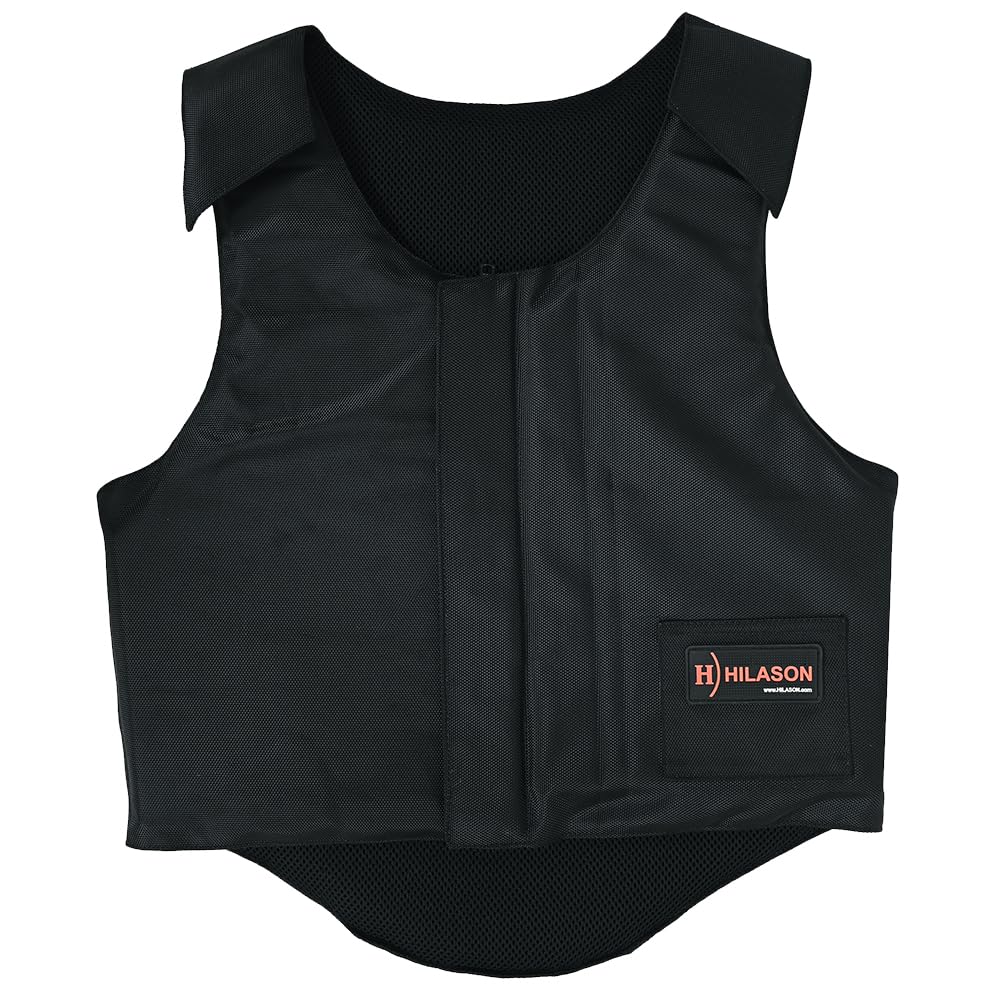
This HILASON vest earns the top spot because it nails the fundamental trade-off every bull rider faces: impact absorption versus freedom of movement. The Cordura outer shell resists abrasion from the arena floor and repeated saddle friction, while the internally compartmentalized foam panels stay in place on impact instead of shifting like a single pad would. Riders consistently report that their ribs and sternum feel protected even after direct hits, and the design has enough room for a helmet chin strap or face mask without creating pressure points on the neck.
At 3.2 pounds, the vest is noticeably lighter than premium motocross hybrids, which translates to less fatigue during long practice sessions. The side laces let you dial in chest compression so the vest doesn’t ride up when you’re in the riding position. Customers note that the sizing runs slightly generous, so if your chest measurement falls between sizes, the smaller option usually fits better. The vest has survived multiple rides for owners who use it for both bull riding and bronc work, suggesting the internal foam retains its rebound longer than entry-level alternatives.
One caveat is that the vest doesn’t include tailbone-specific padding — the coverage stops around the lower lumbar area. For riders who take hard falls straight backward, adding an optional kidney belt can fill that gap. That minor limitation aside, the combination of build quality, price-to-performance ratio, and real-world durability makes this the most balanced option for riders who need one vest that handles rodeo competition and arena practice equally well.
Why it’s great
- Cordura shell resists tearing from hoof strikes and saddle hardware
- Compartmentalized foam panels prevent pad shifting on impact
- Side laces allow precise chest compression for a secure fit
- Lightweight enough for all-day practice sessions
Good to know
- Rear coverage could extend lower for full tailbone protection
- Sizing runs large — measure chest carefully before ordering
2. EVS Sports Sport Vest

The EVS Sport Vest separates itself from traditional bull riding vests by using a segmented spine protector that moves independently with your vertebrae. Instead of a single rigid plate that restricts bending, seven interlocking polymer panels flex as you lean forward in the chute or twist during a buck-off. The front chest protector uses impact-absorbing foam that compresses and rebounded quickly, which is critical when a bull’s hind leg catches you across the sternum. Riders who wear this for e-scooter use and motocross report the same confidence-level protection carries over to rodeo work.
The adjustable kidney belt wraps around the lower back with compression straps, providing targeted support to the kidneys and lumbar area where many vests leave gaps. The low-profile design fits comfortably under a loose jacket, so whether you want to layer or wear it as your outer shell, the bulk never interferes with your riding posture. Reviews from taller users (6 feet, 200 pounds) confirm the L/XL size accommodates broad shoulders without restricting arm movement. The front pockets are mesh, which adds minor storage for a phone or earplugs without adding visible weight.
One common complaint is that the vest is shorter than expected, leaving the tailbone exposed on seated riders. The spine protection stops at the top of the tailbone area, so if you tend to land directly on your lower back, you may need supplemental padding. The hook-and-loop closure system has held up well for most users, though the Velcro panels can pick up arena dust and lose grip over time if not cleaned. For riders who prioritize thoracic spine articulation over lower-back coverage, this is the vest to beat.
Why it’s great
- Segmented spine protector bends naturally with torso movement
- Kidney belt with compression straps supports lower back
- Low-profile design fits under most jackets without bulk
- Impact-absorbing foam rebounds quickly after compression
Good to know
- Tailbone coverage is minimal — shorter than most rodeo vests
- Velcro panels can lose grip if dirt and dust accumulate
3. Ovation Adults’ ComfortFlex Body Protector

Ovation’s ComfortFlex is ASTM/SEI-certified and carries CE Level 3 certification, meaning it has passed independent lab testing for impact attenuation at a higher threshold than many competitors. That certification alone makes it the safest choice on this list for riders who compete at a level where insurance or event organizers require certified gear. The vest uses extremely thick foam padding distributed across the chest, ribs, and back, and the outer polyester shell is reinforced with reflective piping for low-light visibility during early morning or evening practice.
The YKK front zipper is a standout feature — it’s the same closure system found on high-end outdoor gear, and it does not fail under tension. Dual hook-and-loop side panels let you adjust the girth whether you’re wearing a base layer in summer or extra layers in cooler weather. Taller riders with a larger bust (G cup) report the vest fits without riding up over the saddle, thanks to the elongated back panel that extends lower than most equestrian vests. The ComfortFlex also allows full arm rotation, so roping or maneuvering in tight quarters never feels restricted.
The main downside is the price point — it sits firmly at the top of the spending range. Additionally, the vest is designed primarily for equestrian sports (jumping, eventing), so the tailbone coverage, while better than the EVS, still leaves a gap versus dedicated rodeo models with integrated kidney pads. For bull riding specifically, the heavy foam can feel stiff during the first few wears before it breaks in. But if certification and proven impact attenuation are your non-negotiable, this is the one.
Why it’s great
- ASTM/SEI and CE Level 3 certified impact protection
- YKK front zipper withstands high tension without failure
- Elongated back panel covers lower back better than most
- Reflective piping adds visibility in low-light conditions
Good to know
- Price is a significant step up from mid-range options
- Tailbone coverage still not as complete as dedicated rodeo vests with kidney belts
4. Leatt Fusion Vest 2.0 Jr Junior
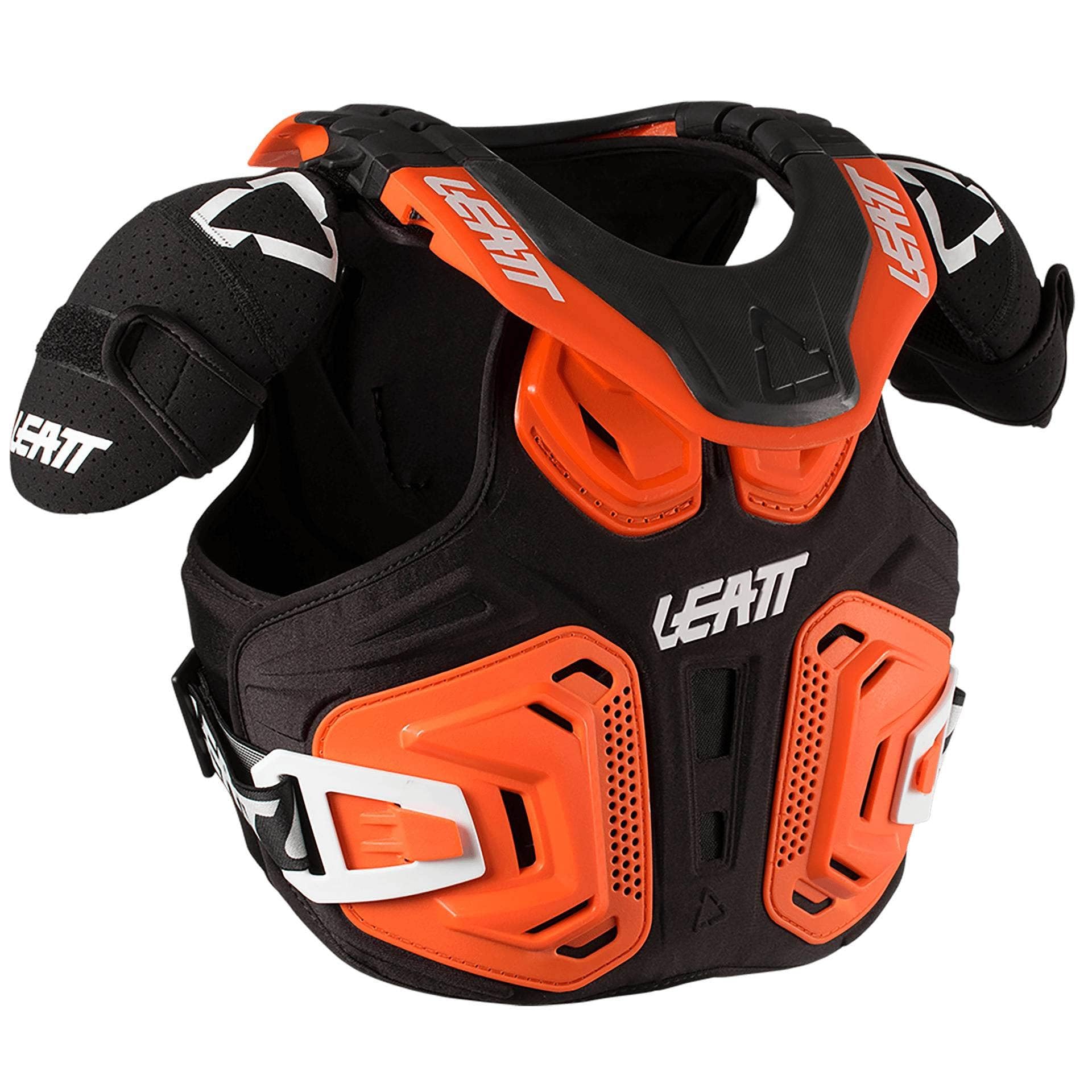
Leatt built the Fusion Vest 2.0 Jr for the youngest riders, and it includes a fiberglass-reinforced polyamide neck brace structure that is integrated directly into the chest and back protection. This design eliminates the need for a separate neck brace, a major cost and convenience advantage for parents of junior bull riders. The rear thoracic strut has an engineered fracture point that snaps off in a severe crash to prevent hyperextension injuries — a safety detail that is rare at any price level.
The vest uses a snap closure system that is fast to put on and take off, which matters when a kid needs to get geared up between practice runs. At 1.27 kg, it is lightweight enough for smaller riders (around 50 pounds and 50 inches tall) to wear continuously without fatigue. Owners report that their children have taken hard falls on their heads and shoulders and walked away without injury, which is the only real metric that matters. The flank protection panels extend below the ribcage, offering more torso coverage than typical junior vests that stop at the waist.
Size selection is tricky — the XXL Youth fits a slender 13-year-old, while the L/XL can be too small for a child who falls in the height-weight range but has a broader chest. Several customers had to return and size up because the vest runs small compared to age-based sizing charts. Additionally, the orange colorway is sporty but stands out in the arena, which may not suit every rider’s preference. For junior competitors who are ready for a neck-brace system without buying separate components, this is the safest junior option available.
Why it’s great
- Integrated neck brace structure saves buying a separate brace
- Engineered fracture point on rear strut prevents hyperextension
- Lightweight at 1.27 kg for smaller riders
- Flank protection extends coverage below the ribs
Good to know
- Runs small — carefully check sizing vs. weight and chest measurements
- Snap closure may feel less secure than zipper to some parents
5. HILASON Horse Riding Rodeo Safety Vest
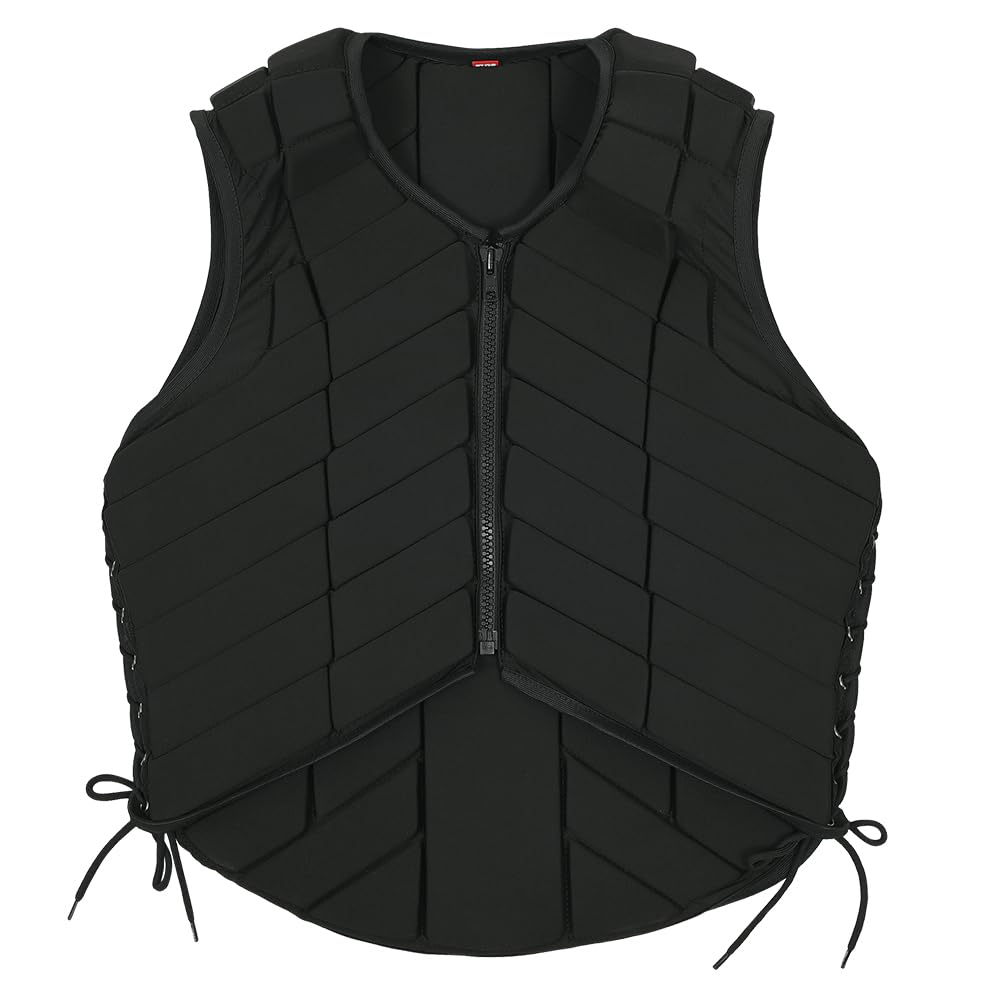
HILASON’s entry-level unisex vest offers the same Cordura-quality materials and shock-absorbing foam as their higher-priced model but in a stretchier fit that accommodates a wider range of body types. The side laces allow you to cinch the vest tight around your torso, eliminating the loose shifting that cheaper vets exhibit when you twist at the hip. Customers who have previously suffered broken ribs report this vest covers the front adequately, leaving no rib area unprotected during a ride.
The vest runs slightly large per the size guide, so a 44-inch chest fits comfortably into the XXL without feeling compressed. Riders over 50 years old specifically praise the fit and comfort, saying the vest takes the worry out of mounting a horse and absorbs wobbles without restricting breathing. The material feels secure and well-put-together, and multiple cleanings with soap and water don’t degrade the foam or shell. For entry-level competitors or practice riders who can’t justify a premium vest, this offers the same baseline safety coverage at a lower commitment.
The primary drawback is the back length — some users with longer torsos find that the rear rides up when they sit in the saddle, exposing the lower back. The side laces included are also short and may need to be replaced with longer boot laces for a full customization range. It also lacks the kidney belt or tailbone padding found on higher-end rodeo vests. For riders who need a vest that does 80% of the job for half the investment, this is the smartest pick.
Why it’s great
- Stretchy fit accommodates different body shapes without pressure points
- Side laces allow fine-tuned chest compression
- Cordura-quality shell holds up after multiple cleanings
- Lightweight enough for senior riders to wear comfortably
Good to know
- Back length can ride up on longer torsos during seated riding
- Side laces are short — some users replace them for a better fit
6. HILASON Kids Junior Youth Bull Pro Rodeo Cordura

HILASON’s youth version is built specifically for kids and junior riders with the same segmented internal compartmentalization found in their adult vests. At only 669 grams, it is light enough for a 7-year-old to wear without complaining, and the adjustable Velcro fasteners at the shoulders and sides let the vest grow with the child for two or three seasons. The shorter front panel is designed to improve rider movement for young athletes, and the elongated lower back padding offers better tailbone protection than most youth vests on the market.
Parents report that their kids describe this vest as extremely comfortable and that it allows them to stay flexible while riding calves or steers. The Cordura outer shell withstands scrapes against the chute and dirt impacts, and the vest is hose-cleanable — just apply soap and rinse. For kids who wear helmets or face masks, the vest is designed to not interfere with the chin strap, which is a frequent annoyance with bulkier entry-level models. Several customers have bought this as a replacement for cheaper vests that fell apart after a few rides.
The fit range is specific: the vest fits chest sizes 32–36 inches and shoulder width of 12.5 inches. If your child is particularly broad-shouldered for their age, the fit may be too snug. The overall length may also be short for taller pre-teens, who might need to jump to the adult small vest. For the target age group of 7 to 12 years old who are actively calf riding, this is the most durable and safest youth option available.
Why it’s great
- Lightweight at 669 grams — kids wear it without resistance
- Adjustable Velcro allows the vest to grow with the child
- Elongated lower back padding improves tailbone protection
- Cordura shell is easy to clean with soap and water
Good to know
- Fits chest 32–36 inches only — taller kids may need a size up
- Shoulder straps may be too narrow for broad-shouldered children
7. Tough 1 Bodyguard Protective Vest

Tough 1’s Bodyguard vest is the entry-level price leader on this list, and it serves a clear function: it provides uniform body protection for young riders who are just starting calf riding or practice bull work. The polyester outer shell is padded with a high-impact shock-absorbing material that has held up well for children who are stepped on or thrown — one parent reports that after multiple stomps, their son walked away without a single bruise or broken bone. For a budget buy, the foam density does its job for low-frequency use.
The adjustable straps on the shoulders and sides allow some customization, and the black color keeps the vest looking clean after a few washes. Several customers confirm the vest fits children well around age 7 and that the size small works for slender builds. The zipper front opens easily, making it simple for kids to gear up on their own. For families who need a vest for occasional roping or ranch play, the Tough 1 covers the basics without breaking the budget.
The major failure point is the zipper. Multiple reviews report the zipper breaking off entirely during a ride, which makes the vest completely useless as a safety device and dangerous if it fails mid-buck. The Velcro closure stitching also pulls out on the first wear for some units, requiring hand sewing before the vest is functional. For serious rodeo parents with kids riding multiple times a week, the zipper reliability risk alone justifies spending more. But for one-off backyard use, it is functional out of the box.
Why it’s great
- High-impact foam absorbs stomps and throws at the entry level
- Adjustable shoulder and side straps for a secure fit
- Black polyester shell stays visually clean between rides
Good to know
- Zipper is the weakest point — known to break during rides
- Velcro stitching pulls out easily; may need reinforcing
8. Jackets 4 Bikes SOA Men’s Motorcycle Vest
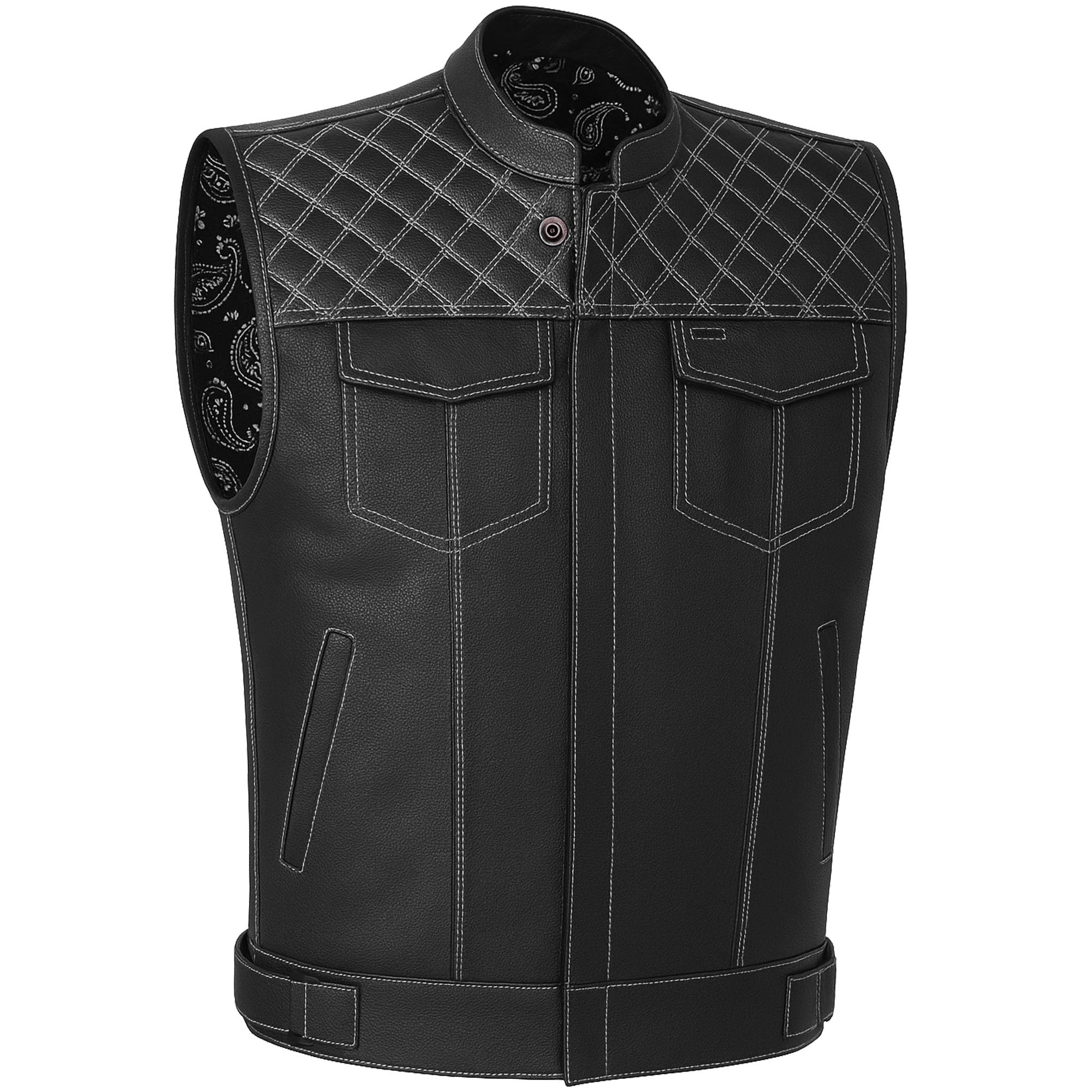
This Jackets 4 Bikes vest is built for motorcycle club aesthetics, not rodeo impact protection. It uses full-grain buffalo leather that provides abrasion resistance against asphalt, but it does not contain the segmented foam panels or shock-absorbing padding that a bull riding vest requires. The removable back armor is a cheap foam pad that folds in shipping and offers negligible impact attenuation against the blunt forces of a bull kick or fall. Riders looking for actual protection should not confuse this with a bull riding vest.
On the plus side, the leather construction does offer a rigid outer shell that could deflect minor scrapes in a practice pen, and the multiple pockets (eight total) provide storage for tools, phone, or earplugs that a typical rodeo vest lacks. The snap-button interior pockets are deep enough for concealed carry, which is a rare feature. For casual ranch wear or as a base for patch display, the build quality at its price is respectable.
The critical problem for bull riding use is that the vest does not cover the ribs fully and the foam armor is not rated for impact absorption at rodeo speeds. Several customers note the leather is stiff and thin, with some reporting it is not real leather despite marketing claims. The zipper and snaps are plastic and low quality, which raises the same failure risk as the Tough 1 vest. If you want a bull riding vest, skip this — it is a club vest, not safety gear.
Why it’s great
- Genuine buffalo leather offers abrasion resistance
- 8 pockets including concealed carry compartments
- Large front and back panels for club patches
Good to know
- Not designed for impact absorption — no rodeo-grade foam
- Removable back armor is thin foam, not rated for high-impact falls
- Some units arrive misrepresented as leather
9. Ariat Men’s FR DuraLight Cordura Canvas Vest
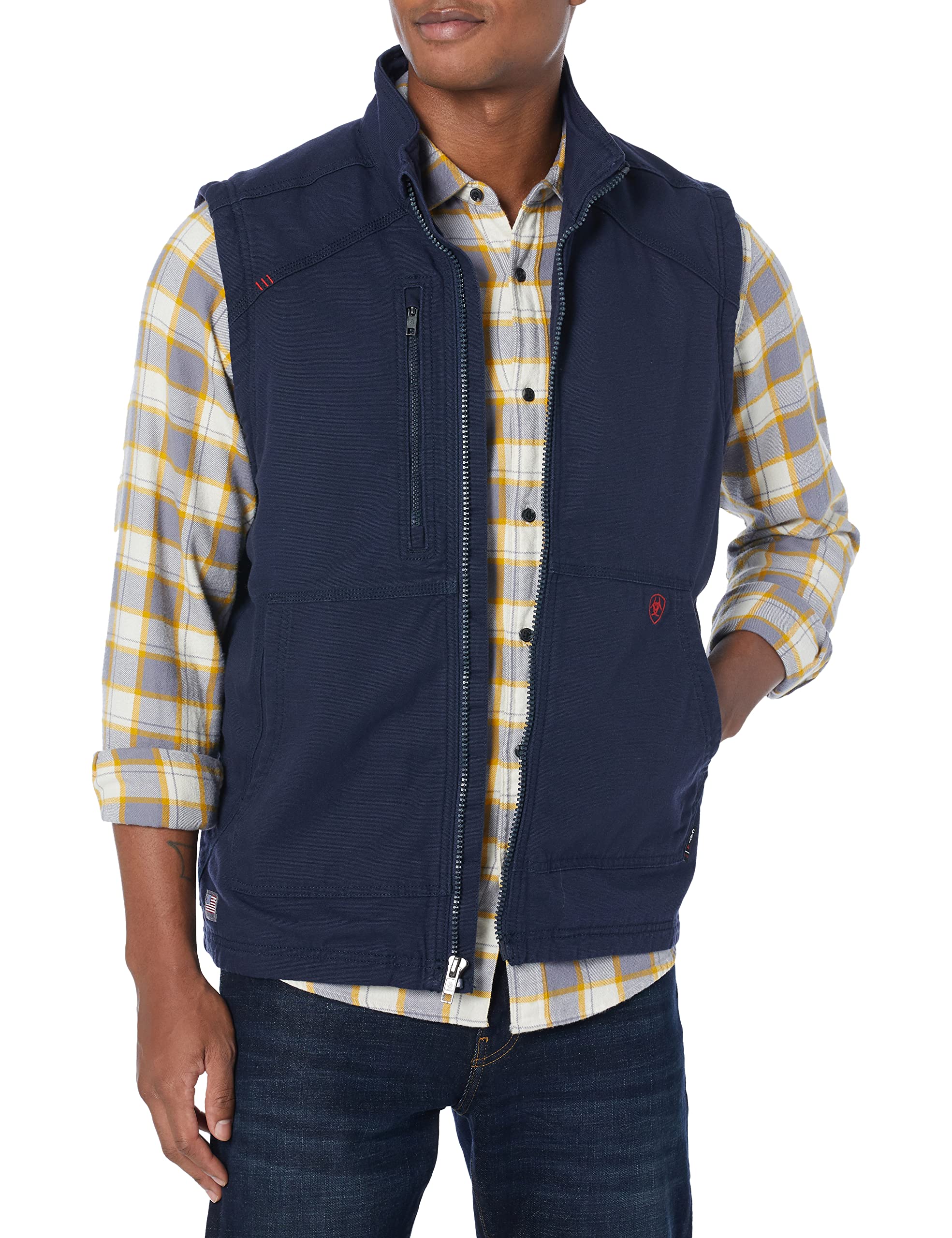
Ariat’s FR vest is built for industrial work environments requiring flame-resistant clothing, not for rodeo impact safety. It is rated CAT 4 ATPV 44 cal/cm2 and complies with NFPA 70E and NFPA 2112 standards for arc flash and flash fire protection. The DuraLight canvas with DuraStretch fabric provides a comfortable work vest that offers excellent abrasion resistance and freedom of movement, and the triple-needle stitching adds genuine durability for daily wear in rough conditions.
For riders who work on ranches or around heavy equipment, this vest is a practical outer layer that can protect against sparks and heat. The polar fleece lining adds warmth in cold weather, and the zippered chest pocket provides secure storage. It fits true to size and has a professional look that works well in both a barn and an office environment. Owners who wear this for ranching or farm work appreciate the quality construction.
The vest contains zero impact-absorbing foam, no spine protection, and no shock-absorbing padding of any kind. Wearing this as a bull riding vest would offer no protection against the primary dangers — blunt force trauma to the ribs, spine, or tailbone. It is included in this list as a warning: an FR-rated work vest is not a rodeo safety vest. If you need fire-resistant outerwear for chores, this is excellent. If you need an impact vest for riding, look at the options above.
Why it’s great
- CAT 4 arc flash rating for flame-resistant workplace protection
- DuraLight canvas with DuraStretch offers excellent abrasion resistance
- Triple-needle stitching adds long-term durability
Good to know
- Zero impact protection — not a bull riding safety vest
- No spine plate, rib padding, or shock-absorbing foam
FAQ
Can I use a motorcycle vest for bull riding?
What chest measurement should I use to size a bull riding vest?
Why are some bull riding vests so much more expensive than others?
How do I clean a bull riding vest without damaging the foam?
How long does a bull riding vest last before the padding degrades?
Final Thoughts: The Verdict
For most riders, the best bull riding vest winner is the HILASON Bull Riding Vest Black Pro Rodeo Cordura because it balances Cordura durability, segmented foam protection, and adjustability at a price that doesn’t punish riders for wanting real safety. If you prioritize articulating spine protection and don’t mind sacrificing tailbone coverage, grab the EVS Sports Sport Vest. And for junior competitors who need an integrated neck brace, nothing beats the Leatt Fusion Vest 2.0 Jr.