
Sharing a bedroom with two growing kids in a tight footprint means every square inch of floor space is precious real estate. The right bunk bed doesn’t just stack mattresses — it redefines the room by carving out play areas, study nooks, and proper walkways that a pair of twin beds would instantly consume. A poorly chosen frame, however, can make a small room feel like a claustrophobic cave with a wobbly ladder.
I’m Min — the co-founder and writer behind Gadgets Feed. I’ve logged countless hours analyzing structural ratings, clearance heights, weight limits, and user reports across dozens of small-room bunk beds to separate the genuinely stable frames from the shaky compromises.
Whether you’re working with a low ceiling, a narrow wall, or simply need to maximize every inch, this guide walks you through the most important factors to consider when buying bunk beds for small rooms.
How To Choose The Best Bunk Beds For Small Rooms
Selecting a bunk bed for a small room introduces unique constraints that do not apply to standard setups. The bed must fit within tight floor dimensions, offer safe access for children, and still leave room for other furniture. Prioritizing the wrong metrics — like a dramatic lofted look instead of a low-profile safety-first frame — is the most common mistake buyers make.
Prioritize the Right Profile Height
A low-profile bunk bed, typically standing between 45 and 52 inches tall, is the single biggest space-saving decision you can make for a small room with a standard 8-foot ceiling. Full-height bunks at 60+ inches often force the top mattress dangerously close to the ceiling, creating a cramped and unsafe sleep zone. Look for a frame where the bottom bunk sits close to the floor, often just 2 to 3 inches off the ground, to maximize vertical breathing room on top.
Verify the Real Weight Limit and Slat Count
The number of slats directly correlates with mattress support and noise levels. Frames with 14+ individual plywood slats per bunk provide better load distribution and reduce sagging compared to designs with fewer or wider-spaced slats. A weight capacity of at least 350 pounds per sleeping surface ensures the bed can accommodate a growing child or even a light adult without structural fatigue.
Measure the Ladder Footprint and Guardrail Coverage
In a cramped room, an integrated ladder that does not protrude into the walkway is a silent hero. Avoid designs where the ladder sticks out past the bed’s footprint. Also, prioritize frames with 12-inch or taller full-length guardrails on the top bunk, as shorter rails reduce the usable mattress depth and increase fall risk when the mattress is closer to the ceiling.
Quick Comparison
On smaller screens, swipe sideways to see the full table.
| Model | Category | Best For | Key Spec | Amazon |
|---|---|---|---|---|
| Max & Lily Low Bunk Bed (Stairs) | Premium | Low Ceilings & Toddler Safety | 14-inch guardrails, 400 lbs per bunk | Amazon |
| Max & Lily Scandinavian Low Bunk | Premium | Knot-Free Wood Construction | 400 lbs per bunk, 50.3″ height | Amazon |
| Giantex Low Bunk Bed | Mid-Range | Low-Ceiling Rooms | 45.5″ total height, 350 lbs per bunk | Amazon |
| JOYMOR Solid Wood Low Bunk | Mid-Range | Toddlers & Sloped Ceilings | 47.24″ height, 11″ guardrails | Amazon |
| Costzon Convertible Bunk | Mid-Range | Converting to Two Beds Later | Solid rubberwood, 60″ height | Amazon |
| KOMFOTT Convertible Bunk | Mid-Range | Future Room Flexibility | 350 lbs per bunk, 14+14 slats | Amazon |
| Grain & Grove Bear Low Bunk | Mid-Range | Young Children (ages 2-6) | 49.25″ height, 400 lbs per bunk | Amazon |
| Giantex Twin Over Twin | Budget-Friendly | Under-Bed Storage | 12.5″ vertical clearance, 330 lbs top | Amazon |
| KOMFOTT Low Profile Bunk | Budget-Friendly | Maximum Value & Simplicity | 51″ low height, 350 lbs top bunk | Amazon |
In‑Depth Reviews
1. Max & Lily Low Bunk Bed With Stairs

The Max & Lily Low Bunk Bed with Stairs sets the standard for small-room bunk beds by integrating a staircase with built-in storage shelves directly into the frame. At 50 inches tall, this twin-over-twin bed fits comfortably under 8-foot ceilings, and the staircase design eliminates the need for a protruding ladder that steals floor space. Each sleeping surface supports up to 400 pounds, and the knot-free New Zealand pine construction with low-VOC finish speaks to a higher tier of furniture longevity.
The 14-inch full-length guardrails on the top bunk provide a generous safety margin, especially important when the bottom bunk sits just 2 inches off the floor — a configuration that makes the lower bed feel less like a traditional bunk and more like a standard floor bed for toddlers. Users report that the staircase panels are customizable for aesthetics, and the metal-on-metal bolt connections contribute to a frame that remains stable even with active children.
Assembly is the most demanding part of owning this bed: multiple owners cite 4 to 9 hours for setup, with the wordless instruction manual being the primary bottleneck. However, once assembled, the build quality exceeds expectations, and the extra step of purchasing replacement screws locally (if any are missing) is a minor inconvenience against the overall solidity. This is the bunk bed that other budget models are measured against.
Why it’s great
- Unique staircase with built-in storage saves floor space
- 400-pound capacity per bunk accommodates growing kids and adults
- 14-inch guardrails provide top-tier safety for the top bunk
Good to know
- Assembly is labor-intensive with complex instructions
- Some units arrive with a strong warehouse odor that needs airing out
2. Max & Lily Scandinavian Low Bunk Bed
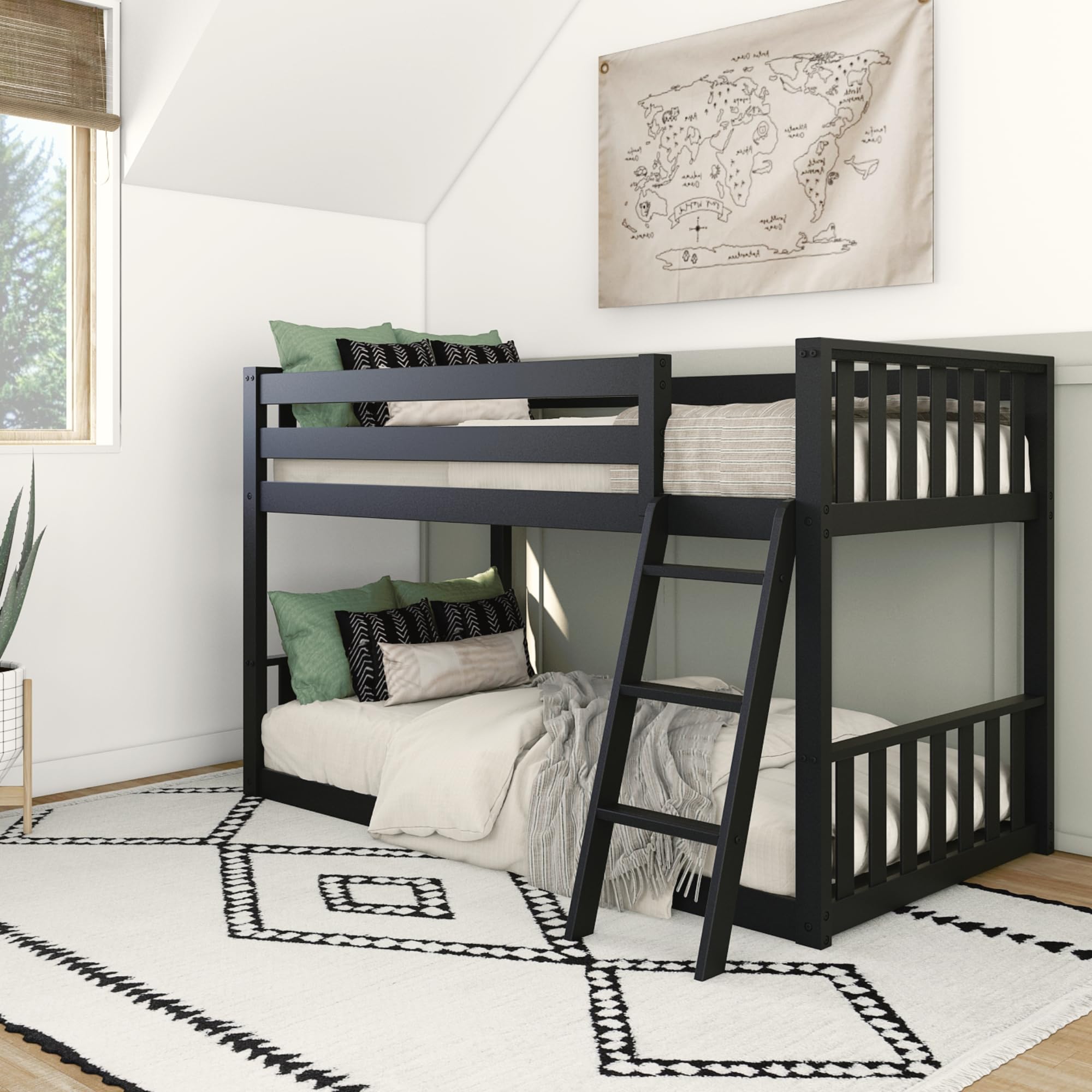
This Scandinavian Low Bunk Bed from Max & Lily delivers the same 400-pound weight capacity and knot-free solid pine construction as its staircase sibling but strips the frame down to a cleaner, slatted headboard design for a more minimalist look. The twin-over-twin bed stands at 50.25 inches tall, and the bottom bunk sits only 2 inches off the ground, making it an excellent low-profile option for rooms with standard or even slightly lower ceilings. The ladder can be installed on either side, offering flexibility that matters when you have a window or closet door to work around.
Owners consistently praise the real-wood feel — there is no particle board or laminate in the structure. The metal support bar combined with solid pine slats eliminates the need for a box spring, and the flush color-matched hardware keeps the clean Scandinavian aesthetic intact. The black finish option, in particular, helps the bed disappear visually in a small room rather than dominating it.
The main drawback is assembly complexity, requiring 3 to 4 hours on average with careful attention to detail. A few users have reported missing hardware (specifically screws) and found the email-only support policy slow. Additionally, a small number of units have arrived with wood imperfections or scratches, though the overall fit and finish upon completion is well above what the price point suggests.
Why it’s great
- Solid knot-free pine with no particle board for real furniture durability
- Versatile ladder placement adapts to tight room layouts
- Non-toxic, low-VOC finish suitable for children’s rooms
Good to know
- Some units have missing screw sets, requiring a trip to the hardware store
- Heavy box (70+ lbs) can be difficult to maneuver solo
3. Giantex Twin Low Bunk Bed

The Giantex Twin Low Bunk Bed is designed specifically for rooms where a standard 60-inch bunk would force the top mattress uncomfortably close to the ceiling. At just 45.5 inches total height, this is one of the shortest low-profile twin-over-twin frames on the market, making it an ideal choice for bunk rooms in basements, attics, or bedrooms with sloped ceilings. The solid pine wood frame with 14+7 plywood slats supports up to 350 pounds per sleeping surface, and the integrated ladder keeps the footprint compact.
Parents of younger children (ages 3 to 7) report that the low height removes the anxiety of a top-bunk fall, and the modern grey painted finish integrates well with contemporary decor. The lower bunk still provides enough clearance for a small storage tote underneath, adding practical utility for an already space-constrained room. Users mention that the frame has survived two years of daily use without creaking or loosening, a testament to the tight screw connections.
The only notable issue is sap leakage reported by a few owners, which seems to be a quality-control variance in the pine wood drying process rather than a design flaw. The bed also requires two people for assembly to ensure proper alignment of the side rails. For families looking to maximize headroom without sacrificing safety, this is a top-tier low-profile solution.
Why it’s great
- Sub-46-inch total height fits under the tightest ceiling constraints
- Sturdy construction that holds up to years of child use
- Integrated ladder does not extend beyond the bed footprint
Good to know
- Occasional sap leakage from unfinished pine areas
- Two-person assembly is strongly recommended
4. JOYMOR Solid Wood Low Bunk Bed
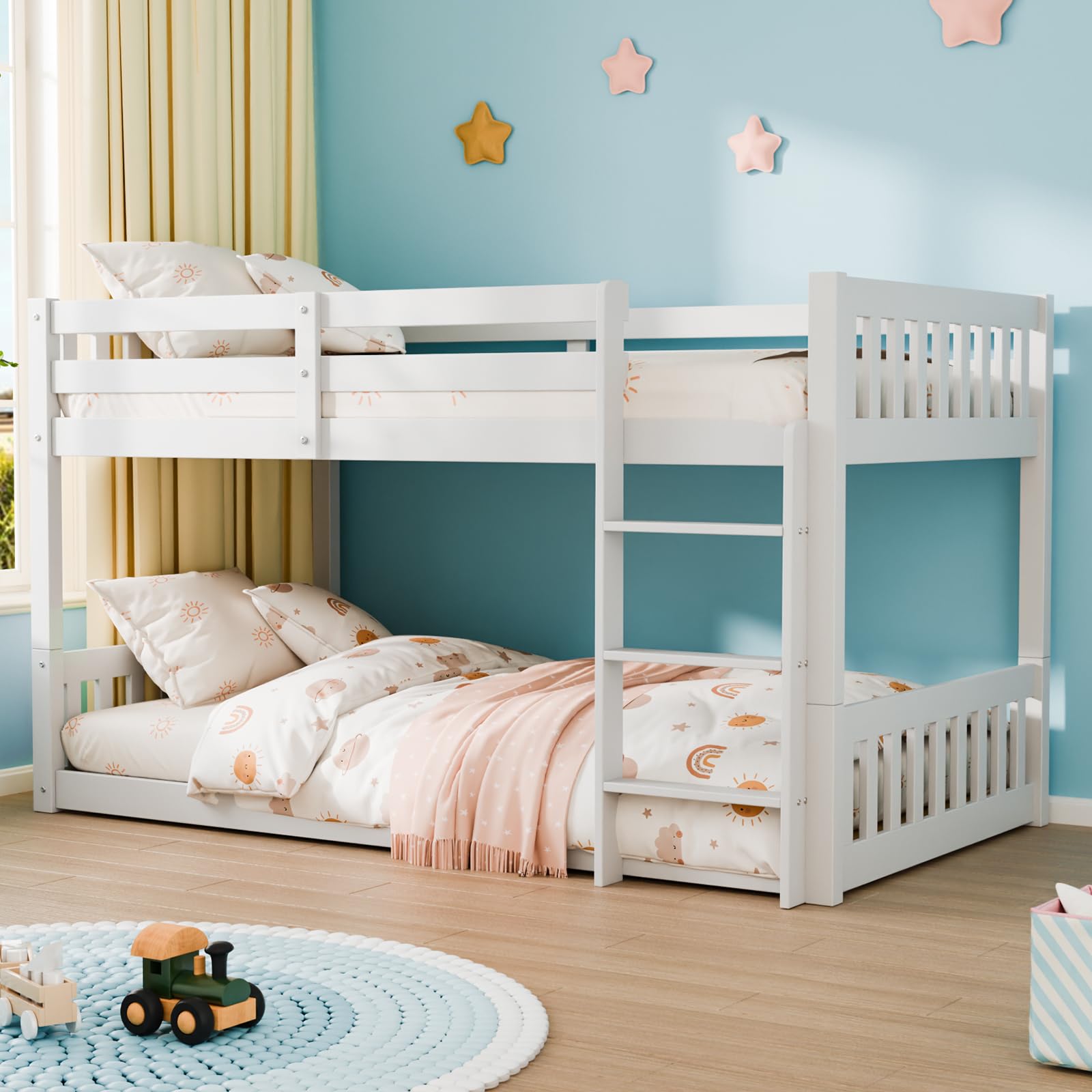
The JOYMOR Solid Wood Low Bunk Bed strikes a careful balance between affordability and toddler-friendly safety features. With a total height of 47.24 inches and an 11-inch guardrail on the upper bunk, this bed is purpose-built for younger children who may still be transitioning out of a crib. The bottom bunk sits low enough that a two-year-old can climb in and out without assistance, while the flat ladder rungs provide easy grip for small feet.
Made from solid pine with hardwood slats, the frame supports up to 264.5 pounds per bunk — a lower limit than premium models, but adequate for children up to their early teens. The low profile makes it particularly effective in rooms with sloped ceilings, as verified by owners who installed it in attic bedrooms where the ceiling starts at just 4.5 feet tall. The white painted finish is clean and bright, helping the small room feel larger.
Assembly is the weakest point here: multiple owners describe a 3-to-5-hour process with instructions that occasionally feature incorrect hole positions. Some users note that the slats can rattle against the frame, though adding wood glue at the contact points resolves the noise. For the price, the visual appeal and low-profile safety make this a compelling entry-level choice for families with young children.
Why it’s great
- Very low height ideal for toddlers and sloped ceilings
- Flat ladder design is easy for young children to climb
- Budget-friendly without looking cheap
Good to know
- 264.5-pound weight limit is lower than most competitors
- Slats may rattle without additional wood glue
5. KOMFOTT Convertible Twin Over Twin Bunk
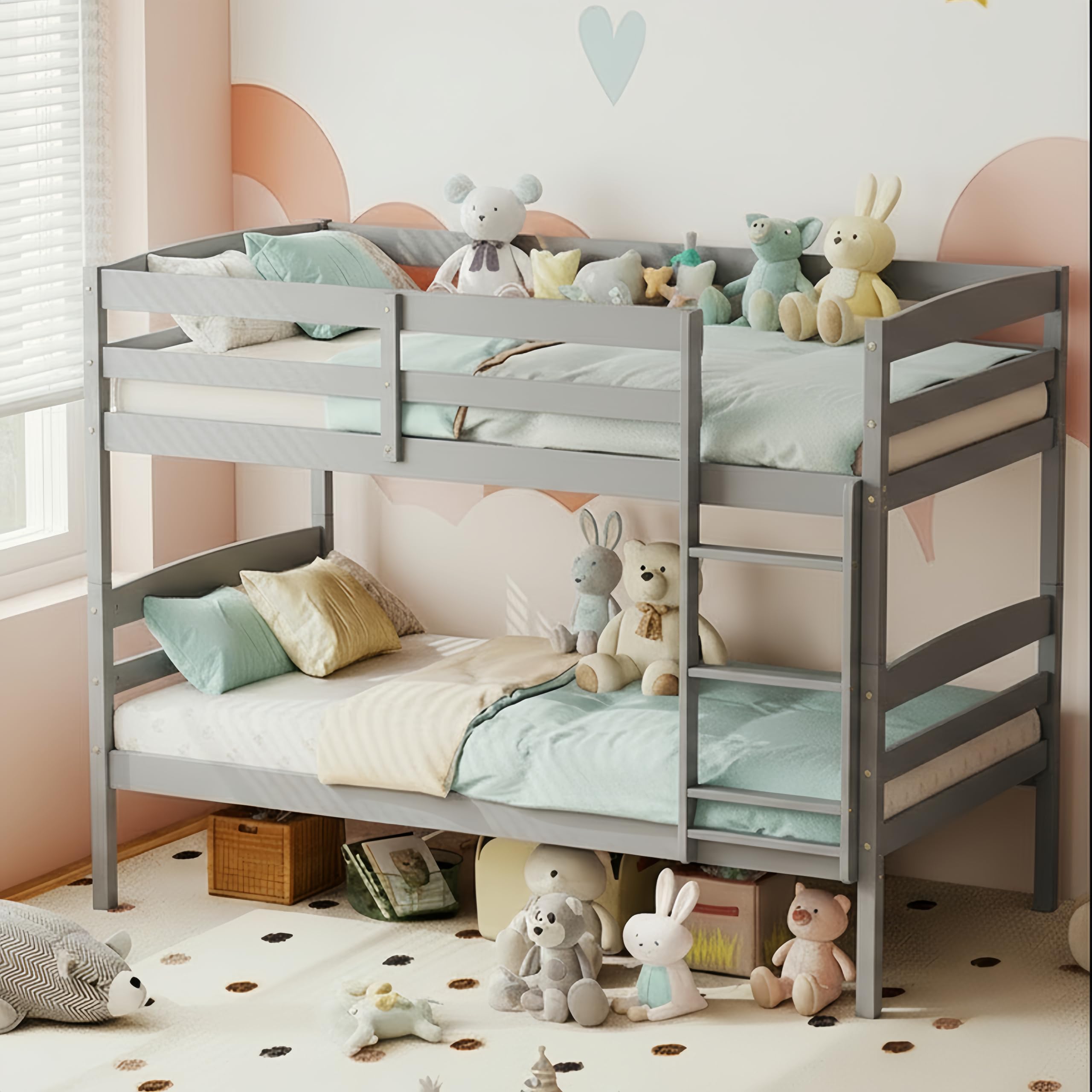
The KOMFOTT Convertible Bunk Bed is engineered for families who want the vertical space savings of a bunk now but the flexibility of two separate twin beds later. The solid pine frame supports 350 pounds on both bunks, and the 14+14 plywood slat configuration provides a dense, noise-free foundation for mattresses. When the kids outgrow the bunk stage, the frame disassembles into two individual beds that can be placed in separate rooms or used as guest beds.
At 60.5 inches tall, this is a full-height bunk rather than a low-profile model, so it works best in rooms with standard 8-foot ceilings where the top bunk occupant can sit up comfortably. The 12-inch full-length guardrails on the upper bunk are effective, and the anti-tipping device that anchors the frame to the wall adds a layer of security that parents of active children appreciate. The 12-inch under-bed clearance is just enough for storage bins or a vacuum robot to pass through.
Assembly feedback is generally positive, with most owners completing it in 2 to 3 hours using the detailed instructions. A small number of units have arrived with split wood on non-structural components, which is visually annoying but does not compromise the bed’s stability. Overall, this is the strongest option for anyone who anticipates changing room layouts or moving the beds to different locations over time.
Why it’s great
- Converts into two separate twin beds for future flexibility
- Dense 14+14 slat setup supports mattresses without sagging
- Wall-anchoring system provides excellent overall stability
Good to know
- 60.5-inch height may be too tall for low-ceiling rooms
- Occasional cosmetic wood splits in non-structural areas
6. Costzon Twin Over Twin Bunk Bed

The Costzon Twin Over Twin Bunk Bed stands out in the mid-range segment by using solid rubberwood instead of the standard pine found in most competitors. Rubberwood is denser and more resistant to warping, giving this 60-inch tall frame a noticeably more premium feel at the touch. The bed is convertible into two separate twin frames, and the slatted headboard and footboard add a classic aesthetic that pairs well with both traditional and modern decor.
Safety features include full-length guardrails on the top bunk and two metal brackets for anchoring the bed to the wall. The inclined ladder is wider than average, which makes climbing safer for younger children. Owners consistently note that the pre-drilled holes line up perfectly, and a single person can complete the assembly in approximately one hour — a rarity in the bunk bed category where most frames require two people and three hours.
The main criticism relates to the bottom mattress slats, which some users report tend to shift or fall off the support rails. This seems to affect a subset of units and may be addressed by adding a few screws to secure the slats permanently. A few owners describe the overall feel as “a bit cheap” despite the solid material, which may reflect the finish quality rather than the structural integrity.
Why it’s great
- Solid rubberwood construction offers better density than standard pine
- Fast solo assembly with well-labeled parts and clear instructions
- Convertible design for long-term flexibility
Good to know
- Bottom mattress slats can shift or fall out of place
- Finish quality is not as refined as higher-priced options
7. Grain & Grove Bear Low Bunk Bed
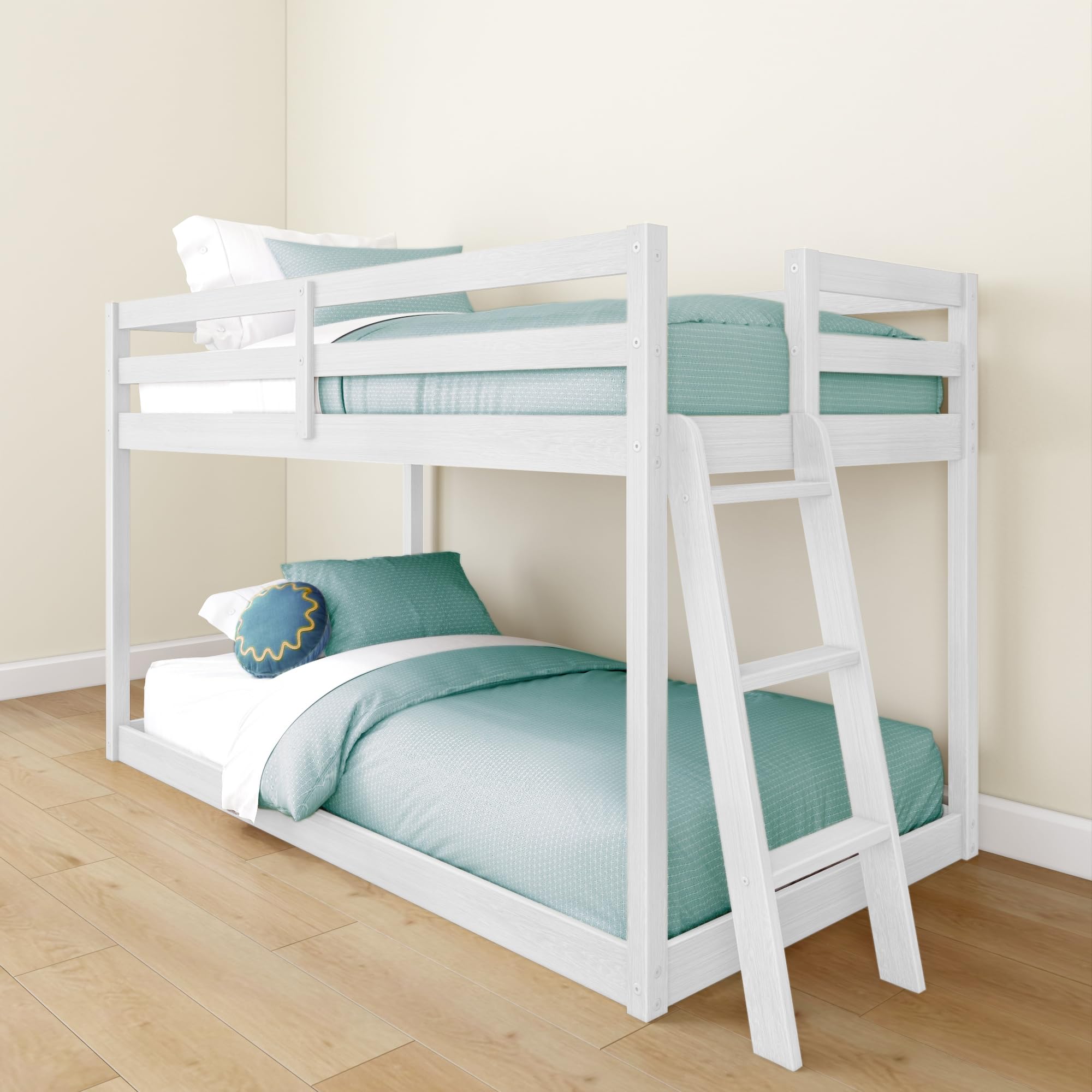
The Grain & Grove Bear Low Bunk Bed brings a 400-pound weight capacity to a sub-50-inch frame, making it one of the strongest low-profile bunks for its height class. The engineered wood construction with color-matched hardware delivers a clean brushed white finish that brightens small rooms without visually towering over the other furniture. The bottom bunk sits just 2 inches off the ground, effectively creating a floor-level sleeping surface that is ideal for children ages 2 through 6.
One of the smartest space-saving features is the ladder design, which does not protrude beyond the bed’s footprint — a critical detail when the bunk is placed against a wall. The 14-inch guardrails on the top bunk are among the tallest in this price range, providing extra reassurance for parents. The 29.75-inch headspace between bunks is generous for a low-profile frame, meaning the child on the bottom bunk does not feel cramped when sitting up to read or play.
Assembly instructions are a notable pain point: bags are mislabeled, and some steps are repetitive or unclear, though all required parts are present. A handful of owners report minor splintering on natural-finish units that required light sanding before assembly. Once built, however, the frame is remarkably quiet — no squeaks or wobbles — which is the ultimate test for any bunk bed used by active children.
Why it’s great
- 400-pound capacity per bunk in a low-profile package
- Ladder stays within the bed footprint for tight spaces
- Tall 14-inch guardrails provide excellent top-bunk safety
Good to know
- Assembly instructions have labeling errors and unclear steps
- Natural finish may require light sanding to remove splinters
8. Giantex Twin Over Twin Bunk Bed

The Giantex Twin Over Twin Bunk Bed prioritizes under-bed accessibility with a 12.5-inch vertical clearance, offering enough room to slide standard storage bins or a low-profile vacuum cleaner beneath the lower bunk. The frame is built from premium pine wood with 14+14 veneer plywood slats and four stout legs, supporting up to 330 pounds on the top bunk and 400 pounds on the bottom. The anti-tipping mechanism includes wall-anchoring brackets for an extra layer of security.
Users routinely describe assembly as manageable, with one 73-year-old grandparent completing the build in approximately three hours without assistance. The raised guardrails on the top bunk are tall enough to work well with a 6-inch mattress, keeping young sleepers safely enclosed. The grey painted finish is modern and does not show dust as quickly as darker or lighter colors.
Two common issues emerge from owner feedback: the included paper stickers meant to cover screw holes are flimsy, and many users opt to use matching paint instead. Additionally, the instructions could benefit from clearer diagram labeling to reduce confusion during the build. Despite these minor frustrations, the combination of generous under-bed storage and sturdy overall construction makes this a strong candidate for rooms that double as play or study spaces.
Why it’s great
- 12.5-inch under-bed clearance for storage bins and cleaning
- Anti-tipping wall brackets included for added stability
- Sturdy pine frame handles daily child use without loosening
Good to know
- Screw hole covers are low-quality paper stickers
- Instruction diagrams could be clearer for first-time builders
9. KOMFOTT Low Bunk Bed Twin Over Twin
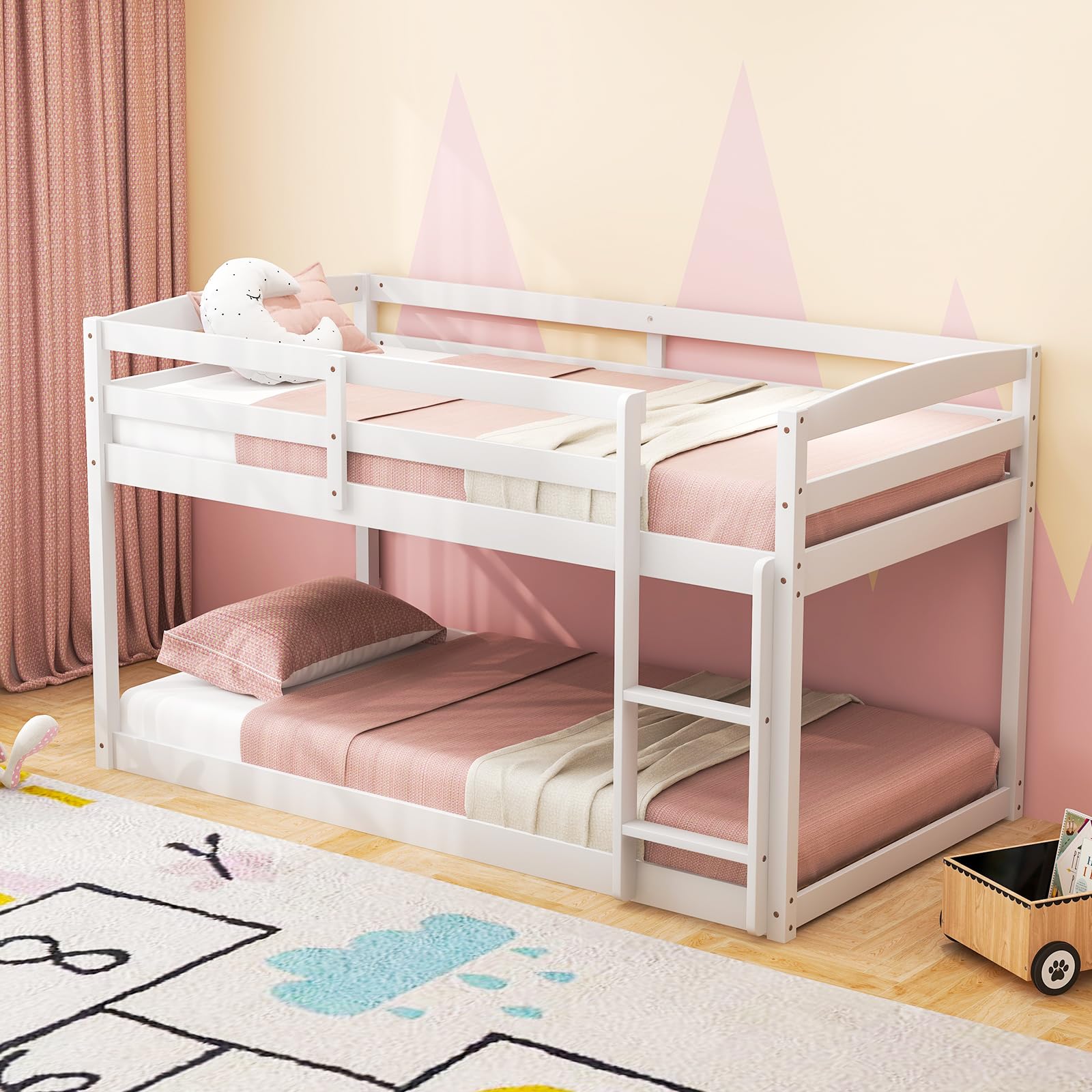
The KOMFOTT Low Bunk Bed is the entry-level anchor of this guide, offering a 51-inch total height that splits the difference between ultra-low toddler bunks and full-height frames. The solid pine wood construction with 14+7 plywood slats supports up to 350 pounds on the top bunk, and the 12-inch full-length guardrails provide adequate protection for the upper sleeper. The 2-step integrated ladder is smooth-edged and does not extend far into the room.
Assembly is straightforward for the category, taking most owners between 2 and 3 hours with two people. The white finish is bright and helps the bed blend into small rooms without feeling visually heavy. The low design is particularly appreciated by parents who worry about their children falling from height, and the frame’s stability after assembly — even under slightly rough use — exceeds expectations at this tier.
The primary limitation is that the top bunk is best suited for children or small adults, as taller teenagers will find the 51-inch clearance restrictive when sitting up. A few owners note a wobble in the top bunk while climbing, though this seems to affect only the lightest users and does not affect the bed once stationary. For families on a budget who still want real wood and a low profile, the KOMFOTT delivers a compelling package.
Why it’s great
- Real solid pine frame at a very accessible cost
- 51-inch height is versatile for most ceiling types
- Simple assembly with clear instructions and labeled parts
Good to know
- Top bunk is too short for teens or adults to sit upright
- Minor wobble during ladder climbing on some units
FAQ
Can a low-profile bunk bed still fit two twin mattresses under an 8-foot ceiling?
What is the minimum guardrail height recommended for a child on the top bunk?
Does a low bunk bed still provide useful under-bed storage space?
Are full-height bunks ever better for small rooms than low-profile models?
Final Thoughts: The Verdict
For most users, the bunk beds for small rooms winner is the Max & Lily Low Bunk Bed With Stairs because it integrates a full staircase with storage into a safe, low-profile frame that gives you back floor space. If you want the cleanest minimalist design with real knot-free wood, grab the Max & Lily Scandinavian Low Bunk. And for maximizing under-bed storage on a tighter budget, nothing beats the Giantex Twin Over Twin Bunk Bed.