
The single biggest upgrade you can make to your morning coffee routine isn’t a new espresso machine or a fancier dripper. It is the grinder. Pre-ground coffee starts losing its volatile aromatic compounds within minutes of being crushed, and a blade grinder only makes matters worse by producing a chaotic mix of boulders and dust that extracts unevenly. A proper burr grinder, using either flat or conical steel plates that crush beans to a uniform size, is the only tool that unlocks the full flavor potential locked inside every bean.
I’m Min — the co-founder and writer behind Gadgets Feed. My analysis of this category focuses on mechanical consistency, grind retention, and the real-world build quality that separates a six-month impulse buy from a decade-long companion.
Whether you are pulling a shot of espresso, brewing a pour-over, or plunging a French press, the grind quality dictates everything. This guide breaks down the best burr coffee grinder for every brewing style and budget.
How To Choose The Best Burr Coffee Grinder
Blade grinders chop beans indiscriminately, producing a wide particle size distribution that leads to bitter over-extraction from fine dust and sour under-extraction from large chunks. A burr grinder crushes beans between two abrasive surfaces to deliver a uniform particle size, which is the single most controllable variable in brewing chemistry. The choice then becomes which build, feature set, and motor or manual mechanism fits your daily workflow and budget.
Electric vs. Manual: Speed vs. Precision
Electric grinders like the SHARDOR or Tuni G1 offer push-button convenience with timed dosing, ideal for high-volume mornings when multiple shots or pots are needed. Manual grinders like the TIMEMORE C2S or KINGrinder K6 trade speed for absolute zero retention and silent operation, making them better for single-dose workflows, travel, or households where motor noise is a problem. Manual units also let you feel the bean resistance directly, giving tactile feedback on grind consistency.
Grind Settings Count and Step Resolution
More settings matter only if they are genuinely usable. A grinder with 48 click-stops, such as the Aromaster or AMZCHEF, provides fine-grained control across espresso, drip, and French press ranges. For espresso specifically, look for micro-adjustments of 16 to 30 microns per step — the KINGrinder K6 offers 16 microns per click, allowing precise dialing for pressure profiling. A grinder with too few steps (e.g., 15 settings like the OXO Brew) is perfectly adequate for drip and French press but may frustrate espresso tuning.
Build Quality and Burr Material
Stainless steel conical burrs are the standard for the mid-range and premium tiers in this list. They resist wear, generate less heat than ceramic alternatives, and are easier to clean when removable. Full metal bodies, as seen in the TIMEMORE C2S and KINGrinder K6, add weight and stability that prevent the unit from walking across the counter during grinding. Plastic casings, like the OXO Brew, keep the price down but may feel less durable over many years of daily use.
Static and Mess Management
Static electricity causes fine coffee particles to cling to the grind container, chute, and countertop, wasting coffee and creating cleanup hassle. Anti-static technology is now common on models such as the SHARDOR, Tuni G1, Aromaster, and AMZCHEF. These designs use slower burr rotation speeds (around 450 RPM) and specialized coatings to reduce static buildup. A manual grinder naturally avoids static because there is no motor generating friction-induced charge in the first place.
Quick Comparison
On smaller screens, swipe sideways to see the full table.
| Model | Category | Best For | Key Spec | Amazon |
|---|---|---|---|---|
| Tuni G1 | Electric | Versatile home brewing | 48 settings, 450 RPM, 250g hopper | Amazon |
| SHARDOR Conical Burr | Electric | Espresso with portafilter cradle | 51 settings, 0.1s timer, 40mm burrs | Amazon |
| OXO Brew Compact | Electric | Small kitchens & drip coffee | 15 settings, 29 micro-adjusts, 50g capacity | Amazon |
| Aromaster 48-Setting | Electric | Quiet operation & anti-static | 48 settings, 3.9oz chamber, built-in brush | Amazon |
| AMZCHEF CG209 | Electric | Digital precision & touchscreen | 48 settings, LED panel, 450 RPM | Amazon |
| TIMEMORE C2S | Manual | Portable & silent grinding | 38mm burr, 36 levels, full metal body | Amazon |
| KINGrinder K6 | Manual | Espresso dialing & zero retention | 16µ/click, 60 clicks/rev, 25-30g cap | Amazon |
In‑Depth Reviews
1. Tuni G1 Conical Burr Coffee Grinder

The Tuni G1 nails the sweet spot of the category by packing 48 grind settings, a 250-gram bean hopper, and a precise timed dose system into a compact stainless steel frame that resists fingerprints. The 40-millimeter conical burrs spin at a low 450 RPM, which keeps heat and static dramatically lower than faster grinders — a genuine engineering advantage for preserving volatile coffee oils. The portafilter holder is compatible with both 54-millimeter and 58-millimeter baskets, so espresso users can grind directly into the portafilter without an extra transfer step.
Retention measures at a remarkably low 0.1 to 0.2 grams according to user measurements, meaning almost every bean you load ends up in your brew rather than stuck in the burr chamber. The touchscreen interface and electronic timer allow adjustments down to 0.5-second increments, which is granular enough for single-dose espresso workflows. Multiple buyers report pairing this grinder with Gaggia Classic and Breville machines with minimal dialing frustration.
The included dosing cup holds 75 grams of grounds, and the accompanying cleaning brush stows neatly on the hopper lid. A few users noted that light-roast espresso may require a DIY shim mod for finer adjustments, but this is a minor tweak for a grinder that otherwise competes with units costing considerably more. For the vast range of home brewing from French press to espresso, the Tuni G1 delivers the most versatility per cubic inch of counter space.
Why it’s great
- Quiet, low-static 450 RPM motor with consistent grind quality across all settings
- Compact footprint with large hopper and dedicated portafilter holder
- Excellent value for the number of features and build materials
Good to know
- May require a shim adjustment for very light roast espresso grinds
- Long-term durability still unproven as a newer model
2. SHARDOR Conical Burr Espresso Coffee Grinder

The SHARDOR distinguishes itself with 51 distinct grind settings and a precision electronic timer adjustable in 0.1-second increments, making it one of the most granular dose-control machines at its tier. The 40-millimeter stainless steel conical burrs are designed to grind slow enough to avoid overheating the bean oils, and the anti-static technology keeps the ground coffee chamber nearly free of clinging particles. A dedicated portafilter cradle lets you grind directly into the basket, shaving seconds off the espresso workflow.
Reviewers consistently praise the grind consistency for both espresso and French press, with several noting that the flavor improvement over pre-ground coffee was immediately obvious. The machine stands 13.5 inches tall with a 6.2-pound heft that keeps it planted on the counter. The touchscreen interface is intuitive, and the cup quantification selector ranges from 1 to 12 cups, which is convenient for both single shots and full pots.
The hopper clip is a known weak point — a few users reported breakage after extended use, though warranty support was responsive. The portafilter holder can sag slightly under heavier baskets, requiring a manual hold for some models. Still, for those prioritizing espresso workflow and micro-adjustable timing, the SHARDOR delivers a level of repeatable dose precision that rivals larger commercial-adjacent units.
Why it’s great
- Exceptional 0.1-second electronic timer for precise dose repeatability
- 51 settings offer fine control from Turkish-fine espresso to coarse French press
- Solid stainless steel construction with effective anti-static performance
Good to know
- Hopper clips can be fragile with heavy daily use
- Portafilter cradle may require manual support for heavy baskets
3. Aromaster Conical Coffee Bean Grinder
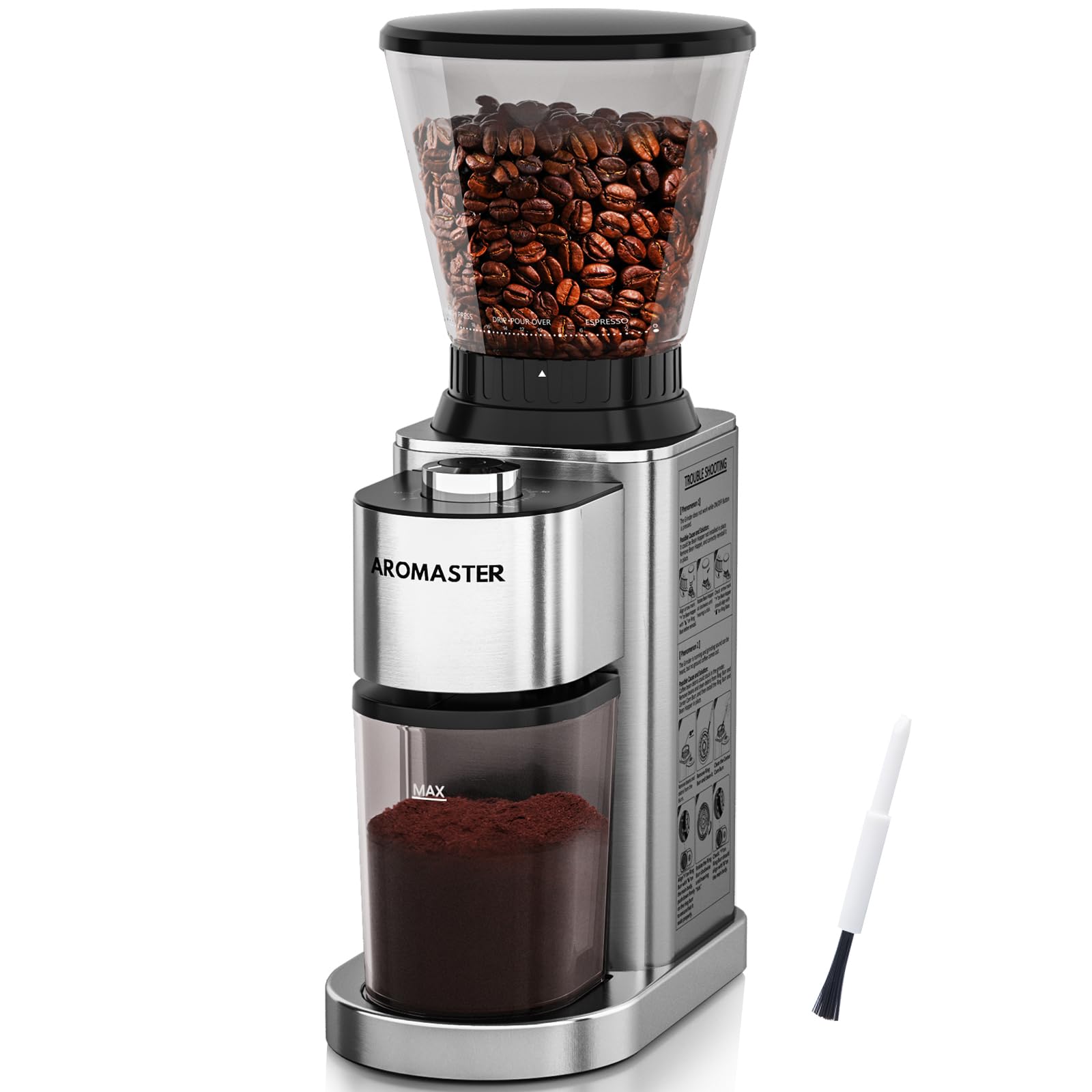
The Aromaster stands out for its genuinely quiet motor and effective anti-static design, which multiple long-term users confirm prevents grounds from sticking to the bin and creating countertop messes. With 48 grind settings and a 3.9-ounce capacity grinding chamber, it covers the full spectrum from espresso to French press without requiring constant refills. The taper-designed bin also reduces ultraviolet light exposure to the grounds, a thoughtful detail for preserving freshness if you grind ahead.
The built-in brush attached to the bean hopper lid actively prevents clogging during operation, and the removable ring burr makes periodic cleaning straightforward. Users who have tried multiple grinders rank the Aromaster as the quietest they have used, with a low growl rather than the high-pitched whine of many budget competitors. The timer dial is intuitive and allows easy adjustment of grind duration without referencing a manual.
A few users noted a slight miscalibration of the grind setting marker, but this is a cosmetic issue rather than a functional one — the click-stops themselves are accurate. The 12-month repair service and responsive customer support provide peace of mind. For those who value a serene morning routine and a spotless counter, the Aromaster delivers the quietest electric experience in this lineup.
Why it’s great
- Remarkably quiet motor operation for early morning grinding
- Effective anti-static technology minimizes mess and ground stickiness
- Generous 3.9oz chamber with 48 versatile settings
Good to know
- Grind setting indicator may be slightly misaligned on some units
- Conical burr speed is slower for very fine espresso grinds
4. AMZCHEF Coffee Grinder CG209
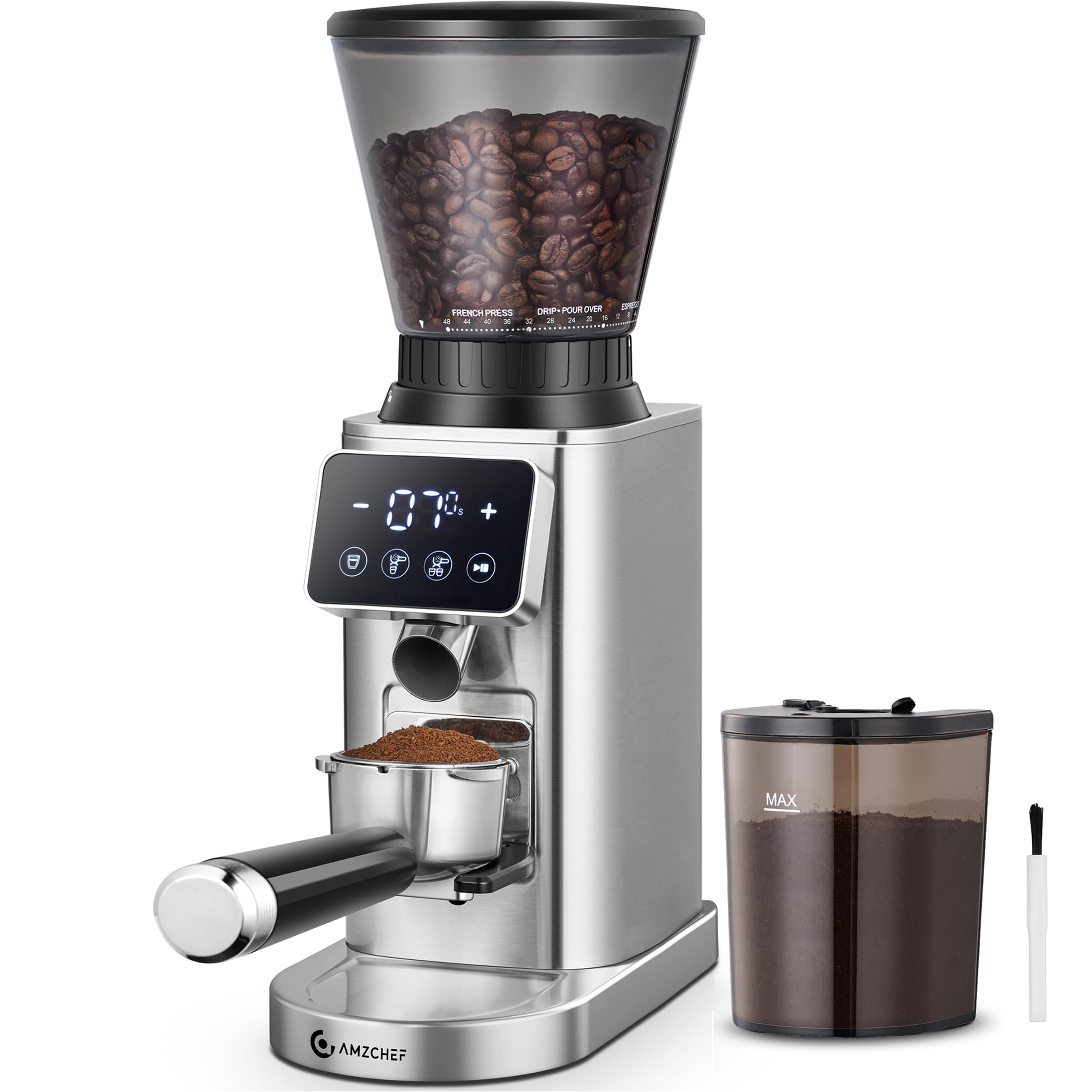
The AMZCHEF CG209 differentiates itself with a full LED touchscreen control panel that offers three grind modes: by cup count, by time with 0.5-second precision, or by espresso single/double shot. The 40-millimeter stainless steel conical burrs spin at 450 RPM to minimize heat and static, and the light-blocking ground coffee container holds 100 grams, protecting the grounds from UV degradation. The portafilter holder is compatible with 50-millimeter baskets, which covers a wide range of consumer espresso machines.
User feedback highlights the consistent grind size across settings 10 to 12 for espresso, and the intuitive interface that requires no manual referencing after the first use. The anti-static chute dispenser works as advertised, delivering grounds into the container with minimal cling. The sturdy build and sleek silver finish earn praise for fitting into modern kitchen aesthetics without feeling plasticky.
The included portafilter holder can be loose on its mounting tracks for some users, requiring a small tape gasket to eliminate wobble. Espresso grind at the finest setting may be too fine for some Breville machines, causing the pressure gauge to read high. These are relatively minor fitment issues for a grinder that otherwise offers one of the most integrated digital experiences in the sub- electric category.
Why it’s great
- Full LED touchscreen with three grinding modes for flexible dosing
- Low 450 RPM operation reduces heat and static buildup
- Compact footprint with 100g UV-blocking grounds container
Good to know
- Portafilter holder may need manual tightening for a secure fit
- Finest espresso setting may be too fine for some machine baskets
5. OXO Brew Compact Conical Burr Coffee Grinder

The OXO Brew Compact is engineered specifically for kitchens where counter space is at a premium — standing just 10.75 inches tall with a 3.75-inch square footprint, it fits under standard cabinets and can be stored in a drawer. Despite its size, it features stainless steel conical burrs with 15 primary grind settings and 29 micro-adjustments, offering a surprising level of control for drip coffee and Aeropress users. The 50-gram bean capacity produces up to 6 cups of coffee, which covers most household morning needs.
Reviewers consistently describe it as the quietest grinder they have owned, with a low growl that is less intrusive than the whirring of many competitors. The removable upper and lower burrs make cleaning straightforward, and the hopper and grounds container are made from Tritan Renew, a recycled-content plastic that feels durable without adding weight. Static is present but less severe than louder, more expensive grinders, and a simple light water spritz eliminates the issue entirely.
The plastic construction, while sturdy for daily use, does not convey the same tactile permanence as full-metal bodies. The 15 grind settings lack the granularity needed for serious espresso dialing — this is a drip-first grinder. But for the majority of coffee drinkers who brew pour-over, automatic drip, or Aeropress, the OXO Brew Compact delivers exceptional grind quality in the smallest possible package.
Why it’s great
- Exceptionally compact design fits in small cabinets and tight counters
- Quietest electric grinder in this roundup for early morning use
- Simple, intuitive operation with consistent grind results
Good to know
- Limited to 15 settings — not ideal for espresso tuning
- Plastic body feels less premium than metal alternatives
6. KINGrinder K6 Manual Hand Coffee Grinder
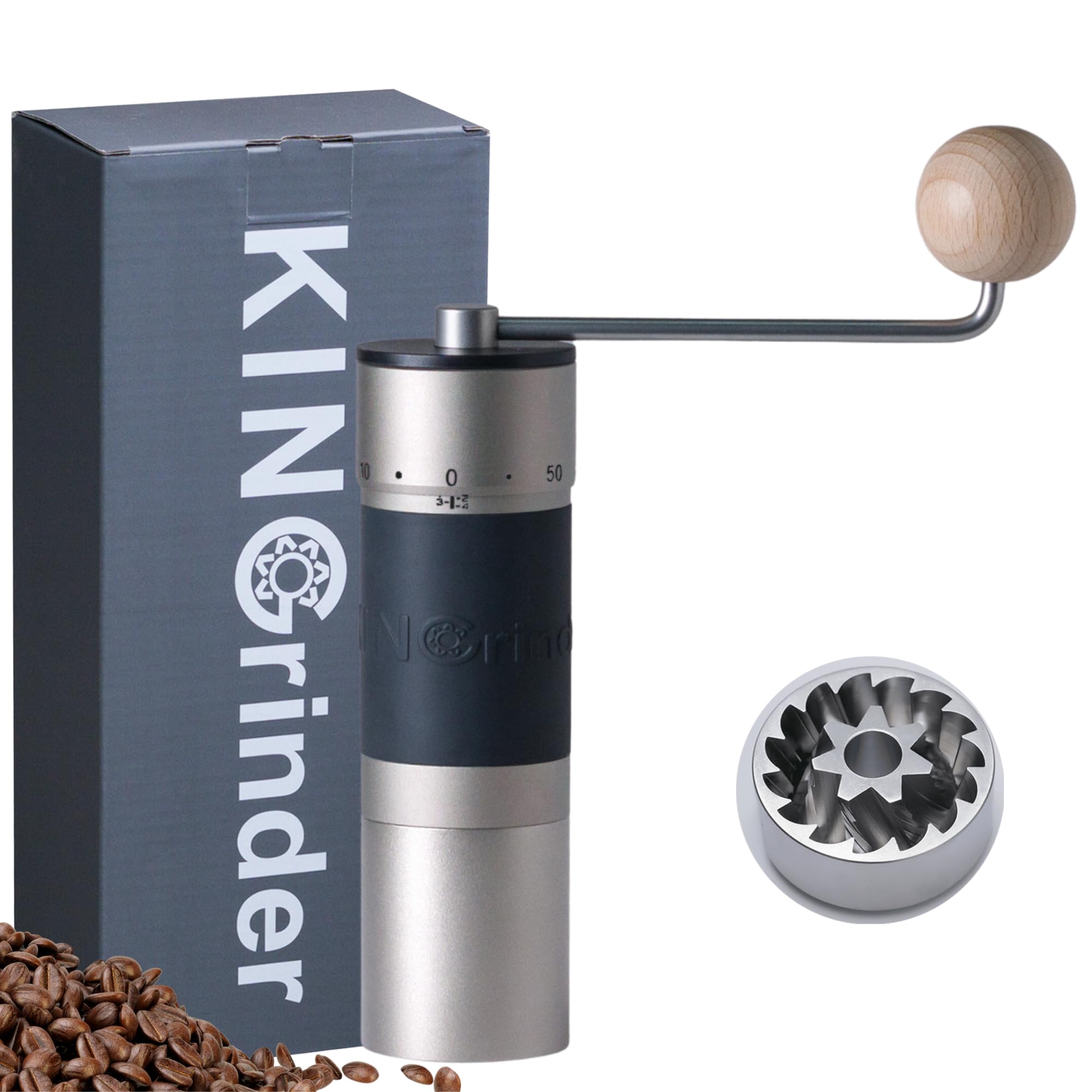
The KINGrinder K6 is the most precise manual grinder in this lineup, offering an impressive 16 microns per click adjustment across 60 clicks per rotation, for up to 4 full rotations of total range. The full metal body — aluminum chassis with stainless steel burrs — feels indestructible in the hand, and the dual-bearing central axis ensures the burrs remain perfectly aligned even under the stress of grinding light-roast beans. The 25-to-30-gram capacity covers a double shot of espresso or a single mug of pour-over.
Grinding speed is fast for a manual unit: 10 to 20 grams for espresso takes roughly 45 seconds with moderate effort, and the handle continues spinning briefly after release thanks to the smooth bearings. The external adjustment nut allows grind size changes without disassembling the grinder, which is critical when switching between brewing methods. Users praise the zero-retention design, meaning exactly the amount of beans you load ends up in your portafilter — a genuine advantage over many electric grinders that retain 0.5 to 1 gram internally.
The straight handle design is the only compromise — it is less ergonomic for high-volume grinding compared to a crank handle, though it packs more compactly for travel. The true zero point may be off by a few clicks out of the box, requiring a one-time calibration. For espresso enthusiasts who want mechanical precision and absolute dose control, the K6 offers grind quality that would require spending significantly more on an electric counterpart.
Why it’s great
- Industry-leading 16-micron per click adjustment for fine espresso dialing
- Full metal build with dual bearings ensures long-term alignment and durability
- Zero retention guarantees every gram of coffee ends up in your brew
Good to know
- Straight handle requires more physical effort than crank-style manual grinders
- True zero calibration may need a one-time adjustment on arrival
7. TIMEMORE Chestnut C2S Manual Coffee Grinder

The TIMEMORE C2S is the upgraded successor to the wildly popular C2, addressing the original’s plastic top cover fragility with a full metal unibody that feels substantially more robust. The 38-millimeter S2C conical burr is CNC-machined from stainless steel with a 55-to-58 HRC hardness rating, delivering uniform grind particles with minimal fine powder generation. The double-bearing central axis ensures smooth rotation even when grinding dense light roasts, and the handle momentum carries through for one or two rotations after you stop.
At 700 grams, the C2S strikes an ideal balance between lightweight portability and a reassuring heft. The 36 click-stops cover the full brewing spectrum from espresso to French press, and the adjustment nut allows tool-free changes. Users report grinding a 24-gram dose in under a minute with comfortable ergonomics, and the disassembly for cleaning is tool-free as well. The included carrying bag and brush make it a genuine travel companion for camping, hiking, or office use.
The 25-gram capacity is adequate for single doses but requires multiple refills for a full French press pot. Grind size adjustment, while precise, can be slightly finicky when frequently switching between drastically different settings. For anyone who wants a manual grinder that will outlast several electric machines and requires no power source, the C2S delivers exceptional build quality and grind consistency at a price point that undercuts most electric alternatives.
Why it’s great
- Full metal unibody eliminates the breakage issues of the previous generation
- Portable 700g weight with ergonomic grip for travel and outdoor use
- Uniform grind quality that rivals electric grinders at a lower price
Good to know
- 25g capacity requires multiple refills for large batch brewing
- Grind adjustment can be tedious when changing settings frequently
FAQ
Why is a conical burr grinder better than a blade grinder for coffee?
How many grind settings do I need for espresso compared to French press?
Does static electricity in coffee grinders affect the taste of my coffee?
Are manual coffee grinders worth it compared to electric models?
How often should I clean the burrs on my coffee grinder?
Final Thoughts: The Verdict
For most users, the best burr coffee grinder winner is the Tuni G1 Conical Burr Grinder because it delivers the broadest usable grind range, genuine anti-static engineering, and a compact stainless steel build at a price that undercuts comparable electric models. If you want precision espresso dialing with zero retention, grab the KINGrinder K6. And for those who need a silent, space-saving grinder that disappears into a cabinet, nothing beats the OXO Brew Compact.