
Our readers keep the lights on and my morning glass full of iced black tea. As an Amazon Associate, I earn from qualifying purchases.
Specs are compiled from manufacturer listings and verified buyer reviews and can change over time — please confirm the key details on the product page before buying.
Picking a bush for the front of your house is different from filling a backyard bed. That spot gets blasted by the sun, scraped by wind, and judged by everyone walking past. You need something that stays tidy without constant pruning, looks good across seasons, and does not flop over after a storm.
I’m Min — the founder and writer behind Gadgets Feed. This guide is built by comparing the manufacturers’ published specifications and the patterns across verified customer reviews, so you get each pick’s real strengths and trade-offs instead of marketing spin.
Whether you are framing a foundation line, edging a walkway, or filling a narrow side bed, this round-up of the best bushes for front of house cuts through the nursery hype to show you four proven performers with honest trade-offs.
Quick Picks
- Proven Winners 2 Gal. Double Play Doozie Spirea — Best Overall
- Southern Living 2 Gal. Obsession Nandina Shrub — Year-Round Color
- Live Plant from Green Promise Farms — Spring Showpiece
- 1G Silverado Texas Sage Plant by Plants for Pets — Budget Champion
How To Choose The Best Bushes For Front Of House
Front-of-house shrubs live in a harsh microclimate — reflected heat from the siding, road salt splash, and limited soil volume if you have a narrow bed. Picking the wrong one means constant trimming or an eyesore. Here are the three specs that matter most.
Mature Height — Do Not Wing It
A bush that hits 48 inches tall can block a ground-floor window. A 24-inch variety stays below the sill and frames the house instead of hiding it. Match the plant’s expected height to your foundation height before you order. A shrub that grows too tall once planted is a headache to dig up.
Sun & Zone Match
Your front bed gets full sun or full shade depending on the house orientation. Check the USDA zone rating (for example, zones 6-10 or zones 3-8) against your local hardiness zone. Then match the sunlight exposure tag — “Full Sun” means 6+ hours of direct light, “Part Shade” means 3-6 hours. A mismatched shrub is a shrub that struggles from day one.
Dormancy Is Not a Defect
Deciduous shrubs (ones that drop leaves for winter) often ship dormant — no leaves, just bare or lightly branched stems. That is how the nursery keeps them healthy in transit. Buyers sometimes panic when a spirea or forsythia arrives looking twiggy in early spring. Check the product description: “Ships dormant winter through early spring” is normal, not a return reason.
Quick Comparison
| Model | Best For | Mature Height | Sunlight | Blooming Period | Amazon |
|---|---|---|---|---|---|
| Southern Living 2 Gal. Obsession Nandina | Year-round red foliage | 48 Inches | Sun to Part Shade | No Blossoms | $27.84Amazon |
| Proven Winners Double Play Doozie Spirea | Compact color through frost | 24 Inches | Full Sun to Partial Shade | Spring to Fall | $33.28Amazon |
| Green Promise Farms Forsythia Show Off Starlet | Early spring yellow burst | 36 Inches | Full Sun | Spring | $69.99Amazon |
| Plants for Pets Silverado Texas Sage | Drought-hearty budget filler | — | Full Sun | Winter | $22.98Amazon |
In‑Depth Reviews
1. Proven Winners 2 Gal. Double Play Doozie Spirea Shrub

A tidy repeat-bloomer that earns its front-row spot from spring to first frost.
The Double Play Doozie Spirea tops out at 24 inches tall and 24 to 36 inches wide — short enough to sit under a ground-floor window without blocking the view, wide enough to fill a 2-foot foundation bed. You get red to purple flowers from spring all the way through fall, which is rare for a compact shrub. It is rated for USDA zones 3 through 8, so buyers in colder northern climates can plant it with confidence, unlike the Southern Living Nandina that stops at zone 6.
Buyers report that the plant arrives healthy and often already blooming. One reviewer noted, “I had to delay planting because our last frost date was about three weeks from arrival. They stayed alive on my enclosed porch and even started to bloom.” That dormancy-handling ability matters if you order in early spring. One catch: it is deciduous, so expect bare stems in winter — not a year-round green screen.
Shaped for Front Beds
- Blooms spring to fall — longest color window in this group
- Stays at 24 inches tall, fits below window lines
- Handles zones 3-8 including cold winter areas
Seasonal Reality
- Foliage drops in winter; bare stems show until spring
- Needs moderate watering — not truly drought-tolerant
Front-of-house verdict: This is the best balanced pick if you want reliable color below window height across most US hardiness zones.
One real limitation: If you need a green screen against the foundation in winter, the bare deciduous look might disappoint you.
2. Southern Living 2 Gal. Obsession Nandina Shrub

The non-flowering shrub that paints your foundation red without the pruning fuss.
This Nandina is the only evergreen-adjacent pick in the group — it keeps leaves year-round, turning from green to a bright red-green in fall, and loses some foliage in winter but not all. At 48 inches tall, it towers over the Spirea by exactly 24 inches, so it works best in front of a tall siding wall or as a corner anchor rather than under a low window. One reviewer summarized it well: “Slow-growing shrub with nice foliage; nonflowering.” Because it produces no blossoms, there is no deadheading and no dropped petals to sweep off your front step.
It ships as a bundled pair (2 pieces per order) for a denser fill. The plant is rated for USDA zones 6 through 10, so it is strictly for warmer half of the US — skip it if you are in zone 5. Owners mention the plants arrive moist and in good shape, though one noted the box can be manhandled during delivery: “One pot smashed, stems bent.” Plant it in sun to part shade and water twice a week until it is established, then once a week after that.
What Stands Out
- Comes as a 2-pack, better value for filling a bed
- Red-green foliage offers year-round visual interest
- Low maintenance once established — slow grower
What to Know
- No blooms at all; purely a foliage plant
- Loses some leaves in winter despite being evergreen-ish
- Not suited for zone 5 or colder areas
Reach for this if… you want a drama-free foliage shrub that stays colorful without deadheading and you live in zones 6-10.
Look elsewhere if… you expect flowers, or your front bed is under a low windowsill that 48 inches would block.
3. Live Plant from Green Promise Farms – Proven Winners Forsythia x Show Off Starlet
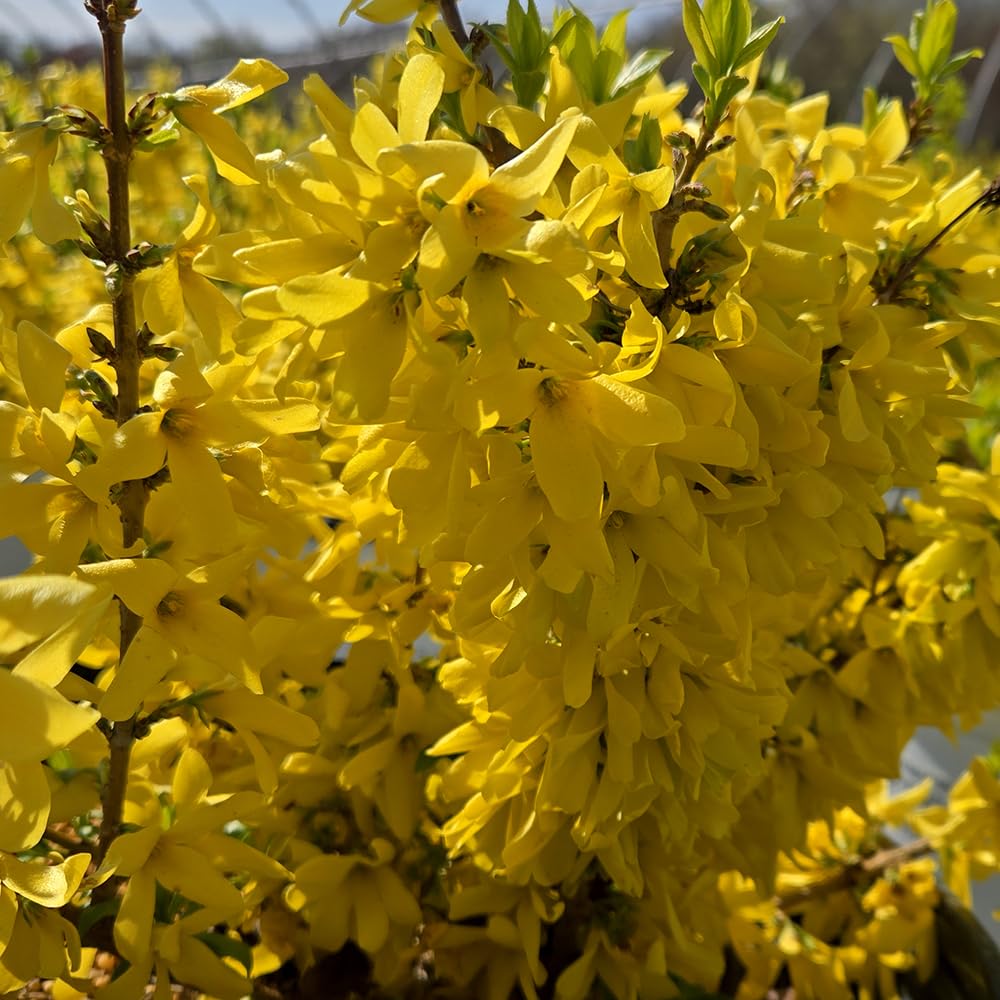
A dwarf forsythia that erupts in yellow before anything else in your yard wakes up.
This is the earliest bloomer in the lineup — a mass of bright yellow flowers from base to tip in spring, before most shrubs have even leafed out. The mature height is 36 inches, with a 24 to 36-inch spread, making it a mid-height option between the short Spirea and the tall Nandina. It is rated for USDA zones 5 through 8, so it handles colder winters better than the Southern Living Nandina. One buyer mentioned, “We’ve had cool weather with rain, so it’s doing well. Smallish but significantly brightening up a dark border.”
It ships in a #3 gallon size container (the largest pot in this group), and it is deciduous — it arrives dormant with no leaves from late fall through winter. That spooks some buyers, but it is normal. At 14 pounds, it is noticeably heavier to lift than the 8.8-pound Nandina or the Spirea. Note: this plant cannot ship to AZ, CA, HI, ID, MT, NV, OR, PR, or UT. It needs regular watering and full sun for the best bloom show.
Front-of-House Perks
- Earliest spring color — a reliable season-starter
- Dwarf form at 36 inches fits mixed borders well
- Deer resistant and low maintenance
Things to Note
- Only blooms in spring; green foliage rest of the season
- Does not ship to 8 western states (AZ, CA, HI, ID, MT, NV, OR, PR, UT)
- Heavier pot at 14 pounds may be awkward to carry
Best for: A buyer in zones 5-8 who wants a cheerful spring curtain and can accept a green-only look the rest of the year.
Not for: Anyone in restricted states or anyone who needs season-long continuous blooms — this one is a one-act show.
4. 1G Silverado Texas Sage Plant by Plants for Pets
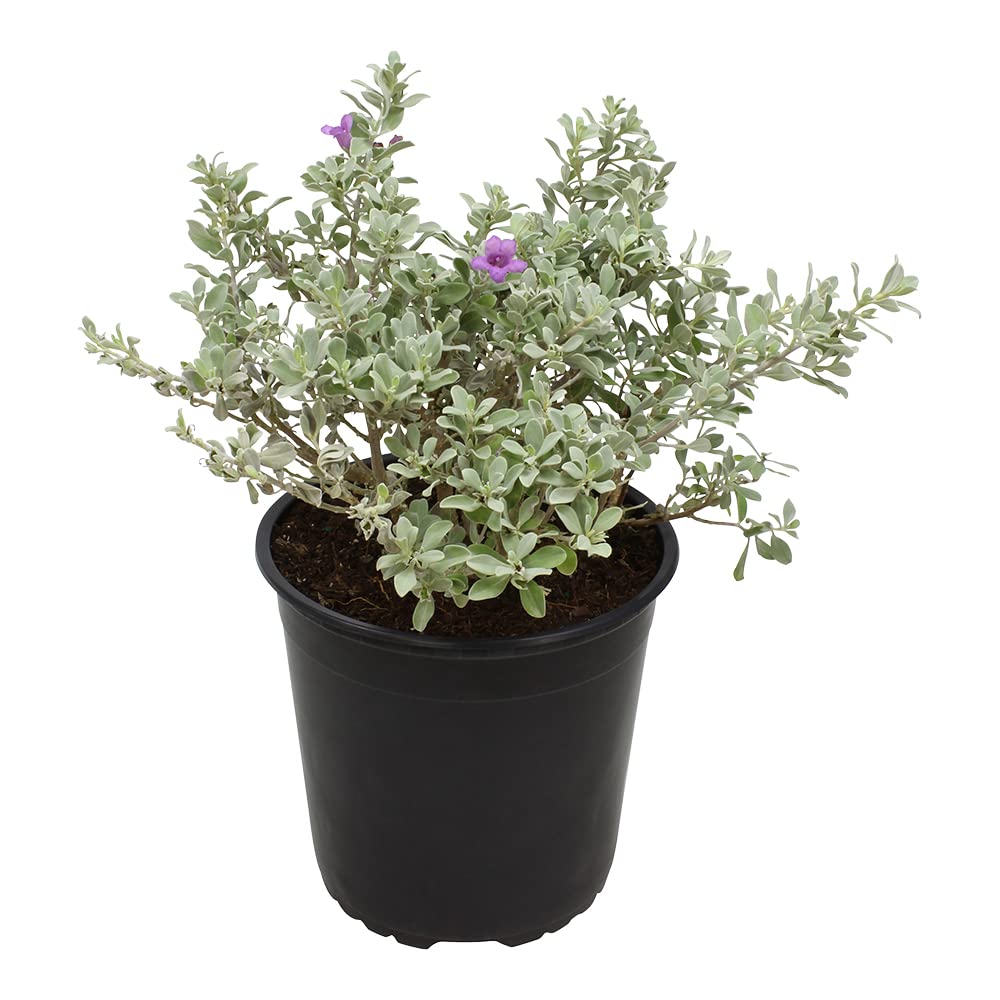
A dry-soil survivor that asks for nothing but sun and a little water.
This Texas sage is the most forgiving plant here — it is drought tolerant, thrives in full sun, and ships in a standard 1-gallon nursery pot. It is a true shrub (listed as Shrub & Hedge) that can work as a patio plant, front porch decor, or edging in a sunny bed. One buyer in a colder zone warned: “Zone 5b, may struggle in deep cold; will be potted.” That is an honest heads-up — the data does not list a specific USDA zone minimum, so southern gardeners (zones 7-10) are the safest bet.
The blooming period is listed as Winter, which means it flowers during the cooler months when many other shrubs are dormant. Unlike the Nandina or Forsythia, this one does not come with a mature height in the given specs, so you are gambling a bit on final size. Buyers consistently praise the packaging and health on arrival — one called it “11/10 quality” — but a few noted crushed boxes during shipping. The brand also donates a portion of each purchase to shelter animals, which is a nice bonus.
Why It Earns Its Spot
- Drought tolerant — needs less babysitting than most front-yard shrubs
- Blooms in winter when the yard is otherwise bare
- Arrives healthy with strong packaging per buyer reports
Trade-offs
- No listed mature height — final size is uncertain
- Not rated for deep cold; best in southern/warmer zones
- Only a single 1G pot; you need multiple for a full bed
The value angle: If your front bed is sunny and you live where frost is rare, this sage gives you a tough, drought-proof option at a low entry cost.
The honest limit: The unknown mature height and cold-zone risk mean it is a confident pick only for warm-climate or container-based plantings.
Understanding the Specs
Mature Height
This is how tall the bush will get at full growth, not its size at delivery. A 48-inch shrub like the Southern Living Nandina can block a low living-room window, while a 24-inch shrub like the Spirea stays below the sill. Measure your foundation or window height before buying to avoid a plant that outgrows its spot in two years.
USDA Hardiness Zone
This number tells you the coldest climate a plant can survive. Zones 3-8 means the shrub handles harsh northern winters (down to -40°F in zone 3). Check your zone online before ordering — planting a zone 6 shrub in a zone 4 yard is a short-lived investment.
FAQ
What is the difference between a Nandina and a Spirea for a front bed?
Can I plant a forsythia right against my house foundation?
Which of these bushes stays green all winter?
How many bushes do I need for a 10-foot front bed?
Why did my bush arrive looking like a dead stick?
Is Texas sage actually a sage plant?
What watering schedule do these front-yard shrubs need?
Can I grow these bushes in pots on my front porch?
Final Thoughts: The Verdict
For most people, the bushes for front of house winner is the Proven Winners Double Play Doozie Spirea because it delivers continuous color from spring to fall at a compact 24-inch height that fits neatly under windows across zones 3-8. If you want year-round evergreen-like structure without flowers, grab the Southern Living Obsession Nandina. And for an early spring yellow burst that announces the season, the standout is the Proven Winners Forsythia Show Off Starlet.
How We Picked
We do not accept paid placement. Every pick is matched to a real buyer and a real use-case; we do not hands-on test units.
Sources & Methodology
Specifications: manufacturer listings and product documentation. Review insights: verified customer reviews, as of July 2026. Pricing: not shown on this page (it changes often); check the current price via the retailer link.
As an Amazon Associate, Gadgets Feed earns from qualifying purchases. This does not affect which products we feature.
Related Guides
Product prices and availability are accurate as of the date/time indicated and are subject to change. Any price and availability information displayed on Amazon at the time of purchase will apply to the purchase of this product. As an Amazon Associate I earn from qualifying purchases.
CERTAIN CONTENT THAT APPEARS ON THIS SITE COMES FROM AMAZON. THIS CONTENT IS PROVIDED "AS IS" AND IS SUBJECT TO CHANGE OR REMOVAL AT ANY TIME.
Amazon and the Amazon logo are trademarks of Amazon.com, Inc. or its affiliates.