
You’ve picked the sunniest spot in your yard, the one that bakes for hours every afternoon. Now you need a bush that won’t crisp, wilt, or fade under that constant exposure. The difference between a thriving landscape and a patch of sad twigs comes down to choosing plants that treat full sun like a welcome invitation rather than a punishment.
I’m Min — the co-founder and writer behind Gadgets Feed. After hours of analyzing sun-exposure labels, hardiness zone maps, mature dimensions, and bloom cycles from six top-rated live plants, I’ve separated the heat-defying performers from the ones that pretend to be tough.
Whether you need ground-hugging color or a tall privacy screen, this guide breaks down the options that actually earn their spot in the ground. Read on for the bushes for full sun that deliver on their promises without constant hand-holding.
How To Choose The Best Bushes For Full Sun
Not every shrub labeled “full sun” can survive on a south-facing slope in July. The real test is how the plant handles extended direct radiation, reflected heat from walls or pavement, and sporadic rainfall. Focus on three criteria that separate survivors from casualties.
Match the Mature Size to Your Space
A bush that spreads eight feet wide when you only gave it three will shade out its own lower branches and create bare legs. Check the expected height and width at maturity — not the size of the pot you receive. The Gold Mop cypress spans eight feet, while the Lemon Drift Rose stays under three. Your planting hole should account for the five-year forecast.
Choose the Right Blooming Period
Full-sun bushes that bloom only in spring leave you with four months of green nothing. Encore Azaleas and Knockout Roses rebloom from spring through fall, giving continuous color during the hottest weeks. Drift roses keep producing even when temps spike past 90°F, as long as they get a weekly drink.
Check the USDA Hardiness Zone Match
A zone 4-8 plant like Gold Mop will survive northern winters but may struggle in zone 9 heat. Conversely, a zone 9-11 Blue Plumbago will freeze out in zone 6. The hardiness range printed on the tag is the single most reliable predictor of long-term survival — ignore it only if you plan to treat the plant as an annual.
Quick Comparison
On smaller screens, swipe sideways to see the full table.
| Model | Category | Best For | Key Spec | Amazon |
|---|---|---|---|---|
| Encore Azalea Autumn Bonfire | Reblooming Shrub | Three-season color in small spaces | Mature height 3 ft, width 3.5 ft | Amazon |
| Coral Drift Rose | Ground Cover Rose | Low spreading color for front borders | Mature height 1-2 ft, width 2-3 ft | Amazon |
| Perfect Plants Lemon Drift Rose | Compact Yellow Rose | Bright yellow blooms in tight gardens | Hardy in zones 4-11 | Amazon |
| Blue Plumbago | Pollinator Magnet | Butterfly and bee attraction in warm climates | Hardy in zones 9-11 | Amazon |
| Knockout Double Rose | Classic Rose Bush | Reliable red blooms over long season | Mature height 48 inches | Amazon |
| Gold Mop Cypress | Golden Evergreen | Year-round foliage in low-maintenance beds | Mature width 8 ft | Amazon |
In‑Depth Reviews
1. Encore Azalea Autumn Bonfire (1 Gallon)

This Encore Azalea delivers what most full-sun shrubs only promise: real reblooming from spring through fall. The Autumn Bonfire produces red single and semi-double flowers over bright green foliage that holds all year, making it one of the few bushes that earns its keep every season. The compact 3-foot height and 3.5-foot spread fit neatly into foundation plantings or mixed borders without overwhelming adjacent plants.
Hardiness down to 0°F and tolerance for 4-6 hours of direct sun make this azalea a legitimate full-sun contender, unlike older azalea varieties that demand dappled shade. Multiple verified buyers reported that these plants survived 110°F heat waves and freezing temperatures alike, then pushed out new growth once conditions normalized. The 1-gallon pot arrives with established roots and ready-to-open buds.
One critical edge the Encore line owns: the bloom cycle doesn’t quit after a single flush. While standard azaleas flower for three weeks in spring, this Autumn Bonfire repeats through summer and into fall when given that daily sun window. The trade-off is that the plant needs about 2-3 waterings per week during dry spells, and the branches are somewhat brittle during shipping.
Why it’s great
- Three-season reblooming extends color well into fall
- Compact mature size fits tight garden spaces
- Proven survival in extreme heat and cold
Good to know
- Some plants arrived with dry soil and dead branches
- Requires consistent moisture during establishment
2. Coral Drift Rose (1 Gallon)

The Coral Drift Rose tackles a specific full-sun problem: bare mulch beds and walkway edges where taller shrubs block the view. This groundcover-style rose stays low at 1-2 feet tall and spreads 2-3 feet wide, creating a carpet of blushing coral petals that bloom from spring through fall. The dark green foliage grows linear to the soil, which means it shades out weeds naturally once established.
Drought tolerance and winter hardiness separate this Drift from delicate knockout varieties. Verified buyers reported that these bushes survived below-25°F winters and snow cover, then bounced back with blooms the following spring. The 1-gallon pot arrives with rose food included, and one gardener noted that after four years the plant reached 3 feet wide without exceeding its allotted space.
One weakness reported by multiple buyers: the Coral Drift showed black spot fungus in some shipments and was not as robust as the 3-gallon version. If you need immediate visual impact, the difference between a 1-gallon and 3-gallon pot is substantial — the larger size has a denser root system and more branching from day one.
Why it’s great
- Low habit requires no staking or heavy pruning
- Proven cold hardiness down to sub-freezing temperatures
- Continuous bloom cycle from spring through frost
Good to know
- Susceptible to black spot fungus in humid conditions
- 1-gallon size is noticeably smaller than 3-gallon alternative
3. Perfect Plants Lemon Drift Rose (1 Gallon)

Lemon yellow is a tough color to find in a full-sun bush that doesn’t scorch. This Lemon Drift Rose delivers bright blooms on a compact 2-foot frame with a hardiness range stretching from zone 4 through zone 11 — one of the widest survivable ranges in this roundup. The groundcover growth habit keeps it low enough for front borders, and the flowers repeat from spring through fall.
One year-old plants in New Jersey survived a snowy winter and returned healthy the following spring, which confirms the cold-hardy claims. The 1-gallon pot arrived with multiple delicate buds, and buyers consistently praised the soil moisture and packaging quality. The weight listed at 10 pounds indicates a dense, well-rooted plant rather than a spindly cutting.
The common complaint: some 1-gallon shipments contained the smallest drift rose these buyers had ever seen, with roots barely reaching halfway down the pot. One plant died within 8-10 days of 80°F temperatures despite fertilizer and regular water. If you order this for a high-heat zone, consider potting up to a larger container before ground planting to give roots room to establish.
Why it’s great
- Unique yellow color stands out against green foliage
- Extremely wide hardiness range from zone 4 to 11
- Proven cold survival through winter snow
Good to know
- Some 1-gallon plants arrived with underdeveloped roots
- Heat stress caused plant death in one verified case
4. Blue Plumbago (1 Gallon)
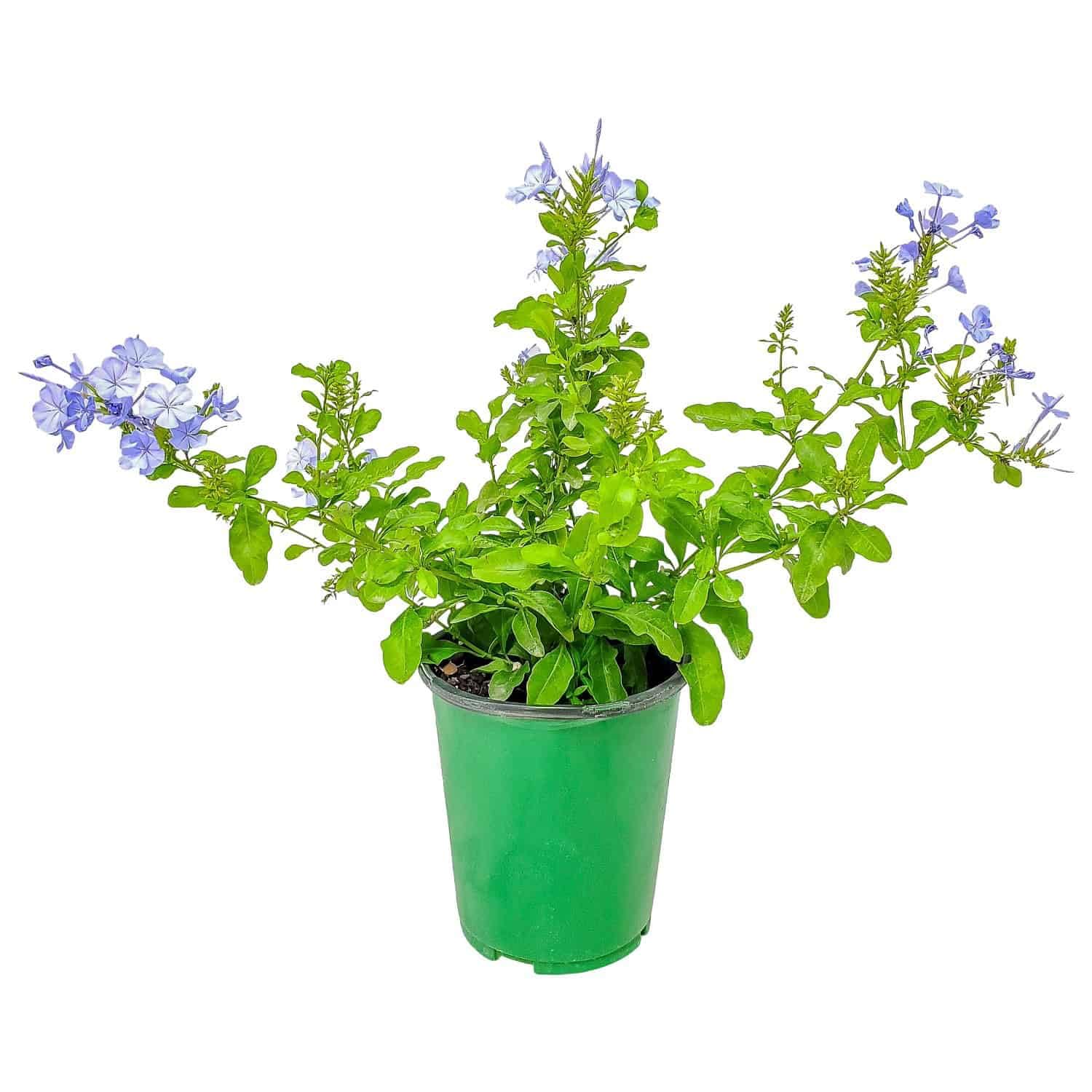
The Blue Plumbago delivers something rare in the full-sun shrub world: true blue flowers that attract butterflies, hummingbirds, and bees. The 14- to 16-inch plant in a 1-gallon pot produces clusters of imperial blue blooms from spring through fall, and the foliage stays lush as long as it gets direct sun. This shrub works equally well in landscape borders, trellises, or container plantings for patios that bake all day.
Deer resistance is a major differentiator in this category. Most flowering shrubs are deer magnets, but Plumbago’s natural compounds repel browsing without any sprays or netting. Multiple verified buyers praised the healthy arrival condition, with one noting they saw a bee on the flowers within hours of planting.
The limitation: Blue Plumbago is only hardy in zones 9-11, which restricts it to the warmest parts of the country. It cannot survive freezing winters, so anyone north of zone 9 will need to overwinter it indoors or treat it as an annual. Some shipments arrived with dead or wilted foliage, and the plants do not ship to California, Hawaii, or Alaska.
Why it’s great
- True blue flowers are rare in full-sun shrubs
- Attracts pollinators while resisting deer
- Nearly year-round blooms in warm climates
Good to know
- Only hardy in zones 9-11, no freeze tolerance
- Some plants arrived wilted or dead
5. Knockout Double Rose (2 Gallon)

The Knockout Double Rose has been a full-sun staple for years, and the 2-gallon version arrives with serious momentum. The double red blooms are larger and fuller than single-petal varieties, and the plant flowers continuously from spring to fall without deadheading. Mature height hits 48 inches, making this one of the taller options in this guide for creating a back-row statement.
Hardiness in zones 5-11 covers most of the continental US, and the plant is deciduous — it drops leaves in winter then comes back strong in spring. Verified buyers consistently praised the packaging and the healthy condition on arrival, with many noting new growth within two weeks of planting. One gardener in zone 7 reported that the flowers were actually a vibrant pink rather than the advertised red, but were equally beautiful.
Two nuances: the plant ships dormant if ordered between mid-fall and mid-spring, so you might receive a bare stick that looks dead. It’s not — it’s just resting. The 2-gallon size gives a head start over smaller pots, but the double blooms require moderate watering (about twice per week until established, then weekly) to keep producing through hot summer months.
Why it’s great
- Large double blooms with no deadheading needed
- Generous 2-gallon pot provides established root system
- Reliable reblooming from spring through frost
Good to know
- Flower color may be pink rather than the advertised red
- Ships dormant in fall/winter, looks like a dead stick
6. Gold Mop Cypress (1 Gallon)

The Gold Mop Cypress brings something most flowering bushes can’t: year-round golden foliage that keeps your full-sun bed looking good in winter. This 1-gallon cypress grows to 5 feet tall and spreads a massive 8 feet wide, making it an anchor plant for large sunny areas. The thread-like golden needles hold their color through all seasons without fading or browning.
Hardiness in zones 4-8 means this conifer thrives in cooler climates where many other bushes struggle. Verified buyers were surprised by the quality of the “generic” brand plants, with multiple reviews noting that three healthy bushes arrived safely packaged, moist soil intact, and exactly matching the photo. One delayed planting by a full month and the bush still looked great with just occasional added water.
The catch: this cypress wants continuous moisture until it establishes, then becomes relatively drought-tolerant. The 8-foot mature spread is easy to underestimate — plant it too close to a house or walkway and you’ll be pruning constantly. Also, unlike the flowering shrubs in this list, Gold Mop does not produce any blooms, so if you want seasonal flower color, this is purely a foliage plant.
Why it’s great
- Stunning golden foliage provides year-round visual interest
- Impressive 8-foot spread fills large spaces effectively
- Consistent healthy delivery with good packaging
Good to know
- No flowers, purely a foliage plant
- Requires vigilant watering until fully established
FAQ
Can I plant full-sun bushes in containers on a hot patio?
What happens if I plant a “full sun” bush in partial shade?
How long does it take for a 1-gallon bush to reach mature size?
Final Thoughts: The Verdict
For most users, the bushes for full sun winner is the Encore Azalea Autumn Bonfire because it delivers three seasons of red blooms on a compact frame that fits almost any full-sun bed without overwhelming neighboring plants. If you want a low groundcover that smothers weeds, grab the Coral Drift Rose. And for year-round golden foliage that never dies back in cold climates, nothing beats the Gold Mop Cypress.