
A flimsy board that slides, dulls your blades, or cracks within weeks is not a surface—it is a liability. Butcher block wood sits at the intersection of knife care, food safety, and daily endurance, where grain orientation, thickness, and wood species separate a lifetime tool from a disposable accessory. The wrong choice chews through knives and harbors bacteria deeper than plastic ever could.
I’m Min — the co-founder and writer behind Gadgets Feed. I have spent hundreds of hours researching wood species, grain types, and manufacturing methods to separate genuinely durable butcher block from boards that look thick but warp or split under normal kitchen use. This guide compares seven of the strongest contenders across multiple use cases.
After cross-referencing technical specifications, real buyer experiences, and material science, the following analysis delivers a definitive breakdown of the best butcher block wood options available on Amazon right now.
How To Choose The Best Butcher Block Wood
Choosing a butcher block wood surface means balancing three interlocking factors: grain construction, wood species hardness, and dimensional thickness. Each variable directly impacts knife edge retention, bacterial resistance, and the board’s resistance to cupping or cracking over time.
Grain Construction: End Grain vs Edge Grain vs Face Grain
End-grain construction exposes the cut ends of the wood fibers vertically. This structure allows the knife blade to slip between fibers rather than cutting across them, preserving edge sharpness significantly longer. Edge-grain boards, with fibers running parallel to the surface, offer better scratch resistance but dull knives faster. Face-grain boards are the least expensive but develop cut marks quickly. Serious cooks overwhelmingly prefer end grain for daily heavy use.
Wood Species and Janka Hardness
Hard maple ranks around 1,450 lbf on the Janka scale, making it the gold standard for commercial butcher blocks due to its density and closed grain that resists moisture penetration. Black walnut sits around 1,010 lbf — softer, but naturally antimicrobial and less prone to splitting. Teak (1,000-1,155 lbf) offers exceptional moisture resistance from natural oils. Acacia (1,750-2,300 lbf) is extremely hard but more abrasive on knives. Birch (1,260 lbf) provides a mid-range hardness with good stability at lower cost.
Thickness and Warp Resistance
A butcher block board thinner than 1.25 inches risks warping, especially when exposed to uneven moisture or heat. Boards 1.5 inches or thicker distribute impact forces across the mass, maintaining flatness through hundreds of cycles of chopping and washing. The added weight also prevents sliding on countertops without a non-slip pad underneath.
Quick Comparison
On smaller screens, swipe sideways to see the full table.
| Model | Category | Best For | Key Spec | Amazon |
|---|---|---|---|---|
| BABILONIA Black Walnut 19.7×12.2″ | End Grain | High-end daily prep & charcuterie | 1.7″ thick, walnut, oil + plate included | Amazon |
| HOMESTEAD End Grain Acacia 20×15″ | End Grain | Heavy chopping with deep juice groove | 1.25″ thick, 7.21 lb, acacia | Amazon |
| WoodForChef Maple 16×12″ | Edge Grain | FSC-certified maple, balanced maintenance | 1.5″ thick, 8 lb, preseasoned | Amazon |
| Yes4All Teak End Grain 20×15″ | End Grain | Large prep surface with natural oil resistance | 1.5″ thick, 11.2 lb, teak | Amazon |
| BABILONIA Acacia 15.7×10.2″ | Edge Grain | Compact prep with included slide plate | 1.6″ thick, acacia, oil + plate included | Amazon |
| BenchPro Maple Butcher Block 36×24″ | Edge Grain | Full-size countertop or workstation surface | 1″ thick, 36×24″ hard maple top | Amazon |
| RKVPCNE Birch Countertop 48×25″ | Edge Grain | DIY desk, island or large cutting surface | 1.5″ thick, 48×25″ solid birch | Amazon |
In‑Depth Reviews
1. BABILONIA American Black Walnut 19.7×12.2″ End Grain Board
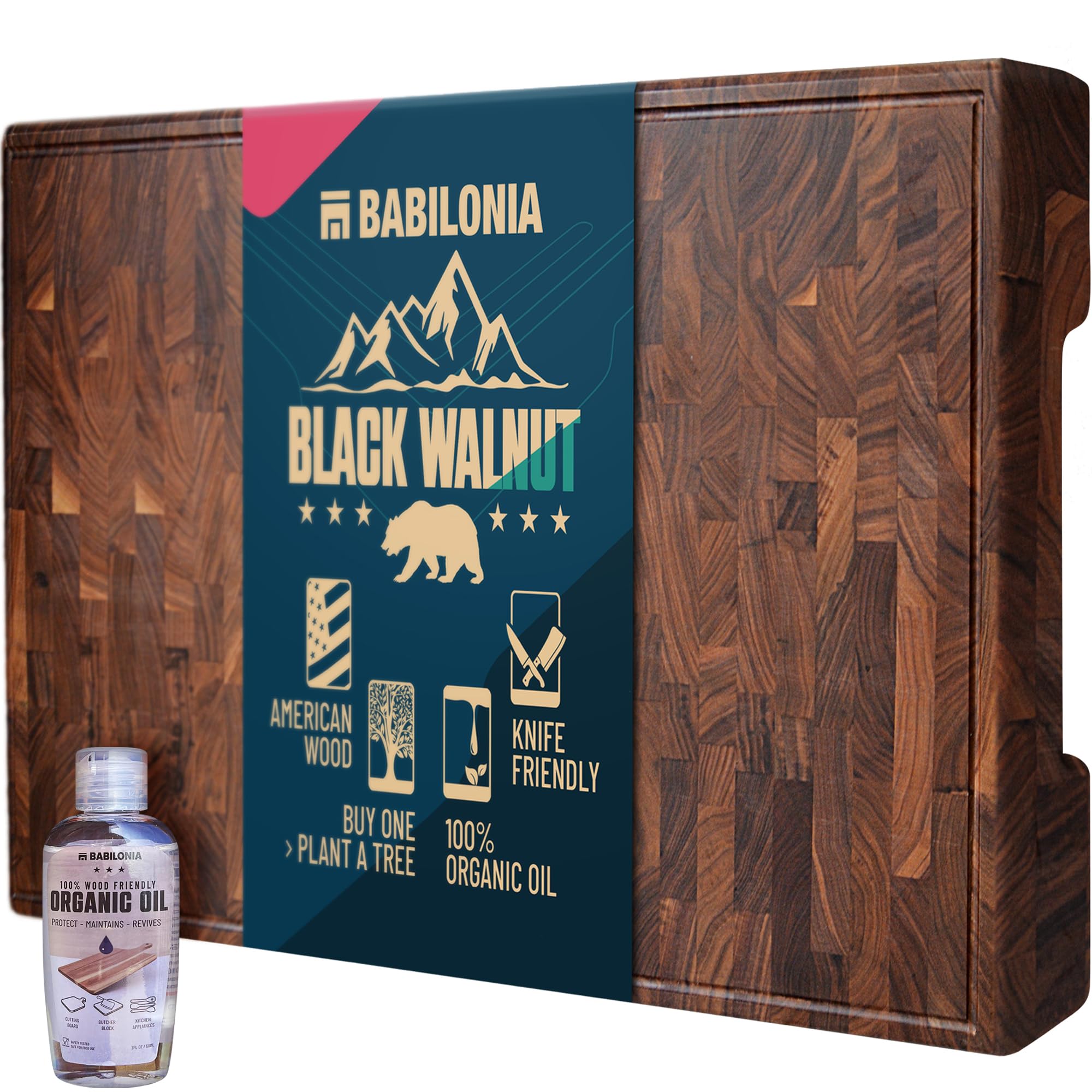
This is the board that checks every box for the serious home cook. The 1.7-inch thickness is exceptional — most boards in this class stop at 1.5 inches — and the extra mass, combined with end-grain construction, absorbs knife impact without transferring vibration to your wrist. Black walnut sits at a lower Janka rating than hard maple, but its natural antimicrobial oils make it a superior surface for raw meat and fish prep, and the wood’s rich chocolate-brown color darkens beautifully with each oiling.
The design includes a clever notch-and-plate system: you slide chopped produce directly into the included ceramic plate through a cutout in the corner, which eliminates the awkward knife-scrape-and-catch motion that leads to countertop messes. Rubber feet on the bottom prevent sliding even during aggressive chopping. The free bottle of organic mineral oil means you can start seasoning immediately, and the board comes pre-oiled from the factory so it is ready for use out of the box.
Some buyers reported minor splitting after several months despite proper care, but BABILONIA backs this with a 2-year warranty and responsive customer service that replaces defective units. For a premium end-grain board at this price point, the walnut color and thoughtful add-ons make it the most complete package available.
Why it’s great
- End-grain walnut is naturally antimicrobial and gentle on knife edges
- Innovative notch-and-plate slide system for mess-free transfer
- Comes pre-oiled with free mineral oil bottle and ceramic plate included
Good to know
- Walnut is softer than maple — deep cut marks may appear with heavy use
- A small number of units have developed cracks after 2-3 months
2. Yes4All Teak End Grain Cutting Board 20×15″

Teak’s natural oil content makes it inherently moisture-resistant — a property that translates directly to longer board life in humid kitchens or near sinks. The Yes4All board uses a genuine end-grain construction with half-inch teak blocks, giving it a striking checkerboard visual that also self-heals better than edge-grain after knife cuts. At 20 by 15 inches, it offers the largest footprint among premium-priced boards in this list without requiring the massive counter space of a full countertop slab.
The 1.5-inch thickness provides plenty of weight — 11.2 pounds — to stay planted during heavy meat prep. The deep juice groove runs the full perimeter to catch drips from roasts or melons, and the built-in handles on both short sides make lifting easy, even with wet hands. Buyers consistently note that the board arrives flat and stays flat, with no cupping or rocking after months of use.
One catch: the board requires several coats of board butter before first use because factory oiling is minimal. Some units arrived with a slightly rough surface along the juice groove that needed light sanding. But given the price for an end-grain teak board of this size, the value proposition is hard to match.
Why it’s great
- Natural teak oil repels moisture without needing constant re-oiling
- Large 20×15 surface with deep juice groove handles large roasts
- Lays flat with no warping reported across many months of use
Good to know
- Requires initial sanding and oiling — not ready to use out of the box
- Teak’s hardness can be moderately abrasive on knife edges over time
3. HOMESTEAD End Grain Acacia Cutting Board 20×15″
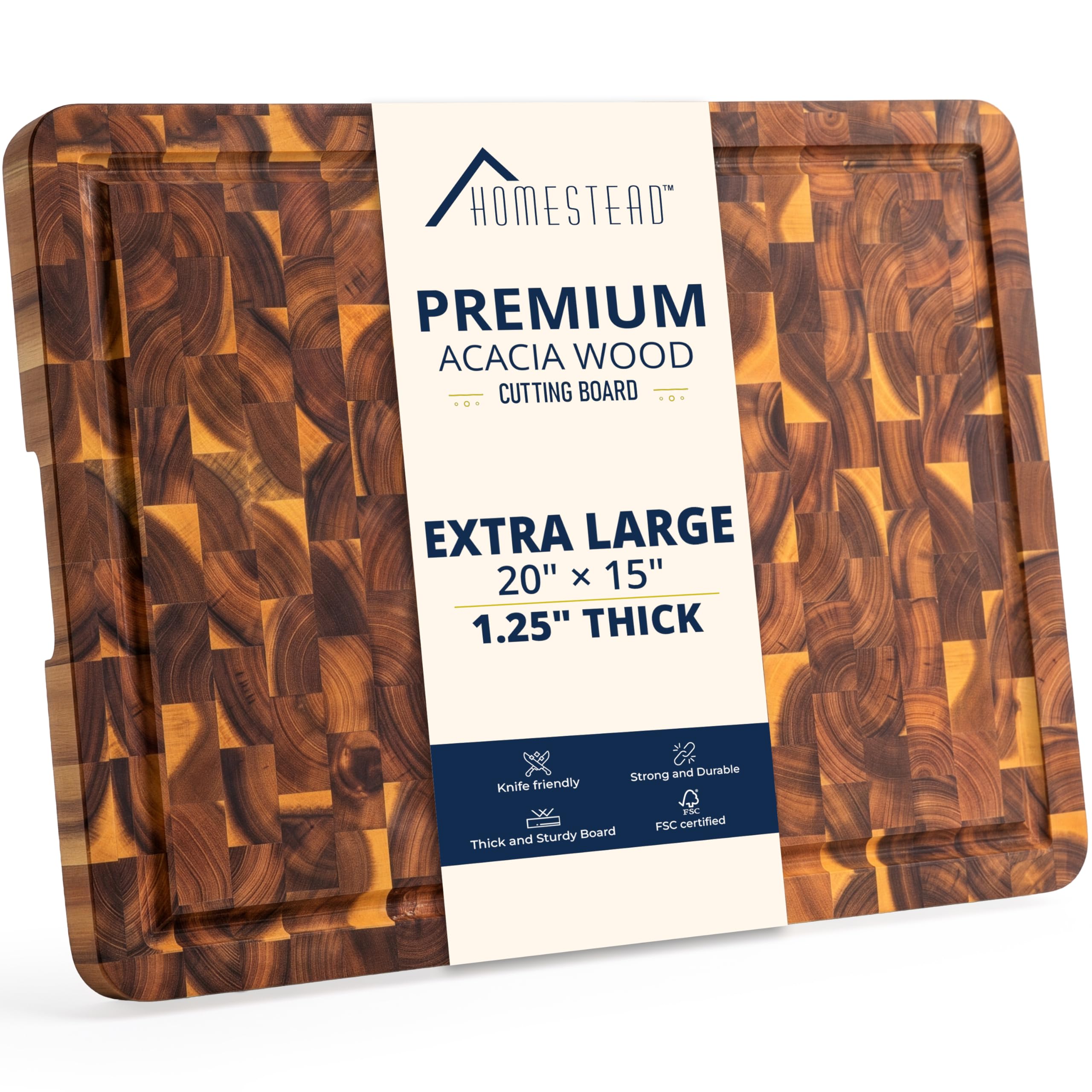
Acacia is one of the hardest commonly available woods for butcher blocks, and HOMESTEAD capitalizes on that with an end-grain configuration that handles brutal chopping without showing significant wear. The interlocking vertical fibers absorb impact rather than resisting it, so a heavy cleaver drop doesn’t transfer shock to the countertop below. At 1.25 inches thick, it is slightly thinner than the premium options, but the extreme density of acacia compensates — the board still weighs 7.21 pounds and feels solid under any load.
The juice groove is surprisingly deep for this price tier, running close to 0.25 inches down, which contains even the juiciest brisket off-cuts. The integrated handles are wide enough for two hands, and the reversible design lets you flip to a flat surface for dough rolling or charcuterie serving. Customer service from Olympia Tools (the parent brand) has been responsive — multiple reports mention immediate replacements for rare cracking issues.
A few early units developed stress cracks after a few months despite regular oiling, suggesting some boards may have been cut from green wood. However, most buyers report the board holds up beautifully with monthly mineral oil treatments. For end-grain construction at a price point typically associated with edge-grain boards, this is a strong mid-range contender.
Why it’s great
- Extremely hard acacia resists deep cut marks better than maple or walnut
- Deep juice groove and wide handles make it practical for large meat prep
- Responsive customer service for rare defect replacements
Good to know
- Some units developed stress cracks after a few months of use
- At 1.25″ thick, slightly less warp resistance than thicker boards
4. WoodForChef FSC Maple Cutting Board 16×12″

Maple is the standard for butcher block for good reason — its closed grain structure and hardness at 1,450 lbf Janka resist knife penetration while remaining easy to resurface with sandpaper. WoodForChef sources FSC-certified North American hard maple, so the environmental footprint is lower than many imported alternatives. The 16×12-inch size is compact enough for standard countertops but generous enough for a whole chicken or large flank steak.
The edge-grain construction means the board is more scratch-resistant than end-grain alternatives, though it will show cut marks more visibly over time. The 1.5-inch thickness keeps it flat and heavy — 8 pounds — so it does not shift during use. It arrives preseasoned with a mineral oil and beeswax blend, so you can start cutting immediately, though the factory coating is light and will benefit from an additional oil application within the first week.
One drawback is the absence of a juice groove. The flat surface works well for dough and charcuterie, but cutting into a roast or watermelon will send juices onto the counter unless you place a towel underneath. Also, edge-grain maple will dull knives faster than the end-grain boards above, so frequent honing becomes part of the routine.
Why it’s great
- FSC-certified North American hard maple — responsibly sourced
- Thick 1.5″ edge grain resists warping and provides heavy stability
- Preseasoned with mineral oil and beeswax — ready for immediate use
Good to know
- No juice groove — juices from meat and fruit will run off the sides
- Edge grain dulls knives faster than end-grain construction
5. BABILONIA Acacia Cutting Board 15.7×10.2″ with Plate
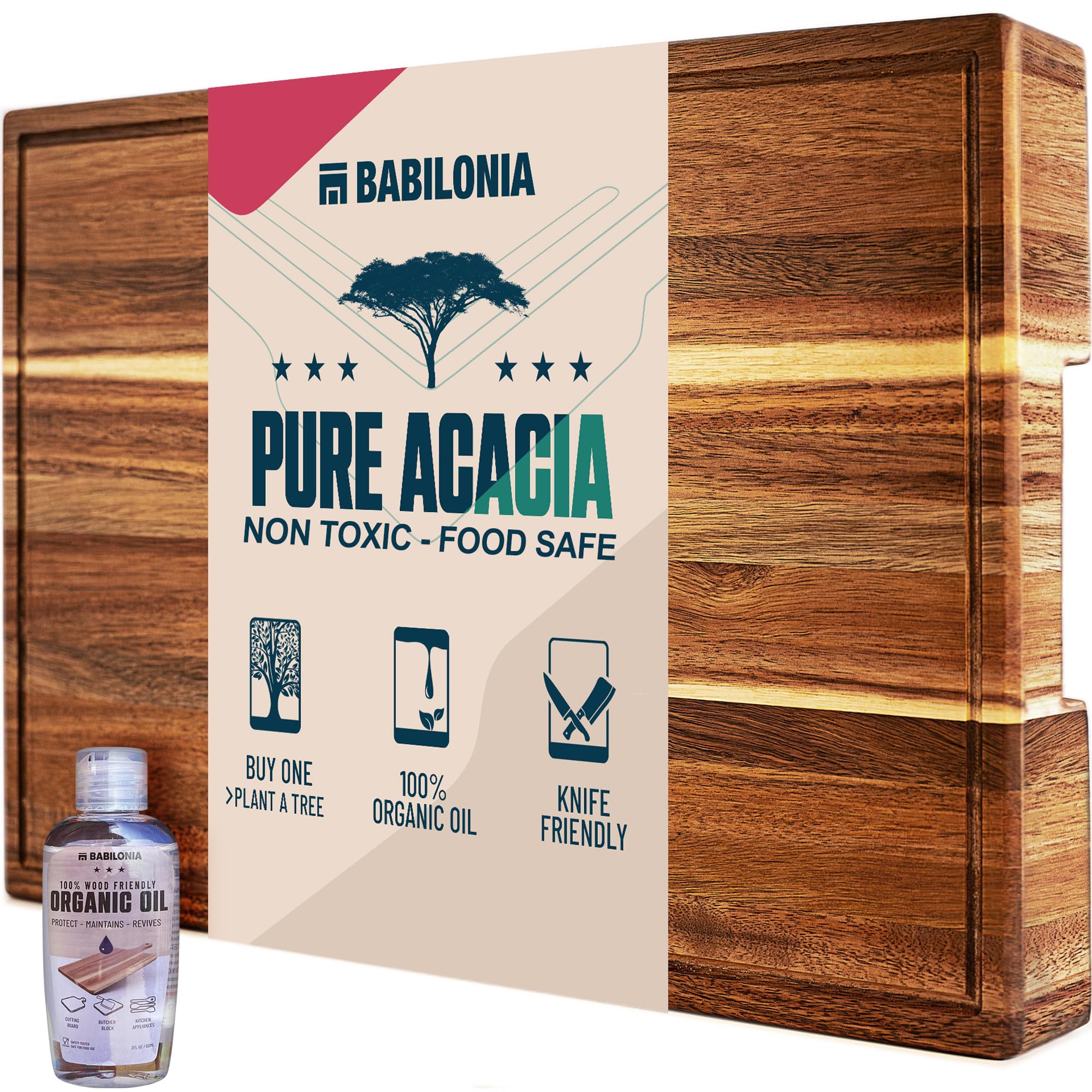
This board is designed for efficiency in smaller kitchens or for cooks who want a dedicated prep station for vegetables and aromatics. The acacia edge-grain construction gives it a hardness that resists denting, and at 1.6 inches thick it is actually thicker than some premium end-grain boards. The standout feature is the integrated plate: a small ceramic dish slides into a notch cut into the board’s corner, so you scrape chopped garlic, herbs, or onions directly into the plate without lifting a knife.
It comes pre-oiled and includes a bottle of organic mineral oil, so you can start using it immediately. The reversible design means one side serves as a flat work surface while the other can double as a serving board for cheeses or appetizers. The hidden handle on both sides makes lifting easy even when the board is loaded with food. Multiple buyers report that after months of heavy use — six times per week — the board still looks new with only occasional oiling.
The 15.7 x 10.2-inch footprint is restrictive for large cuts of meat or whole roasts. You will not fit a full brisket or a large turkey on this board. It is purpose-built for prep, not for protein breakdown, and the edge-grain surface will inevitably show cut marks as the months pass.
Why it’s great
- Clever plate-insert design eliminates the knife-scrape-to-bowl motion
- 1.6″ thickness provides excellent warp resistance for a compact board
- Comes pre-oiled with free mineral oil — zero setup time
Good to know
- Size is too small for large meat cuts or whole poultry
- Edge grain will develop visible cut marks and needs periodic sanding
6. BenchPro Maple Butcher Block Top 36×24″
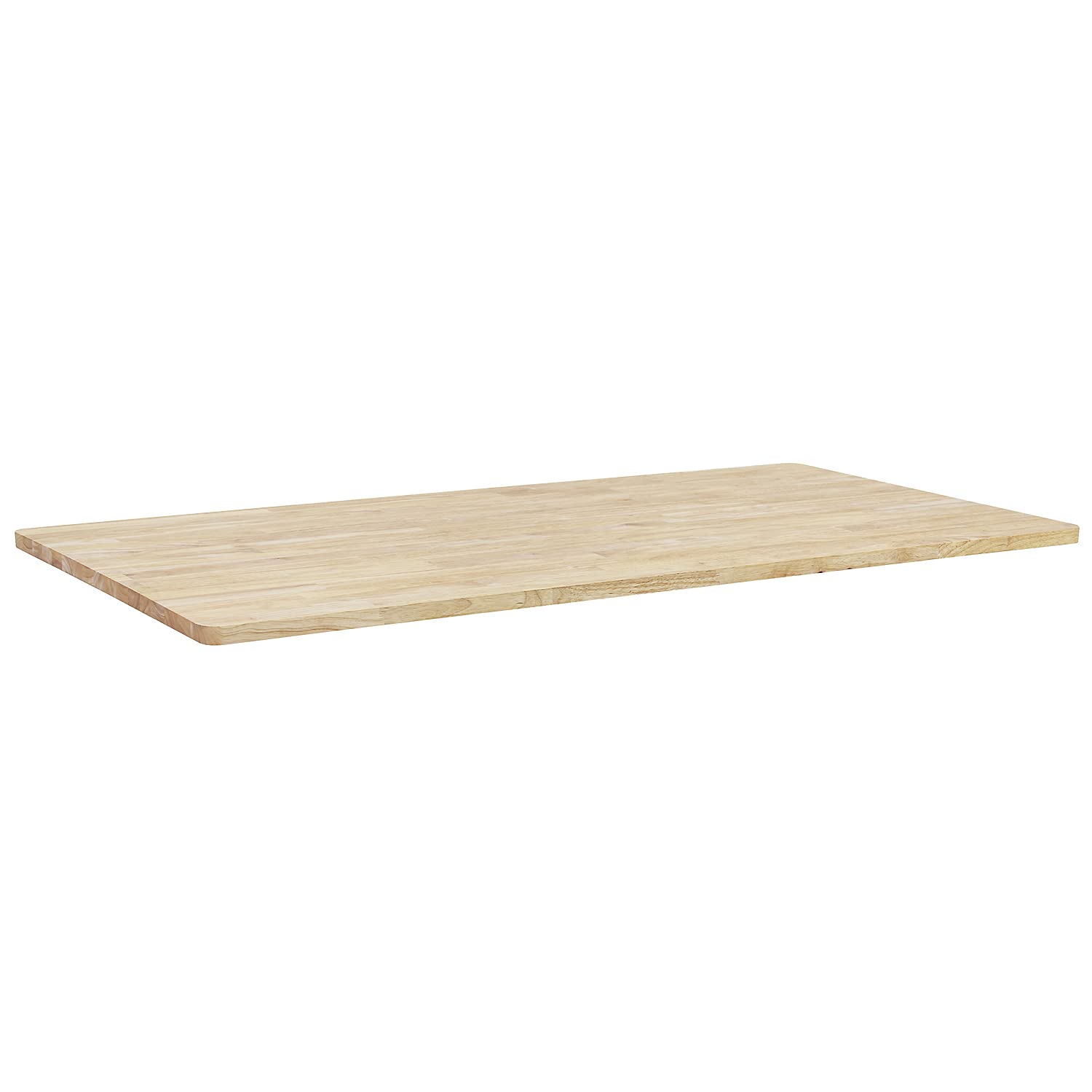
For cooks who need a full-size countertop surface rather than a portable board, BenchPro delivers a 36 x 24-inch slab of solid hard maple at a fraction of the cost of premium brands like John Boos. Professional chef reviewers note the craftsmanship is comparable, with tight glue lines and a smooth finish that requires minimal sanding. The 1-inch thickness is acceptable for a stationary surface that rests on a counter or stainless steel table, but it is too thin for free-standing use on uneven surfaces.
The maple is responsibly sourced and arrives sanded to a clean 320 grit, ready for mineral oil or a food-safe finish. Buyers have repurposed this slab for desk tops, freezer lids, and workbenches, but its primary purpose is dough work and large-scale prep. The weight helps it stay put, and the closed-grain maple resists stains better than open-grain woods. One user reported absorbing 12 ounces of mineral oil before the wood was saturated — a sign of good, thirsty maple that will deepen in color over time.
The lack of any juice groove, handles, or edge routing means this is a raw slab — you add your own finishing touches. A strong maple smell can persist for up to two weeks after opening, and the 1-inch thickness means it can warp if not stored on a perfectly flat surface or if exposed to standing water.
Why it’s great
- Massive 36×24 surface for dough work and large-volume prep
- Solid hard maple at a price well below premium butcher block brands
- Sanded to 320 grit — easy to finish with mineral oil or polyurethane
Good to know
- Only 1″ thick — can warp if not stored on a flat, dry surface
- No juice groove, handles, or edge profile — raw slab only
7. RKVPCNE Solid Birch Butcher Block 48×25″ Countertop
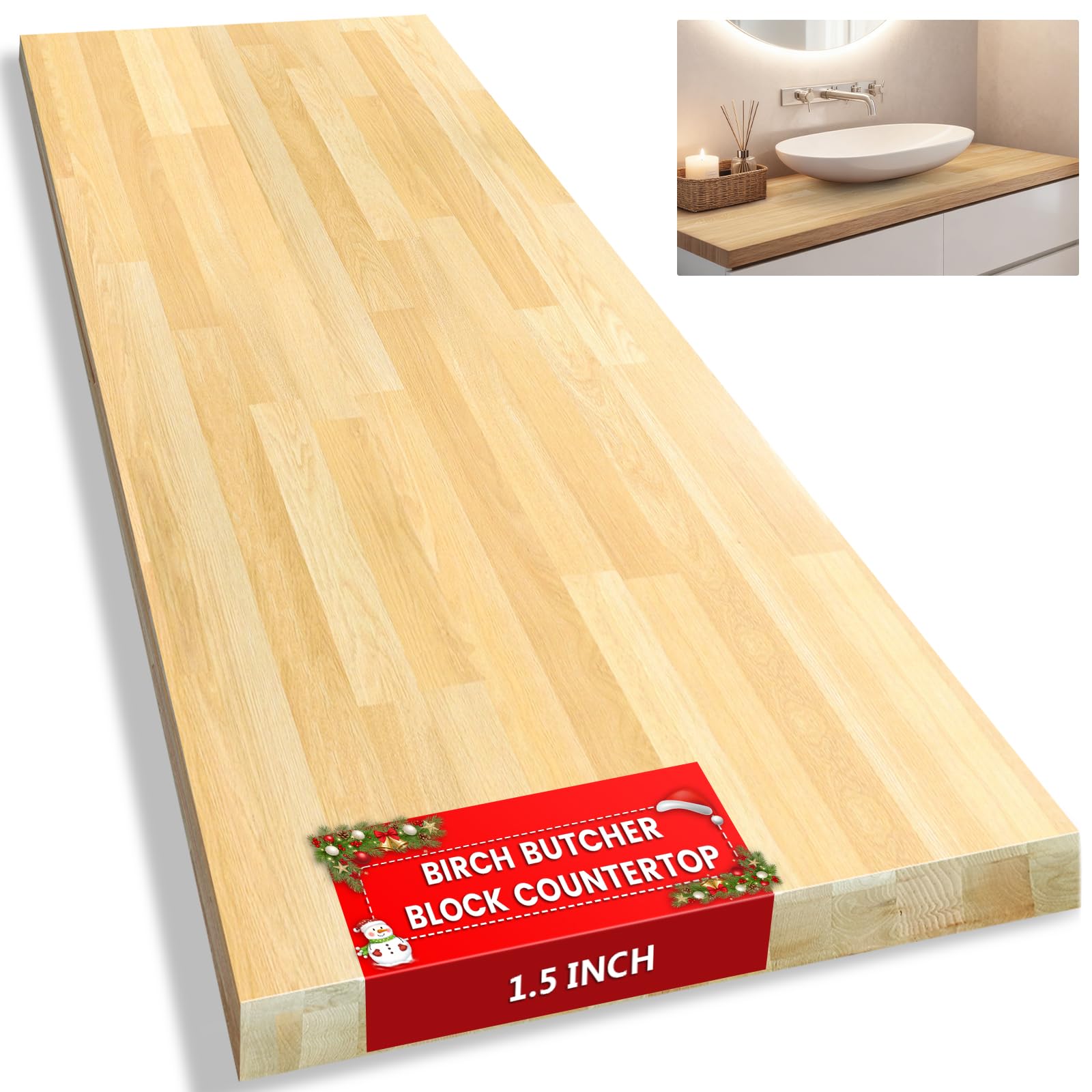
Birch sits in a sweet spot between budget-friendly price and real durability. With a Janka rating of 1,260 lbf, it is harder than walnut but softer than maple, offering a balanced surface that resists denting without being overly aggressive on knife edges. RKVPCNE delivers this as a 48 x 25-inch unfinished slab at 1.5 inches thick — enough mass to support up to 300 pounds without flexing, according to the manufacturer. The board is designed for DIY customization: you can cut it to size, sand it, and finish it with any stain or oil to match your kitchen or workbench.
Buyers have used this as a kitchen island top, a desk surface for motorized standing frames, a bathroom vanity top, and a workbench surface. The birch’s light golden color takes stain uniformly, and multiple coats of water-based polycrylic or mineral oil produce a smooth, easy-to-clean finish. The packaging is heavy-duty — multiple layers of cardboard and foam — so the wood arrives without dings or cracks even in long shipping runs.
The unfinished surface requires significant upfront labor: you should expect to sand with 220 and 320 grit, apply multiple coats of finish, and wait for curing. The board is made from edge-grain strips, so it lacks the visual appeal of an end-grain checkerboard pattern and will show cut marks over time if used as a cutting surface. It is best thought of as raw material for a custom project rather than a ready-to-use butcher block.
Why it’s great
- Large 48×25 surface at a price that beats most local lumber yards
- 1.5″ thickness supports heavy loads and resists sagging
- Versatile for kitchen islands, desks, countertops, and workbenches
Good to know
- Unfinished — requires sanding, staining, and multiple seal coats
- Edge-grain construction will show cut marks if used as a cutting board
FAQ
How often should I oil my butcher block wood board?
Can I use a butcher block wood board for raw meat and still use it for vegetables?
Why did my butcher block wood board crack after a few months?
Final Thoughts: The Verdict
For most users, the best butcher block wood winner is the BABILONIA Black Walnut 19.7×12.2″ because it combines true end-grain construction, exceptional 1.7-inch thickness, and the practical plate-slide system in a package that is ready to use immediately. If you want a massive prep surface that handles heavy chopping without breaking the bank, grab the Yes4All Teak End Grain 20×15″. And for a full-size countertop slab that you can finish to match any kitchen or workshop, nothing beats the RKVPCNE Birch 48×25″ Butcher Block.